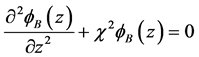
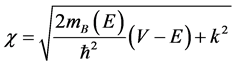
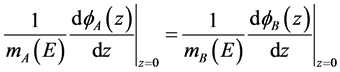
<?xml version="1.0" encoding="UTF-8"?><!DOCTYPE article  PUBLIC "-//NLM//DTD Journal Publishing DTD v3.0 20080202//EN" "http://dtd.nlm.nih.gov/publishing/3.0/journalpublishing3.dtd"><article xmlns:mml="http://www.w3.org/1998/Math/MathML" xmlns:xlink="http://www.w3.org/1999/xlink" dtd-version="3.0" xml:lang="en" article-type="research article"><front><journal-meta><journal-id journal-id-type="publisher-id">JMP</journal-id><journal-title-group><journal-title>Journal of Modern Physics</journal-title></journal-title-group><issn pub-type="epub">2153-1196</issn><publisher><publisher-name>Scientific Research Publishing</publisher-name></publisher></journal-meta><article-meta><article-id pub-id-type="doi">10.4236/jmp.2016.713149</article-id><article-id pub-id-type="publisher-id">JMP-70555</article-id><article-categories><subj-group subj-group-type="heading"><subject>Articles</subject></subj-group><subj-group subj-group-type="Discipline-v2"><subject>Physics&amp;Mathematics</subject></subj-group></article-categories><title-group><article-title>
 
 
  Effects of Band Nonparabolicity and Band Offset on the Electron Gas Properties in &lt;i&gt;InAs/AlSb&lt;/i&gt; Quantum Well
 
</article-title></title-group><contrib-group><contrib contrib-type="author" xlink:type="simple"><name name-style="western"><surname>Gafur</surname><given-names>Gulyamov</given-names></name><xref ref-type="aff" rid="aff1"><sup>1</sup></xref></contrib><contrib contrib-type="author" xlink:type="simple"><name name-style="western"><surname>Bahrom</surname><given-names>Toshmirza O’g’li Abdulazizov</given-names></name><xref ref-type="aff" rid="aff2"><sup>2</sup></xref></contrib><contrib contrib-type="author" xlink:type="simple"><name name-style="western"><surname>Baymatov</surname><given-names>Paziljon Jamoldinovich</given-names></name><xref ref-type="aff" rid="aff2"><sup>2</sup></xref></contrib></contrib-group><aff id="aff2"><addr-line>Namangan State University, Namangan, Uzbekistan</addr-line></aff><aff id="aff1"><addr-line>Namangan Engineering-Pedagogical Institute, Namangan, Uzbekistan</addr-line></aff><pub-date pub-type="epub"><day>06</day><month>09</month><year>2016</year></pub-date><volume>07</volume><issue>13</issue><fpage>1644</fpage><lpage>1650</lpage><history><date date-type="received"><day>July</day>	<month>13,</month>	<year>2016</year></date><date date-type="rev-recd"><day>Accepted:</day>	<month>September</month>	<year>10,</year>	</date><date date-type="accepted"><day>September</day>	<month>13,</month>	<year>2016</year></date></history><permissions><copyright-statement>&#169; Copyright  2014 by authors and Scientific Research Publishing Inc. </copyright-statement><copyright-year>2014</copyright-year><license><license-p>This work is licensed under the Creative Commons Attribution International License (CC BY). http://creativecommons.org/licenses/by/4.0/</license-p></license></permissions><abstract><p>
 
 
  One-band effective mass model is used to simulation of electron gas properties in quantum well. We calculate of dispersion curves for first three subbands. Calculation results of Fermi energy, effective mass at Fermi level as function of electron concentration are presented. The obtained results are good agreement with the experimental dates.
 
</p></abstract><kwd-group><kwd>Quantum Well</kwd><kwd> In-Plane Dispersion</kwd><kwd> &lt;i&gt;InAs</kwd><kwd> AlSb&lt;/i&gt;</kwd><kwd> Two Dimentional Electron Gas</kwd><kwd> Effective Mass</kwd><kwd> Cyclotron Mass</kwd></kwd-group></article-meta></front><body><sec id="s1"><title>1. Introduction</title><p>In semiconductors, InAs and InSb of the conduction band are characterized by a strong nonparabolicity and recently intensively studied heterostructures based on them [<xref ref-type="bibr" rid="scirp.70555-ref1">1</xref>] - [<xref ref-type="bibr" rid="scirp.70555-ref3">3</xref>] . Nonparabolicity of the conduction band and the nature of the spin splitting of the electron in the quantum well (QW) are studied by the cyclotron resonance [<xref ref-type="bibr" rid="scirp.70555-ref4">4</xref>] - [<xref ref-type="bibr" rid="scirp.70555-ref7">7</xref>] .</p><p>In [<xref ref-type="bibr" rid="scirp.70555-ref8">8</xref>] has been investigated InAs/AlSb based QW with well width L = 15 nm, where two dimensional (2D) electron concentration ranges from 2.7 &#215; 10<sup>11</sup> to 8 &#215; 10<sup>12</sup> cm<sup>−2</sup>. In this work has been found increase of the effective mass of almost 2 times.</p><p>The purpose of this work―the calculation of: 1) subbands dispersion curves, 2) the density of states of 2D electron gas and 3) concentration dependence of effective mass in Fermi level for InAs/AlAs QW with width L = 15 nm.</p><p>It is shown that an abrupt change in the density of states leads to a peculiar change in the concentration dependence of effective mass.</p></sec><sec id="s2"><title>2. The In-Plane Dispersion</title><p>Consider a single QW with width L (area A―InAs), concluded between barriers with height V (area B―AlAs). The energy is measured from the bottom of the band of the bulk InAs.</p><p>In the one band effective mass approximation, the solution of the three-dimensional Schr&#246;dinger equation can be represented as<inline-formula><inline-graphic xlink:href="http://html.scirp.org/file/4-7502844x2.png" xlink:type="simple"/></inline-formula>. Then for the area A and B, respectively, we can write the following one-dimensional equations</p><p><img src="http://html.scirp.org/file/4-7502844x3.png" />,<img src="http://html.scirp.org/file/4-7502844x4.png" /> (1)</p><p><img src="http://html.scirp.org/file/4-7502844x5.png" />,<img src="http://html.scirp.org/file/4-7502844x6.png" /> (2)</p><p>Here <inline-formula><inline-graphic xlink:href="http://html.scirp.org/file/4-7502844x7.png" xlink:type="simple"/></inline-formula> and <inline-formula><inline-graphic xlink:href="http://html.scirp.org/file/4-7502844x8.png" xlink:type="simple"/></inline-formula> is in plane wave vector,<inline-formula><inline-graphic xlink:href="http://html.scirp.org/file/4-7502844x9.png" xlink:type="simple"/></inline-formula>―energy-dependent effective mass of the electrons in the material A or B. Solving Equations (1) and (2), using the boundary condition</p><p><img src="http://html.scirp.org/file/4-7502844x10.png" />,<img src="http://html.scirp.org/file/4-7502844x11.png" /> (3)</p><p><img src="http://html.scirp.org/file/4-7502844x12.png" />,<img src="http://html.scirp.org/file/4-7502844x13.png" /> (4)</p><p>we find the dispersion equation</p><disp-formula id="scirp.70555-formula532"><label>(5)</label><graphic position="anchor" xlink:href="http://html.scirp.org/file/4-7502844x14.png"  xlink:type="simple"/></disp-formula><p>here<inline-formula><inline-graphic xlink:href="http://html.scirp.org/file/4-7502844x15.png" xlink:type="simple"/></inline-formula>, <inline-formula><inline-graphic xlink:href="http://html.scirp.org/file/4-7502844x16.png" xlink:type="simple"/></inline-formula>,<inline-formula><inline-graphic xlink:href="http://html.scirp.org/file/4-7502844x17.png" xlink:type="simple"/></inline-formula>.</p><p>Nonparabolicity of conduction band well takes into account by formulas</p><disp-formula id="scirp.70555-formula533"><label>(6)</label><graphic position="anchor" xlink:href="http://html.scirp.org/file/4-7502844x18.png"  xlink:type="simple"/></disp-formula><disp-formula id="scirp.70555-formula534"><label>(7)</label><graphic position="anchor" xlink:href="http://html.scirp.org/file/4-7502844x19.png"  xlink:type="simple"/></disp-formula><p>where,<inline-formula><inline-graphic xlink:href="http://html.scirp.org/file/4-7502844x20.png" xlink:type="simple"/></inline-formula>―the free electron mass,<inline-formula><inline-graphic xlink:href="http://html.scirp.org/file/4-7502844x20.png" xlink:type="simple"/></inline-formula><inline-formula><inline-graphic xlink:href="http://html.scirp.org/file/4-7502844x21.png" xlink:type="simple"/></inline-formula>―the Kane parameter,<inline-formula><inline-graphic xlink:href="http://html.scirp.org/file/4-7502844x20.png" xlink:type="simple"/></inline-formula><inline-formula><inline-graphic xlink:href="http://html.scirp.org/file/4-7502844x21.png" xlink:type="simple"/></inline-formula><inline-formula><inline-graphic xlink:href="http://html.scirp.org/file/4-7502844x22.png" xlink:type="simple"/></inline-formula>―the band gap,<inline-formula><inline-graphic xlink:href="http://html.scirp.org/file/4-7502844x20.png" xlink:type="simple"/></inline-formula><inline-formula><inline-graphic xlink:href="http://html.scirp.org/file/4-7502844x21.png" xlink:type="simple"/></inline-formula><inline-formula><inline-graphic xlink:href="http://html.scirp.org/file/4-7502844x22.png" xlink:type="simple"/></inline-formula><inline-formula><inline-graphic xlink:href="http://html.scirp.org/file/4-7502844x23.png" xlink:type="simple"/></inline-formula>― the spin-orbital splitting of valence band, V―conduction band offset. Band parameters of InAs and AlSb are shown in <xref ref-type="table" rid="table1">Table 1</xref>.</p><p>To describe the statistics of electrons, Equation (5) is non convenient because it is not solvable with respect to E or k. Therefore, we replace Equation (5) is by simple approximation</p><disp-formula id="scirp.70555-formula535"><label>(8)</label><graphic position="anchor" xlink:href="http://html.scirp.org/file/4-7502844x24.png"  xlink:type="simple"/></disp-formula><table-wrap id="table1" ><label><xref ref-type="table" rid="table1">Table 1</xref></label><caption><title> Band parameters of InAs and AlSb</title></caption><table><tbody><thead><tr><th align="center" valign="middle" ></th><th align="center" valign="middle" >InAs (A)</th><th align="center" valign="middle" >AlSb (B)</th></tr></thead><tr><td align="center" valign="middle" >E<sub>g</sub>, eV</td><td align="center" valign="middle" >0.42</td><td align="center" valign="middle" >2.37</td></tr><tr><td align="center" valign="middle" >D, eV</td><td align="center" valign="middle" >0.38</td><td align="center" valign="middle" >0.75</td></tr><tr><td align="center" valign="middle" >E<sub>P</sub>, eV</td><td align="center" valign="middle" >21.2</td><td align="center" valign="middle" >20.85</td></tr><tr><td align="center" valign="middle" >m(0), [m<sub>0</sub>]</td><td align="center" valign="middle" >0.023</td><td align="center" valign="middle" >0.11</td></tr><tr><td align="center" valign="middle" >V, eV</td><td align="center" valign="middle" >0</td><td align="center" valign="middle" >1.35</td></tr></tbody></table></table-wrap><p>where, E<sub>n</sub>―is bottom of n-th subbands. Now, approximation (8) is the best solution of (5). However, values of E<sub>n</sub> in (8) now are obtained from Equation (5) at k = 0 by use numeric method.</p><p>For InAs/AlSb QW with L = 15 nm, we have: E<sub>1</sub> = 0.0454 eV, E<sub>2</sub> = 0.158 eV, E<sub>3</sub> = 0.304 eV, and for case L = 6 nm we have: E<sub>1</sub> = 0.163 eV, E<sub>2</sub> = 0.509 eV, E<sub>3</sub> = 0.903 eV.</p><p>Calculated dispersion curves from Equation (5) and approximation (8) are compared in <xref ref-type="fig" rid="fig1">Figure 1</xref>(a), <xref ref-type="fig" rid="fig1">Figure 1</xref>(b).</p><p>From <xref ref-type="fig" rid="fig1">Figure 1</xref>(a), <xref ref-type="fig" rid="fig1">Figure 1</xref>(b) follows that, the approximation (8) is sufficiently accurate and/or (8) is the best solution of (5) in a wide range of width QW. It is convenient when studying the statistics of electrons, kinetic, optical, or other characteristics of the 2D electron gas. Inconveniences approximation (8) is such that <inline-formula><inline-graphic xlink:href="http://html.scirp.org/file/4-7502844x25.png" xlink:type="simple"/></inline-formula> depends on L, V and on other parameters of materials A,B. Therefore every time when changing these parameters, the value of <inline-formula><inline-graphic xlink:href="http://html.scirp.org/file/4-7502844x25.png" xlink:type="simple"/></inline-formula><inline-formula><inline-graphic xlink:href="http://html.scirp.org/file/4-7502844x26.png" xlink:type="simple"/></inline-formula> is recalculated from Equation (5) at k = 0.</p></sec><sec id="s3"><title>3. The Fermi Energy and Thermodynamic DOS</title><p>The total electron concentration is</p><disp-formula id="scirp.70555-formula536"><label>(9)</label><graphic position="anchor" xlink:href="http://html.scirp.org/file/4-7502844x27.png"  xlink:type="simple"/></disp-formula><p>where</p><p><inline-formula><inline-graphic xlink:href="http://html.scirp.org/file/4-7502844x28.png" xlink:type="simple"/></inline-formula>.</p><p>According (8) we have</p><p><img data-original="http://html.scirp.org/file/4-7502844x29.png" />,<img data-original="http://html.scirp.org/file/4-7502844x30.png" /> (10)</p><p>where<inline-formula><inline-graphic xlink:href="http://html.scirp.org/file/4-7502844x31.png" xlink:type="simple"/></inline-formula>―is n-th subband concentration.</p><p>In Equation (10), the terms in the sum should be positive. The negative terms in <inline-formula><inline-graphic xlink:href="http://html.scirp.org/file/4-7502844x32.png" xlink:type="simple"/></inline-formula> excluded by the Heaviside function. It establishes a link between the Fermi energy <inline-formula><inline-graphic xlink:href="http://html.scirp.org/file/4-7502844x32.png" xlink:type="simple"/></inline-formula><inline-formula><inline-graphic xlink:href="http://html.scirp.org/file/4-7502844x33.png" xlink:type="simple"/></inline-formula> and full 2D electron concentration<inline-formula><inline-graphic xlink:href="http://html.scirp.org/file/4-7502844x32.png" xlink:type="simple"/></inline-formula><inline-formula><inline-graphic xlink:href="http://html.scirp.org/file/4-7502844x33.png" xlink:type="simple"/></inline-formula><inline-formula><inline-graphic xlink:href="http://html.scirp.org/file/4-7502844x34.png" xlink:type="simple"/></inline-formula>. They also determine the concentration of electrons in separate subbands <inline-formula><inline-graphic xlink:href="http://html.scirp.org/file/4-7502844x32.png" xlink:type="simple"/></inline-formula><inline-formula><inline-graphic xlink:href="http://html.scirp.org/file/4-7502844x33.png" xlink:type="simple"/></inline-formula><inline-formula><inline-graphic xlink:href="http://html.scirp.org/file/4-7502844x34.png" xlink:type="simple"/></inline-formula><inline-formula><inline-graphic xlink:href="http://html.scirp.org/file/4-7502844x35.png" xlink:type="simple"/></inline-formula> for a given<inline-formula><inline-graphic xlink:href="http://html.scirp.org/file/4-7502844x32.png" xlink:type="simple"/></inline-formula><inline-formula><inline-graphic xlink:href="http://html.scirp.org/file/4-7502844x33.png" xlink:type="simple"/></inline-formula><inline-formula><inline-graphic xlink:href="http://html.scirp.org/file/4-7502844x34.png" xlink:type="simple"/></inline-formula><inline-formula><inline-graphic xlink:href="http://html.scirp.org/file/4-7502844x35.png" xlink:type="simple"/></inline-formula><inline-formula><inline-graphic xlink:href="http://html.scirp.org/file/4-7502844x36.png" xlink:type="simple"/></inline-formula>.</p><p>From (10), we can estimate the critical concentrations of<inline-formula><inline-graphic xlink:href="http://html.scirp.org/file/4-7502844x37.png" xlink:type="simple"/></inline-formula>, in which the Fermi level comes to bottom of the second subband<inline-formula><inline-graphic xlink:href="http://html.scirp.org/file/4-7502844x37.png" xlink:type="simple"/></inline-formula><inline-formula><inline-graphic xlink:href="http://html.scirp.org/file/4-7502844x38.png" xlink:type="simple"/></inline-formula>. In the structure of InAs/AlSb QW</p><fig-group id="fig1"><label><xref ref-type="fig" rid="fig1">Figure 1</xref></label><caption><title> The dispersion curves of the first three subbands (n = 1, 2, 3) in InAs/AlSb QW: the full (red) line―according to Equation (5), the dotted (blue) line―approximation (8); (a) L = 15 nm, (b) L = 6 nm.</title></caption><fig id ="fig1_1"><label></label><graphic mimetype="image"   position="float"  xlink:type="simple"  xlink:href="http://html.scirp.org/file/4-7502844x39.png"/></fig><fig id ="fig1_2"><label></label><graphic mimetype="image"   position="float"  xlink:type="simple"  xlink:href="http://html.scirp.org/file/4-7502844x40.png"/></fig></fig-group><p>with the well width L = 15 nm can be found</p><disp-formula id="scirp.70555-formula537"><label>(11)</label><graphic position="anchor" xlink:href="http://html.scirp.org/file/4-7502844x41.png"  xlink:type="simple"/></disp-formula><p>This estimation is close to experimental measured date <inline-formula><inline-graphic xlink:href="http://html.scirp.org/file/4-7502844x42.png" xlink:type="simple"/></inline-formula> [<xref ref-type="bibr" rid="scirp.70555-ref8">8</xref>] . Similarly, the critical concentration of<inline-formula><inline-graphic xlink:href="http://html.scirp.org/file/4-7502844x42.png" xlink:type="simple"/></inline-formula><inline-formula><inline-graphic xlink:href="http://html.scirp.org/file/4-7502844x43.png" xlink:type="simple"/></inline-formula>, in which the Fermi level comes to bottom of the third subband<inline-formula><inline-graphic xlink:href="http://html.scirp.org/file/4-7502844x42.png" xlink:type="simple"/></inline-formula><inline-formula><inline-graphic xlink:href="http://html.scirp.org/file/4-7502844x43.png" xlink:type="simple"/></inline-formula><inline-formula><inline-graphic xlink:href="http://html.scirp.org/file/4-7502844x44.png" xlink:type="simple"/></inline-formula>, is n<sub>c</sub><sub>2</sub> = 6.87 &#215; 10<sup>12</sup> cm<sup>−2</sup>.</p><p>The dependence <inline-formula><inline-graphic xlink:href="http://html.scirp.org/file/4-7502844x45.png" xlink:type="simple"/></inline-formula> is shown in <xref ref-type="fig" rid="fig2">Figure 2</xref>. It is obtained from Equations (10) by changing the Fermi energy in the range of<inline-formula><inline-graphic xlink:href="http://html.scirp.org/file/4-7502844x45.png" xlink:type="simple"/></inline-formula><inline-formula><inline-graphic xlink:href="http://html.scirp.org/file/4-7502844x46.png" xlink:type="simple"/></inline-formula>. The graph shows that, depending on <inline-formula><inline-graphic xlink:href="http://html.scirp.org/file/4-7502844x45.png" xlink:type="simple"/></inline-formula><inline-formula><inline-graphic xlink:href="http://html.scirp.org/file/4-7502844x46.png" xlink:type="simple"/></inline-formula><inline-formula><inline-graphic xlink:href="http://html.scirp.org/file/4-7502844x47.png" xlink:type="simple"/></inline-formula> there exist a fractures―slowing of increase the Fermi’s energy. They are caused by abrupt changes (by jumps), the density of states at the critical points:<inline-formula><inline-graphic xlink:href="http://html.scirp.org/file/4-7502844x45.png" xlink:type="simple"/></inline-formula><inline-formula><inline-graphic xlink:href="http://html.scirp.org/file/4-7502844x46.png" xlink:type="simple"/></inline-formula><inline-formula><inline-graphic xlink:href="http://html.scirp.org/file/4-7502844x47.png" xlink:type="simple"/></inline-formula><inline-formula><inline-graphic xlink:href="http://html.scirp.org/file/4-7502844x48.png" xlink:type="simple"/></inline-formula>, <inline-formula><inline-graphic xlink:href="http://html.scirp.org/file/4-7502844x45.png" xlink:type="simple"/></inline-formula><inline-formula><inline-graphic xlink:href="http://html.scirp.org/file/4-7502844x46.png" xlink:type="simple"/></inline-formula><inline-formula><inline-graphic xlink:href="http://html.scirp.org/file/4-7502844x47.png" xlink:type="simple"/></inline-formula><inline-formula><inline-graphic xlink:href="http://html.scirp.org/file/4-7502844x48.png" xlink:type="simple"/></inline-formula><inline-formula><inline-graphic xlink:href="http://html.scirp.org/file/4-7502844x49.png" xlink:type="simple"/></inline-formula>, <inline-formula><inline-graphic xlink:href="http://html.scirp.org/file/4-7502844x45.png" xlink:type="simple"/></inline-formula><inline-formula><inline-graphic xlink:href="http://html.scirp.org/file/4-7502844x46.png" xlink:type="simple"/></inline-formula><inline-formula><inline-graphic xlink:href="http://html.scirp.org/file/4-7502844x47.png" xlink:type="simple"/></inline-formula><inline-formula><inline-graphic xlink:href="http://html.scirp.org/file/4-7502844x48.png" xlink:type="simple"/></inline-formula><inline-formula><inline-graphic xlink:href="http://html.scirp.org/file/4-7502844x49.png" xlink:type="simple"/></inline-formula><inline-formula><inline-graphic xlink:href="http://html.scirp.org/file/4-7502844x50.png" xlink:type="simple"/></inline-formula>,<inline-formula><inline-graphic xlink:href="http://html.scirp.org/file/4-7502844x45.png" xlink:type="simple"/></inline-formula><inline-formula><inline-graphic xlink:href="http://html.scirp.org/file/4-7502844x46.png" xlink:type="simple"/></inline-formula><inline-formula><inline-graphic xlink:href="http://html.scirp.org/file/4-7502844x47.png" xlink:type="simple"/></inline-formula><inline-formula><inline-graphic xlink:href="http://html.scirp.org/file/4-7502844x48.png" xlink:type="simple"/></inline-formula><inline-formula><inline-graphic xlink:href="http://html.scirp.org/file/4-7502844x49.png" xlink:type="simple"/></inline-formula><inline-formula><inline-graphic xlink:href="http://html.scirp.org/file/4-7502844x50.png" xlink:type="simple"/></inline-formula><inline-formula><inline-graphic xlink:href="http://html.scirp.org/file/4-7502844x51.png" xlink:type="simple"/></inline-formula>.</p><p>These fractures occur at the critical concentrations of<inline-formula><inline-graphic xlink:href="http://html.scirp.org/file/4-7502844x52.png" xlink:type="simple"/></inline-formula>, where <inline-formula><inline-graphic xlink:href="http://html.scirp.org/file/4-7502844x52.png" xlink:type="simple"/></inline-formula><inline-formula><inline-graphic xlink:href="http://html.scirp.org/file/4-7502844x53.png" xlink:type="simple"/></inline-formula> intersects the Fermi level of the bottom of the next subband.</p><p>The thermodynamically DOS of electron gas at Fermi level <inline-formula><inline-graphic xlink:href="http://html.scirp.org/file/4-7502844x54.png" xlink:type="simple"/></inline-formula> is shown in <xref ref-type="fig" rid="fig3">Figure 3</xref>.</p></sec><sec id="s4"><title>4. The Cyclotron Mass</title><p>According approximation (8), the electron effective mass at the Fermi level (cyclotron mass) <inline-formula><inline-graphic xlink:href="http://html.scirp.org/file/4-7502844x55.png" xlink:type="simple"/></inline-formula>is</p><disp-formula id="scirp.70555-formula538"><label>(12)</label><graphic position="anchor" xlink:href="http://html.scirp.org/file/4-7502844x56.png"  xlink:type="simple"/></disp-formula><p>The dependence <inline-formula><inline-graphic xlink:href="http://html.scirp.org/file/4-7502844x57.png" xlink:type="simple"/></inline-formula> is shown in <xref ref-type="fig" rid="fig4">Figure 4</xref>.</p><p>This dependence can be obtained from Equations (10) and (12) by changing the Fermi energy in the range<inline-formula><inline-graphic xlink:href="http://html.scirp.org/file/4-7502844x58.png" xlink:type="simple"/></inline-formula>.</p><p>This figure shows also the dependence of experimentally measured value of the effective masses (cyclotron mass) <inline-formula><inline-graphic xlink:href="http://html.scirp.org/file/4-7502844x59.png" xlink:type="simple"/></inline-formula>at the Fermi level of the total concentration of 2D <inline-formula><inline-graphic xlink:href="http://html.scirp.org/file/4-7502844x59.png" xlink:type="simple"/></inline-formula><inline-formula><inline-graphic xlink:href="http://html.scirp.org/file/4-7502844x60.png" xlink:type="simple"/></inline-formula> [<xref ref-type="bibr" rid="scirp.70555-ref8">8</xref>] . Fracture in the <inline-formula><inline-graphic xlink:href="http://html.scirp.org/file/4-7502844x59.png" xlink:type="simple"/></inline-formula><inline-formula><inline-graphic xlink:href="http://html.scirp.org/file/4-7502844x60.png" xlink:type="simple"/></inline-formula><inline-formula><inline-graphic xlink:href="http://html.scirp.org/file/4-7502844x61.png" xlink:type="simple"/></inline-formula> occur at critical points:<inline-formula><inline-graphic xlink:href="http://html.scirp.org/file/4-7502844x59.png" xlink:type="simple"/></inline-formula><inline-formula><inline-graphic xlink:href="http://html.scirp.org/file/4-7502844x60.png" xlink:type="simple"/></inline-formula><inline-formula><inline-graphic xlink:href="http://html.scirp.org/file/4-7502844x61.png" xlink:type="simple"/></inline-formula><inline-formula><inline-graphic xlink:href="http://html.scirp.org/file/4-7502844x62.png" xlink:type="simple"/></inline-formula>, <inline-formula><inline-graphic xlink:href="http://html.scirp.org/file/4-7502844x59.png" xlink:type="simple"/></inline-formula><inline-formula><inline-graphic xlink:href="http://html.scirp.org/file/4-7502844x60.png" xlink:type="simple"/></inline-formula><inline-formula><inline-graphic xlink:href="http://html.scirp.org/file/4-7502844x61.png" xlink:type="simple"/></inline-formula><inline-formula><inline-graphic xlink:href="http://html.scirp.org/file/4-7502844x62.png" xlink:type="simple"/></inline-formula><inline-formula><inline-graphic xlink:href="http://html.scirp.org/file/4-7502844x63.png" xlink:type="simple"/></inline-formula>and<inline-formula><inline-graphic xlink:href="http://html.scirp.org/file/4-7502844x59.png" xlink:type="simple"/></inline-formula><inline-formula><inline-graphic xlink:href="http://html.scirp.org/file/4-7502844x60.png" xlink:type="simple"/></inline-formula><inline-formula><inline-graphic xlink:href="http://html.scirp.org/file/4-7502844x61.png" xlink:type="simple"/></inline-formula><inline-formula><inline-graphic xlink:href="http://html.scirp.org/file/4-7502844x62.png" xlink:type="simple"/></inline-formula><inline-formula><inline-graphic xlink:href="http://html.scirp.org/file/4-7502844x63.png" xlink:type="simple"/></inline-formula><inline-formula><inline-graphic xlink:href="http://html.scirp.org/file/4-7502844x64.png" xlink:type="simple"/></inline-formula>,<inline-formula><inline-graphic xlink:href="http://html.scirp.org/file/4-7502844x59.png" xlink:type="simple"/></inline-formula><inline-formula><inline-graphic xlink:href="http://html.scirp.org/file/4-7502844x60.png" xlink:type="simple"/></inline-formula><inline-formula><inline-graphic xlink:href="http://html.scirp.org/file/4-7502844x61.png" xlink:type="simple"/></inline-formula><inline-formula><inline-graphic xlink:href="http://html.scirp.org/file/4-7502844x62.png" xlink:type="simple"/></inline-formula><inline-formula><inline-graphic xlink:href="http://html.scirp.org/file/4-7502844x63.png" xlink:type="simple"/></inline-formula><inline-formula><inline-graphic xlink:href="http://html.scirp.org/file/4-7502844x64.png" xlink:type="simple"/></inline-formula><inline-formula><inline-graphic xlink:href="http://html.scirp.org/file/4-7502844x65.png" xlink:type="simple"/></inline-formula>.</p><fig id="fig2"  position="float"><label><xref ref-type="fig" rid="fig2">Figure 2</xref></label><caption><title> The dependence of the Fermi energy on the 2D concentration in InAs/AlSb QW with L = 15 nm, V = 1.35 eV. The critical points<inline-formula><inline-graphic xlink:href="http://html.scirp.org/file/4-7502844x67.png" xlink:type="simple"/></inline-formula>, <inline-formula><inline-graphic xlink:href="http://html.scirp.org/file/4-7502844x67.png" xlink:type="simple"/></inline-formula><inline-formula><inline-graphic xlink:href="http://html.scirp.org/file/4-7502844x68.png" xlink:type="simple"/></inline-formula>and<inline-formula><inline-graphic xlink:href="http://html.scirp.org/file/4-7502844x67.png" xlink:type="simple"/></inline-formula><inline-formula><inline-graphic xlink:href="http://html.scirp.org/file/4-7502844x68.png" xlink:type="simple"/></inline-formula><inline-formula><inline-graphic xlink:href="http://html.scirp.org/file/4-7502844x69.png" xlink:type="simple"/></inline-formula>, <inline-formula><inline-graphic xlink:href="http://html.scirp.org/file/4-7502844x67.png" xlink:type="simple"/></inline-formula><inline-formula><inline-graphic xlink:href="http://html.scirp.org/file/4-7502844x68.png" xlink:type="simple"/></inline-formula><inline-formula><inline-graphic xlink:href="http://html.scirp.org/file/4-7502844x69.png" xlink:type="simple"/></inline-formula><inline-formula><inline-graphic xlink:href="http://html.scirp.org/file/4-7502844x70.png" xlink:type="simple"/></inline-formula>shown by the shaded lines</title></caption><graphic mimetype="image"   position="float"  xlink:type="simple"  xlink:href="http://html.scirp.org/file/4-7502844x66.png"/></fig><fig id="fig3"  position="float"><label><xref ref-type="fig" rid="fig3">Figure 3</xref></label><caption><title> The thermodynamically DOS of electron gas at Fermi level in InAs/AlSb QW, L = 15 nm, V = 1.35 eV</title></caption><graphic mimetype="image"   position="float"  xlink:type="simple"  xlink:href="http://html.scirp.org/file/4-7502844x71.png"/></fig><fig id="fig4"  position="float"><label><xref ref-type="fig" rid="fig4">Figure 4</xref></label><caption><title> The dependence of the effective mass on the total concentration for InAs/AlSb QW, L = 15 нм, V = 1.35 eV</title></caption><graphic mimetype="image"   position="float"  xlink:type="simple"  xlink:href="http://html.scirp.org/file/4-7502844x72.png"/></fig></sec><sec id="s5"><title>5. Conclusion</title><p>In this study are provided useful approximation (8) of subband dispersions and simplified Equation (10) to calculate the statistics of a degenerate electron gas in heterostructured InAs/AlSb QW, which satisfactorily describes the experimental results [<xref ref-type="bibr" rid="scirp.70555-ref8">8</xref>] . They are also useful to study of calculation of the transport, optical and magnetic properties of electron gas in a Kane type 2D system. The above description of the algorithms can be applied to other QW heterostructures based on semiconductor group<inline-formula><inline-graphic xlink:href="http://html.scirp.org/file/4-7502844x73.png" xlink:type="simple"/></inline-formula>.</p></sec><sec id="s6"><title>Acknowledgements</title><p>This work was supported by the Scientific and Technical program Republic of of Uzbekistan (Grant F2-OT-O-15494).</p></sec><sec id="s7"><title>Cite this paper</title><p>Gulyamov, G., Abdulazizov, B.T. and Jamoldinovich, B.P. (2016) Effects of Band Nonparabolicity and Band Offset on the Electron Gas Properties in InAs/ AlSb Quantum Well. Journal of Modern Physics, 7, 1644-1650. http://dx.doi.org/10.4236/jmp.2016.713149</p></sec></body><back><ref-list><title>References</title><ref id="scirp.70555-ref1"><label>1</label><mixed-citation publication-type="other" xlink:type="simple">Vasilyev, Yu.B., Gouider, F., Nachtwei, G. and Buckle, P.D. (2010) Semiconductors, 44, 1511-1514. http://dx.doi.org/10.1134/S1063782610110266</mixed-citation></ref><ref id="scirp.70555-ref2"><label>2</label><mixed-citation publication-type="other" xlink:type="simple">Spirin, K.E., Kalinin, K.P., Krishtopenko, S.S., Maremyanin, K.V., Gavrilenko, V.I. and Sadofyev, Yu.G. (2012) Semiconductors, 46, 1396-1401. http://dx.doi.org/10.1134/S1063782612110206</mixed-citation></ref><ref id="scirp.70555-ref3"><label>3</label><mixed-citation publication-type="other" xlink:type="simple">Barate, D., Teissier, R., Wang, Y. and Baranov, A.N. (2005) Applied Physics Letters, 87, 051103. http://dx.doi.org/10.1063/1.2007854</mixed-citation></ref><ref id="scirp.70555-ref4"><label>4</label><mixed-citation publication-type="other" xlink:type="simple">Yang, M.J., Lin-Chung, P.J., Wagner, R.J., Waterman, J.R., Moore, W.J. and Shanabrook, B.V. (1993) Semiconductor Science and Technology, 8, S129. http://dx.doi.org/10.1088/0268-1242/8/1S/029</mixed-citation></ref><ref id="scirp.70555-ref5"><label>5</label><mixed-citation publication-type="other" xlink:type="simple">Yang, M.J., Lin-Chung, P.J., Shanabrook, B.V., Waterman, J.R., Wagner, R.J. and Moore, W.J. (1993) Physical Review B, 47, 1691. http://dx.doi.org/10.1103/PhysRevB.47.1691</mixed-citation></ref><ref id="scirp.70555-ref6"><label>6</label><mixed-citation publication-type="other" xlink:type="simple">Gauer, C., Scriba, J., Wixforth, A., Kotthaus, J.P., Bolognesi, C.R., Nguyen, C., Brar, B. and Kroemer, H. (1994) Semiconductor Science and Technology, 9, 1580. http://dx.doi.org/10.1088/0268-1242/9/9/002</mixed-citation></ref><ref id="scirp.70555-ref7"><label>7</label><mixed-citation publication-type="other" xlink:type="simple">Warburton, R.J., Gauer, C., Wixforth, A., Kotthaus, J.P., Brar, B. and Kroemer, H. (1996) Physical Review B, 53, 7903. http://dx.doi.org/10.1103/PhysRevB.53.7903</mixed-citation></ref><ref id="scirp.70555-ref8"><label>8</label><mixed-citation publication-type="other" xlink:type="simple">Aleshkin, V.Ya., Gavrilenko, V.I., Ikonnikov, A.V., Sadofyev, Yu.G., Bird, J.P., Jonhson, S.R. and Zhang, Y.-H. (2005) Semiconductors, 39, 62-66. http://dx.doi.org/10.1134/1.1852647</mixed-citation></ref></ref-list></back></article>