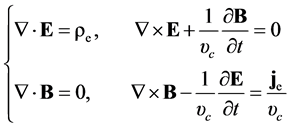
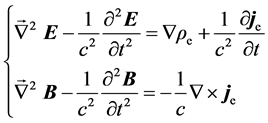
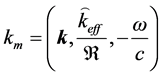
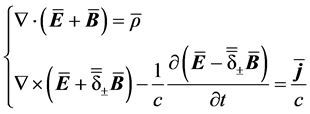
<?xml version="1.0" encoding="UTF-8"?><!DOCTYPE article  PUBLIC "-//NLM//DTD Journal Publishing DTD v3.0 20080202//EN" "http://dtd.nlm.nih.gov/publishing/3.0/journalpublishing3.dtd"><article xmlns:mml="http://www.w3.org/1998/Math/MathML" xmlns:xlink="http://www.w3.org/1999/xlink" dtd-version="3.0" xml:lang="en" article-type="research article"><front><journal-meta><journal-id journal-id-type="publisher-id">OALibJ</journal-id><journal-title-group><journal-title>Open Access Library Journal</journal-title></journal-title-group><issn pub-type="epub">2333-9705</issn><publisher><publisher-name>Scientific Research Publishing</publisher-name></publisher></journal-meta><article-meta><article-id pub-id-type="doi">10.4236/oalib.1101955</article-id><article-id pub-id-type="publisher-id">OALibJ-68642</article-id><article-categories><subj-group subj-group-type="heading"><subject>Articles</subject></subj-group><subj-group subj-group-type="Discipline-v2"><subject>Biomedical&amp;Life Sciences</subject><subject> Business&amp;Economics</subject><subject> Chemistry&amp;Materials Science</subject><subject> Computer Science&amp;Communications</subject><subject> Earth&amp;Environmental Sciences</subject><subject> Engineering</subject><subject> Medicine&amp;Healthcare</subject><subject> Physics&amp;Mathematics</subject><subject> Social Sciences&amp;Humanities</subject></subj-group></article-categories><title-group><article-title>
 
 
  Magnetic Monopole Cannot Be Incorporated into the Dual Framework of Electromagnetic Theory
 
</article-title></title-group><contrib-group><contrib contrib-type="author" xlink:type="simple"><name name-style="western"><surname>Qiankai</surname><given-names>Yao</given-names></name><xref ref-type="aff" rid="aff1"><sub>1</sub></xref><xref ref-type="corresp" rid="cor1"><sup>*</sup></xref></contrib></contrib-group><aff id="aff1"><label>1</label><addr-line>School of Physics and Engineering, Zhengzhou University, Zhengzhou, China</addr-line></aff><author-notes><corresp id="cor1">* E-mail:<email>yaoqk@zzu.edu.cn</email></corresp></author-notes><pub-date pub-type="epub"><day>30</day><month>09</month><year>2015</year></pub-date><volume>02</volume><issue>09</issue><fpage>1</fpage><lpage>13</lpage><history><date date-type="received"><day>2</day>	<month>September</month>	<year>2015</year></date><date date-type="rev-recd"><day>accepted</day>	<month>18</month>	<year>September</year>	</date><date date-type="accepted"><day>23</day>	<month>September</month>	<year>2015</year></date></history><permissions><copyright-statement>&#169; Copyright  2014 by authors and Scientific Research Publishing Inc. </copyright-statement><copyright-year>2014</copyright-year><license><license-p>This work is licensed under the Creative Commons Attribution International License (CC BY). http://creativecommons.org/licenses/by/4.0/</license-p></license></permissions><abstract><p>


   Through reexamining the intention of duality in classical physics, we will develop the electromagnetic field equations (EFEs) into a new dualized form. In the process, we will see 1) the dual symmetry does not represent the counterpart of electricity and magnetism, but a technique of expression, that is, any dualized equation will be equivalent to its originality. This symmetry can naturally lead to a conserved quantity (called the dual spin), and meanwhile is responsible for charge quantization; 2) magnetic monopole is not compatible with the classical physical laws. Such an opinion can be summarized as no-reality theorem, namely, any Dirac typical dual object will have no reality, such as, no realities of magnetic monopole and permanent electrics, so that the final conclusion is magnetic monopole which does not exist. 
  
 
</p></abstract><kwd-group><kwd>Magnetic Monopole</kwd><kwd> 5-D Field Equations</kwd><kwd> Dual Symmetry</kwd><kwd> Dual Spin</kwd></kwd-group></article-meta></front><body><sec id="s1"><title>1. Introduction</title><p>Regarding the originality of magnetic charge, we could go back to the 19th century. At that time Helmholtz used the concept to calculate the force exerted on a “magnetic particle” by electric current [<xref ref-type="bibr" rid="scirp.68642-ref1">1</xref>] . Meanwhile, based on the fact that the magnetic flux across a closed surface was always zero, Maxwell pointed out that no evidence indicated the possible existence of magnetic charge [<xref ref-type="bibr" rid="scirp.68642-ref2">2</xref>] . Nevertheless, a set of symmetrised MEs was first obtained by Heaviside in 1893 [<xref ref-type="bibr" rid="scirp.68642-ref3">3</xref>] , but Heaviside himself didn’t trust magnetic charge. Thus, he called it “fictitious”, and even thought that its sole worth was providing a convenient way to describe electromagnetic phenomena. In 1931, Dirac presented an idea of magnetic monopole to symmetrise Maxwell equations (MEs) as</p><disp-formula id="scirp.68642-formula718"><label>(1.1)</label><graphic position="anchor" xlink:href="http://html.scirp.org/file/68642x5.png"  xlink:type="simple"/></disp-formula><p><inline-formula><inline-graphic xlink:href="http://html.scirp.org/file/68642x6.png" xlink:type="simple"/></inline-formula>and <inline-formula><inline-graphic xlink:href="http://html.scirp.org/file/68642x7.png" xlink:type="simple"/></inline-formula> denote the dielectric permittivity and magnetic permeability. At the same time, Dirac also asserted that magnetic monopole would be responsible for the separate property of charge [<xref ref-type="bibr" rid="scirp.68642-ref4">4</xref>] . Importantly, Dirac’s idea could guide people to pursue the natural symmetry. This kind of symmetry is not only in mathematical form but also in physical connotation.</p><p>Essentially, what Dirac formulation led to was a Coulomb-like magnetic field with a flux going along a kind of unique string as a channel, but no actual magnetic monopole (at least no experiment could confirm its existence) [<xref ref-type="bibr" rid="scirp.68642-ref5">5</xref>] [<xref ref-type="bibr" rid="scirp.68642-ref6">6</xref>] . After all, breaking two poles (North and South) of a magnet always produced two smaller dipoles, rather than monopoles. Therefore, in Dirac theory, MEs have not really been symmetrised [<xref ref-type="bibr" rid="scirp.68642-ref6">6</xref>] - [<xref ref-type="bibr" rid="scirp.68642-ref8">8</xref>] . This is so- called magnetic monopole question.</p><p>Here, by the re-explanation of duality we will highlight that the duality doesn’t imply the existence of magnetic monopole, but a more extensive symmetry: MEs are not our only choice, whose dualized form will have the same effectiveness, and thus express the proper dual symmetry of electromagnetic movement. Finally, we will verify that magnetic monopole is impossible.</p></sec><sec id="s2"><title>2. A General Form of Field Equations</title><p>In modern notation, MEs in Heaviside-Lorentz units read [<xref ref-type="bibr" rid="scirp.68642-ref4">4</xref>] [<xref ref-type="bibr" rid="scirp.68642-ref9">9</xref>]</p><disp-formula id="scirp.68642-formula719"><label>(2.1)</label><graphic position="anchor" xlink:href="http://html.scirp.org/file/68642x8.png"  xlink:type="simple"/></disp-formula><p>Applying this equation system in simple medium gives the following non-covariant form</p><p><img src="http://html.scirp.org/file/68642x9.png" />,<img src="http://html.scirp.org/file/68642x10.png" /> (2.2)</p><p>with a speed <inline-formula><inline-graphic xlink:href="http://html.scirp.org/file/68642x11.png" xlink:type="simple"/></inline-formula> defined by relative permittivity <inline-formula><inline-graphic xlink:href="http://html.scirp.org/file/68642x12.png" xlink:type="simple"/></inline-formula> and permeability <inline-formula><inline-graphic xlink:href="http://html.scirp.org/file/68642x13.png" xlink:type="simple"/></inline-formula> as</p><disp-formula id="scirp.68642-formula720"><label>(2.3)</label><graphic position="anchor" xlink:href="http://html.scirp.org/file/68642x14.png"  xlink:type="simple"/></disp-formula><p><inline-formula><inline-graphic xlink:href="http://html.scirp.org/file/68642x15.png" xlink:type="simple"/></inline-formula>and <inline-formula><inline-graphic xlink:href="http://html.scirp.org/file/68642x16.png" xlink:type="simple"/></inline-formula> denote the electric and magnetic susceptibilities of medium.</p><p>A set of covariant equations we want to introduce to replace Equation (2.2), is massive electromagnetic equations (described in Minkowski coordinate system<inline-formula><inline-graphic xlink:href="http://html.scirp.org/file/68642x17.png" xlink:type="simple"/></inline-formula>) [<xref ref-type="bibr" rid="scirp.68642-ref10">10</xref>]</p><disp-formula id="scirp.68642-formula721"><label>(2.4)</label><graphic position="anchor" xlink:href="http://html.scirp.org/file/68642x18.png"  xlink:type="simple"/></disp-formula><p>but need to redefine the polarized vector field <inline-formula><inline-graphic xlink:href="http://html.scirp.org/file/68642x19.png" xlink:type="simple"/></inline-formula> and scalar field <inline-formula><inline-graphic xlink:href="http://html.scirp.org/file/68642x20.png" xlink:type="simple"/></inline-formula></p><disp-formula id="scirp.68642-formula722"><label>(2.5)</label><graphic position="anchor" xlink:href="http://html.scirp.org/file/68642x21.png"  xlink:type="simple"/></disp-formula><p>with</p><disp-formula id="scirp.68642-formula723"><label>(2.6)</label><graphic position="anchor" xlink:href="http://html.scirp.org/file/68642x22.png"  xlink:type="simple"/></disp-formula><p>where, the characteristic length <inline-formula><inline-graphic xlink:href="http://html.scirp.org/file/68642x23.png" xlink:type="simple"/></inline-formula> reflects the effective range of electromagnetic interaction.<inline-formula><inline-graphic xlink:href="http://html.scirp.org/file/68642x23.png" xlink:type="simple"/></inline-formula><inline-formula><inline-graphic xlink:href="http://html.scirp.org/file/68642x24.png" xlink:type="simple"/></inline-formula>, <inline-formula><inline-graphic xlink:href="http://html.scirp.org/file/68642x23.png" xlink:type="simple"/></inline-formula><inline-formula><inline-graphic xlink:href="http://html.scirp.org/file/68642x24.png" xlink:type="simple"/></inline-formula><inline-formula><inline-graphic xlink:href="http://html.scirp.org/file/68642x25.png" xlink:type="simple"/></inline-formula>the total polarization and magnetization (including the vacuum and medium effects), <inline-formula><inline-graphic xlink:href="http://html.scirp.org/file/68642x23.png" xlink:type="simple"/></inline-formula><inline-formula><inline-graphic xlink:href="http://html.scirp.org/file/68642x24.png" xlink:type="simple"/></inline-formula><inline-formula><inline-graphic xlink:href="http://html.scirp.org/file/68642x25.png" xlink:type="simple"/></inline-formula><inline-formula><inline-graphic xlink:href="http://html.scirp.org/file/68642x26.png" xlink:type="simple"/></inline-formula>, <inline-formula><inline-graphic xlink:href="http://html.scirp.org/file/68642x23.png" xlink:type="simple"/></inline-formula><inline-formula><inline-graphic xlink:href="http://html.scirp.org/file/68642x24.png" xlink:type="simple"/></inline-formula><inline-formula><inline-graphic xlink:href="http://html.scirp.org/file/68642x25.png" xlink:type="simple"/></inline-formula><inline-formula><inline-graphic xlink:href="http://html.scirp.org/file/68642x26.png" xlink:type="simple"/></inline-formula><inline-formula><inline-graphic xlink:href="http://html.scirp.org/file/68642x27.png" xlink:type="simple"/></inline-formula>the corresponding bounded charge and current. Then, the two susceptibilities become</p><disp-formula id="scirp.68642-formula724"><label>(2.7)</label><graphic position="anchor" xlink:href="http://html.scirp.org/file/68642x28.png"  xlink:type="simple"/></disp-formula><p>Now, if consider the charge fluctuation, we are allowed to write the flow equation</p><disp-formula id="scirp.68642-formula725"><label>(2.8)</label><graphic position="anchor" xlink:href="http://html.scirp.org/file/68642x29.png"  xlink:type="simple"/></disp-formula><p><inline-formula><inline-graphic xlink:href="http://html.scirp.org/file/68642x30.png" xlink:type="simple"/></inline-formula>is the gradient operator of 4-dimensional space<inline-formula><inline-graphic xlink:href="http://html.scirp.org/file/68642x30.png" xlink:type="simple"/></inline-formula><inline-formula><inline-graphic xlink:href="http://html.scirp.org/file/68642x31.png" xlink:type="simple"/></inline-formula>, the total added current <inline-formula><inline-graphic xlink:href="http://html.scirp.org/file/68642x30.png" xlink:type="simple"/></inline-formula><inline-formula><inline-graphic xlink:href="http://html.scirp.org/file/68642x31.png" xlink:type="simple"/></inline-formula><inline-formula><inline-graphic xlink:href="http://html.scirp.org/file/68642x32.png" xlink:type="simple"/></inline-formula> (flowing along <inline-formula><inline-graphic xlink:href="http://html.scirp.org/file/68642x30.png" xlink:type="simple"/></inline-formula><inline-formula><inline-graphic xlink:href="http://html.scirp.org/file/68642x31.png" xlink:type="simple"/></inline-formula><inline-formula><inline-graphic xlink:href="http://html.scirp.org/file/68642x32.png" xlink:type="simple"/></inline-formula><inline-formula><inline-graphic xlink:href="http://html.scirp.org/file/68642x33.png" xlink:type="simple"/></inline-formula>-axis) consists of two parts: one <inline-formula><inline-graphic xlink:href="http://html.scirp.org/file/68642x30.png" xlink:type="simple"/></inline-formula><inline-formula><inline-graphic xlink:href="http://html.scirp.org/file/68642x31.png" xlink:type="simple"/></inline-formula><inline-formula><inline-graphic xlink:href="http://html.scirp.org/file/68642x32.png" xlink:type="simple"/></inline-formula><inline-formula><inline-graphic xlink:href="http://html.scirp.org/file/68642x33.png" xlink:type="simple"/></inline-formula><inline-formula><inline-graphic xlink:href="http://html.scirp.org/file/68642x34.png" xlink:type="simple"/></inline-formula> arises from the charge deviation [<xref ref-type="bibr" rid="scirp.68642-ref10">10</xref>] , the other <inline-formula><inline-graphic xlink:href="http://html.scirp.org/file/68642x30.png" xlink:type="simple"/></inline-formula><inline-formula><inline-graphic xlink:href="http://html.scirp.org/file/68642x31.png" xlink:type="simple"/></inline-formula><inline-formula><inline-graphic xlink:href="http://html.scirp.org/file/68642x32.png" xlink:type="simple"/></inline-formula><inline-formula><inline-graphic xlink:href="http://html.scirp.org/file/68642x33.png" xlink:type="simple"/></inline-formula><inline-formula><inline-graphic xlink:href="http://html.scirp.org/file/68642x34.png" xlink:type="simple"/></inline-formula><inline-formula><inline-graphic xlink:href="http://html.scirp.org/file/68642x35.png" xlink:type="simple"/></inline-formula> the possible transform between free and bounded charges. Then, the equation together with Equation (2.4) gives</p><disp-formula id="scirp.68642-formula726"><label>(2.9)</label><graphic position="anchor" xlink:href="http://html.scirp.org/file/68642x36.png"  xlink:type="simple"/></disp-formula><p>To illustrate (2.4) covariant, it is sufficient to show that the contained equations can be written entirely in terms of Lorentz tensors. The covariant path will begin with the introduction of electromagnetic field tensor</p><disp-formula id="scirp.68642-formula727"><label>(2.10)</label><graphic position="anchor" xlink:href="http://html.scirp.org/file/68642x37.png"  xlink:type="simple"/></disp-formula><p>with a 5-dimensional potential<inline-formula><inline-graphic xlink:href="http://html.scirp.org/file/68642x38.png" xlink:type="simple"/></inline-formula>. The components of <inline-formula><inline-graphic xlink:href="http://html.scirp.org/file/68642x38.png" xlink:type="simple"/></inline-formula><inline-formula><inline-graphic xlink:href="http://html.scirp.org/file/68642x39.png" xlink:type="simple"/></inline-formula> transform according to the generalized Lorentz rule</p><disp-formula id="scirp.68642-formula728"><label>(2.11)</label><graphic position="anchor" xlink:href="http://html.scirp.org/file/68642x40.png"  xlink:type="simple"/></disp-formula><p>with transformation matrix</p><disp-formula id="scirp.68642-formula729"><label>(2.12)</label><graphic position="anchor" xlink:href="http://html.scirp.org/file/68642x41.png"  xlink:type="simple"/></disp-formula><p>which reproduces the field transformation formulae</p><disp-formula id="scirp.68642-formula730"><label>(2.13)</label><graphic position="anchor" xlink:href="http://html.scirp.org/file/68642x42.png"  xlink:type="simple"/></disp-formula><p>By<inline-formula><inline-graphic xlink:href="http://html.scirp.org/file/68642x43.png" xlink:type="simple"/></inline-formula>, the homogeneous and non-homogeneous equations in (2.4) can be expressed as</p><disp-formula id="scirp.68642-formula731"><label>(2.14)</label><graphic position="anchor" xlink:href="http://html.scirp.org/file/68642x44.png"  xlink:type="simple"/></disp-formula><p>including the generalized continuity equation <inline-formula><inline-graphic xlink:href="http://html.scirp.org/file/68642x45.png" xlink:type="simple"/></inline-formula> and Lorenz condition<inline-formula><inline-graphic xlink:href="http://html.scirp.org/file/68642x45.png" xlink:type="simple"/></inline-formula><inline-formula><inline-graphic xlink:href="http://html.scirp.org/file/68642x46.png" xlink:type="simple"/></inline-formula>.</p><p>In the case of neglecting vacuum effect and added current (i.e.<inline-formula><inline-graphic xlink:href="http://html.scirp.org/file/68642x47.png" xlink:type="simple"/></inline-formula>), we also have</p><disp-formula id="scirp.68642-formula732"><label>(2.15)</label><graphic position="anchor" xlink:href="http://html.scirp.org/file/68642x48.png"  xlink:type="simple"/></disp-formula><p>Substituting them into Equation (2.4), we find its first four equations (a) - (d) just reduce to Equation (2.2), implying the two are completely equivalent. Meanwhile, Equation (e) becomes the bounded charge conservation<inline-formula><inline-graphic xlink:href="http://html.scirp.org/file/68642x49.png" xlink:type="simple"/></inline-formula>, and the remainders (g) and (f) acted by operator <inline-formula><inline-graphic xlink:href="http://html.scirp.org/file/68642x49.png" xlink:type="simple"/></inline-formula><inline-formula><inline-graphic xlink:href="http://html.scirp.org/file/68642x50.png" xlink:type="simple"/></inline-formula> will lead to the second field equations respectively</p><disp-formula id="scirp.68642-formula733"><label>(2.16)</label><graphic position="anchor" xlink:href="http://html.scirp.org/file/68642x51.png"  xlink:type="simple"/></disp-formula><p>Correspondingly, the free part obeys</p><disp-formula id="scirp.68642-formula734"><label>(2.17)</label><graphic position="anchor" xlink:href="http://html.scirp.org/file/68642x52.png"  xlink:type="simple"/></disp-formula><p>Pulsing (2.16) and (2.17) together gives</p><p><img data-original="http://html.scirp.org/file/68642x53.png" />,<img data-original="http://html.scirp.org/file/68642x54.png" /> (2.18)</p><p>Which have the following free wave solutions <inline-formula><inline-graphic xlink:href="http://html.scirp.org/file/68642x55.png" xlink:type="simple"/></inline-formula></p><p><img data-original="http://html.scirp.org/file/68642x56.png" />,<img data-original="http://html.scirp.org/file/68642x57.png" /> (2.19)</p><p>with an effective angular wave number <inline-formula><inline-graphic xlink:href="http://html.scirp.org/file/68642x58.png" xlink:type="simple"/></inline-formula> defined by</p><disp-formula id="scirp.68642-formula735"><label>(2.20)</label><graphic position="anchor" xlink:href="http://html.scirp.org/file/68642x59.png"  xlink:type="simple"/></disp-formula><p><inline-formula><inline-graphic xlink:href="http://html.scirp.org/file/68642x60.png" xlink:type="simple"/></inline-formula>and <inline-formula><inline-graphic xlink:href="http://html.scirp.org/file/68642x60.png" xlink:type="simple"/></inline-formula><inline-formula><inline-graphic xlink:href="http://html.scirp.org/file/68642x61.png" xlink:type="simple"/></inline-formula> denote the angular wave number and Compton wave number of photon in medium, <inline-formula><inline-graphic xlink:href="http://html.scirp.org/file/68642x60.png" xlink:type="simple"/></inline-formula><inline-formula><inline-graphic xlink:href="http://html.scirp.org/file/68642x61.png" xlink:type="simple"/></inline-formula><inline-formula><inline-graphic xlink:href="http://html.scirp.org/file/68642x62.png" xlink:type="simple"/></inline-formula>the angular wave length [<xref ref-type="bibr" rid="scirp.68642-ref10">10</xref>] . Correspondingly, the frequency dependence reads</p><disp-formula id="scirp.68642-formula736"><label>(2.21)</label><graphic position="anchor" xlink:href="http://html.scirp.org/file/68642x63.png"  xlink:type="simple"/></disp-formula><p>This dispersion relation can help us to get the group and phase velocities</p><disp-formula id="scirp.68642-formula737"><label>(2.22)</label><graphic position="anchor" xlink:href="http://html.scirp.org/file/68642x64.png"  xlink:type="simple"/></disp-formula><p>The former represents the project of generalized light speed c (propagating in space<inline-formula><inline-graphic xlink:href="http://html.scirp.org/file/68642x65.png" xlink:type="simple"/></inline-formula>) to the real space, the latter the velocity of the intersection point of wave surface and z-axis moving along the axis. They both tend to c together, only as<inline-formula><inline-graphic xlink:href="http://html.scirp.org/file/68642x65.png" xlink:type="simple"/></inline-formula><inline-formula><inline-graphic xlink:href="http://html.scirp.org/file/68642x66.png" xlink:type="simple"/></inline-formula>.</p><p>Especially, neglecting magnetization effect (due to <inline-formula><inline-graphic xlink:href="http://html.scirp.org/file/68642x67.png" xlink:type="simple"/></inline-formula> for most mediums) gives</p><disp-formula id="scirp.68642-formula738"><label>(2.23)</label><graphic position="anchor" xlink:href="http://html.scirp.org/file/68642x68.png"  xlink:type="simple"/></disp-formula><p>For vacuum case, the group velocity of photon becomes</p><disp-formula id="scirp.68642-formula739"><label>(2.24)</label><graphic position="anchor" xlink:href="http://html.scirp.org/file/68642x69.png"  xlink:type="simple"/></disp-formula><p>which can help us to estimate the vacuum susceptibility for the radiation of <inline-formula><inline-graphic xlink:href="http://html.scirp.org/file/68642x70.png" xlink:type="simple"/></inline-formula> as</p><disp-formula id="scirp.68642-formula740"><label>(2.25)</label><graphic position="anchor" xlink:href="http://html.scirp.org/file/68642x71.png"  xlink:type="simple"/></disp-formula><p>being a very small value. When traveling through a medium of refractive index<inline-formula><inline-graphic xlink:href="http://html.scirp.org/file/68642x72.png" xlink:type="simple"/></inline-formula>, this frequent photon will obtain an inertia mass(corresponding to the spin mass of photon<inline-formula><inline-graphic xlink:href="http://html.scirp.org/file/68642x72.png" xlink:type="simple"/></inline-formula><inline-formula><inline-graphic xlink:href="http://html.scirp.org/file/68642x73.png" xlink:type="simple"/></inline-formula>) [<xref ref-type="bibr" rid="scirp.68642-ref10">10</xref>]</p><disp-formula id="scirp.68642-formula741"><label>(2.26)</label><graphic position="anchor" xlink:href="http://html.scirp.org/file/68642x74.png"  xlink:type="simple"/></disp-formula><p>only about one-millionth of electron mass<inline-formula><inline-graphic xlink:href="http://html.scirp.org/file/68642x75.png" xlink:type="simple"/></inline-formula>.</p></sec><sec id="s3"><title>3. The Dualized Form of Field Equations</title><p>Notice that, by introducing the displacement current <inline-formula><inline-graphic xlink:href="http://html.scirp.org/file/68642x76.png" xlink:type="simple"/></inline-formula> in analogy to the magnetic term<inline-formula><inline-graphic xlink:href="http://html.scirp.org/file/68642x76.png" xlink:type="simple"/></inline-formula><inline-formula><inline-graphic xlink:href="http://html.scirp.org/file/68642x77.png" xlink:type="simple"/></inline-formula>, Maxwell successfully constructed a set of divergence and curl equations both for <inline-formula><inline-graphic xlink:href="http://html.scirp.org/file/68642x76.png" xlink:type="simple"/></inline-formula><inline-formula><inline-graphic xlink:href="http://html.scirp.org/file/68642x77.png" xlink:type="simple"/></inline-formula><inline-formula><inline-graphic xlink:href="http://html.scirp.org/file/68642x78.png" xlink:type="simple"/></inline-formula> and<inline-formula><inline-graphic xlink:href="http://html.scirp.org/file/68642x76.png" xlink:type="simple"/></inline-formula><inline-formula><inline-graphic xlink:href="http://html.scirp.org/file/68642x77.png" xlink:type="simple"/></inline-formula><inline-formula><inline-graphic xlink:href="http://html.scirp.org/file/68642x78.png" xlink:type="simple"/></inline-formula><inline-formula><inline-graphic xlink:href="http://html.scirp.org/file/68642x79.png" xlink:type="simple"/></inline-formula>: it would look like to be quite symmetric, but not completely [<xref ref-type="bibr" rid="scirp.68642-ref7">7</xref>] [<xref ref-type="bibr" rid="scirp.68642-ref9">9</xref>] . To symmetrise (2.4), we introduce the definition of</p><disp-formula id="scirp.68642-formula742"><label>(3.1)</label><graphic position="anchor" xlink:href="http://html.scirp.org/file/68642x80.png"  xlink:type="simple"/></disp-formula><p>for dual current<inline-formula><inline-graphic xlink:href="http://html.scirp.org/file/68642x81.png" xlink:type="simple"/></inline-formula>, <inline-formula><inline-graphic xlink:href="http://html.scirp.org/file/68642x81.png" xlink:type="simple"/></inline-formula><inline-formula><inline-graphic xlink:href="http://html.scirp.org/file/68642x82.png" xlink:type="simple"/></inline-formula>is an angular parameter. By which, Equation (2.4) can be expanded equivalently into a 2-component dualized form (superscript * omitted)</p><disp-formula id="scirp.68642-formula743"><label>(3.2)</label><graphic position="anchor" xlink:href="http://html.scirp.org/file/68642x83.png"  xlink:type="simple"/></disp-formula><p>with the dual fields <inline-formula><inline-graphic xlink:href="http://html.scirp.org/file/68642x84.png" xlink:type="simple"/></inline-formula> given by</p><disp-formula id="scirp.68642-formula744"><label>(3.3)</label><graphic position="anchor" xlink:href="http://html.scirp.org/file/68642x85.png"  xlink:type="simple"/></disp-formula><p><inline-formula><inline-graphic xlink:href="http://html.scirp.org/file/68642x86.png" xlink:type="simple"/></inline-formula>is dual to potential<inline-formula><inline-graphic xlink:href="http://html.scirp.org/file/68642x86.png" xlink:type="simple"/></inline-formula><inline-formula><inline-graphic xlink:href="http://html.scirp.org/file/68642x87.png" xlink:type="simple"/></inline-formula>. The minus sign in front of dual flux <inline-formula><inline-graphic xlink:href="http://html.scirp.org/file/68642x86.png" xlink:type="simple"/></inline-formula><inline-formula><inline-graphic xlink:href="http://html.scirp.org/file/68642x87.png" xlink:type="simple"/></inline-formula><inline-formula><inline-graphic xlink:href="http://html.scirp.org/file/68642x88.png" xlink:type="simple"/></inline-formula> indicates a left hand rule governing its induced fields, in contrast to the right hand rule associated with flux<inline-formula><inline-graphic xlink:href="http://html.scirp.org/file/68642x86.png" xlink:type="simple"/></inline-formula><inline-formula><inline-graphic xlink:href="http://html.scirp.org/file/68642x87.png" xlink:type="simple"/></inline-formula><inline-formula><inline-graphic xlink:href="http://html.scirp.org/file/68642x88.png" xlink:type="simple"/></inline-formula><inline-formula><inline-graphic xlink:href="http://html.scirp.org/file/68642x89.png" xlink:type="simple"/></inline-formula>. In the way, we get a new set of dualized equations with perfect symmetry, in which electromagnetic fields <inline-formula><inline-graphic xlink:href="http://html.scirp.org/file/68642x86.png" xlink:type="simple"/></inline-formula><inline-formula><inline-graphic xlink:href="http://html.scirp.org/file/68642x87.png" xlink:type="simple"/></inline-formula><inline-formula><inline-graphic xlink:href="http://html.scirp.org/file/68642x88.png" xlink:type="simple"/></inline-formula><inline-formula><inline-graphic xlink:href="http://html.scirp.org/file/68642x89.png" xlink:type="simple"/></inline-formula><inline-formula><inline-graphic xlink:href="http://html.scirp.org/file/68642x90.png" xlink:type="simple"/></inline-formula> have the same status completely with their dual objects<inline-formula><inline-graphic xlink:href="http://html.scirp.org/file/68642x86.png" xlink:type="simple"/></inline-formula><inline-formula><inline-graphic xlink:href="http://html.scirp.org/file/68642x87.png" xlink:type="simple"/></inline-formula><inline-formula><inline-graphic xlink:href="http://html.scirp.org/file/68642x88.png" xlink:type="simple"/></inline-formula><inline-formula><inline-graphic xlink:href="http://html.scirp.org/file/68642x89.png" xlink:type="simple"/></inline-formula><inline-formula><inline-graphic xlink:href="http://html.scirp.org/file/68642x90.png" xlink:type="simple"/></inline-formula><inline-formula><inline-graphic xlink:href="http://html.scirp.org/file/68642x91.png" xlink:type="simple"/></inline-formula>. However, it needs to be pointed that,</p><p>the here defined two groups of field quantities completely different from the original idea of duality, must be required to satisfy different equations: the former obeys the ones without superscript <inline-formula><inline-graphic xlink:href="http://html.scirp.org/file/68642x92.png" xlink:type="simple"/></inline-formula> in Equation (3.2), the latter follows the remainders, that is to possess the mutual independence.</p><p>The dual symmetry of Equation (3.2) can be understood as invariance under dual transformation. Thus, by defining the 2-component arrays [<xref ref-type="bibr" rid="scirp.68642-ref11">11</xref>]</p><p><inline-formula><inline-graphic xlink:href="http://html.scirp.org/file/68642x93.png" xlink:type="simple"/></inline-formula>, <inline-formula><inline-graphic xlink:href="http://html.scirp.org/file/68642x93.png" xlink:type="simple"/></inline-formula><inline-formula><inline-graphic xlink:href="http://html.scirp.org/file/68642x94.png" xlink:type="simple"/></inline-formula>,<inline-formula><inline-graphic xlink:href="http://html.scirp.org/file/68642x93.png" xlink:type="simple"/></inline-formula><inline-formula><inline-graphic xlink:href="http://html.scirp.org/file/68642x94.png" xlink:type="simple"/></inline-formula><inline-formula><inline-graphic xlink:href="http://html.scirp.org/file/68642x95.png" xlink:type="simple"/></inline-formula> (3.4)</p><p>and a matrix</p><disp-formula id="scirp.68642-formula745"><label>(3.5)</label><graphic position="anchor" xlink:href="http://html.scirp.org/file/68642x96.png"  xlink:type="simple"/></disp-formula><p>we have the transformation relation</p><disp-formula id="scirp.68642-formula746"><label>(3.6)</label><graphic position="anchor" xlink:href="http://html.scirp.org/file/68642x97.png"  xlink:type="simple"/></disp-formula><p>It shows that, the essence of dual transformation actually reflects a kind of rotation by angle<inline-formula><inline-graphic xlink:href="http://html.scirp.org/file/68642x98.png" xlink:type="simple"/></inline-formula>. To illustrate the rotation needs to get help from Mobius strip [<xref ref-type="bibr" rid="scirp.68642-ref9">9</xref>] , in which if a vector and its anti-vector are designated to represent two dual quantities<inline-formula><inline-graphic xlink:href="http://html.scirp.org/file/68642x98.png" xlink:type="simple"/></inline-formula><inline-formula><inline-graphic xlink:href="http://html.scirp.org/file/68642x99.png" xlink:type="simple"/></inline-formula>, <inline-formula><inline-graphic xlink:href="http://html.scirp.org/file/68642x98.png" xlink:type="simple"/></inline-formula><inline-formula><inline-graphic xlink:href="http://html.scirp.org/file/68642x99.png" xlink:type="simple"/></inline-formula><inline-formula><inline-graphic xlink:href="http://html.scirp.org/file/68642x100.png" xlink:type="simple"/></inline-formula>(see <xref ref-type="fig" rid="fig1">Figure 1</xref>), one can find, with translating the vector pair will naturally achieve the exchange of its two components. This means, the distinction between two dual quantities is merely one of definition. So that, if early days the electron was asserted to be dually charged(tantamount to the dual form of MEs first established, or the left hand rule adopted to govern the field of moving charge), then present people would be engaged in analysis of the electrically charged objects, but the result is the same.</p><p>In the presented, the electromagnetic fields and their dual objects are treated in the same way, and there some consequences arise. For example, a moving dual charge <inline-formula><inline-graphic xlink:href="http://html.scirp.org/file/68642x101.png" xlink:type="simple"/></inline-formula> induces<inline-formula><inline-graphic xlink:href="http://html.scirp.org/file/68642x101.png" xlink:type="simple"/></inline-formula><inline-formula><inline-graphic xlink:href="http://html.scirp.org/file/68642x102.png" xlink:type="simple"/></inline-formula>, analogously to a moving electric charge <inline-formula><inline-graphic xlink:href="http://html.scirp.org/file/68642x101.png" xlink:type="simple"/></inline-formula><inline-formula><inline-graphic xlink:href="http://html.scirp.org/file/68642x102.png" xlink:type="simple"/></inline-formula><inline-formula><inline-graphic xlink:href="http://html.scirp.org/file/68642x103.png" xlink:type="simple"/></inline-formula> inducing <inline-formula><inline-graphic xlink:href="http://html.scirp.org/file/68642x101.png" xlink:type="simple"/></inline-formula><inline-formula><inline-graphic xlink:href="http://html.scirp.org/file/68642x102.png" xlink:type="simple"/></inline-formula><inline-formula><inline-graphic xlink:href="http://html.scirp.org/file/68642x103.png" xlink:type="simple"/></inline-formula><inline-formula><inline-graphic xlink:href="http://html.scirp.org/file/68642x104.png" xlink:type="simple"/></inline-formula> (see <xref ref-type="fig" rid="fig2">Figure 2</xref>).</p><p>The dualized tensor <inline-formula><inline-graphic xlink:href="http://html.scirp.org/file/68642x105.png" xlink:type="simple"/></inline-formula> can help us to express Equation (3.2) resultantly as</p><disp-formula id="scirp.68642-formula747"><label>(3.7)</label><graphic position="anchor" xlink:href="http://html.scirp.org/file/68642x106.png"  xlink:type="simple"/></disp-formula><p>accompanied with the dualized continuity equation <inline-formula><inline-graphic xlink:href="http://html.scirp.org/file/68642x107.png" xlink:type="simple"/></inline-formula> and Lorenz condition<inline-formula><inline-graphic xlink:href="http://html.scirp.org/file/68642x107.png" xlink:type="simple"/></inline-formula><inline-formula><inline-graphic xlink:href="http://html.scirp.org/file/68642x108.png" xlink:type="simple"/></inline-formula>. Now, it is easy to verify, the developed equations still have gauge invariance under the transformation of<inline-formula><inline-graphic xlink:href="http://html.scirp.org/file/68642x107.png" xlink:type="simple"/></inline-formula><inline-formula><inline-graphic xlink:href="http://html.scirp.org/file/68642x108.png" xlink:type="simple"/></inline-formula><inline-formula><inline-graphic xlink:href="http://html.scirp.org/file/68642x109.png" xlink:type="simple"/></inline-formula>, namely</p><fig id="fig1"  position="float"><label><xref ref-type="fig" rid="fig1">Figure 1</xref></label><caption><title> Dual transformation can be illustrated by the translation of dualized vector <inline-formula><inline-graphic xlink:href="http://html.scirp.org/file/68642x111.png" xlink:type="simple"/></inline-formula> in the space of Mobius strip (unfolded)</title></caption><graphic mimetype="image"   position="float"  xlink:type="simple"  xlink:href="http://html.scirp.org/file/68642x110.png"/></fig><fig-group id="fig2"><label><xref ref-type="fig" rid="fig2">Figure 2</xref></label><caption><title> The fields induced by moving charged particles: (a) A pure electric charge<inline-formula><inline-graphic xlink:href="http://html.scirp.org/file/68642x113.png" xlink:type="simple"/></inline-formula>, θ = 0; (b) A dyon (quoted from Schwinger’s invention [<xref ref-type="bibr" rid="scirp.68642-ref12">12</xref>] ) of carrying two mutual dual charges<inline-formula><inline-graphic xlink:href="http://html.scirp.org/file/68642x113.png" xlink:type="simple"/></inline-formula><inline-formula><inline-graphic xlink:href="http://html.scirp.org/file/68642x114.png" xlink:type="simple"/></inline-formula>, 0 &lt; θ &lt; π/2; (c) A pure dual charge<inline-formula><inline-graphic xlink:href="http://html.scirp.org/file/68642x113.png" xlink:type="simple"/></inline-formula><inline-formula><inline-graphic xlink:href="http://html.scirp.org/file/68642x114.png" xlink:type="simple"/></inline-formula><inline-formula><inline-graphic xlink:href="http://html.scirp.org/file/68642x115.png" xlink:type="simple"/></inline-formula>, θ = π/2.</title></caption><fig id ="fig2_1"><label> (b)</label><graphic mimetype="image"   position="float"  xlink:type="simple"  xlink:href="http://html.scirp.org/file/68642x112.png"/></fig></fig-group><disp-formula id="scirp.68642-formula748"><label>(3.8)</label><graphic position="anchor" xlink:href="http://html.scirp.org/file/68642x116.png"  xlink:type="simple"/></disp-formula><p><inline-formula><inline-graphic xlink:href="http://html.scirp.org/file/68642x117.png" xlink:type="simple"/></inline-formula>is an arbitrary dualized scalar function. If gauge invariance held, the Lagrangian reads</p><disp-formula id="scirp.68642-formula749"><label>(3.9)</label><graphic position="anchor" xlink:href="http://html.scirp.org/file/68642x118.png"  xlink:type="simple"/></disp-formula><p>whose variation with respect to <inline-formula><inline-graphic xlink:href="http://html.scirp.org/file/68642x119.png" xlink:type="simple"/></inline-formula> yields<inline-formula><inline-graphic xlink:href="http://html.scirp.org/file/68642x119.png" xlink:type="simple"/></inline-formula><inline-formula><inline-graphic xlink:href="http://html.scirp.org/file/68642x120.png" xlink:type="simple"/></inline-formula>. In order to organize effectively EFEs, we write the stress of current <inline-formula><inline-graphic xlink:href="http://html.scirp.org/file/68642x119.png" xlink:type="simple"/></inline-formula><inline-formula><inline-graphic xlink:href="http://html.scirp.org/file/68642x120.png" xlink:type="simple"/></inline-formula><inline-formula><inline-graphic xlink:href="http://html.scirp.org/file/68642x121.png" xlink:type="simple"/></inline-formula> as</p><disp-formula id="scirp.68642-formula750"><label>(3.10)</label><graphic position="anchor" xlink:href="http://html.scirp.org/file/68642x122.png"  xlink:type="simple"/></disp-formula><p>with the electromagnetic stress-energy tensor given by</p><disp-formula id="scirp.68642-formula751"><label>(3.11)</label><graphic position="anchor" xlink:href="http://html.scirp.org/file/68642x123.png"  xlink:type="simple"/></disp-formula><p>Applying dual transformation to Equation (3.10), we find</p><disp-formula id="scirp.68642-formula752"><label>(3.12)</label><graphic position="anchor" xlink:href="http://html.scirp.org/file/68642x124.png"  xlink:type="simple"/></disp-formula><p>It shows that, the transformation doesn’t change the form of Equation (3.2), and the electromagnetic interaction also keeps the same. In this way, the electrodynamics displays its unique dual invariance. The invariance means, any one would obtain the same results, when he wish to adopt dualized equations to describe the electromagnetic phenomena.</p><p>It should be pointed that, due to dual symmetry, the ratio between two dual charges can be arbitrarily chosen, while the physical results will keep the same. So that we say, Equations (2.4) and (3.2) have the equivalent description efficacy; the only difference between them is that, the latter is understanding a charged particle as a dyon of carrying two mutual dual charges, rather than pure electric charge. In other words, regardless of whether an electron is a particle with unit negative charge<inline-formula><inline-graphic xlink:href="http://html.scirp.org/file/68642x125.png" xlink:type="simple"/></inline-formula>, or a dyon with dualized charge <inline-formula><inline-graphic xlink:href="http://html.scirp.org/file/68642x125.png" xlink:type="simple"/></inline-formula><inline-formula><inline-graphic xlink:href="http://html.scirp.org/file/68642x126.png" xlink:type="simple"/></inline-formula> designated by the transformation of</p><disp-formula id="scirp.68642-formula753"><label>(3.13)</label><graphic position="anchor" xlink:href="http://html.scirp.org/file/68642x127.png"  xlink:type="simple"/></disp-formula><p>as long as assuming all particles in the universe have the same ratio<inline-formula><inline-graphic xlink:href="http://html.scirp.org/file/68642x128.png" xlink:type="simple"/></inline-formula>, the physical results would be unanimous. In particularly, for two “electrons” with charge<inline-formula><inline-graphic xlink:href="http://html.scirp.org/file/68642x128.png" xlink:type="simple"/></inline-formula><inline-formula><inline-graphic xlink:href="http://html.scirp.org/file/68642x129.png" xlink:type="simple"/></inline-formula>, the “Coulomb” force between them should be</p><disp-formula id="scirp.68642-formula754"><label>(3.14)</label><graphic position="anchor" xlink:href="http://html.scirp.org/file/68642x130.png"  xlink:type="simple"/></disp-formula><p>just equal to that between two conventional electrons. This means, Maxwell’s theory itself does not be short of symmetry, it can be dualized at any time. After all, we have no absolute reason to say, an electron only carries an unit negative charge<inline-formula><inline-graphic xlink:href="http://html.scirp.org/file/68642x131.png" xlink:type="simple"/></inline-formula>, it can actually be understood as a dyon of carrying dualized charge<inline-formula><inline-graphic xlink:href="http://html.scirp.org/file/68642x131.png" xlink:type="simple"/></inline-formula><inline-formula><inline-graphic xlink:href="http://html.scirp.org/file/68642x132.png" xlink:type="simple"/></inline-formula>, just like in mechanics, a force <inline-formula><inline-graphic xlink:href="http://html.scirp.org/file/68642x131.png" xlink:type="simple"/></inline-formula><inline-formula><inline-graphic xlink:href="http://html.scirp.org/file/68642x132.png" xlink:type="simple"/></inline-formula><inline-formula><inline-graphic xlink:href="http://html.scirp.org/file/68642x133.png" xlink:type="simple"/></inline-formula> is always allowed to be equivalently decomposed into two components, i.e.<inline-formula><inline-graphic xlink:href="http://html.scirp.org/file/68642x131.png" xlink:type="simple"/></inline-formula><inline-formula><inline-graphic xlink:href="http://html.scirp.org/file/68642x132.png" xlink:type="simple"/></inline-formula><inline-formula><inline-graphic xlink:href="http://html.scirp.org/file/68642x133.png" xlink:type="simple"/></inline-formula><inline-formula><inline-graphic xlink:href="http://html.scirp.org/file/68642x134.png" xlink:type="simple"/></inline-formula>.</p><p>To examine the elements of<inline-formula><inline-graphic xlink:href="http://html.scirp.org/file/68642x135.png" xlink:type="simple"/></inline-formula>, we find</p><disp-formula id="scirp.68642-formula755"><label>(3.15)</label><graphic position="anchor" xlink:href="http://html.scirp.org/file/68642x136.png"  xlink:type="simple"/></disp-formula><p>With this tensor in hand, it is straightforward to confirm that Equation (3.10) contains two conservation laws. The first is a statement of momentum conservation</p><disp-formula id="scirp.68642-formula756"><label>(3.16)</label><graphic position="anchor" xlink:href="http://html.scirp.org/file/68642x137.png"  xlink:type="simple"/></disp-formula><p>The second gives Poynting’s theorem of energy conservation</p><disp-formula id="scirp.68642-formula757"><label>(3.17)</label><graphic position="anchor" xlink:href="http://html.scirp.org/file/68642x138.png"  xlink:type="simple"/></disp-formula><p>When no polarized fields <inline-formula><inline-graphic xlink:href="http://html.scirp.org/file/68642x139.png" xlink:type="simple"/></inline-formula> considered, Equation (3.2) can be merged into a more succinct form</p><p><img data-original="http://html.scirp.org/file/68642x140.png" />,<img data-original="http://html.scirp.org/file/68642x141.png" /> (3.18)</p><p>followed by a 4-force</p><disp-formula id="scirp.68642-formula758"><label>(3.19)</label><graphic position="anchor" xlink:href="http://html.scirp.org/file/68642x142.png"  xlink:type="simple"/></disp-formula><p>In absence of dual charge, we get back Maxwell theory.</p></sec><sec id="s4"><title>4. Conserved Quantity and Charge Quantization</title><p>A celebrated theorem due to Noether makes a general connection: every invariance (or symmetry) of variable transformation would determine a conserved quantity [<xref ref-type="bibr" rid="scirp.68642-ref13">13</xref>] . What is the conserved quantity of dual transformation? It is the dual spin. So that, we focus our interest on the covariant electromagnetic action, and vary an action with the general form</p><disp-formula id="scirp.68642-formula759"><label>(4.1)</label><graphic position="anchor" xlink:href="http://html.scirp.org/file/68642x143.png"  xlink:type="simple"/></disp-formula><p><inline-formula><inline-graphic xlink:href="http://html.scirp.org/file/68642x144.png" xlink:type="simple"/></inline-formula>is the three-dimensional volume element. It requires</p><disp-formula id="scirp.68642-formula760"><label>(4.2)</label><graphic position="anchor" xlink:href="http://html.scirp.org/file/68642x145.png"  xlink:type="simple"/></disp-formula><p>and hence, there be the following differential form</p><disp-formula id="scirp.68642-formula761"><label>(4.3)</label><graphic position="anchor" xlink:href="http://html.scirp.org/file/68642x146.png"  xlink:type="simple"/></disp-formula><p>which provides a conserved quantity<inline-formula><inline-graphic xlink:href="http://html.scirp.org/file/68642x147.png" xlink:type="simple"/></inline-formula>, called the dual spin density for its arising from the symmetry of dual rotation. We here emphasize, as a “fictitious” rotation, the dual transformation would not lead to any physical effect, and thus determine a zero dual spin of photon, i.e.<inline-formula><inline-graphic xlink:href="http://html.scirp.org/file/68642x147.png" xlink:type="simple"/></inline-formula><inline-formula><inline-graphic xlink:href="http://html.scirp.org/file/68642x148.png" xlink:type="simple"/></inline-formula>. On the other hand, due to the introduction of dual quantities increasing the freedom of electromagnetic motion, there needs to supply a new condition to re-</p><p>strict, this condition is nothing but the conversation form<inline-formula><inline-graphic xlink:href="http://html.scirp.org/file/68642x149.png" xlink:type="simple"/></inline-formula>, just corresponding to <inline-formula><inline-graphic xlink:href="http://html.scirp.org/file/68642x149.png" xlink:type="simple"/></inline-formula><inline-formula><inline-graphic xlink:href="http://html.scirp.org/file/68642x150.png" xlink:type="simple"/></inline-formula> and<inline-formula><inline-graphic xlink:href="http://html.scirp.org/file/68642x149.png" xlink:type="simple"/></inline-formula><inline-formula><inline-graphic xlink:href="http://html.scirp.org/file/68642x150.png" xlink:type="simple"/></inline-formula><inline-formula><inline-graphic xlink:href="http://html.scirp.org/file/68642x151.png" xlink:type="simple"/></inline-formula>.</p><p>To demonstrate charge quantization, we look upon an electrically charged particle with <inline-formula><inline-graphic xlink:href="http://html.scirp.org/file/68642x152.png" xlink:type="simple"/></inline-formula> as a dyon of carrying</p><disp-formula id="scirp.68642-formula762"><label>(4.4)</label><graphic position="anchor" xlink:href="http://html.scirp.org/file/68642x153.png"  xlink:type="simple"/></disp-formula><p>here, a proportional relation of <inline-formula><inline-graphic xlink:href="http://html.scirp.org/file/68642x154.png" xlink:type="simple"/></inline-formula> (with an adjustable parameter<inline-formula><inline-graphic xlink:href="http://html.scirp.org/file/68642x154.png" xlink:type="simple"/></inline-formula><inline-formula><inline-graphic xlink:href="http://html.scirp.org/file/68642x155.png" xlink:type="simple"/></inline-formula>) is supposed. When the dyon moves along the closed Landau orbit <inline-formula><inline-graphic xlink:href="http://html.scirp.org/file/68642x154.png" xlink:type="simple"/></inline-formula><inline-formula><inline-graphic xlink:href="http://html.scirp.org/file/68642x155.png" xlink:type="simple"/></inline-formula><inline-formula><inline-graphic xlink:href="http://html.scirp.org/file/68642x156.png" xlink:type="simple"/></inline-formula> in dualized magnetic fields<inline-formula><inline-graphic xlink:href="http://html.scirp.org/file/68642x154.png" xlink:type="simple"/></inline-formula><inline-formula><inline-graphic xlink:href="http://html.scirp.org/file/68642x155.png" xlink:type="simple"/></inline-formula><inline-formula><inline-graphic xlink:href="http://html.scirp.org/file/68642x156.png" xlink:type="simple"/></inline-formula><inline-formula><inline-graphic xlink:href="http://html.scirp.org/file/68642x157.png" xlink:type="simple"/></inline-formula>, its phase shift arising from the potential <inline-formula><inline-graphic xlink:href="http://html.scirp.org/file/68642x154.png" xlink:type="simple"/></inline-formula><inline-formula><inline-graphic xlink:href="http://html.scirp.org/file/68642x155.png" xlink:type="simple"/></inline-formula><inline-formula><inline-graphic xlink:href="http://html.scirp.org/file/68642x156.png" xlink:type="simple"/></inline-formula><inline-formula><inline-graphic xlink:href="http://html.scirp.org/file/68642x157.png" xlink:type="simple"/></inline-formula><inline-formula><inline-graphic xlink:href="http://html.scirp.org/file/68642x158.png" xlink:type="simple"/></inline-formula> should be</p><p><img data-original="http://html.scirp.org/file/68642x160.png" /><img data-original="http://html.scirp.org/file/68642x159.png" /> (4.5)</p><p><inline-formula><inline-graphic xlink:href="http://html.scirp.org/file/68642x161.png" xlink:type="simple"/></inline-formula>is the flow of <inline-formula><inline-graphic xlink:href="http://html.scirp.org/file/68642x161.png" xlink:type="simple"/></inline-formula><inline-formula><inline-graphic xlink:href="http://html.scirp.org/file/68642x162.png" xlink:type="simple"/></inline-formula> through any surface <inline-formula><inline-graphic xlink:href="http://html.scirp.org/file/68642x161.png" xlink:type="simple"/></inline-formula><inline-formula><inline-graphic xlink:href="http://html.scirp.org/file/68642x162.png" xlink:type="simple"/></inline-formula><inline-formula><inline-graphic xlink:href="http://html.scirp.org/file/68642x163.png" xlink:type="simple"/></inline-formula> bounded by<inline-formula><inline-graphic xlink:href="http://html.scirp.org/file/68642x161.png" xlink:type="simple"/></inline-formula><inline-formula><inline-graphic xlink:href="http://html.scirp.org/file/68642x162.png" xlink:type="simple"/></inline-formula><inline-formula><inline-graphic xlink:href="http://html.scirp.org/file/68642x163.png" xlink:type="simple"/></inline-formula><inline-formula><inline-graphic xlink:href="http://html.scirp.org/file/68642x164.png" xlink:type="simple"/></inline-formula>. The dual covariance requires</p><disp-formula id="scirp.68642-formula763"><label>(4.6)</label><graphic position="anchor" xlink:href="http://html.scirp.org/file/68642x165.png"  xlink:type="simple"/></disp-formula><p>Then, based on the independency of two fluxes<inline-formula><inline-graphic xlink:href="http://html.scirp.org/file/68642x166.png" xlink:type="simple"/></inline-formula>, we deduce</p><disp-formula id="scirp.68642-formula764"><label>(4.7)</label><graphic position="anchor" xlink:href="http://html.scirp.org/file/68642x167.png"  xlink:type="simple"/></disp-formula><p>Due to the adjustability of<inline-formula><inline-graphic xlink:href="http://html.scirp.org/file/68642x168.png" xlink:type="simple"/></inline-formula>, the constant is always allowed to be unit by redefining<inline-formula><inline-graphic xlink:href="http://html.scirp.org/file/68642x168.png" xlink:type="simple"/></inline-formula><inline-formula><inline-graphic xlink:href="http://html.scirp.org/file/68642x169.png" xlink:type="simple"/></inline-formula>, namely</p><disp-formula id="scirp.68642-formula765"><label>(4.8)</label><graphic position="anchor" xlink:href="http://html.scirp.org/file/68642x170.png"  xlink:type="simple"/></disp-formula><p>So that, putting the obtained into (4.5) gives the quantization relationship</p><disp-formula id="scirp.68642-formula766"><label>(4.9)</label><graphic position="anchor" xlink:href="http://html.scirp.org/file/68642x171.png"  xlink:type="simple"/></disp-formula><p>This derivation implies, not have to get help from Dirac monopole, the dual covariance would naturally lead to the charge quantization. In other words, the root of charge quantization is not at the existence of magnetic monopole, but the dual symmetry of electromagnetic movement.</p></sec><sec id="s5"><title>5. Magnetic Monopole Does Not Exist</title><p>Right now, if suppose the dual object of electric charge were Dirac magnetic monopole (i.e.<inline-formula><inline-graphic xlink:href="http://html.scirp.org/file/68642x172.png" xlink:type="simple"/></inline-formula>,<inline-formula><inline-graphic xlink:href="http://html.scirp.org/file/68642x172.png" xlink:type="simple"/></inline-formula><inline-formula><inline-graphic xlink:href="http://html.scirp.org/file/68642x173.png" xlink:type="simple"/></inline-formula>), and the electromagnetic fields dual each other:<inline-formula><inline-graphic xlink:href="http://html.scirp.org/file/68642x172.png" xlink:type="simple"/></inline-formula><inline-formula><inline-graphic xlink:href="http://html.scirp.org/file/68642x173.png" xlink:type="simple"/></inline-formula><inline-formula><inline-graphic xlink:href="http://html.scirp.org/file/68642x174.png" xlink:type="simple"/></inline-formula>, <inline-formula><inline-graphic xlink:href="http://html.scirp.org/file/68642x172.png" xlink:type="simple"/></inline-formula><inline-formula><inline-graphic xlink:href="http://html.scirp.org/file/68642x173.png" xlink:type="simple"/></inline-formula><inline-formula><inline-graphic xlink:href="http://html.scirp.org/file/68642x174.png" xlink:type="simple"/></inline-formula><inline-formula><inline-graphic xlink:href="http://html.scirp.org/file/68642x175.png" xlink:type="simple"/></inline-formula>, we can reedit Equation (3.2) in the form of</p><disp-formula id="scirp.68642-formula767"><label>(5.1)</label><graphic position="anchor" xlink:href="http://html.scirp.org/file/68642x176.png"  xlink:type="simple"/></disp-formula><p><inline-formula><inline-graphic xlink:href="http://html.scirp.org/file/68642x177.png" xlink:type="simple"/></inline-formula>, <inline-formula><inline-graphic xlink:href="http://html.scirp.org/file/68642x177.png" xlink:type="simple"/></inline-formula><inline-formula><inline-graphic xlink:href="http://html.scirp.org/file/68642x178.png" xlink:type="simple"/></inline-formula>are the corresponding bounded magnetic charge and current. In the case of no bounded, these equations reduce to the Maxwell-Dirac form (i.e. Equation (1.1))</p><disp-formula id="scirp.68642-formula768"><label>(5.2)</label><graphic position="anchor" xlink:href="http://html.scirp.org/file/68642x179.png"  xlink:type="simple"/></disp-formula><p>From which, we see that, the electric and magnetic quantities have been put in perfectly symmetrical position, and at present, there would be three kinds of way to produce magnetic field: magnetic charge, moving electric charge and changing electric field. So, the energy-momentum conservation for Maxwell-Dirac system needs to be derived from Equation (5.2), namely</p><disp-formula id="scirp.68642-formula769"><label>(5.3)</label><graphic position="anchor" xlink:href="http://html.scirp.org/file/68642x180.png"  xlink:type="simple"/></disp-formula><p>Just as our expectation, the electromagnetic energy-momentum changes into the mechanical form, in turn, the latter gets to balance by the former reducing. Ostensibly, it seems to imply, the law of energy-momentum conservation is still working well, and Maxwell-Dirac theory has no question, at least in mathematical form, not conflict with the classical physics. However, this is not the case; the involvement of magnetic monopole will completely change the trend of whole theory.</p><p>To illustrate this point, we suppose the existence of magnetic monopole, and conceive an electromagnetic system. As shown in <xref ref-type="fig" rid="fig3">Figure 3</xref>, the system is consisting of a permanent magnet and a magnetic circuit<inline-formula><inline-graphic xlink:href="http://html.scirp.org/file/68642x181.png" xlink:type="simple"/></inline-formula>,</p><fig id="fig3"  position="float"><label><xref ref-type="fig" rid="fig3">Figure 3</xref></label><caption><title> An electromagnetic system is supposed to be composed of magnetic current <inline-formula><inline-graphic xlink:href="http://html.scirp.org/file/68642x183.png" xlink:type="simple"/></inline-formula> flowing through the rotational magnetostatic field <inline-formula><inline-graphic xlink:href="http://html.scirp.org/file/68642x183.png" xlink:type="simple"/></inline-formula><inline-formula><inline-graphic xlink:href="http://html.scirp.org/file/68642x184.png" xlink:type="simple"/></inline-formula> caused by a permanent magnet. Then analogy the usual Lorentz force, there should be a corresponding formula for magnetic charge movement, that is a continuous magnetic force<inline-formula><inline-graphic xlink:href="http://html.scirp.org/file/68642x183.png" xlink:type="simple"/></inline-formula><inline-formula><inline-graphic xlink:href="http://html.scirp.org/file/68642x184.png" xlink:type="simple"/></inline-formula><inline-formula><inline-graphic xlink:href="http://html.scirp.org/file/68642x185.png" xlink:type="simple"/></inline-formula>. The appearance of <inline-formula><inline-graphic xlink:href="http://html.scirp.org/file/68642x183.png" xlink:type="simple"/></inline-formula><inline-formula><inline-graphic xlink:href="http://html.scirp.org/file/68642x184.png" xlink:type="simple"/></inline-formula><inline-formula><inline-graphic xlink:href="http://html.scirp.org/file/68642x185.png" xlink:type="simple"/></inline-formula><inline-formula><inline-graphic xlink:href="http://html.scirp.org/file/68642x186.png" xlink:type="simple"/></inline-formula> implies, the electromagnetic energy-momentum seems to be able to transform unlimitedly into the mechanical form. This obviously violates the basic physical law</title></caption><graphic mimetype="image"   position="float"  xlink:type="simple"  xlink:href="http://html.scirp.org/file/68642x182.png"/></fig><p>when there be a flux <inline-formula><inline-graphic xlink:href="http://html.scirp.org/file/68642x187.png" xlink:type="simple"/></inline-formula> flowing through the circuit, the rotational magnetostatic field <inline-formula><inline-graphic xlink:href="http://html.scirp.org/file/68642x187.png" xlink:type="simple"/></inline-formula><inline-formula><inline-graphic xlink:href="http://html.scirp.org/file/68642x188.png" xlink:type="simple"/></inline-formula> caused by the magnet will exert a stress on it, i.e.<inline-formula><inline-graphic xlink:href="http://html.scirp.org/file/68642x187.png" xlink:type="simple"/></inline-formula><inline-formula><inline-graphic xlink:href="http://html.scirp.org/file/68642x188.png" xlink:type="simple"/></inline-formula><inline-formula><inline-graphic xlink:href="http://html.scirp.org/file/68642x189.png" xlink:type="simple"/></inline-formula>. Then, by Equation (5.3) we can write the following integral over the surface <inline-formula><inline-graphic xlink:href="http://html.scirp.org/file/68642x187.png" xlink:type="simple"/></inline-formula><inline-formula><inline-graphic xlink:href="http://html.scirp.org/file/68642x188.png" xlink:type="simple"/></inline-formula><inline-formula><inline-graphic xlink:href="http://html.scirp.org/file/68642x189.png" xlink:type="simple"/></inline-formula><inline-formula><inline-graphic xlink:href="http://html.scirp.org/file/68642x190.png" xlink:type="simple"/></inline-formula> that bounds <inline-formula><inline-graphic xlink:href="http://html.scirp.org/file/68642x187.png" xlink:type="simple"/></inline-formula><inline-formula><inline-graphic xlink:href="http://html.scirp.org/file/68642x188.png" xlink:type="simple"/></inline-formula><inline-formula><inline-graphic xlink:href="http://html.scirp.org/file/68642x189.png" xlink:type="simple"/></inline-formula><inline-formula><inline-graphic xlink:href="http://html.scirp.org/file/68642x190.png" xlink:type="simple"/></inline-formula><inline-formula><inline-graphic xlink:href="http://html.scirp.org/file/68642x191.png" xlink:type="simple"/></inline-formula></p><disp-formula id="scirp.68642-formula770"><label>(5.4)</label><graphic position="anchor" xlink:href="http://html.scirp.org/file/68642x192.png"  xlink:type="simple"/></disp-formula><p>For unbounded space(modeled as a spherical volume tending to infinity), no momentum and energy in or out the closed boundary<inline-formula><inline-graphic xlink:href="http://html.scirp.org/file/68642x193.png" xlink:type="simple"/></inline-formula>, and the conservation equations become</p><disp-formula id="scirp.68642-formula771"><label>(5.5)</label><graphic position="anchor" xlink:href="http://html.scirp.org/file/68642x194.png"  xlink:type="simple"/></disp-formula><p>with the total magnetic force <inline-formula><inline-graphic xlink:href="http://html.scirp.org/file/68642x195.png" xlink:type="simple"/></inline-formula> and power <inline-formula><inline-graphic xlink:href="http://html.scirp.org/file/68642x195.png" xlink:type="simple"/></inline-formula><inline-formula><inline-graphic xlink:href="http://html.scirp.org/file/68642x196.png" xlink:type="simple"/></inline-formula> given by</p><disp-formula id="scirp.68642-formula772"><label>(5.6)</label><graphic position="anchor" xlink:href="http://html.scirp.org/file/68642x197.png"  xlink:type="simple"/></disp-formula><p><inline-formula><inline-graphic xlink:href="http://html.scirp.org/file/68642x198.png" xlink:type="simple"/></inline-formula>denotes the volume of magnetic conductor<inline-formula><inline-graphic xlink:href="http://html.scirp.org/file/68642x198.png" xlink:type="simple"/></inline-formula><inline-formula><inline-graphic xlink:href="http://html.scirp.org/file/68642x199.png" xlink:type="simple"/></inline-formula>. It is clear that, the increase of mechanical energy-mo- mentum can always be compensated by the surrounding fields. The conclusion itself has no any question, however this is only an ostensible impression, when <inline-formula><inline-graphic xlink:href="http://html.scirp.org/file/68642x198.png" xlink:type="simple"/></inline-formula><inline-formula><inline-graphic xlink:href="http://html.scirp.org/file/68642x199.png" xlink:type="simple"/></inline-formula><inline-formula><inline-graphic xlink:href="http://html.scirp.org/file/68642x200.png" xlink:type="simple"/></inline-formula> and <inline-formula><inline-graphic xlink:href="http://html.scirp.org/file/68642x198.png" xlink:type="simple"/></inline-formula><inline-formula><inline-graphic xlink:href="http://html.scirp.org/file/68642x199.png" xlink:type="simple"/></inline-formula><inline-formula><inline-graphic xlink:href="http://html.scirp.org/file/68642x200.png" xlink:type="simple"/></inline-formula><inline-formula><inline-graphic xlink:href="http://html.scirp.org/file/68642x201.png" xlink:type="simple"/></inline-formula> have the steady and finite values, the mechanical momentum and energy of whole system will be inevitable to increase continuously, even tend to infinity</p><disp-formula id="scirp.68642-formula773"><label>(5.7)</label><graphic position="anchor" xlink:href="http://html.scirp.org/file/68642x202.png"  xlink:type="simple"/></disp-formula><p>These results tell us that, the conceived system could unlimitedly transform its electromagnetic momentum and energy into the mechanical form, even like avalanche to an infinite negative value region(with imaginary fields<inline-formula><inline-graphic xlink:href="http://html.scirp.org/file/68642x203.png" xlink:type="simple"/></inline-formula>,<inline-formula><inline-graphic xlink:href="http://html.scirp.org/file/68642x203.png" xlink:type="simple"/></inline-formula><inline-formula><inline-graphic xlink:href="http://html.scirp.org/file/68642x204.png" xlink:type="simple"/></inline-formula>), namely</p><disp-formula id="scirp.68642-formula774"><label>(5.8)</label><graphic position="anchor" xlink:href="http://html.scirp.org/file/68642x205.png"  xlink:type="simple"/></disp-formula><p>This is impossible by energy-momentum conservation. Therefore, as long as no physical experiment could detect the above transform, the assumption of that the magnetic monopole exists in universe cannot be true.</p><p>Hereby, it can be concluded that, the notion of magnetic monopole is not compatible with the classical physical laws. In other words, the magnetic field is not suitable to be understood as the dual target of electric one, since the magnetism is completely staying in an unequal position to electricity (see <xref ref-type="table" rid="table1">Table 1</xref>).</p><p>From the table we see that, any two supposed dual objects are actually antithetical each other, that is, if either is true (false), the other must be false (true). This situation can be stated as two equivalent statements:</p><p>1) There are no physical objects dual each other in Dirac mode, or any Dirac typical dual object has no reality (called no-reality theorem);</p><p>2) Any static vortex field is impossible to be an active one, or any field with source is impossible to possess simultaneously a static vortex structure (called no-vortex theorem).</p><p>Their equivalence can be proved by showing that if either is false, so is the other. Specifically, if the former were violated, namely magnetic monopole exist, magnetic field will become an active field. At the same time, the rotational magnetostatic field caused by permanent magnet also exists, and thus violates the second statement. In turn, the conclusion remains the same.</p><p>The key point is that, due to possessing a vortex structure, magnetic field lines do not begin or end in any volume of space(reflected completely by<inline-formula><inline-graphic xlink:href="http://html.scirp.org/file/68642x206.png" xlink:type="simple"/></inline-formula>). Consequently, if allow the existence of Dirac typical dual objects, one may use them to construct a kind of working system that will produce some unphysical results. For example, whether magnetic monopole or rotational electrostatic field (induced by permanent electrics analogous to permanent magnet) exists, there would be a type of perpetual mobile that can output power unlimitedly, this obviously violates the law of energy conservation, as shown in <xref ref-type="fig" rid="fig4">Figure 4</xref>.</p><p>In short, Maxwell theory itself does not require or forbid magnetic monopole exists, as well as the impossibility of perpetual mobile of the first kind states that, magnetic monopole has no reality. Although magnetic monopole has no reality, it still does not negate the usefulness of duality as a tool for studying the electromagnetic movement from a viewpoint of symmetry.</p></sec><sec id="s6"><title>6. Conclusions</title><p>In conclusion, our acquisitions can be summed up as follows:</p><p>1) The developed 5-dimensional EFEs can provide us with a unified formalism; this formalism describing the medium effect by independent polarized fields has led to some meaningful results, such as the propagation and dispersion of light in matter;</p><fig-group id="fig4"><label><xref ref-type="fig" rid="fig4">Figure 4</xref></label><caption><title> The existence of magnetic monopole or permanent electrics (the electric analog of permanent magnet) implies the feasibility of perpetual mobile of the first kind. Specifically, when moving through a rotational magnetostatic (a) (electrostatic (b)) field caused by permanent magnet (electrics), the magnetic (electric) charge system will work as a perpetual mobile of outputting the power unlimitedly. This is impossible.</title></caption><fig id ="fig4_1"><label> (b)</label><graphic mimetype="image"   position="float"  xlink:type="simple"  xlink:href="http://html.scirp.org/file/68642x207.png"/></fig></fig-group><table-wrap id="table1" ><label><xref ref-type="table" rid="table1">Table 1</xref></label><caption><title> Some electromagnetic objects and their statuses (√ and &#215; denote reality and no reality)</title></caption><table><tbody><thead><tr><th align="center" valign="middle" >Electricity</th><th align="center" valign="middle" >Electric charge</th><th align="center" valign="middle" >Electric dipole (placement of poles)</th><th align="center" valign="middle" >Electric dipole (loop of current)</th><th align="center" valign="middle" >Rotational electrostatic field</th></tr></thead><tr><td align="center" valign="middle" >Status</td><td align="center" valign="middle" >√</td><td align="center" valign="middle" >√</td><td align="center" valign="middle" >&#215;</td><td align="center" valign="middle" >&#215;</td></tr><tr><td align="center" valign="middle" >Magnetism</td><td align="center" valign="middle" >Magnetic charge</td><td align="center" valign="middle" >Magnetic dipole (placement of poles)</td><td align="center" valign="middle" >Magnetic dipole (loop of current)</td><td align="center" valign="middle" >Rotational magnetostatic field</td></tr><tr><td align="center" valign="middle" >Status</td><td align="center" valign="middle" >&#215;</td><td align="center" valign="middle" >&#215;</td><td align="center" valign="middle" >√</td><td align="center" valign="middle" >√</td></tr><tr><td align="center" valign="middle" >Electricity</td><td align="center" valign="middle" >Electric atom</td><td align="center" valign="middle" >Molecular electric current</td><td align="center" valign="middle" >Permanent electrics</td><td align="center" valign="middle" >Spin electric moment</td></tr><tr><td align="center" valign="middle" >Status</td><td align="center" valign="middle" >√</td><td align="center" valign="middle" >√</td><td align="center" valign="middle" >&#215;</td><td align="center" valign="middle" >&#215;</td></tr><tr><td align="center" valign="middle" >Magnetism</td><td align="center" valign="middle" >Magnetic atom</td><td align="center" valign="middle" >Molecular magnetic current</td><td align="center" valign="middle" >Permanent magnet</td><td align="center" valign="middle" >Spin magnetic moment</td></tr><tr><td align="center" valign="middle" >Status</td><td align="center" valign="middle" >&#215;</td><td align="center" valign="middle" >&#215;</td><td align="center" valign="middle" >√</td><td align="center" valign="middle" >√</td></tr></tbody></table></table-wrap><p>2) Due to possessing different natures, the electric and magnetic fields are not dual each other, whereas the dual quantities must be independent mutually. Based on the decision, we have developed EFEs into a 2-com- ponent dualized form. This form emphasizes that all the dualized equations should have the equivalent description efficacy to its originality. Especially, the dual spin of photon is essentially related to the electromagnetic dual symmetry, which also can provide us with a natural explanation for charge quantization;</p><p>3) Magnetic monopole is impossible, since it allows the electromagnetic energy-momentum to be transformed unlimitedly into the mechanical form. Crucially, the motivation of Dirac proposing magnetic monopole is to symmetrise MEs, but here it is no longer an indispensable concept. Eventually, Maxwell theory can be symmetrised at any time; it originally represents a particular form of 2-component dualized EFEs.</p></sec><sec id="s7"><title>Cite this paper</title><p>Qiankai Yao, (2015) Magnetic Monopole Cannot Be Incorporated into the Dual Framework of Electromagnetic Theory. Open Access Library Journal,02,1-13. doi: 10.4236/oalib.1101955</p></sec></body><back><ref-list><title>References</title><ref id="scirp.68642-ref1"><label>1</label><mixed-citation publication-type="other" xlink:type="simple">Helmholtz, H.V. (1858) Ueber Integrale der hydrodynamischen Gleichungen, welche der Wirbelbewegung entsprechen. Journal für die reine und angewandte Mathematik, 55, 25. (In German)</mixed-citation></ref><ref id="scirp.68642-ref2"><label>2</label><mixed-citation publication-type="other" xlink:type="simple">Maxwell, J.C. (1865) A Dynamical Theory of the Electromagnetic Field. Philosophical Transactions of the Royal Society of London, 155, 459-512. http://dx.doi.org/10.1098/rstl.1865.0008</mixed-citation></ref><ref id="scirp.68642-ref3"><label>3</label><mixed-citation publication-type="other" xlink:type="simple">Heaviside, O. (1893) Electromagnetic Theory. Chelsea Publishing Co., London.</mixed-citation></ref><ref id="scirp.68642-ref4"><label>4</label><mixed-citation publication-type="other" xlink:type="simple">Dirac, P.A.M. (1931) Quantized Singularities in the Electromagnetic Field. Proceedings of the Royal Society A, 133, 60.http://dx.doi.org/10.1098/rspa.1931.0130</mixed-citation></ref><ref id="scirp.68642-ref5"><label>5</label><mixed-citation publication-type="other" xlink:type="simple">Dirac, P.A.M. (1948) The Theory of Magnetic Poles. Physical Review Letters, 74, 817.http://dx.doi.org/10.1103/PhysRev.74.817</mixed-citation></ref><ref id="scirp.68642-ref6"><label>6</label><mixed-citation publication-type="other" xlink:type="simple">Preskill, J. (1984) Magnetic Monopoles. Annual Review of Nuclear and Particle Science, 34, 461-530.http://dx.doi.org/10.1146/annurev.ns.34.120184.002333</mixed-citation></ref><ref id="scirp.68642-ref7"><label>7</label><mixed-citation publication-type="other" xlink:type="simple">Milton, K.A. (2006) Theoretical and Experimental Status of Magnetic Monopoles. Reports on Progress in Physics, 69, 1637. http://dx.doi.org/10.1088/0034-4885/69/6/R02</mixed-citation></ref><ref id="scirp.68642-ref8"><label>8</label><mixed-citation publication-type="journal" xlink:type="simple"><name name-style="western"><surname>Rajantie</surname><given-names> A. </given-names></name>,<etal>et al</etal>. (<year>2012</year>)<article-title>Introduction to Magnetic Monopoles</article-title><source> Contemporary Physics</source><volume> 53</volume>,<fpage> 195</fpage>-<lpage>211</lpage>.<pub-id pub-id-type="doi"></pub-id></mixed-citation></ref><ref id="scirp.68642-ref9"><label>9</label><mixed-citation publication-type="other" xlink:type="simple">Fryberger, D. (1985) Magnetic Monopole. IEEE Transactions on Magnetics, 21, 84-101.http://dx.doi.org/10.1109/TMAG.1985.1063877</mixed-citation></ref><ref id="scirp.68642-ref10"><label>10</label><mixed-citation publication-type="other" xlink:type="simple">Yao, Q.K. (2015) The Unified Theoretical Form of Massive Electrodynamics. Open Access Library Journal, 2, e1372.http://dx.doi.org/10.4236/oalib.1101732</mixed-citation></ref><ref id="scirp.68642-ref11"><label>11</label><mixed-citation publication-type="other" xlink:type="simple">Gonano, C.A. (2011) Estensione in N-D di prodotto vettore e rotore e loro applicazioni. M.S. Thesis. (In Italy)https://www.politesi.polimi.it/bitstream/10589/34061/1/2011_12_Gonano.pdf, Dec. 2011.</mixed-citation></ref><ref id="scirp.68642-ref12"><label>12</label><mixed-citation publication-type="other" xlink:type="simple">Schwinger, J. (1969) A Magnetic Model of Matter. Science, 165, 757-761.http://dx.doi.org/10.1126/science.165.3895.757</mixed-citation></ref><ref id="scirp.68642-ref13"><label>13</label><mixed-citation publication-type="other" xlink:type="simple">Barut, A.O. (1964) Electrodynamics and Classical Field Theory of Fields and Particles. Macmillan, New York.</mixed-citation></ref></ref-list></back></article>