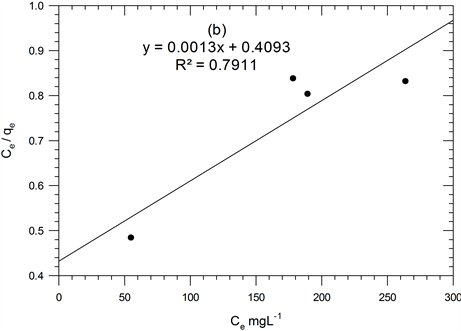
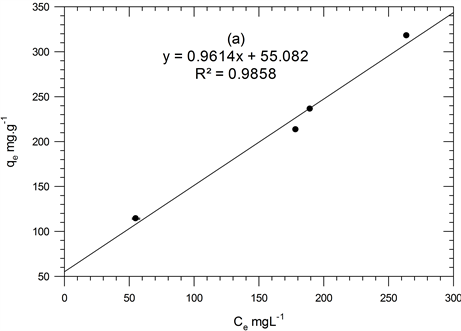
<?xml version="1.0" encoding="UTF-8"?><!DOCTYPE article  PUBLIC "-//NLM//DTD Journal Publishing DTD v3.0 20080202//EN" "http://dtd.nlm.nih.gov/publishing/3.0/journalpublishing3.dtd"><article xmlns:mml="http://www.w3.org/1998/Math/MathML" xmlns:xlink="http://www.w3.org/1999/xlink" dtd-version="3.0" xml:lang="en" article-type="research article"><front><journal-meta><journal-id journal-id-type="publisher-id">AJAC</journal-id><journal-title-group><journal-title>American Journal of Analytical Chemistry</journal-title></journal-title-group><issn pub-type="epub">2156-8251</issn><publisher><publisher-name>Scientific Research Publishing</publisher-name></publisher></journal-meta><article-meta><article-id pub-id-type="doi">10.4236/ajac.2015.61001</article-id><article-id pub-id-type="publisher-id">AJAC-53019</article-id><article-categories><subj-group subj-group-type="heading"><subject>Articles</subject></subj-group><subj-group subj-group-type="Discipline-v2"><subject>Chemistry&amp;Materials Science</subject></subj-group></article-categories><title-group><article-title>
 
 
  Isotherm, Kinetic and Thermodynamic Studies for the Sorption of Mercury (II) onto Activated Carbon from &lt;i&gt;Rosmarinus officinalis&lt;/i&gt; Leaves
 
</article-title></title-group><contrib-group><contrib contrib-type="author" xlink:type="simple"><name name-style="western"><surname>ohamed</surname><given-names>Erhayem</given-names></name><xref ref-type="aff" rid="aff1"><sup>1</sup></xref></contrib><contrib contrib-type="author" xlink:type="simple"><name name-style="western"><surname>Fatima</surname><given-names>Al-Tohami</given-names></name><xref ref-type="aff" rid="aff1"><sup>1</sup></xref></contrib><contrib contrib-type="author" xlink:type="simple"><name name-style="western"><surname>Ragwan</surname><given-names>Mohamed</given-names></name><xref ref-type="aff" rid="aff2"><sup>2</sup></xref></contrib><contrib contrib-type="author" xlink:type="simple"><name name-style="western"><surname>Khadija</surname><given-names>Ahmida</given-names></name><xref ref-type="aff" rid="aff1"><sup>1</sup></xref></contrib></contrib-group><aff id="aff1"><addr-line>Department of Chemistry, Faculty of Science, Sebha University, Sebha, Libya</addr-line></aff><aff id="aff2"><addr-line>Department of Chemistry, Faculty of Science, Sirte University, Sirte, Libya</addr-line></aff><pub-date pub-type="epub"><day>09</day><month>01</month><year>2015</year></pub-date><volume>06</volume><issue>01</issue><fpage>1</fpage><lpage>10</lpage><history><date date-type="received"><day>2</day>	<month>October</month>	<year>2014</year></date><date date-type="rev-recd"><day>16</day>	<month>November</month>	<year>2014</year>	</date><date date-type="accepted"><day>3</day>	<month>December</month>	<year>2014</year></date></history><permissions><copyright-statement>&#169; Copyright  2014 by authors and Scientific Research Publishing Inc. </copyright-statement><copyright-year>2014</copyright-year><license><license-p>This work is licensed under the Creative Commons Attribution International License (CC BY). http://creativecommons.org/licenses/by/4.0/</license-p></license></permissions><abstract><p>
 
 
  The present work deals with the equilibrium adsorption of Hg(II) onto carbonized 
  Rosmarinus officinalis leaves (ACROL) as a new adsorbent from aqueous solution and it has been investigated. ACROL samples were prepared by physical carbonization at 773 K for 1 h. Titration method was used to determine the concentration of Hg(II) before and after adsorption onto ACROL by ethylenediaminetetraacetic acid, EDTA, as chelating agent. Batch equilibrium studies were carried out under different experimental conditions such as Hg(II) concentration and temperature. The relationship between the amount of Hg(II) onto ACROL can be described using four tow-parameter isotherm models. The equilibrium sorption data were analyzed using Freundlich, Langmuir, Dubinin-Radushkevich (DRK) and Temkin isotherms. The experimental results were found to fit the Langmuir isotherm model with a monolayer adsorption capacity of 588.2 mg/g at 318 K, while they were found to fit the Freundlich isotherm model at 298 K. The 
  K<sub>L</sub> was decreased with increasing temperature, indicating a bond strength between Hg(II) and ACROL decreased with increasing temperature and sorption is exothermic. From DRK isotherm, free energy, 
  E
  , was higher than 31 kJ/mol suggesting the Hg(II) adsorption onto ACROL chemical sorption. The thermodynamic studies revealed that the process is spontaneous nature of Hg(II) adsorption by ACROL and exothermic. The findings from this research show that ACROL has capability to remove Hg(II) from aqueous solutions.
 
</p></abstract><kwd-group><kwd>Adsorption</kwd><kwd> Hg(II)</kwd><kwd> Isotherm</kwd><kwd> Kinetic</kwd><kwd> Thermodynamic</kwd><kwd> &lt;i&gt;Rosmarinus officinalis&lt;/i&gt; Leaves</kwd></kwd-group></article-meta></front><body><sec id="s1"><title>1. Introduction</title><p>The removal of heavy metals released from industrial water into environments is a matter of great interest due to their toxicity and industrial activities in large amount of non-degradable heavy metals [<xref ref-type="bibr" rid="scirp.53019-ref1">1</xref>] . In 1999, 48 tons of mercury was emitted globally into atmosphere from coal-fire power plants in US [<xref ref-type="bibr" rid="scirp.53019-ref2">2</xref>] [<xref ref-type="bibr" rid="scirp.53019-ref3">3</xref>] . Hg(II) is water-soluble in water and can be converted to methylmercury in the presence of micro-organisms, which is a highly toxic form [<xref ref-type="bibr" rid="scirp.53019-ref4">4</xref>] . Mercury metal can be transported over long distance and may be bio-accumulated in the food chain like fish and interfere with ozone depletion in the arctic [<xref ref-type="bibr" rid="scirp.53019-ref3">3</xref>] . Increased applications of Hg(II) have led to increase in possible risks to the environment, so the removal of Hg(II) becomes crucial.</p><p>The treatment of waste waters from Hg(II) is one of the growing needs in environmental applications. However, several processes are useful to remove these heavy metals from water and wastewater including chemical precipitations, ion exchange, membrane filtration, adsorption flotation, and coagulation flocculation [<xref ref-type="bibr" rid="scirp.53019-ref5">5</xref>] [<xref ref-type="bibr" rid="scirp.53019-ref6">6</xref>] . Adsorption is one of the most widely used methods for removal of heavy metals from waste waters due to low-cost sorbent and eco-environmental materials [<xref ref-type="bibr" rid="scirp.53019-ref7">7</xref>] . Several adsorbents have been used to remove the heavy metals from waste waters such as olive stones, palm kernel oil, pumpkin seeds, melon seeds etc. [<xref ref-type="bibr" rid="scirp.53019-ref8">8</xref>] -[<xref ref-type="bibr" rid="scirp.53019-ref10">10</xref>] . Rosmarinus officinalis Leaves (ACROL) is used as a decorative plant in gardens and many medical uses [<xref ref-type="bibr" rid="scirp.53019-ref11">11</xref>] . Also, ACROL are used to flavor foods such as roast meats [<xref ref-type="bibr" rid="scirp.53019-ref11">11</xref>] . Due to the natural abundance in the environment and cheap especially in Libya, ACROL can be applied for heavy metal removal from aqueous solution. Also, in our previous work, we reported that the ACROL could remove Hg(II) from aqueous solution; in which the adsorption capacity depended on agitation time (75 min), pH of 2.4 and dosage of ACROL [<xref ref-type="bibr" rid="scirp.53019-ref12">12</xref>] . The aims of this research are to investigate the possibility of using ACROL as efficient alternative adsorbent materials to remove Hg(II) from aqueous solution using different isotherm models and to evaluate thermodynamic and kinetic of Hg(II) adsorption onto ACROL.</p></sec><sec id="s2"><title>2. Materials and Methods</title><sec id="s2_1"><title>2.1. Chemicals and Instruments</title><p>All the chemicals used in this work were purchased from Merck, Germany and BDH, England and used without further purifications. The stock solution of Hg(II) was prepared by dissolving mercury acetate in distilled water and the desirable concentrations of Hg(II) were obtained by diluting the stock solution, in 100 - 400 mg/L range. The solution pH was measured by pH Jenway 3505 Model and adjusted using HCl and NaOH. Ethylenediaminetetraacetic acid (EDTA) was used for EDTA titration method. Xylenol orange was used as indicator. Conductivity meter (Philips, PW-9527); FT-IR (IR200) were used.</p></sec><sec id="s2_2"><title>2.2. Sample Collection, Preparation and Carbonization</title><p>ACROL was collected from Sabha City, Libya (<xref ref-type="fig" rid="fig1">Figure 1</xref>) and washed with distilled water to remove fines and dirt. The raw sample was dried at 40˚C for 3 h, crushed and sieved to a particle size with 90 &#181;m mesh and then was later immersed in diethyl ether for overnight until the solvents evaporated in order to remove the volatile oils. Then, it was placed in crucible and carbonized at 773 K for 1 h. The carbon produced was allowed to cool to room temperature for overnight, sieved again with 90 &#181;m, put in an air tight bottle and stored in desiccators [<xref ref-type="bibr" rid="scirp.53019-ref12">12</xref>] .</p></sec><sec id="s2_3"><title>2.3. Characteristics of ACROAL</title><p>The proximate composition of was determined according to Ofomaja et al., 2010 with slightly modifications [<xref ref-type="bibr" rid="scirp.53019-ref13">13</xref>] . The ACROL solution pH, conductivity, salinity, solubility and hydroscopic moisture content were determined using different method using American Society for Testing and Materials (ASTM) such as D3838-80, D4607-94, D2866-94 and D 2867-99.</p></sec><sec id="s2_4"><title>2.4. Batch Adsorption Studies</title><p>The Optimization parameters for Adsorption of Hg(II) ions onto ACROL from Aqueous Solutions were reported previously by our group [<xref ref-type="bibr" rid="scirp.53019-ref12">12</xref>] . In order to determine the ACROL-Hg(II) adsorption isotherms, 40 mg of ACROL was added to varied Hg(II) concentrations from 100 to 400 mg/L Hg(II) at constant pH 2.4, 300 rpm and T =</p><fig id="fig1"  position="float"><label><xref ref-type="fig" rid="fig1">Figure 1</xref></label><caption><title> Rosmarinus officinalis leaves (ACROL samples site. *Sample site</title></caption><graphic mimetype="image"   position="float"  xlink:type="simple"  xlink:href="http://html.scirp.org/file/1-2201044x5.png"/></fig><p>298, 308 and 318 K. The ACROL-Hg(II) suspensions were placed on a stirring plate for 75 min to establish the equilibrium condition. Then, 10 ml aliquots of the ACROL-Hg(II) suspensions were filtered using filter paper (Whatman No. P4). The residual Hg(II) concentration was determined by EDTA titration method using xylenol orange as indicator.</p></sec><sec id="s2_5"><title>2.5. Data Analysis</title><p>Equation (1) is the percent of Hg(II) removal by ACROL and Equation (2) is amount of adsorption at equilibrium (q<sub>e</sub>, mg/g):</p><disp-formula id="scirp.53019-formula48"><label>(1)</label><graphic position="anchor" xlink:href="http://html.scirp.org/file/1-2201044x6.png"  xlink:type="simple"/></disp-formula><disp-formula id="scirp.53019-formula49"><label>(2)</label><graphic position="anchor" xlink:href="http://html.scirp.org/file/1-2201044x7.png"  xlink:type="simple"/></disp-formula><p>where: C<sub>o</sub> and C<sub>e</sub> = initial and equilibrium concentrations of Hg(II); v = total volume; w = weight of adsorbent. All the experiments were repeated for triplicate values.</p></sec></sec><sec id="s3"><title>3. Results and Discussion</title><sec id="s3_1"><title>3.1. Characterization of Biosorbent</title><p>Fourier transform infrared (FT-IR) spectroscopy was used to evaluate the functional groups on the surface of ACROL within the range of 600 - 4000 cm<sup>−</sup><sup>1</sup>, as shown in <xref ref-type="fig" rid="fig2">Figure 2</xref>. FT-IR measurement for ACROL showed the presence of the following groups: O-H stretching (a broad peak at 3756.34 cm<sup>−</sup><sup>1</sup>), C-H stretching (a weak peak at 2925.87 cm<sup>−</sup><sup>1</sup>), C=O (1690.03 cm<sup>−</sup><sup>1</sup>), N-H (1416.90 cm<sup>−</sup><sup>1</sup>) and C-N (1027.47 cm<sup>−</sup><sup>1</sup>) [<xref ref-type="bibr" rid="scirp.53019-ref13">13</xref>] .</p><p>Physico-chemical characteristics of ACROL are shown in <xref ref-type="table" rid="table1">Table 1</xref>. The characterization of ACROL as adsorbent is an important analysis to understand the behavior or mechanism of Hg(II) removal onto ACROL surface. Also, the extent of heavy metal adsorption onto biomass is influenced by the physico-chemical properties</p><fig id="fig2"  position="float"><label><xref ref-type="fig" rid="fig2">Figure 2</xref></label><caption><title> FTIR spectrum of ACROL</title></caption><graphic mimetype="image"   position="float"  xlink:type="simple"  xlink:href="http://html.scirp.org/file/1-2201044x8.png"/></fig><table-wrap id="table1" ><label><xref ref-type="table" rid="table1">Table 1</xref></label><caption><title> Physico-chemical characteristics of ACROL</title></caption><table><tbody><thead><tr><th align="center" valign="middle" >Physico-chemical properties</th><th align="center" valign="middle" >Results</th></tr></thead><tr><td align="center" valign="middle" >pH</td><td align="center" valign="middle" >7.58</td></tr><tr><td align="center" valign="middle" >Bulk density (g/cm<sup>3</sup>)</td><td align="center" valign="middle" >0.40</td></tr><tr><td align="center" valign="middle" >Moisture content (%)</td><td align="center" valign="middle" >1.33</td></tr><tr><td align="center" valign="middle" >Solubility (%)</td><td align="center" valign="middle" >0.202</td></tr><tr><td align="center" valign="middle" >Cellulose content (%)</td><td align="center" valign="middle" >65.0</td></tr><tr><td align="center" valign="middle" >Conductivity (&#181;s/cm)</td><td align="center" valign="middle" >489</td></tr><tr><td align="center" valign="middle" >Salinity (ppm)</td><td align="center" valign="middle" >266</td></tr></tbody></table></table-wrap><p>of biomass [<xref ref-type="bibr" rid="scirp.53019-ref14">14</xref>] . The value of pH 7.58 obtained in this research is useful for most applications. The moisture content tended to be was low of ACROL indicating that activated carbon of ACROL was properly prepared and handled. Bulk density of ACROL was relatively high comparing to other activated carbon. The higher bulk density is the better filterability of activated carbons and the lower limit of bulk density for activated carbon application is 0.25 g/cm<sup>3</sup>. The conductivity and salinity values were noted to be higher than good conductivity for adsorption process ranged from 52 to 70 &#181;s/cm [<xref ref-type="bibr" rid="scirp.53019-ref10">10</xref>] . This may be due to the presence of leachable ash as undesirable impurities and acid-water wash may not be able to reduced leachable ash.</p></sec><sec id="s3_2"><title>3.2. Adsorption Isotherm</title><sec id="s3_2_1"><title>3.2.1. Freundlich Isotherm</title><p>The Freundlich isotherm is usually used for heterogeneous surface energy systems (non-uniform distribution of sorption heat) [<xref ref-type="bibr" rid="scirp.53019-ref15">15</xref>] [<xref ref-type="bibr" rid="scirp.53019-ref16">16</xref>] . Equation (3) is the Freundlich expression:</p><disp-formula id="scirp.53019-formula50"><label>(3)</label><graphic position="anchor" xlink:href="http://html.scirp.org/file/1-2201044x9.png"  xlink:type="simple"/></disp-formula><p>where: K<sub>f</sub> and n are Freundlich constants, the K<sub>f</sub> is adsorption capacity while n is biosorption intensity; q<sub>e</sub> = amount of Hg(II) per unit mass of adsorbate (mg/g); C<sub>e</sub> = equilibrium concentration (mg/L). The q<sub>e</sub> versus C<sub>e</sub> plot allows determining the Freundlich constants. The results of adsorption isotherm models are shown in <xref ref-type="fig" rid="fig3">Figure 3</xref>(a). The adsorption constants and the correlation coefficients are also listed in <xref ref-type="table" rid="table2">Table 2</xref>. According to Freundlich isotherm, the 1/n values lie between 0 and 1, this indicates favorable Hg(II) adsorption onto ACROL at low concentration and strong bond between Hg(II) and ACROL surface [<xref ref-type="bibr" rid="scirp.53019-ref17">17</xref>] [<xref ref-type="bibr" rid="scirp.53019-ref18">18</xref>] . Also, n values have the same magnitude suggesting that the retention of Hg(II) ions from solution take place by ionic interactions in the first moment [<xref ref-type="bibr" rid="scirp.53019-ref19">19</xref>] . The Freundlich equation represents the best fit experimental data with R<sup>2</sup> = 0.9818 than other isotherm equations at low temperature.</p></sec><sec id="s3_2_2"><title>3.2.2. Langmuir Isotherm</title><p>The Langmuir isotherm is usually used for a monolayer adsorption at specific homogenous sites on ACROL surface [<xref ref-type="bibr" rid="scirp.53019-ref16">16</xref>] [<xref ref-type="bibr" rid="scirp.53019-ref20">20</xref>] . Equation (4) is the Langmuir expression:</p><disp-formula id="scirp.53019-formula51"><label>(4)</label><graphic position="anchor" xlink:href="http://html.scirp.org/file/1-2201044x10.png"  xlink:type="simple"/></disp-formula><p>where: q<sub>m</sub> = monolayer sorption capacity (mg/g) and K<sub>L</sub> = Langmuir equilibrium constant (L/g) [<xref ref-type="bibr" rid="scirp.53019-ref15">15</xref>] . A plot of C<sub>e</sub>/q<sub>e</sub> versus C<sub>e</sub> yields a straight line, shown in <xref ref-type="fig" rid="fig3">Figure 3</xref>(b) and values are listed in <xref ref-type="table" rid="table2">Table 2</xref>. According to Langmuir model, q<sub>m</sub> values are increased with increasing temperature solution indicating that the Hg(II) ions is favorable adsorbed by ACROL at low temperature. However, K<sub>L</sub> values are decreased with increasing temperature of solution from 298 to 318 K, therefore, less adsorption of Hg(II) onto the surface of ACROL would be</p><p><img src="http://html.scirp.org/file/1-2201044x12.png" /><img src="http://html.scirp.org/file/1-2201044x11.png" /></p><fig-group id="fig3"><label><xref ref-type="fig" rid="fig3">Figure 3</xref></label><caption><title> Plots for Freundlich (a), Langmiur (b), Temkin (c) and DRK (d) isotherms for Hg(II)-ACROL.</title></caption><fig id ="fig3_1"><label></label><graphic mimetype="image"   position="float"  xlink:type="simple"  xlink:href="http://html.scirp.org/file/1-2201044x14.png"/></fig></fig-group><table-wrap id="table2" ><label><xref ref-type="table" rid="table2">Table 2</xref></label><caption><title> Adsorption isotherm constants of Hg(II) ions on ACROL</title></caption><table><tbody><thead><tr><th align="center" valign="middle"  colspan="2"   rowspan="2"  >T</th><th align="center" valign="middle"  colspan="3"  >Freundlich constants</th><th align="center" valign="middle"  colspan="4"  >Langmuir constants</th></tr></thead><tr><td align="center" valign="middle" >K<sub>f</sub></td><td align="center" valign="middle" >1/n</td><td align="center" valign="middle" >R<sup>2</sup></td><td align="center" valign="middle" >K<sub>L</sub></td><td align="center" valign="middle" >q<sub>m</sub></td><td align="center" valign="middle" >R<sub>L</sub></td><td align="center" valign="middle" >R<sup>2</sup></td></tr><tr><td align="center" valign="middle"  colspan="2"  >K</td><td align="center" valign="middle" >L/g</td><td align="center" valign="middle" ></td><td align="center" valign="middle" ></td><td align="center" valign="middle" >L/g</td><td align="center" valign="middle" >L/mg</td><td align="center" valign="middle" >Range</td><td align="center" valign="middle" ></td></tr><tr><td align="center" valign="middle"  colspan="2"  >298</td><td align="center" valign="middle" >0.5761</td><td align="center" valign="middle" >0.4518</td><td align="center" valign="middle" >0.9818</td><td align="center" valign="middle" >0.011</td><td align="center" valign="middle" >294.1</td><td align="center" valign="middle" >2.150 - 5.462</td><td align="center" valign="middle" >0.9709</td></tr><tr><td align="center" valign="middle"  colspan="2"  >308</td><td align="center" valign="middle" >0.9116</td><td align="center" valign="middle" >0.651</td><td align="center" valign="middle" >0.9723</td><td align="center" valign="middle" >0.005</td><td align="center" valign="middle" >454.6</td><td align="center" valign="middle" >1.516 - 3.004</td><td align="center" valign="middle" >0.9767</td></tr><tr><td align="center" valign="middle"  colspan="2"  >318</td><td align="center" valign="middle" >1.2555</td><td align="center" valign="middle" >0.7282</td><td align="center" valign="middle" >0.9286</td><td align="center" valign="middle" >0.004</td><td align="center" valign="middle" >588.2</td><td align="center" valign="middle" >1.418 - 2.619</td><td align="center" valign="middle" >0.956</td></tr><tr><td align="center" valign="middle"  rowspan="2"  >T</td><td align="center" valign="middle"  colspan="4"  >Temkin constants</td><td align="center" valign="middle"  colspan="4"  >DRK constants</td></tr><tr><td align="center" valign="middle" >K<sub>T</sub></td><td align="center" valign="middle" >q<sub>m</sub></td><td align="center" valign="middle" >B</td><td align="center" valign="middle" >R<sup>2</sup></td><td align="center" valign="middle" >Β</td><td align="center" valign="middle" >q<sub>m</sub></td><td align="center" valign="middle" >E</td><td align="center" valign="middle" >R<sup>2</sup></td></tr><tr><td align="center" valign="middle" >K</td><td align="center" valign="middle" >J/mol</td><td align="center" valign="middle" >L/g</td><td align="center" valign="middle" ></td><td align="center" valign="middle" ></td><td align="center" valign="middle" >J/mol</td><td align="center" valign="middle" >L/g</td><td align="center" valign="middle" >J/mol</td><td align="center" valign="middle" ></td></tr><tr><td align="center" valign="middle" >298</td><td align="center" valign="middle" >0.0772</td><td align="center" valign="middle" >74.98</td><td align="center" valign="middle" >35.26</td><td align="center" valign="middle" >0.9364</td><td align="center" valign="middle" >0.0003</td><td align="center" valign="middle" >220.1</td><td align="center" valign="middle" >40.83</td><td align="center" valign="middle" >0.8832</td></tr><tr><td align="center" valign="middle" >308</td><td align="center" valign="middle" >0.0393</td><td align="center" valign="middle" >114.2</td><td align="center" valign="middle" >23.15</td><td align="center" valign="middle" >0.8904</td><td align="center" valign="middle" >0.0005</td><td align="center" valign="middle" >254.3</td><td align="center" valign="middle" >31.62</td><td align="center" valign="middle" >0.8701</td></tr><tr><td align="center" valign="middle" >318</td><td align="center" valign="middle" >0.0351</td><td align="center" valign="middle" >143.4</td><td align="center" valign="middle" >18.44</td><td align="center" valign="middle" >0.8078</td><td align="center" valign="middle" >0.0005</td><td align="center" valign="middle" >291.6</td><td align="center" valign="middle" >31.62</td><td align="center" valign="middle" >0.8227</td></tr></tbody></table></table-wrap><p>40 mg of ACROL was added to 100 ml of 100.8, 263.8, 284.0 and 361.1 mg/L of Hg(II) at constant pH 2.4, and 300 rpm. The suspensions were stirred for 75 min.</p><p>expected at higher temperature. This indicates that the adsorption process is exothermic. On the other hand, the K<sub>L</sub> values were very slightly decreased with increasing temperature indicating that the adsorption of Hg(II) onto ACROL using Langmuir model cannot be evaluated using K<sub>L</sub>. From R<sup>2</sup> of Freundlich and Langmuir models, the Hg(II) adsorption process onto ACROL was followed Freundlich at low temperature, while it was followed Langmuir models with increasing temperature indicating the desorption of Hg(II) multilayer onto ACROL was taken place with increasing temperature of solution. The K<sub>L</sub> was decreased with increasing temperature, indicating a bond strength between Hg(II) and ACROL decreased with increasing temperature and sorption is exothermic. Equation (5) is used to determine the constant separation factor, R<sub>L</sub>:</p><disp-formula id="scirp.53019-formula52"><label>(5)</label><graphic position="anchor" xlink:href="http://html.scirp.org/file/1-2201044x15.png"  xlink:type="simple"/></disp-formula><p>The value of R<sub>L</sub> indicates the isotherm shape to be unfavorable (R<sub>L</sub> &gt; 1), favorable (0 &lt; R<sub>L</sub> &lt; 1) and irreversible (R<sub>L</sub> = 1). The R<sub>L</sub> values were &gt;1, which confirmed that the Hg(II) adsorption onto ACROL is unfavorable under these conditions using Langmuir isotherm for each temperature studied.</p></sec><sec id="s3_2_3"><title>3.2.3. Temkin Isotherm</title><p>The Temkin isotherm is usually used for heterogeneous surface energy systems (non-uniform distribution of sorption heat) [<xref ref-type="bibr" rid="scirp.53019-ref15">15</xref>] [<xref ref-type="bibr" rid="scirp.53019-ref16">16</xref>] .</p><disp-formula id="scirp.53019-formula53"><label>(6)</label><graphic position="anchor" xlink:href="http://html.scirp.org/file/1-2201044x16.png"  xlink:type="simple"/></disp-formula><p>where: <inline-formula><inline-graphic xlink:href="http://html.scirp.org/file/1-2201044x17.png" xlink:type="simple"/></inline-formula>constant related to heat of sorption (J/mol) obtained From the Temkin plot (q<sub>e</sub> versus lnC<sub>e</sub>); A</p><p>(slope) = Temkin isotherm equilibrium binding constant (L/g); b (intercept) = Temkin isotherm constant; R = universal gas constant (8.314 J∙mol<sup>−</sup><sup>1</sup>∙K<sup>−</sup><sup>1</sup>) T = Temperature at 298, 308 and 318 K, shown in <xref ref-type="fig" rid="fig3">Figure 3</xref>(c) and listed in <xref ref-type="table" rid="table2">Table 2</xref>. The heat of Hg(II) adsorption (b) is directly related to coverage of Hg(II) onto ACROL due to adsorbent-adsorbate interaction. It was decreased with increasing temperature from 35.26 to 18.44 J/mol, as listed in <xref ref-type="table" rid="table2">Table 2</xref>. This indicates that the heat of adsorption of Hg(II) onto the surface of ACROL decreases with increasing temperature from 298 to 318 K and the sorption is exothermic. Also, the b values is higher than 80 KJ/mol which indicating a chemical adsorption process and is a quite higher that reveals the strong ionic interaction between Hg(II) and ACROL [<xref ref-type="bibr" rid="scirp.53019-ref21">21</xref>] . R<sup>2</sup> is found to be the poorest fit of all experimental data.</p></sec><sec id="s3_2_4"><title>3.2.4. Dubinin-Radushkevich (DRK) Isotherm</title><p>DKR isotherm is used to determine the apparent energy of Hg(II) adsorption onto ACROL and has the linear form as following equation:</p><disp-formula id="scirp.53019-formula54"><label>(7)</label><graphic position="anchor" xlink:href="http://html.scirp.org/file/1-2201044x18.png"  xlink:type="simple"/></disp-formula><disp-formula id="scirp.53019-formula55"><label>(8)</label><graphic position="anchor" xlink:href="http://html.scirp.org/file/1-2201044x19.png"  xlink:type="simple"/></disp-formula><p>where: q<sub>m</sub> is maximum sorption capacity (mg/g); β is a activity coefficient constant related to sorption energy; ɛ is Polanyi potential. The DKR parameters are calculated from the slop of the plot of lnq<sub>e</sub> versus ε<sup>2</sup> gives β (mol<sup>2</sup>/J<sup>2</sup>) and exp (intercept) gives q<sub>m</sub> (mg/g) in <xref ref-type="fig" rid="fig3">Figure 3</xref>(d) and listed in <xref ref-type="table" rid="table2">Table 2</xref>. The β gives the mean free energy (E) of sorption per molecule of the sorbate when it is transferred to the surface of the solid from infinity in the solution:</p><disp-formula id="scirp.53019-formula56"><label>(8)</label><graphic position="anchor" xlink:href="http://html.scirp.org/file/1-2201044x20.png"  xlink:type="simple"/></disp-formula><p>The value of E is &gt;8 that reveals the sorption process follows chemical sorption, as listed in <xref ref-type="table" rid="table2">Table 2</xref>.</p></sec></sec><sec id="s3_3"><title>3.3. Adsorption Kinetics</title><p>Two kinetic models were used to fit experimental data, Lagergren pseudo-first order Equation (9) and pseudo- second-order Equation (10):</p><disp-formula id="scirp.53019-formula57"><label>(9)</label><graphic position="anchor" xlink:href="http://html.scirp.org/file/1-2201044x21.png"  xlink:type="simple"/></disp-formula><disp-formula id="scirp.53019-formula58"><label>(10)</label><graphic position="anchor" xlink:href="http://html.scirp.org/file/1-2201044x22.png"  xlink:type="simple"/></disp-formula><p>where: q<sub>e</sub> is the adsorption equilibrium capacity (mg/g), q<sub>t</sub> is the amount of Hg(II) adsorbed (mg/g) at time t, k<sub>1</sub> is the rate constant of pseudo-first-order (min<sup>−</sup><sup>1</sup>), q<sub>2</sub> is the maximum adsorption capacity (mg/g) and k<sub>2</sub> is the rate constant of pseudo-second-order (g/mg min) [<xref ref-type="bibr" rid="scirp.53019-ref16">16</xref>] . These parameters were obtained from slope and intercept of pseudo-first-order and pseudo-second-order plots between <inline-formula><inline-graphic xlink:href="http://html.scirp.org/file/1-2201044x23.png" xlink:type="simple"/></inline-formula> versus t and (t/q<sub>t</sub>) versus t [<xref ref-type="bibr" rid="scirp.53019-ref20">20</xref>] . <xref ref-type="fig" rid="fig4">Figure 4</xref> shows pseudo-second-order plots for the Hg(II) adsorption onto ACROL surface and the kinetic parameters</p><fig id="fig4"  position="float"><label><xref ref-type="fig" rid="fig4">Figure 4</xref></label><caption><title> Pseudo-second order kinetic plots for the adsorption of Hg(II) onto ACROL at various temperatures. ACROL (40 mg) was added to 100 ml of 300 mg/L Hg(II), pH2. 4 and at 298, 308 and 318 K</title></caption><graphic mimetype="image"   position="float"  xlink:type="simple"  xlink:href="http://html.scirp.org/file/1-2201044x24.png"/></fig><p>for tow models are presented in <xref ref-type="table" rid="table3">Table 3</xref>. From the values of R<sup>2</sup>, the experimental data follow pseudo-second- order kinetics comparatively better than pseudo-first-order. Also, Equation (10) is used to determine the best-fit for kinetic models by the square sum of errors (SSE) values:</p><disp-formula id="scirp.53019-formula59"><label>(11)</label><graphic position="anchor" xlink:href="http://html.scirp.org/file/1-2201044x25.png"  xlink:type="simple"/></disp-formula><p>The lowest value of SSE is the best model for the particular system. It is clear from SSE that pseudo-second- order kinetic has lower SSE value than pseudo-first-order kinetic.</p></sec><sec id="s3_4"><title>3.4. Adsorption Thermodynamics</title><p>Equation (11) is used to calculate the thermodynamic equilibrium constant (K<sub>c</sub>) for Hg(II)-ACROL adsorption:</p><disp-formula id="scirp.53019-formula60"><label>(11)</label><graphic position="anchor" xlink:href="http://html.scirp.org/file/1-2201044x26.png"  xlink:type="simple"/></disp-formula><p>where: C<sub>Ae</sub>: the equilibrium Hg(II) concentration adsorbed on ACROL at (mg/L) and C<sub>Se</sub>: the equilibrium Hg(II) concentration in solution (mg/L). The change in standard free energy (∆G<sup>o</sup>), enthalpy (∆H<sup>o</sup>) and entropy (∆S<sup>o</sup>) of adsorption were calculated from the following equation:</p><disp-formula id="scirp.53019-formula61"><label>(12)</label><graphic position="anchor" xlink:href="http://html.scirp.org/file/1-2201044x27.png"  xlink:type="simple"/></disp-formula><p>Thermodynamic parameters were estimated from van’t Hoff. A plot of lnK<sub>c</sub> versus 1/T (see <xref ref-type="fig" rid="fig5">Figure 5</xref>) was used to determine ∆H<sup>o</sup> (= −slope. R) and ∆S<sup>o</sup> (= intercept. R) from slope and intercept by following equation:</p><disp-formula id="scirp.53019-formula62"><label>(13)</label><graphic position="anchor" xlink:href="http://html.scirp.org/file/1-2201044x28.png"  xlink:type="simple"/></disp-formula><p>The calculated thermodynamic parameters are listed in <xref ref-type="table" rid="table4">Table 4</xref>. The negative values of ∆G<sup>o</sup> at all temperature studied indicate the spontaneous nature of Hg(II) adsorption by ACROL. Also, the negative of ∆G<sup>o</sup> values, less than −15 kJ/mol, are connected with physical interactions between ACROL sites and Hg(II) ions. The experimental data show the adsorption capacities at equilibrium were decreased with an increase in temperature indicating that the adsorption process of Hg(II) onto ACROL follows exothermic path and the negative value of ∆H<sup>o</sup> confirms the exothermic nature of Hg(II)-ACROL adsorption process. These results confirm the previous findings which obtained in the adsorption isotherm study. Also, the negative values for both ∆H<sup>o</sup> and ∆S<sup>o</sup> suggest</p><fig id="fig5"  position="float"><label><xref ref-type="fig" rid="fig5">Figure 5</xref></label><caption><title> Relationship between Gibbs free energy calculated from different isotherm models and adsorption process temperature (K). 40 mg of ACROL was added to varied Hg(II) concentrations from 100 to 400 mg/L Hg(II) at constant pH 2.4, 200 rpm and T = 298, 308 and 318 K</title></caption><graphic mimetype="image"   position="float"  xlink:type="simple"  xlink:href="http://html.scirp.org/file/1-2201044x29.png"/></fig><table-wrap id="table3" ><label><xref ref-type="table" rid="table3">Table 3</xref></label><caption><title> Kinetic parameters for Hg(II) adsorption by ACROL at various temperatures</title></caption><table><tbody><thead><tr><th align="center" valign="middle"  rowspan="2"  >T (K)</th><th align="center" valign="middle"  colspan="5"  >Pseudo-First order</th><th align="center" valign="middle"  colspan="4"  >Pseudo-Second order kinetic</th></tr></thead><tr><td align="center" valign="middle" >q<sub>eexp</sub> (mg/g)</td><td align="center" valign="middle" >q<sub>e</sub><sub>1cal</sub> (mg/g)</td><td align="center" valign="middle" >k<sub>1</sub> &#180; 10<sup>−</sup><sup>2 </sup> (min<sup>−</sup><sup>1</sup>)<sup> </sup></td><td align="center" valign="middle" >R<sup>2</sup></td><td align="center" valign="middle" >SSE</td><td align="center" valign="middle" >q<sub>e</sub><sub>2cal</sub> (mg/g)</td><td align="center" valign="middle" >k<sub>2</sub> &#180; 10<sup>−</sup><sup>4 </sup> (g/mg∙min)<sup> </sup></td><td align="center" valign="middle" >R<sup>2</sup></td><td align="center" valign="middle" >SSE</td></tr><tr><td align="center" valign="middle" >298</td><td align="center" valign="middle" >294.1</td><td align="center" valign="middle" >5.554</td><td align="center" valign="middle" >3.777</td><td align="center" valign="middle" >0.7502</td><td align="center" valign="middle" >283.1</td><td align="center" valign="middle" >100.0</td><td align="center" valign="middle" >200.0</td><td align="center" valign="middle" >1.000</td><td align="center" valign="middle" >128.1</td></tr><tr><td align="center" valign="middle" >308</td><td align="center" valign="middle" >454.6</td><td align="center" valign="middle" >177.9</td><td align="center" valign="middle" >6.080</td><td align="center" valign="middle" >0.8543</td><td align="center" valign="middle" ></td><td align="center" valign="middle" >125.0</td><td align="center" valign="middle" >3.710</td><td align="center" valign="middle" >0.9711</td><td align="center" valign="middle" ></td></tr><tr><td align="center" valign="middle" >318</td><td align="center" valign="middle" >588.2</td><td align="center" valign="middle" >13210</td><td align="center" valign="middle" >3.224</td><td align="center" valign="middle" >0.7536</td><td align="center" valign="middle" ></td><td align="center" valign="middle" >625.0</td><td align="center" valign="middle" >5.565</td><td align="center" valign="middle" >0.9992</td><td align="center" valign="middle" ></td></tr></tbody></table></table-wrap><p>ACROL (40 mg) was added to 100 ml of 300 mg/L of Hg(II), pH 2.4 and at 298, 308 and 318 K.</p><table-wrap id="table4" ><label><xref ref-type="table" rid="table4">Table 4</xref></label><caption><title> Thermodynamic parameters for sorption of Hg(II) on ACROL</title></caption><table><tbody><thead><tr><th align="center" valign="middle" >Initial ion (mg/L)</th><th align="center" valign="middle" >∆G<sup>o</sup> (KJ/mol) 298 K</th><th align="center" valign="middle" >∆G<sup>o</sup> (KJ/mol) 308 K</th><th align="center" valign="middle" >∆G<sup>o</sup> (KJ/mol) 318 K</th><th align="center" valign="middle" >∆H<sup>o</sup> (J/mol)</th><th align="center" valign="middle" >∆S<sup>o</sup> (J/mol)</th></tr></thead><tr><td align="center" valign="middle" >100.8</td><td align="center" valign="middle" >−0.4694</td><td align="center" valign="middle" >−0.8480</td><td align="center" valign="middle" >−0.6080</td><td align="center" valign="middle" >−308.8</td><td align="center" valign="middle" >−0.9072</td></tr><tr><td align="center" valign="middle" >263.8</td><td align="center" valign="middle" >−2.322</td><td align="center" valign="middle" >−2.142</td><td align="center" valign="middle" >−2.001</td><td align="center" valign="middle" ></td><td align="center" valign="middle" ></td></tr><tr><td align="center" valign="middle" >284.0</td><td align="center" valign="middle" >−2.319</td><td align="center" valign="middle" >−2.0967</td><td align="center" valign="middle" >−1.594</td><td align="center" valign="middle" ></td><td align="center" valign="middle" ></td></tr><tr><td align="center" valign="middle" >391.08</td><td align="center" valign="middle" >−2.645</td><td align="center" valign="middle" >−2.056</td><td align="center" valign="middle" >−1.389</td><td align="center" valign="middle" ></td><td align="center" valign="middle" ></td></tr></tbody></table></table-wrap><p>Optimum ACROL (40 mg) was added to 100 ml of varied Hg(II) concentrations from 400 mg/L Hg(II) at different temperature (298, 308 and 318 K) and at constant pH 2.4 and 200 rpm for 75 min.</p><p>that the adsorption is physical in nature with a weak forces of attraction and a decrease in randomness at ACROL/Hg(II) interface during the adsorption process [<xref ref-type="bibr" rid="scirp.53019-ref16">16</xref>] .</p></sec></sec><sec id="s4"><title>4. Conclusion</title><p>The findings in this research revealed that ACROL can be used as adsorbent for Hg(II) ions. The isotherm, kinetic and thermodynamic studies confirmed the experimental results. The equilibrium was the best described by Langmuir isotherm at high temperature, while the kinetic of the adsorption process was followed by pseudo- second-order model. The biosorption mechanism is chemisorption process. The negative values of ∆H<sup>o</sup> and ∆S<sup>o</sup> show that the Hg(II) adsorption process onto ACROL is exothermic in nature.</p></sec></body><back><ref-list><title>References</title><ref id="scirp.53019-ref1"><label>1</label><mixed-citation publication-type="other" xlink:type="simple">Lu, X.C., Jiang, J.C., Sun, K., Wang, J.B. and Zhang, Y.P. (2014) Influence of the Pore Structure and Surface Chemical Properties of Activated Carbon on the Adsorption of Mercury from Aqueous Solutions. Marine Pollution Bulletin, 78, 69-76. http://dx.doi.org/10.1016/j.marpolbul.2013.11.007</mixed-citation></ref><ref id="scirp.53019-ref2"><label>2</label><mixed-citation publication-type="other" xlink:type="simple">Luo, J.J., Hein, A.M. and Hwang, J.Y. (2004) Adsorption of Vapor Phase Mercury on Various Carbons. Journal of Minerals &amp; Materials Characterization &amp; Engineering, 3, 13-22.</mixed-citation></ref><ref id="scirp.53019-ref3"><label>3</label><mixed-citation publication-type="other" xlink:type="simple">Wilcox, J., Rupp, E., Ying, S.C., Lim, D.-H., Negreira, A.S., Kirchofer, A., Feng, F. and Lee, K. (2012) Mercury Adsorption and Oxidation in Coal Combustion and Gasification Processes. International Journal of Coal Geology, 90-91, 4-20.</mixed-citation></ref><ref id="scirp.53019-ref4"><label>4</label><mixed-citation publication-type="other" xlink:type="simple">Ariya, P.A., et al. (2004) The Arctic: A Sink for Mercury. Tellus B, 56, 397-403. http://dx.doi.org/10.1111/j.1600-0889.2004.00118.x</mixed-citation></ref><ref id="scirp.53019-ref5"><label>5</label><mixed-citation publication-type="other" xlink:type="simple">Malamisa, S. and Katsoua, E. (2013) A Review on Zinc and Nickel Adsorption on Natural and Modified Zeolite, Bentonite and Vermiculite: Examination of Process Parameters, Kinetics and Isotherms. Journal of Hazardous Materials, 252-253, 428-461.</mixed-citation></ref><ref id="scirp.53019-ref6"><label>6</label><mixed-citation publication-type="other" xlink:type="simple">Clercq, J.D. (2012) Removal of Mercury from Aqueous Solutions by Adsorption on a New Ultra Stable Mesoporous Adsorbent and on a Commercial Ion Exchange Resin. International Journal of Industrial Chemistry, 1, 3.</mixed-citation></ref><ref id="scirp.53019-ref7"><label>7</label><mixed-citation publication-type="other" xlink:type="simple">Erhayem, M. and Sohn, M. (2014) Stability Studies for Titanium Dioxide Nanoparticles upon Adsorption of Suwannee River Humic and Fulvic Acids and Natural Organic Matter. Science of the Total Environment, 468-469, 249-257. http://dx.doi.org/10.1016/j.scitotenv.2013.08.038</mixed-citation></ref><ref id="scirp.53019-ref8"><label>8</label><mixed-citation publication-type="other" xlink:type="simple">Evbuomwan, B.O., Agbede, A.M. and Atuka, M.M. (2013) A Comparative Study of the Physico-Chemical Properties of Activated Carbon from Oil Palm Waste (Kernel Shell and Fibre). International Journal of Science and Engineering Investigations, 2, 75-79.</mixed-citation></ref><ref id="scirp.53019-ref9"><label>9</label><mixed-citation publication-type="other" xlink:type="simple">Madu, P.C. and Lajide, L. (2013) Physicochemical Characteristics of Activated Charcoal Derived from Melon Seed Husk. Journal of Chemical and Pharmaceutical Research, 5, 94-98.</mixed-citation></ref><ref id="scirp.53019-ref10"><label>10</label><mixed-citation publication-type="other" xlink:type="simple">Verla, A.W., Horsfall Jr., M., Verla, E.N., Spiff, A.I. and Ekpete, O.A. (2012) Preparation and Characterization of Activated Carbon from Fluted Pumpkin (Telfairia Occidentalis Hook.F) Seed Shell. Asian Journal of Natural &amp; Applied Science, 1, 39-50.</mixed-citation></ref><ref id="scirp.53019-ref11"><label>11</label><mixed-citation publication-type="other" xlink:type="simple">Aziza, K.G., Haiko, H., Artur, S.J., Simone, M.S. (2008) Rosemary (Rosmarinus officinalis)—A Study of the Composition, Antioxidant and Antimicrobial Activities of Extracts Obtained with Supercritical Carbon Dioxide. Food Science and Technology (Campinas), 28, 463-469. http://dx.doi.org/10.1590/S0101-20612008000200030</mixed-citation></ref><ref id="scirp.53019-ref12"><label>12</label><mixed-citation publication-type="other" xlink:type="simple">Al-Tohami, F., Erhayem, M., Ali, R. and Ali, M. (2014) Optimization Parameters for Adsorption of Hg (II) Ions onto Carbonized Rosmarinus Officinalis Leaves (ACROL) from Aqueous Solutions. TCSSE International Conference of Science and Technology, Dubai, 26-27 August 2014. (As Poster)</mixed-citation></ref><ref id="scirp.53019-ref13"><label>13</label><mixed-citation publication-type="other" xlink:type="simple">Ofomaja, A.E. (2010) Equilibrium Studies of Copper Ion Adsorption onto Palm Kernel Fibre. Journal of Environmental Management, 91, 1491-1499. http://dx.doi.org/10.1016/j.jenvman.2010.02.029</mixed-citation></ref><ref id="scirp.53019-ref14"><label>14</label><mixed-citation publication-type="other" xlink:type="simple">Memon, G.Z., Bhanger, M.I. and Akhtar, M. (2007) The Removal Efficiency of Chestnut Shells for Selected Pesticides from Aqueous Solutions. Journal of Colloid and Interface Science, 315, 33-40. http://dx.doi.org/10.1016/j.jcis.2007.06.037</mixed-citation></ref><ref id="scirp.53019-ref15"><label>15</label><mixed-citation publication-type="other" xlink:type="simple">Mohamed, A., Hesham, G.I. and Mohamed, M.A. (2008) Equilibrium and Kinetics of Chromium Adsorption on Cement Kiln Dust. Proceedings of the World Congress on Engineering and Computer Science, San Francisco, 22-24 October 2008, 54-62.</mixed-citation></ref><ref id="scirp.53019-ref16"><label>16</label><mixed-citation publication-type="other" xlink:type="simple">Atar, N., Olgun, A. and Wangb, S. (2012) Adsorption of Cadmium (II) and Zinc (II) on Boron Enrichment Process Waste in Aqueous Solutions: Batch and Fixed-Bed System Studies. Chemical Engineering Journal, 192, 1-7. http://dx.doi.org/10.1016/j.cej.2012.03.067</mixed-citation></ref><ref id="scirp.53019-ref17"><label>17</label><mixed-citation publication-type="other" xlink:type="simple">Erhayem, M. and Sohn, M. (2014) Effect of Humic Acid Source on Humic Acid Adsorption onto Titanium Dioxide Nanoparticles. Science of the Total Environment, 470-471, 92-98. http://dx.doi.org/10.1016/j.scitotenv.2013.09.063</mixed-citation></ref><ref id="scirp.53019-ref18"><label>18</label><mixed-citation publication-type="other" xlink:type="simple">Varank, G., Demir, A., Yetilmezsoy, K., Top, S., Sekman, E. and Bilgili, M.S. (2012) Removal of 4-Nitrophenol from Aqueous Solution by Natural Low-Cost Adsorbents. Indian Journal of Chemical Technology, 19, 7-25.</mixed-citation></ref><ref id="scirp.53019-ref19"><label>19</label><mixed-citation publication-type="other" xlink:type="simple">Bulgariu, L., Ratoi, M., Bulgariu, D. and Macoveanu, M. (2008) Equilirium Study of Pb (II) and Hg (II) Sorption from Aqueous Solutions by Moss Peat. Bulgariu, Laura, Mioara Ratoi, Dumitru Bulgariu, and Matei Macoveanu. EQUIL Environmental Engineering &amp; Management Journal, 7, 511-516.</mixed-citation></ref><ref id="scirp.53019-ref20"><label>20</label><mixed-citation publication-type="other" xlink:type="simple">Nagy, B., Maica, A., Indolean, C. and Burca, S. (2013) Cadmium (II) Ions Removal from Aqueous Solutions Using Romanian Untreated fir Tree Sawdust a Green Biosorbent. Acta Chimica Slovenica, 60, 263-273.</mixed-citation></ref><ref id="scirp.53019-ref21"><label>21</label><mixed-citation publication-type="other" xlink:type="simple">Shahmohammadi-Kalalagh, S., Babazadeh, H., Nazemi, A. and Manshouri, M. (2011) Isotherm and Kinetic Studies on Adsorption of Pb, Zn and Cu by Kaolinite. Caspian Journal of Environmental Sciences, 9, 243-255.</mixed-citation></ref></ref-list></back></article>