<?xml version="1.0" encoding="UTF-8"?><!DOCTYPE article PUBLIC "-//NLM//DTD Journal Publishing DTD v3.0 20080202//EN" "http://dtd.nlm.nih.gov/publishing/3.0/journalpublishing3.dtd">
<article xmlns:mml="http://www.w3.org/1998/Math/MathML" xmlns:xlink="http://www.w3.org/1999/xlink" dtd-version="3.0" xml:lang="en" article-type="research article">
 <front>
  <journal-meta>
   <journal-id journal-id-type="publisher-id">
    jamp
   </journal-id>
   <journal-title-group>
    <journal-title>
     Journal of Applied Mathematics and Physics
    </journal-title>
   </journal-title-group>
   <issn pub-type="epub">
    2327-4352
   </issn>
   <issn publication-format="print">
    2327-4379
   </issn>
   <publisher>
    <publisher-name>
     Scientific Research Publishing
    </publisher-name>
   </publisher>
  </journal-meta>
  <article-meta>
   <article-id pub-id-type="doi">
    10.4236/jamp.2025.133044
   </article-id>
   <article-id pub-id-type="publisher-id">
    jamp-141458
   </article-id>
   <article-categories>
    <subj-group subj-group-type="heading">
     <subject>
      Articles
     </subject>
    </subj-group>
    <subj-group subj-group-type="Discipline-v2">
     <subject>
      Physics 
     </subject>
     <subject>
       Mathematics
     </subject>
    </subj-group>
   </article-categories>
   <title-group>
    Dynamic Event-Triggered and Impulsive Control for Nonlinear Impulsive Systems
   </title-group>
   <contrib-group>
    <contrib contrib-type="author" xlink:type="simple">
     <name name-style="western">
      <surname>
       Yueyi
      </surname>
      <given-names>
       Yu
      </given-names>
     </name> 
     <xref ref-type="aff" rid="aff1"> 
      <sup>1</sup>
     </xref>
    </contrib>
    <contrib contrib-type="author" xlink:type="simple">
     <name name-style="western">
      <surname>
       Shasha
      </surname>
      <given-names>
       Zheng
      </given-names>
     </name> 
     <xref ref-type="aff" rid="aff2"> 
      <sup>2</sup>
     </xref>
    </contrib>
   </contrib-group> 
   <aff id="aff1">
    <addr-line>
     aSchool of Mathematics and Statistics, Shandong Normal University, Jinan, China
    </addr-line> 
   </aff> 
   <aff id="aff2">
    <addr-line>
     aShandong Provincial Engineering Research Center of System Control and Intelligent Technology, School of Mathematics and Statistics, Shandong Normal University, Jinan, China
    </addr-line> 
   </aff> 
   <pub-date pub-type="epub">
    <day>
     13
    </day> 
    <month>
     03
    </month>
    <year>
     2025
    </year>
   </pub-date> 
   <volume>
    13
   </volume> 
   <issue>
    03
   </issue>
   <fpage>
    844
   </fpage>
   <lpage>
    856
   </lpage>
   <history>
    <date date-type="received">
     <day>
      28,
     </day>
     <month>
      February
     </month>
     <year>
      2025
     </year>
    </date>
    <date date-type="published">
     <day>
      21,
     </day>
     <month>
      February
     </month>
     <year>
      2025
     </year> 
    </date> 
    <date date-type="accepted">
     <day>
      21,
     </day>
     <month>
      March
     </month>
     <year>
      2025
     </year> 
    </date>
   </history>
   <permissions>
    <copyright-statement>
     © Copyright 2014 by authors and Scientific Research Publishing Inc. 
    </copyright-statement>
    <copyright-year>
     2014
    </copyright-year>
    <license>
     <license-p>
      This work is licensed under the Creative Commons Attribution International License (CC BY). http://creativecommons.org/licenses/by/4.0/
     </license-p>
    </license>
   </permissions>
   <abstract>
    In this paper, the problem of dynamic event-triggered impulsive control for a class of nonlinear systems is studied. Based on the input-to-state stability results of nonlinear systems, a dynamic event-triggered control strategy is designed to stabilize the nonlinear system, and the lower bound of triggering is set. By using Lyapunov method, a sufficient condition for the stabilization of nonlinear systems is obtained. The conservation of the original theorem is maintained while the number of transmissions is greatly reduced. Numerical simulations show the effectiveness of the theoretical results.
   </abstract>
   <kwd-group> 
    <kwd>
     Dynamic Event-Triggered Impulsive Control
    </kwd> 
    <kwd>
      Nonlinear Impulsive System
    </kwd> 
    <kwd>
      Impulsive Control
    </kwd>
   </kwd-group>
  </article-meta>
 </front>
 <body>
  <sec id="s1">
   <title>1. Introduction</title>
   <p>As a new control method, the idea of event-triggered control is to design the trigger time and trigger conditions according to the characteristics and purpose of the system, and establish the event-triggered mechanism. When each trigger is triggered, the controller is activated to perform the task. The difficulty lies in the balance between the design of the trigger condition and the control task. The event-triggered mechanism makes it easier to find control time and save energy than time-triggered control. The event-triggered control mechanism not only optimizes the resource utilization system, but also saves signal transmission resources and data computing resources. It is an efficient control method. At present, event-triggered control has been widely concerned and applied to various systems, such as general nonlinear systems <xref ref-type="bibr" rid="scirp.141458-1">
     [1]
    </xref> <xref ref-type="bibr" rid="scirp.141458-2">
     [2]
    </xref>, networked control systems <xref ref-type="bibr" rid="scirp.141458-3">
     [3]
    </xref> <xref ref-type="bibr" rid="scirp.141458-4">
     [4]
    </xref>, multi-agent systems <xref ref-type="bibr" rid="scirp.141458-5">
     [5]
    </xref>-<xref ref-type="bibr" rid="scirp.141458-7">
     [7]
    </xref> and so on. Dynamic event-triggered control can save more energy. Therefore, it is of great significance to study the event-triggered control method.</p>
   <p>Impulsive system is a special hybrid system, including a given impulsive criterion <xref ref-type="bibr" rid="scirp.141458-8">
     [8]
    </xref> and an ordinary differential equation. It has a wide range of applications in many fields, such as robot design engineering, ecological system engineering, network communication engineering, aerospace engineering <xref ref-type="bibr" rid="scirp.141458-9">
     [9]
    </xref>-<xref ref-type="bibr" rid="scirp.141458-19">
     [19]
    </xref>. Generally speaking, pulse effect includes pulse control and pulse interference. Impulsive disturbance usually contains unstable pulses, which tests the robustness of the system; Impulsive control usually includes stable impulses, and the stabilization of the system is considered. Pulse control is a discontinuous control, which can not only improve the confidentiality, save the control cost, but also enhance the robustness of the system. Impulse control is involved in many fields, such as money supply control in aviation financial market, celestial orbital adjustment, communication security and chaos synchronization. In recent years, scholars from many different fields have devoted themselves to using impulse control when studying the stability of the system.</p>
   <p>The combination of dynamic event triggering control <xref ref-type="bibr" rid="scirp.141458-20">
     [20]
    </xref> and pulse control is dynamic event triggering pulse control. rzén proposed the concept of event triggered control <xref ref-type="bibr" rid="scirp.141458-21">
     [21]
    </xref>. Professor Tabuada proposed the event triggering strategy for nonlinear control systems. Professor A. Girard proposed a dynamic event trigger mechanism. Professor Li proposed event triggered pulse control <xref ref-type="bibr" rid="scirp.141458-22">
     [22]
    </xref>. These documents ensure the feasibility of this study.</p>
   <p>In this paper, the dynamic event triggered control of nonlinear systems is studied. The control mechanism of dynamic event trigger pulse and dynamic variable parameters are designed. Considering the problem of frequent trigger, the lower bound of trigger time is set. The final data simulation shows that the transmission times of dynamic event triggering mechanism is much lower than that of static event triggering mechanism.</p>
   <p>Notations. Let 
    <math xmlns="http://www.w3.org/1998/Math/MathML"> <mi>
       ℕ 
     </mi> 
    </math> be a positive integer set, 
    <math xmlns="http://www.w3.org/1998/Math/MathML"> <mi>
       ℝ 
     </mi> 
    </math> be the set of real numbers, 
    <math xmlns="http://www.w3.org/1998/Math/MathML"> <mrow> 
      <msup> 
       <mi>
         ℝ 
       </mi> 
       <mo>
         + 
       </mo> 
      </msup> 
     </mrow> 
    </math> be the set of nonnegative real numbers, and 
    <math xmlns="http://www.w3.org/1998/Math/MathML"> <mi>
       ℝ 
     </mi> 
    </math> be the n-demensional real space equipped with the Euclidean norm denoted by 
    <math xmlns="http://www.w3.org/1998/Math/MathML"> <mrow> 
      <mrow> 
       <mo>
         ‖ 
       </mo> 
       <mrow> 
        <mtext>
            
        </mtext> 
        <mo>
          • 
        </mo> 
        <mtext>
            
        </mtext> 
       </mrow> 
       <mo>
         ‖ 
       </mo> 
      </mrow> 
     </mrow> 
    </math>. For a locally Lipschitz continuous function 
    <math xmlns="http://www.w3.org/1998/Math/MathML"> <mrow> 
      <mi>
        V 
      </mi> 
      <mo>
        : 
      </mo> 
      <msup> 
       <mi>
         ℝ 
       </mi> 
       <mi>
         n 
       </mi> 
      </msup> 
      <mo>
        → 
      </mo> 
      <msup> 
       <mi>
         ℝ 
       </mi> 
       <mo>
         + 
       </mo> 
      </msup> 
     </mrow> 
    </math>, 
    <math xmlns="http://www.w3.org/1998/Math/MathML"> <mrow> 
      <msup> 
       <mi>
         D 
       </mi> 
       <mo>
         + 
       </mo> 
      </msup> 
      <mi>
        V 
      </mi> 
     </mrow> 
    </math> denotes the upper right-hand Dini derivative. 
    <math xmlns="http://www.w3.org/1998/Math/MathML"> <mrow> 
      <mi>
        A 
      </mi> 
      <mo>
        &gt; 
      </mo> 
      <mn>
        0 
      </mn> 
     </mrow> 
    </math> denotes that 
    <math xmlns="http://www.w3.org/1998/Math/MathML"> <mi>
       A 
     </mi> 
    </math> is a symmetric and positive definite matrix. 
    <math xmlns="http://www.w3.org/1998/Math/MathML"> <mrow> 
      <mi>
        A 
      </mi> 
      <mo>
        &lt; 
      </mo> 
      <mn>
        0 
      </mn> 
     </mrow> 
    </math> ( 
    <math xmlns="http://www.w3.org/1998/Math/MathML"> <mrow> 
      <mi>
        A 
      </mi> 
      <mo>
        ≤ 
      </mo> 
      <mn>
        0 
      </mn> 
     </mrow> 
    </math>) denotes that 
    <math xmlns="http://www.w3.org/1998/Math/MathML"> <mi>
       A 
     </mi> 
    </math> is a symmetric and negative definite (semi-definite) matrix. 
    <math xmlns="http://www.w3.org/1998/Math/MathML"> <mi>
       I 
     </mi> 
    </math> is the identity matrix with appropriate dimensions.</p>
  </sec><sec id="s2">
   <title>2. Preliminaries</title>
   <p>Consider the following control system with time delay:</p>
   <p>
    <math xmlns="http://www.w3.org/1998/Math/MathML"> <mrow> 
      <mrow> 
       <mo>
         { 
       </mo> 
       <mrow> 
        <mtable columnalign="left"> 
         <mtr columnalign="left"> 
          <mtd columnalign="left"> 
           <mrow> 
            <mover accent="true"> 
             <mi>
               x 
             </mi> 
             <mo>
               ˙ 
             </mo> 
            </mover> 
            <mrow> 
             <mo>
               ( 
             </mo> 
             <mi>
               t 
             </mi> 
             <mo>
               ) 
             </mo> 
            </mrow> 
            <mo>
              = 
            </mo> 
            <mi>
              f 
            </mi> 
            <mrow> 
             <mo>
               ( 
             </mo> 
             <mrow> 
              <mi>
                t 
              </mi> 
              <mo>
                , 
              </mo> 
              <mi>
                x 
              </mi> 
             </mrow> 
             <mo>
               ) 
             </mo> 
            </mrow> 
            <mo>
              + 
            </mo> 
            <mi>
              B 
            </mi> 
            <mi>
              u 
            </mi> 
            <mrow> 
             <mo>
               ( 
             </mo> 
             <mi>
               t 
             </mi> 
             <mo>
               ) 
             </mo> 
            </mrow> 
            <mo>
              , 
            </mo> 
            <mtext>
                
            </mtext> 
            <mtext>
                
            </mtext> 
            <mi>
              t 
            </mi> 
            <mo>
              ≥ 
            </mo> 
            <msub> 
             <mi>
               t 
             </mi> 
             <mn>
               0 
             </mn> 
            </msub> 
            <mo>
              , 
            </mo> 
           </mrow> 
          </mtd> 
         </mtr> 
         <mtr columnalign="left"> 
          <mtd columnalign="left"> 
           <mrow> 
            <mi>
              x 
            </mi> 
            <mrow> 
             <mo>
               ( 
             </mo> 
             <mrow> 
              <msub> 
               <mi>
                 t 
               </mi> 
               <mn>
                 0 
               </mn> 
              </msub> 
             </mrow> 
             <mo>
               ) 
             </mo> 
            </mrow> 
            <mo>
              = 
            </mo> 
            <msub> 
             <mi>
               x 
             </mi> 
             <mn>
               0 
             </mn> 
            </msub> 
            <mo>
              , 
            </mo> 
           </mrow> 
          </mtd> 
         </mtr> 
        </mtable> 
       </mrow> 
      </mrow> 
     </mrow> 
    </math>(1)</p>
   <p>where 
    <math xmlns="http://www.w3.org/1998/Math/MathML"> <mrow> 
      <mi>
        x 
      </mi> 
      <mrow> 
       <mo>
         ( 
       </mo> 
       <mi>
         t 
       </mi> 
       <mo>
         ) 
       </mo> 
      </mrow> 
      <mo>
        ∈ 
      </mo> 
      <msup> 
       <mi>
         ℝ 
       </mi> 
       <mi>
         n 
       </mi> 
      </msup> 
     </mrow> 
    </math> is the system state; 
    <math xmlns="http://www.w3.org/1998/Math/MathML"> <mrow> 
      <mi>
        B 
      </mi> 
      <mo>
        ∈ 
      </mo> 
      <msup> 
       <mi>
         ℝ 
       </mi> 
       <mrow> 
        <mi>
          n 
        </mi> 
        <mo>
          × 
        </mo> 
        <mi>
          m 
        </mi> 
       </mrow> 
      </msup> 
     </mrow> 
    </math> is the control gain; both 
    <math xmlns="http://www.w3.org/1998/Math/MathML"> <mrow> 
      <mi>
        f 
      </mi> 
      <mo>
        : 
      </mo> 
      <msup> 
       <mi>
         ℝ 
       </mi> 
       <mo>
         + 
       </mo> 
      </msup> 
      <mo>
        × 
      </mo> 
      <msup> 
       <mi>
         ℝ 
       </mi> 
       <mi>
         n 
       </mi> 
      </msup> 
      <mo>
        → 
      </mo> 
      <msup> 
       <mi>
         ℝ 
       </mi> 
       <mi>
         n 
       </mi> 
      </msup> 
     </mrow> 
    </math> and the control input 
    <math xmlns="http://www.w3.org/1998/Math/MathML"> <mrow> 
      <mi>
        u 
      </mi> 
      <mo>
        : 
      </mo> 
      <mrow> 
       <mo>
         [ 
       </mo> 
       <mrow> 
        <msub> 
         <mi>
           t 
         </mi> 
         <mn>
           0 
         </mn> 
        </msub> 
        <mo>
          , 
        </mo> 
        <mi>
          ∞ 
        </mi> 
       </mrow> 
       <mo>
         ) 
       </mo> 
      </mrow> 
      <mo>
        → 
      </mo> 
      <msup> 
       <mi>
         ℝ 
       </mi> 
       <mi>
         m 
       </mi> 
      </msup> 
     </mrow> 
    </math> satisfy 
    <math xmlns="http://www.w3.org/1998/Math/MathML"> <mrow> 
      <mi>
        f 
      </mi> 
      <mrow> 
       <mo>
         ( 
       </mo> 
       <mrow> 
        <mi>
          t 
        </mi> 
        <mo>
          , 
        </mo> 
        <mn>
          0 
        </mn> 
       </mrow> 
       <mo>
         ) 
       </mo> 
      </mrow> 
      <mo>
        = 
      </mo> 
      <mi>
        u 
      </mi> 
      <mrow> 
       <mo>
         ( 
       </mo> 
       <mn>
         0 
       </mn> 
       <mo>
         ) 
       </mo> 
      </mrow> 
      <mo>
        = 
      </mo> 
      <mn>
        0 
      </mn> 
     </mrow> 
    </math> so that the system (1) admits the trivial solution. In this study, we consider the hybrid impulsive control</p>
   <p>
    <math xmlns="http://www.w3.org/1998/Math/MathML"> <mrow> 
      <mtable columnalign="left"> 
       <mtr columnalign="left"> 
        <mtd columnalign="left"> 
         <mrow> 
          <mi>
            u 
          </mi> 
          <mrow> 
           <mo>
             ( 
           </mo> 
           <mi>
             t 
           </mi> 
           <mo>
             ) 
           </mo> 
          </mrow> 
          <mo>
            = 
          </mo> 
          <msub> 
           <mi>
             u 
           </mi> 
           <mn>
             1 
           </mn> 
          </msub> 
          <mrow> 
           <mo>
             ( 
           </mo> 
           <mi>
             t 
           </mi> 
           <mo>
             ) 
           </mo> 
          </mrow> 
          <mo>
            + 
          </mo> 
          <msub> 
           <mi>
             u 
           </mi> 
           <mn>
             2 
           </mn> 
          </msub> 
          <mrow> 
           <mo>
             ( 
           </mo> 
           <mi>
             t 
           </mi> 
           <mo>
             ) 
           </mo> 
          </mrow> 
          <mo>
            , 
          </mo> 
         </mrow> 
        </mtd> 
       </mtr> 
      </mtable> 
     </mrow> 
    </math></p>
   <p>with the state feedback control.</p>
   <p>
    <math xmlns="http://www.w3.org/1998/Math/MathML"> <mrow> 
      <mtable columnalign="left"> 
       <mtr columnalign="left"> 
        <mtd columnalign="left"> 
         <mrow> 
          <msub> 
           <mi>
             u 
           </mi> 
           <mn>
             1 
           </mn> 
          </msub> 
          <mo>
            = 
          </mo> 
          <mi>
            k 
          </mi> 
          <mi>
            x 
          </mi> 
          <mrow> 
           <mo>
             ( 
           </mo> 
           <mi>
             t 
           </mi> 
           <mo>
             ) 
           </mo> 
          </mrow> 
          <mo>
            , 
          </mo> 
         </mrow> 
        </mtd> 
       </mtr> 
      </mtable> 
     </mrow> 
    </math>(2)</p>
   <p>where 
    <math xmlns="http://www.w3.org/1998/Math/MathML"> <mrow> 
      <mi>
        k 
      </mi> 
      <mo>
        : 
      </mo> 
      <msup> 
       <mi>
         ℝ 
       </mi> 
       <mi>
         n 
       </mi> 
      </msup> 
      <mo>
        → 
      </mo> 
      <msup> 
       <mi>
         ℝ 
       </mi> 
       <mi>
         m 
       </mi> 
      </msup> 
     </mrow> 
    </math> is the feedback control law, and the impulsive control</p>
   <p>
    <math xmlns="http://www.w3.org/1998/Math/MathML"> <mrow> 
      <mtable columnalign="left"> 
       <mtr columnalign="left"> 
        <mtd columnalign="left"> 
         <mrow> 
          <msub> 
           <mi>
             u 
           </mi> 
           <mn>
             2 
           </mn> 
          </msub> 
          <mrow> 
           <mo>
             ( 
           </mo> 
           <mi>
             t 
           </mi> 
           <mo>
             ) 
           </mo> 
          </mrow> 
          <mo>
            = 
          </mo> 
          <munderover> 
           <mstyle mathsize="140%" displaystyle="true"> 
            <mo>
              ∑ 
            </mo> 
           </mstyle> 
           <mrow> 
            <mi>
              i 
            </mi> 
            <mo>
              = 
            </mo> 
            <mn>
              1 
            </mn> 
           </mrow> 
           <mi>
             ∞ 
           </mi> 
          </munderover> 
          <mtext>
              
          </mtext> 
          <mi>
            g 
          </mi> 
          <mrow> 
           <mo>
             ( 
           </mo> 
           <mrow> 
            <mi>
              x 
            </mi> 
            <mrow> 
             <mo>
               ( 
             </mo> 
             <mi>
               t 
             </mi> 
             <mo>
               ) 
             </mo> 
            </mrow> 
           </mrow> 
           <mo>
             ) 
           </mo> 
          </mrow> 
          <mi>
            δ 
          </mi> 
          <mrow> 
           <mo>
             ( 
           </mo> 
           <mrow> 
            <mi>
              t 
            </mi> 
            <mo>
              − 
            </mo> 
            <msub> 
             <mi>
               s 
             </mi> 
             <mi>
               i 
             </mi> 
            </msub> 
           </mrow> 
           <mo>
             ) 
           </mo> 
          </mrow> 
          <mo>
            , 
          </mo> 
         </mrow> 
        </mtd> 
       </mtr> 
      </mtable> 
     </mrow> 
    </math>(3)</p>
   <p>where 
    <math xmlns="http://www.w3.org/1998/Math/MathML"> <mrow> 
      <mi>
        g 
      </mi> 
      <mo>
        : 
      </mo> 
      <msup> 
       <mi>
         ℝ 
       </mi> 
       <mi>
         n 
       </mi> 
      </msup> 
      <mo>
        → 
      </mo> 
      <msup> 
       <mi>
         ℝ 
       </mi> 
       <mi>
         m 
       </mi> 
      </msup> 
     </mrow> 
    </math> is the impulsive control law, 
    <math xmlns="http://www.w3.org/1998/Math/MathML"> <mrow> 
      <mi>
        δ 
      </mi> 
      <mrow> 
       <mo>
         ( 
       </mo> 
       <mo>
         ⋅ 
       </mo> 
       <mo>
         ) 
       </mo> 
      </mrow> 
     </mrow> 
    </math> denotes Delta dirac function, and the sequence of imimpulsive times 
    <math xmlns="http://www.w3.org/1998/Math/MathML"> <mrow> 
      <msub> 
       <mrow> 
        <mrow> 
         <mo>
           { 
         </mo> 
         <mrow> 
          <msub> 
           <mi>
             s 
           </mi> 
           <mi>
             i 
           </mi> 
          </msub> 
         </mrow> 
         <mo>
           } 
         </mo> 
        </mrow> 
       </mrow> 
       <mrow> 
        <mi>
          i 
        </mi> 
        <mo>
          ∈ 
        </mo> 
        <mi>
          ℕ 
        </mi> 
       </mrow> 
      </msub> 
     </mrow> 
    </math> satisfies 
    <math xmlns="http://www.w3.org/1998/Math/MathML"> <mrow> 
      <mn>
        0 
      </mn> 
      <mo>
        ≤ 
      </mo> 
      <msub> 
       <mi>
         t 
       </mi> 
       <mn>
         0 
       </mn> 
      </msub> 
      <mo>
        &lt; 
      </mo> 
      <msub> 
       <mi>
         s 
       </mi> 
       <mi>
         i 
       </mi> 
      </msub> 
     </mrow> 
    </math>, with 
    <math xmlns="http://www.w3.org/1998/Math/MathML"> <mrow> 
      <msub> 
       <mi>
         s 
       </mi> 
       <mi>
         i 
       </mi> 
      </msub> 
      <mo>
        &lt; 
      </mo> 
      <msub> 
       <mi>
         s 
       </mi> 
       <mi>
         j 
       </mi> 
      </msub> 
     </mrow> 
    </math> for 
    <math xmlns="http://www.w3.org/1998/Math/MathML"> <mrow> 
      <mi>
        i 
      </mi> 
      <mo>
        &lt; 
      </mo> 
      <mi>
        j 
      </mi> 
     </mrow> 
    </math>, and 
    <math xmlns="http://www.w3.org/1998/Math/MathML"> <mrow> 
      <msub> 
       <mrow> 
        <mi>
          lim 
        </mi> 
       </mrow> 
       <mrow> 
        <mi>
          i 
        </mi> 
        <mo>
          → 
        </mo> 
        <mi>
          ∞ 
        </mi> 
       </mrow> 
      </msub> 
      <msub> 
       <mi>
         s 
       </mi> 
       <mi>
         i 
       </mi> 
      </msub> 
      <mo>
        = 
      </mo> 
      <mi>
        ∞ 
      </mi> 
     </mrow> 
    </math>. Hence, the closed-loop system (1) replaced by (2) and (3) can be rewritten as an impulsive system</p>
   <p>
    <math xmlns="http://www.w3.org/1998/Math/MathML"> <mrow> 
      <mrow> 
       <mo>
         { 
       </mo> 
       <mrow> 
        <mtable columnalign="left"> 
         <mtr columnalign="left"> 
          <mtd columnalign="left"> 
           <mrow> 
            <mover accent="true"> 
             <mi>
               x 
             </mi> 
             <mo>
               ˙ 
             </mo> 
            </mover> 
            <mrow> 
             <mo>
               ( 
             </mo> 
             <mi>
               t 
             </mi> 
             <mo>
               ) 
             </mo> 
            </mrow> 
            <mo>
              = 
            </mo> 
            <mi>
              f 
            </mi> 
            <mrow> 
             <mo>
               ( 
             </mo> 
             <mrow> 
              <mi>
                t 
              </mi> 
              <mo>
                , 
              </mo> 
              <mi>
                x 
              </mi> 
             </mrow> 
             <mo>
               ) 
             </mo> 
            </mrow> 
            <mo>
              + 
            </mo> 
            <mi>
              B 
            </mi> 
            <mi>
              k 
            </mi> 
            <mrow> 
             <mo>
               ( 
             </mo> 
             <mi>
               x 
             </mi> 
             <mo>
               ) 
             </mo> 
            </mrow> 
            <mo>
              , 
            </mo> 
            <mtext>
                
            </mtext> 
            <mtext>
                
            </mtext> 
            <mi>
              t 
            </mi> 
            <mo>
              ≠ 
            </mo> 
            <msub> 
             <mi>
               s 
             </mi> 
             <mi>
               i 
             </mi> 
            </msub> 
            <mo>
              , 
            </mo> 
           </mrow> 
          </mtd> 
         </mtr> 
         <mtr columnalign="left"> 
          <mtd columnalign="left"> 
           <mrow> 
            <mi>
              Δ 
            </mi> 
            <mi>
              x 
            </mi> 
            <mrow> 
             <mo>
               ( 
             </mo> 
             <mrow> 
              <msub> 
               <mi>
                 s 
               </mi> 
               <mi>
                 i 
               </mi> 
              </msub> 
             </mrow> 
             <mo>
               ) 
             </mo> 
            </mrow> 
            <mo>
              = 
            </mo> 
            <mi>
              B 
            </mi> 
            <mi>
              g 
            </mi> 
            <mrow> 
             <mo>
               ( 
             </mo> 
             <mrow> 
              <mi>
                x 
              </mi> 
              <mrow> 
               <mo>
                 ( 
               </mo> 
               <mrow> 
                <msubsup> 
                 <mi>
                   s 
                 </mi> 
                 <mi>
                   i 
                 </mi> 
                 <mo>
                   − 
                 </mo> 
                </msubsup> 
               </mrow> 
               <mo>
                 ) 
               </mo> 
              </mrow> 
             </mrow> 
             <mo>
               ) 
             </mo> 
            </mrow> 
            <mo>
              , 
            </mo> 
            <mtext>
                
            </mtext> 
            <mtext>
                
            </mtext> 
            <mi>
              i 
            </mi> 
            <mo>
              ∈ 
            </mo> 
            <mi>
              ℕ 
            </mi> 
           </mrow> 
          </mtd> 
         </mtr> 
         <mtr columnalign="left"> 
          <mtd columnalign="left"> 
           <mrow> 
            <mi>
              x 
            </mi> 
            <mrow> 
             <mo>
               ( 
             </mo> 
             <mrow> 
              <msub> 
               <mi>
                 t 
               </mi> 
               <mn>
                 0 
               </mn> 
              </msub> 
             </mrow> 
             <mo>
               ) 
             </mo> 
            </mrow> 
            <mo>
              = 
            </mo> 
            <msub> 
             <mi>
               x 
             </mi> 
             <mn>
               0 
             </mn> 
            </msub> 
            <mo>
              . 
            </mo> 
           </mrow> 
          </mtd> 
         </mtr> 
        </mtable> 
       </mrow> 
      </mrow> 
     </mrow> 
    </math>(4)</p>
   <p>Definition 1. We refer the reader to <xref ref-type="bibr" rid="scirp.141458-23">
     [23]
    </xref> for a detailed discussion on transformation of control system (1) into impulsive system (4).</p>
   <p>System is said to be input-to-state stable (ISS) with respect to input 
    <math xmlns="http://www.w3.org/1998/Math/MathML"> <mi>
       u 
     </mi> 
    </math>, if there exist functions 
    <math xmlns="http://www.w3.org/1998/Math/MathML"> <mrow> 
      <mi>
        β 
      </mi> 
      <mo>
        ∈ 
      </mo> 
      <mi mathvariant="script">
        K 
      </mi> 
      <mi>
        ℒ 
      </mi> 
     </mrow> 
    </math> and 
    <math xmlns="http://www.w3.org/1998/Math/MathML"> <mrow> 
      <mi>
        γ 
      </mi> 
      <mo>
        ∈ 
      </mo> 
      <msub> 
       <mi mathvariant="script">
         K 
       </mi> 
       <mi>
         ∞ 
       </mi> 
      </msub> 
     </mrow> 
    </math> such that, for each initial condition 
    <math xmlns="http://www.w3.org/1998/Math/MathML"> <mrow> 
      <msub> 
       <mi>
         x 
       </mi> 
       <mn>
         0 
       </mn> 
      </msub> 
      <mo>
        ∈ 
      </mo> 
      <msup> 
       <mi>
         ℝ 
       </mi> 
       <mi>
         n 
       </mi> 
      </msup> 
     </mrow> 
    </math> and input function <img width="145.83333333333334" src="https://html.scirp.org/file/1724084-rId86.svg?20250324024814">, the corresponding solution to (1) exists globally and satisfies</img></p>
   <p>
    <math xmlns="http://www.w3.org/1998/Math/MathML"> <mrow> 
      <mrow> 
       <mo>
         ‖ 
       </mo> 
       <mrow> 
        <mi>
          x 
        </mi> 
        <mrow> 
         <mo>
           ( 
         </mo> 
         <mi>
           t 
         </mi> 
         <mo>
           ) 
         </mo> 
        </mrow> 
       </mrow> 
       <mo>
         ‖ 
       </mo> 
      </mrow> 
      <mo>
        ≤ 
      </mo> 
      <mi>
        β 
      </mi> 
      <mrow> 
       <mo>
         ( 
       </mo> 
       <mrow> 
        <msub> 
         <mi>
           x 
         </mi> 
         <mn>
           0 
         </mn> 
        </msub> 
        <mo>
          , 
        </mo> 
        <mi>
          t 
        </mi> 
        <mo>
          − 
        </mo> 
        <msub> 
         <mi>
           t 
         </mi> 
         <mn>
           0 
         </mn> 
        </msub> 
       </mrow> 
       <mo>
         ) 
       </mo> 
      </mrow> 
      <mo>
        + 
      </mo> 
      <mi>
        γ 
      </mi> 
      <mrow> 
       <mo>
         ( 
       </mo> 
       <mrow> 
        <munder> 
         <mrow> 
          <mtext>
            sup 
          </mtext> 
         </mrow> 
         <mrow> 
          <mi>
            s 
          </mi> 
          <mo>
            ∈ 
          </mo> 
          <mrow> 
           <mo>
             [ 
           </mo> 
           <mrow> 
            <msub> 
             <mi>
               t 
             </mi> 
             <mn>
               0 
             </mn> 
            </msub> 
            <mo>
              , 
            </mo> 
            <mi>
              t 
            </mi> 
           </mrow> 
           <mo>
             ] 
           </mo> 
          </mrow> 
         </mrow> 
        </munder> 
        <mrow> 
         <mo>
           ‖ 
         </mo> 
         <mrow> 
          <mi>
            u 
          </mi> 
          <mrow> 
           <mo>
             ( 
           </mo> 
           <mi>
             s 
           </mi> 
           <mo>
             ) 
           </mo> 
          </mrow> 
         </mrow> 
         <mo>
           ‖ 
         </mo> 
        </mrow> 
       </mrow> 
       <mo>
         ) 
       </mo> 
      </mrow> 
      <mo>
        , 
      </mo> 
     </mrow> 
    </math></p>
   <p>for all 
    <math xmlns="http://www.w3.org/1998/Math/MathML"> <mrow> 
      <mi>
        t 
      </mi> 
      <mo>
        &gt; 
      </mo> 
      <msub> 
       <mi>
         t 
       </mi> 
       <mn>
         0 
       </mn> 
      </msub> 
     </mrow> 
    </math>.</p>
   <p>The relevant theorems can be found in the literature.</p>
   <p>Theorem 1. Assume that there exist functions 
    <math xmlns="http://www.w3.org/1998/Math/MathML"> <mrow> 
      <mi>
        V 
      </mi> 
      <mo>
        ∈ 
      </mo> 
      <msub> 
       <mi>
         v 
       </mi> 
       <mn>
         0 
       </mn> 
      </msub> 
     </mrow> 
    </math> and 
    <math xmlns="http://www.w3.org/1998/Math/MathML"> <mrow> 
      <msub> 
       <mi>
         α 
       </mi> 
       <mn>
         1 
       </mn> 
      </msub> 
      <mo>
        , 
      </mo> 
      <msub> 
       <mi>
         α 
       </mi> 
       <mn>
         2 
       </mn> 
      </msub> 
      <mo>
        , 
      </mo> 
      <mi>
        χ 
      </mi> 
      <mo>
        ∈ 
      </mo> 
      <msub> 
       <mi mathvariant="script">
         K 
       </mi> 
       <mi>
         ∞ 
       </mi> 
      </msub> 
     </mrow> 
    </math>, and constants 
    <math xmlns="http://www.w3.org/1998/Math/MathML"> <mrow> 
      <mi>
        l 
      </mi> 
      <mo>
        &gt; 
      </mo> 
      <mn>
        0 
      </mn> 
     </mrow> 
    </math>, such that, for all 
    <math xmlns="http://www.w3.org/1998/Math/MathML"> <mrow> 
      <mi>
        t 
      </mi> 
      <mo>
        ∈ 
      </mo> 
      <msup> 
       <mi>
         ℝ 
       </mi> 
       <mo>
         + 
       </mo> 
      </msup> 
      <mo>
        , 
      </mo> 
      <mi>
        x 
      </mi> 
      <mo>
        ∈ 
      </mo> 
      <msup> 
       <mi>
         ℝ 
       </mi> 
       <mi>
         n 
       </mi> 
      </msup> 
     </mrow> 
    </math> and 
    <math xmlns="http://www.w3.org/1998/Math/MathML"> <mrow> 
      <msub> 
       <mi>
         φ 
       </mi> 
       <mn>
         0 
       </mn> 
      </msub> 
      <mo>
        ∈ 
      </mo> 
      <msup> 
       <mi>
         ℝ 
       </mi> 
       <mi>
         n 
       </mi> 
      </msup> 
     </mrow> 
    </math>,</p>
   <p>(1) 
    <math xmlns="http://www.w3.org/1998/Math/MathML"> <mrow> 
      <msub> 
       <mi>
         α 
       </mi> 
       <mn>
         1 
       </mn> 
      </msub> 
      <mrow> 
       <mo>
         ( 
       </mo> 
       <mrow> 
        <mrow> 
         <mo>
           ‖ 
         </mo> 
         <mi>
           x 
         </mi> 
         <mo>
           ‖ 
         </mo> 
        </mrow> 
       </mrow> 
       <mo>
         ) 
       </mo> 
      </mrow> 
      <mo>
        ≤ 
      </mo> 
      <mi>
        V 
      </mi> 
      <mrow> 
       <mo>
         ( 
       </mo> 
       <mrow> 
        <mi>
          t 
        </mi> 
        <mo>
          , 
        </mo> 
        <mi>
          x 
        </mi> 
       </mrow> 
       <mo>
         ) 
       </mo> 
      </mrow> 
      <mo>
        ≤ 
      </mo> 
      <msub> 
       <mi>
         α 
       </mi> 
       <mn>
         2 
       </mn> 
      </msub> 
      <mrow> 
       <mo>
         ( 
       </mo> 
       <mrow> 
        <mrow> 
         <mo>
           ‖ 
         </mo> 
         <mi>
           x 
         </mi> 
         <mo>
           ‖ 
         </mo> 
        </mrow> 
       </mrow> 
       <mo>
         ) 
       </mo> 
      </mrow> 
     </mrow> 
    </math>,</p>
   <p>(2) 
    <math xmlns="http://www.w3.org/1998/Math/MathML"> <mrow> 
      <msup> 
       <mi>
         D 
       </mi> 
       <mo>
         + 
       </mo> 
      </msup> 
      <mi>
        V 
      </mi> 
      <mrow> 
       <mo>
         ( 
       </mo> 
       <mrow> 
        <mi>
          t 
        </mi> 
        <mo>
          , 
        </mo> 
        <mi>
          x 
        </mi> 
       </mrow> 
       <mo>
         ) 
       </mo> 
      </mrow> 
      <mo>
        ≤ 
      </mo> 
      <mo>
        − 
      </mo> 
      <mi>
        l 
      </mi> 
      <mi>
        V 
      </mi> 
      <mrow> 
       <mo>
         ( 
       </mo> 
       <mrow> 
        <mi>
          t 
        </mi> 
        <mo>
          , 
        </mo> 
        <mi>
          x 
        </mi> 
       </mrow> 
       <mo>
         ) 
       </mo> 
      </mrow> 
      <mo>
        + 
      </mo> 
      <mi>
        χ 
      </mi> 
      <mrow> 
       <mo>
         ( 
       </mo> 
       <mrow> 
        <mrow> 
         <mo>
           ‖ 
         </mo> 
         <mi>
           u 
         </mi> 
         <mo>
           ‖ 
         </mo> 
        </mrow> 
       </mrow> 
       <mo>
         ) 
       </mo> 
      </mrow> 
     </mrow> 
    </math>.</p>
   <p>Then system (1) is ISS.</p>
   <p>To design the event-triggered implementation of 
    <math xmlns="http://www.w3.org/1998/Math/MathML"> <mrow> 
      <msub> 
       <mi>
         u 
       </mi> 
       <mn>
         1 
       </mn> 
      </msub> 
     </mrow> 
    </math>, we consider system with 
    <math xmlns="http://www.w3.org/1998/Math/MathML"> <mrow> 
      <mi>
        g 
      </mi> 
      <mo>
        = 
      </mo> 
      <mn>
        0 
      </mn> 
     </mrow> 
    </math> and state-feedback control as follows:</p>
   <p>
    <math xmlns="http://www.w3.org/1998/Math/MathML"> <mrow> 
      <mrow> 
       <mo>
         { 
       </mo> 
       <mrow> 
        <mtable columnalign="left"> 
         <mtr columnalign="left"> 
          <mtd columnalign="left"> 
           <mrow> 
            <mover accent="true"> 
             <mi>
               x 
             </mi> 
             <mo>
               ˙ 
             </mo> 
            </mover> 
            <mrow> 
             <mo>
               ( 
             </mo> 
             <mi>
               t 
             </mi> 
             <mo>
               ) 
             </mo> 
            </mrow> 
            <mo>
              = 
            </mo> 
            <mi>
              f 
            </mi> 
            <mrow> 
             <mo>
               ( 
             </mo> 
             <mrow> 
              <mi>
                t 
              </mi> 
              <mo>
                , 
              </mo> 
              <mi>
                x 
              </mi> 
             </mrow> 
             <mo>
               ) 
             </mo> 
            </mrow> 
            <mo>
              + 
            </mo> 
            <mi>
              B 
            </mi> 
            <msub> 
             <mi>
               u 
             </mi> 
             <mn>
               1 
             </mn> 
            </msub> 
            <mrow> 
             <mo>
               ( 
             </mo> 
             <mi>
               t 
             </mi> 
             <mo>
               ) 
             </mo> 
            </mrow> 
            <mo>
              , 
            </mo> 
           </mrow> 
          </mtd> 
         </mtr> 
         <mtr columnalign="left"> 
          <mtd columnalign="left"> 
           <mrow> 
            <msub> 
             <mi>
               u 
             </mi> 
             <mn>
               1 
             </mn> 
            </msub> 
            <mrow> 
             <mo>
               ( 
             </mo> 
             <mi>
               t 
             </mi> 
             <mo>
               ) 
             </mo> 
            </mrow> 
            <mo>
              = 
            </mo> 
            <mi>
              k 
            </mi> 
            <mrow> 
             <mo>
               ( 
             </mo> 
             <mrow> 
              <mi>
                x 
              </mi> 
              <mrow> 
               <mo>
                 ( 
               </mo> 
               <mrow> 
                <msub> 
                 <mi>
                   t 
                 </mi> 
                 <mi>
                   i 
                 </mi> 
                </msub> 
               </mrow> 
               <mo>
                 ) 
               </mo> 
              </mrow> 
             </mrow> 
             <mo>
               ) 
             </mo> 
            </mrow> 
            <mo>
              , 
            </mo> 
            <mtext>
                
            </mtext> 
            <mtext>
                
            </mtext> 
            <mi>
              t 
            </mi> 
            <mo>
              ∈ 
            </mo> 
            <mrow> 
             <mo>
               [ 
             </mo> 
             <mrow> 
              <msub> 
               <mi>
                 t 
               </mi> 
               <mi>
                 i 
               </mi> 
              </msub> 
              <mo>
                , 
              </mo> 
              <msub> 
               <mi>
                 t 
               </mi> 
               <mrow> 
                <mi>
                  i 
                </mi> 
                <mo>
                  + 
                </mo> 
                <mn>
                  1 
                </mn> 
               </mrow> 
              </msub> 
             </mrow> 
             <mo>
               ) 
             </mo> 
            </mrow> 
           </mrow> 
          </mtd> 
         </mtr> 
         <mtr columnalign="left"> 
          <mtd columnalign="left"> 
           <mrow> 
            <mi>
              x 
            </mi> 
            <mrow> 
             <mo>
               ( 
             </mo> 
             <mrow> 
              <msub> 
               <mi>
                 t 
               </mi> 
               <mn>
                 0 
               </mn> 
              </msub> 
             </mrow> 
             <mo>
               ) 
             </mo> 
            </mrow> 
            <mo>
              = 
            </mo> 
            <msub> 
             <mi>
               φ 
             </mi> 
             <mn>
               0 
             </mn> 
            </msub> 
            <mo>
              . 
            </mo> 
           </mrow> 
          </mtd> 
         </mtr> 
        </mtable> 
       </mrow> 
      </mrow> 
     </mrow> 
    </math>(5)</p>
   <p>Let us define the state measurement error by</p>
   <p>
    <math xmlns="http://www.w3.org/1998/Math/MathML"> <mrow> 
      <mi mathvariant="fraktur">
        e 
      </mi> 
      <mrow> 
       <mo>
         ( 
       </mo> 
       <mi>
         t 
       </mi> 
       <mo>
         ) 
       </mo> 
      </mrow> 
      <mo>
        = 
      </mo> 
      <mi>
        x 
      </mi> 
      <mrow> 
       <mo>
         ( 
       </mo> 
       <mrow> 
        <msub> 
         <mi>
           t 
         </mi> 
         <mi>
           i 
         </mi> 
        </msub> 
       </mrow> 
       <mo>
         ) 
       </mo> 
      </mrow> 
      <mo>
        − 
      </mo> 
      <mi>
        x 
      </mi> 
      <mrow> 
       <mo>
         ( 
       </mo> 
       <mi>
         t 
       </mi> 
       <mo>
         ) 
       </mo> 
      </mrow> 
     </mrow> 
    </math></p>
   <p>for 
    <math xmlns="http://www.w3.org/1998/Math/MathML"> <mrow> 
      <mi>
        t 
      </mi> 
      <mo>
        ∈ 
      </mo> 
      <mrow> 
       <mo>
         [ 
       </mo> 
       <mrow> 
        <msub> 
         <mi>
           t 
         </mi> 
         <mi>
           i 
         </mi> 
        </msub> 
        <mo>
          , 
        </mo> 
        <msub> 
         <mi>
           t 
         </mi> 
         <mrow> 
          <mi>
            i 
          </mi> 
          <mo>
            + 
          </mo> 
          <mn>
            1 
          </mn> 
         </mrow> 
        </msub> 
       </mrow> 
       <mo>
         ) 
       </mo> 
      </mrow> 
     </mrow> 
    </math> with 
    <math xmlns="http://www.w3.org/1998/Math/MathML"> <mrow> 
      <mi>
        i 
      </mi> 
      <mo>
        ∈ 
      </mo> 
      <mi>
        ℕ 
      </mi> 
     </mrow> 
    </math>, and then rewrite</p>
   <p>
    <math xmlns="http://www.w3.org/1998/Math/MathML"> <mrow> 
      <msub> 
       <mi>
         u 
       </mi> 
       <mn>
         1 
       </mn> 
      </msub> 
      <mrow> 
       <mo>
         ( 
       </mo> 
       <mi>
         t 
       </mi> 
       <mo>
         ) 
       </mo> 
      </mrow> 
      <mo>
        = 
      </mo> 
      <mi>
        k 
      </mi> 
      <mi>
        x 
      </mi> 
      <mrow> 
       <mo>
         ( 
       </mo> 
       <mrow> 
        <msub> 
         <mi>
           t 
         </mi> 
         <mi>
           i 
         </mi> 
        </msub> 
       </mrow> 
       <mo>
         ) 
       </mo> 
      </mrow> 
      <mo>
        = 
      </mo> 
      <mi>
        k 
      </mi> 
      <mrow> 
       <mo>
         ( 
       </mo> 
       <mrow> 
        <mi mathvariant="fraktur">
          e 
        </mi> 
        <mrow> 
         <mo>
           ( 
         </mo> 
         <mi>
           t 
         </mi> 
         <mo>
           ) 
         </mo> 
        </mrow> 
        <mo>
          + 
        </mo> 
        <mi>
          x 
        </mi> 
        <mrow> 
         <mo>
           ( 
         </mo> 
         <mi>
           t 
         </mi> 
         <mo>
           ) 
         </mo> 
        </mrow> 
       </mrow> 
       <mo>
         ) 
       </mo> 
      </mrow> 
      <mo>
        , 
      </mo> 
     </mrow> 
    </math>(6)</p>
   <p>Substituting (6) into system (5) gives the following closed-loop system:</p>
   <p>
    <math xmlns="http://www.w3.org/1998/Math/MathML"> <mrow> 
      <mrow> 
       <mo>
         { 
       </mo> 
       <mrow> 
        <mtable columnalign="left"> 
         <mtr columnalign="left"> 
          <mtd columnalign="left"> 
           <mrow> 
            <mover accent="true"> 
             <mi>
               x 
             </mi> 
             <mo>
               ˙ 
             </mo> 
            </mover> 
            <mrow> 
             <mo>
               ( 
             </mo> 
             <mi>
               t 
             </mi> 
             <mo>
               ) 
             </mo> 
            </mrow> 
            <mo>
              = 
            </mo> 
            <mi>
              f 
            </mi> 
            <mrow> 
             <mo>
               ( 
             </mo> 
             <mrow> 
              <mi>
                t 
              </mi> 
              <mo>
                , 
              </mo> 
              <msub> 
               <mi>
                 x 
               </mi> 
               <mrow></mrow> 
              </msub> 
             </mrow> 
             <mo>
               ) 
             </mo> 
            </mrow> 
            <mo>
              + 
            </mo> 
            <mi>
              B 
            </mi> 
            <mi>
              k 
            </mi> 
            <mrow> 
             <mo>
               ( 
             </mo> 
             <mrow> 
              <mi mathvariant="fraktur">
                e 
              </mi> 
              <mo>
                + 
              </mo> 
              <mi>
                x 
              </mi> 
             </mrow> 
             <mo>
               ) 
             </mo> 
            </mrow> 
            <mo>
              , 
            </mo> 
           </mrow> 
          </mtd> 
         </mtr> 
         <mtr columnalign="left"> 
          <mtd columnalign="left"> 
           <mrow> 
            <mi>
              x 
            </mi> 
            <mrow> 
             <mo>
               ( 
             </mo> 
             <mrow> 
              <msub> 
               <mi>
                 t 
               </mi> 
               <mn>
                 0 
               </mn> 
              </msub> 
             </mrow> 
             <mo>
               ) 
             </mo> 
            </mrow> 
            <mo>
              = 
            </mo> 
            <msub> 
             <mi>
               φ 
             </mi> 
             <mn>
               0 
             </mn> 
            </msub> 
            <mo>
              . 
            </mo> 
           </mrow> 
          </mtd> 
         </mtr> 
        </mtable> 
       </mrow> 
      </mrow> 
     </mrow> 
    </math>(7)</p>
   <p>We make the following assumption on the control system (7).</p>
   <p>Assumption 1. There exist functions 
    <math xmlns="http://www.w3.org/1998/Math/MathML"> <mrow> 
      <mi>
        V 
      </mi> 
      <mo>
        ∈ 
      </mo> 
      <msub> 
       <mi>
         v 
       </mi> 
       <mn>
         0 
       </mn> 
      </msub> 
     </mrow> 
    </math> and 
    <math xmlns="http://www.w3.org/1998/Math/MathML"> <mrow> 
      <msub> 
       <mi>
         α 
       </mi> 
       <mn>
         1 
       </mn> 
      </msub> 
      <mo>
        , 
      </mo> 
      <msub> 
       <mi>
         α 
       </mi> 
       <mn>
         2 
       </mn> 
      </msub> 
      <mo>
        , 
      </mo> 
      <mi>
        χ 
      </mi> 
      <mo>
        ∈ 
      </mo> 
      <msub> 
       <mi mathvariant="script">
         K 
       </mi> 
       <mi>
         ∞ 
       </mi> 
      </msub> 
     </mrow> 
    </math>, and constants 
    <math xmlns="http://www.w3.org/1998/Math/MathML"> <mrow> 
      <mi>
        l 
      </mi> 
      <mo>
        &gt; 
      </mo> 
      <mn>
        0 
      </mn> 
     </mrow> 
    </math> such that all the conditions of Theorem 1 hold for system (7) with input 
    <math xmlns="http://www.w3.org/1998/Math/MathML"> <mi>
       u 
     </mi> 
    </math> replaced with 
    <math xmlns="http://www.w3.org/1998/Math/MathML"> <mi mathvariant="fraktur">
       e 
     </mi> 
    </math>.</p>
   <p>It can be seen from Theorem 1 that Assumption 1 guarantees that closed-loop system (7) is ISS with respect to measurement error 
    <math xmlns="http://www.w3.org/1998/Math/MathML"> <mi mathvariant="fraktur">
       e 
     </mi> 
    </math>, and system (7) is GAS provided 
    <math xmlns="http://www.w3.org/1998/Math/MathML"> <mrow> 
      <mi mathvariant="fraktur">
        e 
      </mi> 
      <mo>
        = 
      </mo> 
      <mn>
        0 
      </mn> 
     </mrow> 
    </math>. Next, an execution rule is designed to determine the updated time order 
    <math xmlns="http://www.w3.org/1998/Math/MathML"> <mrow> 
      <msub> 
       <mrow> 
        <mrow> 
         <mo>
           { 
         </mo> 
         <mrow> 
          <msub> 
           <mi>
             t 
           </mi> 
           <mi>
             i 
           </mi> 
          </msub> 
         </mrow> 
         <mo>
           } 
         </mo> 
        </mrow> 
       </mrow> 
       <mrow> 
        <mi>
          i 
        </mi> 
        <mo>
          ∈ 
        </mo> 
        <mi>
          ℕ 
        </mi> 
       </mrow> 
      </msub> 
     </mrow> 
    </math> of the feedback controller 
    <math xmlns="http://www.w3.org/1998/Math/MathML"> <mrow> 
      <msub> 
       <mi>
         u 
       </mi> 
       <mn>
         1 
       </mn> 
      </msub> 
     </mrow> 
    </math> so that the closed-loop system after replacing 
    <math xmlns="http://www.w3.org/1998/Math/MathML"> <mi>
       u 
     </mi> 
    </math> with 
    <math xmlns="http://www.w3.org/1998/Math/MathML"> <mi mathvariant="fraktur">
       e 
     </mi> 
    </math> is still GAS. To do so, we restrict 
    <math xmlns="http://www.w3.org/1998/Math/MathML"> <mi mathvariant="fraktur">
       e 
     </mi> 
    </math> to satisfy</p>
   <p>
    <math xmlns="http://www.w3.org/1998/Math/MathML"> <mrow> 
      <mi>
        χ 
      </mi> 
      <mrow> 
       <mo>
         ( 
       </mo> 
       <mrow> 
        <mrow> 
         <mo>
           ‖ 
         </mo> 
         <mi mathvariant="fraktur">
           e 
         </mi> 
         <mo>
           ‖ 
         </mo> 
        </mrow> 
       </mrow> 
       <mo>
         ) 
       </mo> 
      </mrow> 
      <mo>
        ≤ 
      </mo> 
      <mi>
        σ 
      </mi> 
      <msub> 
       <mi>
         α 
       </mi> 
       <mn>
         1 
       </mn> 
      </msub> 
      <mrow> 
       <mo>
         ( 
       </mo> 
       <mrow> 
        <mrow> 
         <mo>
           ‖ 
         </mo> 
         <mi>
           x 
         </mi> 
         <mo>
           ‖ 
         </mo> 
        </mrow> 
       </mrow> 
       <mo>
         ) 
       </mo> 
      </mrow> 
     </mrow> 
    </math></p>
   <p>for some 
    <math xmlns="http://www.w3.org/1998/Math/MathML"> <mrow> 
      <mi>
        σ 
      </mi> 
      <mo>
        &gt; 
      </mo> 
      <mn>
        0 
      </mn> 
     </mrow> 
    </math>. Then the dynamics of 
    <math xmlns="http://www.w3.org/1998/Math/MathML"> <mi>
       V 
     </mi> 
    </math> is bounded by</p>
   <p>
    <math xmlns="http://www.w3.org/1998/Math/MathML"> <mrow> 
      <msup> 
       <mi>
         D 
       </mi> 
       <mo>
         + 
       </mo> 
      </msup> 
      <mi>
        V 
      </mi> 
      <mrow> 
       <mo>
         ( 
       </mo> 
       <mrow> 
        <mi>
          t 
        </mi> 
        <mo>
          , 
        </mo> 
        <mi>
          x 
        </mi> 
       </mrow> 
       <mo>
         ) 
       </mo> 
      </mrow> 
      <mo>
        ≤ 
      </mo> 
      <mo>
        − 
      </mo> 
      <mi>
        l 
      </mi> 
      <mi>
        V 
      </mi> 
      <mrow> 
       <mo>
         ( 
       </mo> 
       <mrow> 
        <mi>
          t 
        </mi> 
        <mo>
          , 
        </mo> 
        <mi>
          x 
        </mi> 
       </mrow> 
       <mo>
         ) 
       </mo> 
      </mrow> 
      <mo>
        + 
      </mo> 
      <mi>
        σ 
      </mi> 
      <msub> 
       <mi>
         α 
       </mi> 
       <mn>
         1 
       </mn> 
      </msub> 
      <mrow> 
       <mo>
         ( 
       </mo> 
       <mrow> 
        <mrow> 
         <mo>
           ‖ 
         </mo> 
         <mi>
           x 
         </mi> 
         <mo>
           ‖ 
         </mo> 
        </mrow> 
       </mrow> 
       <mo>
         ) 
       </mo> 
      </mrow> 
      <mo>
        ≤ 
      </mo> 
      <mo>
        − 
      </mo> 
      <mrow> 
       <mo>
         ( 
       </mo> 
       <mrow> 
        <mi>
          l 
        </mi> 
        <mo>
          − 
        </mo> 
        <mi>
          σ 
        </mi> 
       </mrow> 
       <mo>
         ) 
       </mo> 
      </mrow> 
      <mi>
        V 
      </mi> 
      <mrow> 
       <mo>
         ( 
       </mo> 
       <mrow> 
        <mi>
          t 
        </mi> 
        <mo>
          , 
        </mo> 
        <mi>
          x 
        </mi> 
       </mrow> 
       <mo>
         ) 
       </mo> 
      </mrow> 
      <mo>
        . 
      </mo> 
     </mrow> 
    </math></p>
   <p>This guarantees the control system (7) is GAS provided 
    <math xmlns="http://www.w3.org/1998/Math/MathML"> <mrow> 
      <mi>
        σ 
      </mi> 
      <mo>
        &lt; 
      </mo> 
      <mi>
        l 
      </mi> 
     </mrow> 
    </math>. The updating of the control input 
    <math xmlns="http://www.w3.org/1998/Math/MathML"> <mrow> 
      <msub> 
       <mi>
         u 
       </mi> 
       <mn>
         1 
       </mn> 
      </msub> 
     </mrow> 
    </math> can be triggered by the execution rule (or event)</p>
   <p>
    <math xmlns="http://www.w3.org/1998/Math/MathML"> <mrow> 
      <mi>
        χ 
      </mi> 
      <mrow> 
       <mo>
         ( 
       </mo> 
       <mrow> 
        <mrow> 
         <mo>
           ‖ 
         </mo> 
         <mi mathvariant="fraktur">
           e 
         </mi> 
         <mo>
           ‖ 
         </mo> 
        </mrow> 
       </mrow> 
       <mo>
         ) 
       </mo> 
      </mrow> 
      <mo>
        ≥ 
      </mo> 
      <mi>
        σ 
      </mi> 
      <msub> 
       <mi>
         α 
       </mi> 
       <mn>
         1 
       </mn> 
      </msub> 
      <mrow> 
       <mo>
         ( 
       </mo> 
       <mrow> 
        <mrow> 
         <mo>
           ‖ 
         </mo> 
         <mi>
           x 
         </mi> 
         <mo>
           ‖ 
         </mo> 
        </mrow> 
       </mrow> 
       <mo>
         ) 
       </mo> 
      </mrow> 
     </mrow> 
    </math></p>
   <p>The event times are the instants when the event happens, that is,</p>
   <p>
    <math xmlns="http://www.w3.org/1998/Math/MathML"> <mrow> 
      <msub> 
       <mi>
         t 
       </mi> 
       <mrow> 
        <mi>
          i 
        </mi> 
        <mo>
          + 
        </mo> 
        <mn>
          1 
        </mn> 
       </mrow> 
      </msub> 
      <mo>
        = 
      </mo> 
      <mi>
        inf 
      </mi> 
      <mrow> 
       <mo>
         { 
       </mo> 
       <mrow> 
        <mi>
          t 
        </mi> 
        <mo>
          ≥ 
        </mo> 
        <msub> 
         <mi>
           t 
         </mi> 
         <mi>
           i 
         </mi> 
        </msub> 
        <mo>
          | 
        </mo> 
        <mi>
          η 
        </mi> 
        <mrow> 
         <mo>
           ( 
         </mo> 
         <mi>
           t 
         </mi> 
         <mo>
           ) 
         </mo> 
        </mrow> 
        <mo>
          + 
        </mo> 
        <mi>
          θ 
        </mi> 
        <mrow> 
         <mo>
           ( 
         </mo> 
         <mrow> 
          <mi>
            σ 
          </mi> 
          <msub> 
           <mi>
             α 
           </mi> 
           <mn>
             1 
           </mn> 
          </msub> 
          <mrow> 
           <mo>
             ( 
           </mo> 
           <mrow> 
            <mrow> 
             <mo>
               ‖ 
             </mo> 
             <mi>
               x 
             </mi> 
             <mo>
               ‖ 
             </mo> 
            </mrow> 
           </mrow> 
           <mo>
             ) 
           </mo> 
          </mrow> 
          <mo>
            − 
          </mo> 
          <mi>
            χ 
          </mi> 
          <mrow> 
           <mo>
             ( 
           </mo> 
           <mrow> 
            <mrow> 
             <mo>
               ‖ 
             </mo> 
             <mi mathvariant="fraktur">
               e 
             </mi> 
             <mo>
               ‖ 
             </mo> 
            </mrow> 
           </mrow> 
           <mo>
             ) 
           </mo> 
          </mrow> 
         </mrow> 
         <mo>
           ) 
         </mo> 
        </mrow> 
        <mo>
          ≤ 
        </mo> 
        <mn>
          0 
        </mn> 
       </mrow> 
       <mo>
         } 
       </mo> 
      </mrow> 
      <mo>
        , 
      </mo> 
     </mrow> 
    </math>(8)</p>
   <p>
    <math xmlns="http://www.w3.org/1998/Math/MathML"> <mrow> 
      <mrow> 
       <mo>
         { 
       </mo> 
       <mrow> 
        <mtable columnalign="left"> 
         <mtr columnalign="left"> 
          <mtd columnalign="left"> 
           <mrow> 
            <mover accent="true"> 
             <mi>
               η 
             </mi> 
             <mo>
               ˙ 
             </mo> 
            </mover> 
            <mrow> 
             <mo>
               ( 
             </mo> 
             <mi>
               t 
             </mi> 
             <mo>
               ) 
             </mo> 
            </mrow> 
            <mo>
              = 
            </mo> 
            <mo>
              − 
            </mo> 
            <mi>
              α 
            </mi> 
            <mrow> 
             <mo>
               ( 
             </mo> 
             <mrow> 
              <mi>
                η 
              </mi> 
              <mrow> 
               <mo>
                 ( 
               </mo> 
               <mi>
                 t 
               </mi> 
               <mo>
                 ) 
               </mo> 
              </mrow> 
             </mrow> 
             <mo>
               ) 
             </mo> 
            </mrow> 
            <mo>
              , 
            </mo> 
            <mtext>
                
            </mtext> 
            <mtext>
                
            </mtext> 
            <mtext>
              for 
            </mtext> 
            <mtext>
                
            </mtext> 
            <mtext>
                
            </mtext> 
            <mi>
              t 
            </mi> 
            <mo>
              ≥ 
            </mo> 
            <msub> 
             <mi>
               t 
             </mi> 
             <mn>
               0 
             </mn> 
            </msub> 
            <mo>
              , 
            </mo> 
           </mrow> 
          </mtd> 
         </mtr> 
         <mtr columnalign="left"> 
          <mtd columnalign="left"> 
           <mrow> 
            <mi>
              η 
            </mi> 
            <mrow> 
             <mo>
               ( 
             </mo> 
             <mrow> 
              <msub> 
               <mi>
                 t 
               </mi> 
               <mn>
                 0 
               </mn> 
              </msub> 
             </mrow> 
             <mo>
               ) 
             </mo> 
            </mrow> 
            <mo>
              = 
            </mo> 
            <msub> 
             <mi>
               η 
             </mi> 
             <mn>
               0 
             </mn> 
            </msub> 
            <mo>
              , 
            </mo> 
           </mrow> 
          </mtd> 
         </mtr> 
        </mtable> 
       </mrow> 
      </mrow> 
     </mrow> 
    </math></p>
   <p>where 
    <math xmlns="http://www.w3.org/1998/Math/MathML"> <mrow> 
      <mi>
        α 
      </mi> 
      <mo>
        ∈ 
      </mo> 
      <mi mathvariant="script">
        K 
      </mi> 
     </mrow> 
    </math> and 
    <math xmlns="http://www.w3.org/1998/Math/MathML"> <mrow> 
      <mi>
        θ 
      </mi> 
      <mo>
        &gt; 
      </mo> 
      <mn>
        0 
      </mn> 
     </mrow> 
    </math>.</p>
   <p>According to the control law (8), the control input is updated at each 
    <math xmlns="http://www.w3.org/1998/Math/MathML"> <mrow> 
      <msub> 
       <mi>
         t 
       </mi> 
       <mi>
         i 
       </mi> 
      </msub> 
     </mrow> 
    </math> (the error 
    <math xmlns="http://www.w3.org/1998/Math/MathML"> <mi mathvariant="fraktur">
       e 
     </mi> 
    </math> is set to zero simultaneously) and remains constant until the next event time 
    <math xmlns="http://www.w3.org/1998/Math/MathML"> <mrow> 
      <msub> 
       <mi>
         t 
       </mi> 
       <mrow> 
        <mi>
          i 
        </mi> 
        <mo>
          + 
        </mo> 
        <mn>
          1 
        </mn> 
       </mrow> 
      </msub> 
     </mrow> 
    </math>, and then the error 
    <math xmlns="http://www.w3.org/1998/Math/MathML"> <mi mathvariant="fraktur">
       e 
     </mi> 
    </math> is reset to zero again. Therefore, the proposed event times ensures the GAS of control system (5).</p>
   <p>Lemma 1. Let 
    <math xmlns="http://www.w3.org/1998/Math/MathML"> <mi>
       α 
     </mi> 
    </math> be a locally Lipschtiz continuous 
    <math xmlns="http://www.w3.org/1998/Math/MathML"> <mrow> 
      <msub> 
       <mi mathvariant="script">
         K 
       </mi> 
       <mi>
         ∞ 
       </mi> 
      </msub> 
     </mrow> 
    </math> and 
    <math xmlns="http://www.w3.org/1998/Math/MathML"> <mrow> 
      <msub> 
       <mi>
         η 
       </mi> 
       <mn>
         0 
       </mn> 
      </msub> 
      <mo>
        ∈ 
      </mo> 
      <msub> 
       <mi>
         ℝ 
       </mi> 
       <mo>
         + 
       </mo> 
      </msub> 
     </mrow> 
    </math>,Then, 
    <math xmlns="http://www.w3.org/1998/Math/MathML"> <mrow> 
      <mi>
        η 
      </mi> 
      <mo>
        ≥ 
      </mo> 
      <mn>
        0 
      </mn> 
     </mrow> 
    </math> for all 
    <math xmlns="http://www.w3.org/1998/Math/MathML"> <mrow> 
      <mi>
        t 
      </mi> 
      <mo>
        ∈ 
      </mo> 
      <mrow> 
       <mo>
         [ 
       </mo> 
       <mrow> 
        <mn>
          0 
        </mn> 
        <mo>
          , 
        </mo> 
        <mi>
          ∞ 
        </mi> 
       </mrow> 
       <mo>
         ) 
       </mo> 
      </mrow> 
     </mrow> 
    </math>.</p>
   <p>Definition 2. (Zeno Behavior). If there exists 
    <math xmlns="http://www.w3.org/1998/Math/MathML"> <mrow> 
      <mi>
        T 
      </mi> 
      <mo>
        &gt; 
      </mo> 
      <mn>
        0 
      </mn> 
     </mrow> 
    </math> such that 
    <math xmlns="http://www.w3.org/1998/Math/MathML"> <mrow> 
      <msub> 
       <mi>
         t 
       </mi> 
       <mn>
         1 
       </mn> 
      </msub> 
      <mo>
        ≤ 
      </mo> 
      <mi>
        T 
      </mi> 
     </mrow> 
    </math> for all 
    <math xmlns="http://www.w3.org/1998/Math/MathML"> <mrow> 
      <mi>
        l 
      </mi> 
      <mo>
        ∈ 
      </mo> 
      <mi>
        ℕ 
      </mi> 
     </mrow> 
    </math>, then system (5) is said to exhibit Zeno behavior.</p>
   <p>To proceed, let us define a sequence of event-time candidate</p>
   <p>
    <math xmlns="http://www.w3.org/1998/Math/MathML"> <mrow> 
      <msub> 
       <mi>
         t 
       </mi> 
       <mrow> 
        <mi>
          i 
        </mi> 
        <mo>
          + 
        </mo> 
        <mn>
          1 
        </mn> 
       </mrow> 
      </msub> 
      <mo>
        = 
      </mo> 
      <mi>
        inf 
      </mi> 
      <mrow> 
       <mo>
         { 
       </mo> 
       <mrow> 
        <mi>
          t 
        </mi> 
        <mo>
          ≥ 
        </mo> 
        <msub> 
         <mi>
           t 
         </mi> 
         <mi>
           i 
         </mi> 
        </msub> 
        <mo>
          | 
        </mo> 
        <mi>
          η 
        </mi> 
        <mrow> 
         <mo>
           ( 
         </mo> 
         <mi>
           t 
         </mi> 
         <mo>
           ) 
         </mo> 
        </mrow> 
        <mo>
          + 
        </mo> 
        <mi>
          θ 
        </mi> 
        <mrow> 
         <mo>
           ( 
         </mo> 
         <mrow> 
          <mi>
            χ 
          </mi> 
          <mrow> 
           <mo>
             ( 
           </mo> 
           <mrow> 
            <mrow> 
             <mo>
               ‖ 
             </mo> 
             <mi mathvariant="fraktur">
               e 
             </mi> 
             <mo>
               ‖ 
             </mo> 
            </mrow> 
           </mrow> 
           <mo>
             ) 
           </mo> 
          </mrow> 
          <mo>
            − 
          </mo> 
          <mi>
            σ 
          </mi> 
          <msub> 
           <mi>
             α 
           </mi> 
           <mn>
             1 
           </mn> 
          </msub> 
          <mrow> 
           <mo>
             ( 
           </mo> 
           <mrow> 
            <mrow> 
             <mo>
               ‖ 
             </mo> 
             <mi>
               x 
             </mi> 
             <mo>
               ‖ 
             </mo> 
            </mrow> 
           </mrow> 
           <mo>
             ) 
           </mo> 
          </mrow> 
         </mrow> 
         <mo>
           ) 
         </mo> 
        </mrow> 
        <mo>
          ≤ 
        </mo> 
        <mn>
          0 
        </mn> 
        <mo>
          ∧ 
        </mo> 
        <msub> 
         <mi>
           t 
         </mi> 
         <mrow> 
          <mi>
            i 
          </mi> 
          <mo>
            + 
          </mo> 
          <mn>
            1 
          </mn> 
         </mrow> 
        </msub> 
        <mo>
          ≥ 
        </mo> 
        <msub> 
         <mi>
           t 
         </mi> 
         <mi>
           i 
         </mi> 
        </msub> 
        <mo>
          + 
        </mo> 
        <mi>
          h 
        </mi> 
       </mrow> 
       <mo>
         } 
       </mo> 
      </mrow> 
      <mo>
        . 
      </mo> 
     </mrow> 
    </math>(9)</p>
   <p>We let 
    <math xmlns="http://www.w3.org/1998/Math/MathML"> <mrow> 
      <mi>
        Δ 
      </mi> 
      <mi>
        x 
      </mi> 
      <mrow> 
       <mo>
         ( 
       </mo> 
       <mrow> 
        <msub> 
         <mi>
           t 
         </mi> 
         <mrow> 
          <mi>
            i 
          </mi> 
          <mo>
            + 
          </mo> 
          <mn>
            1 
          </mn> 
         </mrow> 
        </msub> 
       </mrow> 
       <mo>
         ) 
       </mo> 
      </mrow> 
      <mo>
        = 
      </mo> 
      <mi>
        B 
      </mi> 
      <mi>
        g 
      </mi> 
      <mrow> 
       <mo>
         ( 
       </mo> 
       <mrow> 
        <msubsup> 
         <mi>
           x 
         </mi> 
         <mrow> 
          <mi>
            i 
          </mi> 
          <mo>
            + 
          </mo> 
          <mn>
            1 
          </mn> 
         </mrow> 
         <mo>
           − 
         </mo> 
        </msubsup> 
       </mrow> 
       <mo>
         ) 
       </mo> 
      </mrow> 
     </mrow> 
    </math> when 
    <math xmlns="http://www.w3.org/1998/Math/MathML"> <mrow> 
      <msub> 
       <mi>
         t 
       </mi> 
       <mrow> 
        <mi>
          i 
        </mi> 
        <mo>
          + 
        </mo> 
        <mn>
          1 
        </mn> 
       </mrow> 
      </msub> 
      <mo>
        = 
      </mo> 
      <msub> 
       <mi>
         t 
       </mi> 
       <mi>
         i 
       </mi> 
      </msub> 
      <mo>
        + 
      </mo> 
      <mi>
        h 
      </mi> 
     </mrow> 
    </math>, and update the feedback control at each 
    <math xmlns="http://www.w3.org/1998/Math/MathML"> <mrow> 
      <msub> 
       <mi>
         t 
       </mi> 
       <mrow> 
        <mi>
          i 
        </mi> 
        <mo>
          + 
        </mo> 
        <mn>
          1 
        </mn> 
       </mrow> 
      </msub> 
     </mrow> 
    </math>. According to the principle of event triggering (9), the system can be rewritten as:</p>
   <p>
    <math xmlns="http://www.w3.org/1998/Math/MathML"> <mrow> 
      <mrow> 
       <mo>
         { 
       </mo> 
       <mrow> 
        <mtable columnalign="left"> 
         <mtr columnalign="left"> 
          <mtd columnalign="left"> 
           <mrow> 
            <mover accent="true"> 
             <mi>
               x 
             </mi> 
             <mo>
               ˙ 
             </mo> 
            </mover> 
            <mrow> 
             <mo>
               ( 
             </mo> 
             <mi>
               t 
             </mi> 
             <mo>
               ) 
             </mo> 
            </mrow> 
            <mo>
              = 
            </mo> 
            <mi>
              f 
            </mi> 
            <mrow> 
             <mo>
               ( 
             </mo> 
             <mrow> 
              <mi>
                t 
              </mi> 
              <mo>
                , 
              </mo> 
              <mi>
                x 
              </mi> 
             </mrow> 
             <mo>
               ) 
             </mo> 
            </mrow> 
            <mo>
              + 
            </mo> 
            <mi>
              B 
            </mi> 
            <msub> 
             <mi>
               u 
             </mi> 
             <mn>
               1 
             </mn> 
            </msub> 
            <mrow> 
             <mo>
               ( 
             </mo> 
             <mi>
               t 
             </mi> 
             <mo>
               ) 
             </mo> 
            </mrow> 
            <mo>
              , 
            </mo> 
           </mrow> 
          </mtd> 
         </mtr> 
         <mtr columnalign="left"> 
          <mtd columnalign="left"> 
           <mrow> 
            <msub> 
             <mi>
               u 
             </mi> 
             <mn>
               1 
             </mn> 
            </msub> 
            <mrow> 
             <mo>
               ( 
             </mo> 
             <mi>
               t 
             </mi> 
             <mo>
               ) 
             </mo> 
            </mrow> 
            <mo>
              = 
            </mo> 
            <mi>
              k 
            </mi> 
            <mrow> 
             <mo>
               ( 
             </mo> 
             <mrow> 
              <mi>
                x 
              </mi> 
              <mrow> 
               <mo>
                 ( 
               </mo> 
               <mrow> 
                <msub> 
                 <mi>
                   t 
                 </mi> 
                 <mi>
                   i 
                 </mi> 
                </msub> 
               </mrow> 
               <mo>
                 ) 
               </mo> 
              </mrow> 
             </mrow> 
             <mo>
               ) 
             </mo> 
            </mrow> 
            <mo>
              , 
            </mo> 
            <mtext>
                
            </mtext> 
            <mtext>
                
            </mtext> 
            <mi>
              t 
            </mi> 
            <mo>
              ∈ 
            </mo> 
            <mrow> 
             <mo>
               [ 
             </mo> 
             <mrow> 
              <msub> 
               <mi>
                 t 
               </mi> 
               <mi>
                 i 
               </mi> 
              </msub> 
              <mo>
                , 
              </mo> 
              <msub> 
               <mi>
                 t 
               </mi> 
               <mrow> 
                <mi>
                  i 
                </mi> 
                <mo>
                  + 
                </mo> 
                <mn>
                  1 
                </mn> 
               </mrow> 
              </msub> 
             </mrow> 
             <mo>
               ) 
             </mo> 
            </mrow> 
           </mrow> 
          </mtd> 
         </mtr> 
         <mtr columnalign="left"> 
          <mtd columnalign="left"> 
           <mrow> 
            <mi>
              Δ 
            </mi> 
            <mi>
              x 
            </mi> 
            <mrow> 
             <mo>
               ( 
             </mo> 
             <mrow> 
              <msub> 
               <mi>
                 t 
               </mi> 
               <mrow> 
                <mi>
                  i 
                </mi> 
                <mo>
                  + 
                </mo> 
                <mn>
                  1 
                </mn> 
               </mrow> 
              </msub> 
             </mrow> 
             <mo>
               ) 
             </mo> 
            </mrow> 
            <mo>
              = 
            </mo> 
            <mi>
              B 
            </mi> 
            <mi>
              g 
            </mi> 
            <mrow> 
             <mo>
               ( 
             </mo> 
             <mrow> 
              <msubsup> 
               <mi>
                 x 
               </mi> 
               <mrow> 
                <mi>
                  i 
                </mi> 
                <mo>
                  + 
                </mo> 
                <mn>
                  1 
                </mn> 
               </mrow> 
               <mo>
                 − 
               </mo> 
              </msubsup> 
             </mrow> 
             <mo>
               ) 
             </mo> 
            </mrow> 
            <mo>
              , 
            </mo> 
            <mtext>
                
            </mtext> 
            <mtext>
                
            </mtext> 
            <mtext>
              if 
            </mtext> 
            <mtext>
                
            </mtext> 
            <msub> 
             <mi>
               t 
             </mi> 
             <mrow> 
              <mi>
                i 
              </mi> 
              <mo>
                + 
              </mo> 
              <mn>
                1 
              </mn> 
             </mrow> 
            </msub> 
            <mo>
              = 
            </mo> 
            <msub> 
             <mi>
               t 
             </mi> 
             <mi>
               i 
             </mi> 
            </msub> 
            <mo>
              + 
            </mo> 
            <mi>
              h 
            </mi> 
            <mo>
              , 
            </mo> 
           </mrow> 
          </mtd> 
         </mtr> 
         <mtr columnalign="left"> 
          <mtd columnalign="left"> 
           <mrow> 
            <mi>
              x 
            </mi> 
            <mrow> 
             <mo>
               ( 
             </mo> 
             <mrow> 
              <msub> 
               <mi>
                 t 
               </mi> 
               <mn>
                 0 
               </mn> 
              </msub> 
             </mrow> 
             <mo>
               ) 
             </mo> 
            </mrow> 
            <mo>
              = 
            </mo> 
            <msub> 
             <mi>
               φ 
             </mi> 
             <mn>
               0 
             </mn> 
            </msub> 
            <mo>
              . 
            </mo> 
           </mrow> 
          </mtd> 
         </mtr> 
        </mtable> 
       </mrow> 
      </mrow> 
     </mrow> 
    </math>(10)</p>
   <p>Theorem 2 will be given below to guarantee the system (10) GAS. To prove Theorem 2 and Lemma 2 is given.</p>
   <p>Lemma 2. 
    <math xmlns="http://www.w3.org/1998/Math/MathML"> <mrow> 
      <mi>
        α 
      </mi> 
      <mrow> 
       <mo>
         ( 
       </mo> 
       <mi>
         η 
       </mi> 
       <mo>
         ) 
       </mo> 
      </mrow> 
      <mo>
        ≥ 
      </mo> 
      <mi>
        k 
      </mi> 
      <mi>
        η 
      </mi> 
     </mrow> 
    </math> and 
    <math xmlns="http://www.w3.org/1998/Math/MathML"> <mrow> 
      <msub> 
       <mi>
         η 
       </mi> 
       <mn>
         0 
       </mn> 
      </msub> 
      <mo>
        ∈ 
      </mo> 
      <msub> 
       <mi>
         ℝ 
       </mi> 
       <mo>
         + 
       </mo> 
      </msub> 
     </mrow> 
    </math>. Then, 
    <math xmlns="http://www.w3.org/1998/Math/MathML"> <mrow> 
      <mi>
        η 
      </mi> 
      <mo>
        ≥ 
      </mo> 
      <mn>
        0 
      </mn> 
     </mrow> 
    </math> and 
    <math xmlns="http://www.w3.org/1998/Math/MathML"> <mrow> 
      <mi mathvariant="script">
        W 
      </mi> 
      <mrow> 
       <mo>
         ( 
       </mo> 
       <mi>
         t 
       </mi> 
       <mo>
         ) 
       </mo> 
      </mrow> 
      <mo>
        = 
      </mo> 
      <mi>
        V 
      </mi> 
      <mrow> 
       <mo>
         ( 
       </mo> 
       <mi>
         t 
       </mi> 
       <mo>
         ) 
       </mo> 
      </mrow> 
      <mo>
        + 
      </mo> 
      <mi>
        η 
      </mi> 
      <mrow> 
       <mo>
         ( 
       </mo> 
       <mi>
         t 
       </mi> 
       <mo>
         ) 
       </mo> 
      </mrow> 
      <mo>
        ≥ 
      </mo> 
      <mn>
        0 
      </mn> 
     </mrow> 
    </math> for all 
    <math xmlns="http://www.w3.org/1998/Math/MathML"> <mrow> 
      <mi>
        t 
      </mi> 
      <mo>
        ∈ 
      </mo> 
      <mrow> 
       <mo>
         [ 
       </mo> 
       <mrow> 
        <mn>
          0 
        </mn> 
        <mo>
          , 
        </mo> 
        <mi>
          ∞ 
        </mi> 
       </mrow> 
       <mo>
         ) 
       </mo> 
      </mrow> 
     </mrow> 
    </math>.</p>
   <p>Next, we prove Theorem 2.</p>
  </sec><sec id="s3">
   <title>3. Main Results</title>
   <p>Theorem 2. Suppose that Assumption 1 holds on. For some 
    <math xmlns="http://www.w3.org/1998/Math/MathML"> <mrow> 
      <mi>
        h 
      </mi> 
      <mo>
        &gt; 
      </mo> 
      <mn>
        0 
      </mn> 
     </mrow> 
    </math>, the event times 
    <math xmlns="http://www.w3.org/1998/Math/MathML"> <mrow> 
      <msub> 
       <mrow> 
        <mrow> 
         <mo>
           { 
         </mo> 
         <mrow> 
          <msub> 
           <mi>
             t 
           </mi> 
           <mi>
             i 
           </mi> 
          </msub> 
         </mrow> 
         <mo>
           } 
         </mo> 
        </mrow> 
       </mrow> 
       <mrow> 
        <mi>
          i 
        </mi> 
        <mo>
          ∈ 
        </mo> 
        <mi>
          ℕ 
        </mi> 
       </mrow> 
      </msub> 
     </mrow> 
    </math> are created by event-triggered mechanism with positive constant 
    <math xmlns="http://www.w3.org/1998/Math/MathML"> <mrow> 
      <mi>
        σ 
      </mi> 
      <mo>
        &lt; 
      </mo> 
      <mi>
        l 
      </mi> 
     </mrow> 
    </math>. If 
    <math xmlns="http://www.w3.org/1998/Math/MathML"> <mrow> 
      <msub> 
       <mi>
         t 
       </mi> 
       <mrow> 
        <mi>
          i 
        </mi> 
        <mo>
          + 
        </mo> 
        <mn>
          1 
        </mn> 
       </mrow> 
      </msub> 
      <mo>
        = 
      </mo> 
      <msub> 
       <mi>
         t 
       </mi> 
       <mi>
         i 
       </mi> 
      </msub> 
      <mo>
        + 
      </mo> 
      <mi>
        h 
      </mi> 
     </mrow> 
    </math>, we assume there exist constants 
    <math xmlns="http://www.w3.org/1998/Math/MathML"> <mi>
       c 
     </mi> 
    </math> satisfying the following conditions</p>
   <p>(i) for 
    <math xmlns="http://www.w3.org/1998/Math/MathML"> <mrow> 
      <mi>
        t 
      </mi> 
      <mo>
        ∈ 
      </mo> 
      <mrow> 
       <mo>
         [ 
       </mo> 
       <mrow> 
        <msub> 
         <mi>
           t 
         </mi> 
         <mi>
           i 
         </mi> 
        </msub> 
        <mo>
          , 
        </mo> 
        <msub> 
         <mi>
           t 
         </mi> 
         <mrow> 
          <mi>
            i 
          </mi> 
          <mo>
            + 
          </mo> 
          <mn>
            1 
          </mn> 
         </mrow> 
        </msub> 
       </mrow> 
       <mo>
         ) 
       </mo> 
      </mrow> 
     </mrow> 
    </math>, 
    <math xmlns="http://www.w3.org/1998/Math/MathML"> <mrow> 
      <msup> 
       <mi>
         D 
       </mi> 
       <mo>
         + 
       </mo> 
      </msup> 
      <mi>
        V 
      </mi> 
      <mrow> 
       <mo>
         ( 
       </mo> 
       <mrow> 
        <mi>
          t 
        </mi> 
        <mo>
          , 
        </mo> 
        <mi>
          x 
        </mi> 
       </mrow> 
       <mo>
         ) 
       </mo> 
      </mrow> 
      <mo>
        ≤ 
      </mo> 
      <mi>
        c 
      </mi> 
      <mi>
        V 
      </mi> 
      <mrow> 
       <mo>
         ( 
       </mo> 
       <mrow> 
        <mi>
          t 
        </mi> 
        <mo>
          , 
        </mo> 
        <mi>
          x 
        </mi> 
       </mrow> 
       <mo>
         ) 
       </mo> 
      </mrow> 
     </mrow> 
    </math>,</p>
   <p>(ii) 
    <math xmlns="http://www.w3.org/1998/Math/MathML"> <mrow> 
      <mi>
        V 
      </mi> 
      <mrow> 
       <mo>
         ( 
       </mo> 
       <mrow> 
        <msub> 
         <mi>
           t 
         </mi> 
         <mrow> 
          <mi>
            i 
          </mi> 
          <mo>
            + 
          </mo> 
          <mn>
            1 
          </mn> 
         </mrow> 
        </msub> 
        <mo>
          , 
        </mo> 
        <mi>
          x 
        </mi> 
        <mrow> 
         <mo>
           ( 
         </mo> 
         <mrow> 
          <msubsup> 
           <mi>
             t 
           </mi> 
           <mrow> 
            <mi>
              i 
            </mi> 
            <mo>
              + 
            </mo> 
            <mn>
              1 
            </mn> 
           </mrow> 
           <mo>
             − 
           </mo> 
          </msubsup> 
         </mrow> 
         <mo>
           ) 
         </mo> 
        </mrow> 
        <mo>
          + 
        </mo> 
        <mi>
          B 
        </mi> 
        <mi>
          g 
        </mi> 
        <mrow> 
         <mo>
           ( 
         </mo> 
         <mrow> 
          <mi>
            x 
          </mi> 
          <mrow> 
           <mo>
             ( 
           </mo> 
           <mrow> 
            <msubsup> 
             <mi>
               t 
             </mi> 
             <mrow> 
              <mi>
                i 
              </mi> 
              <mo>
                + 
              </mo> 
              <mn>
                1 
              </mn> 
             </mrow> 
             <mo>
               − 
             </mo> 
            </msubsup> 
           </mrow> 
           <mo>
             ) 
           </mo> 
          </mrow> 
         </mrow> 
         <mo>
           ) 
         </mo> 
        </mrow> 
       </mrow> 
       <mo>
         ) 
       </mo> 
      </mrow> 
      <mo>
        ≤ 
      </mo> 
      <mi>
        ρ 
      </mi> 
      <mi>
        V 
      </mi> 
      <mrow> 
       <mo>
         ( 
       </mo> 
       <mrow> 
        <msubsup> 
         <mi>
           t 
         </mi> 
         <mrow> 
          <mi>
            i 
          </mi> 
          <mo>
            + 
          </mo> 
          <mn>
            1 
          </mn> 
         </mrow> 
         <mo>
           − 
         </mo> 
        </msubsup> 
        <mo>
          , 
        </mo> 
        <mi>
          x 
        </mi> 
        <mrow> 
         <mo>
           ( 
         </mo> 
         <mrow> 
          <msubsup> 
           <mi>
             t 
           </mi> 
           <mrow> 
            <mi>
              i 
            </mi> 
            <mo>
              + 
            </mo> 
            <mn>
              1 
            </mn> 
           </mrow> 
           <mo>
             − 
           </mo> 
          </msubsup> 
         </mrow> 
         <mo>
           ) 
         </mo> 
        </mrow> 
       </mrow> 
       <mo>
         ) 
       </mo> 
      </mrow> 
     </mrow> 
    </math>,</p>
   <p>(iii) 
    <math xmlns="http://www.w3.org/1998/Math/MathML"> <mrow> 
      <mi>
        α 
      </mi> 
      <mrow> 
       <mo>
         ( 
       </mo> 
       <mi>
         η 
       </mi> 
       <mo>
         ) 
       </mo> 
      </mrow> 
      <mo>
        ≥ 
      </mo> 
      <mi>
        k 
      </mi> 
      <mi>
        η 
      </mi> 
     </mrow> 
    </math> and 
    <math xmlns="http://www.w3.org/1998/Math/MathML"> <mrow> 
      <mi>
        η 
      </mi> 
      <mrow> 
       <mo>
         ( 
       </mo> 
       <mrow> 
        <msub> 
         <mi>
           t 
         </mi> 
         <mrow> 
          <mi>
            i 
          </mi> 
          <mo>
            + 
          </mo> 
          <mn>
            1 
          </mn> 
         </mrow> 
        </msub> 
       </mrow> 
       <mo>
         ) 
       </mo> 
      </mrow> 
      <mo>
        ≤ 
      </mo> 
      <mi>
        ρ 
      </mi> 
      <mi>
        η 
      </mi> 
      <mrow> 
       <mo>
         ( 
       </mo> 
       <mrow> 
        <msubsup> 
         <mi>
           t 
         </mi> 
         <mrow> 
          <mi>
            i 
          </mi> 
          <mo>
            + 
          </mo> 
          <mn>
            1 
          </mn> 
         </mrow> 
         <mo>
           − 
         </mo> 
        </msubsup> 
       </mrow> 
       <mo>
         ) 
       </mo> 
      </mrow> 
     </mrow> 
    </math>,</p>
   <p>(iv) 
    <math xmlns="http://www.w3.org/1998/Math/MathML"> <mrow> 
      <mfrac> 
       <mn>
         1 
       </mn> 
       <mi>
         ρ 
       </mi> 
      </mfrac> 
      <mo>
        &gt; 
      </mo> 
      <msup> 
       <mrow> 
        <mtext>
          exp 
        </mtext> 
       </mrow> 
       <mrow> 
        <mi>
          c 
        </mi> 
        <mi>
          h 
        </mi> 
       </mrow> 
      </msup> 
     </mrow> 
    </math> and 
    <math xmlns="http://www.w3.org/1998/Math/MathML"> <mrow> 
      <mi>
        k 
      </mi> 
      <mo>
        &gt; 
      </mo> 
      <mfrac> 
       <mn>
         1 
       </mn> 
       <mi>
         θ 
       </mi> 
      </mfrac> 
     </mrow> 
    </math>.</p>
   <p>Then the system (10) is GAS.</p>
   <p>Proof. Condition (iv) indicates there exists a constant 
    <math xmlns="http://www.w3.org/1998/Math/MathML"> <mrow> 
      <mn>
        0 
      </mn> 
      <mo>
        &lt; 
      </mo> 
      <mi>
        λ 
      </mi> 
      <mo>
        &lt; 
      </mo> 
      <mi>
        min 
      </mi> 
      <mrow> 
       <mo>
         { 
       </mo> 
       <mrow> 
        <mi>
          l 
        </mi> 
        <mo>
          − 
        </mo> 
        <mi>
          σ 
        </mi> 
        <mo>
          , 
        </mo> 
        <mi>
          k 
        </mi> 
        <mo>
          − 
        </mo> 
        <mfrac> 
         <mn>
           1 
         </mn> 
         <mi>
           θ 
         </mi> 
        </mfrac> 
       </mrow> 
       <mo>
         } 
       </mo> 
      </mrow> 
     </mrow> 
    </math> such that</p>
   <p>
    <math xmlns="http://www.w3.org/1998/Math/MathML"> <mrow> 
      <mfrac> 
       <mrow> 
        <msup> 
         <mrow> 
          <mtext>
            exp 
          </mtext> 
         </mrow> 
         <mrow> 
          <mi>
            λ 
          </mi> 
          <mi>
            τ 
          </mi> 
         </mrow> 
        </msup> 
       </mrow> 
       <mi>
         ρ 
       </mi> 
      </mfrac> 
      <mo>
        ≥ 
      </mo> 
      <mfrac> 
       <mn>
         1 
       </mn> 
       <mi>
         ρ 
       </mi> 
      </mfrac> 
      <mo>
        ≥ 
      </mo> 
      <msup> 
       <mrow> 
        <mtext>
          exp 
        </mtext> 
       </mrow> 
       <mrow> 
        <mrow> 
         <mo>
           ( 
         </mo> 
         <mrow> 
          <mi>
            c 
          </mi> 
          <mo>
            + 
          </mo> 
          <mi>
            λ 
          </mi> 
         </mrow> 
         <mo>
           ) 
         </mo> 
        </mrow> 
        <mi>
          h 
        </mi> 
       </mrow> 
      </msup> 
      <mo>
        . 
      </mo> 
     </mrow> 
    </math></p>
   <p>Next, we prove that the inequality</p>
   <p>
    <math xmlns="http://www.w3.org/1998/Math/MathML"> <mrow> 
      <mi mathvariant="script">
        W 
      </mi> 
      <mrow> 
       <mo>
         ( 
       </mo> 
       <mi>
         t 
       </mi> 
       <mo>
         ) 
       </mo> 
      </mrow> 
      <mo>
        = 
      </mo> 
      <mi>
        V 
      </mi> 
      <mrow> 
       <mo>
         ( 
       </mo> 
       <mi>
         t 
       </mi> 
       <mo>
         ) 
       </mo> 
      </mrow> 
      <mo>
        + 
      </mo> 
      <mi>
        η 
      </mi> 
      <mrow> 
       <mo>
         ( 
       </mo> 
       <mi>
         t 
       </mi> 
       <mo>
         ) 
       </mo> 
      </mrow> 
      <mo>
        ≤ 
      </mo> 
      <mfrac> 
       <mn>
         1 
       </mn> 
       <mi>
         ρ 
       </mi> 
      </mfrac> 
      <mrow> 
       <mo>
         ( 
       </mo> 
       <mrow> 
        <msub> 
         <mi>
           α 
         </mi> 
         <mn>
           2 
         </mn> 
        </msub> 
        <mrow> 
         <mo>
           ( 
         </mo> 
         <mrow> 
          <mrow> 
           <mo>
             ‖ 
           </mo> 
           <mrow> 
            <msub> 
             <mi>
               x 
             </mi> 
             <mn>
               0 
             </mn> 
            </msub> 
           </mrow> 
           <mo>
             ‖ 
           </mo> 
          </mrow> 
         </mrow> 
         <mo>
           ) 
         </mo> 
        </mrow> 
        <msup> 
         <mrow> 
          <mtext>
            exp 
          </mtext> 
         </mrow> 
         <mrow> 
          <mo>
            − 
          </mo> 
          <mi>
            λ 
          </mi> 
          <mrow> 
           <mo>
             ( 
           </mo> 
           <mrow> 
            <mi>
              t 
            </mi> 
            <mo>
              − 
            </mo> 
            <msub> 
             <mi>
               t 
             </mi> 
             <mn>
               0 
             </mn> 
            </msub> 
           </mrow> 
           <mo>
             ) 
           </mo> 
          </mrow> 
         </mrow> 
        </msup> 
        <mo>
          + 
        </mo> 
        <mi>
          η 
        </mi> 
        <mrow> 
         <mo>
           ( 
         </mo> 
         <mrow> 
          <msub> 
           <mi>
             t 
           </mi> 
           <mn>
             0 
           </mn> 
          </msub> 
         </mrow> 
         <mo>
           ) 
         </mo> 
        </mrow> 
        <msup> 
         <mrow> 
          <mtext>
            exp 
          </mtext> 
         </mrow> 
         <mrow> 
          <mo>
            − 
          </mo> 
          <mi>
            λ 
          </mi> 
          <mrow> 
           <mo>
             ( 
           </mo> 
           <mrow> 
            <mi>
              t 
            </mi> 
            <mo>
              − 
            </mo> 
            <msub> 
             <mi>
               t 
             </mi> 
             <mn>
               0 
             </mn> 
            </msub> 
           </mrow> 
           <mo>
             ) 
           </mo> 
          </mrow> 
         </mrow> 
        </msup> 
       </mrow> 
       <mo>
         ) 
       </mo> 
      </mrow> 
     </mrow> 
    </math>(11)</p>
   <p>holds at 
    <math xmlns="http://www.w3.org/1998/Math/MathML"> <mrow> 
      <mrow> 
       <mo>
         [ 
       </mo> 
       <mrow> 
        <msub> 
         <mi>
           t 
         </mi> 
         <mn>
           0 
         </mn> 
        </msub> 
        <mo>
          , 
        </mo> 
        <msub> 
         <mi>
           t 
         </mi> 
         <mn>
           1 
         </mn> 
        </msub> 
       </mrow> 
       <mo>
         ) 
       </mo> 
      </mrow> 
     </mrow> 
    </math>. But we must discuss it in two cases.</p>
   <p>Case 1: When 
    <math xmlns="http://www.w3.org/1998/Math/MathML"> <mrow> 
      <msub> 
       <mi>
         t 
       </mi> 
       <mn>
         0 
       </mn> 
      </msub> 
      <mo>
        &gt; 
      </mo> 
      <msub> 
       <mi>
         t 
       </mi> 
       <mn>
         1 
       </mn> 
      </msub> 
      <mo>
        + 
      </mo> 
      <mi>
        h 
      </mi> 
     </mrow> 
    </math>, the inequality (11) obviously holds at 
    <math xmlns="http://www.w3.org/1998/Math/MathML"> <mrow> 
      <mrow> 
       <mo>
         [ 
       </mo> 
       <mrow> 
        <msub> 
         <mi>
           t 
         </mi> 
         <mn>
           0 
         </mn> 
        </msub> 
        <mo>
          , 
        </mo> 
        <msub> 
         <mi>
           t 
         </mi> 
         <mn>
           1 
         </mn> 
        </msub> 
       </mrow> 
       <mo>
         ) 
       </mo> 
      </mrow> 
     </mrow> 
    </math>. Easily obtained</p>
   <p>
    <math xmlns="http://www.w3.org/1998/Math/MathML"> <mtable> 
      <mtr> 
       <mtd> 
        <msup> 
         <mi>
           D 
         </mi> 
         <mo>
           + 
         </mo> 
        </msup> 
        <mi mathvariant="script">
          W 
        </mi> 
        <mo>
          = 
        </mo> 
        <msup> 
         <mi>
           D 
         </mi> 
         <mo>
           + 
         </mo> 
        </msup> 
        <mi>
          V 
        </mi> 
        <mo>
          + 
        </mo> 
        <mover accent="true"> 
         <mi>
           η 
         </mi> 
         <mo>
           ˙ 
         </mo> 
        </mover> 
       </mtd> 
      </mtr> 
      <mtr> 
       <mtd> 
        <mo>
          ≤ 
        </mo> 
        <mo>
          − 
        </mo> 
        <mrow> 
         <mo>
           ( 
         </mo> 
         <mrow> 
          <mi>
            l 
          </mi> 
          <mo>
            − 
          </mo> 
          <mi>
            σ 
          </mi> 
         </mrow> 
         <mo>
           ) 
         </mo> 
        </mrow> 
        <mi>
          V 
        </mi> 
        <mo>
          − 
        </mo> 
        <mrow> 
         <mo>
           ( 
         </mo> 
         <mrow> 
          <mi>
            k 
          </mi> 
          <mo>
            − 
          </mo> 
          <mfrac> 
           <mn>
             1 
           </mn> 
           <mi>
             θ 
           </mi> 
          </mfrac> 
         </mrow> 
         <mo>
           ) 
         </mo> 
        </mrow> 
        <mi>
          η 
        </mi> 
       </mtd> 
      </mtr> 
      <mtr> 
       <mtd> 
        <mo>
          ≤ 
        </mo> 
        <mo>
          − 
        </mo> 
        <mi>
          λ 
        </mi> 
        <mi mathvariant="script">
          W 
        </mi> 
       </mtd> 
      </mtr> 
     </mtable> 
    </math></p>
   <p>for all 
    <math xmlns="http://www.w3.org/1998/Math/MathML"> <mrow> 
      <mi>
        t 
      </mi> 
      <mo>
        ∈ 
      </mo> 
      <mrow> 
       <mo>
         [ 
       </mo> 
       <mrow> 
        <msub> 
         <mi>
           t 
         </mi> 
         <mn>
           0 
         </mn> 
        </msub> 
        <mo>
          , 
        </mo> 
        <msub> 
         <mi>
           t 
         </mi> 
         <mn>
           1 
         </mn> 
        </msub> 
       </mrow> 
       <mo>
         ) 
       </mo> 
      </mrow> 
     </mrow> 
    </math>.</p>
   <p>Thus,</p>
   <p>
    <math xmlns="http://www.w3.org/1998/Math/MathML"> <mtable> 
      <mtr> 
       <mtd> 
        <mi mathvariant="script">
          W 
        </mi> 
        <mrow> 
         <mo>
           ( 
         </mo> 
         <mi>
           t 
         </mi> 
         <mo>
           ) 
         </mo> 
        </mrow> 
        <mo>
          ≤ 
        </mo> 
        <mrow> 
         <mo>
           ( 
         </mo> 
         <mrow> 
          <mi>
            V 
          </mi> 
          <mrow> 
           <mo>
             ( 
           </mo> 
           <mrow> 
            <msub> 
             <mi>
               t 
             </mi> 
             <mn>
               0 
             </mn> 
            </msub> 
           </mrow> 
           <mo>
             ) 
           </mo> 
          </mrow> 
          <mo>
            + 
          </mo> 
          <mi>
            η 
          </mi> 
          <mrow> 
           <mo>
             ( 
           </mo> 
           <mrow> 
            <msub> 
             <mi>
               t 
             </mi> 
             <mn>
               0 
             </mn> 
            </msub> 
           </mrow> 
           <mo>
             ) 
           </mo> 
          </mrow> 
         </mrow> 
         <mo>
           ) 
         </mo> 
        </mrow> 
        <msup> 
         <mtext>
           exp 
         </mtext> 
         <mrow> 
          <mo>
            − 
          </mo> 
          <mi>
            λ 
          </mi> 
          <mrow> 
           <mo>
             ( 
           </mo> 
           <mrow> 
            <mi>
              t 
            </mi> 
            <mo>
              − 
            </mo> 
            <msub> 
             <mi>
               t 
             </mi> 
             <mn>
               0 
             </mn> 
            </msub> 
           </mrow> 
           <mo>
             ) 
           </mo> 
          </mrow> 
         </mrow> 
        </msup> 
       </mtd> 
      </mtr> 
      <mtr> 
       <mtd> 
        <mo>
          ≤ 
        </mo> 
        <mfrac> 
         <mn>
           1 
         </mn> 
         <mi>
           ρ 
         </mi> 
        </mfrac> 
        <mrow> 
         <mo>
           ( 
         </mo> 
         <mrow> 
          <msub> 
           <mi>
             α 
           </mi> 
           <mn>
             2 
           </mn> 
          </msub> 
          <mrow> 
           <mo>
             ( 
           </mo> 
           <mrow> 
            <mrow> 
             <mo>
               ‖ 
             </mo> 
             <mrow> 
              <msub> 
               <mi>
                 x 
               </mi> 
               <mn>
                 0 
               </mn> 
              </msub> 
             </mrow> 
             <mo>
               ‖ 
             </mo> 
            </mrow> 
           </mrow> 
           <mo>
             ) 
           </mo> 
          </mrow> 
          <msup> 
           <mrow> 
            <mtext>
              exp 
            </mtext> 
           </mrow> 
           <mrow> 
            <mo>
              − 
            </mo> 
            <mi>
              λ 
            </mi> 
            <mrow> 
             <mo>
               ( 
             </mo> 
             <mrow> 
              <mi>
                t 
              </mi> 
              <mo>
                − 
              </mo> 
              <msub> 
               <mi>
                 t 
               </mi> 
               <mn>
                 0 
               </mn> 
              </msub> 
             </mrow> 
             <mo>
               ) 
             </mo> 
            </mrow> 
           </mrow> 
          </msup> 
          <mo>
            + 
          </mo> 
          <mi>
            η 
          </mi> 
          <mrow> 
           <mo>
             ( 
           </mo> 
           <mrow> 
            <msub> 
             <mi>
               t 
             </mi> 
             <mn>
               0 
             </mn> 
            </msub> 
           </mrow> 
           <mo>
             ) 
           </mo> 
          </mrow> 
          <msup> 
           <mrow> 
            <mtext>
              exp 
            </mtext> 
           </mrow> 
           <mrow> 
            <mo>
              − 
            </mo> 
            <mi>
              λ 
            </mi> 
            <mrow> 
             <mo>
               ( 
             </mo> 
             <mrow> 
              <mi>
                t 
              </mi> 
              <mo>
                − 
              </mo> 
              <msub> 
               <mi>
                 t 
               </mi> 
               <mn>
                 0 
               </mn> 
              </msub> 
             </mrow> 
             <mo>
               ) 
             </mo> 
            </mrow> 
           </mrow> 
          </msup> 
         </mrow> 
         <mo>
           ) 
         </mo> 
        </mrow> 
       </mtd> 
      </mtr> 
     </mtable> 
    </math></p>
   <p>We prove that the inequality (11) holds at 
    <math xmlns="http://www.w3.org/1998/Math/MathML"> <mrow> 
      <mrow> 
       <mo>
         [ 
       </mo> 
       <mrow> 
        <msub> 
         <mi>
           t 
         </mi> 
         <mn>
           0 
         </mn> 
        </msub> 
        <mo>
          , 
        </mo> 
        <msub> 
         <mi>
           t 
         </mi> 
         <mn>
           1 
         </mn> 
        </msub> 
       </mrow> 
       <mo>
         ) 
       </mo> 
      </mrow> 
     </mrow> 
    </math> in Case 1.</p>
   <p>Case 2: When 
    <math xmlns="http://www.w3.org/1998/Math/MathML"> <mrow> 
      <msub> 
       <mi>
         t 
       </mi> 
       <mn>
         0 
       </mn> 
      </msub> 
      <mo>
        = 
      </mo> 
      <msub> 
       <mi>
         t 
       </mi> 
       <mn>
         1 
       </mn> 
      </msub> 
      <mo>
        + 
      </mo> 
      <mi>
        h 
      </mi> 
     </mrow> 
    </math>, the inequality (11) also holds at 
    <math xmlns="http://www.w3.org/1998/Math/MathML"> <mrow> 
      <mrow> 
       <mo>
         [ 
       </mo> 
       <mrow> 
        <msub> 
         <mi>
           t 
         </mi> 
         <mn>
           0 
         </mn> 
        </msub> 
        <mo>
          , 
        </mo> 
        <msub> 
         <mi>
           t 
         </mi> 
         <mn>
           1 
         </mn> 
        </msub> 
       </mrow> 
       <mo>
         ) 
       </mo> 
      </mrow> 
     </mrow> 
    </math>. Easily obtained</p>
   <p>
    <math xmlns="http://www.w3.org/1998/Math/MathML"> <mtable> 
      <mtr> 
       <mtd> 
        <msup> 
         <mi>
           D 
         </mi> 
         <mo>
           + 
         </mo> 
        </msup> 
        <mi mathvariant="script">
          W 
        </mi> 
        <mo>
          = 
        </mo> 
        <msup> 
         <mi>
           D 
         </mi> 
         <mo>
           + 
         </mo> 
        </msup> 
        <mi>
          V 
        </mi> 
        <mo>
          + 
        </mo> 
        <mover accent="true"> 
         <mi>
           η 
         </mi> 
         <mo>
           ˙ 
         </mo> 
        </mover> 
       </mtd> 
      </mtr> 
      <mtr> 
       <mtd> 
        <mo>
          ≤ 
        </mo> 
        <mi>
          c 
        </mi> 
        <mi>
          V 
        </mi> 
        <mo>
          − 
        </mo> 
        <mi>
          k 
        </mi> 
        <mi>
          η 
        </mi> 
       </mtd> 
      </mtr> 
      <mtr> 
       <mtd> 
        <mo>
          ≤ 
        </mo> 
        <mi>
          c 
        </mi> 
        <mi mathvariant="script">
          W 
        </mi> 
       </mtd> 
      </mtr> 
     </mtable> 
    </math></p>
   <p>for all 
    <math xmlns="http://www.w3.org/1998/Math/MathML"> <mrow> 
      <mi>
        t 
      </mi> 
      <mo>
        ∈ 
      </mo> 
      <mrow> 
       <mo>
         [ 
       </mo> 
       <mrow> 
        <msub> 
         <mi>
           t 
         </mi> 
         <mn>
           0 
         </mn> 
        </msub> 
        <mo>
          , 
        </mo> 
        <msub> 
         <mi>
           t 
         </mi> 
         <mn>
           1 
         </mn> 
        </msub> 
       </mrow> 
       <mo>
         ) 
       </mo> 
      </mrow> 
     </mrow> 
    </math>.</p>
   <p>Thus,</p>
   <p>
    <math xmlns="http://www.w3.org/1998/Math/MathML"> <mtable> 
      <mtr> 
       <mtd> 
        <mi mathvariant="script">
          W 
        </mi> 
        <mrow> 
         <mo>
           ( 
         </mo> 
         <mi>
           t 
         </mi> 
         <mo>
           ) 
         </mo> 
        </mrow> 
        <mo>
          ≤ 
        </mo> 
        <mrow> 
         <mo>
           ( 
         </mo> 
         <mrow> 
          <mi>
            V 
          </mi> 
          <mrow> 
           <mo>
             ( 
           </mo> 
           <mrow> 
            <msub> 
             <mi>
               t 
             </mi> 
             <mn>
               0 
             </mn> 
            </msub> 
           </mrow> 
           <mo>
             ) 
           </mo> 
          </mrow> 
          <mo>
            + 
          </mo> 
          <mi>
            η 
          </mi> 
          <mrow> 
           <mo>
             ( 
           </mo> 
           <mrow> 
            <msub> 
             <mi>
               t 
             </mi> 
             <mn>
               0 
             </mn> 
            </msub> 
           </mrow> 
           <mo>
             ) 
           </mo> 
          </mrow> 
         </mrow> 
         <mo>
           ) 
         </mo> 
        </mrow> 
        <msup> 
         <mtext>
           exp 
         </mtext> 
         <mrow> 
          <mi>
            c 
          </mi> 
          <mrow> 
           <mo>
             ( 
           </mo> 
           <mrow> 
            <mi>
              t 
            </mi> 
            <mo>
              − 
            </mo> 
            <msub> 
             <mi>
               t 
             </mi> 
             <mn>
               0 
             </mn> 
            </msub> 
           </mrow> 
           <mo>
             ) 
           </mo> 
          </mrow> 
         </mrow> 
        </msup> 
       </mtd> 
      </mtr> 
      <mtr> 
       <mtd> 
        <mo>
          ≤ 
        </mo> 
        <mfrac> 
         <mn>
           1 
         </mn> 
         <mi>
           ρ 
         </mi> 
        </mfrac> 
        <mrow> 
         <mo>
           ( 
         </mo> 
         <mrow> 
          <msub> 
           <mi>
             α 
           </mi> 
           <mn>
             2 
           </mn> 
          </msub> 
          <mrow> 
           <mo>
             ( 
           </mo> 
           <mrow> 
            <mrow> 
             <mo>
               ‖ 
             </mo> 
             <mrow> 
              <msub> 
               <mi>
                 x 
               </mi> 
               <mn>
                 0 
               </mn> 
              </msub> 
             </mrow> 
             <mo>
               ‖ 
             </mo> 
            </mrow> 
           </mrow> 
           <mo>
             ) 
           </mo> 
          </mrow> 
          <msup> 
           <mrow> 
            <mtext>
              exp 
            </mtext> 
           </mrow> 
           <mrow> 
            <mo>
              − 
            </mo> 
            <mi>
              λ 
            </mi> 
            <mrow> 
             <mo>
               ( 
             </mo> 
             <mrow> 
              <mi>
                t 
              </mi> 
              <mo>
                − 
              </mo> 
              <msub> 
               <mi>
                 t 
               </mi> 
               <mn>
                 0 
               </mn> 
              </msub> 
             </mrow> 
             <mo>
               ) 
             </mo> 
            </mrow> 
           </mrow> 
          </msup> 
          <mo>
            + 
          </mo> 
          <mi>
            η 
          </mi> 
          <mrow> 
           <mo>
             ( 
           </mo> 
           <mrow> 
            <msub> 
             <mi>
               t 
             </mi> 
             <mn>
               0 
             </mn> 
            </msub> 
           </mrow> 
           <mo>
             ) 
           </mo> 
          </mrow> 
          <msup> 
           <mrow> 
            <mtext>
              exp 
            </mtext> 
           </mrow> 
           <mrow> 
            <mo>
              − 
            </mo> 
            <mi>
              λ 
            </mi> 
            <mrow> 
             <mo>
               ( 
             </mo> 
             <mrow> 
              <mi>
                t 
              </mi> 
              <mo>
                − 
              </mo> 
              <msub> 
               <mi>
                 t 
               </mi> 
               <mn>
                 0 
               </mn> 
              </msub> 
             </mrow> 
             <mo>
               ) 
             </mo> 
            </mrow> 
           </mrow> 
          </msup> 
         </mrow> 
         <mo>
           ) 
         </mo> 
        </mrow> 
        <mo>
          . 
        </mo> 
       </mtd> 
      </mtr> 
     </mtable> 
    </math></p>
   <p>We prove that the inequality (11) holds at 
    <math xmlns="http://www.w3.org/1998/Math/MathML"> <mrow> 
      <mrow> 
       <mo>
         [ 
       </mo> 
       <mrow> 
        <msub> 
         <mi>
           t 
         </mi> 
         <mn>
           0 
         </mn> 
        </msub> 
        <mo>
          , 
        </mo> 
        <msub> 
         <mi>
           t 
         </mi> 
         <mn>
           1 
         </mn> 
        </msub> 
       </mrow> 
       <mo>
         ) 
       </mo> 
      </mrow> 
     </mrow> 
    </math> in Case 2.</p>
   <p>Through the proof of two cases, we can get that the inequality (11) holds at 
    <math xmlns="http://www.w3.org/1998/Math/MathML"> <mrow> 
      <mrow> 
       <mo>
         [ 
       </mo> 
       <mrow> 
        <msub> 
         <mi>
           t 
         </mi> 
         <mn>
           0 
         </mn> 
        </msub> 
        <mo>
          , 
        </mo> 
        <msub> 
         <mi>
           t 
         </mi> 
         <mn>
           1 
         </mn> 
        </msub> 
       </mrow> 
       <mo>
         ) 
       </mo> 
      </mrow> 
     </mrow> 
    </math>. Now suppose that the inequality (11) holds at any 
    <math xmlns="http://www.w3.org/1998/Math/MathML"> <mrow> 
      <mi>
        t 
      </mi> 
      <mo>
        ∈ 
      </mo> 
      <mrow> 
       <mo>
         [ 
       </mo> 
       <mrow> 
        <msub> 
         <mi>
           t 
         </mi> 
         <mrow> 
          <mi>
            p 
          </mi> 
          <mo>
            − 
          </mo> 
          <mn>
            1 
          </mn> 
         </mrow> 
        </msub> 
        <mo>
          , 
        </mo> 
        <msub> 
         <mi>
           t 
         </mi> 
         <mi>
           p 
         </mi> 
        </msub> 
       </mrow> 
       <mo>
         ) 
       </mo> 
      </mrow> 
     </mrow> 
    </math> where 
    <math xmlns="http://www.w3.org/1998/Math/MathML"> <mrow> 
      <mi>
        p 
      </mi> 
      <mo>
        ≥ 
      </mo> 
      <mn>
        1 
      </mn> 
     </mrow> 
    </math>. That is, the inequality (11) holds at 
    <math xmlns="http://www.w3.org/1998/Math/MathML"> <mrow> 
      <mi>
        t 
      </mi> 
      <mo>
        ∈ 
      </mo> 
      <mrow> 
       <mo>
         [ 
       </mo> 
       <mrow> 
        <msub> 
         <mi>
           t 
         </mi> 
         <mn>
           0 
         </mn> 
        </msub> 
        <mo>
          , 
        </mo> 
        <msub> 
         <mi>
           t 
         </mi> 
         <mi>
           p 
         </mi> 
        </msub> 
       </mrow> 
       <mo>
         ) 
       </mo> 
      </mrow> 
     </mrow> 
    </math> where 
    <math xmlns="http://www.w3.org/1998/Math/MathML"> <mrow> 
      <mi>
        p 
      </mi> 
      <mo>
        ≥ 
      </mo> 
      <mn>
        1 
      </mn> 
     </mrow> 
    </math>.</p>
   <p>Then, we prove that the inequality (11) also holds at 
    <math xmlns="http://www.w3.org/1998/Math/MathML"> <mrow> 
      <mi>
        t 
      </mi> 
      <mo>
        ∈ 
      </mo> 
      <mrow> 
       <mo>
         [ 
       </mo> 
       <mrow> 
        <msub> 
         <mi>
           t 
         </mi> 
         <mi>
           p 
         </mi> 
        </msub> 
        <mo>
          , 
        </mo> 
        <msub> 
         <mi>
           t 
         </mi> 
         <mrow> 
          <mi>
            p 
          </mi> 
          <mo>
            + 
          </mo> 
          <mn>
            1 
          </mn> 
         </mrow> 
        </msub> 
       </mrow> 
       <mo>
         ) 
       </mo> 
      </mrow> 
     </mrow> 
    </math> where 
    <math xmlns="http://www.w3.org/1998/Math/MathML"> <mrow> 
      <mi>
        p 
      </mi> 
      <mo>
        ≥ 
      </mo> 
      <mn>
        1 
      </mn> 
     </mrow> 
    </math>. But we must discuss it in four cases.</p>
   <p>Case 1: When 
    <math xmlns="http://www.w3.org/1998/Math/MathML"> <mrow> 
      <msub> 
       <mi>
         t 
       </mi> 
       <mi>
         p 
       </mi> 
      </msub> 
      <mo>
        = 
      </mo> 
      <msub> 
       <mi>
         t 
       </mi> 
       <mrow> 
        <mi>
          p 
        </mi> 
        <mo>
          − 
        </mo> 
        <mn>
          1 
        </mn> 
       </mrow> 
      </msub> 
      <mo>
        + 
      </mo> 
      <mi>
        h 
      </mi> 
     </mrow> 
    </math> and 
    <math xmlns="http://www.w3.org/1998/Math/MathML"> <mrow> 
      <msub> 
       <mi>
         t 
       </mi> 
       <mrow> 
        <mi>
          p 
        </mi> 
        <mo>
          + 
        </mo> 
        <mn>
          1 
        </mn> 
       </mrow> 
      </msub> 
      <mo>
        &gt; 
      </mo> 
      <msub> 
       <mi>
         t 
       </mi> 
       <mi>
         p 
       </mi> 
      </msub> 
      <mo>
        + 
      </mo> 
      <mi>
        h 
      </mi> 
     </mrow> 
    </math>, we prove that the inequality (11) holds at 
    <math xmlns="http://www.w3.org/1998/Math/MathML"> <mrow> 
      <mi>
        t 
      </mi> 
      <mo>
        ∈ 
      </mo> 
      <mrow> 
       <mo>
         [ 
       </mo> 
       <mrow> 
        <msub> 
         <mi>
           t 
         </mi> 
         <mi>
           p 
         </mi> 
        </msub> 
        <mo>
          , 
        </mo> 
        <msub> 
         <mi>
           t 
         </mi> 
         <mrow> 
          <mi>
            p 
          </mi> 
          <mo>
            + 
          </mo> 
          <mn>
            1 
          </mn> 
         </mrow> 
        </msub> 
       </mrow> 
       <mo>
         ) 
       </mo> 
      </mrow> 
     </mrow> 
    </math>. We can easily get</p>
   <p>
    <math xmlns="http://www.w3.org/1998/Math/MathML"> <mtable> 
      <mtr> 
       <mtd> 
        <mi mathvariant="script">
          W 
        </mi> 
        <mrow> 
         <mo>
           ( 
         </mo> 
         <mrow> 
          <msub> 
           <mi>
             t 
           </mi> 
           <mi>
             n 
           </mi> 
          </msub> 
         </mrow> 
         <mo>
           ) 
         </mo> 
        </mrow> 
        <mo>
          ≤ 
        </mo> 
        <mfrac> 
         <mn>
           1 
         </mn> 
         <mi>
           ρ 
         </mi> 
        </mfrac> 
        <mrow> 
         <mo>
           ( 
         </mo> 
         <mrow> 
          <msub> 
           <mi>
             α 
           </mi> 
           <mn>
             2 
           </mn> 
          </msub> 
          <mrow> 
           <mo>
             ( 
           </mo> 
           <mrow> 
            <mrow> 
             <mo>
               ‖ 
             </mo> 
             <mrow> 
              <msub> 
               <mi>
                 x 
               </mi> 
               <mn>
                 0 
               </mn> 
              </msub> 
             </mrow> 
             <mo>
               ‖ 
             </mo> 
            </mrow> 
           </mrow> 
           <mo>
             ) 
           </mo> 
          </mrow> 
          <msup> 
           <mrow> 
            <mtext>
              exp 
            </mtext> 
           </mrow> 
           <mrow> 
            <mo>
              − 
            </mo> 
            <mi>
              λ 
            </mi> 
            <mrow> 
             <mo>
               ( 
             </mo> 
             <mrow> 
              <msub> 
               <mi>
                 t 
               </mi> 
               <mi>
                 n 
               </mi> 
              </msub> 
              <mo>
                − 
              </mo> 
              <msub> 
               <mi>
                 t 
               </mi> 
               <mn>
                 0 
               </mn> 
              </msub> 
             </mrow> 
             <mo>
               ) 
             </mo> 
            </mrow> 
           </mrow> 
          </msup> 
          <mo>
            + 
          </mo> 
          <mi>
            η 
          </mi> 
          <mrow> 
           <mo>
             ( 
           </mo> 
           <mrow> 
            <msub> 
             <mi>
               t 
             </mi> 
             <mn>
               0 
             </mn> 
            </msub> 
           </mrow> 
           <mo>
             ) 
           </mo> 
          </mrow> 
          <msup> 
           <mrow> 
            <mtext>
              exp 
            </mtext> 
           </mrow> 
           <mrow> 
            <mo>
              − 
            </mo> 
            <mi>
              λ 
            </mi> 
            <mrow> 
             <mo>
               ( 
             </mo> 
             <mrow> 
              <msub> 
               <mi>
                 t 
               </mi> 
               <mi>
                 n 
               </mi> 
              </msub> 
              <mo>
                − 
              </mo> 
              <msub> 
               <mi>
                 t 
               </mi> 
               <mn>
                 0 
               </mn> 
              </msub> 
             </mrow> 
             <mo>
               ) 
             </mo> 
            </mrow> 
           </mrow> 
          </msup> 
         </mrow> 
         <mo>
           ) 
         </mo> 
        </mrow> 
        <mi>
          ρ 
        </mi> 
       </mtd> 
      </mtr> 
      <mtr> 
       <mtd> 
        <mo>
          = 
        </mo> 
        <mrow> 
         <mo>
           ( 
         </mo> 
         <mrow> 
          <msub> 
           <mi>
             α 
           </mi> 
           <mn>
             2 
           </mn> 
          </msub> 
          <mrow> 
           <mo>
             ( 
           </mo> 
           <mrow> 
            <mrow> 
             <mo>
               ‖ 
             </mo> 
             <mrow> 
              <msub> 
               <mi>
                 x 
               </mi> 
               <mn>
                 0 
               </mn> 
              </msub> 
             </mrow> 
             <mo>
               ‖ 
             </mo> 
            </mrow> 
           </mrow> 
           <mo>
             ) 
           </mo> 
          </mrow> 
          <msup> 
           <mrow> 
            <mtext>
              exp 
            </mtext> 
           </mrow> 
           <mrow> 
            <mo>
              − 
            </mo> 
            <mi>
              λ 
            </mi> 
            <mrow> 
             <mo>
               ( 
             </mo> 
             <mrow> 
              <msub> 
               <mi>
                 t 
               </mi> 
               <mi>
                 n 
               </mi> 
              </msub> 
              <mo>
                − 
              </mo> 
              <msub> 
               <mi>
                 t 
               </mi> 
               <mn>
                 0 
               </mn> 
              </msub> 
             </mrow> 
             <mo>
               ) 
             </mo> 
            </mrow> 
           </mrow> 
          </msup> 
          <mo>
            + 
          </mo> 
          <mi>
            η 
          </mi> 
          <mrow> 
           <mo>
             ( 
           </mo> 
           <mrow> 
            <msub> 
             <mi>
               t 
             </mi> 
             <mn>
               0 
             </mn> 
            </msub> 
           </mrow> 
           <mo>
             ) 
           </mo> 
          </mrow> 
          <msup> 
           <mrow> 
            <mtext>
              exp 
            </mtext> 
           </mrow> 
           <mrow> 
            <mo>
              − 
            </mo> 
            <mi>
              λ 
            </mi> 
            <mrow> 
             <mo>
               ( 
             </mo> 
             <mrow> 
              <msub> 
               <mi>
                 t 
               </mi> 
               <mi>
                 n 
               </mi> 
              </msub> 
              <mo>
                − 
              </mo> 
              <msub> 
               <mi>
                 t 
               </mi> 
               <mn>
                 0 
               </mn> 
              </msub> 
             </mrow> 
             <mo>
               ) 
             </mo> 
            </mrow> 
           </mrow> 
          </msup> 
         </mrow> 
         <mo>
           ) 
         </mo> 
        </mrow> 
       </mtd> 
      </mtr> 
     </mtable> 
    </math></p>
   <p>and</p>
   <p>
    <math xmlns="http://www.w3.org/1998/Math/MathML"> <mrow> 
      <msup> 
       <mi>
         D 
       </mi> 
       <mo>
         + 
       </mo> 
      </msup> 
      <mi mathvariant="script">
        W 
      </mi> 
      <mo>
        ≤ 
      </mo> 
      <mo>
        − 
      </mo> 
      <mi>
        λ 
      </mi> 
      <mi mathvariant="script">
        W 
      </mi> 
      <mo>
        . 
      </mo> 
     </mrow> 
    </math></p>
   <p>Thus,</p>
   <p>
    <math xmlns="http://www.w3.org/1998/Math/MathML"> <mtable> 
      <mtr> 
       <mtd> 
        <mi mathvariant="script">
          W 
        </mi> 
        <mo>
          ≤ 
        </mo> 
        <mi mathvariant="script">
          W 
        </mi> 
        <mrow> 
         <mo>
           ( 
         </mo> 
         <mrow> 
          <msub> 
           <mi>
             t 
           </mi> 
           <mi>
             n 
           </mi> 
          </msub> 
         </mrow> 
         <mo>
           ) 
         </mo> 
        </mrow> 
        <msup> 
         <mtext>
           exp 
         </mtext> 
         <mrow> 
          <mo>
            − 
          </mo> 
          <mi>
            λ 
          </mi> 
          <mrow> 
           <mo>
             ( 
           </mo> 
           <mrow> 
            <mi>
              t 
            </mi> 
            <mo>
              − 
            </mo> 
            <msub> 
             <mi>
               t 
             </mi> 
             <mi>
               n 
             </mi> 
            </msub> 
           </mrow> 
           <mo>
             ) 
           </mo> 
          </mrow> 
         </mrow> 
        </msup> 
       </mtd> 
      </mtr> 
      <mtr> 
       <mtd> 
        <mo>
          ≤ 
        </mo> 
        <mfrac> 
         <mn>
           1 
         </mn> 
         <mi>
           ρ 
         </mi> 
        </mfrac> 
        <mrow> 
         <mo>
           ( 
         </mo> 
         <mrow> 
          <msub> 
           <mi>
             α 
           </mi> 
           <mn>
             2 
           </mn> 
          </msub> 
          <mrow> 
           <mo>
             ( 
           </mo> 
           <mrow> 
            <mrow> 
             <mo>
               ‖ 
             </mo> 
             <mrow> 
              <msub> 
               <mi>
                 x 
               </mi> 
               <mn>
                 0 
               </mn> 
              </msub> 
             </mrow> 
             <mo>
               ‖ 
             </mo> 
            </mrow> 
           </mrow> 
           <mo>
             ) 
           </mo> 
          </mrow> 
          <msup> 
           <mrow> 
            <mtext>
              exp 
            </mtext> 
           </mrow> 
           <mrow> 
            <mo>
              − 
            </mo> 
            <mi>
              λ 
            </mi> 
            <mrow> 
             <mo>
               ( 
             </mo> 
             <mrow> 
              <mi>
                t 
              </mi> 
              <mo>
                − 
              </mo> 
              <msub> 
               <mi>
                 t 
               </mi> 
               <mn>
                 0 
               </mn> 
              </msub> 
             </mrow> 
             <mo>
               ) 
             </mo> 
            </mrow> 
           </mrow> 
          </msup> 
          <mo>
            + 
          </mo> 
          <mi>
            η 
          </mi> 
          <mrow> 
           <mo>
             ( 
           </mo> 
           <mrow> 
            <msub> 
             <mi>
               t 
             </mi> 
             <mn>
               0 
             </mn> 
            </msub> 
           </mrow> 
           <mo>
             ) 
           </mo> 
          </mrow> 
          <msup> 
           <mrow> 
            <mtext>
              exp 
            </mtext> 
           </mrow> 
           <mrow> 
            <mo>
              − 
            </mo> 
            <mi>
              λ 
            </mi> 
            <mrow> 
             <mo>
               ( 
             </mo> 
             <mrow> 
              <mi>
                t 
              </mi> 
              <mo>
                − 
              </mo> 
              <msub> 
               <mi>
                 t 
               </mi> 
               <mn>
                 0 
               </mn> 
              </msub> 
             </mrow> 
             <mo>
               ) 
             </mo> 
            </mrow> 
           </mrow> 
          </msup> 
         </mrow> 
         <mo>
           ) 
         </mo> 
        </mrow> 
        <mo>
          . 
        </mo> 
       </mtd> 
      </mtr> 
     </mtable> 
    </math></p>
   <p>We prove that the inequality (11) holds at 
    <math xmlns="http://www.w3.org/1998/Math/MathML"> <mrow> 
      <mrow> 
       <mo>
         [ 
       </mo> 
       <mrow> 
        <msub> 
         <mi>
           t 
         </mi> 
         <mi>
           p 
         </mi> 
        </msub> 
        <mo>
          , 
        </mo> 
        <msub> 
         <mi>
           t 
         </mi> 
         <mrow> 
          <mi>
            p 
          </mi> 
          <mo>
            + 
          </mo> 
          <mn>
            1 
          </mn> 
         </mrow> 
        </msub> 
       </mrow> 
       <mo>
         ) 
       </mo> 
      </mrow> 
     </mrow> 
    </math> in Case 1.</p>
   <p>Case 2: When 
    <math xmlns="http://www.w3.org/1998/Math/MathML"> <mrow> 
      <msub> 
       <mi>
         t 
       </mi> 
       <mi>
         p 
       </mi> 
      </msub> 
      <mo>
        = 
      </mo> 
      <msub> 
       <mi>
         t 
       </mi> 
       <mrow> 
        <mi>
          p 
        </mi> 
        <mo>
          − 
        </mo> 
        <mn>
          1 
        </mn> 
       </mrow> 
      </msub> 
      <mo>
        + 
      </mo> 
      <mi>
        h 
      </mi> 
     </mrow> 
    </math> and 
    <math xmlns="http://www.w3.org/1998/Math/MathML"> <mrow> 
      <msub> 
       <mi>
         t 
       </mi> 
       <mrow> 
        <mi>
          p 
        </mi> 
        <mo>
          + 
        </mo> 
        <mn>
          1 
        </mn> 
       </mrow> 
      </msub> 
      <mo>
        = 
      </mo> 
      <msub> 
       <mi>
         t 
       </mi> 
       <mi>
         p 
       </mi> 
      </msub> 
      <mo>
        + 
      </mo> 
      <mi>
        h 
      </mi> 
     </mrow> 
    </math>, we prove that the inequality (11) holds at 
    <math xmlns="http://www.w3.org/1998/Math/MathML"> <mrow> 
      <mi>
        t 
      </mi> 
      <mo>
        ∈ 
      </mo> 
      <mrow> 
       <mo>
         [ 
       </mo> 
       <mrow> 
        <msub> 
         <mi>
           t 
         </mi> 
         <mi>
           p 
         </mi> 
        </msub> 
        <mo>
          , 
        </mo> 
        <msub> 
         <mi>
           t 
         </mi> 
         <mrow> 
          <mi>
            p 
          </mi> 
          <mo>
            + 
          </mo> 
          <mn>
            1 
          </mn> 
         </mrow> 
        </msub> 
       </mrow> 
       <mo>
         ) 
       </mo> 
      </mrow> 
     </mrow> 
    </math>. We can easily get</p>
   <p>
    <math xmlns="http://www.w3.org/1998/Math/MathML"> <mrow> 
      <mi mathvariant="script">
        W 
      </mi> 
      <mrow> 
       <mo>
         ( 
       </mo> 
       <mrow> 
        <msub> 
         <mi>
           t 
         </mi> 
         <mi>
           n 
         </mi> 
        </msub> 
       </mrow> 
       <mo>
         ) 
       </mo> 
      </mrow> 
      <mo>
        ≤ 
      </mo> 
      <mrow> 
       <mo>
         ( 
       </mo> 
       <mrow> 
        <msub> 
         <mi>
           α 
         </mi> 
         <mn>
           2 
         </mn> 
        </msub> 
        <mrow> 
         <mo>
           ( 
         </mo> 
         <mrow> 
          <mrow> 
           <mo>
             ‖ 
           </mo> 
           <mrow> 
            <msub> 
             <mi>
               x 
             </mi> 
             <mn>
               0 
             </mn> 
            </msub> 
           </mrow> 
           <mo>
             ‖ 
           </mo> 
          </mrow> 
         </mrow> 
         <mo>
           ) 
         </mo> 
        </mrow> 
        <msup> 
         <mrow> 
          <mtext>
            exp 
          </mtext> 
         </mrow> 
         <mrow> 
          <mo>
            − 
          </mo> 
          <mi>
            λ 
          </mi> 
          <mrow> 
           <mo>
             ( 
           </mo> 
           <mrow> 
            <msub> 
             <mi>
               t 
             </mi> 
             <mi>
               n 
             </mi> 
            </msub> 
            <mo>
              − 
            </mo> 
            <msub> 
             <mi>
               t 
             </mi> 
             <mn>
               0 
             </mn> 
            </msub> 
           </mrow> 
           <mo>
             ) 
           </mo> 
          </mrow> 
         </mrow> 
        </msup> 
        <mo>
          + 
        </mo> 
        <mi>
          η 
        </mi> 
        <mrow> 
         <mo>
           ( 
         </mo> 
         <mrow> 
          <msub> 
           <mi>
             t 
           </mi> 
           <mn>
             0 
           </mn> 
          </msub> 
         </mrow> 
         <mo>
           ) 
         </mo> 
        </mrow> 
        <msup> 
         <mrow> 
          <mtext>
            exp 
          </mtext> 
         </mrow> 
         <mrow> 
          <mo>
            − 
          </mo> 
          <mi>
            λ 
          </mi> 
          <mrow> 
           <mo>
             ( 
           </mo> 
           <mrow> 
            <msub> 
             <mi>
               t 
             </mi> 
             <mi>
               n 
             </mi> 
            </msub> 
            <mo>
              − 
            </mo> 
            <msub> 
             <mi>
               t 
             </mi> 
             <mn>
               0 
             </mn> 
            </msub> 
           </mrow> 
           <mo>
             ) 
           </mo> 
          </mrow> 
         </mrow> 
        </msup> 
       </mrow> 
       <mo>
         ) 
       </mo> 
      </mrow> 
     </mrow> 
    </math></p>
   <p>and</p>
   <p>
    <math xmlns="http://www.w3.org/1998/Math/MathML"> <mrow> 
      <msup> 
       <mi>
         D 
       </mi> 
       <mo>
         + 
       </mo> 
      </msup> 
      <mi mathvariant="script">
        W 
      </mi> 
      <mo>
        ≤ 
      </mo> 
      <mi>
        c 
      </mi> 
      <mi mathvariant="script">
        W 
      </mi> 
      <mo>
        . 
      </mo> 
     </mrow> 
    </math></p>
   <p>Thus,</p>
   <p>
    <math xmlns="http://www.w3.org/1998/Math/MathML"> <mtable> 
      <mtr> 
       <mtd> 
        <mi mathvariant="script">
          W 
        </mi> 
        <mo>
          ≤ 
        </mo> 
        <mi mathvariant="script">
          W 
        </mi> 
        <mrow> 
         <mo>
           ( 
         </mo> 
         <mrow> 
          <msub> 
           <mi>
             t 
           </mi> 
           <mi>
             n 
           </mi> 
          </msub> 
         </mrow> 
         <mo>
           ) 
         </mo> 
        </mrow> 
        <msup> 
         <mtext>
           exp 
         </mtext> 
         <mrow> 
          <mi>
            c 
          </mi> 
          <mrow> 
           <mo>
             ( 
           </mo> 
           <mrow> 
            <mi>
              t 
            </mi> 
            <mo>
              − 
            </mo> 
            <msub> 
             <mi>
               t 
             </mi> 
             <mi>
               n 
             </mi> 
            </msub> 
           </mrow> 
           <mo>
             ) 
           </mo> 
          </mrow> 
         </mrow> 
        </msup> 
       </mtd> 
      </mtr> 
      <mtr> 
       <mtd> 
        <mo>
          ≤ 
        </mo> 
        <mi mathvariant="script">
          W 
        </mi> 
        <mrow> 
         <mo>
           ( 
         </mo> 
         <mrow> 
          <msub> 
           <mi>
             t 
           </mi> 
           <mi>
             n 
           </mi> 
          </msub> 
         </mrow> 
         <mo>
           ) 
         </mo> 
        </mrow> 
        <mfrac> 
         <mn>
           1 
         </mn> 
         <mi>
           ρ 
         </mi> 
        </mfrac> 
        <msup> 
         <mtext>
           exp 
         </mtext> 
         <mrow> 
          <mo>
            − 
          </mo> 
          <mi>
            λ 
          </mi> 
          <mrow> 
           <mo>
             ( 
           </mo> 
           <mrow> 
            <mi>
              t 
            </mi> 
            <mo>
              − 
            </mo> 
            <msub> 
             <mi>
               t 
             </mi> 
             <mi>
               n 
             </mi> 
            </msub> 
           </mrow> 
           <mo>
             ) 
           </mo> 
          </mrow> 
         </mrow> 
        </msup> 
       </mtd> 
      </mtr> 
      <mtr> 
       <mtd> 
        <mo>
          ≤ 
        </mo> 
        <mfrac> 
         <mn>
           1 
         </mn> 
         <mi>
           ρ 
         </mi> 
        </mfrac> 
        <mrow> 
         <mo>
           ( 
         </mo> 
         <mrow> 
          <msub> 
           <mi>
             α 
           </mi> 
           <mn>
             2 
           </mn> 
          </msub> 
          <mrow> 
           <mo>
             ( 
           </mo> 
           <mrow> 
            <mrow> 
             <mo>
               ‖ 
             </mo> 
             <mrow> 
              <msub> 
               <mi>
                 x 
               </mi> 
               <mn>
                 0 
               </mn> 
              </msub> 
             </mrow> 
             <mo>
               ‖ 
             </mo> 
            </mrow> 
           </mrow> 
           <mo>
             ) 
           </mo> 
          </mrow> 
          <msup> 
           <mrow> 
            <mtext>
              exp 
            </mtext> 
           </mrow> 
           <mrow> 
            <mo>
              − 
            </mo> 
            <mi>
              λ 
            </mi> 
            <mrow> 
             <mo>
               ( 
             </mo> 
             <mrow> 
              <mi>
                t 
              </mi> 
              <mo>
                − 
              </mo> 
              <msub> 
               <mi>
                 t 
               </mi> 
               <mn>
                 0 
               </mn> 
              </msub> 
             </mrow> 
             <mo>
               ) 
             </mo> 
            </mrow> 
           </mrow> 
          </msup> 
          <mo>
            + 
          </mo> 
          <mi>
            η 
          </mi> 
          <mrow> 
           <mo>
             ( 
           </mo> 
           <mrow> 
            <msub> 
             <mi>
               t 
             </mi> 
             <mn>
               0 
             </mn> 
            </msub> 
           </mrow> 
           <mo>
             ) 
           </mo> 
          </mrow> 
          <msup> 
           <mrow> 
            <mtext>
              exp 
            </mtext> 
           </mrow> 
           <mrow> 
            <mo>
              − 
            </mo> 
            <mi>
              λ 
            </mi> 
            <mrow> 
             <mo>
               ( 
             </mo> 
             <mrow> 
              <mi>
                t 
              </mi> 
              <mo>
                − 
              </mo> 
              <msub> 
               <mi>
                 t 
               </mi> 
               <mn>
                 0 
               </mn> 
              </msub> 
             </mrow> 
             <mo>
               ) 
             </mo> 
            </mrow> 
           </mrow> 
          </msup> 
         </mrow> 
         <mo>
           ) 
         </mo> 
        </mrow> 
        <mo>
          . 
        </mo> 
       </mtd> 
      </mtr> 
     </mtable> 
    </math></p>
   <p>We prove that the inequality (11) holds at 
    <math xmlns="http://www.w3.org/1998/Math/MathML"> <mrow> 
      <mrow> 
       <mo>
         [ 
       </mo> 
       <mrow> 
        <msub> 
         <mi>
           t 
         </mi> 
         <mi>
           p 
         </mi> 
        </msub> 
        <mo>
          , 
        </mo> 
        <msub> 
         <mi>
           t 
         </mi> 
         <mrow> 
          <mi>
            p 
          </mi> 
          <mo>
            + 
          </mo> 
          <mn>
            1 
          </mn> 
         </mrow> 
        </msub> 
       </mrow> 
       <mo>
         ) 
       </mo> 
      </mrow> 
     </mrow> 
    </math> in Case 2.</p>
   <p>Case 3: When 
    <math xmlns="http://www.w3.org/1998/Math/MathML"> <mrow> 
      <msub> 
       <mi>
         t 
       </mi> 
       <mi>
         p 
       </mi> 
      </msub> 
      <mo>
        &gt; 
      </mo> 
      <msub> 
       <mi>
         t 
       </mi> 
       <mrow> 
        <mi>
          p 
        </mi> 
        <mo>
          − 
        </mo> 
        <mn>
          1 
        </mn> 
       </mrow> 
      </msub> 
      <mo>
        + 
      </mo> 
      <mi>
        h 
      </mi> 
     </mrow> 
    </math> and 
    <math xmlns="http://www.w3.org/1998/Math/MathML"> <mrow> 
      <msub> 
       <mi>
         t 
       </mi> 
       <mrow> 
        <mi>
          p 
        </mi> 
        <mo>
          + 
        </mo> 
        <mn>
          1 
        </mn> 
       </mrow> 
      </msub> 
      <mo>
        &gt; 
      </mo> 
      <msub> 
       <mi>
         t 
       </mi> 
       <mi>
         p 
       </mi> 
      </msub> 
      <mo>
        + 
      </mo> 
      <mi>
        h 
      </mi> 
     </mrow> 
    </math>, we prove that the inequality (11) holds at 
    <math xmlns="http://www.w3.org/1998/Math/MathML"> <mrow> 
      <mi>
        t 
      </mi> 
      <mo>
        ∈ 
      </mo> 
      <mrow> 
       <mo>
         [ 
       </mo> 
       <mrow> 
        <msub> 
         <mi>
           t 
         </mi> 
         <mi>
           p 
         </mi> 
        </msub> 
        <mo>
          , 
        </mo> 
        <msub> 
         <mi>
           t 
         </mi> 
         <mrow> 
          <mi>
            p 
          </mi> 
          <mo>
            + 
          </mo> 
          <mn>
            1 
          </mn> 
         </mrow> 
        </msub> 
       </mrow> 
       <mo>
         ) 
       </mo> 
      </mrow> 
     </mrow> 
    </math>. Easily obtained</p>
   <p>
    <math xmlns="http://www.w3.org/1998/Math/MathML"> <mrow> 
      <mi mathvariant="script">
        W 
      </mi> 
      <mrow> 
       <mo>
         ( 
       </mo> 
       <mrow> 
        <msub> 
         <mi>
           t 
         </mi> 
         <mi>
           n 
         </mi> 
        </msub> 
       </mrow> 
       <mo>
         ) 
       </mo> 
      </mrow> 
      <mo>
        ≤ 
      </mo> 
      <mfrac> 
       <mn>
         1 
       </mn> 
       <mi>
         ρ 
       </mi> 
      </mfrac> 
      <mrow> 
       <mo>
         ( 
       </mo> 
       <mrow> 
        <msub> 
         <mi>
           α 
         </mi> 
         <mn>
           2 
         </mn> 
        </msub> 
        <mrow> 
         <mo>
           ( 
         </mo> 
         <mrow> 
          <mrow> 
           <mo>
             ‖ 
           </mo> 
           <mrow> 
            <msub> 
             <mi>
               x 
             </mi> 
             <mn>
               0 
             </mn> 
            </msub> 
           </mrow> 
           <mo>
             ‖ 
           </mo> 
          </mrow> 
         </mrow> 
         <mo>
           ) 
         </mo> 
        </mrow> 
        <msup> 
         <mrow> 
          <mtext>
            exp 
          </mtext> 
         </mrow> 
         <mrow> 
          <mo>
            − 
          </mo> 
          <mi>
            λ 
          </mi> 
          <mrow> 
           <mo>
             ( 
           </mo> 
           <mrow> 
            <msub> 
             <mi>
               t 
             </mi> 
             <mi>
               n 
             </mi> 
            </msub> 
            <mo>
              − 
            </mo> 
            <msub> 
             <mi>
               t 
             </mi> 
             <mn>
               0 
             </mn> 
            </msub> 
           </mrow> 
           <mo>
             ) 
           </mo> 
          </mrow> 
         </mrow> 
        </msup> 
        <mo>
          + 
        </mo> 
        <mi>
          η 
        </mi> 
        <mrow> 
         <mo>
           ( 
         </mo> 
         <mrow> 
          <msub> 
           <mi>
             t 
           </mi> 
           <mn>
             0 
           </mn> 
          </msub> 
         </mrow> 
         <mo>
           ) 
         </mo> 
        </mrow> 
        <msup> 
         <mrow> 
          <mtext>
            exp 
          </mtext> 
         </mrow> 
         <mrow> 
          <mo>
            − 
          </mo> 
          <mi>
            λ 
          </mi> 
          <mrow> 
           <mo>
             ( 
           </mo> 
           <mrow> 
            <msub> 
             <mi>
               t 
             </mi> 
             <mi>
               n 
             </mi> 
            </msub> 
            <mo>
              − 
            </mo> 
            <msub> 
             <mi>
               t 
             </mi> 
             <mn>
               0 
             </mn> 
            </msub> 
           </mrow> 
           <mo>
             ) 
           </mo> 
          </mrow> 
         </mrow> 
        </msup> 
       </mrow> 
       <mo>
         ) 
       </mo> 
      </mrow> 
     </mrow> 
    </math></p>
   <p>and</p>
   <p>
    <math xmlns="http://www.w3.org/1998/Math/MathML"> <mrow> 
      <msup> 
       <mi>
         D 
       </mi> 
       <mo>
         + 
       </mo> 
      </msup> 
      <mi mathvariant="script">
        W 
      </mi> 
      <mo>
        ≤ 
      </mo> 
      <mo>
        − 
      </mo> 
      <mi>
        λ 
      </mi> 
      <mi mathvariant="script">
        W 
      </mi> 
      <mo>
        . 
      </mo> 
     </mrow> 
    </math></p>
   <p>Thus,</p>
   <p>
    <math xmlns="http://www.w3.org/1998/Math/MathML"> <mtable> 
      <mtr> 
       <mtd> 
        <mi mathvariant="script">
          W 
        </mi> 
        <mo>
          ≤ 
        </mo> 
        <mi mathvariant="script">
          W 
        </mi> 
        <mrow> 
         <mo>
           ( 
         </mo> 
         <mrow> 
          <msub> 
           <mi>
             t 
           </mi> 
           <mi>
             n 
           </mi> 
          </msub> 
         </mrow> 
         <mo>
           ) 
         </mo> 
        </mrow> 
        <msup> 
         <mtext>
           exp 
         </mtext> 
         <mrow> 
          <mo>
            − 
          </mo> 
          <mi>
            λ 
          </mi> 
          <mrow> 
           <mo>
             ( 
           </mo> 
           <mrow> 
            <mi>
              t 
            </mi> 
            <mo>
              − 
            </mo> 
            <msub> 
             <mi>
               t 
             </mi> 
             <mi>
               n 
             </mi> 
            </msub> 
           </mrow> 
           <mo>
             ) 
           </mo> 
          </mrow> 
         </mrow> 
        </msup> 
       </mtd> 
      </mtr> 
      <mtr> 
       <mtd> 
        <mo>
          ≤ 
        </mo> 
        <mfrac> 
         <mn>
           1 
         </mn> 
         <mi>
           ρ 
         </mi> 
        </mfrac> 
        <mrow> 
         <mo>
           ( 
         </mo> 
         <mrow> 
          <msub> 
           <mi>
             α 
           </mi> 
           <mn>
             2 
           </mn> 
          </msub> 
          <mrow> 
           <mo>
             ( 
           </mo> 
           <mrow> 
            <mrow> 
             <mo>
               ‖ 
             </mo> 
             <mrow> 
              <msub> 
               <mi>
                 x 
               </mi> 
               <mn>
                 0 
               </mn> 
              </msub> 
             </mrow> 
             <mo>
               ‖ 
             </mo> 
            </mrow> 
           </mrow> 
           <mo>
             ) 
           </mo> 
          </mrow> 
          <msup> 
           <mrow> 
            <mtext>
              exp 
            </mtext> 
           </mrow> 
           <mrow> 
            <mo>
              − 
            </mo> 
            <mi>
              λ 
            </mi> 
            <mrow> 
             <mo>
               ( 
             </mo> 
             <mrow> 
              <mi>
                t 
              </mi> 
              <mo>
                − 
              </mo> 
              <msub> 
               <mi>
                 t 
               </mi> 
               <mn>
                 0 
               </mn> 
              </msub> 
             </mrow> 
             <mo>
               ) 
             </mo> 
            </mrow> 
           </mrow> 
          </msup> 
          <mo>
            + 
          </mo> 
          <mi>
            η 
          </mi> 
          <mrow> 
           <mo>
             ( 
           </mo> 
           <mrow> 
            <msub> 
             <mi>
               t 
             </mi> 
             <mn>
               0 
             </mn> 
            </msub> 
           </mrow> 
           <mo>
             ) 
           </mo> 
          </mrow> 
          <msup> 
           <mrow> 
            <mtext>
              exp 
            </mtext> 
           </mrow> 
           <mrow> 
            <mo>
              − 
            </mo> 
            <mi>
              λ 
            </mi> 
            <mrow> 
             <mo>
               ( 
             </mo> 
             <mrow> 
              <mi>
                t 
              </mi> 
              <mo>
                − 
              </mo> 
              <msub> 
               <mi>
                 t 
               </mi> 
               <mn>
                 0 
               </mn> 
              </msub> 
             </mrow> 
             <mo>
               ) 
             </mo> 
            </mrow> 
           </mrow> 
          </msup> 
         </mrow> 
         <mo>
           ) 
         </mo> 
        </mrow> 
        <mo>
          . 
        </mo> 
       </mtd> 
      </mtr> 
     </mtable> 
    </math></p>
   <p>We prove that the inequality (11) holds at 
    <math xmlns="http://www.w3.org/1998/Math/MathML"> <mrow> 
      <mrow> 
       <mo>
         [ 
       </mo> 
       <mrow> 
        <msub> 
         <mi>
           t 
         </mi> 
         <mn>
           0 
         </mn> 
        </msub> 
        <mo>
          , 
        </mo> 
        <msub> 
         <mi>
           t 
         </mi> 
         <mrow> 
          <mi>
            p 
          </mi> 
          <mo>
            + 
          </mo> 
          <mn>
            1 
          </mn> 
         </mrow> 
        </msub> 
       </mrow> 
       <mo>
         ) 
       </mo> 
      </mrow> 
     </mrow> 
    </math>.</p>
   <p>Case 4: When 
    <math xmlns="http://www.w3.org/1998/Math/MathML"> <mrow> 
      <msub> 
       <mi>
         t 
       </mi> 
       <mi>
         p 
       </mi> 
      </msub> 
      <mo>
        &gt; 
      </mo> 
      <msub> 
       <mi>
         t 
       </mi> 
       <mrow> 
        <mi>
          p 
        </mi> 
        <mo>
          − 
        </mo> 
        <mn>
          1 
        </mn> 
       </mrow> 
      </msub> 
      <mo>
        + 
      </mo> 
      <mi>
        h 
      </mi> 
     </mrow> 
    </math> and 
    <math xmlns="http://www.w3.org/1998/Math/MathML"> <mrow> 
      <msub> 
       <mi>
         t 
       </mi> 
       <mrow> 
        <mi>
          p 
        </mi> 
        <mo>
          + 
        </mo> 
        <mn>
          1 
        </mn> 
       </mrow> 
      </msub> 
      <mo>
        = 
      </mo> 
      <msub> 
       <mi>
         t 
       </mi> 
       <mi>
         p 
       </mi> 
      </msub> 
      <mo>
        + 
      </mo> 
      <mi>
        h 
      </mi> 
     </mrow> 
    </math>, we prove that the inequality (11) holds at 
    <math xmlns="http://www.w3.org/1998/Math/MathML"> <mrow> 
      <mi>
        t 
      </mi> 
      <mo>
        ∈ 
      </mo> 
      <mrow> 
       <mo>
         [ 
       </mo> 
       <mrow> 
        <msub> 
         <mi>
           t 
         </mi> 
         <mi>
           p 
         </mi> 
        </msub> 
        <mo>
          , 
        </mo> 
        <msub> 
         <mi>
           t 
         </mi> 
         <mrow> 
          <mi>
            p 
          </mi> 
          <mo>
            + 
          </mo> 
          <mn>
            1 
          </mn> 
         </mrow> 
        </msub> 
       </mrow> 
       <mo>
         ) 
       </mo> 
      </mrow> 
     </mrow> 
    </math>. Easily obtained</p>
   <p>
    <math xmlns="http://www.w3.org/1998/Math/MathML"> <mrow> 
      <mi mathvariant="script">
        W 
      </mi> 
      <mrow> 
       <mo>
         ( 
       </mo> 
       <mrow> 
        <msub> 
         <mi>
           t 
         </mi> 
         <mi>
           n 
         </mi> 
        </msub> 
       </mrow> 
       <mo>
         ) 
       </mo> 
      </mrow> 
      <mo>
        ≤ 
      </mo> 
      <mfrac> 
       <mn>
         1 
       </mn> 
       <mi>
         ρ 
       </mi> 
      </mfrac> 
      <mrow> 
       <mo>
         ( 
       </mo> 
       <mrow> 
        <msub> 
         <mi>
           α 
         </mi> 
         <mn>
           2 
         </mn> 
        </msub> 
        <mrow> 
         <mo>
           ( 
         </mo> 
         <mrow> 
          <mrow> 
           <mo>
             ‖ 
           </mo> 
           <mrow> 
            <msub> 
             <mi>
               x 
             </mi> 
             <mn>
               0 
             </mn> 
            </msub> 
           </mrow> 
           <mo>
             ‖ 
           </mo> 
          </mrow> 
         </mrow> 
         <mo>
           ) 
         </mo> 
        </mrow> 
        <msup> 
         <mrow> 
          <mtext>
            exp 
          </mtext> 
         </mrow> 
         <mrow> 
          <mo>
            − 
          </mo> 
          <mi>
            λ 
          </mi> 
          <mrow> 
           <mo>
             ( 
           </mo> 
           <mrow> 
            <msub> 
             <mi>
               t 
             </mi> 
             <mi>
               n 
             </mi> 
            </msub> 
            <mo>
              − 
            </mo> 
            <msub> 
             <mi>
               t 
             </mi> 
             <mn>
               0 
             </mn> 
            </msub> 
           </mrow> 
           <mo>
             ) 
           </mo> 
          </mrow> 
         </mrow> 
        </msup> 
        <mo>
          + 
        </mo> 
        <mi>
          η 
        </mi> 
        <mrow> 
         <mo>
           ( 
         </mo> 
         <mrow> 
          <msub> 
           <mi>
             t 
           </mi> 
           <mn>
             0 
           </mn> 
          </msub> 
         </mrow> 
         <mo>
           ) 
         </mo> 
        </mrow> 
        <msup> 
         <mrow> 
          <mtext>
            exp 
          </mtext> 
         </mrow> 
         <mrow> 
          <mo>
            − 
          </mo> 
          <mi>
            λ 
          </mi> 
          <mrow> 
           <mo>
             ( 
           </mo> 
           <mrow> 
            <msub> 
             <mi>
               t 
             </mi> 
             <mi>
               n 
             </mi> 
            </msub> 
            <mo>
              − 
            </mo> 
            <msub> 
             <mi>
               t 
             </mi> 
             <mn>
               0 
             </mn> 
            </msub> 
           </mrow> 
           <mo>
             ) 
           </mo> 
          </mrow> 
         </mrow> 
        </msup> 
       </mrow> 
       <mo>
         ) 
       </mo> 
      </mrow> 
     </mrow> 
    </math></p>
   <p>and</p>
   <p>
    <math xmlns="http://www.w3.org/1998/Math/MathML"> <mrow> 
      <msup> 
       <mi>
         D 
       </mi> 
       <mo>
         + 
       </mo> 
      </msup> 
      <mi mathvariant="script">
        W 
      </mi> 
      <mo>
        ≤ 
      </mo> 
      <mi>
        c 
      </mi> 
      <mi mathvariant="script">
        W 
      </mi> 
      <mo>
        . 
      </mo> 
     </mrow> 
    </math></p>
   <p>Thus,</p>
   <p>
    <math xmlns="http://www.w3.org/1998/Math/MathML"> <mtable> 
      <mtr> 
       <mtd> 
        <mi mathvariant="script">
          W 
        </mi> 
        <mo>
          ≤ 
        </mo> 
        <mi mathvariant="script">
          W 
        </mi> 
        <mrow> 
         <mo>
           ( 
         </mo> 
         <mrow> 
          <msub> 
           <mi>
             t 
           </mi> 
           <mi>
             n 
           </mi> 
          </msub> 
         </mrow> 
         <mo>
           ) 
         </mo> 
        </mrow> 
        <msup> 
         <mtext>
           exp 
         </mtext> 
         <mrow> 
          <mi>
            c 
          </mi> 
          <mrow> 
           <mo>
             ( 
           </mo> 
           <mrow> 
            <mi>
              t 
            </mi> 
            <mo>
              − 
            </mo> 
            <msub> 
             <mi>
               t 
             </mi> 
             <mi>
               n 
             </mi> 
            </msub> 
           </mrow> 
           <mo>
             ) 
           </mo> 
          </mrow> 
         </mrow> 
        </msup> 
       </mtd> 
      </mtr> 
      <mtr> 
       <mtd> 
        <mo>
          ≤ 
        </mo> 
        <mi mathvariant="script">
          W 
        </mi> 
        <mrow> 
         <mo>
           ( 
         </mo> 
         <mrow> 
          <msub> 
           <mi>
             t 
           </mi> 
           <mi>
             n 
           </mi> 
          </msub> 
         </mrow> 
         <mo>
           ) 
         </mo> 
        </mrow> 
        <mfrac> 
         <mn>
           1 
         </mn> 
         <mi>
           ρ 
         </mi> 
        </mfrac> 
        <msup> 
         <mtext>
           exp 
         </mtext> 
         <mrow> 
          <mo>
            − 
          </mo> 
          <mi>
            λ 
          </mi> 
          <mrow> 
           <mo>
             ( 
           </mo> 
           <mrow> 
            <mi>
              t 
            </mi> 
            <mo>
              − 
            </mo> 
            <msub> 
             <mi>
               t 
             </mi> 
             <mi>
               n 
             </mi> 
            </msub> 
           </mrow> 
           <mo>
             ) 
           </mo> 
          </mrow> 
         </mrow> 
        </msup> 
       </mtd> 
      </mtr> 
      <mtr> 
       <mtd> 
        <mo>
          ≤ 
        </mo> 
        <mfrac> 
         <mn>
           1 
         </mn> 
         <mi>
           ρ 
         </mi> 
        </mfrac> 
        <mrow> 
         <mo>
           ( 
         </mo> 
         <mrow> 
          <msub> 
           <mi>
             α 
           </mi> 
           <mn>
             2 
           </mn> 
          </msub> 
          <mrow> 
           <mo>
             ( 
           </mo> 
           <mrow> 
            <mrow> 
             <mo>
               ‖ 
             </mo> 
             <mrow> 
              <msub> 
               <mi>
                 x 
               </mi> 
               <mn>
                 0 
               </mn> 
              </msub> 
             </mrow> 
             <mo>
               ‖ 
             </mo> 
            </mrow> 
           </mrow> 
           <mo>
             ) 
           </mo> 
          </mrow> 
          <msup> 
           <mrow> 
            <mtext>
              exp 
            </mtext> 
           </mrow> 
           <mrow> 
            <mo>
              − 
            </mo> 
            <mi>
              λ 
            </mi> 
            <mrow> 
             <mo>
               ( 
             </mo> 
             <mrow> 
              <mi>
                t 
              </mi> 
              <mo>
                − 
              </mo> 
              <msub> 
               <mi>
                 t 
               </mi> 
               <mn>
                 0 
               </mn> 
              </msub> 
             </mrow> 
             <mo>
               ) 
             </mo> 
            </mrow> 
           </mrow> 
          </msup> 
          <mo>
            + 
          </mo> 
          <mi>
            η 
          </mi> 
          <mrow> 
           <mo>
             ( 
           </mo> 
           <mrow> 
            <msub> 
             <mi>
               t 
             </mi> 
             <mn>
               0 
             </mn> 
            </msub> 
           </mrow> 
           <mo>
             ) 
           </mo> 
          </mrow> 
          <msup> 
           <mrow> 
            <mtext>
              exp 
            </mtext> 
           </mrow> 
           <mrow> 
            <mo>
              − 
            </mo> 
            <mi>
              λ 
            </mi> 
            <mrow> 
             <mo>
               ( 
             </mo> 
             <mrow> 
              <mi>
                t 
              </mi> 
              <mo>
                − 
              </mo> 
              <msub> 
               <mi>
                 t 
               </mi> 
               <mn>
                 0 
               </mn> 
              </msub> 
             </mrow> 
             <mo>
               ) 
             </mo> 
            </mrow> 
           </mrow> 
          </msup> 
         </mrow> 
         <mo>
           ) 
         </mo> 
        </mrow> 
        <mo>
          . 
        </mo> 
       </mtd> 
      </mtr> 
     </mtable> 
    </math></p>
   <p>We prove that the inequality (11) holds at 
    <math xmlns="http://www.w3.org/1998/Math/MathML"> <mrow> 
      <mrow> 
       <mo>
         [ 
       </mo> 
       <mrow> 
        <msub> 
         <mi>
           t 
         </mi> 
         <mi>
           p 
         </mi> 
        </msub> 
        <mo>
          , 
        </mo> 
        <msub> 
         <mi>
           t 
         </mi> 
         <mrow> 
          <mi>
            p 
          </mi> 
          <mo>
            + 
          </mo> 
          <mn>
            1 
          </mn> 
         </mrow> 
        </msub> 
       </mrow> 
       <mo>
         ) 
       </mo> 
      </mrow> 
     </mrow> 
    </math> in Case 4.</p>
   <p>Remark 1. Condition (i) describes the divergence rate of the 
    <math xmlns="http://www.w3.org/1998/Math/MathML"> <mi>
       V 
     </mi> 
    </math> function. Conditions (ii) and (iii) describe the pulse intensity. Condition (iv) gives the corresponding parameter relationship. In the example, 
    <math xmlns="http://www.w3.org/1998/Math/MathML"> <mi>
       c 
     </mi> 
    </math> is known, and the pulse intensity can be designed after setting 
    <math xmlns="http://www.w3.org/1998/Math/MathML"> <mi>
       h 
     </mi> 
    </math>. The dynamic parameter 
    <math xmlns="http://www.w3.org/1998/Math/MathML"> <mi>
       η 
     </mi> 
    </math> The pulse intensity of can be less than 
    <math xmlns="http://www.w3.org/1998/Math/MathML"> <mi>
       ρ 
     </mi> 
    </math>, and finally only need to give the numerical 
    <math xmlns="http://www.w3.org/1998/Math/MathML"> <mrow> 
      <mi>
        k 
      </mi> 
      <mo>
        − 
      </mo> 
      <mfrac> 
       <mn>
         1 
       </mn> 
       <mi>
         θ 
       </mi> 
      </mfrac> 
     </mrow> 
    </math> less than 
    <math xmlns="http://www.w3.org/1998/Math/MathML"> <mrow> 
      <mi>
        l 
      </mi> 
      <mo>
        − 
      </mo> 
      <mi>
        σ 
      </mi> 
     </mrow> 
    </math> and 
    <math xmlns="http://www.w3.org/1998/Math/MathML"> <mrow> 
      <msub> 
       <mi>
         η 
       </mi> 
       <mn>
         0 
       </mn> 
      </msub> 
      <mo>
        &lt; 
      </mo> 
      <mrow> 
       <mo>
         ‖ 
       </mo> 
       <mrow> 
        <msub> 
         <mi>
           x 
         </mi> 
         <mn>
           0 
         </mn> 
        </msub> 
       </mrow> 
       <mo>
         ‖ 
       </mo> 
      </mrow> 
     </mrow> 
    </math>, the three less than the inequality should not be greater than the case, otherwise it may lead to slow convergence rate.</p>
   <p>Dynamic event triggering mechanism includes static event triggering mechanism. When 
    <math xmlns="http://www.w3.org/1998/Math/MathML"> <mrow> 
      <msub> 
       <mi>
         η 
       </mi> 
       <mn>
         0 
       </mn> 
      </msub> 
      <mo>
        = 
      </mo> 
      <mn>
        0 
      </mn> 
     </mrow> 
    </math>, the dynamic event trigger mechanism is the same as the static event trigger mechanism. The dynamic time trigger mechanism is unlikely to produce Zeno phenomenon, because the dynamic variable 
    <math xmlns="http://www.w3.org/1998/Math/MathML"> <mrow> 
      <mo> 
      </mo> 
      <mo> 
      </mo> 
      <mi>
        e 
      </mi> 
      <mi>
        t 
      </mi> 
      <mi>
        a 
      </mi> 
     </mrow> 
    </math> is not equal to zero, so it cannot be less than zero in a short time after the event is triggered, but can only be strictly greater than zero. The dynamic event trigger control mechanism in this paper also includes the static event trigger control mechanism and the dynamic time trigger control mechanism without pulses.</p>
   <p>Corollary 1. If 
    <math xmlns="http://www.w3.org/1998/Math/MathML"> <mrow> 
      <msub> 
       <mi>
         α 
       </mi> 
       <mn>
         1 
       </mn> 
      </msub> 
      <mo>
        ≥ 
      </mo> 
      <msub> 
       <mi>
         c 
       </mi> 
       <mn>
         1 
       </mn> 
      </msub> 
      <msup> 
       <mrow> 
        <mrow> 
         <mo>
           ‖ 
         </mo> 
         <mi>
           x 
         </mi> 
         <mo>
           ‖ 
         </mo> 
        </mrow> 
       </mrow> 
       <mi>
         q 
       </mi> 
      </msup> 
     </mrow> 
    </math>, then the system (10) is exponential stability.</p>
   <p>The proof of this theorem is simple and omitted.</p>
  </sec><sec id="s4">
   <title>4. Application</title>
   <p>Consider the control problem of the nonlinear system</p>
   <p>
    <math xmlns="http://www.w3.org/1998/Math/MathML"> <mrow> 
      <mrow> 
       <mo>
         { 
       </mo> 
       <mrow> 
        <mtable columnalign="left"> 
         <mtr columnalign="left"> 
          <mtd columnalign="left"> 
           <mrow> 
            <mover accent="true"> 
             <mi>
               x 
             </mi> 
             <mo>
               ˙ 
             </mo> 
            </mover> 
            <mrow> 
             <mo>
               ( 
             </mo> 
             <mi>
               t 
             </mi> 
             <mo>
               ) 
             </mo> 
            </mrow> 
            <mo>
              = 
            </mo> 
            <mi>
              A 
            </mi> 
            <mi>
              x 
            </mi> 
            <mrow> 
             <mo>
               ( 
             </mo> 
             <mi>
               t 
             </mi> 
             <mo>
               ) 
             </mo> 
            </mrow> 
            <mo>
              + 
            </mo> 
            <mi>
              f 
            </mi> 
            <mrow> 
             <mo>
               ( 
             </mo> 
             <mrow> 
              <mi>
                x 
              </mi> 
              <mrow> 
               <mo>
                 ( 
               </mo> 
               <mi>
                 t 
               </mi> 
               <mo>
                 ) 
               </mo> 
              </mrow> 
             </mrow> 
             <mo>
               ) 
             </mo> 
            </mrow> 
            <mo>
              + 
            </mo> 
            <mi>
              u 
            </mi> 
            <mrow> 
             <mo>
               ( 
             </mo> 
             <mi>
               t 
             </mi> 
             <mo>
               ) 
             </mo> 
            </mrow> 
            <mo>
              , 
            </mo> 
            <mtext>
                
            </mtext> 
            <mtext>
                
            </mtext> 
            <mi>
              t 
            </mi> 
            <mo>
              ≠ 
            </mo> 
            <msub> 
             <mi>
               p 
             </mi> 
             <mi>
               i 
             </mi> 
            </msub> 
           </mrow> 
          </mtd> 
         </mtr> 
         <mtr columnalign="left"> 
          <mtd columnalign="left"> 
           <mrow> 
            <mi>
              Δ 
            </mi> 
            <mi>
              x 
            </mi> 
            <mrow> 
             <mo>
               ( 
             </mo> 
             <mrow> 
              <msub> 
               <mi>
                 p 
               </mi> 
               <mi>
                 i 
               </mi> 
              </msub> 
             </mrow> 
             <mo>
               ) 
             </mo> 
            </mrow> 
            <mo>
              = 
            </mo> 
            <mi>
              C 
            </mi> 
            <mi>
              x 
            </mi> 
            <mrow> 
             <mo>
               ( 
             </mo> 
             <mrow> 
              <msub> 
               <mi>
                 p 
               </mi> 
               <mi>
                 i 
               </mi> 
              </msub> 
             </mrow> 
             <mo>
               ) 
             </mo> 
            </mrow> 
            <mo>
              , 
            </mo> 
            <mtext>
                
            </mtext> 
            <mtext>
                
            </mtext> 
            <mi>
              i 
            </mi> 
            <mo>
              ∈ 
            </mo> 
            <mi>
              ℕ 
            </mi> 
           </mrow> 
          </mtd> 
         </mtr> 
         <mtr columnalign="left"> 
          <mtd columnalign="left"> 
           <mrow> 
            <msub> 
             <mi>
               x 
             </mi> 
             <mrow> 
              <msub> 
               <mi>
                 t 
               </mi> 
               <mn>
                 0 
               </mn> 
              </msub> 
             </mrow> 
            </msub> 
            <mo>
              = 
            </mo> 
            <msub> 
             <mi>
               x 
             </mi> 
             <mn>
               0 
             </mn> 
            </msub> 
           </mrow> 
          </mtd> 
         </mtr> 
        </mtable> 
       </mrow> 
      </mrow> 
     </mrow> 
    </math>(12)</p>
   <p>where 
    <math xmlns="http://www.w3.org/1998/Math/MathML"> <mrow> 
      <mi>
        x 
      </mi> 
      <mrow> 
       <mo>
         ( 
       </mo> 
       <mi>
         t 
       </mi> 
       <mo>
         ) 
       </mo> 
      </mrow> 
      <mo>
        = 
      </mo> 
      <msup> 
       <mrow> 
        <mrow> 
         <mo>
           [ 
         </mo> 
         <mrow> 
          <msub> 
           <mi>
             x 
           </mi> 
           <mn>
             1 
           </mn> 
          </msub> 
          <mrow> 
           <mo>
             ( 
           </mo> 
           <mi>
             t 
           </mi> 
           <mo>
             ) 
           </mo> 
          </mrow> 
          <mo>
            , 
          </mo> 
          <msub> 
           <mi>
             x 
           </mi> 
           <mn>
             2 
           </mn> 
          </msub> 
          <mrow> 
           <mo>
             ( 
           </mo> 
           <mi>
             t 
           </mi> 
           <mo>
             ) 
           </mo> 
          </mrow> 
          <mo>
            , 
          </mo> 
          <msub> 
           <mi>
             x 
           </mi> 
           <mn>
             3 
           </mn> 
          </msub> 
          <mrow> 
           <mo>
             ( 
           </mo> 
           <mi>
             t 
           </mi> 
           <mo>
             ) 
           </mo> 
          </mrow> 
         </mrow> 
         <mo>
           ] 
         </mo> 
        </mrow> 
       </mrow> 
       <mtext>
         T 
       </mtext> 
      </msup> 
      <mo>
        ∈ 
      </mo> 
      <msup> 
       <mi>
         ℝ 
       </mi> 
       <mn>
         3 
       </mn> 
      </msup> 
     </mrow> 
    </math>, feedback control 
    <math xmlns="http://www.w3.org/1998/Math/MathML"> <mrow> 
      <mi>
        u 
      </mi> 
      <mrow> 
       <mo>
         ( 
       </mo> 
       <mi>
         t 
       </mi> 
       <mo>
         ) 
       </mo> 
      </mrow> 
      <mo>
        = 
      </mo> 
      <mi>
        K 
      </mi> 
      <mi>
        x 
      </mi> 
      <mrow> 
       <mo>
         ( 
       </mo> 
       <mi>
         t 
       </mi> 
       <mo>
         ) 
       </mo> 
      </mrow> 
     </mrow> 
    </math> with control gain 
    <math xmlns="http://www.w3.org/1998/Math/MathML"> <mrow> 
      <mi>
        K 
      </mi> 
      <mo>
        = 
      </mo> 
      <mi>
        γ 
      </mi> 
      <mi>
        I 
      </mi> 
     </mrow> 
    </math> and 
    <math xmlns="http://www.w3.org/1998/Math/MathML"> <mrow> 
      <mi>
        γ 
      </mi> 
      <mo>
        = 
      </mo> 
      <mo>
        − 
      </mo> 
      <mn>
        14.35 
      </mn> 
     </mrow> 
    </math>, and initial condition 
    <math xmlns="http://www.w3.org/1998/Math/MathML"> <mrow> 
      <msub> 
       <mi>
         x 
       </mi> 
       <mn>
         0 
       </mn> 
      </msub> 
      <mo>
        = 
      </mo> 
      <msup> 
       <mrow> 
        <mrow> 
         <mo>
           [ 
         </mo> 
         <mrow> 
          <mn>
            0.13 
          </mn> 
          <mo>
            , 
          </mo> 
          <mo>
            − 
          </mo> 
          <mn>
            0.28 
          </mn> 
          <mi>
            ， 
          </mi> 
          <mo>
            − 
          </mo> 
          <mn>
            0.15 
          </mn> 
         </mrow> 
         <mo>
           ] 
         </mo> 
        </mrow> 
       </mrow> 
       <mtext>
         T 
       </mtext> 
      </msup> 
     </mrow> 
    </math>. Matrix 
    <math xmlns="http://www.w3.org/1998/Math/MathML"> <mi>
       A 
     </mi> 
    </math> and function 
    <math xmlns="http://www.w3.org/1998/Math/MathML"> <mi>
       f 
     </mi> 
    </math> are given as follows:</p>
   <p>
    <math xmlns="http://www.w3.org/1998/Math/MathML"> <mrow> 
      <mi>
        A 
      </mi> 
      <mo>
        = 
      </mo> 
      <mrow> 
       <mo>
         [ 
       </mo> 
       <mrow> 
        <mtable> 
         <mtr> 
          <mtd> 
           <mrow> 
            <mo>
              − 
            </mo> 
            <mi>
              α 
            </mi> 
            <mrow> 
             <mo>
               ( 
             </mo> 
             <mrow> 
              <mn>
                1 
              </mn> 
              <mo>
                + 
              </mo> 
              <msub> 
               <mi>
                 m 
               </mi> 
               <mn>
                 1 
               </mn> 
              </msub> 
             </mrow> 
             <mo>
               ) 
             </mo> 
            </mrow> 
           </mrow> 
          </mtd> 
          <mtd> 
           <mi>
             α 
           </mi> 
          </mtd> 
          <mtd> 
           <mn>
             0 
           </mn> 
          </mtd> 
         </mtr> 
         <mtr> 
          <mtd> 
           <mn>
             1 
           </mn> 
          </mtd> 
          <mtd> 
           <mrow> 
            <mo>
              − 
            </mo> 
            <mn>
              1 
            </mn> 
           </mrow> 
          </mtd> 
          <mtd> 
           <mn>
             1 
           </mn> 
          </mtd> 
         </mtr> 
         <mtr> 
          <mtd> 
           <mn>
             0 
           </mn> 
          </mtd> 
          <mtd> 
           <mrow> 
            <mo>
              − 
            </mo> 
            <mi>
              β 
            </mi> 
           </mrow> 
          </mtd> 
          <mtd> 
           <mn>
             0 
           </mn> 
          </mtd> 
         </mtr> 
        </mtable> 
       </mrow> 
       <mo>
         ] 
       </mo> 
      </mrow> 
      <mo>
        , 
      </mo> 
      <mi>
        f 
      </mi> 
      <mrow> 
       <mo>
         ( 
       </mo> 
       <mi>
         x 
       </mi> 
       <mo>
         ) 
       </mo> 
      </mrow> 
      <mo>
        = 
      </mo> 
      <mrow> 
       <mo>
         [ 
       </mo> 
       <mrow> 
        <mtable> 
         <mtr> 
          <mtd> 
           <mrow> 
            <mo>
              − 
            </mo> 
            <mi>
              α 
            </mi> 
            <mrow> 
             <mo>
               ( 
             </mo> 
             <mrow> 
              <msub> 
               <mi>
                 m 
               </mi> 
               <mn>
                 1 
               </mn> 
              </msub> 
              <mo>
                − 
              </mo> 
              <msub> 
               <mi>
                 m 
               </mi> 
               <mn>
                 0 
               </mn> 
              </msub> 
             </mrow> 
             <mo>
               ) 
             </mo> 
            </mrow> 
            <mi>
              s 
            </mi> 
            <mi>
              a 
            </mi> 
            <mi>
              t 
            </mi> 
            <mrow> 
             <mo>
               ( 
             </mo> 
             <mrow> 
              <msub> 
               <mi>
                 x 
               </mi> 
               <mn>
                 1 
               </mn> 
              </msub> 
              <mrow> 
               <mo>
                 ( 
               </mo> 
               <mi>
                 t 
               </mi> 
               <mo>
                 ) 
               </mo> 
              </mrow> 
             </mrow> 
             <mo>
               ) 
             </mo> 
            </mrow> 
           </mrow> 
          </mtd> 
         </mtr> 
         <mtr> 
          <mtd> 
           <mn>
             0 
           </mn> 
          </mtd> 
         </mtr> 
         <mtr> 
          <mtd> 
           <mn>
             0 
           </mn> 
          </mtd> 
         </mtr> 
        </mtable> 
       </mrow> 
       <mo>
         ] 
       </mo> 
      </mrow> 
      <mo>
        , 
      </mo> 
     </mrow> 
    </math></p>
   <p>where 
    <math xmlns="http://www.w3.org/1998/Math/MathML"> <mrow> 
      <mi>
        α 
      </mi> 
      <mo>
        = 
      </mo> 
      <mn>
        10 
      </mn> 
     </mrow> 
    </math>, 
    <math xmlns="http://www.w3.org/1998/Math/MathML"> <mrow> 
      <mi>
        β 
      </mi> 
      <mo>
        = 
      </mo> 
      <mn>
        16 
      </mn> 
     </mrow> 
    </math>, 
    <math xmlns="http://www.w3.org/1998/Math/MathML"> <mrow> 
      <msub> 
       <mi>
         m 
       </mi> 
       <mn>
         0 
       </mn> 
      </msub> 
      <mo>
        = 
      </mo> 
      <mo>
        − 
      </mo> 
      <mrow> 
       <mn>
         8 
       </mn> 
       <mo>
         / 
       </mo> 
       <mn>
         7 
       </mn> 
      </mrow> 
     </mrow> 
    </math>, 
    <math xmlns="http://www.w3.org/1998/Math/MathML"> <mrow> 
      <msub> 
       <mi>
         m 
       </mi> 
       <mn>
         1 
       </mn> 
      </msub> 
      <mo>
        = 
      </mo> 
      <mo>
        − 
      </mo> 
      <mrow> 
       <mn>
         5 
       </mn> 
       <mo>
         / 
       </mo> 
       <mn>
         7 
       </mn> 
      </mrow> 
     </mrow> 
    </math>, and 
    <math xmlns="http://www.w3.org/1998/Math/MathML"> <mrow> 
      <mi>
        s 
      </mi> 
      <mi>
        a 
      </mi> 
      <mi>
        t 
      </mi> 
      <mrow> 
       <mo>
         ( 
       </mo> 
       <mi>
         z 
       </mi> 
       <mo>
         ) 
       </mo> 
      </mrow> 
     </mrow> 
    </math> is the saturation function defined as 
    <math xmlns="http://www.w3.org/1998/Math/MathML"> <mrow> 
      <mi>
        s 
      </mi> 
      <mi>
        a 
      </mi> 
      <mi>
        t 
      </mi> 
      <mrow> 
       <mo>
         ( 
       </mo> 
       <mi>
         z 
       </mi> 
       <mo>
         ) 
       </mo> 
      </mrow> 
      <mo>
        = 
      </mo> 
      <mrow> 
       <mrow> 
        <mrow> 
         <mo>
           ( 
         </mo> 
         <mrow> 
          <mrow> 
           <mo>
             | 
           </mo> 
           <mrow> 
            <mi>
              z 
            </mi> 
            <mo>
              + 
            </mo> 
            <mn>
              1 
            </mn> 
           </mrow> 
           <mo>
             | 
           </mo> 
          </mrow> 
          <mo>
            − 
          </mo> 
          <mrow> 
           <mo>
             | 
           </mo> 
           <mrow> 
            <mi>
              z 
            </mi> 
            <mo>
              − 
            </mo> 
            <mn>
              1 
            </mn> 
           </mrow> 
           <mo>
             | 
           </mo> 
          </mrow> 
         </mrow> 
         <mo>
           ) 
         </mo> 
        </mrow> 
       </mrow> 
       <mo>
         / 
       </mo> 
       <mn>
         2 
       </mn> 
      </mrow> 
     </mrow> 
    </math> for 
    <math xmlns="http://www.w3.org/1998/Math/MathML"> <mrow> 
      <mi>
        z 
      </mi> 
      <mo>
        ∈ 
      </mo> 
      <mi>
        ℝ 
      </mi> 
     </mrow> 
    </math>. First, we consider the event-triggered implementation of the feedback control according to (8). Note that the control system can be written in the form of (7). We next choose the Lyapunov function 
    <math xmlns="http://www.w3.org/1998/Math/MathML"> <mrow> 
      <mi>
        V 
      </mi> 
      <mrow> 
       <mo>
         ( 
       </mo> 
       <mi>
         x 
       </mi> 
       <mo>
         ) 
       </mo> 
      </mrow> 
      <mo>
        = 
      </mo> 
      <msup> 
       <mi>
         x 
       </mi> 
       <mtext>
         T 
       </mtext> 
      </msup> 
      <mi>
        x 
      </mi> 
     </mrow> 
    </math>, where condition of Theorem 1 is clearly satisfied with. We have</p>
   <p>
    <math xmlns="http://www.w3.org/1998/Math/MathML"> <mrow> 
      <mover accent="true"> 
       <mi>
         V 
       </mi> 
       <mo>
         ˙ 
       </mo> 
      </mover> 
      <mrow> 
       <mo>
         ( 
       </mo> 
       <mi>
         x 
       </mi> 
       <mo>
         ) 
       </mo> 
      </mrow> 
      <mo>
        ≤ 
      </mo> 
      <msup> 
       <mi>
         x 
       </mi> 
       <mtext>
         T 
       </mtext> 
      </msup> 
      <mrow> 
       <mo>
         ( 
       </mo> 
       <mrow> 
        <msup> 
         <mi>
           A 
         </mi> 
         <mtext>
           T 
         </mtext> 
        </msup> 
        <mo>
          + 
        </mo> 
        <mi>
          A 
        </mi> 
        <mo>
          + 
        </mo> 
        <mn>
          2 
        </mn> 
        <mi>
          γ 
        </mi> 
        <mi>
          I 
        </mi> 
       </mrow> 
       <mo>
         ) 
       </mo> 
      </mrow> 
      <mi>
        x 
      </mi> 
      <mo>
        + 
      </mo> 
      <mn>
        2 
      </mn> 
      <msup> 
       <mi>
         x 
       </mi> 
       <mtext>
         T 
       </mtext> 
      </msup> 
      <mi>
        f 
      </mi> 
      <mrow> 
       <mo>
         ( 
       </mo> 
       <mrow> 
        <mi>
          x 
        </mi> 
        <mrow> 
         <mo>
           ( 
         </mo> 
         <mi>
           t 
         </mi> 
         <mo>
           ) 
         </mo> 
        </mrow> 
       </mrow> 
       <mo>
         ) 
       </mo> 
      </mrow> 
      <mo>
        + 
      </mo> 
      <mn>
        2 
      </mn> 
      <mi>
        γ 
      </mi> 
      <msup> 
       <mi>
         x 
       </mi> 
       <mtext>
         T 
       </mtext> 
      </msup> 
      <mi>
        e 
      </mi> 
     </mrow> 
    </math></p>
   <p>
    <math xmlns="http://www.w3.org/1998/Math/MathML"> <mrow> 
      <msup> 
       <mi>
         x 
       </mi> 
       <mtext>
         T 
       </mtext> 
      </msup> 
      <mrow> 
       <mo>
         ( 
       </mo> 
       <mrow> 
        <msup> 
         <mi>
           A 
         </mi> 
         <mtext>
           T 
         </mtext> 
        </msup> 
        <mo>
          + 
        </mo> 
        <mi>
          A 
        </mi> 
        <mo>
          + 
        </mo> 
        <mrow> 
         <mo>
           ( 
         </mo> 
         <mrow> 
          <mn>
            2 
          </mn> 
          <mi>
            γ 
          </mi> 
          <mo>
            + 
          </mo> 
          <mn>
            2 
          </mn> 
          <mi>
            L 
          </mi> 
          <mo>
            + 
          </mo> 
          <mn>
            1 
          </mn> 
         </mrow> 
         <mo>
           ) 
         </mo> 
        </mrow> 
        <mi>
          I 
        </mi> 
       </mrow> 
       <mo>
         ) 
       </mo> 
      </mrow> 
      <mi>
        x 
      </mi> 
      <mo>
        + 
      </mo> 
      <msup> 
       <mi>
         γ 
       </mi> 
       <mn>
         2 
       </mn> 
      </msup> 
      <msup> 
       <mi>
         e 
       </mi> 
       <mtext>
         T 
       </mtext> 
      </msup> 
      <mi>
        e 
      </mi> 
      <mo>
        , 
      </mo> 
     </mrow> 
    </math></p>
   <p>which implies that condition holds with</p>
   <p>
    <math xmlns="http://www.w3.org/1998/Math/MathML"> <mrow> 
      <mi>
        l 
      </mi> 
      <mo>
        = 
      </mo> 
      <msub> 
       <mi>
         λ 
       </mi> 
       <mi>
         M 
       </mi> 
      </msub> 
      <mrow> 
       <mo>
         ( 
       </mo> 
       <mrow> 
        <msup> 
         <mi>
           A 
         </mi> 
         <mtext>
           T 
         </mtext> 
        </msup> 
        <mo>
          + 
        </mo> 
        <mi>
          A 
        </mi> 
       </mrow> 
       <mo>
         ) 
       </mo> 
      </mrow> 
      <mo>
        + 
      </mo> 
      <mn>
        2 
      </mn> 
      <mi>
        γ 
      </mi> 
      <mo>
        + 
      </mo> 
      <mn>
        2 
      </mn> 
      <mi>
        L 
      </mi> 
      <mo>
        + 
      </mo> 
      <mn>
        1 
      </mn> 
      <mo>
        ≈ 
      </mo> 
      <mo>
        − 
      </mo> 
      <mn>
        2.3444 
      </mn> 
     </mrow> 
    </math></p>
   <p>
    <math xmlns="http://www.w3.org/1998/Math/MathML"> <mrow> 
      <mi>
        χ 
      </mi> 
      <mrow> 
       <mo>
         ( 
       </mo> 
       <mi mathvariant="fraktur">
         e 
       </mi> 
       <mo>
         ) 
       </mo> 
      </mrow> 
      <mo>
        = 
      </mo> 
      <msup> 
       <mi>
         γ 
       </mi> 
       <mn>
         2 
       </mn> 
      </msup> 
      <msup> 
       <mi>
         e 
       </mi> 
       <mtext>
         T 
       </mtext> 
      </msup> 
      <mi>
        e 
      </mi> 
     </mrow> 
    </math></p>
   <p>where 
    <math xmlns="http://www.w3.org/1998/Math/MathML"> <mrow> 
      <msub> 
       <mi>
         λ 
       </mi> 
       <mi>
         M 
       </mi> 
      </msub> 
      <mrow> 
       <mo>
         ( 
       </mo> 
       <mrow> 
        <msup> 
         <mi>
           A 
         </mi> 
         <mtext>
           T 
         </mtext> 
        </msup> 
        <mo>
          + 
        </mo> 
        <mi>
          A 
        </mi> 
       </mrow> 
       <mo>
         ) 
       </mo> 
      </mrow> 
     </mrow> 
    </math> represents the largest eigenvalue of 
    <math xmlns="http://www.w3.org/1998/Math/MathML"> <mrow> 
      <msup> 
       <mi>
         A 
       </mi> 
       <mtext>
         T 
       </mtext> 
      </msup> 
      <mo>
        + 
      </mo> 
      <mi>
        A 
      </mi> 
     </mrow> 
    </math>. Choosing 
    <math xmlns="http://www.w3.org/1998/Math/MathML"> <mrow> 
      <mi>
        σ 
      </mi> 
      <mo>
        = 
      </mo> 
      <mn>
        1.5 
      </mn> 
     </mrow> 
    </math>, the event-time candidates are determined as</p>
   <p>
    <math xmlns="http://www.w3.org/1998/Math/MathML"> <mrow> 
      <msub> 
       <mi>
         t 
       </mi> 
       <mrow> 
        <mi>
          i 
        </mi> 
        <mo>
          + 
        </mo> 
        <mn>
          1 
        </mn> 
       </mrow> 
      </msub> 
      <mo>
        = 
      </mo> 
      <mi>
        i 
      </mi> 
      <mi>
        n 
      </mi> 
      <mi>
        f 
      </mi> 
      <mrow> 
       <mo>
         { 
       </mo> 
       <mrow> 
        <mi>
          t 
        </mi> 
        <mo>
          ≥ 
        </mo> 
        <msub> 
         <mi>
           t 
         </mi> 
         <mi>
           i 
         </mi> 
        </msub> 
        <mo>
          | 
        </mo> 
        <mi>
          η 
        </mi> 
        <mrow> 
         <mo>
           ( 
         </mo> 
         <mi>
           t 
         </mi> 
         <mo>
           ) 
         </mo> 
        </mrow> 
        <mo>
          + 
        </mo> 
        <mi>
          θ 
        </mi> 
        <mrow> 
         <mo>
           ( 
         </mo> 
         <mrow> 
          <mi>
            σ 
          </mi> 
          <msup> 
           <mi>
             x 
           </mi> 
           <mtext>
             T 
           </mtext> 
          </msup> 
          <mi>
            x 
          </mi> 
          <mo>
            − 
          </mo> 
          <msup> 
           <mi>
             γ 
           </mi> 
           <mn>
             2 
           </mn> 
          </msup> 
          <msup> 
           <mi>
             e 
           </mi> 
           <mtext>
             T 
           </mtext> 
          </msup> 
          <mi>
            e 
          </mi> 
         </mrow> 
         <mo>
           ) 
         </mo> 
        </mrow> 
        <mo>
          ≤ 
        </mo> 
        <mn>
          0 
        </mn> 
        <mo>
          ∧ 
        </mo> 
        <msub> 
         <mi>
           t 
         </mi> 
         <mrow> 
          <mi>
            i 
          </mi> 
          <mo>
            + 
          </mo> 
          <mn>
            1 
          </mn> 
         </mrow> 
        </msub> 
        <mo>
          ≥ 
        </mo> 
        <msub> 
         <mi>
           t 
         </mi> 
         <mi>
           i 
         </mi> 
        </msub> 
        <mo>
          + 
        </mo> 
        <mi>
          h 
        </mi> 
       </mrow> 
       <mo>
         } 
       </mo> 
      </mrow> 
      <mo>
        , 
      </mo> 
     </mrow> 
    </math>(13)</p>
   <p>where 
    <math xmlns="http://www.w3.org/1998/Math/MathML"> <mrow> 
      <mi>
        θ 
      </mi> 
      <mo>
        &gt; 
      </mo> 
      <mn>
        0 
      </mn> 
     </mrow> 
    </math>,</p>
   <p>
    <math xmlns="http://www.w3.org/1998/Math/MathML"> <mrow> 
      <mrow> 
       <mo>
         { 
       </mo> 
       <mrow> 
        <mtable columnalign="left"> 
         <mtr columnalign="left"> 
          <mtd columnalign="left"> 
           <mrow> 
            <mover accent="true"> 
             <mi>
               η 
             </mi> 
             <mo>
               ˙ 
             </mo> 
            </mover> 
            <mrow> 
             <mo>
               ( 
             </mo> 
             <mi>
               t 
             </mi> 
             <mo>
               ) 
             </mo> 
            </mrow> 
            <mo>
              = 
            </mo> 
            <mi>
              k 
            </mi> 
            <mi>
              η 
            </mi> 
            <mrow> 
             <mo>
               ( 
             </mo> 
             <mi>
               t 
             </mi> 
             <mo>
               ) 
             </mo> 
            </mrow> 
            <mo>
              , 
            </mo> 
            <mtext>
                
            </mtext> 
            <mtext>
                
            </mtext> 
            <mi>
              t 
            </mi> 
            <mo>
              ≥ 
            </mo> 
            <mn>
              0 
            </mn> 
           </mrow> 
          </mtd> 
         </mtr> 
         <mtr columnalign="left"> 
          <mtd columnalign="left"> 
           <mrow> 
            <mi>
              η 
            </mi> 
            <mrow> 
             <mo>
               ( 
             </mo> 
             <mrow> 
              <msub> 
               <mi>
                 t 
               </mi> 
               <mn>
                 0 
               </mn> 
              </msub> 
             </mrow> 
             <mo>
               ) 
             </mo> 
            </mrow> 
            <mo>
              = 
            </mo> 
            <msub> 
             <mi>
               η 
             </mi> 
             <mn>
               0 
             </mn> 
            </msub> 
            <mo>
              , 
            </mo> 
            <mtext>
                
            </mtext> 
            <mtext>
                
            </mtext> 
            <mi>
              t 
            </mi> 
            <mo>
              ≤ 
            </mo> 
            <mn>
              0 
            </mn> 
           </mrow> 
          </mtd> 
         </mtr> 
         <mtr columnalign="left"> 
          <mtd columnalign="left"> 
           <mrow> 
            <mi>
              η 
            </mi> 
            <mrow> 
             <mo>
               ( 
             </mo> 
             <mrow> 
              <msub> 
               <mi>
                 t 
               </mi> 
               <mrow> 
                <mi>
                  i 
                </mi> 
                <mo>
                  + 
                </mo> 
                <mn>
                  1 
                </mn> 
               </mrow> 
              </msub> 
             </mrow> 
             <mo>
               ) 
             </mo> 
            </mrow> 
            <mo>
              = 
            </mo> 
            <mi>
              ρ 
            </mi> 
            <mi>
              η 
            </mi> 
            <mrow> 
             <mo>
               ( 
             </mo> 
             <mrow> 
              <msubsup> 
               <mi>
                 t 
               </mi> 
               <mrow> 
                <mi>
                  i 
                </mi> 
                <mo>
                  + 
                </mo> 
                <mn>
                  1 
                </mn> 
               </mrow> 
               <mo>
                 − 
               </mo> 
              </msubsup> 
             </mrow> 
             <mo>
               ) 
             </mo> 
            </mrow> 
            <mo>
              , 
            </mo> 
            <mtext>
                
            </mtext> 
            <mtext>
                
            </mtext> 
            <msub> 
             <mi>
               t 
             </mi> 
             <mrow> 
              <mi>
                i 
              </mi> 
              <mo>
                + 
              </mo> 
              <mn>
                1 
              </mn> 
             </mrow> 
            </msub> 
            <mo>
              = 
            </mo> 
            <msub> 
             <mi>
               t 
             </mi> 
             <mi>
               i 
             </mi> 
            </msub> 
            <mo>
              + 
            </mo> 
            <mi>
              h 
            </mi> 
           </mrow> 
          </mtd> 
         </mtr> 
        </mtable> 
       </mrow> 
      </mrow> 
     </mrow> 
    </math>(14)</p>
   <p>and 
    <math xmlns="http://www.w3.org/1998/Math/MathML"> <mrow> 
      <msub> 
       <mi>
         η 
       </mi> 
       <mn>
         0 
       </mn> 
      </msub> 
      <mo>
        &gt; 
      </mo> 
      <mn>
        0 
      </mn> 
     </mrow> 
    </math> to be determined in the case of pulse.</p>
   <p>Next, we consider the conditions that the impulsive system satisfies when 
    <math xmlns="http://www.w3.org/1998/Math/MathML"> <mrow> 
      <msub> 
       <mi>
         t 
       </mi> 
       <mrow> 
        <mi>
          i 
        </mi> 
        <mo>
          + 
        </mo> 
        <mn>
          1 
        </mn> 
       </mrow> 
      </msub> 
      <mo>
        = 
      </mo> 
      <msub> 
       <mi>
         t 
       </mi> 
       <mi>
         i 
       </mi> 
      </msub> 
      <mo>
        + 
      </mo> 
      <mi>
        h 
      </mi> 
     </mrow> 
    </math>,</p>
   <p>
    <math xmlns="http://www.w3.org/1998/Math/MathML"> <mrow> 
      <mrow> 
       <mo>
         { 
       </mo> 
       <mrow> 
        <mtable columnalign="left"> 
         <mtr columnalign="left"> 
          <mtd columnalign="left"> 
           <mrow> 
            <mover accent="true"> 
             <mi>
               x 
             </mi> 
             <mo>
               ˙ 
             </mo> 
            </mover> 
            <mrow> 
             <mo>
               ( 
             </mo> 
             <mi>
               t 
             </mi> 
             <mo>
               ) 
             </mo> 
            </mrow> 
            <mo>
              = 
            </mo> 
            <mi>
              A 
            </mi> 
            <mi>
              x 
            </mi> 
            <mrow> 
             <mo>
               ( 
             </mo> 
             <mi>
               t 
             </mi> 
             <mo>
               ) 
             </mo> 
            </mrow> 
            <mo>
              + 
            </mo> 
            <mi>
              f 
            </mi> 
            <mrow> 
             <mo>
               ( 
             </mo> 
             <mrow> 
              <mi>
                x 
              </mi> 
              <mrow> 
               <mo>
                 ( 
               </mo> 
               <mi>
                 t 
               </mi> 
               <mo>
                 ) 
               </mo> 
              </mrow> 
             </mrow> 
             <mo>
               ) 
             </mo> 
            </mrow> 
            <mo>
              + 
            </mo> 
            <mi>
              u 
            </mi> 
            <mrow> 
             <mo>
               ( 
             </mo> 
             <mi>
               t 
             </mi> 
             <mo>
               ) 
             </mo> 
            </mrow> 
            <mo>
              , 
            </mo> 
            <mtext>
                
            </mtext> 
            <mtext>
                
            </mtext> 
            <mtext>
              for 
            </mtext> 
            <mtext>
                
            </mtext> 
            <mi>
              t 
            </mi> 
            <mo>
              ∈ 
            </mo> 
            <mrow> 
             <mo>
               [ 
             </mo> 
             <mrow> 
              <msub> 
               <mi>
                 t 
               </mi> 
               <mi>
                 i 
               </mi> 
              </msub> 
              <mo>
                , 
              </mo> 
              <msub> 
               <mi>
                 t 
               </mi> 
               <mrow> 
                <mi>
                  i 
                </mi> 
                <mo>
                  − 
                </mo> 
                <mn>
                  1 
                </mn> 
               </mrow> 
              </msub> 
             </mrow> 
             <mo>
               ) 
             </mo> 
            </mrow> 
           </mrow> 
          </mtd> 
         </mtr> 
         <mtr columnalign="left"> 
          <mtd columnalign="left"> 
           <mrow> 
            <mi>
              Δ 
            </mi> 
            <mi>
              x 
            </mi> 
            <mrow> 
             <mo>
               ( 
             </mo> 
             <mrow> 
              <msub> 
               <mi>
                 t 
               </mi> 
               <mrow> 
                <mi>
                  i 
                </mi> 
                <mo>
                  + 
                </mo> 
                <mn>
                  1 
                </mn> 
               </mrow> 
              </msub> 
             </mrow> 
             <mo>
               ) 
             </mo> 
            </mrow> 
            <mo>
              = 
            </mo> 
            <mi>
              C 
            </mi> 
            <mi>
              x 
            </mi> 
            <mrow> 
             <mo>
               ( 
             </mo> 
             <mrow> 
              <msubsup> 
               <mi>
                 t 
               </mi> 
               <mrow> 
                <mi>
                  i 
                </mi> 
                <mo>
                  + 
                </mo> 
                <mn>
                  1 
                </mn> 
               </mrow> 
               <mo>
                 − 
               </mo> 
              </msubsup> 
             </mrow> 
             <mo>
               ) 
             </mo> 
            </mrow> 
            <mo>
              , 
            </mo> 
            <mtext>
                
            </mtext> 
            <mtext>
                
            </mtext> 
            <mtext>
              if 
            </mtext> 
            <mtext>
                
            </mtext> 
            <msub> 
             <mi>
               t 
             </mi> 
             <mrow> 
              <mi>
                i 
              </mi> 
              <mo>
                + 
              </mo> 
              <mn>
                1 
              </mn> 
             </mrow> 
            </msub> 
            <mo>
              = 
            </mo> 
            <msub> 
             <mi>
               t 
             </mi> 
             <mi>
               i 
             </mi> 
            </msub> 
            <mo>
              + 
            </mo> 
            <mi>
              h 
            </mi> 
           </mrow> 
          </mtd> 
         </mtr> 
         <mtr columnalign="left"> 
          <mtd columnalign="left"> 
           <mrow> 
            <msub> 
             <mi>
               x 
             </mi> 
             <mrow> 
              <msub> 
               <mi>
                 t 
               </mi> 
               <mn>
                 0 
               </mn> 
              </msub> 
             </mrow> 
            </msub> 
            <mo>
              = 
            </mo> 
            <msub> 
             <mi>
               x 
             </mi> 
             <mn>
               0 
             </mn> 
            </msub> 
            <mo>
              , 
            </mo> 
           </mrow> 
          </mtd> 
         </mtr> 
        </mtable> 
       </mrow> 
      </mrow> 
     </mrow> 
    </math></p>
   <p>where 
    <math xmlns="http://www.w3.org/1998/Math/MathML"> <mrow> 
      <mi>
        C 
      </mi> 
      <mo>
        &gt; 
      </mo> 
      <mn>
        0 
      </mn> 
     </mrow> 
    </math> and 
    <math xmlns="http://www.w3.org/1998/Math/MathML"> <mrow> 
      <mi>
        h 
      </mi> 
      <mo>
        &gt; 
      </mo> 
      <mn>
        0 
      </mn> 
     </mrow> 
    </math>. Consider the function 
    <math xmlns="http://www.w3.org/1998/Math/MathML"> <mrow> 
      <mi mathvariant="script">
        W 
      </mi> 
      <mrow> 
       <mo>
         ( 
       </mo> 
       <mi>
         x 
       </mi> 
       <mo>
         ) 
       </mo> 
      </mrow> 
      <mo>
        = 
      </mo> 
      <msup> 
       <mi>
         x 
       </mi> 
       <mtext>
         T 
       </mtext> 
      </msup> 
      <mi>
        x 
      </mi> 
      <mo>
        + 
      </mo> 
      <mi>
        η 
      </mi> 
      <mrow> 
       <mo>
         ( 
       </mo> 
       <mi>
         t 
       </mi> 
       <mo>
         ) 
       </mo> 
      </mrow> 
     </mrow> 
    </math>,</p>
   <p>
    <math xmlns="http://www.w3.org/1998/Math/MathML"> <mtable> 
      <mtr> 
       <mtd> 
        <msup> 
         <mi>
           D 
         </mi> 
         <mo>
           + 
         </mo> 
        </msup> 
        <mi mathvariant="script">
          W 
        </mi> 
        <mo>
          ≤ 
        </mo> 
        <msup> 
         <mi>
           x 
         </mi> 
         <mtext>
           T 
         </mtext> 
        </msup> 
        <mrow> 
         <mo>
           ( 
         </mo> 
         <mrow> 
          <msup> 
           <mi>
             A 
           </mi> 
           <mtext>
             T 
           </mtext> 
          </msup> 
          <mo>
            + 
          </mo> 
          <mi>
            A 
          </mi> 
          <mo>
            + 
          </mo> 
          <mn>
            2 
          </mn> 
          <mi>
            γ 
          </mi> 
          <mi>
            I 
          </mi> 
         </mrow> 
         <mo>
           ) 
         </mo> 
        </mrow> 
        <mi>
          x 
        </mi> 
        <mo>
          + 
        </mo> 
        <mn>
          2 
        </mn> 
        <msup> 
         <mi>
           x 
         </mi> 
         <mtext>
           T 
         </mtext> 
        </msup> 
        <mi>
          f 
        </mi> 
        <mrow> 
         <mo>
           ( 
         </mo> 
         <mrow> 
          <mi>
            x 
          </mi> 
          <mrow> 
           <mo>
             ( 
           </mo> 
           <mi>
             t 
           </mi> 
           <mo>
             ) 
           </mo> 
          </mrow> 
         </mrow> 
         <mo>
           ) 
         </mo> 
        </mrow> 
        <mo>
          + 
        </mo> 
        <mn>
          2 
        </mn> 
        <mi>
          γ 
        </mi> 
        <msup> 
         <mi>
           x 
         </mi> 
         <mtext>
           T 
         </mtext> 
        </msup> 
        <mi>
          e 
        </mi> 
        <mo>
          + 
        </mo> 
        <mover accent="true"> 
         <mi>
           η 
         </mi> 
         <mo>
           ˙ 
         </mo> 
        </mover> 
       </mtd> 
      </mtr> 
      <mtr> 
       <mtd> 
        <mo>
          ≤ 
        </mo> 
        <msup> 
         <mi>
           x 
         </mi> 
         <mtext>
           T 
         </mtext> 
        </msup> 
        <mrow> 
         <mo>
           ( 
         </mo> 
         <mrow> 
          <msup> 
           <mi>
             A 
           </mi> 
           <mtext>
             T 
           </mtext> 
          </msup> 
          <mo>
            + 
          </mo> 
          <mi>
            A 
          </mi> 
          <mo>
            + 
          </mo> 
          <mrow> 
           <mo>
             ( 
           </mo> 
           <mrow> 
            <mn>
              2 
            </mn> 
            <mi>
              γ 
            </mi> 
            <mo>
              + 
            </mo> 
            <mn>
              2 
            </mn> 
            <mi>
              L 
            </mi> 
            <mo>
              + 
            </mo> 
            <mi>
              σ 
            </mi> 
            <mi>
              m 
            </mi> 
           </mrow> 
           <mo>
             ) 
           </mo> 
          </mrow> 
          <mi>
            I 
          </mi> 
         </mrow> 
         <mo>
           ) 
         </mo> 
        </mrow> 
        <mi>
          x 
        </mi> 
        <mo>
          + 
        </mo> 
        <mn>
          2 
        </mn> 
        <mi>
          γ 
        </mi> 
        <msup> 
         <mi>
           e 
         </mi> 
         <mtext>
           T 
         </mtext> 
        </msup> 
        <mi>
          x 
        </mi> 
        <mo>
          − 
        </mo> 
        <mi>
          m 
        </mi> 
        <msup> 
         <mi>
           e 
         </mi> 
         <mtext>
           T 
         </mtext> 
        </msup> 
        <mi>
          e 
        </mi> 
        <mo>
          + 
        </mo> 
        <mrow> 
         <mo>
           ( 
         </mo> 
         <mrow> 
          <mfrac> 
           <mi>
             m 
           </mi> 
           <mi>
             θ 
           </mi> 
          </mfrac> 
          <mo>
            − 
          </mo> 
          <mi>
            k 
          </mi> 
         </mrow> 
         <mo>
           ) 
         </mo> 
        </mrow> 
        <mi>
          η 
        </mi> 
        <mo>
          , 
        </mo> 
       </mtd> 
      </mtr> 
     </mtable> 
    </math></p>
   <p>which implies condition (i) of Theorem 2 is satisfied with</p>
   <p>
    <math xmlns="http://www.w3.org/1998/Math/MathML"> <mrow> 
      <mrow> 
       <mo>
         [ 
       </mo> 
       <mrow> 
        <mtable> 
         <mtr> 
          <mtd> 
           <mrow> 
            <msup> 
             <mi>
               A 
             </mi> 
             <mtext>
               T 
             </mtext> 
            </msup> 
            <mo>
              + 
            </mo> 
            <mi>
              A 
            </mi> 
            <mo>
              + 
            </mo> 
            <mrow> 
             <mo>
               ( 
             </mo> 
             <mrow> 
              <mn>
                2 
              </mn> 
              <mi>
                γ 
              </mi> 
              <mo>
                + 
              </mo> 
              <mn>
                2 
              </mn> 
              <mi>
                L 
              </mi> 
              <mo>
                + 
              </mo> 
              <mi>
                σ 
              </mi> 
              <mi>
                m 
              </mi> 
              <mo>
                − 
              </mo> 
              <mi>
                c 
              </mi> 
             </mrow> 
             <mo>
               ) 
             </mo> 
            </mrow> 
            <mi>
              I 
            </mi> 
           </mrow> 
          </mtd> 
          <mtd> 
           <mrow> 
            <mi>
              σ 
            </mi> 
            <mi>
              I 
            </mi> 
           </mrow> 
          </mtd> 
         </mtr> 
         <mtr> 
          <mtd> 
           <mrow> 
            <mi>
              σ 
            </mi> 
            <mi>
              I 
            </mi> 
           </mrow> 
          </mtd> 
          <mtd> 
           <mrow> 
            <mo>
              − 
            </mo> 
            <mi>
              m 
            </mi> 
           </mrow> 
          </mtd> 
         </mtr> 
        </mtable> 
       </mrow> 
       <mo>
         ] 
       </mo> 
      </mrow> 
      <mo>
        ≤ 
      </mo> 
      <mn>
        0 
      </mn> 
     </mrow> 
    </math></p>
   <p>
    <math xmlns="http://www.w3.org/1998/Math/MathML"> <mrow> 
      <mi>
        c 
      </mi> 
      <mo>
        ≈ 
      </mo> 
      <mn>
        44.9555 
      </mn> 
      <mo>
        , 
      </mo> 
     </mrow> 
    </math></p>
   <p>
    <math xmlns="http://www.w3.org/1998/Math/MathML"> <mrow> 
      <mi>
        m 
      </mi> 
      <mo>
        = 
      </mo> 
      <mn>
        2. 
      </mn> 
     </mrow> 
    </math></p>
   <p>When 
    <math xmlns="http://www.w3.org/1998/Math/MathML"> <mrow> 
      <msub> 
       <mi>
         t 
       </mi> 
       <mrow> 
        <mi>
          i 
        </mi> 
        <mo>
          + 
        </mo> 
        <mn>
          1 
        </mn> 
       </mrow> 
      </msub> 
      <mo>
        = 
      </mo> 
      <msub> 
       <mi>
         t 
       </mi> 
       <mi>
         i 
       </mi> 
      </msub> 
      <mo>
        + 
      </mo> 
      <mi>
        h 
      </mi> 
     </mrow> 
    </math>, we have</p>
   <p>
    <math xmlns="http://www.w3.org/1998/Math/MathML"> <mrow> 
      <mi>
        V 
      </mi> 
      <mrow> 
       <mo>
         ( 
       </mo> 
       <mrow> 
        <mi>
          x 
        </mi> 
        <mrow> 
         <mo>
           ( 
         </mo> 
         <mrow> 
          <msub> 
           <mi>
             t 
           </mi> 
           <mrow> 
            <mi>
              i 
            </mi> 
            <mo>
              + 
            </mo> 
            <mn>
              1 
            </mn> 
           </mrow> 
          </msub> 
         </mrow> 
         <mo>
           ) 
         </mo> 
        </mrow> 
       </mrow> 
       <mo>
         ) 
       </mo> 
      </mrow> 
      <mo>
        = 
      </mo> 
      <msup> 
       <mi>
         x 
       </mi> 
       <mtext>
         T 
       </mtext> 
      </msup> 
      <mrow> 
       <mo>
         ( 
       </mo> 
       <mrow> 
        <msubsup> 
         <mi>
           t 
         </mi> 
         <mrow> 
          <mi>
            i 
          </mi> 
          <mo>
            + 
          </mo> 
          <mn>
            1 
          </mn> 
         </mrow> 
         <mo>
           − 
         </mo> 
        </msubsup> 
       </mrow> 
       <mo>
         ) 
       </mo> 
      </mrow> 
      <msup> 
       <mrow> 
        <mrow> 
         <mo>
           ( 
         </mo> 
         <mrow> 
          <mi>
            I 
          </mi> 
          <mo>
            + 
          </mo> 
          <mi>
            C 
          </mi> 
         </mrow> 
         <mo>
           ) 
         </mo> 
        </mrow> 
       </mrow> 
       <mtext>
         T 
       </mtext> 
      </msup> 
      <mrow> 
       <mo>
         ( 
       </mo> 
       <mrow> 
        <mi>
          I 
        </mi> 
        <mo>
          + 
        </mo> 
        <mi>
          C 
        </mi> 
       </mrow> 
       <mo>
         ) 
       </mo> 
      </mrow> 
      <mi>
        x 
      </mi> 
      <mrow> 
       <mo>
         ( 
       </mo> 
       <mrow> 
        <msubsup> 
         <mi>
           t 
         </mi> 
         <mrow> 
          <mi>
            i 
          </mi> 
          <mo>
            + 
          </mo> 
          <mn>
            1 
          </mn> 
         </mrow> 
         <mo>
           − 
         </mo> 
        </msubsup> 
       </mrow> 
       <mo>
         ) 
       </mo> 
      </mrow> 
      <mo>
        , 
      </mo> 
     </mrow> 
    </math></p>
   <p>where 
    <math xmlns="http://www.w3.org/1998/Math/MathML"> <mrow> 
      <mi>
        I 
      </mi> 
      <mo>
        + 
      </mo> 
      <mi>
        C 
      </mi> 
      <mo>
        = 
      </mo> 
      <mn>
        0.913 
      </mn> 
      <mo>
        ∗ 
      </mo> 
      <mi>
        I 
      </mi> 
     </mrow> 
    </math>.</p>
   <p>After determining the parameters such as 
    <math xmlns="http://www.w3.org/1998/Math/MathML"> <mrow> 
      <mi>
        l 
      </mi> 
      <mo>
        , 
      </mo> 
      <mi>
        c 
      </mi> 
      <mo>
        , 
      </mo> 
      <mi>
        σ 
      </mi> 
     </mrow> 
    </math>, we set 
    <math xmlns="http://www.w3.org/1998/Math/MathML"> <mrow> 
      <mi>
        h 
      </mi> 
      <mo>
        = 
      </mo> 
      <mn>
        0.0032 
      </mn> 
     </mrow> 
    </math> to determine the pulse intensity. Using 
    <math xmlns="http://www.w3.org/1998/Math/MathML"> <mrow> 
      <mi>
        k 
      </mi> 
      <mo>
        − 
      </mo> 
      <mfrac> 
       <mn>
         1 
       </mn> 
       <mi>
         θ 
       </mi> 
      </mfrac> 
     </mrow> 
    </math> less than 
    <math xmlns="http://www.w3.org/1998/Math/MathML"> <mrow> 
      <mi>
        l 
      </mi> 
      <mo>
        − 
      </mo> 
      <mi>
        σ 
      </mi> 
     </mrow> 
    </math> and 
    <math xmlns="http://www.w3.org/1998/Math/MathML"> <mrow> 
      <msub> 
       <mi>
         η 
       </mi> 
       <mn>
         0 
       </mn> 
      </msub> 
      <mo>
        &lt; 
      </mo> 
      <mrow> 
       <mo>
         ‖ 
       </mo> 
       <mrow> 
        <msub> 
         <mi>
           x 
         </mi> 
         <mn>
           0 
         </mn> 
        </msub> 
       </mrow> 
       <mo>
         ‖ 
       </mo> 
      </mrow> 
     </mrow> 
    </math>, we can determine 
    <math xmlns="http://www.w3.org/1998/Math/MathML"> <mrow> 
      <mi>
        θ 
      </mi> 
      <mo>
        = 
      </mo> 
      <mn>
        100 
      </mn> 
     </mrow> 
    </math>, 
    <math xmlns="http://www.w3.org/1998/Math/MathML"> <mrow> 
      <msub> 
       <mi>
         η 
       </mi> 
       <mn>
         0 
       </mn> 
      </msub> 
      <mo>
        = 
      </mo> 
      <mn>
        0.44 
      </mn> 
     </mrow> 
    </math>, 
    <math xmlns="http://www.w3.org/1998/Math/MathML"> <mrow> 
      <mi>
        k 
      </mi> 
      <mo>
        = 
      </mo> 
      <mn>
        0.858 
      </mn> 
     </mrow> 
    </math>.</p>
   <p>
    <xref ref-type="fig" rid="fig1">
     Figure 1
    </xref> shows the static event trigger control mechanism, and <xref ref-type="fig" rid="fig2">
     Figure 2
    </xref> shows the dynamic event trigger control mechanism. <xref ref-type="fig" rid="fig3">
     Figure 3
    </xref> is the image of nonlinear system. Take 
    <math xmlns="http://www.w3.org/1998/Math/MathML"> <mrow> 
      <mi>
        h 
      </mi> 
      <mo>
        = 
      </mo> 
      <mn>
        0.0032 
      </mn> 
     </mrow> 
    </math>, 
    <math xmlns="http://www.w3.org/1998/Math/MathML"> <mrow> 
      <mi>
        θ 
      </mi> 
      <mo>
        = 
      </mo> 
      <mn>
        100 
      </mn> 
     </mrow> 
    </math>, 
    <math xmlns="http://www.w3.org/1998/Math/MathML"> <mrow> 
      <msub> 
       <mi>
         η 
       </mi> 
       <mn>
         0 
       </mn> 
      </msub> 
      <mo>
        = 
      </mo> 
      <mn>
        0.44 
      </mn> 
     </mrow> 
    </math>, 
    <math xmlns="http://www.w3.org/1998/Math/MathML"> <mrow> 
      <mi>
        k 
      </mi> 
      <mo>
        = 
      </mo> 
      <mn>
        0.858 
      </mn> 
     </mrow> 
    </math>. It can be seen that the number of pulses triggered by dynamic events The mechanism was significantly reduced. The most outstanding point is the dynamic event trigger control strategy The convergence speed is faster than the static event trigger control strategy.</p>
  </sec><sec id="s5">
   <title>5. Conclusion</title>
   <p>In this paper, the dynamic event triggering control mechanism of nonlinear impulsive systems is studied, the lower bound of triggering time is set, and the parameter setting of dynamic variables is given. The practice has proved that the dynamic event trigger mechanism can save more energy. However, this paper</p>
   <fig id="fig1" position="float">
    <label>Figure 1</label>
    <caption>
     <title>Figure 1. Static event-triggered impulsive control strategy.</title>
    </caption>
    <graphic mimetype="image" position="float" xlink:type="simple" xlink:href="https://html.scirp.org/file/1724084-rId464.jpeg?20250324024815" />
   </fig>
   <fig id="fig2" position="float">
    <label>Figure 2</label>
    <caption>
     <title>Figure 2. Dynamic event-triggered impulsive control strategy.</title>
    </caption>
    <graphic mimetype="image" position="float" xlink:type="simple" xlink:href="https://html.scirp.org/file/1724084-rId465.jpeg?20250324024815" />
   </fig>
   <fig id="fig3" position="float">
    <label>Figure 3</label>
    <caption>
     <title>Figure 3. Nonlinear System.</title>
    </caption>
    <graphic mimetype="image" position="float" xlink:type="simple" xlink:href="https://html.scirp.org/file/1724084-rId466.jpeg?20250324024815" />
   </fig>
   <p>does not study the influence of various parameters and the influence of noise, interference and other factors. These effects will be studied in the future.</p>
  </sec><sec id="s6">
   <title>Acknowledgements</title>
   <p>This work was supported by the Natural Science Foundation of Shandong Province (ZR2023MA065) and City-University Integration Development Strategy Project of Jinan (JNSX2024014).</p>
  </sec>
 </body><back>
  <ref-list>
   <title>References</title>
   <ref id="scirp.141458-ref1">
    <label>1</label>
    <mixed-citation publication-type="other" xlink:type="simple">
     Tabuada, P. (2007) Event-Triggered Real-Time Scheduling of Stabilizing Control Tasks. IEEE Transactions on Automatic Control, 52, 1680-1685. &gt;https://doi.org/10.1109/tac.2007.904277
    </mixed-citation>
   </ref>
   <ref id="scirp.141458-ref2">
    <label>2</label>
    <mixed-citation publication-type="other" xlink:type="simple">
     Wang, X. and Lemmon, M. (2011) On Event Design in Event-Triggered Feedback Systems. Automatica, 47, 2319-2322. &gt;https://doi.org/10.1016/j.automatica.2011.05.027
    </mixed-citation>
   </ref>
   <ref id="scirp.141458-ref3">
    <label>3</label>
    <mixed-citation publication-type="other" xlink:type="simple">
     Wang, X. and Lemmon, M.D. (2011) Event-Triggering in Distributed Networked Control Systems. IEEE Transactions on Automatic Control, 56, 586-601. &gt;https://doi.org/10.1109/tac.2010.2057951
    </mixed-citation>
   </ref>
   <ref id="scirp.141458-ref4">
    <label>4</label>
    <mixed-citation publication-type="other" xlink:type="simple">
     Yue, D., Tian, E. and Han, Q. (2013) A Delay System Method for Designing Event-Triggered Controllers of Networked Control Systems. IEEE Transactions on Automatic Control, 58, 475-481. &gt;https://doi.org/10.1109/tac.2012.2206694
    </mixed-citation>
   </ref>
   <ref id="scirp.141458-ref5">
    <label>5</label>
    <mixed-citation publication-type="other" xlink:type="simple">
     Garcia, E., Cao, Y. and Casbeer, D.W. (2017) Periodic Event-Triggered Synchronization of Linear Multi-Agent Systems with Communication Delays. IEEE Transactions on Automatic Control, 62, 366-371. &gt;https://doi.org/10.1109/tac.2016.2555484
    </mixed-citation>
   </ref>
   <ref id="scirp.141458-ref6">
    <label>6</label>
    <mixed-citation publication-type="other" xlink:type="simple">
     Dimarogonas, D.V., Frazzoli, E. and Johansson, K.H. (2012) Distributed Event-Triggered Control for Multi-Agent Systems. IEEE Transactions on Automatic Control, 57, 1291-1297. &gt;https://doi.org/10.1109/tac.2011.2174666
    </mixed-citation>
   </ref>
   <ref id="scirp.141458-ref7">
    <label>7</label>
    <mixed-citation publication-type="other" xlink:type="simple">
     Yi, X., Yang, T., Wu, J. and Johansson, K.H. (2019) Distributed Event-Triggered Control for Global Consensus of Multi-Agent Systems with Input Saturation. Automatica, 100, 1-9. &gt;https://doi.org/10.1016/j.automatica.2018.10.032
    </mixed-citation>
   </ref>
   <ref id="scirp.141458-ref8">
    <label>8</label>
    <mixed-citation publication-type="other" xlink:type="simple">
     Guan, Z.H. and Chen, G. (2000) On Impulsive Control of a Periodically Forced Chaotic Pendulum System. IEEE Transactions on Automatic Control, 45, 1724-1727.
    </mixed-citation>
   </ref>
   <ref id="scirp.141458-ref9">
    <label>9</label>
    <mixed-citation publication-type="other" xlink:type="simple">
     Yang, T. (2001) Impulsive Control Theory. Springer-Verlag.
    </mixed-citation>
   </ref>
   <ref id="scirp.141458-ref10">
    <label>10</label>
    <mixed-citation publication-type="other" xlink:type="simple">
     Haddad, W.M., Chellaboina, V.S. and Nersesov, S.G. (2006) Impulsive and Hybrid Dynamical Systems: Stability, Dissipativity, and Control. Princeton University Press.
    </mixed-citation>
   </ref>
   <ref id="scirp.141458-ref11">
    <label>11</label>
    <mixed-citation publication-type="other" xlink:type="simple">
     Sun, J. and Zhang, Y. (2003) Impulsive Control of a Nuclear Spin Generator. Journal of Computational and Applied Mathematics, 157, 235-242. &gt;https://doi.org/10.1016/s0377-0427(03)00454-0
    </mixed-citation>
   </ref>
   <ref id="scirp.141458-ref12">
    <label>12</label>
    <mixed-citation publication-type="other" xlink:type="simple">
     Verriest, E.I. (2003) Regularization Method for Optimally Switched and Impulsive Systems with Biomedical Applications. 42nd IEEE International Conference on Decision and Control, Maui, 9-12 December 2003, 2156-2161. &gt;https://doi.org/10.1109/cdc.2003.1272937
    </mixed-citation>
   </ref>
   <ref id="scirp.141458-ref13">
    <label>13</label>
    <mixed-citation publication-type="other" xlink:type="simple">
     Masutani, Y. (2006) Flyaround Maneuvers on a Satellite Orbit by Impulsive Thrust Control. Proceedings 2001 ICRA. IEEE International Conference on Robotics and Automation, Seoul, 21-26 May 2001, 421-426.
    </mixed-citation>
   </ref>
   <ref id="scirp.141458-ref14">
    <label>14</label>
    <mixed-citation publication-type="other" xlink:type="simple">
     Choi, J.H. and Grizzle, J.W. (2005) Feedback Control of an Underactuated Planar Bipedal Robot with Impulsive Foot Action. Robotica, 23, 567-580. &gt;https://doi.org/10.1017/s0263574704001250
    </mixed-citation>
   </ref>
   <ref id="scirp.141458-ref15">
    <label>15</label>
    <mixed-citation publication-type="other" xlink:type="simple">
     Liu, X., Cao, J., Yu, W. and Song, Q. (2016) Nonsmooth Finite-Time Synchronization of Switched Coupled Neural Networks. IEEE Transactions on Cybernetics, 46, 2360-2371. &gt;https://doi.org/10.1109/tcyb.2015.2477366
    </mixed-citation>
   </ref>
   <ref id="scirp.141458-ref16">
    <label>16</label>
    <mixed-citation publication-type="other" xlink:type="simple">
     Chen, S., Song, G., Zheng, B. and Li, T. (2019) Finite-Time Synchronization of Coupled Reaction-Diffusion Neural Systems via Intermittent Control. Automatica, 109, Article ID: 108564. &gt;https://doi.org/10.1016/j.automatica.2019.108564
    </mixed-citation>
   </ref>
   <ref id="scirp.141458-ref17">
    <label>17</label>
    <mixed-citation publication-type="other" xlink:type="simple">
     Hong, Y., Xu, Y. and Huang, J. (2002) Finite-Time Control for Robot Manipulators. Systems &amp; Control Letters, 46, 243-253. &gt;https://doi.org/10.1016/s0167-6911(02)00130-5
    </mixed-citation>
   </ref>
   <ref id="scirp.141458-ref18">
    <label>18</label>
    <mixed-citation publication-type="other" xlink:type="simple">
     Zou, A. (2014) Finite-Time Output Feedback Attitude Tracking Control for Rigid Spacecraft. IEEE Transactions on Control Systems Technology, 22, 338-345. &gt;https://doi.org/10.1109/tcst.2013.2246836
    </mixed-citation>
   </ref>
   <ref id="scirp.141458-ref19">
    <label>19</label>
    <mixed-citation publication-type="other" xlink:type="simple">
     Yang, H., Jiang, B., Cocquempot, V. and Chen, M. (2013) Spacecraft Formation Stabilization and Fault Tolerance: A State-Varying Switched System Approach. Systems &amp; Control Letters, 62, 715-722. &gt;https://doi.org/10.1016/j.sysconle.2013.05.007
    </mixed-citation>
   </ref>
   <ref id="scirp.141458-ref20">
    <label>20</label>
    <mixed-citation publication-type="other" xlink:type="simple">
     Girard, A. (2015) Dynamic Triggering Mechanisms for Event-Triggered Control. IEEE Transactions on Automatic Control, 60, 1992-1997. &gt;https://doi.org/10.1109/tac.2014.2366855
    </mixed-citation>
   </ref>
   <ref id="scirp.141458-ref21">
    <label>21</label>
    <mixed-citation publication-type="other" xlink:type="simple">
     Åarzén, K. (1999) A Simple Event-Based PID Controller. IFAC Proceedings Volumes, 32, 8687-8692. &gt;https://doi.org/10.1016/s1474-6670(17)57482-0
    </mixed-citation>
   </ref>
   <ref id="scirp.141458-ref22">
    <label>22</label>
    <mixed-citation publication-type="other" xlink:type="simple">
     Li, X., Peng, D. and Cao, J. (2020) Lyapunov Stability for Impulsive Systems via Event-Triggered Impulsive Control. IEEE Transactions on Automatic Control, 65, 4908-4913. &gt;https://doi.org/10.1109/tac.2020.2964558
    </mixed-citation>
   </ref>
   <ref id="scirp.141458-ref23">
    <label>23</label>
    <mixed-citation publication-type="other" xlink:type="simple">
     Sontag, E.D. and Wang, Y. (1995) On Characterizations of the Input-to-State Stability Property. Systems &amp; Control Letters, 24, 351-359. &gt;https://doi.org/10.1016/0167-6911(94)00050-6
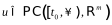
    </mixed-citation>
   </ref>
  </ref-list>
 </back>
</article>