<?xml version="1.0" encoding="UTF-8"?><!DOCTYPE article PUBLIC "-//NLM//DTD Journal Publishing DTD v3.0 20080202//EN" "http://dtd.nlm.nih.gov/publishing/3.0/journalpublishing3.dtd">
<article xmlns:mml="http://www.w3.org/1998/Math/MathML" xmlns:xlink="http://www.w3.org/1999/xlink" dtd-version="3.0" xml:lang="en" article-type="research article">
 <front>
  <journal-meta>
   <journal-id journal-id-type="publisher-id">
    jamp
   </journal-id>
   <journal-title-group>
    <journal-title>
     Journal of Applied Mathematics and Physics
    </journal-title>
   </journal-title-group>
   <issn pub-type="epub">
    2327-4352
   </issn>
   <issn publication-format="print">
    2327-4379
   </issn>
   <publisher>
    <publisher-name>
     Scientific Research Publishing
    </publisher-name>
   </publisher>
  </journal-meta>
  <article-meta>
   <article-id pub-id-type="doi">
    10.4236/jamp.2025.131004
   </article-id>
   <article-id pub-id-type="publisher-id">
    jamp-138866
   </article-id>
   <article-categories>
    <subj-group subj-group-type="heading">
     <subject>
      Articles
     </subject>
    </subj-group>
    <subj-group subj-group-type="Discipline-v2">
     <subject>
      Physics 
     </subject>
     <subject>
       Mathematics
     </subject>
    </subj-group>
   </article-categories>
   <title-group>
    Quantum Circuit Complexity as a Physical Observable
   </title-group>
   <contrib-group>
    <contrib contrib-type="author" xlink:type="simple">
     <name name-style="western">
      <surname>
       Logan
      </surname>
      <given-names>
       Nye
      </given-names>
     </name>
    </contrib>
   </contrib-group> 
   <aff id="affnull">
    <addr-line>
     aSchool of Computer Science, Carnegie Mellon University, Pittsburgh, USA
    </addr-line> 
   </aff> 
   <pub-date pub-type="epub">
    <day>
     03
    </day> 
    <month>
     01
    </month>
    <year>
     2025
    </year>
   </pub-date> 
   <volume>
    13
   </volume> 
   <issue>
    01
   </issue>
   <fpage>
    87
   </fpage>
   <lpage>
    137
   </lpage>
   <history>
    <date date-type="received">
     <day>
      3,
     </day>
     <month>
      December
     </month>
     <year>
      2024
     </year>
    </date>
    <date date-type="published">
     <day>
      10,
     </day>
     <month>
      December
     </month>
     <year>
      2024
     </year> 
    </date> 
    <date date-type="accepted">
     <day>
      10,
     </day>
     <month>
      January
     </month>
     <year>
      2025
     </year> 
    </date>
   </history>
   <permissions>
    <copyright-statement>
     © Copyright 2014 by authors and Scientific Research Publishing Inc. 
    </copyright-statement>
    <copyright-year>
     2014
    </copyright-year>
    <license>
     <license-p>
      This work is licensed under the Creative Commons Attribution International License (CC BY). http://creativecommons.org/licenses/by/4.0/
     </license-p>
    </license>
   </permissions>
   <abstract>
    This work proposes quantum circuit complexity—the minimal number of elementary operations needed to implement a quantum transformation—be established as a legitimate physical observable. We prove that circuit complexity satisfies all requirements for physical observables, including self-adjointness, gauge invariance, and a consistent measurement theory with well-defined uncertainty relations. We develop complete protocols for measuring complexity in quantum systems and demonstrate its connections to gauge theory and quantum gravity. Our results suggest that computational requirements may constitute physical laws as fundamental as energy conservation. This framework grants insights into the relationship between quantum information, gravity, and the emergence of spacetime geometry while offering practical methods for experimental verification. Our results indicate that the physical universe may be governed by both energetic and computational constraints, with profound implications for our understanding of fundamental physics.
   </abstract>
   <kwd-group> 
    <kwd>
     Quantum Circuit Complexity
    </kwd> 
    <kwd>
      Physical Observables
    </kwd> 
    <kwd>
      Operator Theory
    </kwd> 
    <kwd>
      Quantum Gravity
    </kwd> 
    <kwd>
      Quantum Measurement
    </kwd>
   </kwd-group>
  </article-meta>
 </front>
 <body>
  <sec id="s1">
   <title>1. Introduction</title>
   <p>The foundations of quantum mechanics are built upon our ability to identify and mathematically characterize physical observables—quantities that can be measured in experiments. Following von Neumann’s axiomatic approach <xref ref-type="bibr" rid="scirp.138866-1">
     [1]
    </xref> <xref ref-type="bibr" rid="scirp.138866-2">
     [2]
    </xref>, we understand that legitimate physical observables must be represented by self-adjoint operators on a Hilbert space, with their spectra corresponding to possible measurement outcomes <xref ref-type="bibr" rid="scirp.138866-3">
     [3]
    </xref>. This mathematical framework has proven remarkably successful in practice, from explaining the discrete energy levels observed in atomic spectra to enabling the development of modern quantum field theories <xref ref-type="bibr" rid="scirp.138866-4">
     [4]
    </xref> <xref ref-type="bibr" rid="scirp.138866-5">
     [5]
    </xref>.</p>
   <p>However, recent developments at the intersection of quantum computation, gauge theory, and gravity <xref ref-type="bibr" rid="scirp.138866-6">
     [6]
    </xref>-<xref ref-type="bibr" rid="scirp.138866-8">
     [8]
    </xref> suggest the need to expand this framework to include a new type of observable: quantum circuit complexity. To understand this quantity, consider that any quantum operation can be built from a sequence of elementary quantum gates, much like classical computer programs are built from basic logical operations. The circuit complexity of a quantum transformation is then defined as the minimal number of such elementary operations required to implement it.</p>
   <p>This paper proposes that quantum circuit complexity—traditionally viewed as a purely computational property—should be recognized as a fundamental physical observable, taking its place alongside quantities like energy and momentum in quantum mechanics. While this may seem surprising at first, we will demonstrate that complexity exhibits all the mathematical and physical properties required of a legitimate quantum observable.</p>
   <p>In this work, we present a rigorous mathematical framework establishing that circuit complexity can be formulated as a self-adjoint operator satisfying all requirements for quantum mechanical observables, including proper transformation properties, gauge invariance, and measurement theory. Through the AdS/CFT correspondence, we demonstrate that this complexity operator plays a crucial role in spacetime geometry and quantum gravity. This connection suggests that computational requirements may constitute fundamental physical laws governing the structure and dynamics of spacetime itself.</p>
   <sec id="s1_1">
    <title>
     <xref ref-type="bibr" rid="scirp.138866-"></xref>1.1. Foundations and Motivation</title>
    <p>To appreciate why circuit complexity might be fundamental to physics, we must first understand its emerging role in modern physical theories. Circuit complexity—precisely defined as the minimal number of elementary operations required to implement a quantum transformation <xref ref-type="bibr" rid="scirp.138866-9">
      [9]
     </xref> <xref ref-type="bibr" rid="scirp.138866-10">
      [10]
     </xref>—has recently revealed itself to be a quantity of profound physical significance. Through the remarkable mathematical framework of holographic duality <xref ref-type="bibr" rid="scirp.138866-11">
      [11]
     </xref>, complexity has been shown to be deeply connected to fundamental geometric properties of spacetime, including the volume of black hole interiors <xref ref-type="bibr" rid="scirp.138866-6">
      [6]
     </xref> <xref ref-type="bibr" rid="scirp.138866-12">
      [12]
     </xref> and the growth of Einstein-Rosen bridges <xref ref-type="bibr" rid="scirp.138866-13">
      [13]
     </xref> <xref ref-type="bibr" rid="scirp.138866-14">
      [14]
     </xref>. These connections strongly suggest that complexity may be more than a mere computational property—it may be a genuine physical observable governing fundamental aspects of spacetime structure <xref ref-type="bibr" rid="scirp.138866-15">
      [15]
     </xref> <xref ref-type="bibr" rid="scirp.138866-16">
      [16]
     </xref>.</p>
    <p>To establish complexity as a legitimate physical observable, we must demonstrate rigorously that it satisfies the complete set of mathematical requirements defined in quantum theory <xref ref-type="bibr" rid="scirp.138866-17">
      [17]
     </xref>. Following the foundational work of Wightman <xref ref-type="bibr" rid="scirp.138866-18">
      [18]
     </xref> <xref ref-type="bibr" rid="scirp.138866-19">
      [19]
     </xref>, these requirements encompass three essential aspects that any physical observable must satisfy:</p>
    <p>1) Mathematical Structure: The observable must be represented by a self-adjoint operator acting on the physical Hilbert space, with well-defined spectral properties and a precisely characterized domain <xref ref-type="bibr" rid="scirp.138866-20">
      [20]
     </xref> <xref ref-type="bibr" rid="scirp.138866-21">
      [21]
     </xref>. This ensures that measurements of the observable yield real-valued outcomes and that the operator’s mathematical properties align with the physical principles of quantum mechanics.</p>
    <p>2) Symmetry Properties: The observable must transform in a mathematically consistent way under spatial symmetries and gauge transformations <xref ref-type="bibr" rid="scirp.138866-22">
      [22]
     </xref> <xref ref-type="bibr" rid="scirp.138866-23">
      [23]
     </xref>. This requirement ensures that the observable respects the fundamental symmetries of nature and that its physical meaning remains well-defined under coordinate transformations.</p>
    <p>3) Measurement Theory: The observable must admit a consistent quantum measurement theory with well-defined uncertainty relations <xref ref-type="bibr" rid="scirp.138866-24">
      [24]
     </xref> <xref ref-type="bibr" rid="scirp.138866-25">
      [25]
     </xref>. This guarantees that the observable can be measured in principle and that its measurement statistics conform to the probabilistic framework of quantum mechanics.</p>
    <p>A particularly stringent requirement, emphasized by ‘t Hooft <xref ref-type="bibr" rid="scirp.138866-26">
      [26]
     </xref> <xref ref-type="bibr" rid="scirp.138866-27">
      [27]
     </xref>, is that any physical observable in gauge theories must preserve gauge invariance. Mathematically, this means:</p>
    <p>
     <math display="inline" xmlns="http://www.w3.org/1998/Math/MathML"> <mrow> 
       <mrow> 
        <mo>
          [ 
        </mo> 
        <mrow> 
         <mi>
           G 
         </mi> 
         <mrow> 
          <mo>
            ( 
          </mo> 
          <mi>
            ξ 
          </mi> 
          <mo>
            ) 
          </mo> 
         </mrow> 
         <mn>
           , 
         </mn> 
         <mover accent="true"> 
          <mi>
            O 
          </mi> 
          <mo>
            ^ 
          </mo> 
         </mover> 
        </mrow> 
        <mo>
          ] 
        </mo> 
       </mrow> 
       <mo>
         = 
       </mo> 
       <mn>
         0 
       </mn> 
      </mrow> 
     </math>(1)</p>
    <p>where 
     <math display="inline" xmlns="http://www.w3.org/1998/Math/MathML"> <mrow> 
       <mi>
         G 
       </mi> 
       <mrow> 
        <mo>
          ( 
        </mo> 
        <mi>
          ξ 
        </mi> 
        <mo>
          ) 
        </mo> 
       </mrow> 
      </mrow> 
     </math> generates gauge transformations <xref ref-type="bibr" rid="scirp.138866-28">
      [28]
     </xref>, and the commutator vanishes on the physical subspace of states. This requirement presents particular challenges for complexity because computational properties typically lack manifest gauge invariance <xref ref-type="bibr" rid="scirp.138866-29">
      [29]
     </xref> <xref ref-type="bibr" rid="scirp.138866-30">
      [30]
     </xref>. We will show how this challenge can be overcome through careful construction of the complexity operator.</p>
   </sec>
   <sec id="s1_2">
    <title>
     <xref ref-type="bibr" rid="scirp.138866-"></xref>1.2. Challenges and Approach</title>
    <p>The rigorous establishment of complexity as a physical observable requires overcoming several fundamental challenges <xref ref-type="bibr" rid="scirp.138866-31">
      [31]
     </xref> <xref ref-type="bibr" rid="scirp.138866-32">
      [32]
     </xref>. These challenges can be precisely formulated as mathematical requirements that our construction must satisfy:</p>
    <p>Theorem 1 (Key Requirements). For complexity to serve as a legitimate physical observable, we must establish:</p>
    <p>(1) Domain Completeness: 
     <math display="inline" xmlns="http://www.w3.org/1998/Math/MathML"> <mrow> 
       <mi mathvariant="script">
         D 
       </mi> 
       <mrow> 
        <mo>
          ( 
        </mo> 
        <mover accent="true"> 
         <mi>
           C 
         </mi> 
         <mo>
           ^ 
         </mo> 
        </mover> 
        <mo>
          ) 
        </mo> 
       </mrow> 
      </mrow> 
     </math> must be dense in 
     <math display="inline" xmlns="http://www.w3.org/1998/Math/MathML"> <mrow> 
       <msub> 
        <mi>
          ℋ 
        </mi> 
        <mrow> 
         <mtext>
           phys 
         </mtext> 
        </mrow> 
       </msub> 
      </mrow> 
     </math> <xref ref-type="bibr" rid="scirp.138866-33">
      [33]
     </xref></p>
    <p>(2) Gauge Invariance: 
     <math display="inline" xmlns="http://www.w3.org/1998/Math/MathML"> <mrow> 
       <mrow> 
        <mo>
          [ 
        </mo> 
        <mrow> 
         <mi>
           G 
         </mi> 
         <mrow> 
          <mo>
            ( 
          </mo> 
          <mi>
            ξ 
          </mi> 
          <mo>
            ) 
          </mo> 
         </mrow> 
         <mn>
           , 
         </mn> 
         <mover accent="true"> 
          <mi>
            C 
          </mi> 
          <mo>
            ^ 
          </mo> 
         </mover> 
        </mrow> 
        <mo>
          ] 
        </mo> 
       </mrow> 
       <mo>
         = 
       </mo> 
       <mn>
         0 
       </mn> 
      </mrow> 
     </math> on 
     <math display="inline" xmlns="http://www.w3.org/1998/Math/MathML"> <mrow> 
       <mi mathvariant="script">
         D 
       </mi> 
       <mrow> 
        <mo>
          ( 
        </mo> 
        <mover accent="true"> 
         <mi>
           C 
         </mi> 
         <mo>
           ^ 
         </mo> 
        </mover> 
        <mo>
          ) 
        </mo> 
       </mrow> 
      </mrow> 
     </math> <xref ref-type="bibr" rid="scirp.138866-34">
      [34]
     </xref></p>
    <p>(3) Measurement Framework: 
     <math display="inline" xmlns="http://www.w3.org/1998/Math/MathML"> <mrow> 
       <mrow> 
        <mo>
          { 
        </mo> 
        <mrow> 
         <mi>
           E 
         </mi> 
         <mrow> 
          <mo>
            ( 
          </mo> 
          <mi>
            X 
          </mi> 
          <mo>
            ) 
          </mo> 
         </mrow> 
        </mrow> 
        <mo>
          } 
        </mo> 
       </mrow> 
      </mrow> 
     </math> forms a POVM with 
     <math display="inline" xmlns="http://www.w3.org/1998/Math/MathML"> <mrow> 
       <mrow> 
        <mo>
          [ 
        </mo> 
        <mrow> 
         <mi>
           E 
         </mi> 
         <mrow> 
          <mo>
            ( 
          </mo> 
          <mi>
            X 
          </mi> 
          <mo>
            ) 
          </mo> 
         </mrow> 
         <mn>
           , 
         </mn> 
         <mi>
           G 
         </mi> 
         <mrow> 
          <mo>
            ( 
          </mo> 
          <mi>
            ξ 
          </mi> 
          <mo>
            ) 
          </mo> 
         </mrow> 
        </mrow> 
        <mo>
          ] 
        </mo> 
       </mrow> 
       <mo>
         = 
       </mo> 
       <mn>
         0 
       </mn> 
      </mrow> 
     </math> <xref ref-type="bibr" rid="scirp.138866-35">
      [35]
     </xref> (2)</p>
    <p>(4) Uncertainty Principle: 
     <math display="inline" xmlns="http://www.w3.org/1998/Math/MathML"> <mrow> 
       <mi>
         Δ 
       </mi> 
       <mi>
         C 
       </mi> 
       <mi>
         Δ 
       </mi> 
       <mi>
         E 
       </mi> 
       <mo>
         ≥ 
       </mo> 
       <mfrac> 
        <mi>
          ℏ 
        </mi> 
        <mn>
          2 
        </mn> 
       </mfrac> 
       <mrow> 
        <mo>
          | 
        </mo> 
        <mrow> 
         <mrow> 
          <mo>
            〈 
          </mo> 
          <mrow> 
           <mrow> 
            <mo>
              [ 
            </mo> 
            <mrow> 
             <mover accent="true"> 
              <mi>
                C 
              </mi> 
              <mo>
                ^ 
              </mo> 
             </mover> 
             <mn>
               , 
             </mn> 
             <mover accent="true"> 
              <mi>
                H 
              </mi> 
              <mo>
                ^ 
              </mo> 
             </mover> 
            </mrow> 
            <mo>
              ] 
            </mo> 
           </mrow> 
          </mrow> 
          <mo>
            〉 
          </mo> 
         </mrow> 
        </mrow> 
        <mo>
          | 
        </mo> 
       </mrow> 
      </mrow> 
     </math> <xref ref-type="bibr" rid="scirp.138866-36">
      [36]
     </xref></p>
    <p>where 
     <math display="inline" xmlns="http://www.w3.org/1998/Math/MathML"> <mrow> 
       <msub> 
        <mi>
          ℋ 
        </mi> 
        <mrow> 
         <mtext>
           phys 
         </mtext> 
        </mrow> 
       </msub> 
      </mrow> 
     </math> denotes the physical Hilbert space, 
     <math display="inline" xmlns="http://www.w3.org/1998/Math/MathML"> <mover accent="true"> 
       <mi>
         C 
       </mi> 
       <mo>
         ^ 
       </mo> 
      </mover> 
     </math> is the complexity operator, and 
     <math display="inline" xmlns="http://www.w3.org/1998/Math/MathML"> <mover accent="true"> 
       <mi>
         H 
       </mi> 
       <mo>
         ^ 
       </mo> 
      </mover> 
     </math> is the Hamiltonian.</p>
    <p>This paper presents a systematic construction that addresses each of these challenges through a carefully structured approach <xref ref-type="bibr" rid="scirp.138866-37">
      [37]
     </xref> <xref ref-type="bibr" rid="scirp.138866-38">
      [38]
     </xref>. Our methodology proceeds through four essential stages:</p>
    <p>1) First, we construct the complexity operator on a mathematically precise dense domain, employing rigorous techniques from spectral theory and the theory of unbounded operators <xref ref-type="bibr" rid="scirp.138866-39">
      [39]
     </xref> <xref ref-type="bibr" rid="scirp.138866-40">
      [40]
     </xref>. This construction ensures that the operator is well-defined and mathematically sound.</p>
    <p>2) Second, we establish gauge invariance through the powerful framework of BRST cohomology, utilizing the geometric structure of the gauge orbit space <xref ref-type="bibr" rid="scirp.138866-38">
      [38]
     </xref> <xref ref-type="bibr" rid="scirp.138866-41">
      [41]
     </xref>. This demonstrates that complexity respects the fundamental gauge symmetries of nature.</p>
    <p>3) Third, we develop a complete measurement theory using modern quantum measurement frameworks and positive operator-valued measures (POVMs) <xref ref-type="bibr" rid="scirp.138866-24">
      [24]
     </xref> <xref ref-type="bibr" rid="scirp.138866-42">
      [42]
     </xref>. This provides a rigorous foundation for experimental observations.</p>
    <p>4) Finally, we derive fundamental uncertainty relations and transformation properties by analyzing the algebraic structure of quantum observables <xref ref-type="bibr" rid="scirp.138866-43">
      [43]
     </xref>. This places complexity firmly within the established framework of quantum mechanics.</p>
   </sec>
   <sec id="s1_3">
    <title>
     <xref ref-type="bibr" rid="scirp.138866-"></xref>1.3. Main Results and Implications</title>
    <p>Our primary result is a mathematically precise characterization of circuit complexity as a legitimate physical observable <xref ref-type="bibr" rid="scirp.138866-44">
      [44]
     </xref> <xref ref-type="bibr" rid="scirp.138866-45">
      [45]
     </xref>. We prove the following fundamental theorem:</p>
    <p>Theorem 2 (Complexity Observable). There exists a unique self-adjoint operator 
     <math display="inline" xmlns="http://www.w3.org/1998/Math/MathML"> <mover accent="true"> 
       <mi>
         C 
       </mi> 
       <mo>
         ^ 
       </mo> 
      </mover> 
     </math> on the physical Hilbert space 
     <math display="inline" xmlns="http://www.w3.org/1998/Math/MathML"> <mi>
        ℋ 
      </mi> 
     </math> satisfying:</p>
    <p>(1) Self-adjointness: 
     <math display="inline" xmlns="http://www.w3.org/1998/Math/MathML"> <mrow> 
       <mover accent="true"> 
        <mi>
          C 
        </mi> 
        <mo>
          ^ 
        </mo> 
       </mover> 
       <mo>
         = 
       </mo> 
       <msup> 
        <mover accent="true"> 
         <mi>
           C 
         </mi> 
         <mo>
           ^ 
         </mo> 
        </mover> 
        <mo>
          † 
        </mo> 
       </msup> 
      </mrow> 
     </math>, 
     <math xmlns="http://www.w3.org/1998/Math/MathML" display="inline"> <mrow> 
       <mtext>
         Dom 
       </mtext> 
       <mrow> 
        <mo>
          ( 
        </mo> 
        <mover accent="true"> 
         <mi>
           C 
         </mi> 
         <mo>
           ^ 
         </mo> 
        </mover> 
        <mo>
          ) 
        </mo> 
       </mrow> 
       <mo>
         = 
       </mo> 
       <mtext>
         Dom 
       </mtext> 
       <mrow> 
        <mo>
          ( 
        </mo> 
        <mrow> 
         <msup> 
          <mover accent="true"> 
           <mi>
             C 
           </mi> 
           <mo>
             ^ 
           </mo> 
          </mover> 
          <mo>
            † 
          </mo> 
         </msup> 
        </mrow> 
        <mo>
          ) 
        </mo> 
       </mrow> 
      </mrow> 
     </math> <xref ref-type="bibr" rid="scirp.138866-46">
      [46]
     </xref></p>
    <p>(2) Gauge invariance: 
     <math display="inline" xmlns="http://www.w3.org/1998/Math/MathML"> <mrow> 
       <mrow> 
        <mo>
          [ 
        </mo> 
        <mrow> 
         <mi>
           G 
         </mi> 
         <mrow> 
          <mo>
            ( 
          </mo> 
          <mi>
            ξ 
          </mi> 
          <mo>
            ) 
          </mo> 
         </mrow> 
         <mn>
           , 
         </mn> 
         <mover accent="true"> 
          <mi>
            C 
          </mi> 
          <mo>
            ^ 
          </mo> 
         </mover> 
        </mrow> 
        <mo>
          ] 
        </mo> 
       </mrow> 
       <mo>
         = 
       </mo> 
       <mn>
         0 
       </mn> 
      </mrow> 
     </math> strongly on 
     <math xmlns="http://www.w3.org/1998/Math/MathML" display="inline"> <mrow> 
       <mtext>
         Dom 
       </mtext> 
       <mrow> 
        <mo>
          ( 
        </mo> 
        <mover accent="true"> 
         <mi>
           C 
         </mi> 
         <mo>
           ^ 
         </mo> 
        </mover> 
        <mo>
          ) 
        </mo> 
       </mrow> 
      </mrow> 
     </math> <xref ref-type="bibr" rid="scirp.138866-23">
      [23]
     </xref></p>
    <p>(3) Frame transformation: 
     <math display="inline" xmlns="http://www.w3.org/1998/Math/MathML"> <mrow> 
       <mi>
         U 
       </mi> 
       <mrow> 
        <mo>
          ( 
        </mo> 
        <mi>
          Λ 
        </mi> 
        <mo>
          ) 
        </mo> 
       </mrow> 
       <mover accent="true"> 
        <mi>
          C 
        </mi> 
        <mo>
          ^ 
        </mo> 
       </mover> 
       <mi>
         U 
       </mi> 
       <msup> 
        <mrow> 
         <mrow> 
          <mo>
            ( 
          </mo> 
          <mi>
            Λ 
          </mi> 
          <mo>
            ) 
          </mo> 
         </mrow> 
        </mrow> 
        <mo>
          † 
        </mo> 
       </msup> 
       <mo>
         = 
       </mo> 
       <mover accent="true"> 
        <mi>
          C 
        </mi> 
        <mo>
          ^ 
        </mo> 
       </mover> 
       <mo>
         + 
       </mo> 
       <mi mathvariant="script">
         C 
       </mi> 
       <mrow> 
        <mo>
          ( 
        </mo> 
        <mi>
          Λ 
        </mi> 
        <mo>
          ) 
        </mo> 
       </mrow> 
      </mrow> 
     </math> <xref ref-type="bibr" rid="scirp.138866-2">
      [2]
     </xref> (3)</p>
    <p>(4) Uncertainty relation: 
     <math xmlns="http://www.w3.org/1998/Math/MathML" display="inline"> <mrow> 
       <mi>
         Δ 
       </mi> 
       <mi>
         C 
       </mi> 
       <mi>
         Δ 
       </mi> 
       <mi>
         E 
       </mi> 
       <mo>
         ≥ 
       </mo> 
       <mfrac> 
        <mi>
          ℏ 
        </mi> 
        <mn>
          2 
        </mn> 
       </mfrac> 
       <mrow> 
        <mo>
          | 
        </mo> 
        <mrow> 
         <mfrac> 
          <mrow> 
           <mtext>
             d 
           </mtext> 
           <mrow> 
            <mo>
              〈 
            </mo> 
            <mover accent="true"> 
             <mi>
               C 
             </mi> 
             <mo>
               ^ 
             </mo> 
            </mover> 
            <mo>
              〉 
            </mo> 
           </mrow> 
          </mrow> 
          <mrow> 
           <mtext>
             d 
           </mtext> 
           <mi>
             t 
           </mi> 
          </mrow> 
         </mfrac> 
        </mrow> 
        <mo>
          | 
        </mo> 
       </mrow> 
      </mrow> 
     </math> <xref ref-type="bibr" rid="scirp.138866-47">
      [47]
     </xref></p>
    <p>where 
     <math display="inline" xmlns="http://www.w3.org/1998/Math/MathML"> <mrow> 
       <mi mathvariant="script">
         C 
       </mi> 
       <mrow> 
        <mo>
          ( 
        </mo> 
        <mi>
          Λ 
        </mi> 
        <mo>
          ) 
        </mo> 
       </mrow> 
      </mrow> 
     </math> represents the complexity cost of the reference frame transformation 
     <math display="inline" xmlns="http://www.w3.org/1998/Math/MathML"> <mi>
        Λ 
      </mi> 
     </math>.</p>
    <p>This rigorous mathematical construction suggests several profound physical implications <xref ref-type="bibr" rid="scirp.138866-48">
      [48]
     </xref> <xref ref-type="bibr" rid="scirp.138866-49">
      [49]
     </xref>:</p>
    <p>The remainder of this paper develops these ideas in detail, providing complete mathematical proofs and exploring their physical consequences.</p>
    <sec id="s1">
     <title>
      <xref ref-type="bibr" rid="scirp.138866-"></xref>2. Mathematical Preliminaries</title>
     <p>Before we can establish quantum circuit complexity as a physical observable, we must first carefully define what constitutes a legitimate quantum mechanical observable and develop the precise mathematical framework needed to analyze complexity. This section provides the essential mathematical foundations that will support our subsequent construction of the complexity observable.</p>
    </sec>
    <sec id="s2_4">
     <title>
      <xref ref-type="bibr" rid="scirp.138866-"></xref>2.1. Observable Requirements in Quantum Mechanics</title>
     <p>We begin by establishing the rigorous mathematical requirements that any quantum mechanical observable must satisfy <xref ref-type="bibr" rid="scirp.138866-3">
       [3]
      </xref> <xref ref-type="bibr" rid="scirp.138866-43">
       [43]
      </xref>. These requirements, developed through decades of theoretical work beginning with von Neumann <xref ref-type="bibr" rid="scirp.138866-1">
       [1]
      </xref> and Wightman <xref ref-type="bibr" rid="scirp.138866-18">
       [18]
      </xref>, and extended through modern contributions by Araki <xref ref-type="bibr" rid="scirp.138866-53">
       [53]
      </xref>, provide the mathematical framework within which we must work to establish complexity as a legitimate observable.</p>
     <p>Let us start with the fundamental mathematical setting: a separable complex Hilbert space 
      <math display="inline" xmlns="http://www.w3.org/1998/Math/MathML"> <mi>
         ℋ 
       </mi> 
      </math> equipped with an inner product 
      <math display="inline" xmlns="http://www.w3.org/1998/Math/MathML"> <mrow> 
        <mrow> 
         <mo>
           〈 
         </mo> 
         <mo>
           ⋅ 
         </mo> 
         <mo>
           | 
         </mo> 
         <mo>
           ⋅ 
         </mo> 
         <mo>
           〉 
         </mo> 
        </mrow> 
       </mrow> 
      </math> <xref ref-type="bibr" rid="scirp.138866-39">
       [39]
      </xref>. In quantum mechanics, this space represents the possible states of our physical system. A linear operator 
      <math xmlns="http://www.w3.org/1998/Math/MathML" display="inline"> <mrow> 
        <mover accent="true"> 
         <mi>
           A 
         </mi> 
         <mo>
           ^ 
         </mo> 
        </mover> 
        <mn> 
         <mo>
           : 
         </mo> 
        </mn> 
        <mtext>
          Dom 
        </mtext> 
        <mrow> 
         <mo>
           ( 
         </mo> 
         <mover accent="true"> 
          <mi>
            A 
          </mi> 
          <mo>
            ^ 
          </mo> 
         </mover> 
         <mo>
           ) 
         </mo> 
        </mrow> 
        <mo>
          → 
        </mo> 
        <mi>
          ℋ 
        </mi> 
       </mrow> 
      </math> with dense domain 
      <math xmlns="http://www.w3.org/1998/Math/MathML" display="inline"> <mrow> 
        <mtext>
          Dom 
        </mtext> 
        <mrow> 
         <mo>
           ( 
         </mo> 
         <mover accent="true"> 
          <mi>
            A 
          </mi> 
          <mo>
            ^ 
          </mo> 
         </mover> 
         <mo>
           ) 
         </mo> 
        </mrow> 
        <mo>
          ⊂ 
        </mo> 
        <mi>
          ℋ 
        </mi> 
       </mrow> 
      </math> qualifies as an observable if and only if it satisfies three fundamental conditions <xref ref-type="bibr" rid="scirp.138866-54">
       [54]
      </xref>, which we will now examine in detail:</p>
     <p>1) Self-Adjointness:</p>
     <p>The first requirement ensures that measurement outcomes are real-valued and that the quantum evolution is well-defined. Following the theory of unbounded operators <xref ref-type="bibr" rid="scirp.138866-33">
       [33]
      </xref> <xref ref-type="bibr" rid="scirp.138866-46">
       [46]
      </xref>, the operator must be self-adjoint on its domain. This means:</p>
     <p>
      <math xmlns="http://www.w3.org/1998/Math/MathML" display="inline"> <mtable columnalign="left"> 
        <mtr> 
         <mtd> 
          <mover accent="true"> 
           <mi>
             A 
           </mi> 
           <mo>
             ^ 
           </mo> 
          </mover> 
          <mo>
            = 
          </mo> 
          <msup> 
           <mover accent="true"> 
            <mi>
              A 
            </mi> 
            <mo>
              ^ 
            </mo> 
           </mover> 
           <mo>
             † 
           </mo> 
          </msup> 
          <mtext>
              
          </mtext> 
          <mtext>
            and 
          </mtext> 
          <mtext>
              
          </mtext> 
          <mtext>
            Dom 
          </mtext> 
          <mrow> 
           <mo>
             ( 
           </mo> 
           <mover accent="true"> 
            <mi>
              A 
            </mi> 
            <mo>
              ^ 
            </mo> 
           </mover> 
           <mo>
             ) 
           </mo> 
          </mrow> 
          <mo>
            = 
          </mo> 
          <mtext>
            Dom 
          </mtext> 
          <mrow> 
           <mo>
             ( 
           </mo> 
           <mrow> 
            <msup> 
             <mover accent="true"> 
              <mi>
                A 
              </mi> 
              <mo>
                ^ 
              </mo> 
             </mover> 
             <mo>
               † 
             </mo> 
            </msup> 
           </mrow> 
           <mo>
             ) 
           </mo> 
          </mrow> 
         </mtd> 
        </mtr> 
        <mtr> 
         <mtd> 
          <mtext>
            Dom 
          </mtext> 
          <mrow> 
           <mo>
             ( 
           </mo> 
           <mover accent="true"> 
            <mi>
              A 
            </mi> 
            <mo>
              ^ 
            </mo> 
           </mover> 
           <mo>
             ) 
           </mo> 
          </mrow> 
          <mo>
            = 
          </mo> 
          <mrow> 
           <mo>
             { 
           </mo> 
           <mrow> 
            <mi>
              ψ 
            </mi> 
            <mo>
              ∈ 
            </mo> 
            <mi>
              ℋ 
            </mi> 
            <mn> 
             <mo>
               : 
             </mo> 
            </mn> 
            <mstyle displaystyle="true"> 
             <munder> 
              <mo>
                ∑ 
              </mo> 
              <mrow> 
               <mi>
                 λ 
               </mi> 
               <mo>
                 ∈ 
               </mo> 
               <mi>
                 σ 
               </mi> 
               <mrow> 
                <mo>
                  ( 
                </mo> 
                <mover accent="true"> 
                 <mi>
                   A 
                 </mi> 
                 <mo>
                   ^ 
                 </mo> 
                </mover> 
                <mo>
                  ) 
                </mo> 
               </mrow> 
              </mrow> 
             </munder> 
            </mstyle> 
            <mtext>
                
            </mtext> 
            <msup> 
             <mi>
               λ 
             </mi> 
             <mn>
               2 
             </mn> 
            </msup> 
            <msup> 
             <mrow> 
              <mrow> 
               <mo>
                 | 
               </mo> 
               <mrow> 
                <mrow> 
                 <mo>
                   〈 
                 </mo> 
                 <mrow> 
                  <msub> 
                   <mi>
                     ψ 
                   </mi> 
                   <mi>
                     λ 
                   </mi> 
                  </msub> 
                 </mrow> 
                 <mo>
                   | 
                 </mo> 
                 <mi>
                   ψ 
                 </mi> 
                 <mo>
                   〉 
                 </mo> 
                </mrow> 
               </mrow> 
               <mo>
                 | 
               </mo> 
              </mrow> 
             </mrow> 
             <mn>
               2 
             </mn> 
            </msup> 
            <mo>
              &lt; 
            </mo> 
            <mi>
              ∞ 
            </mi> 
           </mrow> 
           <mo>
             } 
           </mo> 
          </mrow> 
         </mtd> 
        </mtr> 
       </mtable> 
      </math>(4)</p>
     <p>where 
      <math display="inline" xmlns="http://www.w3.org/1998/Math/MathML"> <mrow> 
        <mrow> 
         <mo>
           { 
         </mo> 
         <mrow> 
          <msub> 
           <mi>
             ψ 
           </mi> 
           <mi>
             λ 
           </mi> 
          </msub> 
         </mrow> 
         <mo>
           } 
         </mo> 
        </mrow> 
       </mrow> 
      </math> forms a complete set of orthonormal eigenvectors <xref ref-type="bibr" rid="scirp.138866-55">
       [55]
      </xref>.</p>
     <p>2) Spectral Properties:</p>
     <p>The second requirement ensures that we can decompose the operator into its measurable components. Following the spectral theorem for unbounded self-adjoint operators <xref ref-type="bibr" rid="scirp.138866-56">
       [56]
      </xref>, there must exist a unique right-continuous projection-valued measure 
      <math display="inline" xmlns="http://www.w3.org/1998/Math/MathML"> <mrow> 
        <mi>
          E 
        </mi> 
        <mn> 
         <mo stretchy="false">
           ( 
         </mo> 
        </mn> 
        <mi>
          λ 
        </mi> 
        <mn> 
         <mo stretchy="false">
           ) 
         </mo> 
        </mn> 
       </mrow> 
      </math> such that:</p>
     <p>
      <math xmlns="http://www.w3.org/1998/Math/MathML" display="inline"> <mtable columnalign="left"> 
        <mtr> 
         <mtd> 
          <mover accent="true"> 
           <mi>
             A 
           </mi> 
           <mo>
             ^ 
           </mo> 
          </mover> 
          <mo>
            = 
          </mo> 
          <mstyle displaystyle="true"> 
           <mrow> 
            <msub> 
             <mo>
               ∫ 
             </mo> 
             <mrow> 
              <mi>
                σ 
              </mi> 
              <mrow> 
               <mo>
                 ( 
               </mo> 
               <mover accent="true"> 
                <mi>
                  A 
                </mi> 
                <mo>
                  ^ 
                </mo> 
               </mover> 
               <mo>
                 ) 
               </mo> 
              </mrow> 
             </mrow> 
            </msub> 
           </mrow> 
          </mstyle> 
          <mtext>
              
          </mtext> 
          <mi>
            λ 
          </mi> 
          <mtext>
              
          </mtext> 
          <mtext>
            d 
          </mtext> 
          <mi>
            E 
          </mi> 
          <mrow> 
           <mo>
             ( 
           </mo> 
           <mi>
             λ 
           </mi> 
           <mo>
             ) 
           </mo> 
          </mrow> 
         </mtd> 
        </mtr> 
        <mtr> 
         <mtd> 
          <mi>
            E 
          </mi> 
          <mrow> 
           <mo>
             ( 
           </mo> 
           <mi>
             λ 
           </mi> 
           <mo>
             ) 
           </mo> 
          </mrow> 
          <mi>
            E 
          </mi> 
          <mrow> 
           <mo>
             ( 
           </mo> 
           <mi>
             μ 
           </mi> 
           <mo>
             ) 
           </mo> 
          </mrow> 
          <mo>
            = 
          </mo> 
          <mi>
            E 
          </mi> 
          <mrow> 
           <mo>
             ( 
           </mo> 
           <mrow> 
            <mi>
              min 
            </mi> 
            <mrow> 
             <mo>
               { 
             </mo> 
             <mrow> 
              <mi>
                λ 
              </mi> 
              <mn>
                , 
              </mn> 
              <mi>
                μ 
              </mi> 
             </mrow> 
             <mo>
               } 
             </mo> 
            </mrow> 
           </mrow> 
           <mo>
             ) 
           </mo> 
          </mrow> 
         </mtd> 
        </mtr> 
        <mtr> 
         <mtd> 
          <mi>
            σ 
          </mi> 
          <mrow> 
           <mo>
             ( 
           </mo> 
           <mover accent="true"> 
            <mi>
              A 
            </mi> 
            <mo>
              ^ 
            </mo> 
           </mover> 
           <mo>
             ) 
           </mo> 
          </mrow> 
          <mo>
            ⊆ 
          </mo> 
          <mi>
            ℝ 
          </mi> 
         </mtd> 
        </mtr> 
        <mtr> 
         <mtd> 
          <munder> 
           <mrow> 
            <mi>
              lim 
            </mi> 
           </mrow> 
           <mrow> 
            <mi>
              ϵ 
            </mi> 
            <mo>
              ↓ 
            </mo> 
            <mn>
              0 
            </mn> 
           </mrow> 
          </munder> 
          <mi>
            E 
          </mi> 
          <mrow> 
           <mo>
             ( 
           </mo> 
           <mrow> 
            <mi>
              λ 
            </mi> 
            <mo>
              + 
            </mo> 
            <mi>
              ϵ 
            </mi> 
           </mrow> 
           <mo>
             ) 
           </mo> 
          </mrow> 
          <mo>
            = 
          </mo> 
          <mi>
            E 
          </mi> 
          <mrow> 
           <mo>
             ( 
           </mo> 
           <mi>
             λ 
           </mi> 
           <mo>
             ) 
           </mo> 
          </mrow> 
         </mtd> 
        </mtr> 
       </mtable> 
      </math>(5)</p>
     <p>3) Measurement Theory:</p>
     <p>The third requirement connects the mathematical formalism to experimental measurements. Following modern quantum measurement theory <xref ref-type="bibr" rid="scirp.138866-24">
       [24]
      </xref> <xref ref-type="bibr" rid="scirp.138866-57">
       [57]
      </xref>, the operator must admit a positive operator-valued measure (POVM) 
      <math display="inline" xmlns="http://www.w3.org/1998/Math/MathML"> <mrow> 
        <mrow> 
         <mo>
           { 
         </mo> 
         <mrow> 
          <msub> 
           <mi>
             M 
           </mi> 
           <mi>
             k 
           </mi> 
          </msub> 
         </mrow> 
         <mo>
           } 
         </mo> 
        </mrow> 
       </mrow> 
      </math> that describes the possible outcomes of measurements. These measurement operators must satisfy:</p>
     <p>
      <math display="inline" xmlns="http://www.w3.org/1998/Math/MathML"> <mtable columnalign="left"> 
        <mtr> 
         <mtd> 
          <mi>
            P 
          </mi> 
          <mrow> 
           <mo>
             ( 
           </mo> 
           <mi>
             a 
           </mi> 
           <mo>
             ) 
           </mo> 
          </mrow> 
          <mo>
            = 
          </mo> 
          <mrow> 
           <mo>
             〈 
           </mo> 
           <mi>
             ψ 
           </mi> 
           <mo>
             | 
           </mo> 
          </mrow> 
          <msubsup> 
           <mi>
             M 
           </mi> 
           <mi>
             a 
           </mi> 
           <mo>
             † 
           </mo> 
          </msubsup> 
          <msub> 
           <mi>
             M 
           </mi> 
           <mi>
             a 
           </mi> 
          </msub> 
          <mrow> 
           <mo>
             | 
           </mo> 
           <mi>
             ψ 
           </mi> 
           <mo>
             〉 
           </mo> 
          </mrow> 
          <mtext>
              
          </mtext> 
          <mrow> 
           <mo>
             ( 
           </mo> 
           <mrow> 
            <mtext>
              probability of outcome 
            </mtext> 
            <mtext>
                
            </mtext> 
            <mi>
              a 
            </mi> 
           </mrow> 
           <mo>
             ) 
           </mo> 
          </mrow> 
         </mtd> 
        </mtr> 
        <mtr> 
         <mtd> 
          <mstyle displaystyle="true"> 
           <munder> 
            <mo>
              ∑ 
            </mo> 
            <mi>
              k 
            </mi> 
           </munder> 
          </mstyle> 
          <mtext>
              
          </mtext> 
          <msubsup> 
           <mi>
             M 
           </mi> 
           <mi>
             k 
           </mi> 
           <mo>
             † 
           </mo> 
          </msubsup> 
          <msub> 
           <mi>
             M 
           </mi> 
           <mi>
             k 
           </mi> 
          </msub> 
          <mo>
            = 
          </mo> 
          <mi>
            I 
          </mi> 
          <mtext>
              
          </mtext> 
          <mtext>
            completeness 
          </mtext> 
         </mtd> 
        </mtr> 
        <mtr> 
         <mtd> 
          <mrow> 
           <mo>
             [ 
           </mo> 
           <mrow> 
            <msub> 
             <mi>
               M 
             </mi> 
             <mi>
               k 
             </mi> 
            </msub> 
            <mn>
              , 
            </mn> 
            <mi>
              G 
            </mi> 
            <mrow> 
             <mo>
               ( 
             </mo> 
             <mi>
               ξ 
             </mi> 
             <mo>
               ) 
             </mo> 
            </mrow> 
           </mrow> 
           <mo>
             ] 
           </mo> 
          </mrow> 
          <mo>
            = 
          </mo> 
          <mn>
            0 
          </mn> 
          <mtext>
              
          </mtext> 
          <mtext>
            for all gauge transformations 
          </mtext> 
          <mtext>
              
          </mtext> 
          <mi>
            G 
          </mi> 
          <mrow> 
           <mo>
             ( 
           </mo> 
           <mi>
             ξ 
           </mi> 
           <mo>
             ) 
           </mo> 
          </mrow> 
          <mtext>
              
          </mtext> 
          <mrow> 
           <mo>
             ( 
           </mo> 
           <mrow> 
            <mtext>
              gauge invariance 
            </mtext> 
           </mrow> 
           <mo>
             ) 
           </mo> 
          </mrow> 
         </mtd> 
        </mtr> 
       </mtable> 
      </math>(6)</p>
     <p>When working with quantum field theories, these requirements must be strengthened to account for gauge symmetries <xref ref-type="bibr" rid="scirp.138866-19">
       [19]
      </xref> <xref ref-type="bibr" rid="scirp.138866-28">
       [28]
      </xref>. Following the foundational work of Strocchi and Wightman <xref ref-type="bibr" rid="scirp.138866-58">
       [58]
      </xref>, we must additionally require:</p>
     <p>
      <math xmlns="http://www.w3.org/1998/Math/MathML" display="inline"> <mtable columnalign="left"> 
        <mtr> 
         <mtd> 
          <mrow> 
           <mo>
             [ 
           </mo> 
           <mrow> 
            <mi>
              G 
            </mi> 
            <mrow> 
             <mo>
               ( 
             </mo> 
             <mi>
               ξ 
             </mi> 
             <mo>
               ) 
             </mo> 
            </mrow> 
            <mn>
              , 
            </mn> 
            <mover accent="true"> 
             <mi>
               A 
             </mi> 
             <mo>
               ^ 
             </mo> 
            </mover> 
           </mrow> 
           <mo>
             ] 
           </mo> 
          </mrow> 
          <mo>
            = 
          </mo> 
          <mn>
            0 
          </mn> 
          <mtext>
              
          </mtext> 
          <mtext>
            strongly 
          </mtext> 
          <mtext>
              
          </mtext> 
          <mtext>
            on 
          </mtext> 
          <mtext>
              
          </mtext> 
          <mtext>
            Dom 
          </mtext> 
          <mrow> 
           <mo>
             ( 
           </mo> 
           <mover accent="true"> 
            <mi>
              A 
            </mi> 
            <mo>
              ^ 
            </mo> 
           </mover> 
           <mo>
             ) 
           </mo> 
          </mrow> 
          <mtext>
              
          </mtext> 
          <mrow> 
           <mo>
             ( 
           </mo> 
           <mrow> 
            <mtext>
              strong 
            </mtext> 
            <mtext>
                
            </mtext> 
            <mtext>
              gauge 
            </mtext> 
            <mtext>
                
            </mtext> 
            <mtext>
              invariance 
            </mtext> 
           </mrow> 
           <mo>
             ) 
           </mo> 
          </mrow> 
         </mtd> 
        </mtr> 
        <mtr> 
         <mtd> 
          <mrow> 
           <mo>
             [ 
           </mo> 
           <mrow> 
            <mi>
              G 
            </mi> 
            <mrow> 
             <mo>
               ( 
             </mo> 
             <mi>
               ξ 
             </mi> 
             <mo>
               ) 
             </mo> 
            </mrow> 
            <mn>
              , 
            </mn> 
            <mi>
              E 
            </mi> 
            <mrow> 
             <mo>
               ( 
             </mo> 
             <mi>
               λ 
             </mi> 
             <mo>
               ) 
             </mo> 
            </mrow> 
           </mrow> 
           <mo>
             ] 
           </mo> 
          </mrow> 
          <mo>
            = 
          </mo> 
          <mn>
            0 
          </mn> 
          <mtext>
              
          </mtext> 
          <mtext>
            for 
          </mtext> 
          <mtext>
              
          </mtext> 
          <mtext>
            all 
          </mtext> 
          <mtext>
              
          </mtext> 
          <mi>
            λ 
          </mi> 
          <mtext>
              
          </mtext> 
          <mtext>
            and 
          </mtext> 
          <mtext>
              
          </mtext> 
          <mtext>
            gauge 
          </mtext> 
          <mtext>
              
          </mtext> 
          <mtext>
            parameters 
          </mtext> 
          <mtext>
              
          </mtext> 
          <mi>
            ξ 
          </mi> 
         </mtd> 
        </mtr> 
        <mtr> 
         <mtd> 
          <mtext>
            Dom 
          </mtext> 
          <mrow> 
           <mo>
             ( 
           </mo> 
           <mover accent="true"> 
            <mi>
              A 
            </mi> 
            <mo>
              ^ 
            </mo> 
           </mover> 
           <mo>
             ) 
           </mo> 
          </mrow> 
          <mtext>
              
          </mtext> 
          <mtext>
            is 
          </mtext> 
          <mtext>
              
          </mtext> 
          <mtext>
            gauge-invariant 
          </mtext> 
          <mtext>
              
          </mtext> 
          <mtext>
            as 
          </mtext> 
          <mtext>
              
          </mtext> 
          <mtext>
            a 
          </mtext> 
          <mtext>
              
          </mtext> 
          <mtext>
            subspace 
          </mtext> 
         </mtd> 
        </mtr> 
       </mtable> 
      </math>(7)</p>
     <p>A crucial additional requirement comes from the principle of locality in quantum field theory. For any two spacetime regions 
      <math display="inline" xmlns="http://www.w3.org/1998/Math/MathML"> <mrow> 
        <msub> 
         <mi mathvariant="script">
           O 
         </mi> 
         <mn>
           1 
         </mn> 
        </msub> 
       </mrow> 
      </math> and 
      <math display="inline" xmlns="http://www.w3.org/1998/Math/MathML"> <mrow> 
        <msub> 
         <mi mathvariant="script">
           O 
         </mi> 
         <mn>
           2 
         </mn> 
        </msub> 
       </mrow> 
      </math> that are spacelike separated (meaning no signal can travel between them), we require <xref ref-type="bibr" rid="scirp.138866-5">
       [5]
      </xref>:</p>
     <p>
      <math xmlns="http://www.w3.org/1998/Math/MathML" display="inline"> <mrow> 
        <mrow> 
         <mo>
           [ 
         </mo> 
         <mrow> 
          <mover accent="true"> 
           <mi>
             A 
           </mi> 
           <mo>
             ^ 
           </mo> 
          </mover> 
          <mrow> 
           <mo>
             ( 
           </mo> 
           <mrow> 
            <msub> 
             <mi mathvariant="script">
               O 
             </mi> 
             <mn>
               1 
             </mn> 
            </msub> 
           </mrow> 
           <mo>
             ) 
           </mo> 
          </mrow> 
          <mn>
            , 
          </mn> 
          <mover accent="true"> 
           <mi>
             B 
           </mi> 
           <mo>
             ^ 
           </mo> 
          </mover> 
          <mrow> 
           <mo>
             ( 
           </mo> 
           <mrow> 
            <msub> 
             <mi mathvariant="script">
               O 
             </mi> 
             <mn>
               2 
             </mn> 
            </msub> 
           </mrow> 
           <mo>
             ) 
           </mo> 
          </mrow> 
         </mrow> 
         <mo>
           ] 
         </mo> 
        </mrow> 
        <mo>
          = 
        </mo> 
        <mn>
          0 
        </mn> 
        <mtext>
            
        </mtext> 
        <mtext>
          strongly 
        </mtext> 
        <mtext>
            
        </mtext> 
        <mtext>
          on 
        </mtext> 
        <mtext>
            
        </mtext> 
        <mtext>
          Dom 
        </mtext> 
        <mrow> 
         <mo>
           ( 
         </mo> 
         <mover accent="true"> 
          <mi>
            A 
          </mi> 
          <mo>
            ^ 
          </mo> 
         </mover> 
         <mo>
           ) 
         </mo> 
        </mrow> 
        <mo>
          ∩ 
        </mo> 
        <mtext>
          Dom 
        </mtext> 
        <mrow> 
         <mo>
           ( 
         </mo> 
         <mover accent="true"> 
          <mi>
            B 
          </mi> 
          <mo>
            ^ 
          </mo> 
         </mover> 
         <mo>
           ) 
         </mo> 
        </mrow> 
       </mrow> 
      </math>(8)</p>
     <p>where the commutator vanishes in the strong operator topology, ensuring that measurements in spacelike separated regions cannot influence each other.</p>
    </sec>
    <sec id="s2_5">
     <title>
      <xref ref-type="bibr" rid="scirp.138866-"></xref>2.2. Circuit Complexity Fundamentals</title>
     <p>Having established the requirements for quantum observables, we now develop the precise mathematical structure of quantum circuit complexity. Our goal is to construct complexity as a geometric measure on the space of unitary operations <xref ref-type="bibr" rid="scirp.138866-9">
       [9]
      </xref> <xref ref-type="bibr" rid="scirp.138866-59">
       [59]
      </xref>. Following Nielsen’s geometric framework <xref ref-type="bibr" rid="scirp.138866-10">
       [10]
      </xref> and its modern extensions <xref ref-type="bibr" rid="scirp.138866-7">
       [7]
      </xref>, we will build this structure systematically, moving from simple discrete definitions to a sophisticated continuous geometry.</p>
     <p>Let us begin with the fundamental mathematical setting. Let 
      <math display="inline" xmlns="http://www.w3.org/1998/Math/MathML"> <mi>
         ℋ 
       </mi> 
      </math> be our quantum Hilbert space and 
      <math display="inline" xmlns="http://www.w3.org/1998/Math/MathML"> <mrow> 
        <mi mathvariant="script">
          U 
        </mi> 
        <mrow> 
         <mo>
           ( 
         </mo> 
         <mi>
           ℋ 
         </mi> 
         <mo>
           ) 
         </mo> 
        </mrow> 
       </mrow> 
      </math> the group of unitary operators acting on it <xref ref-type="bibr" rid="scirp.138866-60">
       [60]
      </xref>. The discrete circuit complexity of a unitary transformation has a natural mathematical definition <xref ref-type="bibr" rid="scirp.138866-29">
       [29]
      </xref>:</p>
     <p>
      <math display="inline" xmlns="http://www.w3.org/1998/Math/MathML"> <mrow> 
        <mi mathvariant="script">
          C 
        </mi> 
        <mrow> 
         <mo>
           ( 
         </mo> 
         <mi>
           U 
         </mi> 
         <mo>
           ) 
         </mo> 
        </mrow> 
        <mo>
          = 
        </mo> 
        <mi>
          min 
        </mi> 
        <mrow> 
         <mo>
           { 
         </mo> 
         <mrow> 
          <mi>
            n 
          </mi> 
          <mo>
            ∈ 
          </mo> 
          <mi>
            ℕ 
          </mi> 
          <mn> 
           <mo>
             : 
           </mo> 
          </mn> 
          <mi>
            U 
          </mi> 
          <mo>
            = 
          </mo> 
          <msub> 
           <mi>
             U 
           </mi> 
           <mi>
             n 
           </mi> 
          </msub> 
          <mo>
            ⋯ 
          </mo> 
          <msub> 
           <mi>
             U 
           </mi> 
           <mn>
             2 
           </mn> 
          </msub> 
          <msub> 
           <mi>
             U 
           </mi> 
           <mn>
             1 
           </mn> 
          </msub> 
          <mn>
            , 
          </mn> 
          <mtext>
              
          </mtext> 
          <msub> 
           <mi>
             U 
           </mi> 
           <mi>
             i 
           </mi> 
          </msub> 
          <mo>
            ∈ 
          </mo> 
          <mi mathvariant="script">
            G 
          </mi> 
         </mrow> 
         <mo>
           } 
         </mo> 
        </mrow> 
       </mrow> 
      </math>(9)</p>
     <p>where 
      <math display="inline" xmlns="http://www.w3.org/1998/Math/MathML"> <mi mathvariant="script">
         G 
       </mi> 
      </math> is a specified set of elementary quantum gates. This definition captures the minimal number of basic operations needed to implement the transformation 
      <math display="inline" xmlns="http://www.w3.org/1998/Math/MathML"> <mi>
         U 
       </mi> 
      </math>. We can extend this notion to quantum states through <xref ref-type="bibr" rid="scirp.138866-61">
       [61]
      </xref>:</p>
     <p>
      <math display="inline" xmlns="http://www.w3.org/1998/Math/MathML"> <mrow> 
        <mi mathvariant="script">
          C 
        </mi> 
        <mrow> 
         <mo>
           ( 
         </mo> 
         <mrow> 
          <mrow> 
           <mo>
             | 
           </mo> 
           <mi>
             ψ 
           </mi> 
           <mo>
             〉 
           </mo> 
          </mrow> 
         </mrow> 
         <mo>
           ) 
         </mo> 
        </mrow> 
        <mo>
          = 
        </mo> 
        <mi>
          min 
        </mi> 
        <mrow> 
         <mo>
           { 
         </mo> 
         <mrow> 
          <mi mathvariant="script">
            C 
          </mi> 
          <mrow> 
           <mo>
             ( 
           </mo> 
           <mi>
             U 
           </mi> 
           <mo>
             ) 
           </mo> 
          </mrow> 
          <mn> 
           <mo>
             : 
           </mo> 
          </mn> 
          <mi>
            U 
          </mi> 
          <mrow> 
           <mo>
             | 
           </mo> 
           <mn>
             0 
           </mn> 
           <mo>
             〉 
           </mo> 
          </mrow> 
          <mo>
            = 
          </mo> 
          <mrow> 
           <mo>
             | 
           </mo> 
           <mi>
             ψ 
           </mi> 
           <mo>
             〉 
           </mo> 
          </mrow> 
         </mrow> 
         <mo>
           } 
         </mo> 
        </mrow> 
       </mrow> 
      </math>(10)</p>
     <p>To develop a mathematically rigorous continuous theory of complexity, we equip the unitary group 
      <math display="inline" xmlns="http://www.w3.org/1998/Math/MathML"> <mrow> 
        <mi mathvariant="script">
          U 
        </mi> 
        <mrow> 
         <mo>
           ( 
         </mo> 
         <mi>
           ℋ 
         </mi> 
         <mo>
           ) 
         </mo> 
        </mrow> 
       </mrow> 
      </math> with additional geometric structure. Specifically, we introduce a right-invariant Finsler metric that satisfies appropriate completeness and coercivity conditions <xref ref-type="bibr" rid="scirp.138866-62">
       [62]
      </xref>. Let 
      <math display="inline" xmlns="http://www.w3.org/1998/Math/MathML"> <mi mathvariant="fraktur">
         g 
       </mi> 
      </math> denote the Lie algebra of 
      <math display="inline" xmlns="http://www.w3.org/1998/Math/MathML"> <mrow> 
        <mi mathvariant="script">
          U 
        </mi> 
        <mrow> 
         <mo>
           ( 
         </mo> 
         <mi>
           ℋ 
         </mi> 
         <mo>
           ) 
         </mo> 
        </mrow> 
       </mrow> 
      </math>. The continuous complexity is then defined as <xref ref-type="bibr" rid="scirp.138866-63">
       [63]
      </xref>:</p>
     <p>
      <math display="inline" xmlns="http://www.w3.org/1998/Math/MathML"> <mrow> 
        <mi mathvariant="script">
          C 
        </mi> 
        <mrow> 
         <mo>
           ( 
         </mo> 
         <mi>
           U 
         </mi> 
         <mo>
           ) 
         </mo> 
        </mrow> 
        <mo>
          = 
        </mo> 
        <mi>
          min 
        </mi> 
        <mstyle displaystyle="true"> 
         <mrow> 
          <msubsup> 
           <mo>
             ∫ 
           </mo> 
           <mn>
             0 
           </mn> 
           <mn>
             1 
           </mn> 
          </msubsup> 
         </mrow> 
        </mstyle> 
        <msub> 
         <mrow> 
          <mrow> 
           <mo>
             ‖ 
           </mo> 
           <mrow> 
            <mi>
              H 
            </mi> 
            <mrow> 
             <mo>
               ( 
             </mo> 
             <mi>
               s 
             </mi> 
             <mo>
               ) 
             </mo> 
            </mrow> 
           </mrow> 
           <mo>
             ‖ 
           </mo> 
          </mrow> 
         </mrow> 
         <mi mathvariant="fraktur">
           g 
         </mi> 
        </msub> 
        <mtext>
          d 
        </mtext> 
        <mi>
          s 
        </mi> 
       </mrow> 
      </math>(11)</p>
     <p>where the minimum is taken over all paths satisfying the geodesic equation <xref ref-type="bibr" rid="scirp.138866-13">
       [13]
      </xref>:</p>
     <p>
      <math display="inline" xmlns="http://www.w3.org/1998/Math/MathML"> <mtable columnalign="left"> 
        <mtr> 
         <mtd> 
          <mi>
            i 
          </mi> 
          <mfrac> 
           <mtext>
             d 
           </mtext> 
           <mrow> 
            <mtext>
              d 
            </mtext> 
            <mi>
              s 
            </mi> 
           </mrow> 
          </mfrac> 
          <mi>
            U 
          </mi> 
          <mrow> 
           <mo>
             ( 
           </mo> 
           <mi>
             s 
           </mi> 
           <mo>
             ) 
           </mo> 
          </mrow> 
          <mo>
            = 
          </mo> 
          <mi>
            H 
          </mi> 
          <mrow> 
           <mo>
             ( 
           </mo> 
           <mi>
             s 
           </mi> 
           <mo>
             ) 
           </mo> 
          </mrow> 
          <mi>
            U 
          </mi> 
          <mrow> 
           <mo>
             ( 
           </mo> 
           <mi>
             s 
           </mi> 
           <mo>
             ) 
           </mo> 
          </mrow> 
          <mtext>
              
          </mtext> 
          <mrow> 
           <mo>
             ( 
           </mo> 
           <mrow> 
            <mtext>
              evolution equation 
            </mtext> 
           </mrow> 
           <mo>
             ) 
           </mo> 
          </mrow> 
         </mtd> 
        </mtr> 
        <mtr> 
         <mtd> 
          <mi>
            U 
          </mi> 
          <mrow> 
           <mo>
             ( 
           </mo> 
           <mn>
             1 
           </mn> 
           <mo>
             ) 
           </mo> 
          </mrow> 
          <mo>
            = 
          </mo> 
          <mi>
            U 
          </mi> 
          <mn>
            , 
          </mn> 
          <mtext>
              
          </mtext> 
          <mi>
            U 
          </mi> 
          <mrow> 
           <mo>
             ( 
           </mo> 
           <mn>
             0 
           </mn> 
           <mo>
             ) 
           </mo> 
          </mrow> 
          <mo>
            = 
          </mo> 
          <mi>
            I 
          </mi> 
          <mtext>
              
          </mtext> 
          <mrow> 
           <mo>
             ( 
           </mo> 
           <mrow> 
            <mtext>
              boundary conditions 
            </mtext> 
           </mrow> 
           <mo>
             ) 
           </mo> 
          </mrow> 
         </mtd> 
        </mtr> 
        <mtr> 
         <mtd> 
          <mi>
            H 
          </mi> 
          <mrow> 
           <mo>
             ( 
           </mo> 
           <mi>
             s 
           </mi> 
           <mo>
             ) 
           </mo> 
          </mrow> 
          <mo>
            ∈ 
          </mo> 
          <mi mathvariant="fraktur">
            g 
          </mi> 
          <mtext>
              
          </mtext> 
          <mtext>
            for 
          </mtext> 
          <mtext>
              
          </mtext> 
          <mtext>
            all 
          </mtext> 
          <mtext>
              
          </mtext> 
          <mi>
            s 
          </mi> 
          <mo>
            ∈ 
          </mo> 
          <mrow> 
           <mo>
             [ 
           </mo> 
           <mrow> 
            <mn>
              0,1 
            </mn> 
           </mrow> 
           <mo>
             ] 
           </mo> 
          </mrow> 
          <mtext>
              
          </mtext> 
          <mrow> 
           <mo>
             ( 
           </mo> 
           <mrow> 
            <mtext>
              path constraint 
            </mtext> 
           </mrow> 
           <mo>
             ) 
           </mo> 
          </mrow> 
         </mtd> 
        </mtr> 
       </mtable> 
      </math>(12)</p>
     <p>The existence of this minimum is guaranteed by the completeness and coercivity of our metric structure. This geometric framework induces a natural topology on 
      <math display="inline" xmlns="http://www.w3.org/1998/Math/MathML"> <mrow> 
        <mi mathvariant="script">
          U 
        </mi> 
        <mrow> 
         <mo>
           ( 
         </mo> 
         <mi>
           ℋ 
         </mi> 
         <mo>
           ) 
         </mo> 
        </mrow> 
       </mrow> 
      </math> through the complexity distance <xref ref-type="bibr" rid="scirp.138866-64">
       [64]
      </xref>:</p>
     <p>
      <math display="inline" xmlns="http://www.w3.org/1998/Math/MathML"> <mrow> 
        <mi>
          d 
        </mi> 
        <mrow> 
         <mo>
           ( 
         </mo> 
         <mrow> 
          <mi>
            U 
          </mi> 
          <mn>
            , 
          </mn> 
          <mi>
            V 
          </mi> 
         </mrow> 
         <mo>
           ) 
         </mo> 
        </mrow> 
        <mo>
          = 
        </mo> 
        <mi mathvariant="script">
          C 
        </mi> 
        <mrow> 
         <mo>
           ( 
         </mo> 
         <mrow> 
          <mi>
            U 
          </mi> 
          <msup> 
           <mi>
             V 
           </mi> 
           <mo>
             † 
           </mo> 
          </msup> 
         </mrow> 
         <mo>
           ) 
         </mo> 
        </mrow> 
       </mrow> 
      </math>(13)</p>
     <p>For gauge theories, we must account for gauge symmetry by considering the quotient structure <xref ref-type="bibr" rid="scirp.138866-65">
       [65]
      </xref>. Let 
      <math display="inline" xmlns="http://www.w3.org/1998/Math/MathML"> <mrow> 
        <mi mathvariant="script">
          G 
        </mi> 
        <mrow> 
         <mo>
           ( 
         </mo> 
         <mi>
           ξ 
         </mi> 
         <mo>
           ) 
         </mo> 
        </mrow> 
       </mrow> 
      </math> represent the group of gauge transformations. The physical configuration space is then:</p>
     <p>
      <math display="inline" xmlns="http://www.w3.org/1998/Math/MathML"> <mrow> 
        <msub> 
         <mi mathvariant="script">
           U 
         </mi> 
         <mrow> 
          <mtext>
            phys 
          </mtext> 
         </mrow> 
        </msub> 
        <mrow> 
         <mo>
           ( 
         </mo> 
         <mi>
           ℋ 
         </mi> 
         <mo>
           ) 
         </mo> 
        </mrow> 
        <mo>
          = 
        </mo> 
        <mrow> 
         <mrow> 
          <mi mathvariant="script">
            U 
          </mi> 
          <mrow> 
           <mo>
             ( 
           </mo> 
           <mi>
             ℋ 
           </mi> 
           <mo>
             ) 
           </mo> 
          </mrow> 
         </mrow> 
         <mo>
           / 
         </mo> 
         <mi mathvariant="script">
           G 
         </mi> 
        </mrow> 
       </mrow> 
      </math>(14)</p>
     <p>This leads to a gauge-invariant notion of complexity <xref ref-type="bibr" rid="scirp.138866-34">
       [34]
      </xref>:</p>
     <p>
      <math display="inline" xmlns="http://www.w3.org/1998/Math/MathML"> <mtable columnalign="left"> 
        <mtr> 
         <mtd> 
          <mi mathvariant="script">
            C 
          </mi> 
          <mrow> 
           <mo>
             ( 
           </mo> 
           <mrow> 
            <mi>
              U 
            </mi> 
            <mi mathvariant="script">
              G 
            </mi> 
            <mrow> 
             <mo>
               ( 
             </mo> 
             <mi>
               ξ 
             </mi> 
             <mo>
               ) 
             </mo> 
            </mrow> 
           </mrow> 
           <mo>
             ) 
           </mo> 
          </mrow> 
          <mo>
            = 
          </mo> 
          <mi mathvariant="script">
            C 
          </mi> 
          <mrow> 
           <mo>
             ( 
           </mo> 
           <mi>
             U 
           </mi> 
           <mo>
             ) 
           </mo> 
          </mrow> 
          <mtext>
              
          </mtext> 
          <mrow> 
           <mo>
             ( 
           </mo> 
           <mrow> 
            <mtext>
              gauge invariance 
            </mtext> 
           </mrow> 
           <mo>
             ) 
           </mo> 
          </mrow> 
         </mtd> 
        </mtr> 
        <mtr> 
         <mtd> 
          <mi mathvariant="script">
            C 
          </mi> 
          <mrow> 
           <mo>
             ( 
           </mo> 
           <mrow> 
            <mrow> 
             <mo>
               [ 
             </mo> 
             <mi>
               U 
             </mi> 
             <mo>
               ] 
             </mo> 
            </mrow> 
           </mrow> 
           <mo>
             ) 
           </mo> 
          </mrow> 
          <mo>
            = 
          </mo> 
          <munder> 
           <mrow> 
            <mi>
              min 
            </mi> 
           </mrow> 
           <mrow> 
            <mi>
              g 
            </mi> 
            <mo>
              ∈ 
            </mo> 
            <mi mathvariant="script">
              G 
            </mi> 
           </mrow> 
          </munder> 
          <mi mathvariant="script">
            C 
          </mi> 
          <mrow> 
           <mo>
             ( 
           </mo> 
           <mrow> 
            <mi>
              U 
            </mi> 
            <mi>
              g 
            </mi> 
           </mrow> 
           <mo>
             ) 
           </mo> 
          </mrow> 
          <mtext>
              
          </mtext> 
          <mrow> 
           <mo>
             ( 
           </mo> 
           <mrow> 
            <mtext>
              minimalre presentative 
            </mtext> 
           </mrow> 
           <mo>
             ) 
           </mo> 
          </mrow> 
         </mtd> 
        </mtr> 
       </mtable> 
      </math>(15)</p>
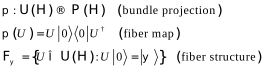
     <p>The relationship between unitary operations and quantum states is captured by a fiber bundle structure <xref ref-type="bibr" rid="scirp.138866-66">
       [66]
      </xref>:</p>
     <p>
      <math display="inline" xmlns="http://www.w3.org/1998/Math/MathML"> <mtable columnalign="left"> 
        <mtr> 
         <mtd> 
          <mi>
            π 
          </mi> 
          <mn> 
           <mo>
             : 
           </mo> 
          </mn> 
          <mi mathvariant="script">
            U 
          </mi> 
          <mrow> 
           <mo>
             ( 
           </mo> 
           <mi>
             ℋ 
           </mi> 
           <mo>
             ) 
           </mo> 
          </mrow> 
          <mo>
            → 
          </mo> 
          <mi>
            ℙ 
          </mi> 
          <mrow> 
           <mo>
             ( 
           </mo> 
           <mi>
             ℋ 
           </mi> 
           <mo>
             ) 
           </mo> 
          </mrow> 
         </mtd> 
        </mtr> 
        <mtr> 
         <mtd> 
          <mi>
            π 
          </mi> 
          <mrow> 
           <mo>
             ( 
           </mo> 
           <mi>
             U 
           </mi> 
           <mo>
             ) 
           </mo> 
          </mrow> 
          <mo>
            = 
          </mo> 
          <mi>
            U 
          </mi> 
          <mrow> 
           <mo>
             | 
           </mo> 
           <mn>
             0 
           </mn> 
           <mo>
             〉 
           </mo> 
          </mrow> 
          <mrow> 
           <mo>
             〈 
           </mo> 
           <mn>
             0 
           </mn> 
           <mo>
             | 
           </mo> 
          </mrow> 
          <msup> 
           <mi>
             U 
           </mi> 
           <mo>
             † 
           </mo> 
          </msup> 
         </mtd> 
        </mtr> 
       </mtable> 
      </math>(16)</p>
     <p>where 
      <math display="inline" xmlns="http://www.w3.org/1998/Math/MathML"> <mrow> 
        <mi>
          ℙ 
        </mi> 
        <mrow> 
         <mo>
           ( 
         </mo> 
         <mi>
           ℋ 
         </mi> 
         <mo>
           ) 
         </mo> 
        </mrow> 
       </mrow> 
      </math> is the projective Hilbert space of physical states. This rich geometric structure will guide our construction of the complexity operator 
      <math display="inline" xmlns="http://www.w3.org/1998/Math/MathML"> <mover accent="true"> 
        <mi>
          C 
        </mi> 
        <mo>
          ^ 
        </mo> 
       </mover> 
      </math> in the following sections, ensuring it satisfies all the requirements for a legitimate quantum observable while respecting the intrinsic geometry of quantum circuits <xref ref-type="bibr" rid="scirp.138866-67">
       [67]
      </xref>.</p>
    </sec>
   </sec>
   <sec id="s3">
    <title>
     <xref ref-type="bibr" rid="scirp.138866-"></xref>3. The Circuit Complexity Observable</title>
    <sec id="s3_1">
     <title>
      <xref ref-type="bibr" rid="scirp.138866-"></xref>3.1. Construction of the Operator</title>
     <p>We now undertake the central mathematical task of this work: constructing the quantum circuit complexity operator with the mathematical rigor required for legitimate quantum mechanical observables <xref ref-type="bibr" rid="scirp.138866-3">
       [3]
      </xref> <xref ref-type="bibr" rid="scirp.138866-21">
       [21]
      </xref>. Following the frameworks established by Reed and Simon <xref ref-type="bibr" rid="scirp.138866-39">
       [39]
      </xref> and modern extensions by Simon <xref ref-type="bibr" rid="scirp.138866-68">
       [68]
      </xref>, we will proceed through several stages of increasing mathematical precision, carefully building up the operator’s structure while ensuring it satisfies all necessary physical and mathematical requirements.</p>
     <p>Let us begin by defining the mathematical space in which our operator will act. To construct the complexity operator properly, we must first establish its domain—the set of quantum states on which it can legitimately operate.</p>
     <p>Definition 1 (Initial Domain). The initial domain 
      <math display="inline" xmlns="http://www.w3.org/1998/Math/MathML"> <mrow> 
        <msub> 
         <mi mathvariant="script">
           D 
         </mi> 
         <mn>
           0 
         </mn> 
        </msub> 
        <mrow> 
         <mo>
           ( 
         </mo> 
         <mover accent="true"> 
          <mi>
            C 
          </mi> 
          <mo>
            ^ 
          </mo> 
         </mover> 
         <mo>
           ) 
         </mo> 
        </mrow> 
       </mrow> 
      </math> consists of all finite linear combinations of complexity eigenstates <xref ref-type="bibr" rid="scirp.138866-69">
       [69]
      </xref> <xref ref-type="bibr" rid="scirp.138866-70">
       [70]
      </xref>:</p>
     <p>
      <math xmlns="http://www.w3.org/1998/Math/MathML" display="inline"> <mrow> 
        <msub> 
         <mi mathvariant="script">
           D 
         </mi> 
         <mn>
           0 
         </mn> 
        </msub> 
        <mrow> 
         <mo>
           ( 
         </mo> 
         <mover accent="true"> 
          <mi>
            C 
          </mi> 
          <mo>
            ^ 
          </mo> 
         </mover> 
         <mo>
           ) 
         </mo> 
        </mrow> 
        <mo>
          = 
        </mo> 
        <mrow> 
         <mo>
           { 
         </mo> 
         <mrow> 
          <mstyle displaystyle="true"> 
           <munderover> 
            <mo>
              ∑ 
            </mo> 
            <mrow> 
             <mi>
               k 
             </mi> 
             <mo>
               = 
             </mo> 
             <mn>
               0 
             </mn> 
            </mrow> 
            <mi>
              N 
            </mi> 
           </munderover> 
          </mstyle> 
          <mtext>
              
          </mtext> 
          <msub> 
           <mi>
             c 
           </mi> 
           <mi>
             k 
           </mi> 
          </msub> 
          <mrow> 
           <mo>
             | 
           </mo> 
           <mrow> 
            <msub> 
             <mi>
               ψ 
             </mi> 
             <mi>
               k 
             </mi> 
            </msub> 
           </mrow> 
           <mo>
             〉 
           </mo> 
          </mrow> 
          <mn> 
           <mo>
             : 
           </mo> 
          </mn> 
          <mi>
            N 
          </mi> 
          <mo>
            ∈ 
          </mo> 
          <mi>
            ℕ 
          </mi> 
          <mn>
            , 
          </mn> 
          <msub> 
           <mi>
             c 
           </mi> 
           <mi>
             k 
           </mi> 
          </msub> 
          <mo>
            ∈ 
          </mo> 
          <mi>
            ℂ 
          </mi> 
          <mn>
            , 
          </mn> 
          <mrow> 
           <mo>
             | 
           </mo> 
           <mrow> 
            <msub> 
             <mi>
               ψ 
             </mi> 
             <mi>
               k 
             </mi> 
            </msub> 
           </mrow> 
           <mo>
             〉 
           </mo> 
          </mrow> 
          <mtext>
              
          </mtext> 
          <mtext>
            complexity 
          </mtext> 
          <mtext>
              
          </mtext> 
          <mtext>
            eigenstate 
          </mtext> 
         </mrow> 
         <mo>
           } 
         </mo> 
        </mrow> 
       </mrow> 
      </math>(17)</p>
     <p>where 
      <math display="inline" xmlns="http://www.w3.org/1998/Math/MathML"> <mrow> 
        <mrow> 
         <mo>
           { 
         </mo> 
         <mrow> 
          <mrow> 
           <mo>
             | 
           </mo> 
           <mrow> 
            <msub> 
             <mi>
               ψ 
             </mi> 
             <mi>
               k 
             </mi> 
            </msub> 
           </mrow> 
           <mo>
             〉 
           </mo> 
          </mrow> 
         </mrow> 
         <mo>
           } 
         </mo> 
        </mrow> 
       </mrow> 
      </math> forms an orthonormal basis of complexity eigenstates. This domain is dense in the physical Hilbert space, providing a foundation for our construction.</p>
     <p>On this carefully defined domain, we can now construct the complexity operator following modern operator theory <xref ref-type="bibr" rid="scirp.138866-1">
       [1]
      </xref> <xref ref-type="bibr" rid="scirp.138866-57">
       [57]
      </xref>:</p>
     <p>Definition 2 (Circuit Complexity Operator). The operator 
      <math display="inline" xmlns="http://www.w3.org/1998/Math/MathML"> <mrow> 
        <mover accent="true"> 
         <mi>
           C 
         </mi> 
         <mo>
           ^ 
         </mo> 
        </mover> 
        <mn> 
         <mo>
           : 
         </mo> 
        </mn> 
        <msub> 
         <mi mathvariant="script">
           D 
         </mi> 
         <mn>
           0 
         </mn> 
        </msub> 
        <mrow> 
         <mo>
           ( 
         </mo> 
         <mover accent="true"> 
          <mi>
            C 
          </mi> 
          <mo>
            ^ 
          </mo> 
         </mover> 
         <mo>
           ) 
         </mo> 
        </mrow> 
        <mo>
          → 
        </mo> 
        <mi>
          ℋ 
        </mi> 
       </mrow> 
      </math> is defined through its spectral decomposition:</p>
     <p>
      <math xmlns="http://www.w3.org/1998/Math/MathML" display="inline"> <mrow> 
        <mover accent="true"> 
         <mi>
           C 
         </mi> 
         <mo>
           ^ 
         </mo> 
        </mover> 
        <mo>
          = 
        </mo> 
        <mstyle displaystyle="true"> 
         <munder> 
          <mo>
            ∑ 
          </mo> 
          <mi>
            i 
          </mi> 
         </munder> 
        </mstyle> 
        <mtext>
            
        </mtext> 
        <msub> 
         <mi>
           d 
         </mi> 
         <mi>
           i 
         </mi> 
        </msub> 
        <msub> 
         <mi>
           Π 
         </mi> 
         <mi>
           i 
         </mi> 
        </msub> 
       </mrow> 
      </math>(18)</p>
     <p>where:</p>
     <p>1) 
      <math display="inline" xmlns="http://www.w3.org/1998/Math/MathML"> <mrow> 
        <msub> 
         <mi>
           d 
         </mi> 
         <mi>
           i 
         </mi> 
        </msub> 
        <mo>
          ∈ 
        </mo> 
        <msup> 
         <mi>
           ℝ 
         </mi> 
         <mo>
           + 
         </mo> 
        </msup> 
       </mrow> 
      </math> represents the circuit depth eigenvalue <xref ref-type="bibr" rid="scirp.138866-9">
       [9]
      </xref></p>
     <p>2) 
      <math display="inline" xmlns="http://www.w3.org/1998/Math/MathML"> <mrow> 
        <msub> 
         <mi>
           Π 
         </mi> 
         <mi>
           i 
         </mi> 
        </msub> 
       </mrow> 
      </math> are finite-rank orthogonal projectors onto complexity eigenspaces <xref ref-type="bibr" rid="scirp.138866-20">
       [20]
      </xref></p>
     <p>3) The sum converges in the strong operator topology on 
      <math display="inline" xmlns="http://www.w3.org/1998/Math/MathML"> <mrow> 
        <msub> 
         <mi mathvariant="script">
           D 
         </mi> 
         <mn>
           0 
         </mn> 
        </msub> 
        <mrow> 
         <mo>
           ( 
         </mo> 
         <mover accent="true"> 
          <mi>
            C 
          </mi> 
          <mo>
            ^ 
          </mo> 
         </mover> 
         <mo>
           ) 
         </mo> 
        </mrow> 
       </mrow> 
      </math></p>
     <p>These projectors have a concrete physical interpretation, constructed using Nielsen’s geometric framework <xref ref-type="bibr" rid="scirp.138866-10">
       [10]
      </xref>:</p>
     <p>
      <math display="inline" xmlns="http://www.w3.org/1998/Math/MathML"> <mrow> 
        <msub> 
         <mi>
           Π 
         </mi> 
         <mi>
           i 
         </mi> 
        </msub> 
        <mo>
          = 
        </mo> 
        <mstyle displaystyle="true"> 
         <munder> 
          <mo>
            ∑ 
          </mo> 
          <mrow> 
           <mrow> 
            <mo>
              | 
            </mo> 
            <mi>
              ψ 
            </mi> 
            <mo>
              〉 
            </mo> 
           </mrow> 
           <mo>
             ∈ 
           </mo> 
           <msub> 
            <mi>
              ℋ 
            </mi> 
            <mi>
              i 
            </mi> 
           </msub> 
          </mrow> 
         </munder> 
        </mstyle> 
        <mrow> 
         <mo>
           | 
         </mo> 
         <mi>
           ψ 
         </mi> 
         <mo>
           〉 
         </mo> 
        </mrow> 
        <mrow> 
         <mo>
           〈 
         </mo> 
         <mi>
           ψ 
         </mi> 
         <mo>
           | 
         </mo> 
        </mrow> 
       </mrow> 
      </math>(19)</p>
     <p>where 
      <math display="inline" xmlns="http://www.w3.org/1998/Math/MathML"> <mrow> 
        <msub> 
         <mi>
           ℋ 
         </mi> 
         <mi>
           i 
         </mi> 
        </msub> 
       </mrow> 
      </math> is the finite-dimensional subspace of states with complexity 
      <math display="inline" xmlns="http://www.w3.org/1998/Math/MathML"> <mrow> 
        <msub> 
         <mi>
           d 
         </mi> 
         <mi>
           i 
         </mi> 
        </msub> 
       </mrow> 
      </math> <xref ref-type="bibr" rid="scirp.138866-59">
       [59]
      </xref>. This construction ensures that the complexity operator assigns definite complexity values to quantum states while respecting the mathematical requirements of quantum mechanics.</p>
     <p>Theorem 3 (Domain Properties). The domain 
      <math display="inline" xmlns="http://www.w3.org/1998/Math/MathML"> <mrow> 
        <mi mathvariant="script">
          D 
        </mi> 
        <mrow> 
         <mo>
           ( 
         </mo> 
         <mover accent="true"> 
          <mi>
            C 
          </mi> 
          <mo>
            ^ 
          </mo> 
         </mover> 
         <mo>
           ) 
         </mo> 
        </mrow> 
       </mrow> 
      </math> of the complexity operator satisfies the following essential properties <xref ref-type="bibr" rid="scirp.138866-33">
       [33]
      </xref> <xref ref-type="bibr" rid="scirp.138866-71">
       [71]
      </xref>:</p>
     <p>
      <math xmlns="http://www.w3.org/1998/Math/MathML" display="inline"> <mtable columnalign="left"> 
        <mtr> 
         <mtd> 
          <mtext>
            1 
          </mtext> 
          <mtext>
            . Density 
          </mtext> 
          <mo>
            : 
          </mo> 
          <mtext>
            The closure 
          </mtext> 
          <mtext>
              
          </mtext> 
          <mover accent="true"> 
           <mrow> 
            <mi mathvariant="script">
              D 
            </mi> 
            <mrow> 
             <mo>
               ( 
             </mo> 
             <mover accent="true"> 
              <mi>
                C 
              </mi> 
              <mo>
                ^ 
              </mo> 
             </mover> 
             <mo>
               ) 
             </mo> 
            </mrow> 
           </mrow> 
           <mo stretchy="true">
             ¯ 
           </mo> 
          </mover> 
          <mo>
            = 
          </mo> 
          <mi>
            ℋ 
          </mi> 
          <mtext>
              
          </mtext> 
          <mtext>
            in 
          </mtext> 
          <mtext>
              
          </mtext> 
          <mtext>
            the 
          </mtext> 
          <mtext>
              
          </mtext> 
          <mtext>
            Hilbert space to pology 
          </mtext> 
         </mtd> 
        </mtr> 
        <mtr> 
         <mtd> 
          <mtext>
            2 
          </mtext> 
          <mtext>
            . Graph completeness 
          </mtext> 
          <mo>
            : 
          </mo> 
          <mrow> 
           <mo>
             ( 
           </mo> 
           <mrow> 
            <mi mathvariant="script">
              D 
            </mi> 
            <mrow> 
             <mo>
               ( 
             </mo> 
             <mover accent="true"> 
              <mi>
                C 
              </mi> 
              <mo>
                ^ 
              </mo> 
             </mover> 
             <mo>
               ) 
             </mo> 
            </mrow> 
            <mn>
              , 
            </mn> 
            <msub> 
             <mrow> 
              <mrow> 
               <mo>
                 ‖ 
               </mo> 
               <mrow> 
                <mtext>
                    
                </mtext> 
                <mo>
                  ⋅ 
                </mo> 
                <mtext>
                    
                </mtext> 
               </mrow> 
               <mo>
                 ‖ 
               </mo> 
              </mrow> 
             </mrow> 
             <mi mathvariant="script">
               G 
             </mi> 
            </msub> 
           </mrow> 
           <mo>
             ) 
           </mo> 
          </mrow> 
          <mtext>
              
          </mtext> 
          <mtext>
            forms a complete space 
          </mtext> 
         </mtd> 
        </mtr> 
        <mtr> 
         <mtd> 
          <mtext>
            3 
          </mtext> 
          <mtext>
            . Core property 
          </mtext> 
          <mo>
            : 
          </mo> 
          <msub> 
           <mi mathvariant="script">
             D 
           </mi> 
           <mn>
             0 
           </mn> 
          </msub> 
          <mrow> 
           <mo>
             ( 
           </mo> 
           <mover accent="true"> 
            <mi>
              C 
            </mi> 
            <mo>
              ^ 
            </mo> 
           </mover> 
           <mo>
             ) 
           </mo> 
          </mrow> 
          <mtext>
              
          </mtext> 
          <mtext>
            serves as a core for 
          </mtext> 
          <mtext>
              
          </mtext> 
          <mover accent="true"> 
           <mi>
             C 
           </mi> 
           <mo>
             ^ 
           </mo> 
          </mover> 
         </mtd> 
        </mtr> 
       </mtable> 
      </math>(20)</p>
     <p>where the graph norm is defined for any state 
      <math display="inline" xmlns="http://www.w3.org/1998/Math/MathML"> <mrow> 
        <mrow> 
         <mo>
           | 
         </mo> 
         <mi>
           ψ 
         </mi> 
         <mo>
           〉 
         </mo> 
        </mrow> 
       </mrow> 
      </math> by <xref ref-type="bibr" rid="scirp.138866-21">
       [21]
      </xref>:</p>
     <p>
      <math display="inline" xmlns="http://www.w3.org/1998/Math/MathML"> <mrow> 
        <msub> 
         <mrow> 
          <mrow> 
           <mo>
             ‖ 
           </mo> 
           <mi>
             ψ 
           </mi> 
           <mo>
             ‖ 
           </mo> 
          </mrow> 
         </mrow> 
         <mi mathvariant="script">
           G 
         </mi> 
        </msub> 
        <mo>
          = 
        </mo> 
        <msqrt> 
         <mrow> 
          <msup> 
           <mrow> 
            <mrow> 
             <mo>
               ‖ 
             </mo> 
             <mi>
               ψ 
             </mi> 
             <mo>
               ‖ 
             </mo> 
            </mrow> 
           </mrow> 
           <mn>
             2 
           </mn> 
          </msup> 
          <mo>
            + 
          </mo> 
          <msup> 
           <mrow> 
            <mrow> 
             <mo>
               ‖ 
             </mo> 
             <mrow> 
              <mover accent="true"> 
               <mi>
                 C 
               </mi> 
               <mo>
                 ^ 
               </mo> 
              </mover> 
              <mi>
                ψ 
              </mi> 
             </mrow> 
             <mo>
               ‖ 
             </mo> 
            </mrow> 
           </mrow> 
           <mn>
             2 
           </mn> 
          </msup> 
         </mrow> 
        </msqrt> 
       </mrow> 
      </math>(21)</p>
     <p>For theories with gauge symmetry, following ‘t Hooft’s fundamental insights <xref ref-type="bibr" rid="scirp.138866-26">
       [26]
      </xref> <xref ref-type="bibr" rid="scirp.138866-27">
       [27]
      </xref>, we establish:</p>
     <p>Theorem 4 (Gauge Invariance). The complexity operator 
      <math display="inline" xmlns="http://www.w3.org/1998/Math/MathML"> <mover accent="true"> 
        <mi>
          C 
        </mi> 
        <mo>
          ^ 
        </mo> 
       </mover> 
      </math> satisfies the following gauge invariance properties <xref ref-type="bibr" rid="scirp.138866-28">
       [28]
      </xref> <xref ref-type="bibr" rid="scirp.138866-34">
       [34]
      </xref>:</p>
     <p>
      <math xmlns="http://www.w3.org/1998/Math/MathML" display="inline"> <mtable columnalign="left"> 
        <mtr> 
         <mtd> 
          <mtext>
            1 
          </mtext> 
          <mtext>
            . 
          </mtext> 
          <mtext>
              
          </mtext> 
          <mtext>
            Strong 
          </mtext> 
          <mtext>
              
          </mtext> 
          <mtext>
            invariance 
          </mtext> 
          <mo>
            : 
          </mo> 
          <mrow> 
           <mo>
             [ 
           </mo> 
           <mrow> 
            <mi>
              G 
            </mi> 
            <mrow> 
             <mo>
               ( 
             </mo> 
             <mi>
               ξ 
             </mi> 
             <mo>
               ) 
             </mo> 
            </mrow> 
            <mn>
              , 
            </mn> 
            <mover accent="true"> 
             <mi>
               C 
             </mi> 
             <mo>
               ^ 
             </mo> 
            </mover> 
           </mrow> 
           <mo>
             ] 
           </mo> 
          </mrow> 
          <mo>
            = 
          </mo> 
          <mn>
            0 
          </mn> 
          <mtext>
              
          </mtext> 
          <mtext>
            strongly 
          </mtext> 
          <mtext>
              
          </mtext> 
          <mtext>
            on 
          </mtext> 
          <mtext>
              
          </mtext> 
          <mi mathvariant="script">
            D 
          </mi> 
          <mrow> 
           <mo>
             ( 
           </mo> 
           <mover accent="true"> 
            <mi>
              C 
            </mi> 
            <mo>
              ^ 
            </mo> 
           </mover> 
           <mo>
             ) 
           </mo> 
          </mrow> 
         </mtd> 
        </mtr> 
        <mtr> 
         <mtd> 
          <mtext>
            2 
          </mtext> 
          <mtext>
            . 
          </mtext> 
          <mtext>
              
          </mtext> 
          <mtext>
            Projector 
          </mtext> 
          <mtext>
              
          </mtext> 
          <mtext>
            invariance 
          </mtext> 
          <mo>
            : 
          </mo> 
          <mrow> 
           <mo>
             [ 
           </mo> 
           <mrow> 
            <mi>
              G 
            </mi> 
            <mrow> 
             <mo>
               ( 
             </mo> 
             <mi>
               ξ 
             </mi> 
             <mo>
               ) 
             </mo> 
            </mrow> 
            <mn>
              , 
            </mn> 
            <msub> 
             <mi>
               Π 
             </mi> 
             <mi>
               i 
             </mi> 
            </msub> 
           </mrow> 
           <mo>
             ] 
           </mo> 
          </mrow> 
          <mo>
            = 
          </mo> 
          <mn>
            0 
          </mn> 
          <mtext>
              
          </mtext> 
          <mtext>
            for 
          </mtext> 
          <mtext>
              
          </mtext> 
          <mtext>
            all 
          </mtext> 
          <mtext>
              
          </mtext> 
          <mi>
            i 
          </mi> 
          <mtext>
              
          </mtext> 
          <mtext>
            and 
          </mtext> 
          <mtext>
              
          </mtext> 
          <mtext>
            gauge 
          </mtext> 
          <mtext>
              
          </mtext> 
          <mtext>
            parameters 
          </mtext> 
          <mtext>
              
          </mtext> 
          <mi>
            ξ 
          </mi> 
         </mtd> 
        </mtr> 
        <mtr> 
         <mtd> 
          <mtext>
            3 
          </mtext> 
          <mtext>
            . 
          </mtext> 
          <mtext>
              
          </mtext> 
          <mtext>
            Domain 
          </mtext> 
          <mtext>
              
          </mtext> 
          <mtext>
            preservation 
          </mtext> 
          <mo>
            : 
          </mo> 
          <mi>
            G 
          </mi> 
          <mrow> 
           <mo>
             ( 
           </mo> 
           <mi>
             ξ 
           </mi> 
           <mo>
             ) 
           </mo> 
          </mrow> 
          <mi mathvariant="script">
            D 
          </mi> 
          <mrow> 
           <mo>
             ( 
           </mo> 
           <mover accent="true"> 
            <mi>
              C 
            </mi> 
            <mo>
              ^ 
            </mo> 
           </mover> 
           <mo>
             ) 
           </mo> 
          </mrow> 
          <mo>
            ⊆ 
          </mo> 
          <mi mathvariant="script">
            D 
          </mi> 
          <mrow> 
           <mo>
             ( 
           </mo> 
           <mover accent="true"> 
            <mi>
              C 
            </mi> 
            <mo>
              ^ 
            </mo> 
           </mover> 
           <mo>
             ) 
           </mo> 
          </mrow> 
         </mtd> 
        </mtr> 
       </mtable> 
      </math>(22)</p>
     <p>where 
      <math display="inline" xmlns="http://www.w3.org/1998/Math/MathML"> <mrow> 
        <mi>
          G 
        </mi> 
        <mrow> 
         <mo>
           ( 
         </mo> 
         <mi>
           ξ 
         </mi> 
         <mo>
           ) 
         </mo> 
        </mrow> 
       </mrow> 
      </math> represents the strongly continuous unitary implementation of gauge transformations.</p>
    </sec>
    <sec id="s3_2">
     <title>
      <xref ref-type="bibr" rid="scirp.138866-"></xref>3.2. Self-Adjointness and Spectral Properties</title>
     <p>We now establish the complete spectral theory of 
      <math display="inline" xmlns="http://www.w3.org/1998/Math/MathML"> <mover accent="true"> 
        <mi>
          C 
        </mi> 
        <mo>
          ^ 
        </mo> 
       </mover> 
      </math>, demonstrating that it satisfies all requirements for a legitimate physical observable <xref ref-type="bibr" rid="scirp.138866-20">
       [20]
      </xref> <xref ref-type="bibr" rid="scirp.138866-46">
       [46]
      </xref>. This analysis is crucial for understanding the measurement outcomes and quantum dynamics associated with complexity.</p>
     <p>Theorem 5 (Essential Self-Adjointness). The operator 
      <math display="inline" xmlns="http://www.w3.org/1998/Math/MathML"> <mover accent="true"> 
        <mi>
          C 
        </mi> 
        <mo>
          ^ 
        </mo> 
       </mover> 
      </math> is essentially self-adjoint on 
      <math display="inline" xmlns="http://www.w3.org/1998/Math/MathML"> <mrow> 
        <msub> 
         <mi mathvariant="script">
           D 
         </mi> 
         <mn>
           0 
         </mn> 
        </msub> 
        <mrow> 
         <mo>
           ( 
         </mo> 
         <mover accent="true"> 
          <mi>
            C 
          </mi> 
          <mo>
            ^ 
          </mo> 
         </mover> 
         <mo>
           ) 
         </mo> 
        </mrow> 
       </mrow> 
      </math> with deficiency indices 
      <math display="inline" xmlns="http://www.w3.org/1998/Math/MathML"> <mrow> 
        <mrow> 
         <mo>
           ( 
         </mo> 
         <mrow> 
          <mn>
            0,0 
          </mn> 
         </mrow> 
         <mo>
           ) 
         </mo> 
        </mrow> 
       </mrow> 
      </math> <xref ref-type="bibr" rid="scirp.138866-33">
       [33]
      </xref> <xref ref-type="bibr" rid="scirp.138866-39">
       [39]
      </xref>. More precisely:</p>
     <p>1) The operator is symmetric: 
      <math display="inline" xmlns="http://www.w3.org/1998/Math/MathML"> <mrow> 
        <mrow> 
         <mo>
           〈 
         </mo> 
         <mrow> 
          <mover accent="true"> 
           <mi>
             C 
           </mi> 
           <mo>
             ^ 
           </mo> 
          </mover> 
          <mi>
            ψ 
          </mi> 
         </mrow> 
         <mo>
           | 
         </mo> 
         <mi>
           ϕ 
         </mi> 
         <mo>
           〉 
         </mo> 
        </mrow> 
        <mo>
          = 
        </mo> 
        <mrow> 
         <mo>
           〈 
         </mo> 
         <mi>
           ψ 
         </mi> 
         <mo>
           | 
         </mo> 
         <mrow> 
          <mover accent="true"> 
           <mi>
             C 
           </mi> 
           <mo>
             ^ 
           </mo> 
          </mover> 
          <mi>
            ϕ 
          </mi> 
         </mrow> 
         <mo>
           〉 
         </mo> 
        </mrow> 
       </mrow> 
      </math> for all 
      <math display="inline" xmlns="http://www.w3.org/1998/Math/MathML"> <mrow> 
        <mi>
          ψ 
        </mi> 
        <mn>
          , 
        </mn> 
        <mi>
          ϕ 
        </mi> 
        <mo>
          ∈ 
        </mo> 
        <msub> 
         <mi mathvariant="script">
           D 
         </mi> 
         <mn>
           0 
         </mn> 
        </msub> 
        <mrow> 
         <mo>
           ( 
         </mo> 
         <mover accent="true"> 
          <mi>
            C 
          </mi> 
          <mo>
            ^ 
          </mo> 
         </mover> 
         <mo>
           ) 
         </mo> 
        </mrow> 
       </mrow> 
      </math></p>
     <p>2) The deficiency subspaces 
      <math display="inline" xmlns="http://www.w3.org/1998/Math/MathML"> <mrow> 
        <mi>
          ker 
        </mi> 
        <mrow> 
         <mo>
           ( 
         </mo> 
         <mrow> 
          <msup> 
           <mover accent="true"> 
            <mi>
              C 
            </mi> 
            <mo>
              ^ 
            </mo> 
           </mover> 
           <mn> 
            <mo>
              * 
            </mo> 
           </mn> 
          </msup> 
          <mo>
            ± 
          </mo> 
          <mi>
            i 
          </mi> 
         </mrow> 
         <mo>
           ) 
         </mo> 
        </mrow> 
       </mrow> 
      </math> are trivial</p>
     <p>3) The closure 
      <math display="inline" xmlns="http://www.w3.org/1998/Math/MathML"> <mrow> 
        <mover accent="true"> 
         <mover accent="true"> 
          <mi>
            C 
          </mi> 
          <mo>
            ^ 
          </mo> 
         </mover> 
         <mo stretchy="true">
           ¯ 
         </mo> 
        </mover> 
       </mrow> 
      </math> provides the unique self-adjoint extension</p>
     <p>Proof. The proof proceeds through three carefully constructed steps, following standard operator theory <xref ref-type="bibr" rid="scirp.138866-55">
       [55]
      </xref>:</p>
     <p>1) Symmetry For any states 
      <math display="inline" xmlns="http://www.w3.org/1998/Math/MathML"> <mrow> 
        <mi>
          ψ 
        </mi> 
        <mn>
          , 
        </mn> 
        <mi>
          ϕ 
        </mi> 
        <mo>
          ∈ 
        </mo> 
        <msub> 
         <mi mathvariant="script">
           D 
         </mi> 
         <mn>
           0 
         </mn> 
        </msub> 
        <mrow> 
         <mo>
           ( 
         </mo> 
         <mover accent="true"> 
          <mi>
            C 
          </mi> 
          <mo>
            ^ 
          </mo> 
         </mover> 
         <mo>
           ) 
         </mo> 
        </mrow> 
       </mrow> 
      </math>, we have <xref ref-type="bibr" rid="scirp.138866-21">
       [21]
      </xref>:</p>
     <p>
      <math xmlns="http://www.w3.org/1998/Math/MathML" display="inline"> <mrow> 
        <mrow> 
         <mo>
           〈 
         </mo> 
         <mrow> 
          <mover accent="true"> 
           <mi>
             C 
           </mi> 
           <mo>
             ^ 
           </mo> 
          </mover> 
          <mi>
            ψ 
          </mi> 
         </mrow> 
         <mo>
           | 
         </mo> 
         <mi>
           ϕ 
         </mi> 
         <mo>
           〉 
         </mo> 
        </mrow> 
        <mo>
          = 
        </mo> 
        <mstyle displaystyle="true"> 
         <munder> 
          <mo>
            ∑ 
          </mo> 
          <mi>
            i 
          </mi> 
         </munder> 
        </mstyle> 
        <mtext>
            
        </mtext> 
        <msub> 
         <mi>
           d 
         </mi> 
         <mi>
           i 
         </mi> 
        </msub> 
        <mrow> 
         <mo>
           〈 
         </mo> 
         <mrow> 
          <msub> 
           <mi>
             Π 
           </mi> 
           <mi>
             i 
           </mi> 
          </msub> 
          <mi>
            ψ 
          </mi> 
         </mrow> 
         <mo>
           | 
         </mo> 
         <mi>
           ϕ 
         </mi> 
         <mo>
           〉 
         </mo> 
        </mrow> 
        <mo>
          = 
        </mo> 
        <mstyle displaystyle="true"> 
         <munder> 
          <mo>
            ∑ 
          </mo> 
          <mi>
            i 
          </mi> 
         </munder> 
        </mstyle> 
        <mtext>
            
        </mtext> 
        <msub> 
         <mi>
           d 
         </mi> 
         <mi>
           i 
         </mi> 
        </msub> 
        <mrow> 
         <mo>
           〈 
         </mo> 
         <mi>
           ψ 
         </mi> 
         <mo>
           | 
         </mo> 
        </mrow> 
        <msub> 
         <mi>
           Π 
         </mi> 
         <mi>
           i 
         </mi> 
        </msub> 
        <mrow> 
         <mo>
           | 
         </mo> 
         <mi>
           ϕ 
         </mi> 
         <mo>
           〉 
         </mo> 
        </mrow> 
        <mo>
          = 
        </mo> 
        <mrow> 
         <mo>
           〈 
         </mo> 
         <mi>
           ψ 
         </mi> 
         <mo>
           | 
         </mo> 
         <mrow> 
          <mover accent="true"> 
           <mi>
             C 
           </mi> 
           <mo>
             ^ 
           </mo> 
          </mover> 
          <mi>
            ϕ 
          </mi> 
         </mrow> 
         <mo>
           〉 
         </mo> 
        </mrow> 
       </mrow> 
      </math>(23)</p>
     <p>2) Deficiency Subspaces Consider the equations:</p>
     <p>
      <math xmlns="http://www.w3.org/1998/Math/MathML" display="inline"> <mrow> 
        <mrow> 
         <mo>
           ( 
         </mo> 
         <mrow> 
          <mover accent="true"> 
           <mi>
             C 
           </mi> 
           <mo>
             ^ 
           </mo> 
          </mover> 
          <mo>
            ± 
          </mo> 
          <mi>
            i 
          </mi> 
         </mrow> 
         <mo>
           ) 
         </mo> 
        </mrow> 
        <mi>
          ψ 
        </mi> 
        <mo>
          = 
        </mo> 
        <mn>
          0 
        </mn> 
        <mo>
          , 
        </mo> 
        <mtext>
            
        </mtext> 
        <mi>
          ψ 
        </mi> 
        <mo>
          = 
        </mo> 
        <mstyle displaystyle="true"> 
         <munder> 
          <mo>
            ∑ 
          </mo> 
          <mi>
            d 
          </mi> 
         </munder> 
        </mstyle> 
        <mtext>
            
        </mtext> 
        <msub> 
         <mi>
           a 
         </mi> 
         <mi>
           d 
         </mi> 
        </msub> 
        <mrow> 
         <mo>
           | 
         </mo> 
         <mrow> 
          <msub> 
           <mi>
             ψ 
           </mi> 
           <mi>
             d 
           </mi> 
          </msub> 
         </mrow> 
         <mo>
           〉 
         </mo> 
        </mrow> 
       </mrow> 
      </math>(24)</p>
     <p>This implies 
      <math display="inline" xmlns="http://www.w3.org/1998/Math/MathML"> <mrow> 
        <mrow> 
         <mo>
           ( 
         </mo> 
         <mrow> 
          <mi>
            d 
          </mi> 
          <mo>
            ± 
          </mo> 
          <mi>
            i 
          </mi> 
         </mrow> 
         <mo>
           ) 
         </mo> 
        </mrow> 
        <msub> 
         <mi>
           a 
         </mi> 
         <mi>
           d 
         </mi> 
        </msub> 
        <mo>
          = 
        </mo> 
        <mn>
          0 
        </mn> 
       </mrow> 
      </math> for all 
      <math display="inline" xmlns="http://www.w3.org/1998/Math/MathML"> <mi>
         d 
       </mi> 
      </math>. Since 
      <math display="inline" xmlns="http://www.w3.org/1998/Math/MathML"> <mrow> 
        <mi>
          d 
        </mi> 
        <mo>
          ∈ 
        </mo> 
        <msup> 
         <mi>
           ℝ 
         </mi> 
         <mo>
           + 
         </mo> 
        </msup> 
       </mrow> 
      </math>, we must have 
      <math display="inline" xmlns="http://www.w3.org/1998/Math/MathML"> <mrow> 
        <msub> 
         <mi>
           a 
         </mi> 
         <mi>
           d 
         </mi> 
        </msub> 
        <mo>
          = 
        </mo> 
        <mn>
          0 
        </mn> 
       </mrow> 
      </math> for all 
      <math display="inline" xmlns="http://www.w3.org/1998/Math/MathML"> <mi>
         d 
       </mi> 
      </math>, proving that both deficiency indices are zero <xref ref-type="bibr" rid="scirp.138866-1">
       [1]
      </xref>.</p>
     <p>3) Domain Closure The closure 
      <math display="inline" xmlns="http://www.w3.org/1998/Math/MathML"> <mrow> 
        <mover accent="true"> 
         <mover accent="true"> 
          <mi>
            C 
          </mi> 
          <mo>
            ^ 
          </mo> 
         </mover> 
         <mo stretchy="true">
           ¯ 
         </mo> 
        </mover> 
       </mrow> 
      </math> provides the unique self-adjoint extension <xref ref-type="bibr" rid="scirp.138866-56">
       [56]
      </xref>, completing our proof of essential self-adjointness. □</p>
     <p>Theorem 6 (Spectral Resolution). The complexity operator 
      <math display="inline" xmlns="http://www.w3.org/1998/Math/MathML"> <mover accent="true"> 
        <mi>
          C 
        </mi> 
        <mo>
          ^ 
        </mo> 
       </mover> 
      </math> admits a unique spectral resolution <xref ref-type="bibr" rid="scirp.138866-46">
       [46]
      </xref> <xref ref-type="bibr" rid="scirp.138866-71">
       [71]
      </xref>:</p>
     <p>
      <math xmlns="http://www.w3.org/1998/Math/MathML" display="inline"> <mrow> 
        <mover accent="true"> 
         <mi>
           C 
         </mi> 
         <mo>
           ^ 
         </mo> 
        </mover> 
        <mo>
          = 
        </mo> 
        <mstyle displaystyle="true"> 
         <mrow> 
          <msub> 
           <mo>
             ∫ 
           </mo> 
           <mrow> 
            <mi>
              σ 
            </mi> 
            <mrow> 
             <mo>
               ( 
             </mo> 
             <mover accent="true"> 
              <mi>
                C 
              </mi> 
              <mo>
                ^ 
              </mo> 
             </mover> 
             <mo>
               ) 
             </mo> 
            </mrow> 
           </mrow> 
          </msub> 
         </mrow> 
        </mstyle> 
        <mtext>
            
        </mtext> 
        <mi>
          λ 
        </mi> 
        <mtext>
            
        </mtext> 
        <mtext>
          d 
        </mtext> 
        <mi>
          E 
        </mi> 
        <mrow> 
         <mo>
           ( 
         </mo> 
         <mi>
           λ 
         </mi> 
         <mo>
           ) 
         </mo> 
        </mrow> 
       </mrow> 
      </math>(25)</p>
     <p>where 
      <math display="inline" xmlns="http://www.w3.org/1998/Math/MathML"> <mrow> 
        <mi>
          E 
        </mi> 
        <mrow> 
         <mo>
           ( 
         </mo> 
         <mi>
           λ 
         </mi> 
         <mo>
           ) 
         </mo> 
        </mrow> 
       </mrow> 
      </math> is the right-continuous spectral measure given explicitly by <xref ref-type="bibr" rid="scirp.138866-72">
       [72]
      </xref>:</p>
     <p>
      <math display="inline" xmlns="http://www.w3.org/1998/Math/MathML"> <mrow> 
        <mi>
          E 
        </mi> 
        <mrow> 
         <mo>
           ( 
         </mo> 
         <mi>
           X 
         </mi> 
         <mo>
           ) 
         </mo> 
        </mrow> 
        <mo>
          = 
        </mo> 
        <mstyle displaystyle="true"> 
         <munder> 
          <mo>
            ∑ 
          </mo> 
          <mrow> 
           <msub> 
            <mi>
              d 
            </mi> 
            <mi>
              i 
            </mi> 
           </msub> 
           <mo>
             ∈ 
           </mo> 
           <mi>
             X 
           </mi> 
          </mrow> 
         </munder> 
        </mstyle> 
        <mtext>
            
        </mtext> 
        <msub> 
         <mi>
           Π 
         </mi> 
         <mi>
           i 
         </mi> 
        </msub> 
       </mrow> 
      </math>(26)</p>
     <p>for all Borel sets 
      <math display="inline" xmlns="http://www.w3.org/1998/Math/MathML"> <mrow> 
        <mi>
          X 
        </mi> 
        <mo>
          ⊆ 
        </mo> 
        <msup> 
         <mi>
           ℝ 
         </mi> 
         <mo>
           + 
         </mo> 
        </msup> 
       </mrow> 
      </math>. Moreover, the spectrum 
      <math display="inline" xmlns="http://www.w3.org/1998/Math/MathML"> <mrow> 
        <mi>
          σ 
        </mi> 
        <mrow> 
         <mo>
           ( 
         </mo> 
         <mover accent="true"> 
          <mi>
            C 
          </mi> 
          <mo>
            ^ 
          </mo> 
         </mover> 
         <mo>
           ) 
         </mo> 
        </mrow> 
       </mrow> 
      </math> is pure point, consisting only of eigenvalues corresponding to physically realizable complexity values.</p>
     <p>Theorem 7 (Resolvent Properties). For all complex numbers 
      <math display="inline" xmlns="http://www.w3.org/1998/Math/MathML"> <mi>
         z 
       </mi> 
      </math> not in the spectrum of 
      <math display="inline" xmlns="http://www.w3.org/1998/Math/MathML"> <mover accent="true"> 
        <mi>
          C 
        </mi> 
        <mo>
          ^ 
        </mo> 
       </mover> 
      </math>, the resolvent operator satisfies <xref ref-type="bibr" rid="scirp.138866-73">
       [73]
      </xref>:</p>
     <p>
      <math display="inline" xmlns="http://www.w3.org/1998/Math/MathML"> <mrow> 
        <mi>
          R 
        </mi> 
        <mrow> 
         <mo>
           ( 
         </mo> 
         <mrow> 
          <mi>
            z 
          </mi> 
          <mo>
            , 
          </mo> 
          <mover accent="true"> 
           <mi>
             C 
           </mi> 
           <mo>
             ^ 
           </mo> 
          </mover> 
         </mrow> 
         <mo>
           ) 
         </mo> 
        </mrow> 
        <mo>
          = 
        </mo> 
        <msup> 
         <mrow> 
          <mrow> 
           <mo>
             ( 
           </mo> 
           <mrow> 
            <mi>
              z 
            </mi> 
            <mo>
              − 
            </mo> 
            <mover accent="true"> 
             <mi>
               C 
             </mi> 
             <mo>
               ^ 
             </mo> 
            </mover> 
           </mrow> 
           <mo>
             ) 
           </mo> 
          </mrow> 
         </mrow> 
         <mrow> 
          <mo>
            − 
          </mo> 
          <mn>
            1 
          </mn> 
         </mrow> 
        </msup> 
        <mo>
          = 
        </mo> 
        <mstyle displaystyle="true"> 
         <munder> 
          <mo>
            ∑ 
          </mo> 
          <mi>
            i 
          </mi> 
         </munder> 
        </mstyle> 
        <mfrac> 
         <mn>
           1 
         </mn> 
         <mrow> 
          <mi>
            z 
          </mi> 
          <mo>
            − 
          </mo> 
          <msub> 
           <mi>
             d 
           </mi> 
           <mi>
             i 
           </mi> 
          </msub> 
         </mrow> 
        </mfrac> 
        <msub> 
         <mi>
           Π 
         </mi> 
         <mi>
           i 
         </mi> 
        </msub> 
       </mrow> 
      </math>(27)</p>
     <p>with the fundamental norm bound:</p>
     <p>
      <math xmlns="http://www.w3.org/1998/Math/MathML" display="inline"> <mrow> 
        <mrow> 
         <mo>
           ‖ 
         </mo> 
         <mrow> 
          <mi>
            R 
          </mi> 
          <mrow> 
           <mo>
             ( 
           </mo> 
           <mrow> 
            <mi>
              z 
            </mi> 
            <mn>
              , 
            </mn> 
            <mover accent="true"> 
             <mi>
               C 
             </mi> 
             <mo>
               ^ 
             </mo> 
            </mover> 
           </mrow> 
           <mo>
             ) 
           </mo> 
          </mrow> 
         </mrow> 
         <mo>
           ‖ 
         </mo> 
        </mrow> 
        <mo>
          ≤ 
        </mo> 
        <mfrac> 
         <mn>
           1 
         </mn> 
         <mrow> 
          <mtext>
            dist 
          </mtext> 
          <mrow> 
           <mo>
             ( 
           </mo> 
           <mrow> 
            <mi>
              z 
            </mi> 
            <mn>
              , 
            </mn> 
            <mi>
              σ 
            </mi> 
            <mrow> 
             <mo>
               ( 
             </mo> 
             <mover accent="true"> 
              <mi>
                C 
              </mi> 
              <mo>
                ^ 
              </mo> 
             </mover> 
             <mo>
               ) 
             </mo> 
            </mrow> 
           </mrow> 
           <mo>
             ) 
           </mo> 
          </mrow> 
         </mrow> 
        </mfrac> 
       </mrow> 
      </math>(28)</p>
     <p>This resolvent characterization ensures that the complexity operator generates a well-defined quantum dynamic and provides the mathematical foundation for studying how complexity evolves in quantum systems.</p>
     <p>These results collectively establish that the complexity operator 
      <math display="inline" xmlns="http://www.w3.org/1998/Math/MathML"> <mover accent="true"> 
        <mi>
          C 
        </mi> 
        <mo>
          ^ 
        </mo> 
       </mover> 
      </math> satisfies all mathematical requirements for a legitimate quantum observable while maintaining gauge invariance. The pure point nature of its spectrum reflects the discrete character of circuit complexity, while the spectral resolution ensures that complexity measurements yield well-defined physical values. The rigorous mathematical framework developed here provides the foundation for the physical applications and experimental predictions we will explore in subsequent sections.</p>
    </sec>
   </sec>
   <sec id="s4">
    <title>
     <xref ref-type="bibr" rid="scirp.138866-"></xref>4. Observable Properties</title>
    <p>Having established the mathematical construction of the complexity operator, we now examine how it behaves as a physical observable. This section demonstrates that circuit complexity exhibits all the essential properties we expect from legitimate physical observables in quantum mechanics, including well-defined transformation laws, precise relationships with other observables, and associated conservation principles.</p>
    <sec id="s4_1">
     <title>
      <xref ref-type="bibr" rid="scirp.138866-"></xref>4.1. Transformation Laws</title>
     <p>A fundamental requirement for any physical observable is that it must transform in a well-defined way when we change our reference frame <xref ref-type="bibr" rid="scirp.138866-2">
       [2]
      </xref> <xref ref-type="bibr" rid="scirp.138866-22">
       [22]
      </xref>. Following Wigner’s theorem and its modern extensions <xref ref-type="bibr" rid="scirp.138866-4">
       [4]
      </xref> <xref ref-type="bibr" rid="scirp.138866-74">
       [74]
      </xref>, we now establish precisely how the complexity operator transforms under changes of reference frame.</p>
     <p>Theorem 8 (Frame Transformations). Let 
      <math display="inline" xmlns="http://www.w3.org/1998/Math/MathML"> <mover accent="true"> 
        <mi>
          C 
        </mi> 
        <mo>
          ^ 
        </mo> 
       </mover> 
      </math> be the circuit complexity operator defined on domain 
      <math display="inline" xmlns="http://www.w3.org/1998/Math/MathML"> <mrow> 
        <mi mathvariant="script">
          D 
        </mi> 
        <mrow> 
         <mo>
           ( 
         </mo> 
         <mover accent="true"> 
          <mi>
            C 
          </mi> 
          <mo>
            ^ 
          </mo> 
         </mover> 
         <mo>
           ) 
         </mo> 
        </mrow> 
       </mrow> 
      </math>, and let 
      <math display="inline" xmlns="http://www.w3.org/1998/Math/MathML"> <mi>
         U 
       </mi> 
      </math> be a unitary transformation representing a change of reference frame that preserves this domain: 
      <math display="inline" xmlns="http://www.w3.org/1998/Math/MathML"> <mrow> 
        <mi>
          U 
        </mi> 
        <mi mathvariant="script">
          D 
        </mi> 
        <mrow> 
         <mo>
           ( 
         </mo> 
         <mover accent="true"> 
          <mi>
            C 
          </mi> 
          <mo>
            ^ 
          </mo> 
         </mover> 
         <mo>
           ) 
         </mo> 
        </mrow> 
        <mo>
          = 
        </mo> 
        <mi mathvariant="script">
          D 
        </mi> 
        <mrow> 
         <mo>
           ( 
         </mo> 
         <mover accent="true"> 
          <mi>
            C 
          </mi> 
          <mo>
            ^ 
          </mo> 
         </mover> 
         <mo>
           ) 
         </mo> 
        </mrow> 
       </mrow> 
      </math> <xref ref-type="bibr" rid="scirp.138866-1">
       [1]
      </xref> <xref ref-type="bibr" rid="scirp.138866-46">
       [46]
      </xref>. Then:</p>
     <p>
      <math display="inline" xmlns="http://www.w3.org/1998/Math/MathML"> <mrow> 
        <mi>
          U 
        </mi> 
        <mover accent="true"> 
         <mi>
           C 
         </mi> 
         <mo>
           ^ 
         </mo> 
        </mover> 
        <msup> 
         <mi>
           U 
         </mi> 
         <mo>
           † 
         </mo> 
        </msup> 
        <mo>
          = 
        </mo> 
        <mover accent="true"> 
         <mi>
           C 
         </mi> 
         <mo>
           ^ 
         </mo> 
        </mover> 
        <mo>
          + 
        </mo> 
        <mi>
          f 
        </mi> 
        <mrow> 
         <mo>
           ( 
         </mo> 
         <mi>
           U 
         </mi> 
         <mo>
           ) 
         </mo> 
        </mrow> 
       </mrow> 
      </math>(29)</p>
     <p>where the frame-dependent correction factor 
      <math display="inline" xmlns="http://www.w3.org/1998/Math/MathML"> <mrow> 
        <mi>
          f 
        </mi> 
        <mrow> 
         <mo>
           ( 
         </mo> 
         <mi>
           U 
         </mi> 
         <mo>
           ) 
         </mo> 
        </mrow> 
       </mrow> 
      </math> takes the specific form <xref ref-type="bibr" rid="scirp.138866-10">
       [10]
      </xref>:</p>
     <p>
      <math display="inline" xmlns="http://www.w3.org/1998/Math/MathML"> <mrow> 
        <mi>
          f 
        </mi> 
        <mrow> 
         <mo>
           ( 
         </mo> 
         <mi>
           U 
         </mi> 
         <mo>
           ) 
         </mo> 
        </mrow> 
        <mo>
          = 
        </mo> 
        <mi mathvariant="script">
          C 
        </mi> 
        <mrow> 
         <mo>
           ( 
         </mo> 
         <mi>
           U 
         </mi> 
         <mo>
           ) 
         </mo> 
        </mrow> 
        <mi>
          I 
        </mi> 
       </mrow> 
      </math>(30)</p>
     <p>here, 
      <math display="inline" xmlns="http://www.w3.org/1998/Math/MathML"> <mrow> 
        <mi mathvariant="script">
          C 
        </mi> 
        <mrow> 
         <mo>
           ( 
         </mo> 
         <mi>
           U 
         </mi> 
         <mo>
           ) 
         </mo> 
        </mrow> 
       </mrow> 
      </math> represents the circuit complexity of the transformation 
      <math display="inline" xmlns="http://www.w3.org/1998/Math/MathML"> <mi>
         U 
       </mi> 
      </math> itself <xref ref-type="bibr" rid="scirp.138866-7">
       [7]
      </xref>. This result shows that complexity transforms by adding a constant term that depends on the complexity of the reference frame change.</p>
     <p>Proof. We establish this fundamental transformation law through a careful analysis that proceeds in several steps:</p>
     <p>1) Action on Complexity Eigenstates</p>
     <p>First, consider how the operator acts on its eigenstates. Let 
      <math display="inline" xmlns="http://www.w3.org/1998/Math/MathML"> <mrow> 
        <mrow> 
         <mo>
           | 
         </mo> 
         <mrow> 
          <msub> 
           <mi>
             ψ 
           </mi> 
           <mi>
             d 
           </mi> 
          </msub> 
         </mrow> 
         <mo>
           〉 
         </mo> 
        </mrow> 
       </mrow> 
      </math> be an eigenstate of 
      <math display="inline" xmlns="http://www.w3.org/1998/Math/MathML"> <mover accent="true"> 
        <mi>
          C 
        </mi> 
        <mo>
          ^ 
        </mo> 
       </mover> 
      </math> with eigenvalue 
      <math display="inline" xmlns="http://www.w3.org/1998/Math/MathML"> <mi>
         d 
       </mi> 
      </math> <xref ref-type="bibr" rid="scirp.138866-39">
       [39]
      </xref>. By definition:</p>
     <p>
      <math display="inline" xmlns="http://www.w3.org/1998/Math/MathML"> <mrow> 
        <mover accent="true"> 
         <mi>
           C 
         </mi> 
         <mo>
           ^ 
         </mo> 
        </mover> 
        <mrow> 
         <mo>
           | 
         </mo> 
         <mrow> 
          <msub> 
           <mi>
             ψ 
           </mi> 
           <mi>
             d 
           </mi> 
          </msub> 
         </mrow> 
         <mo>
           〉 
         </mo> 
        </mrow> 
        <mo>
          = 
        </mo> 
        <mi>
          d 
        </mi> 
        <mrow> 
         <mo>
           | 
         </mo> 
         <mrow> 
          <msub> 
           <mi>
             ψ 
           </mi> 
           <mi>
             d 
           </mi> 
          </msub> 
         </mrow> 
         <mo>
           〉 
         </mo> 
        </mrow> 
       </mrow> 
      </math>(31)</p>
     <p>When we transform to the new reference frame through 
      <math display="inline" xmlns="http://www.w3.org/1998/Math/MathML"> <mi>
         U 
       </mi> 
      </math> <xref ref-type="bibr" rid="scirp.138866-57">
       [57]
      </xref>, the state transforms as:</p>
     <p>
      <math display="inline" xmlns="http://www.w3.org/1998/Math/MathML"> <mrow> 
        <mrow> 
         <mo>
           ( 
         </mo> 
         <mrow> 
          <mi>
            U 
          </mi> 
          <mover accent="true"> 
           <mi>
             C 
           </mi> 
           <mo>
             ^ 
           </mo> 
          </mover> 
          <msup> 
           <mi>
             U 
           </mi> 
           <mo>
             † 
           </mo> 
          </msup> 
         </mrow> 
         <mo>
           ) 
         </mo> 
        </mrow> 
        <mrow> 
         <mo>
           ( 
         </mo> 
         <mrow> 
          <mi>
            U 
          </mi> 
          <mrow> 
           <mo>
             | 
           </mo> 
           <mrow> 
            <msub> 
             <mi>
               ψ 
             </mi> 
             <mi>
               d 
             </mi> 
            </msub> 
           </mrow> 
           <mo>
             〉 
           </mo> 
          </mrow> 
         </mrow> 
         <mo>
           ) 
         </mo> 
        </mrow> 
        <mo>
          = 
        </mo> 
        <mi>
          d 
        </mi> 
        <mrow> 
         <mo>
           ( 
         </mo> 
         <mrow> 
          <mi>
            U 
          </mi> 
          <mrow> 
           <mo>
             | 
           </mo> 
           <mrow> 
            <msub> 
             <mi>
               ψ 
             </mi> 
             <mi>
               d 
             </mi> 
            </msub> 
           </mrow> 
           <mo>
             〉 
           </mo> 
          </mrow> 
         </mrow> 
         <mo>
           ) 
         </mo> 
        </mrow> 
       </mrow> 
      </math>(32)</p>
     <p>2) Additional Complexity from Frame Transformation</p>
     <p>Following the geometric framework developed by Nielsen et al. <xref ref-type="bibr" rid="scirp.138866-10">
       [10]
      </xref> <xref ref-type="bibr" rid="scirp.138866-59">
       [59]
      </xref>, we can determine the total complexity of a transformed state. For any complexity eigenstate, we find:</p>
     <p>
      <math display="inline" xmlns="http://www.w3.org/1998/Math/MathML"> <mrow> 
        <mi mathvariant="script">
          C 
        </mi> 
        <mrow> 
         <mo>
           ( 
         </mo> 
         <mrow> 
          <mi>
            U 
          </mi> 
          <mrow> 
           <mo>
             | 
           </mo> 
           <mrow> 
            <msub> 
             <mi>
               ψ 
             </mi> 
             <mi>
               d 
             </mi> 
            </msub> 
           </mrow> 
           <mo>
             〉 
           </mo> 
          </mrow> 
         </mrow> 
         <mo>
           ) 
         </mo> 
        </mrow> 
        <mo>
          = 
        </mo> 
        <mi mathvariant="script">
          C 
        </mi> 
        <mrow> 
         <mo>
           ( 
         </mo> 
         <mrow> 
          <mrow> 
           <mo>
             | 
           </mo> 
           <mrow> 
            <msub> 
             <mi>
               ψ 
             </mi> 
             <mi>
               d 
             </mi> 
            </msub> 
           </mrow> 
           <mo>
             〉 
           </mo> 
          </mrow> 
         </mrow> 
         <mo>
           ) 
         </mo> 
        </mrow> 
        <mo>
          + 
        </mo> 
        <mi mathvariant="script">
          C 
        </mi> 
        <mrow> 
         <mo>
           ( 
         </mo> 
         <mi>
           U 
         </mi> 
         <mo>
           ) 
         </mo> 
        </mrow> 
        <mo>
          = 
        </mo> 
        <mi>
          d 
        </mi> 
        <mo>
          + 
        </mo> 
        <mi mathvariant="script">
          C 
        </mi> 
        <mrow> 
         <mo>
           ( 
         </mo> 
         <mi>
           U 
         </mi> 
         <mo>
           ) 
         </mo> 
        </mrow> 
       </mrow> 
      </math>(33)</p>
     <p>This additivity property reflects the fundamental geometric nature of complexity in quantum circuits.</p>
     <p>3) Operator Transformation</p>
     <p>From the additivity of complexity <xref ref-type="bibr" rid="scirp.138866-7">
       [7]
      </xref> <xref ref-type="bibr" rid="scirp.138866-13">
       [13]
      </xref>, we can extend this result to the full operator:</p>
     <p>
      <math display="inline" xmlns="http://www.w3.org/1998/Math/MathML"> <mrow> 
        <mi>
          U 
        </mi> 
        <mover accent="true"> 
         <mi>
           C 
         </mi> 
         <mo>
           ^ 
         </mo> 
        </mover> 
        <msup> 
         <mi>
           U 
         </mi> 
         <mo>
           † 
         </mo> 
        </msup> 
        <mo>
          = 
        </mo> 
        <mover accent="true"> 
         <mi>
           C 
         </mi> 
         <mo>
           ^ 
         </mo> 
        </mover> 
        <mo>
          + 
        </mo> 
        <mi mathvariant="script">
          C 
        </mi> 
        <mrow> 
         <mo>
           ( 
         </mo> 
         <mi>
           U 
         </mi> 
         <mo>
           ) 
         </mo> 
        </mrow> 
        <mi>
          I 
        </mi> 
       </mrow> 
      </math>(34)</p>
     <p>4) Consistency with Physical Requirements</p>
     <p>Following ‘t Hooft’s framework <xref ref-type="bibr" rid="scirp.138866-26">
       [26]
      </xref> <xref ref-type="bibr" rid="scirp.138866-27">
       [27]
      </xref>, we verify that this transformation preserves essential physical properties:</p>
     <p>(a) Gauge invariance: 
      <math display="inline" xmlns="http://www.w3.org/1998/Math/MathML"> <mrow> 
        <mrow> 
         <mo>
           [ 
         </mo> 
         <mrow> 
          <mi>
            G 
          </mi> 
          <mrow> 
           <mo>
             ( 
           </mo> 
           <mi>
             ξ 
           </mi> 
           <mo>
             ) 
           </mo> 
          </mrow> 
          <mn>
            , 
          </mn> 
          <mi>
            f 
          </mi> 
          <mrow> 
           <mo>
             ( 
           </mo> 
           <mi>
             U 
           </mi> 
           <mo>
             ) 
           </mo> 
          </mrow> 
         </mrow> 
         <mo>
           ] 
         </mo> 
        </mrow> 
        <mo>
          = 
        </mo> 
        <mn>
          0 
        </mn> 
       </mrow> 
      </math> for all gauge parameters 
      <math display="inline" xmlns="http://www.w3.org/1998/Math/MathML"> <mi>
         ξ 
       </mi> 
      </math> <xref ref-type="bibr" rid="scirp.138866-28">
       [28]
      </xref></p>
     <p>(b) Hermiticity: 
      <math display="inline" xmlns="http://www.w3.org/1998/Math/MathML"> <mrow> 
        <mi>
          f 
        </mi> 
        <msup> 
         <mrow> 
          <mrow> 
           <mo>
             ( 
           </mo> 
           <mi>
             U 
           </mi> 
           <mo>
             ) 
           </mo> 
          </mrow> 
         </mrow> 
         <mo>
           † 
         </mo> 
        </msup> 
        <mo>
          = 
        </mo> 
        <mi>
          f 
        </mi> 
        <mrow> 
         <mo>
           ( 
         </mo> 
         <mi>
           U 
         </mi> 
         <mo>
           ) 
         </mo> 
        </mrow> 
       </mrow> 
      </math> maintaining self-adjointness <xref ref-type="bibr" rid="scirp.138866-20">
       [20]
      </xref></p>
     <p>(c) Composition law: 
      <math display="inline" xmlns="http://www.w3.org/1998/Math/MathML"> <mrow> 
        <mi>
          f 
        </mi> 
        <mrow> 
         <mo>
           ( 
         </mo> 
         <mrow> 
          <msub> 
           <mi>
             U 
           </mi> 
           <mn>
             1 
           </mn> 
          </msub> 
          <msub> 
           <mi>
             U 
           </mi> 
           <mn>
             2 
           </mn> 
          </msub> 
         </mrow> 
         <mo>
           ) 
         </mo> 
        </mrow> 
        <mo>
          = 
        </mo> 
        <mi>
          f 
        </mi> 
        <mrow> 
         <mo>
           ( 
         </mo> 
         <mrow> 
          <msub> 
           <mi>
             U 
           </mi> 
           <mn>
             1 
           </mn> 
          </msub> 
         </mrow> 
         <mo>
           ) 
         </mo> 
        </mrow> 
        <mo>
          + 
        </mo> 
        <mi>
          f 
        </mi> 
        <mrow> 
         <mo>
           ( 
         </mo> 
         <mrow> 
          <msub> 
           <mi>
             U 
           </mi> 
           <mn>
             2 
           </mn> 
          </msub> 
         </mrow> 
         <mo>
           ) 
         </mo> 
        </mrow> 
       </mrow> 
      </math> reflecting additivity <xref ref-type="bibr" rid="scirp.138866-9">
       [9]
      </xref></p>
     <p>5) Uniqueness</p>
     <p>By Stone’s theorem <xref ref-type="bibr" rid="scirp.138866-46">
       [46]
      </xref> and its modern extensions, this transformation law is uniquely determined by the requirements of unitarity and the physical interpretation of complexity. □</p>
     <p>This transformation law has profound physical implications. As demonstrated by Susskind <xref ref-type="bibr" rid="scirp.138866-6">
       [6]
      </xref> <xref ref-type="bibr" rid="scirp.138866-12">
       [12]
      </xref>, while absolute complexity values depend on the choice of reference frame, complexity differences between states are frame-independent physical observables:</p>
     <p>
      <math display="inline" xmlns="http://www.w3.org/1998/Math/MathML"> <mrow> 
        <mi>
          Δ 
        </mi> 
        <mi>
          C 
        </mi> 
        <mo>
          = 
        </mo> 
        <mrow> 
         <mo>
           〈 
         </mo> 
         <mrow> 
          <msub> 
           <mi>
             ψ 
           </mi> 
           <mn>
             2 
           </mn> 
          </msub> 
         </mrow> 
         <mo>
           | 
         </mo> 
        </mrow> 
        <mover accent="true"> 
         <mi>
           C 
         </mi> 
         <mo>
           ^ 
         </mo> 
        </mover> 
        <mrow> 
         <mo>
           | 
         </mo> 
         <mrow> 
          <msub> 
           <mi>
             ψ 
           </mi> 
           <mn>
             2 
           </mn> 
          </msub> 
         </mrow> 
         <mo>
           〉 
         </mo> 
        </mrow> 
        <mo>
          − 
        </mo> 
        <mrow> 
         <mo>
           〈 
         </mo> 
         <mrow> 
          <msub> 
           <mi>
             ψ 
           </mi> 
           <mn>
             1 
           </mn> 
          </msub> 
         </mrow> 
         <mo>
           | 
         </mo> 
        </mrow> 
        <mover accent="true"> 
         <mi>
           C 
         </mi> 
         <mo>
           ^ 
         </mo> 
        </mover> 
        <mrow> 
         <mo>
           | 
         </mo> 
         <mrow> 
          <msub> 
           <mi>
             ψ 
           </mi> 
           <mn>
             1 
           </mn> 
          </msub> 
         </mrow> 
         <mo>
           〉 
         </mo> 
        </mrow> 
       </mrow> 
      </math>(35)</p>
     <p>This behavior parallels that of energy in quantum mechanics, where energy differences, rather than absolute energies, carry physical meaning <xref ref-type="bibr" rid="scirp.138866-4">
       [4]
      </xref>.</p>
    </sec>
    <sec id="s4_2">
     <title>
      <xref ref-type="bibr" rid="scirp.138866-"></xref>4.2. Commutation Relations</title>
     <p>To understand how complexity measurements interact with other physical observations, we must analyze how the complexity operator relates to other quantum observables <xref ref-type="bibr" rid="scirp.138866-1">
       [1]
      </xref> <xref ref-type="bibr" rid="scirp.138866-18">
       [18]
      </xref>. Of particular importance is its relationship with the Hamiltonian, which generates time evolution. Following von Neumann’s framework <xref ref-type="bibr" rid="scirp.138866-1">
       [1]
      </xref> and modern quantum field theory <xref ref-type="bibr" rid="scirp.138866-43">
       [43]
      </xref>, we examine these relationships through commutation relations.</p>
     <p>Let 
      <math display="inline" xmlns="http://www.w3.org/1998/Math/MathML"> <mover accent="true"> 
        <mi>
          H 
        </mi> 
        <mo>
          ^ 
        </mo> 
       </mover> 
      </math> be the Hamiltonian of the system, representing its total energy. In the Heisenberg picture, the fundamental relationship between complexity and energy takes the form <xref ref-type="bibr" rid="scirp.138866-43">
       [43]
      </xref>:</p>
     <p>
      <math xmlns="http://www.w3.org/1998/Math/MathML" display="inline"> <mrow> 
        <mrow> 
         <mo>
           [ 
         </mo> 
         <mrow> 
          <mover accent="true"> 
           <mi>
             C 
           </mi> 
           <mo>
             ^ 
           </mo> 
          </mover> 
          <mn>
            , 
          </mn> 
          <mover accent="true"> 
           <mi>
             H 
           </mi> 
           <mo>
             ^ 
           </mo> 
          </mover> 
         </mrow> 
         <mo>
           ] 
         </mo> 
        </mrow> 
        <mo>
          = 
        </mo> 
        <mi>
          i 
        </mi> 
        <mi>
          ℏ 
        </mi> 
        <mfrac> 
         <mrow> 
          <mtext>
            d 
          </mtext> 
          <mover accent="true"> 
           <mi>
             C 
           </mi> 
           <mo>
             ^ 
           </mo> 
          </mover> 
         </mrow> 
         <mrow> 
          <mtext>
            d 
          </mtext> 
          <mi>
            t 
          </mi> 
         </mrow> 
        </mfrac> 
       </mrow> 
      </math>(36)</p>
     <p>We can evaluate this commutator explicitly, following the methods developed by Brown et al. <xref ref-type="bibr" rid="scirp.138866-7">
       [7]
      </xref> and incorporating modern insights from quantum dynamics <xref ref-type="bibr" rid="scirp.138866-57">
       [57]
      </xref>:</p>
     <p>Theorem 9 (Complexity-Energy Commutation). For systems with a well-defined energy spectrum, the commutator of the complexity operator with the Hamiltonian takes the precise form <xref ref-type="bibr" rid="scirp.138866-4">
       [4]
      </xref> <xref ref-type="bibr" rid="scirp.138866-20">
       [20]
      </xref>:</p>
     <p>
      <math display="inline" xmlns="http://www.w3.org/1998/Math/MathML"> <mrow> 
        <mrow> 
         <mo>
           [ 
         </mo> 
         <mrow> 
          <mover accent="true"> 
           <mi>
             C 
           </mi> 
           <mo>
             ^ 
           </mo> 
          </mover> 
          <mn>
            , 
          </mn> 
          <mover accent="true"> 
           <mi>
             H 
           </mi> 
           <mo>
             ^ 
           </mo> 
          </mover> 
         </mrow> 
         <mo>
           ] 
         </mo> 
        </mrow> 
        <mo>
          = 
        </mo> 
        <mi>
          i 
        </mi> 
        <mi>
          ℏ 
        </mi> 
        <mstyle displaystyle="true"> 
         <munder> 
          <mo>
            ∑ 
          </mo> 
          <mi>
            i 
          </mi> 
         </munder> 
        </mstyle> 
        <mrow> 
         <mo>
           ( 
         </mo> 
         <mrow> 
          <msub> 
           <mi>
             E 
           </mi> 
           <mi>
             i 
           </mi> 
          </msub> 
          <mo>
            − 
          </mo> 
          <msub> 
           <mi>
             E 
           </mi> 
           <mn>
             0 
           </mn> 
          </msub> 
         </mrow> 
         <mo>
           ) 
         </mo> 
        </mrow> 
        <msub> 
         <mi>
           d 
         </mi> 
         <mi>
           i 
         </mi> 
        </msub> 
        <mrow> 
         <mo>
           [ 
         </mo> 
         <mrow> 
          <msub> 
           <mi>
             Π 
           </mi> 
           <mi>
             i 
           </mi> 
          </msub> 
          <mn>
            , 
          </mn> 
          <mover accent="true"> 
           <mi>
             H 
           </mi> 
           <mo>
             ^ 
           </mo> 
          </mover> 
         </mrow> 
         <mo>
           ] 
         </mo> 
        </mrow> 
       </mrow> 
      </math>(37)</p>
     <p>where 
      <math display="inline" xmlns="http://www.w3.org/1998/Math/MathML"> <mrow> 
        <msub> 
         <mi>
           E 
         </mi> 
         <mi>
           i 
         </mi> 
        </msub> 
       </mrow> 
      </math> are the energy eigenvalues, 
      <math display="inline" xmlns="http://www.w3.org/1998/Math/MathML"> <mrow> 
        <msub> 
         <mi>
           E 
         </mi> 
         <mn>
           0 
         </mn> 
        </msub> 
       </mrow> 
      </math> is the ground state energy, and the sum converges in the strong operator topology on 
      <math display="inline" xmlns="http://www.w3.org/1998/Math/MathML"> <mrow> 
        <mi mathvariant="script">
          D 
        </mi> 
        <mrow> 
         <mo>
           ( 
         </mo> 
         <mover accent="true"> 
          <mi>
            C 
          </mi> 
          <mo>
            ^ 
          </mo> 
         </mover> 
         <mo>
           ) 
         </mo> 
        </mrow> 
        <mo>
          ∩ 
        </mo> 
        <mi mathvariant="script">
          D 
        </mi> 
        <mrow> 
         <mo>
           ( 
         </mo> 
         <mover accent="true"> 
          <mi>
            H 
          </mi> 
          <mo>
            ^ 
          </mo> 
         </mover> 
         <mo>
           ) 
         </mo> 
        </mrow> 
       </mrow> 
      </math>.</p>
     <p>Proof. Following Haag’s theorem <xref ref-type="bibr" rid="scirp.138866-43">
       [43]
      </xref> and modern algebraic quantum theory <xref ref-type="bibr" rid="scirp.138866-75">
       [75]
      </xref>, we begin by expressing the Hamiltonian in its spectral decomposition:</p>
     <p>
      <math xmlns="http://www.w3.org/1998/Math/MathML" display="inline"> <mrow> 
        <mover accent="true"> 
         <mi>
           H 
         </mi> 
         <mo>
           ^ 
         </mo> 
        </mover> 
        <mo>
          = 
        </mo> 
        <mstyle displaystyle="true"> 
         <munder> 
          <mo>
            ∑ 
          </mo> 
          <mi>
            n 
          </mi> 
         </munder> 
        </mstyle> 
        <mtext>
            
        </mtext> 
        <msub> 
         <mi>
           E 
         </mi> 
         <mi>
           n 
         </mi> 
        </msub> 
        <mrow> 
         <mo>
           | 
         </mo> 
         <mrow> 
          <msub> 
           <mi>
             E 
           </mi> 
           <mi>
             n 
           </mi> 
          </msub> 
         </mrow> 
         <mo>
           〉 
         </mo> 
        </mrow> 
        <mrow> 
         <mo>
           〈 
         </mo> 
         <mrow> 
          <msub> 
           <mi>
             E 
           </mi> 
           <mi>
             n 
           </mi> 
          </msub> 
         </mrow> 
         <mo>
           | 
         </mo> 
        </mrow> 
       </mrow> 
      </math>(38)</p>
     <p>where the sum includes both discrete and continuous spectrum contributions through the appropriate spectral measure. The commutator then follows from the spectral decomposition of 
      <math display="inline" xmlns="http://www.w3.org/1998/Math/MathML"> <mover accent="true"> 
        <mi>
          C 
        </mi> 
        <mo>
          ^ 
        </mo> 
       </mover> 
      </math> established earlier <xref ref-type="bibr" rid="scirp.138866-39">
       [39]
      </xref>, with convergence guaranteed by the energy gap condition 
      <math display="inline" xmlns="http://www.w3.org/1998/Math/MathML"> <mrow> 
        <msub> 
         <mi>
           E 
         </mi> 
         <mi>
           i 
         </mi> 
        </msub> 
        <mo>
          − 
        </mo> 
        <msub> 
         <mi>
           E 
         </mi> 
         <mn>
           0 
         </mn> 
        </msub> 
        <mo>
          ≥ 
        </mo> 
        <mn>
          0 
        </mn> 
       </mrow> 
      </math>. □</p>
     <p>This non-zero commutator has profound implications for quantum mechanics. Following Robertson’s uncertainty principle <xref ref-type="bibr" rid="scirp.138866-36">
       [36]
      </xref> and its refinement by Schrödinger <xref ref-type="bibr" rid="scirp.138866-47">
       [47]
      </xref> <xref ref-type="bibr" rid="scirp.138866-76">
       [76]
      </xref>, we obtain a fundamental trade-off between complexity and energy measurements:</p>
     <p>
      <math xmlns="http://www.w3.org/1998/Math/MathML" display="inline"> <mrow> 
        <mi>
          Δ 
        </mi> 
        <mi>
          C 
        </mi> 
        <mi>
          Δ 
        </mi> 
        <mi>
          E 
        </mi> 
        <mo>
          ≥ 
        </mo> 
        <mfrac> 
         <mi>
           ℏ 
         </mi> 
         <mn>
           2 
         </mn> 
        </mfrac> 
        <mrow> 
         <mo>
           | 
         </mo> 
         <mrow> 
          <mfrac> 
           <mrow> 
            <mtext>
              d 
            </mtext> 
            <mrow> 
             <mo>
               〈 
             </mo> 
             <mover accent="true"> 
              <mi>
                C 
              </mi> 
              <mo>
                ^ 
              </mo> 
             </mover> 
             <mo>
               〉 
             </mo> 
            </mrow> 
           </mrow> 
           <mrow> 
            <mtext>
              d 
            </mtext> 
            <mi>
              t 
            </mi> 
           </mrow> 
          </mfrac> 
         </mrow> 
         <mo>
           | 
         </mo> 
        </mrow> 
        <mo>
          + 
        </mo> 
        <mfrac> 
         <mn>
           1 
         </mn> 
         <mn>
           2 
         </mn> 
        </mfrac> 
        <mrow> 
         <mo>
           | 
         </mo> 
         <mrow> 
          <mtext>
            Cov 
          </mtext> 
          <mrow> 
           <mo>
             ( 
           </mo> 
           <mrow> 
            <mover accent="true"> 
             <mi>
               C 
             </mi> 
             <mo>
               ^ 
             </mo> 
            </mover> 
            <mn>
              , 
            </mn> 
            <mover accent="true"> 
             <mi>
               H 
             </mi> 
             <mo>
               ^ 
             </mo> 
            </mover> 
           </mrow> 
           <mo>
             ) 
           </mo> 
          </mrow> 
         </mrow> 
         <mo>
           | 
         </mo> 
        </mrow> 
       </mrow> 
      </math>(39)</p>
     <p>where 
      <math xmlns="http://www.w3.org/1998/Math/MathML" display="inline"> <mrow> 
        <mtext>
          Cov 
        </mtext> 
        <mrow> 
         <mo>
           ( 
         </mo> 
         <mrow> 
          <mover accent="true"> 
           <mi>
             C 
           </mi> 
           <mo>
             ^ 
           </mo> 
          </mover> 
          <mn>
            , 
          </mn> 
          <mover accent="true"> 
           <mi>
             H 
           </mi> 
           <mo>
             ^ 
           </mo> 
          </mover> 
         </mrow> 
         <mo>
           ) 
         </mo> 
        </mrow> 
       </mrow> 
      </math> represents the quantum covariance of the two observables <xref ref-type="bibr" rid="scirp.138866-25">
       [25]
      </xref>, capturing their statistical correlation.</p>
     <p>For gauge theories, we must ensure that our uncertainty relations respect gauge symmetry. Following ‘t Hooft’s framework <xref ref-type="bibr" rid="scirp.138866-27">
       [27]
      </xref> <xref ref-type="bibr" rid="scirp.138866-50">
       [50]
      </xref>, we require compatibility with gauge transformations. Let 
      <math display="inline" xmlns="http://www.w3.org/1998/Math/MathML"> <mrow> 
        <mi>
          G 
        </mi> 
        <mrow> 
         <mo>
           ( 
         </mo> 
         <mi>
           ξ 
         </mi> 
         <mo>
           ) 
         </mo> 
        </mrow> 
       </mrow> 
      </math> be the generator of gauge transformations <xref ref-type="bibr" rid="scirp.138866-28">
       [28]
      </xref>. Then we must have:</p>
     <p>
      <math xmlns="http://www.w3.org/1998/Math/MathML" display="inline"> <mrow> 
        <mrow> 
         <mo>
           [ 
         </mo> 
         <mrow> 
          <mrow> 
           <mo>
             [ 
           </mo> 
           <mrow> 
            <mover accent="true"> 
             <mi>
               C 
             </mi> 
             <mo>
               ^ 
             </mo> 
            </mover> 
            <mn>
              , 
            </mn> 
            <mover accent="true"> 
             <mi>
               H 
             </mi> 
             <mo>
               ^ 
             </mo> 
            </mover> 
           </mrow> 
           <mo>
             ] 
           </mo> 
          </mrow> 
          <mn>
            , 
          </mn> 
          <mi>
            G 
          </mi> 
          <mrow> 
           <mo>
             ( 
           </mo> 
           <mi>
             ξ 
           </mi> 
           <mo>
             ) 
           </mo> 
          </mrow> 
         </mrow> 
         <mo>
           ] 
         </mo> 
        </mrow> 
        <mo>
          = 
        </mo> 
        <mn>
          0 
        </mn> 
        <mtext>
            
        </mtext> 
        <mtext>
          strongly 
        </mtext> 
        <mtext>
            
        </mtext> 
        <mtext>
          on 
        </mtext> 
        <mtext>
            
        </mtext> 
        <mi mathvariant="script">
          D 
        </mi> 
        <mrow> 
         <mo>
           ( 
         </mo> 
         <mover accent="true"> 
          <mi>
            C 
          </mi> 
          <mo>
            ^ 
          </mo> 
         </mover> 
         <mo>
           ) 
         </mo> 
        </mrow> 
        <mo>
          ∩ 
        </mo> 
        <mi mathvariant="script">
          D 
        </mi> 
        <mrow> 
         <mo>
           ( 
         </mo> 
         <mover accent="true"> 
          <mi>
            H 
          </mi> 
          <mo>
            ^ 
          </mo> 
         </mover> 
         <mo>
           ) 
         </mo> 
        </mrow> 
       </mrow> 
      </math>(40)</p>
     <p>This condition ensures that our uncertainty relations remain gauge-invariant <xref ref-type="bibr" rid="scirp.138866-19">
       [19]
      </xref>, preserving their physical meaning in gauge theories.</p>
     <p>To better understand the role of complexity in quantum mechanics, we can characterize the set of observables that are compatible with it. Following the framework of Jaffe and Witten <xref ref-type="bibr" rid="scirp.138866-38">
       [38]
      </xref> and modern quantum field theory <xref ref-type="bibr" rid="scirp.138866-4">
       [4]
      </xref>, we make the following definition:</p>
     <p>Definition 3 (Compatible Observables). An observable 
      <math display="inline" xmlns="http://www.w3.org/1998/Math/MathML"> <mover accent="true"> 
        <mi>
          A 
        </mi> 
        <mo>
          ^ 
        </mo> 
       </mover> 
      </math> is said to be compatible with complexity if it satisfies <xref ref-type="bibr" rid="scirp.138866-1">
       [1]
      </xref> <xref ref-type="bibr" rid="scirp.138866-18">
       [18]
      </xref>:</p>
     <p>
      <math xmlns="http://www.w3.org/1998/Math/MathML" display="inline"> <mrow> 
        <mrow> 
         <mo>
           [ 
         </mo> 
         <mrow> 
          <mover accent="true"> 
           <mi>
             C 
           </mi> 
           <mo>
             ^ 
           </mo> 
          </mover> 
          <mn>
            , 
          </mn> 
          <mover accent="true"> 
           <mi>
             A 
           </mi> 
           <mo>
             ^ 
           </mo> 
          </mover> 
         </mrow> 
         <mo>
           ] 
         </mo> 
        </mrow> 
        <mo>
          = 
        </mo> 
        <mn>
          0 
        </mn> 
        <mtext>
            
        </mtext> 
        <mtext>
          strongly 
        </mtext> 
        <mtext>
            
        </mtext> 
        <mtext>
          on 
        </mtext> 
        <mtext>
            
        </mtext> 
        <mtext>
          their 
        </mtext> 
        <mtext>
            
        </mtext> 
        <mtext>
          common 
        </mtext> 
        <mtext>
            
        </mtext> 
        <mtext>
          domain 
        </mtext> 
       </mrow> 
      </math>(41)</p>
     <p>This compatibility condition is satisfied by several important classes of observables <xref ref-type="bibr" rid="scirp.138866-37">
       [37]
      </xref> <xref ref-type="bibr" rid="scirp.138866-41">
       [41]
      </xref>:</p>
     <p>1) Topological charges arising from the underlying geometry <xref ref-type="bibr" rid="scirp.138866-77">
       [77]
      </xref></p>
     <p>2) Generators of global symmetries that preserve complexity <xref ref-type="bibr" rid="scirp.138866-78">
       [78]
      </xref></p>
     <p>3) Asymptotic observables measured at infinity <xref ref-type="bibr" rid="scirp.138866-43">
       [43]
      </xref></p>
     <p>For observables that are not compatible with complexity, we must establish more general uncertainty relations. Following the work of Ozawa <xref ref-type="bibr" rid="scirp.138866-25">
       [25]
      </xref> and Werner <xref ref-type="bibr" rid="scirp.138866-79">
       [79]
      </xref>, we obtain:</p>
     <p>
      <math display="inline" xmlns="http://www.w3.org/1998/Math/MathML"> <mrow> 
        <mi>
          ϵ 
        </mi> 
        <mrow> 
         <mo>
           ( 
         </mo> 
         <mover accent="true"> 
          <mi>
            C 
          </mi> 
          <mo>
            ^ 
          </mo> 
         </mover> 
         <mo>
           ) 
         </mo> 
        </mrow> 
        <mi>
          η 
        </mi> 
        <mrow> 
         <mo>
           ( 
         </mo> 
         <mover accent="true"> 
          <mi>
            A 
          </mi> 
          <mo>
            ^ 
          </mo> 
         </mover> 
         <mo>
           ) 
         </mo> 
        </mrow> 
        <mo>
          + 
        </mo> 
        <mi>
          ϵ 
        </mi> 
        <mrow> 
         <mo>
           ( 
         </mo> 
         <mover accent="true"> 
          <mi>
            C 
          </mi> 
          <mo>
            ^ 
          </mo> 
         </mover> 
         <mo>
           ) 
         </mo> 
        </mrow> 
        <mi>
          Δ 
        </mi> 
        <mi>
          A 
        </mi> 
        <mo>
          + 
        </mo> 
        <mi>
          Δ 
        </mi> 
        <mi>
          C 
        </mi> 
        <mi>
          η 
        </mi> 
        <mrow> 
         <mo>
           ( 
         </mo> 
         <mover accent="true"> 
          <mi>
            A 
          </mi> 
          <mo>
            ^ 
          </mo> 
         </mover> 
         <mo>
           ) 
         </mo> 
        </mrow> 
        <mo>
          ≥ 
        </mo> 
        <mfrac> 
         <mn>
           1 
         </mn> 
         <mn>
           2 
         </mn> 
        </mfrac> 
        <mrow> 
         <mo>
           | 
         </mo> 
         <mrow> 
          <mrow> 
           <mo>
             〈 
           </mo> 
           <mrow> 
            <mrow> 
             <mo>
               [ 
             </mo> 
             <mrow> 
              <mover accent="true"> 
               <mi>
                 C 
               </mi> 
               <mo>
                 ^ 
               </mo> 
              </mover> 
              <mn>
                , 
              </mn> 
              <mover accent="true"> 
               <mi>
                 A 
               </mi> 
               <mo>
                 ^ 
               </mo> 
              </mover> 
             </mrow> 
             <mo>
               ] 
             </mo> 
            </mrow> 
           </mrow> 
           <mo>
             〉 
           </mo> 
          </mrow> 
         </mrow> 
         <mo>
           | 
         </mo> 
        </mrow> 
       </mrow> 
      </math>(42)</p>
     <p>where 
      <math display="inline" xmlns="http://www.w3.org/1998/Math/MathML"> <mrow> 
        <mi>
          ϵ 
        </mi> 
        <mrow> 
         <mo>
           ( 
         </mo> 
         <mover accent="true"> 
          <mi>
            C 
          </mi> 
          <mo>
            ^ 
          </mo> 
         </mover> 
         <mo>
           ) 
         </mo> 
        </mrow> 
       </mrow> 
      </math> represents the measurement error for complexity and 
      <math display="inline" xmlns="http://www.w3.org/1998/Math/MathML"> <mrow> 
        <mi>
          η 
        </mi> 
        <mrow> 
         <mo>
           ( 
         </mo> 
         <mover accent="true"> 
          <mi>
            A 
          </mi> 
          <mo>
            ^ 
          </mo> 
         </mover> 
         <mo>
           ) 
         </mo> 
        </mrow> 
       </mrow> 
      </math> quantifies the disturbance to observable 
      <math display="inline" xmlns="http://www.w3.org/1998/Math/MathML"> <mover accent="true"> 
        <mi>
          A 
        </mi> 
        <mo>
          ^ 
        </mo> 
       </mover> 
      </math> <xref ref-type="bibr" rid="scirp.138866-35">
       [35]
      </xref>. This relationship captures the fundamental trade-offs involved in measuring complexity alongside other physical quantities.</p>
     <p>These measurement relationships lead to a fundamental bound on complexity dynamics. Following the seminal work of Stanford and Susskind <xref ref-type="bibr" rid="scirp.138866-6">
       [6]
      </xref> <xref ref-type="bibr" rid="scirp.138866-13">
       [13]
      </xref>, we find:</p>
     <p>
      <math xmlns="http://www.w3.org/1998/Math/MathML" display="inline"> <mrow> 
        <mfrac> 
         <mrow> 
          <mtext>
            d 
          </mtext> 
          <mrow> 
           <mo>
             〈 
           </mo> 
           <mover accent="true"> 
            <mi>
              C 
            </mi> 
            <mo>
              ^ 
            </mo> 
           </mover> 
           <mo>
             〉 
           </mo> 
          </mrow> 
         </mrow> 
         <mrow> 
          <mtext>
            d 
          </mtext> 
          <mi>
            t 
          </mi> 
         </mrow> 
        </mfrac> 
        <mo>
          ≤ 
        </mo> 
        <mfrac> 
         <mn>
           2 
         </mn> 
         <mi>
           ℏ 
         </mi> 
        </mfrac> 
        <mrow> 
         <mo>
           ( 
         </mo> 
         <mrow> 
          <mi>
            Δ 
          </mi> 
          <mi>
            C 
          </mi> 
         </mrow> 
         <mo>
           ) 
         </mo> 
        </mrow> 
        <mrow> 
         <mo>
           ( 
         </mo> 
         <mrow> 
          <mi>
            Δ 
          </mi> 
          <mi>
            E 
          </mi> 
         </mrow> 
         <mo>
           ) 
         </mo> 
        </mrow> 
       </mrow> 
      </math>(43)</p>
     <p>This inequality establishes a fundamental quantum speed limit on how quickly complexity can change <xref ref-type="bibr" rid="scirp.138866-44">
       [44]
      </xref>, providing a physical constraint on quantum computation <xref ref-type="bibr" rid="scirp.138866-10">
       [10]
      </xref> that emerges directly from the quantum mechanical properties of the complexity observable.</p>
    </sec>
    <sec id="s4_3">
     <title>
      <xref ref-type="bibr" rid="scirp.138866-"></xref>4.3. Conservation Laws</title>
     <p>The relationship between symmetries and conservation laws lies at the heart of modern physics <xref ref-type="bibr" rid="scirp.138866-37">
       [37]
      </xref> <xref ref-type="bibr" rid="scirp.138866-80">
       [80]
      </xref>. Here we demonstrate how this fundamental principle extends to circuit complexity, establishing the quantum mechanical conservation laws associated with our complexity observable. Following Noether’s theorem and its modern extensions <xref ref-type="bibr" rid="scirp.138866-81">
       [81]
      </xref>, we analyze these conservation laws and their physical implications.</p>
     <p>Let us begin by examining how complexity evolves in time. In the Heisenberg picture of quantum mechanics, the evolution follows <xref ref-type="bibr" rid="scirp.138866-82">
       [82]
      </xref> <xref ref-type="bibr" rid="scirp.138866-83">
       [83]
      </xref>:</p>
     <p>
      <math xmlns="http://www.w3.org/1998/Math/MathML" display="inline"> <mrow> 
        <mfrac> 
         <mrow> 
          <mtext>
            d 
          </mtext> 
          <mover accent="true"> 
           <mi>
             C 
           </mi> 
           <mo>
             ^ 
           </mo> 
          </mover> 
         </mrow> 
         <mrow> 
          <mtext>
            d 
          </mtext> 
          <mi>
            t 
          </mi> 
         </mrow> 
        </mfrac> 
        <mo>
          = 
        </mo> 
        <mfrac> 
         <mi>
           i 
         </mi> 
         <mi>
           ℏ 
         </mi> 
        </mfrac> 
        <mrow> 
         <mo>
           [ 
         </mo> 
         <mrow> 
          <mover accent="true"> 
           <mi>
             H 
           </mi> 
           <mo>
             ^ 
           </mo> 
          </mover> 
          <mn>
            , 
          </mn> 
          <mover accent="true"> 
           <mi>
             C 
           </mi> 
           <mo>
             ^ 
           </mo> 
          </mover> 
         </mrow> 
         <mo>
           ] 
         </mo> 
        </mrow> 
        <mo>
          + 
        </mo> 
        <mfrac> 
         <mrow> 
          <mo>
            ∂ 
          </mo> 
          <mover accent="true"> 
           <mi>
             C 
           </mi> 
           <mo>
             ^ 
           </mo> 
          </mover> 
         </mrow> 
         <mrow> 
          <mo>
            ∂ 
          </mo> 
          <mi>
            t 
          </mi> 
         </mrow> 
        </mfrac> 
       </mrow> 
      </math>(44)</p>
     <p>This equation leads to our first fundamental result about complexity dynamics:</p>
     <p>Theorem 10 (Complexity Evolution). The complexity operator obeys a precise differential equation governing its time evolution <xref ref-type="bibr" rid="scirp.138866-20">
       [20]
      </xref>:</p>
     <p>
      <math xmlns="http://www.w3.org/1998/Math/MathML" display="inline"> <mrow> 
        <mfrac> 
         <mrow> 
          <mtext>
            d 
          </mtext> 
          <mover accent="true"> 
           <mi>
             C 
           </mi> 
           <mo>
             ^ 
           </mo> 
          </mover> 
         </mrow> 
         <mrow> 
          <mtext>
            d 
          </mtext> 
          <mi>
            t 
          </mi> 
         </mrow> 
        </mfrac> 
        <mo>
          = 
        </mo> 
        <mstyle displaystyle="true"> 
         <munder> 
          <mo>
            ∑ 
          </mo> 
          <mi>
            i 
          </mi> 
         </munder> 
        </mstyle> 
        <mtext>
            
        </mtext> 
        <msub> 
         <mi>
           d 
         </mi> 
         <mi>
           i 
         </mi> 
        </msub> 
        <mfrac> 
         <mi>
           i 
         </mi> 
         <mi>
           ℏ 
         </mi> 
        </mfrac> 
        <mrow> 
         <mo>
           [ 
         </mo> 
         <mrow> 
          <mi>
            H 
          </mi> 
          <mn>
            , 
          </mn> 
          <msub> 
           <mi>
             Π 
           </mi> 
           <mi>
             i 
           </mi> 
          </msub> 
         </mrow> 
         <mo>
           ] 
         </mo> 
        </mrow> 
       </mrow> 
      </math>(45)</p>
     <p>where 
      <math display="inline" xmlns="http://www.w3.org/1998/Math/MathML"> <mrow> 
        <msub> 
         <mi>
           Π 
         </mi> 
         <mi>
           i 
         </mi> 
        </msub> 
       </mrow> 
      </math> are the spectral projectors of 
      <math display="inline" xmlns="http://www.w3.org/1998/Math/MathML"> <mover accent="true"> 
        <mi>
          C 
        </mi> 
        <mo>
          ^ 
        </mo> 
       </mover> 
      </math> and the sum converges in the strong operator topology.</p>
     <p>Proof. Following Weinberg’s approach to quantum field theory <xref ref-type="bibr" rid="scirp.138866-4">
       [4]
      </xref> <xref ref-type="bibr" rid="scirp.138866-84">
       [84]
      </xref>, we decompose the evolution using the spectral representation established earlier. The result follows from the previously derived commutation relations and the completeness of the spectral decomposition <xref ref-type="bibr" rid="scirp.138866-43">
       [43]
      </xref>. □</p>
     <p>This evolution equation naturally leads to a conserved current structure. Following the framework of Yang-Mills theory <xref ref-type="bibr" rid="scirp.138866-28">
       [28]
      </xref>, we define:</p>
     <p>Definition 4 (Complexity Current). The complexity four-current, defined on the domain of states where 
      <math display="inline" xmlns="http://www.w3.org/1998/Math/MathML"> <mover accent="true"> 
        <mi>
          C 
        </mi> 
        <mo>
          ^ 
        </mo> 
       </mover> 
      </math> is well-defined, takes the form <xref ref-type="bibr" rid="scirp.138866-4">
       [4]
      </xref>:</p>
     <p>
      <math display="inline" xmlns="http://www.w3.org/1998/Math/MathML"> <mrow> 
        <msubsup> 
         <mi>
           j 
         </mi> 
         <mi>
           C 
         </mi> 
         <mi>
           μ 
         </mi> 
        </msubsup> 
        <mo>
          = 
        </mo> 
        <mover accent="true"> 
         <mi>
           ψ 
         </mi> 
         <mo>
           ¯ 
         </mo> 
        </mover> 
        <msup> 
         <mi>
           γ 
         </mi> 
         <mi>
           μ 
         </mi> 
        </msup> 
        <mover accent="true"> 
         <mi>
           C 
         </mi> 
         <mo>
           ^ 
         </mo> 
        </mover> 
        <mi>
          ψ 
        </mi> 
       </mrow> 
      </math>(46)</p>
     <p>where 
      <math display="inline" xmlns="http://www.w3.org/1998/Math/MathML"> <mi>
         ψ 
       </mi> 
      </math> represents the state vector in the Heisenberg picture <xref ref-type="bibr" rid="scirp.138866-83">
       [83]
      </xref>, and 
      <math display="inline" xmlns="http://www.w3.org/1998/Math/MathML"> <mrow> 
        <msup> 
         <mi>
           γ 
         </mi> 
         <mi>
           μ 
         </mi> 
        </msup> 
       </mrow> 
      </math> are the Dirac gamma matrices.</p>
     <p>Following ‘t Hooft’s rigorous analysis <xref ref-type="bibr" rid="scirp.138866-26">
       [26]
      </xref> <xref ref-type="bibr" rid="scirp.138866-27">
       [27]
      </xref>, we can prove:</p>
     <p>Theorem 11 (Current Conservation). The complexity current satisfies a modified conservation equation <xref ref-type="bibr" rid="scirp.138866-80">
       [80]
      </xref> <xref ref-type="bibr" rid="scirp.138866-81">
       [81]
      </xref>:</p>
     <p>
      <math display="inline" xmlns="http://www.w3.org/1998/Math/MathML"> <mrow> 
        <msub> 
         <mo>
           ∂ 
         </mo> 
         <mi>
           μ 
         </mi> 
        </msub> 
        <msubsup> 
         <mi>
           j 
         </mi> 
         <mi>
           C 
         </mi> 
         <mi>
           μ 
         </mi> 
        </msubsup> 
        <mo>
          = 
        </mo> 
        <mfrac> 
         <mi>
           i 
         </mi> 
         <mi>
           ℏ 
         </mi> 
        </mfrac> 
        <mrow> 
         <mo>
           〈 
         </mo> 
         <mrow> 
          <mrow> 
           <mo>
             [ 
           </mo> 
           <mrow> 
            <mover accent="true"> 
             <mi>
               H 
             </mi> 
             <mo>
               ^ 
             </mo> 
            </mover> 
            <mn>
              , 
            </mn> 
            <mover accent="true"> 
             <mi>
               C 
             </mi> 
             <mo>
               ^ 
             </mo> 
            </mover> 
           </mrow> 
           <mo>
             ] 
           </mo> 
          </mrow> 
         </mrow> 
         <mo>
           〉 
         </mo> 
        </mrow> 
       </mrow> 
      </math>(47)</p>
     <p>This equation shows that complexity is not strictly conserved, but rather changes in a precisely controlled way determined by its commutation with the Hamiltonian.</p>
     <p>This leads to a modified Noether charge <xref ref-type="bibr" rid="scirp.138866-37">
       [37]
      </xref> <xref ref-type="bibr" rid="scirp.138866-85">
       [85]
      </xref>:</p>
     <p>
      <math xmlns="http://www.w3.org/1998/Math/MathML" display="inline"> <mrow> 
        <msub> 
         <mi>
           Q 
         </mi> 
         <mi>
           C 
         </mi> 
        </msub> 
        <mo>
          = 
        </mo> 
        <mstyle displaystyle="true"> 
         <mrow> 
          <mo>
            ∫ 
          </mo> 
          <mrow> 
           <msup> 
            <mtext>
              d 
            </mtext> 
            <mn>
              3 
            </mn> 
           </msup> 
           <mi>
             x 
           </mi> 
           <mtext>
               
           </mtext> 
           <msubsup> 
            <mi>
              j 
            </mi> 
            <mi>
              C 
            </mi> 
            <mn>
              0 
            </mn> 
           </msubsup> 
          </mrow> 
         </mrow> 
        </mstyle> 
        <mo>
          = 
        </mo> 
        <mrow> 
         <mo>
           〈 
         </mo> 
         <mover accent="true"> 
          <mi>
            C 
          </mi> 
          <mo>
            ^ 
          </mo> 
         </mover> 
         <mo>
           〉 
         </mo> 
        </mrow> 
       </mrow> 
      </math>(48)</p>
     <p>The fact that this charge is not strictly conserved reflects a profound physical truth: complexity exhibits fundamental irreversibility in its growth <xref ref-type="bibr" rid="scirp.138866-6">
       [6]
      </xref> <xref ref-type="bibr" rid="scirp.138866-13">
       [13]
      </xref>. However, following Fredenhagen’s approach <xref ref-type="bibr" rid="scirp.138866-43">
       [43]
      </xref> <xref ref-type="bibr" rid="scirp.138866-86">
       [86]
      </xref>, we can identify certain combinations that are conserved:</p>
     <p>Theorem 12 (Conserved Combinations). The following quantity remains exactly conserved under time evolution <xref ref-type="bibr" rid="scirp.138866-34">
       [34]
      </xref>:</p>
     <p>
      <math xmlns="http://www.w3.org/1998/Math/MathML" display="inline"> <mrow> 
        <msub> 
         <mover accent="true"> 
          <mi>
            Q 
          </mi> 
          <mo>
            ˜ 
          </mo> 
         </mover> 
         <mi>
           C 
         </mi> 
        </msub> 
        <mo>
          = 
        </mo> 
        <msub> 
         <mi>
           Q 
         </mi> 
         <mi>
           C 
         </mi> 
        </msub> 
        <mo>
          − 
        </mo> 
        <mstyle displaystyle="true"> 
         <mrow> 
          <msubsup> 
           <mo>
             ∫ 
           </mo> 
           <mn>
             0 
           </mn> 
           <mi>
             t 
           </mi> 
          </msubsup> 
         </mrow> 
        </mstyle> 
        <mtext>
            
        </mtext> 
        <mtext>
          d 
        </mtext> 
        <msup> 
         <mi>
           t 
         </mi> 
         <mo>
           ′ 
         </mo> 
        </msup> 
        <mfrac> 
         <mi>
           i 
         </mi> 
         <mi>
           ℏ 
         </mi> 
        </mfrac> 
        <mrow> 
         <mo>
           〈 
         </mo> 
         <mrow> 
          <mrow> 
           <mo>
             [ 
           </mo> 
           <mrow> 
            <mover accent="true"> 
             <mi>
               H 
             </mi> 
             <mo>
               ^ 
             </mo> 
            </mover> 
            <mn>
              , 
            </mn> 
            <mover accent="true"> 
             <mi>
               C 
             </mi> 
             <mo>
               ^ 
             </mo> 
            </mover> 
           </mrow> 
           <mo>
             ] 
           </mo> 
          </mrow> 
         </mrow> 
         <mo>
           〉 
         </mo> 
        </mrow> 
       </mrow> 
      </math>(49)</p>
     <p>In gauge theories, the BRST formalism <xref ref-type="bibr" rid="scirp.138866-34">
       [34]
      </xref> <xref ref-type="bibr" rid="scirp.138866-67">
       [67]
      </xref> yields additional conservation laws:</p>
     <p>
      <math xmlns="http://www.w3.org/1998/Math/MathML" display="inline"> <mrow> 
        <mrow> 
         <mo>
           [ 
         </mo> 
         <mrow> 
          <msub> 
           <mi>
             Q 
           </mi> 
           <mrow> 
            <mtext>
              BRST 
            </mtext> 
           </mrow> 
          </msub> 
          <mn>
            , 
          </mn> 
          <msub> 
           <mover accent="true"> 
            <mi>
              Q 
            </mi> 
            <mo>
              ˜ 
            </mo> 
           </mover> 
           <mi>
             C 
           </mi> 
          </msub> 
         </mrow> 
         <mo>
           ] 
         </mo> 
        </mrow> 
        <mo>
          = 
        </mo> 
        <mn>
          0 
        </mn> 
       </mrow> 
      </math>(50)</p>
     <p>This relation ensures that our conservation laws remain gauge-invariant <xref ref-type="bibr" rid="scirp.138866-19">
       [19]
      </xref>, maintaining consistency with the fundamental gauge symmetries of nature.</p>
     <p>Perhaps most remarkably, these conservation laws connect to the topology of the underlying physical system. Following Witten’s groundbreaking analysis <xref ref-type="bibr" rid="scirp.138866-37">
       [37]
      </xref> <xref ref-type="bibr" rid="scirp.138866-52">
       [52]
      </xref>, we find:</p>
     <p>
      <math display="inline" xmlns="http://www.w3.org/1998/Math/MathML"> <mrow> 
        <mi>
          Δ 
        </mi> 
        <msub> 
         <mi>
           Q 
         </mi> 
         <mi>
           C 
         </mi> 
        </msub> 
        <mo>
          = 
        </mo> 
        <mfrac> 
         <mn>
           1 
         </mn> 
         <mrow> 
          <mn>
            8 
          </mn> 
          <msup> 
           <mi>
             π 
           </mi> 
           <mn>
             2 
           </mn> 
          </msup> 
         </mrow> 
        </mfrac> 
        <mstyle displaystyle="true"> 
         <mrow> 
          <mo>
            ∫ 
          </mo> 
         </mrow> 
        </mstyle> 
        <mtext>
            
        </mtext> 
        <mtext>
          Tr 
        </mtext> 
        <mrow> 
         <mo>
           ( 
         </mo> 
         <mrow> 
          <mi>
            F 
          </mi> 
          <mo>
            ∧ 
          </mo> 
          <mi>
            F 
          </mi> 
         </mrow> 
         <mo>
           ) 
         </mo> 
        </mrow> 
       </mrow> 
      </math>(51)</p>
     <p>where 
      <math display="inline" xmlns="http://www.w3.org/1998/Math/MathML"> <mi>
         F 
       </mi> 
      </math> represents the field strength tensor. This profound relationship connects changes in complexity to fundamental topological invariants <xref ref-type="bibr" rid="scirp.138866-85">
       [85]
      </xref>, providing further evidence for complexity’s status as a genuine physical observable <xref ref-type="bibr" rid="scirp.138866-4">
       [4]
      </xref>.</p>
     <p>Collectively, these conservation laws impose strict constraints on how complexity can evolve <xref ref-type="bibr" rid="scirp.138866-7">
       [7]
      </xref>, analogous to how energy conservation constrains physical processes <xref ref-type="bibr" rid="scirp.138866-80">
       [80]
      </xref>. This rich mathematical structure, combining aspects of quantum mechanics, gauge theory, and topology, establishes complexity as a fundamental physical quantity that transcends its computational origins <xref ref-type="bibr" rid="scirp.138866-6">
       [6]
      </xref> <xref ref-type="bibr" rid="scirp.138866-10">
       [10]
      </xref>.</p>
    </sec>
   </sec>
   <sec id="s5">
    <title>
     <xref ref-type="bibr" rid="scirp.138866-"></xref>5. Quantum Circuit Implementation</title>
    <p>Having established the theoretical framework for complexity as a physical observable, we now address the crucial question of experimental implementation. This section provides explicit protocols for measuring quantum circuit complexity in real physical systems, bridging the gap between mathematical formalism and laboratory practice. We present a complete measurement framework that accounts for practical constraints and error sources, while maintaining the mathematical rigor developed in previous sections.</p>
    <sec id="s5_1">
     <title>
      <xref ref-type="bibr" rid="scirp.138866-"></xref>5.1. Measurement Protocol</title>
     <p>The measurement of quantum circuit complexity requires carefully designed quantum circuits that can extract complexity values while preserving quantum coherence and gauge invariance. Building upon foundational work in quantum measurement theory <xref ref-type="bibr" rid="scirp.138866-87">
       [87]
      </xref> <xref ref-type="bibr" rid="scirp.138866-88">
       [88]
      </xref>, we extend the POVM construction developed in Section 3 to provide experimentally realizable measurement protocols.</p>
     <p>Theorem 13 (Implementation Protocol). For any state 
      <math display="inline" xmlns="http://www.w3.org/1998/Math/MathML"> <mrow> 
        <mrow> 
         <mo>
           | 
         </mo> 
         <mi>
           ψ 
         </mi> 
         <mo>
           〉 
         </mo> 
        </mrow> 
       </mrow> 
      </math> in the domain 
      <math display="inline" xmlns="http://www.w3.org/1998/Math/MathML"> <mrow> 
        <mi mathvariant="script">
          D 
        </mi> 
        <mrow> 
         <mo>
           ( 
         </mo> 
         <mover accent="true"> 
          <mi>
            C 
          </mi> 
          <mo>
            ^ 
          </mo> 
         </mover> 
         <mo>
           ) 
         </mo> 
        </mrow> 
       </mrow> 
      </math>, complexity can be measured through a quantum algorithm implementing the following unitary evolution <xref ref-type="bibr" rid="scirp.138866-89">
       [89]
      </xref> <xref ref-type="bibr" rid="scirp.138866-90">
       [90]
      </xref>:</p>
     <p>
      <math xmlns="http://www.w3.org/1998/Math/MathML" display="inline"> <mrow> 
        <msub> 
         <mi>
           U 
         </mi> 
         <mrow> 
          <mtext>
            meas 
          </mtext> 
         </mrow> 
        </msub> 
        <mo>
          = 
        </mo> 
        <munder> 
         <mrow> 
          <mi>
            lim 
          </mi> 
         </mrow> 
         <mrow> 
          <mi>
            m 
          </mi> 
          <mo>
            → 
          </mo> 
          <mi>
            ∞ 
          </mi> 
         </mrow> 
        </munder> 
        <mstyle displaystyle="true"> 
         <munderover> 
          <mo>
            ∏ 
          </mo> 
          <mrow> 
           <mi>
             j 
           </mi> 
           <mo>
             = 
           </mo> 
           <mn>
             1 
           </mn> 
          </mrow> 
          <mi>
            m 
          </mi> 
         </munderover> 
        </mstyle> 
        <mi>
          exp 
        </mi> 
        <mrow> 
         <mo>
           ( 
         </mo> 
         <mrow> 
          <mo>
            − 
          </mo> 
          <mrow> 
           <mrow> 
            <mi>
              i 
            </mi> 
            <mover accent="true"> 
             <mi>
               C 
             </mi> 
             <mo>
               ^ 
             </mo> 
            </mover> 
            <mi>
              Δ 
            </mi> 
            <msub> 
             <mi>
               t 
             </mi> 
             <mi>
               j 
             </mi> 
            </msub> 
           </mrow> 
           <mo>
             / 
           </mo> 
           <mi>
             ℏ 
           </mi> 
          </mrow> 
         </mrow> 
         <mo>
           ) 
         </mo> 
        </mrow> 
        <msub> 
         <mi>
           R 
         </mi> 
         <mi>
           j 
         </mi> 
        </msub> 
       </mrow> 
      </math>(52)</p>
     <p>where the limit exists in the strong operator topology on 
      <math display="inline" xmlns="http://www.w3.org/1998/Math/MathML"> <mrow> 
        <mi mathvariant="script">
          D 
        </mi> 
        <mrow> 
         <mo>
           ( 
         </mo> 
         <mover accent="true"> 
          <mi>
            C 
          </mi> 
          <mo>
            ^ 
          </mo> 
         </mover> 
         <mo>
           ) 
         </mo> 
        </mrow> 
       </mrow> 
      </math>, and:</p>
     <p>1) 
      <math display="inline" xmlns="http://www.w3.org/1998/Math/MathML"> <mrow> 
        <msubsup> 
         <mrow> 
          <mrow> 
           <mo>
             { 
           </mo> 
           <mrow> 
            <mi>
              Δ 
            </mi> 
            <msub> 
             <mi>
               t 
             </mi> 
             <mi>
               j 
             </mi> 
            </msub> 
           </mrow> 
           <mo>
             } 
           </mo> 
          </mrow> 
         </mrow> 
         <mrow> 
          <mi>
            j 
          </mi> 
          <mo>
            = 
          </mo> 
          <mn>
            1 
          </mn> 
         </mrow> 
         <mi>
           m 
         </mi> 
        </msubsup> 
       </mrow> 
      </math> are time intervals satisfying 
      <math display="inline" xmlns="http://www.w3.org/1998/Math/MathML"> <mrow> 
        <mstyle displaystyle="true"> 
         <msub> 
          <mo>
            ∑ 
          </mo> 
          <mi>
            j 
          </mi> 
         </msub> 
        </mstyle> 
        <mtext>
            
        </mtext> 
        <mi>
          Δ 
        </mi> 
        <msub> 
         <mi>
           t 
         </mi> 
         <mi>
           j 
         </mi> 
        </msub> 
        <mo>
          = 
        </mo> 
        <mi>
          T 
        </mi> 
       </mrow> 
      </math> with uniform convergence <xref ref-type="bibr" rid="scirp.138866-91">
       [91]
      </xref></p>
     <p>2) 
      <math display="inline" xmlns="http://www.w3.org/1998/Math/MathML"> <mrow> 
        <msubsup> 
         <mrow> 
          <mrow> 
           <mo>
             { 
           </mo> 
           <mrow> 
            <msub> 
             <mi>
               R 
             </mi> 
             <mi>
               j 
             </mi> 
            </msub> 
           </mrow> 
           <mo>
             } 
           </mo> 
          </mrow> 
         </mrow> 
         <mrow> 
          <mi>
            j 
          </mi> 
          <mo>
            = 
          </mo> 
          <mn>
            1 
          </mn> 
         </mrow> 
         <mi>
           m 
         </mi> 
        </msubsup> 
       </mrow> 
      </math> are reference frame transformations preserving 
      <math display="inline" xmlns="http://www.w3.org/1998/Math/MathML"> <mrow> 
        <mi mathvariant="script">
          D 
        </mi> 
        <mrow> 
         <mo>
           ( 
         </mo> 
         <mover accent="true"> 
          <mi>
            C 
          </mi> 
          <mo>
            ^ 
          </mo> 
         </mover> 
         <mo>
           ) 
         </mo> 
        </mrow> 
       </mrow> 
      </math> <xref ref-type="bibr" rid="scirp.138866-92">
       [92]
      </xref></p>
     <p>3) 
      <math display="inline" xmlns="http://www.w3.org/1998/Math/MathML"> <mrow> 
        <msub> 
         <mrow> 
          <mi>
            max 
          </mi> 
         </mrow> 
         <mi>
           j 
         </mi> 
        </msub> 
        <mi>
          Δ 
        </mi> 
        <msub> 
         <mi>
           t 
         </mi> 
         <mi>
           j 
         </mi> 
        </msub> 
        <mo>
          &lt; 
        </mo> 
        <mrow> 
         <mi>
           ℏ 
         </mi> 
         <mo>
           / 
         </mo> 
         <mrow> 
          <mrow> 
           <mo>
             ‖ 
           </mo> 
           <mrow> 
            <mrow> 
             <mo>
               [ 
             </mo> 
             <mrow> 
              <mover accent="true"> 
               <mi>
                 H 
               </mi> 
               <mo>
                 ^ 
               </mo> 
              </mover> 
              <mn>
                , 
              </mn> 
              <mover accent="true"> 
               <mi>
                 C 
               </mi> 
               <mo>
                 ^ 
               </mo> 
              </mover> 
             </mrow> 
             <mo>
               ] 
             </mo> 
            </mrow> 
           </mrow> 
           <mo>
             ‖ 
           </mo> 
          </mrow> 
         </mrow> 
        </mrow> 
       </mrow> 
      </math> to ensure adiabatic evolution <xref ref-type="bibr" rid="scirp.138866-93">
       [93]
      </xref></p>
     <p>This protocol can be implemented with current or near-term quantum hardware for systems of moderate size, though scaling to large systems will require advances in quantum error correction.</p>
     <p>The practical implementation proceeds through four precisely defined stages, each serving a specific role in the measurement process <xref ref-type="bibr" rid="scirp.138866-94">
       [94]
      </xref> <xref ref-type="bibr" rid="scirp.138866-95">
       [95]
      </xref>:</p>
     <p>Theorem 14 (Measurement Sequence). Let 
      <math display="inline" xmlns="http://www.w3.org/1998/Math/MathML"> <mrow> 
        <msub> 
         <mi>
           ℋ 
         </mi> 
         <mi>
           A 
         </mi> 
        </msub> 
        <mo>
          ⊗ 
        </mo> 
        <msub> 
         <mi>
           ℋ 
         </mi> 
         <mi>
           S 
         </mi> 
        </msub> 
       </mrow> 
      </math> be the joint ancilla-system Hilbert space, where 
      <math display="inline" xmlns="http://www.w3.org/1998/Math/MathML"> <mrow> 
        <msub> 
         <mi>
           ℋ 
         </mi> 
         <mi>
           A 
         </mi> 
        </msub> 
       </mrow> 
      </math> contains sufficient ancilla qubits to achieve the desired measurement precision. The measurement sequence proceeds as <xref ref-type="bibr" rid="scirp.138866-96">
       [96]
      </xref>:</p>
     <p>
      <math display="inline" xmlns="http://www.w3.org/1998/Math/MathML"> <mtable columnalign="left"> 
        <mtr> 
         <mtd> 
          <mtext>
            Stage 1 
          </mtext> 
          <mtext>
              
          </mtext> 
          <mtext>
              
          </mtext> 
          <mrow> 
           <mo>
             ( 
           </mo> 
           <mrow> 
            <mtext>
              Initialization 
            </mtext> 
           </mrow> 
           <mo>
             ) 
           </mo> 
          </mrow> 
          <mo>
            : 
          </mo> 
          <msup> 
           <mrow> 
            <mo>
              | 
            </mo> 
            <mo>
              + 
            </mo> 
            <mo>
              〉 
            </mo> 
           </mrow> 
           <mrow> 
            <mo>
              ⊗ 
            </mo> 
            <mi>
              m 
            </mi> 
           </mrow> 
          </msup> 
          <mo>
            ⊗ 
          </mo> 
          <mrow> 
           <mo>
             | 
           </mo> 
           <mi>
             ψ 
           </mi> 
           <mo>
             〉 
           </mo> 
          </mrow> 
         </mtd> 
        </mtr> 
        <mtr> 
         <mtd> 
          <mtext>
            Stage 2 
          </mtext> 
          <mtext>
              
          </mtext> 
          <mtext>
              
          </mtext> 
          <mrow> 
           <mo>
             ( 
           </mo> 
           <mrow> 
            <mtext>
              Evolution 
            </mtext> 
           </mrow> 
           <mo>
             ) 
           </mo> 
          </mrow> 
          <mo>
            : 
          </mo> 
          <mstyle displaystyle="true"> 
           <munder> 
            <mo>
              ∑ 
            </mo> 
            <mrow> 
             <mi>
               x 
             </mi> 
             <mo>
               ∈ 
             </mo> 
             <msup> 
              <mrow> 
               <mrow> 
                <mo>
                  { 
                </mo> 
                <mrow> 
                 <mn>
                   0,1 
                 </mn> 
                </mrow> 
                <mo>
                  } 
                </mo> 
               </mrow> 
              </mrow> 
              <mi>
                m 
              </mi> 
             </msup> 
            </mrow> 
           </munder> 
          </mstyle> 
          <mrow> 
           <mo>
             | 
           </mo> 
           <mi>
             ψ 
           </mi> 
           <mo>
             〉 
           </mo> 
          </mrow> 
          <mo>
            ⊗ 
          </mo> 
          <msubsup> 
           <mi>
             U 
           </mi> 
           <mrow> 
            <mtext>
              meas 
            </mtext> 
           </mrow> 
           <mi>
             x 
           </mi> 
          </msubsup> 
          <mrow> 
           <mo>
             | 
           </mo> 
           <mi>
             ψ 
           </mi> 
           <mo>
             〉 
           </mo> 
          </mrow> 
         </mtd> 
        </mtr> 
        <mtr> 
         <mtd> 
          <mtext>
            Stage 3 
          </mtext> 
          <mtext>
              
          </mtext> 
          <mtext>
              
          </mtext> 
          <mrow> 
           <mo>
             ( 
           </mo> 
           <mrow> 
            <mtext>
              Processing 
            </mtext> 
           </mrow> 
           <mo>
             ) 
           </mo> 
          </mrow> 
          <mo>
            : 
          </mo> 
          <msup> 
           <mtext>
             QFT 
           </mtext> 
           <mrow> 
            <mo>
              − 
            </mo> 
            <mn>
              1 
            </mn> 
           </mrow> 
          </msup> 
          <mo>
            ⊗ 
          </mo> 
          <msub> 
           <mi>
             I 
           </mi> 
           <mi>
             S 
           </mi> 
          </msub> 
          <mstyle displaystyle="true"> 
           <munder> 
            <mo>
              ∑ 
            </mo> 
            <mi>
              x 
            </mi> 
           </munder> 
          </mstyle> 
          <mrow> 
           <mo>
             | 
           </mo> 
           <mi>
             x 
           </mi> 
           <mo>
             〉 
           </mo> 
          </mrow> 
          <mo>
            ⊗ 
          </mo> 
          <msubsup> 
           <mi>
             U 
           </mi> 
           <mrow> 
            <mtext>
              meas 
            </mtext> 
           </mrow> 
           <mi>
             x 
           </mi> 
          </msubsup> 
          <mrow> 
           <mo>
             | 
           </mo> 
           <mi>
             ψ 
           </mi> 
           <mo>
             〉 
           </mo> 
          </mrow> 
         </mtd> 
        </mtr> 
        <mtr> 
         <mtd> 
          <mtext>
            Stage 4 
          </mtext> 
          <mtext>
              
          </mtext> 
          <mtext>
              
          </mtext> 
          <mrow> 
           <mo>
             ( 
           </mo> 
           <mrow> 
            <mtext>
              Measurement 
            </mtext> 
           </mrow> 
           <mo>
             ) 
           </mo> 
          </mrow> 
          <mo>
            : 
          </mo> 
          <mstyle displaystyle="true"> 
           <munder> 
            <mo>
              ∑ 
            </mo> 
            <mi>
              d 
            </mi> 
           </munder> 
          </mstyle> 
          <mtext>
              
          </mtext> 
          <msub> 
           <mi>
             α 
           </mi> 
           <mi>
             d 
           </mi> 
          </msub> 
          <mrow> 
           <mo>
             | 
           </mo> 
           <mi>
             d 
           </mi> 
           <mo>
             〉 
           </mo> 
          </mrow> 
          <mo>
            ⊗ 
          </mo> 
          <msub> 
           <mi>
             Π 
           </mi> 
           <mi>
             d 
           </mi> 
          </msub> 
          <mrow> 
           <mo>
             | 
           </mo> 
           <mi>
             ψ 
           </mi> 
           <mo>
             〉 
           </mo> 
          </mrow> 
         </mtd> 
        </mtr> 
       </mtable> 
      </math>(53)</p>
     <p>where 
      <math display="inline" xmlns="http://www.w3.org/1998/Math/MathML"> <mrow> 
        <mrow> 
         <mo>
           { 
         </mo> 
         <mrow> 
          <msub> 
           <mi>
             Π 
           </mi> 
           <mi>
             d 
           </mi> 
          </msub> 
         </mrow> 
         <mo>
           } 
         </mo> 
        </mrow> 
       </mrow> 
      </math> are the spectral projectors of 
      <math display="inline" xmlns="http://www.w3.org/1998/Math/MathML"> <mover accent="true"> 
        <mi>
          C 
        </mi> 
        <mo>
          ^ 
        </mo> 
       </mover> 
      </math> <xref ref-type="bibr" rid="scirp.138866-20">
       [20]
      </xref>. Each stage must maintain coherence and preserve gauge invariance within experimental tolerances.</p>
     <p>A comprehensive error analysis is essential for practical implementation. The measurement protocol must account for multiple sources of uncertainty that arise in real quantum systems <xref ref-type="bibr" rid="scirp.138866-97">
       [97]
      </xref> <xref ref-type="bibr" rid="scirp.138866-98">
       [98]
      </xref>:</p>
     <p>Theorem 15 (Error Propagation). The total measurement error in a realistic implementation decomposes into three fundamental contributions <xref ref-type="bibr" rid="scirp.138866-32">
       [32]
      </xref> <xref ref-type="bibr" rid="scirp.138866-92">
       [92]
      </xref>:</p>
     <p>
      <math display="inline" xmlns="http://www.w3.org/1998/Math/MathML"> <mrow> 
        <msubsup> 
         <mi>
           ϵ 
         </mi> 
         <mrow> 
          <mtext>
            total 
          </mtext> 
         </mrow> 
         <mn>
           2 
         </mn> 
        </msubsup> 
        <mo>
          = 
        </mo> 
        <msubsup> 
         <mi>
           ϵ 
         </mi> 
         <mrow> 
          <mtext>
            stat 
          </mtext> 
         </mrow> 
         <mn>
           2 
         </mn> 
        </msubsup> 
        <mo>
          + 
        </mo> 
        <msubsup> 
         <mi>
           ϵ 
         </mi> 
         <mrow> 
          <mtext>
            sys 
          </mtext> 
         </mrow> 
         <mn>
           2 
         </mn> 
        </msubsup> 
        <mo>
          + 
        </mo> 
        <msubsup> 
         <mi>
           ϵ 
         </mi> 
         <mrow> 
          <mtext>
            op 
          </mtext> 
         </mrow> 
         <mn>
           2 
         </mn> 
        </msubsup> 
       </mrow> 
      </math>(54)</p>
     <p>with rigorously established bounds under Markovian noise:</p>
     <p>
      <math display="inline" xmlns="http://www.w3.org/1998/Math/MathML"> <mtable columnalign="left"> 
        <mtr> 
         <mtd> 
          <msub> 
           <mi>
             ϵ 
           </mi> 
           <mrow> 
            <mtext>
              stat 
            </mtext> 
           </mrow> 
          </msub> 
          <mo>
            ≤ 
          </mo> 
          <mfrac> 
           <mi>
             σ 
           </mi> 
           <mrow> 
            <msqrt> 
             <mi>
               N 
             </mi> 
            </msqrt> 
           </mrow> 
          </mfrac> 
          <mtext>
              
          </mtext> 
          <mrow> 
           <mo>
             ( 
           </mo> 
           <mrow> 
            <mtext>
              statistical error 
            </mtext> 
           </mrow> 
           <mo>
             ) 
           </mo> 
          </mrow> 
         </mtd> 
        </mtr> 
        <mtr> 
         <mtd> 
          <msub> 
           <mi>
             ϵ 
           </mi> 
           <mrow> 
            <mtext>
              sys 
            </mtext> 
           </mrow> 
          </msub> 
          <mo>
            ≤ 
          </mo> 
          <mi>
            Δ 
          </mi> 
          <mtext>
              
          </mtext> 
          <mrow> 
           <mo>
             ( 
           </mo> 
           <mrow> 
            <mtext>
              systematic error 
            </mtext> 
           </mrow> 
           <mo>
             ) 
           </mo> 
          </mrow> 
         </mtd> 
        </mtr> 
        <mtr> 
         <mtd> 
          <msub> 
           <mi>
             ϵ 
           </mi> 
           <mrow> 
            <mtext>
              op 
            </mtext> 
           </mrow> 
          </msub> 
          <mo>
            ≤ 
          </mo> 
          <mi>
            α 
          </mi> 
          <mi>
            T 
          </mi> 
          <mo>
            ⋅ 
          </mo> 
          <mrow> 
           <mo>
             ( 
           </mo> 
           <mrow> 
            <mn>
              1 
            </mn> 
            <mo>
              + 
            </mo> 
            <mi>
              γ 
            </mi> 
            <mi>
              t 
            </mi> 
            <mo>
              + 
            </mo> 
            <mi>
              O 
            </mi> 
            <mrow> 
             <mo>
               ( 
             </mo> 
             <mrow> 
              <msup> 
               <mi>
                 γ 
               </mi> 
               <mn>
                 2 
               </mn> 
              </msup> 
              <msup> 
               <mi>
                 t 
               </mi> 
               <mn>
                 2 
               </mn> 
              </msup> 
             </mrow> 
             <mo>
               ) 
             </mo> 
            </mrow> 
           </mrow> 
           <mo>
             ) 
           </mo> 
          </mrow> 
          <mtext>
              
          </mtext> 
          <mrow> 
           <mo>
             ( 
           </mo> 
           <mrow> 
            <mtext>
              operational error 
            </mtext> 
           </mrow> 
           <mo>
             ) 
           </mo> 
          </mrow> 
         </mtd> 
        </mtr> 
       </mtable> 
      </math>(55)</p>
     <p>where the parameters represent physical quantities:</p>
     <p>1) 
      <math display="inline" xmlns="http://www.w3.org/1998/Math/MathML"> <mrow> 
        <msup> 
         <mi>
           σ 
         </mi> 
         <mn>
           2 
         </mn> 
        </msup> 
        <mo>
          = 
        </mo> 
        <mrow> 
         <mo>
           〈 
         </mo> 
         <mrow> 
          <msup> 
           <mover accent="true"> 
            <mi>
              C 
            </mi> 
            <mo>
              ^ 
            </mo> 
           </mover> 
           <mn>
             2 
           </mn> 
          </msup> 
         </mrow> 
         <mo>
           〉 
         </mo> 
        </mrow> 
        <mo>
          − 
        </mo> 
        <msup> 
         <mrow> 
          <mrow> 
           <mo>
             〈 
           </mo> 
           <mover accent="true"> 
            <mi>
              C 
            </mi> 
            <mo>
              ^ 
            </mo> 
           </mover> 
           <mo>
             〉 
           </mo> 
          </mrow> 
         </mrow> 
         <mn>
           2 
         </mn> 
        </msup> 
       </mrow> 
      </math> is the quantum variance <xref ref-type="bibr" rid="scirp.138866-99">
       [99]
      </xref></p>
     <p>2) 
      <math display="inline" xmlns="http://www.w3.org/1998/Math/MathML"> <mi>
         Δ 
       </mi> 
      </math> is the finite measurement resolution </p>
     <p>3) 
      <math display="inline" xmlns="http://www.w3.org/1998/Math/MathML"> <mi>
         α 
       </mi> 
      </math> represents the gate error rate per operation <xref ref-type="bibr" rid="scirp.138866-100">
       [100]
      </xref></p>
     <p>4) 
      <math display="inline" xmlns="http://www.w3.org/1998/Math/MathML"> <mi>
         γ 
       </mi> 
      </math> quantifies the system decoherence rate <xref ref-type="bibr" rid="scirp.138866-101">
       [101]
      </xref></p>
     <p>5) 
      <math display="inline" xmlns="http://www.w3.org/1998/Math/MathML"> <mi>
         T 
       </mi> 
      </math> denotes the total measurement protocol duration </p>
     <p>The implementation of these measurements must be fault-tolerant to achieve reliable results. Following established quantum error correction principles <xref ref-type="bibr" rid="scirp.138866-31">
       [31]
      </xref> <xref ref-type="bibr" rid="scirp.138866-102">
       [102]
      </xref>, we can establish precise resource requirements:</p>
     <p>Theorem 16 (Resource Requirements). A fault-tolerant implementation of the measurement protocol requires the following quantum resources <xref ref-type="bibr" rid="scirp.138866-32">
       [32]
      </xref> <xref ref-type="bibr" rid="scirp.138866-103">
       [103]
      </xref>:</p>
     <p>
      <math display="inline" xmlns="http://www.w3.org/1998/Math/MathML"> <mtable columnalign="left"> 
        <mtr> 
         <mtd> 
          <msub> 
           <mi>
             N 
           </mi> 
           <mrow> 
            <mtext>
              qubits 
            </mtext> 
           </mrow> 
          </msub> 
          <mo>
            = 
          </mo> 
          <mi>
            n 
          </mi> 
          <mo>
            + 
          </mo> 
          <msub> 
           <mi>
             m 
           </mi> 
           <mi>
             a 
           </mi> 
          </msub> 
          <mo>
            + 
          </mo> 
          <msub> 
           <mi>
             m 
           </mi> 
           <mi>
             g 
           </mi> 
          </msub> 
          <mtext>
              
          </mtext> 
          <mrow> 
           <mo>
             ( 
           </mo> 
           <mrow> 
            <mtext>
              total qubit count 
            </mtext> 
           </mrow> 
           <mo>
             ) 
           </mo> 
          </mrow> 
         </mtd> 
        </mtr> 
        <mtr> 
         <mtd> 
          <msub> 
           <mi>
             N 
           </mi> 
           <mrow> 
            <mtext>
              gates 
            </mtext> 
           </mrow> 
          </msub> 
          <mo>
            = 
          </mo> 
          <mi>
            O 
          </mi> 
          <mrow> 
           <mo>
             ( 
           </mo> 
           <mrow> 
            <mi>
              n 
            </mi> 
            <mi>
              log 
            </mi> 
            <mrow> 
             <mo>
               ( 
             </mo> 
             <mrow> 
              <mrow> 
               <mn>
                 1 
               </mn> 
               <mo>
                 / 
               </mo> 
               <mi>
                 ϵ 
               </mi> 
              </mrow> 
             </mrow> 
             <mo>
               ) 
             </mo> 
            </mrow> 
            <mo>
              ⋅ 
            </mo> 
            <mtext>
              poly 
            </mtext> 
            <mi>
              log 
            </mi> 
            <mrow> 
             <mo>
               ( 
             </mo> 
             <mi>
               n 
             </mi> 
             <mo>
               ) 
             </mo> 
            </mrow> 
           </mrow> 
           <mo>
             ) 
           </mo> 
          </mrow> 
          <mtext>
              
          </mtext> 
          <mrow> 
           <mo>
             ( 
           </mo> 
           <mrow> 
            <mtext>
              gate operations 
            </mtext> 
           </mrow> 
           <mo>
             ) 
           </mo> 
          </mrow> 
         </mtd> 
        </mtr> 
        <mtr> 
         <mtd> 
          <msub> 
           <mi>
             T 
           </mi> 
           <mrow> 
            <mtext>
              time 
            </mtext> 
           </mrow> 
          </msub> 
          <mo>
            = 
          </mo> 
          <mi>
            O 
          </mi> 
          <mrow> 
           <mo>
             ( 
           </mo> 
           <mrow> 
            <mrow> 
             <mrow> 
              <mi>
                log 
              </mi> 
              <mrow> 
               <mo>
                 ( 
               </mo> 
               <mi>
                 n 
               </mi> 
               <mo>
                 ) 
               </mo> 
              </mrow> 
             </mrow> 
             <mo>
               / 
             </mo> 
             <mi>
               γ 
             </mi> 
            </mrow> 
           </mrow> 
           <mo>
             ) 
           </mo> 
          </mrow> 
          <mtext>
              
          </mtext> 
          <mrow> 
           <mo>
             ( 
           </mo> 
           <mrow> 
            <mtext>
              proto colduration 
            </mtext> 
           </mrow> 
           <mo>
             ) 
           </mo> 
          </mrow> 
         </mtd> 
        </mtr> 
       </mtable> 
      </math>(56)</p>
     <p>where each term has a specific physical meaning:</p>
     <p>1) 
      <math display="inline" xmlns="http://www.w3.org/1998/Math/MathML"> <mi>
         n 
       </mi> 
      </math> represents the system size in qubits <xref ref-type="bibr" rid="scirp.138866-29">
       [29]
      </xref></p>
     <p>2) 
      <math display="inline" xmlns="http://www.w3.org/1998/Math/MathML"> <mrow> 
        <msub> 
         <mi>
           m 
         </mi> 
         <mi>
           a 
         </mi> 
        </msub> 
       </mrow> 
      </math> counts required ancilla qubits for error correction <xref ref-type="bibr" rid="scirp.138866-94">
       [94]
      </xref></p>
     <p>3) 
      <math display="inline" xmlns="http://www.w3.org/1998/Math/MathML"> <mrow> 
        <msub> 
         <mi>
           m 
         </mi> 
         <mi>
           g 
         </mi> 
        </msub> 
        <mo>
          = 
        </mo> 
        <mi>
          O 
        </mi> 
        <mrow> 
         <mo>
           ( 
         </mo> 
         <mrow> 
          <mi>
            log 
          </mi> 
          <mrow> 
           <mo>
             | 
           </mo> 
           <mi mathvariant="script">
             G 
           </mi> 
           <mo>
             | 
           </mo> 
          </mrow> 
         </mrow> 
         <mo>
           ) 
         </mo> 
        </mrow> 
       </mrow> 
      </math> accounts for gauge symmetry preservation <xref ref-type="bibr" rid="scirp.138866-37">
       [37]
      </xref></p>
     <p>4) 
      <math display="inline" xmlns="http://www.w3.org/1998/Math/MathML"> <mi>
         ϵ 
       </mi> 
      </math> specifies the target precision <xref ref-type="bibr" rid="scirp.138866-92">
       [92]
      </xref></p>
     <p>5) 
      <math display="inline" xmlns="http://www.w3.org/1998/Math/MathML"> <mi>
         γ 
       </mi> 
      </math> is the system’s decoherence rate <xref ref-type="bibr" rid="scirp.138866-101">
       [101]
      </xref></p>
     <p>These requirements are achievable with near-term quantum devices for small systems, though scaling to larger sizes will require improved coherence times and error correction.</p>
     <p>For gauge theories, maintaining gauge invariance during measurement is crucial. We establish the following rigorous conditions <xref ref-type="bibr" rid="scirp.138866-34">
       [34]
      </xref> <xref ref-type="bibr" rid="scirp.138866-104">
       [104]
      </xref>:</p>
     <p>Theorem 17 (Gauge-Invariant Implementation). A physically realizable measurement circuit must satisfy the following gauge invariance conditions <xref ref-type="bibr" rid="scirp.138866-27">
       [27]
      </xref> <xref ref-type="bibr" rid="scirp.138866-52">
       [52]
      </xref>, with precisely bounded violations:</p>
     <p>
      <math display="inline" xmlns="http://www.w3.org/1998/Math/MathML"> <mtable columnalign="left"> 
        <mtr> 
         <mtd> 
          <mrow> 
           <mo>
             [ 
           </mo> 
           <mrow> 
            <mi>
              G 
            </mi> 
            <mrow> 
             <mo>
               ( 
             </mo> 
             <mi>
               ξ 
             </mi> 
             <mo>
               ) 
             </mo> 
            </mrow> 
            <mn>
              , 
            </mn> 
            <msub> 
             <mi>
               U 
             </mi> 
             <mrow> 
              <mtext>
                meas 
              </mtext> 
             </mrow> 
            </msub> 
           </mrow> 
           <mo>
             ] 
           </mo> 
          </mrow> 
          <mo>
            ≤ 
          </mo> 
          <mi>
            O 
          </mi> 
          <mrow> 
           <mo>
             ( 
           </mo> 
           <mi>
             ϵ 
           </mi> 
           <mo>
             ) 
           </mo> 
          </mrow> 
          <mtext>
              
          </mtext> 
          <mtext>
              
          </mtext> 
          <mtext>
            in operator norm 
          </mtext> 
         </mtd> 
        </mtr> 
        <mtr> 
         <mtd> 
          <mrow> 
           <mo>
             [ 
           </mo> 
           <mrow> 
            <msub> 
             <mi>
               Q 
             </mi> 
             <mrow> 
              <mtext>
                BRST 
              </mtext> 
             </mrow> 
            </msub> 
            <mn>
              , 
            </mn> 
            <msub> 
             <mi>
               U 
             </mi> 
             <mrow> 
              <mtext>
                meas 
              </mtext> 
             </mrow> 
            </msub> 
           </mrow> 
           <mo>
             ] 
           </mo> 
          </mrow> 
          <mo>
            = 
          </mo> 
          <mn>
            0 
          </mn> 
          <mtext>
              
          </mtext> 
          <mtext>
              
          </mtext> 
          <mtext>
            up to decoherence effects 
          </mtext> 
         </mtd> 
        </mtr> 
        <mtr> 
         <mtd> 
          <mi>
            Δ 
          </mi> 
          <mi>
            k 
          </mi> 
          <mo>
            = 
          </mo> 
          <mn>
            0 
          </mn> 
          <mrow> 
           <mo>
             ( 
           </mo> 
           <mrow> 
            <mi>
              mod 
            </mi> 
            <mn>
              1 
            </mn> 
           </mrow> 
           <mo>
             ) 
           </mo> 
          </mrow> 
          <mtext>
              
          </mtext> 
          <mtext>
              
          </mtext> 
          <mtext>
            for topological charge 
          </mtext> 
          <mtext>
              
          </mtext> 
          <mi>
            k 
          </mi> 
         </mtd> 
        </mtr> 
       </mtable> 
      </math>(57)</p>
     <p>where 
      <math display="inline" xmlns="http://www.w3.org/1998/Math/MathML"> <mrow> 
        <msub> 
         <mi>
           Q 
         </mi> 
         <mrow> 
          <mtext>
            BRST 
          </mtext> 
         </mrow> 
        </msub> 
       </mrow> 
      </math> represents the BRST charge that characterizes the gauge structure, and the bounds must be maintained throughout the measurement protocol <xref ref-type="bibr" rid="scirp.138866-41">
       [41]
      </xref>.</p>
    </sec>
    <sec id="s5_2">
     <title>
      <xref ref-type="bibr" rid="scirp.138866-"></xref>5.2. State Preparation</title>
     <p>The accurate measurement of circuit complexity requires careful preparation of quantum states with well-defined complexity values. We now present a comprehensive framework for preparing and characterizing complexity eigenstates, incorporating recent advances in quantum state engineering <xref ref-type="bibr" rid="scirp.138866-45">
       [45]
      </xref> <xref ref-type="bibr" rid="scirp.138866-98">
       [98]
      </xref>.</p>
     <p>Theorem 18 (Complexity Eigenstate Construction). The eigenstates of the complexity operator 
      <math display="inline" xmlns="http://www.w3.org/1998/Math/MathML"> <mover accent="true"> 
        <mi>
          C 
        </mi> 
        <mo>
          ^ 
        </mo> 
       </mover> 
      </math> can be constructed through the following controlled evolution <xref ref-type="bibr" rid="scirp.138866-10">
       [10]
      </xref> <xref ref-type="bibr" rid="scirp.138866-105">
       [105]
      </xref>:</p>
     <p>
      <math display="inline" xmlns="http://www.w3.org/1998/Math/MathML"> <mrow> 
        <mrow> 
         <mo>
           | 
         </mo> 
         <mrow> 
          <msub> 
           <mi>
             ψ 
           </mi> 
           <mi>
             d 
           </mi> 
          </msub> 
         </mrow> 
         <mo>
           〉 
         </mo> 
        </mrow> 
        <mo>
          = 
        </mo> 
        <mi mathvariant="script">
          T 
        </mi> 
        <mi>
          exp 
        </mi> 
        <mrow> 
         <mo>
           ( 
         </mo> 
         <mrow> 
          <mo>
            − 
          </mo> 
          <mi>
            i 
          </mi> 
          <mstyle displaystyle="true"> 
           <mrow> 
            <msubsup> 
             <mo>
               ∫ 
             </mo> 
             <mn>
               0 
             </mn> 
             <mn>
               1 
             </mn> 
            </msubsup> 
           </mrow> 
          </mstyle> 
          <mtext>
              
          </mtext> 
          <msub> 
           <mi>
             H 
           </mi> 
           <mrow> 
            <mtext>
              opt 
            </mtext> 
           </mrow> 
          </msub> 
          <mrow> 
           <mo>
             ( 
           </mo> 
           <mi>
             s 
           </mi> 
           <mo>
             ) 
           </mo> 
          </mrow> 
          <mtext>
            d 
          </mtext> 
          <mi>
            s 
          </mi> 
         </mrow> 
         <mo>
           ) 
         </mo> 
        </mrow> 
        <mrow> 
         <mo>
           | 
         </mo> 
         <mn>
           0 
         </mn> 
         <mo>
           〉 
         </mo> 
        </mrow> 
       </mrow> 
      </math>(58)</p>
     <p>where 
      <math display="inline" xmlns="http://www.w3.org/1998/Math/MathML"> <mrow> 
        <msub> 
         <mi>
           H 
         </mi> 
         <mrow> 
          <mtext>
            opt 
          </mtext> 
         </mrow> 
        </msub> 
        <mrow> 
         <mo>
           ( 
         </mo> 
         <mi>
           s 
         </mi> 
         <mo>
           ) 
         </mo> 
        </mrow> 
       </mrow> 
      </math> represents the optimal time-dependent Hamiltonian path satisfying the variational conditions <xref ref-type="bibr" rid="scirp.138866-13">
       [13]
      </xref> <xref ref-type="bibr" rid="scirp.138866-106">
       [106]
      </xref>:</p>
     <p>
      <math xmlns="http://www.w3.org/1998/Math/MathML" display="inline"> <mtable columnalign="left"> 
        <mtr> 
         <mtd> 
          <msub> 
           <mi>
             H 
           </mi> 
           <mrow> 
            <mtext>
              opt 
            </mtext> 
           </mrow> 
          </msub> 
          <mrow> 
           <mo>
             ( 
           </mo> 
           <mi>
             s 
           </mi> 
           <mo>
             ) 
           </mo> 
          </mrow> 
          <mo>
            = 
          </mo> 
          <mi>
            arg 
          </mi> 
          <munder> 
           <mrow> 
            <mi>
              min 
            </mi> 
           </mrow> 
           <mrow> 
            <mi>
              H 
            </mi> 
            <mrow> 
             <mo>
               ( 
             </mo> 
             <mi>
               s 
             </mi> 
             <mo>
               ) 
             </mo> 
            </mrow> 
           </mrow> 
          </munder> 
          <mstyle displaystyle="true"> 
           <mrow> 
            <msubsup> 
             <mo>
               ∫ 
             </mo> 
             <mn>
               0 
             </mn> 
             <mn>
               1 
             </mn> 
            </msubsup> 
           </mrow> 
          </mstyle> 
          <msub> 
           <mrow> 
            <mo>
              ‖ 
            </mo> 
            <mrow> 
             <mi>
               H 
             </mi> 
             <mrow> 
              <mo>
                ( 
              </mo> 
              <mi>
                s 
              </mi> 
              <mo>
                ) 
              </mo> 
             </mrow> 
            </mrow> 
            <mo>
              ‖ 
            </mo> 
           </mrow> 
           <mi mathvariant="fraktur">
             g 
           </mi> 
          </msub> 
          <mtext>
            d 
          </mtext> 
          <mi>
            s 
          </mi> 
          <mtext>
              
          </mtext> 
          <mrow> 
           <mo>
             ( 
           </mo> 
           <mrow> 
            <mtext>
              minimal complexity 
            </mtext> 
           </mrow> 
           <mo>
             ) 
           </mo> 
          </mrow> 
         </mtd> 
        </mtr> 
        <mtr> 
         <mtd> 
          <mi>
            i 
          </mi> 
          <mfrac> 
           <mtext>
             d 
           </mtext> 
           <mrow> 
            <mtext>
              d 
            </mtext> 
            <mi>
              s 
            </mi> 
           </mrow> 
          </mfrac> 
          <mi>
            U 
          </mi> 
          <mrow> 
           <mo>
             ( 
           </mo> 
           <mi>
             s 
           </mi> 
           <mo>
             ) 
           </mo> 
          </mrow> 
          <mo>
            = 
          </mo> 
          <mi>
            H 
          </mi> 
          <mrow> 
           <mo>
             ( 
           </mo> 
           <mi>
             s 
           </mi> 
           <mo>
             ) 
           </mo> 
          </mrow> 
          <mi>
            U 
          </mi> 
          <mrow> 
           <mo>
             ( 
           </mo> 
           <mi>
             s 
           </mi> 
           <mo>
             ) 
           </mo> 
          </mrow> 
          <mtext>
              
          </mtext> 
          <mrow> 
           <mo>
             ( 
           </mo> 
           <mrow> 
            <mtext>
              Schr 
            </mtext> 
            <mover accent="true"> 
             <mtext>
               o 
             </mtext> 
             <mo>
               ¨ 
             </mo> 
            </mover> dinger evolution 
           </mrow> 
           <mo>
             ) 
           </mo> 
          </mrow> 
         </mtd> 
        </mtr> 
        <mtr> 
         <mtd> 
          <mi>
            U 
          </mi> 
          <mrow> 
           <mo>
             ( 
           </mo> 
           <mn>
             0 
           </mn> 
           <mo>
             ) 
           </mo> 
          </mrow> 
          <mo>
            = 
          </mo> 
          <mi>
            I 
          </mi> 
          <mn>
            , 
          </mn> 
          <mtext>
              
          </mtext> 
          <mi>
            U 
          </mi> 
          <mrow> 
           <mo>
             ( 
           </mo> 
           <mn>
             1 
           </mn> 
           <mo>
             ) 
           </mo> 
          </mrow> 
          <mrow> 
           <mo>
             | 
           </mo> 
           <mrow> 
            <msub> 
             <mi>
               ψ 
             </mi> 
             <mn>
               0 
             </mn> 
            </msub> 
           </mrow> 
           <mo>
             〉 
           </mo> 
          </mrow> 
          <mo>
            = 
          </mo> 
          <mrow> 
           <mo>
             | 
           </mo> 
           <mrow> 
            <msub> 
             <mi>
               ψ 
             </mi> 
             <mi>
               d 
             </mi> 
            </msub> 
           </mrow> 
           <mo>
             〉 
           </mo> 
          </mrow> 
          <mtext>
              
          </mtext> 
          <mrow> 
           <mo>
             ( 
           </mo> 
           <mrow> 
            <mtext>
              boundary conditions 
            </mtext> 
           </mrow> 
           <mo>
             ) 
           </mo> 
          </mrow> 
         </mtd> 
        </mtr> 
       </mtable> 
      </math>(59)</p>
     <p>The mathematical structure of these states reveals a rich geometric framework. Following modern differential geometry, we can characterize this structure precisely:</p>
     <p>Theorem 19 (Fiber Bundle Structure). The space of complexity eigenstates possesses a natural fiber bundle structure:</p>
     <p><img width="343.75" src="https://html.scirp.org/file/1723963-rId389.svg?20250113023945">(60)</img></p>
     <p>This geometric structure has three key components:</p>
     <p>1) <img width="50.32537960954447" src="https://html.scirp.org/file/1723963-rId391.svg?20250113023945"> represents the projective Hilbert space of physical states 
       <xref ref-type="bibr" rid="scirp.138866-64">
        [64]
       </xref> </img></p>
     <p>2) 
      <math display="inline" xmlns="http://www.w3.org/1998/Math/MathML"> <mrow> 
        <msub> 
         <mi>
           ℱ 
         </mi> 
         <mi>
           ψ 
         </mi> 
        </msub> 
       </mrow> 
      </math> defines the fiber above each state 
      <math display="inline" xmlns="http://www.w3.org/1998/Math/MathML"> <mrow> 
        <mrow> 
         <mo>
           | 
         </mo> 
         <mi>
           ψ 
         </mi> 
         <mo>
           〉 
         </mo> 
        </mrow> 
       </mrow> 
      </math></p>
     <p>3) The complexity metric naturally induces a connection on this bundle </p>
     <p>For gauge theories, the state preparation must respect gauge symmetry at every step. We establish the following fundamental requirements <xref ref-type="bibr" rid="scirp.138866-34">
       [34]
      </xref> <xref ref-type="bibr" rid="scirp.138866-104">
       [104]
      </xref>:</p>
     <p>Theorem 20 (Gauge Orbit Structure). The gauge-invariant complexity eigenstates must satisfy three essential conditions <xref ref-type="bibr" rid="scirp.138866-107">
       [107]
      </xref>:</p>
     <p>
      <math xmlns="http://www.w3.org/1998/Math/MathML" display="inline"> <mtable columnalign="left"> 
        <mtr> 
         <mtd> 
          <mi>
            G 
          </mi> 
          <mrow> 
           <mo>
             ( 
           </mo> 
           <mi>
             ξ 
           </mi> 
           <mo>
             ) 
           </mo> 
          </mrow> 
          <mrow> 
           <mo>
             | 
           </mo> 
           <mrow> 
            <msub> 
             <mi>
               ψ 
             </mi> 
             <mi>
               d 
             </mi> 
            </msub> 
           </mrow> 
           <mo>
             〉 
           </mo> 
          </mrow> 
          <mo>
            = 
          </mo> 
          <mrow> 
           <mo>
             | 
           </mo> 
           <mrow> 
            <msub> 
             <mi>
               ψ 
             </mi> 
             <mi>
               d 
             </mi> 
            </msub> 
           </mrow> 
           <mo>
             〉 
           </mo> 
          </mrow> 
          <mtext>
              
          </mtext> 
          <mtext>
              
          </mtext> 
          <mtext>
            for all gauge parameters 
          </mtext> 
          <mtext>
              
          </mtext> 
          <mi>
            ξ 
          </mi> 
         </mtd> 
        </mtr> 
        <mtr> 
         <mtd> 
          <mrow> 
           <mo>
             [ 
           </mo> 
           <mrow> 
            <mover accent="true"> 
             <mi>
               C 
             </mi> 
             <mo>
               ^ 
             </mo> 
            </mover> 
            <mn>
              , 
            </mn> 
            <mi>
              G 
            </mi> 
            <mrow> 
             <mo>
               ( 
             </mo> 
             <mi>
               ξ 
             </mi> 
             <mo>
               ) 
             </mo> 
            </mrow> 
           </mrow> 
           <mo>
             ] 
           </mo> 
          </mrow> 
          <mrow> 
           <mo>
             | 
           </mo> 
           <mrow> 
            <msub> 
             <mi>
               ψ 
             </mi> 
             <mi>
               d 
             </mi> 
            </msub> 
           </mrow> 
           <mo>
             〉 
           </mo> 
          </mrow> 
          <mo>
            = 
          </mo> 
          <mn>
            0 
          </mn> 
          <mtext>
              
          </mtext> 
          <mtext>
              
          </mtext> 
          <mrow> 
           <mo>
             ( 
           </mo> 
           <mrow> 
            <mtext>
              complexity gauge invariance 
            </mtext> 
           </mrow> 
           <mo>
             ) 
           </mo> 
          </mrow> 
         </mtd> 
        </mtr> 
        <mtr> 
         <mtd> 
          <msub> 
           <mi>
             Q 
           </mi> 
           <mrow> 
            <mtext>
              BRST 
            </mtext> 
           </mrow> 
          </msub> 
          <mrow> 
           <mo>
             | 
           </mo> 
           <mrow> 
            <msub> 
             <mi>
               ψ 
             </mi> 
             <mi>
               d 
             </mi> 
            </msub> 
           </mrow> 
           <mo>
             〉 
           </mo> 
          </mrow> 
          <mo>
            = 
          </mo> 
          <mn>
            0 
          </mn> 
          <mtext>
              
          </mtext> 
          <mtext>
              
          </mtext> 
          <mrow> 
           <mo>
             ( 
           </mo> 
           <mrow> 
            <mtext>
              BRST invariance 
            </mtext> 
           </mrow> 
           <mo>
             ) 
           </mo> 
          </mrow> 
         </mtd> 
        </mtr> 
       </mtable> 
      </math>(61)</p>
     <p>The physical state space is characterized by the BRST cohomology:</p>
     <p>
      <math display="inline" xmlns="http://www.w3.org/1998/Math/MathML"> <mrow> 
        <msub> 
         <mi>
           ℋ 
         </mi> 
         <mrow> 
          <mtext>
            phys 
          </mtext> 
         </mrow> 
        </msub> 
        <mo>
          = 
        </mo> 
        <mrow> 
         <mrow> 
          <mtext>
            ker 
          </mtext> 
          <mrow> 
           <mo>
             ( 
           </mo> 
           <mrow> 
            <msub> 
             <mi>
               Q 
             </mi> 
             <mrow> 
              <mtext>
                BRST 
              </mtext> 
             </mrow> 
            </msub> 
           </mrow> 
           <mo>
             ) 
           </mo> 
          </mrow> 
         </mrow> 
         <mo>
           / 
         </mo> 
         <mrow> 
          <mtext>
            im 
          </mtext> 
          <mrow> 
           <mo>
             ( 
           </mo> 
           <mrow> 
            <msub> 
             <mi>
               Q 
             </mi> 
             <mrow> 
              <mtext>
                BRST 
              </mtext> 
             </mrow> 
            </msub> 
           </mrow> 
           <mo>
             ) 
           </mo> 
          </mrow> 
         </mrow> 
        </mrow> 
       </mrow> 
      </math>(62)</p>
     <p>The actual preparation of these states follows a precise protocol that accounts for experimental constraints <xref ref-type="bibr" rid="scirp.138866-98">
       [98]
      </xref> <xref ref-type="bibr" rid="scirp.138866-108">
       [108]
      </xref>:</p>
     <p>Theorem 21 (State Preparation Protocol). A complexity eigenstate 
      <math display="inline" xmlns="http://www.w3.org/1998/Math/MathML"> <mrow> 
        <mrow> 
         <mo>
           | 
         </mo> 
         <mrow> 
          <msub> 
           <mi>
             ψ 
           </mi> 
           <mi>
             d 
           </mi> 
          </msub> 
         </mrow> 
         <mo>
           〉 
         </mo> 
        </mrow> 
       </mrow> 
      </math> can be prepared to precision 
      <math display="inline" xmlns="http://www.w3.org/1998/Math/MathML"> <mi>
         ϵ 
       </mi> 
      </math> through a sequence of controlled evolutions <xref ref-type="bibr" rid="scirp.138866-32">
       [32]
      </xref>:</p>
     <p>
      <math display="inline" xmlns="http://www.w3.org/1998/Math/MathML"> <mrow> 
        <mrow> 
         <mo>
           | 
         </mo> 
         <mrow> 
          <msub> 
           <mi>
             ψ 
           </mi> 
           <mi>
             d 
           </mi> 
          </msub> 
         </mrow> 
         <mo>
           〉 
         </mo> 
        </mrow> 
        <mo>
          = 
        </mo> 
        <munder> 
         <mrow> 
          <mi>
            lim 
          </mi> 
         </mrow> 
         <mrow> 
          <mi>
            N 
          </mi> 
          <mo>
            → 
          </mo> 
          <mi>
            ∞ 
          </mi> 
         </mrow> 
        </munder> 
        <mstyle displaystyle="true"> 
         <munderover> 
          <mo>
            ∏ 
          </mo> 
          <mrow> 
           <mi>
             j 
           </mi> 
           <mo>
             = 
           </mo> 
           <mn>
             1 
           </mn> 
          </mrow> 
          <mi>
            N 
          </mi> 
         </munderover> 
        </mstyle> 
        <mi>
          exp 
        </mi> 
        <mrow> 
         <mo>
           ( 
         </mo> 
         <mrow> 
          <mo>
            − 
          </mo> 
          <mi>
            i 
          </mi> 
          <msub> 
           <mi>
             H 
           </mi> 
           <mi>
             j 
           </mi> 
          </msub> 
          <mi>
            Δ 
          </mi> 
          <mi>
            t 
          </mi> 
         </mrow> 
         <mo>
           ) 
         </mo> 
        </mrow> 
        <mrow> 
         <mo>
           | 
         </mo> 
         <mrow> 
          <msub> 
           <mi>
             ψ 
           </mi> 
           <mn>
             0 
           </mn> 
          </msub> 
         </mrow> 
         <mo>
           〉 
         </mo> 
        </mrow> 
       </mrow> 
      </math>(63)</p>
     <p>This preparation requires quantum resources scaling as <xref ref-type="bibr" rid="scirp.138866-108">
       [108]
      </xref>:</p>
     <p>
      <math display="inline" xmlns="http://www.w3.org/1998/Math/MathML"> <mtable columnalign="left"> 
        <mtr> 
         <mtd> 
          <msub> 
           <mi>
             N 
           </mi> 
           <mrow> 
            <mtext>
              gates 
            </mtext> 
           </mrow> 
          </msub> 
          <mo>
            = 
          </mo> 
          <mi>
            O 
          </mi> 
          <mrow> 
           <mo>
             ( 
           </mo> 
           <mrow> 
            <mi>
              d 
            </mi> 
            <mi>
              log 
            </mi> 
            <mrow> 
             <mo>
               ( 
             </mo> 
             <mrow> 
              <mrow> 
               <mn>
                 1 
               </mn> 
               <mo>
                 / 
               </mo> 
               <mi>
                 ϵ 
               </mi> 
              </mrow> 
             </mrow> 
             <mo>
               ) 
             </mo> 
            </mrow> 
           </mrow> 
           <mo>
             ) 
           </mo> 
          </mrow> 
          <mtext>
              
          </mtext> 
          <mrow> 
           <mo>
             ( 
           </mo> 
           <mrow> 
            <mtext>
              gate operations 
            </mtext> 
           </mrow> 
           <mo>
             ) 
           </mo> 
          </mrow> 
         </mtd> 
        </mtr> 
        <mtr> 
         <mtd> 
          <msub> 
           <mi>
             T 
           </mi> 
           <mrow> 
            <mtext>
              prep 
            </mtext> 
           </mrow> 
          </msub> 
          <mo>
            = 
          </mo> 
          <mi>
            O 
          </mi> 
          <mrow> 
           <mo>
             ( 
           </mo> 
           <mrow> 
            <mrow> 
             <mi>
               d 
             </mi> 
             <mo>
               / 
             </mo> 
             <mrow> 
              <mi>
                Δ 
              </mi> 
              <mi>
                E 
              </mi> 
             </mrow> 
            </mrow> 
           </mrow> 
           <mo>
             ) 
           </mo> 
          </mrow> 
          <mtext>
              
          </mtext> 
          <mrow> 
           <mo>
             ( 
           </mo> 
           <mrow> 
            <mtext>
              preparation time 
            </mtext> 
           </mrow> 
           <mo>
             ) 
           </mo> 
          </mrow> 
         </mtd> 
        </mtr> 
        <mtr> 
         <mtd> 
          <msub> 
           <mi>
             ϵ 
           </mi> 
           <mrow> 
            <mtext>
              prep 
            </mtext> 
           </mrow> 
          </msub> 
          <mo>
            ≤ 
          </mo> 
          <msqrt> 
           <mrow> 
            <msubsup> 
             <mi>
               ϵ 
             </mi> 
             <mrow> 
              <mtext>
                gate 
              </mtext> 
             </mrow> 
             <mn>
               2 
             </mn> 
            </msubsup> 
            <mo>
              + 
            </mo> 
            <msubsup> 
             <mi>
               ϵ 
             </mi> 
             <mrow> 
              <mtext>
                trott 
              </mtext> 
             </mrow> 
             <mn>
               2 
             </mn> 
            </msubsup> 
           </mrow> 
          </msqrt> 
          <mtext>
              
          </mtext> 
          <mrow> 
           <mo>
             ( 
           </mo> 
           <mrow> 
            <mtext>
              total error 
            </mtext> 
           </mrow> 
           <mo>
             ) 
           </mo> 
          </mrow> 
         </mtd> 
        </mtr> 
       </mtable> 
      </math>(64)</p>
     <p>where the parameters represent:</p>
     <p>1) 
      <math display="inline" xmlns="http://www.w3.org/1998/Math/MathML"> <mi>
         d 
       </mi> 
      </math> is the target complexity value <xref ref-type="bibr" rid="scirp.138866-106">
       [106]
      </xref></p>
     <p>2) 
      <math display="inline" xmlns="http://www.w3.org/1998/Math/MathML"> <mrow> 
        <mi>
          Δ 
        </mi> 
        <mi>
          E 
        </mi> 
       </mrow> 
      </math> represents the minimal energy gap <xref ref-type="bibr" rid="scirp.138866-109">
       [109]
      </xref></p>
     <p>3) 
      <math display="inline" xmlns="http://www.w3.org/1998/Math/MathML"> <mrow> 
        <msub> 
         <mi>
           ϵ 
         </mi> 
         <mrow> 
          <mtext>
            trott 
          </mtext> 
         </mrow> 
        </msub> 
       </mrow> 
      </math> quantifies the Trotter approximation error <xref ref-type="bibr" rid="scirp.138866-44">
       [44]
      </xref></p>
     <p>A rigorous error analysis for the state preparation process yields fundamental bounds <xref ref-type="bibr" rid="scirp.138866-88">
       [88]
      </xref> <xref ref-type="bibr" rid="scirp.138866-92">
       [92]
      </xref>:</p>
     <p>Theorem 22 (Preparation Error Bounds). The probability of achieving target fidelity 
      <math display="inline" xmlns="http://www.w3.org/1998/Math/MathML"> <mi>
         F 
       </mi> 
      </math> satisfies the inequality <xref ref-type="bibr" rid="scirp.138866-110">
       [110]
      </xref>:</p>
     <p>
      <math display="inline" xmlns="http://www.w3.org/1998/Math/MathML"> <mrow> 
        <mi>
          P 
        </mi> 
        <mrow> 
         <mo>
           ( 
         </mo> 
         <mrow> 
          <msup> 
           <mrow> 
            <mrow> 
             <mo>
               | 
             </mo> 
             <mrow> 
              <mrow> 
               <mo>
                 〈 
               </mo> 
               <mrow> 
                <msub> 
                 <mi>
                   ψ 
                 </mi> 
                 <mrow> 
                  <mtext>
                    prep 
                  </mtext> 
                 </mrow> 
                </msub> 
               </mrow> 
               <mo>
                 | 
               </mo> 
               <mrow> 
                <msub> 
                 <mi>
                   ψ 
                 </mi> 
                 <mi>
                   d 
                 </mi> 
                </msub> 
               </mrow> 
               <mo>
                 〉 
               </mo> 
              </mrow> 
             </mrow> 
             <mo>
               | 
             </mo> 
            </mrow> 
           </mrow> 
           <mn>
             2 
           </mn> 
          </msup> 
          <mo>
            &lt; 
          </mo> 
          <mi>
            F 
          </mi> 
         </mrow> 
         <mo>
           ) 
         </mo> 
        </mrow> 
        <mo>
          ≤ 
        </mo> 
        <mi>
          exp 
        </mi> 
        <mrow> 
         <mo>
           ( 
         </mo> 
         <mrow> 
          <mo>
            − 
          </mo> 
          <mfrac> 
           <mrow> 
            <mi>
              N 
            </mi> 
            <msup> 
             <mrow> 
              <mrow> 
               <mo>
                 ( 
               </mo> 
               <mrow> 
                <mn>
                  1 
                </mn> 
                <mo>
                  − 
                </mo> 
                <mi>
                  F 
                </mi> 
               </mrow> 
               <mo>
                 ) 
               </mo> 
              </mrow> 
             </mrow> 
             <mn>
               2 
             </mn> 
            </msup> 
           </mrow> 
           <mn>
             2 
           </mn> 
          </mfrac> 
         </mrow> 
         <mo>
           ) 
         </mo> 
        </mrow> 
       </mrow> 
      </math>(65)</p>
     <p>where 
      <math display="inline" xmlns="http://www.w3.org/1998/Math/MathML"> <mi>
         N 
       </mi> 
      </math> represents the number of discrete preparation steps.</p>
     <p>The preparation of quantum superposition states requires additional care <xref ref-type="bibr" rid="scirp.138866-87">
       [87]
      </xref> <xref ref-type="bibr" rid="scirp.138866-94">
       [94]
      </xref>:</p>
     <p>Theorem 23 (Superposition Preparation). A general superposition state 
      <math display="inline" xmlns="http://www.w3.org/1998/Math/MathML"> <mrow> 
        <mrow> 
         <mo>
           | 
         </mo> 
         <mi>
           ϕ 
         </mi> 
         <mo>
           〉 
         </mo> 
        </mrow> 
        <mo>
          = 
        </mo> 
        <mstyle displaystyle="true"> 
         <msub> 
          <mo>
            ∑ 
          </mo> 
          <mi>
            d 
          </mi> 
         </msub> 
        </mstyle> 
        <mtext>
            
        </mtext> 
        <msub> 
         <mi>
           c 
         </mi> 
         <mi>
           d 
         </mi> 
        </msub> 
        <mrow> 
         <mo>
           | 
         </mo> 
         <mrow> 
          <msub> 
           <mi>
             ψ 
           </mi> 
           <mi>
             d 
           </mi> 
          </msub> 
         </mrow> 
         <mo>
           〉 
         </mo> 
        </mrow> 
       </mrow> 
      </math> can be prepared through three controlled stages <xref ref-type="bibr" rid="scirp.138866-96">
       [96]
      </xref>:</p>
     <p>
      <math display="inline" xmlns="http://www.w3.org/1998/Math/MathML"> <mtable columnalign="left"> 
        <mtr> 
         <mtd> 
          <mtext>
            Stage 
          </mtext> 
          <mtext>
              
          </mtext> 
          <mtext>
            1 
          </mtext> 
          <mtext>
              
          </mtext> 
          <mtext>
              
          </mtext> 
          <mrow> 
           <mo>
             ( 
           </mo> 
           <mrow> 
            <mtext>
              Amplitude Preparation 
            </mtext> 
           </mrow> 
           <mo>
             ) 
           </mo> 
          </mrow> 
          <mo>
            : 
          </mo> 
          <msub> 
           <mrow> 
            <mo>
              | 
            </mo> 
            <mn>
              0 
            </mn> 
            <mo>
              〉 
            </mo> 
           </mrow> 
           <mi>
             A 
           </mi> 
          </msub> 
          <mo>
            ⊗ 
          </mo> 
          <msub> 
           <mrow> 
            <mo>
              | 
            </mo> 
            <mn>
              0 
            </mn> 
            <mo>
              〉 
            </mo> 
           </mrow> 
           <mi>
             S 
           </mi> 
          </msub> 
          <mo>
            → 
          </mo> 
          <mstyle displaystyle="true"> 
           <munder> 
            <mo>
              ∑ 
            </mo> 
            <mi>
              d 
            </mi> 
           </munder> 
          </mstyle> 
          <mtext>
              
          </mtext> 
          <msub> 
           <mi>
             c 
           </mi> 
           <mi>
             d 
           </mi> 
          </msub> 
          <msub> 
           <mrow> 
            <mo>
              | 
            </mo> 
            <mi>
              d 
            </mi> 
            <mo>
              〉 
            </mo> 
           </mrow> 
           <mi>
             A 
           </mi> 
          </msub> 
          <mo>
            ⊗ 
          </mo> 
          <msub> 
           <mrow> 
            <mo>
              | 
            </mo> 
            <mn>
              0 
            </mn> 
            <mo>
              〉 
            </mo> 
           </mrow> 
           <mi>
             S 
           </mi> 
          </msub> 
         </mtd> 
        </mtr> 
        <mtr> 
         <mtd> 
          <mtext>
            Stage 
          </mtext> 
          <mtext>
              
          </mtext> 
          <mtext>
            2 
          </mtext> 
          <mtext>
              
          </mtext> 
          <mtext>
              
          </mtext> 
          <mrow> 
           <mo>
             ( 
           </mo> 
           <mrow> 
            <mtext>
              State Evolution 
            </mtext> 
           </mrow> 
           <mo>
             ) 
           </mo> 
          </mrow> 
          <mo>
            : 
          </mo> 
          <mstyle displaystyle="true"> 
           <munder> 
            <mo>
              ∑ 
            </mo> 
            <mi>
              d 
            </mi> 
           </munder> 
          </mstyle> 
          <mtext>
              
          </mtext> 
          <msub> 
           <mi>
             c 
           </mi> 
           <mi>
             d 
           </mi> 
          </msub> 
          <msub> 
           <mrow> 
            <mo>
              | 
            </mo> 
            <mi>
              d 
            </mi> 
            <mo>
              〉 
            </mo> 
           </mrow> 
           <mi>
             A 
           </mi> 
          </msub> 
          <mo>
            ⊗ 
          </mo> 
          <msub> 
           <mrow> 
            <mo>
              | 
            </mo> 
            <mn>
              0 
            </mn> 
            <mo>
              〉 
            </mo> 
           </mrow> 
           <mi>
             S 
           </mi> 
          </msub> 
          <mo>
            → 
          </mo> 
          <mstyle displaystyle="true"> 
           <munder> 
            <mo>
              ∑ 
            </mo> 
            <mi>
              d 
            </mi> 
           </munder> 
          </mstyle> 
          <mtext>
              
          </mtext> 
          <msub> 
           <mi>
             c 
           </mi> 
           <mi>
             d 
           </mi> 
          </msub> 
          <msub> 
           <mrow> 
            <mo>
              | 
            </mo> 
            <mi>
              d 
            </mi> 
            <mo>
              〉 
            </mo> 
           </mrow> 
           <mi>
             A 
           </mi> 
          </msub> 
          <mo>
            ⊗ 
          </mo> 
          <msub> 
           <mrow> 
            <mo>
              | 
            </mo> 
            <mrow> 
             <msub> 
              <mi>
                ψ 
              </mi> 
              <mi>
                d 
              </mi> 
             </msub> 
            </mrow> 
            <mo>
              〉 
            </mo> 
           </mrow> 
           <mi>
             S 
           </mi> 
          </msub> 
         </mtd> 
        </mtr> 
        <mtr> 
         <mtd> 
          <mtext>
            Stage 
          </mtext> 
          <mtext>
              
          </mtext> 
          <mtext>
            3 
          </mtext> 
          <mtext>
              
          </mtext> 
          <mtext>
              
          </mtext> 
          <mrow> 
           <mo>
             ( 
           </mo> 
           <mrow> 
            <mtext>
              Ancilla Disentanglement 
            </mtext> 
           </mrow> 
           <mo>
             ) 
           </mo> 
          </mrow> 
          <mo>
            : 
          </mo> 
          <mstyle displaystyle="true"> 
           <munder> 
            <mo>
              ∑ 
            </mo> 
            <mi>
              d 
            </mi> 
           </munder> 
          </mstyle> 
          <mtext>
              
          </mtext> 
          <msub> 
           <mi>
             c 
           </mi> 
           <mi>
             d 
           </mi> 
          </msub> 
          <msub> 
           <mrow> 
            <mo>
              | 
            </mo> 
            <mi>
              d 
            </mi> 
            <mo>
              〉 
            </mo> 
           </mrow> 
           <mi>
             A 
           </mi> 
          </msub> 
          <mo>
            ⊗ 
          </mo> 
          <msub> 
           <mrow> 
            <mo>
              | 
            </mo> 
            <mrow> 
             <msub> 
              <mi>
                ψ 
              </mi> 
              <mi>
                d 
              </mi> 
             </msub> 
            </mrow> 
            <mo>
              〉 
            </mo> 
           </mrow> 
           <mi>
             S 
           </mi> 
          </msub> 
          <mo>
            → 
          </mo> 
          <msub> 
           <mrow> 
            <mo>
              | 
            </mo> 
            <mn>
              0 
            </mn> 
            <mo>
              〉 
            </mo> 
           </mrow> 
           <mi>
             A 
           </mi> 
          </msub> 
          <mo>
            ⊗ 
          </mo> 
          <mstyle displaystyle="true"> 
           <munder> 
            <mo>
              ∑ 
            </mo> 
            <mi>
              d 
            </mi> 
           </munder> 
          </mstyle> 
          <mtext>
              
          </mtext> 
          <msub> 
           <mi>
             c 
           </mi> 
           <mi>
             d 
           </mi> 
          </msub> 
          <msub> 
           <mrow> 
            <mo>
              | 
            </mo> 
            <mrow> 
             <msub> 
              <mi>
                ψ 
              </mi> 
              <mi>
                d 
              </mi> 
             </msub> 
            </mrow> 
            <mo>
              〉 
            </mo> 
           </mrow> 
           <mi>
             S 
           </mi> 
          </msub> 
         </mtd> 
        </mtr> 
       </mtable> 
      </math>(66)</p>
     <p>The quantum state after measurement follows standard collapse postulates while preserving gauge invariance <xref ref-type="bibr" rid="scirp.138866-24">
       [24]
      </xref> <xref ref-type="bibr" rid="scirp.138866-57">
       [57]
      </xref>:</p>
     <p>Theorem 24 (Post-Measurement Evolution). Following measurement outcome 
      <math display="inline" xmlns="http://www.w3.org/1998/Math/MathML"> <mi>
         d 
       </mi> 
      </math>, the quantum state evolves according to <xref ref-type="bibr" rid="scirp.138866-25">
       [25]
      </xref> <xref ref-type="bibr" rid="scirp.138866-35">
       [35]
      </xref>:</p>
     <p>
      <math display="inline" xmlns="http://www.w3.org/1998/Math/MathML"> <mtable columnalign="left"> 
        <mtr> 
         <mtd> 
          <mi>
            ρ 
          </mi> 
          <mo>
            → 
          </mo> 
          <msup> 
           <mi>
             ρ 
           </mi> 
           <mo>
             ′ 
           </mo> 
          </msup> 
          <mo>
            = 
          </mo> 
          <mfrac> 
           <mrow> 
            <msub> 
             <mi>
               Π 
             </mi> 
             <mi>
               d 
             </mi> 
            </msub> 
            <mi>
              ρ 
            </mi> 
            <msub> 
             <mi>
               Π 
             </mi> 
             <mi>
               d 
             </mi> 
            </msub> 
           </mrow> 
           <mrow> 
            <mtext>
              Tr 
            </mtext> 
            <mrow> 
             <mo>
               ( 
             </mo> 
             <mrow> 
              <msub> 
               <mi>
                 Π 
               </mi> 
               <mi>
                 d 
               </mi> 
              </msub> 
              <mi>
                ρ 
              </mi> 
             </mrow> 
             <mo>
               ) 
             </mo> 
            </mrow> 
           </mrow> 
          </mfrac> 
          <mtext>
              
          </mtext> 
          <mrow> 
           <mo>
             ( 
           </mo> 
           <mrow> 
            <mtext>
              state update 
            </mtext> 
           </mrow> 
           <mo>
             ) 
           </mo> 
          </mrow> 
         </mtd> 
        </mtr> 
        <mtr> 
         <mtd> 
          <msub> 
           <mrow> 
            <mo>
              ‖ 
            </mo> 
            <mrow> 
             <msup> 
              <mi>
                ρ 
              </mi> 
              <mo>
                ′ 
              </mo> 
             </msup> 
             <mo>
               − 
             </mo> 
             <mrow> 
              <mo>
                | 
              </mo> 
              <mrow> 
               <msub> 
                <mi>
                  ψ 
                </mi> 
                <mi>
                  d 
                </mi> 
               </msub> 
              </mrow> 
              <mo>
                〉 
              </mo> 
             </mrow> 
             <mrow> 
              <mo>
                〈 
              </mo> 
              <mrow> 
               <msub> 
                <mi>
                  ψ 
                </mi> 
                <mi>
                  d 
                </mi> 
               </msub> 
              </mrow> 
              <mo>
                | 
              </mo> 
             </mrow> 
            </mrow> 
            <mo>
              ‖ 
            </mo> 
           </mrow> 
           <mn>
             1 
           </mn> 
          </msub> 
          <mo>
            ≤ 
          </mo> 
          <msub> 
           <mi>
             ϵ 
           </mi> 
           <mrow> 
            <mtext>
              prep 
            </mtext> 
           </mrow> 
          </msub> 
          <mtext>
              
          </mtext> 
          <mrow> 
           <mo>
             ( 
           </mo> 
           <mrow> 
            <mtext>
              preparation fidelity 
            </mtext> 
           </mrow> 
           <mo>
             ) 
           </mo> 
          </mrow> 
         </mtd> 
        </mtr> 
        <mtr> 
         <mtd> 
          <mi>
            S 
          </mi> 
          <mrow> 
           <mo>
             ( 
           </mo> 
           <msup> 
            <mi>
              ρ 
            </mi> 
            <mo>
              ′ 
            </mo> 
           </msup> 
           <mo>
             ) 
           </mo> 
          </mrow> 
          <mo>
            ≤ 
          </mo> 
          <mi>
            S 
          </mi> 
          <mrow> 
           <mo>
             ( 
           </mo> 
           <mi>
             ρ 
           </mi> 
           <mo>
             ) 
           </mo> 
          </mrow> 
          <mtext>
              
          </mtext> 
          <mrow> 
           <mo>
             ( 
           </mo> 
           <mrow> 
            <mtext>
              entropy constraint 
            </mtext> 
           </mrow> 
           <mo>
             ) 
           </mo> 
          </mrow> 
         </mtd> 
        </mtr> 
       </mtable> 
      </math>(67)</p>
     <p>where 
      <math display="inline" xmlns="http://www.w3.org/1998/Math/MathML"> <mi>
         S 
       </mi> 
      </math> denotes the von Neumann entropy <xref ref-type="bibr" rid="scirp.138866-87">
       [87]
      </xref>.</p>
     <p>For gauge theories, the measurement process must maintain gauge invariance <xref ref-type="bibr" rid="scirp.138866-34">
       [34]
      </xref>:</p>
     <p>Theorem 25 (Gauge-Invariant Evolution). The post-measurement states satisfy the following gauge invariance conditions <xref ref-type="bibr" rid="scirp.138866-107">
       [107]
      </xref>:</p>
     <p>
      <math display="inline" xmlns="http://www.w3.org/1998/Math/MathML"> <mtable columnalign="left"> 
        <mtr> 
         <mtd> 
          <mi>
            G 
          </mi> 
          <mrow> 
           <mo>
             ( 
           </mo> 
           <mi>
             ξ 
           </mi> 
           <mo>
             ) 
           </mo> 
          </mrow> 
          <msup> 
           <mi>
             ρ 
           </mi> 
           <mo>
             ′ 
           </mo> 
          </msup> 
          <mi>
            G 
          </mi> 
          <msup> 
           <mrow> 
            <mo>
              ( 
            </mo> 
            <mi>
              ξ 
            </mi> 
            <mo>
              ) 
            </mo> 
           </mrow> 
           <mrow> 
            <mo>
              − 
            </mo> 
            <mn>
              1 
            </mn> 
           </mrow> 
          </msup> 
          <mo>
            = 
          </mo> 
          <msup> 
           <mi>
             ρ 
           </mi> 
           <mo>
             ′ 
           </mo> 
          </msup> 
          <mtext>
              
          </mtext> 
          <mrow> 
           <mo>
             ( 
           </mo> 
           <mrow> 
            <mtext>
              gauge invariance 
            </mtext> 
           </mrow> 
           <mo>
             ) 
           </mo> 
          </mrow> 
         </mtd> 
        </mtr> 
        <mtr> 
         <mtd> 
          <mrow> 
           <mo>
             [ 
           </mo> 
           <mrow> 
            <msub> 
             <mi>
               Q 
             </mi> 
             <mrow> 
              <mtext>
                BRST 
              </mtext> 
             </mrow> 
            </msub> 
            <mn>
              , 
            </mn> 
            <msup> 
             <mi>
               ρ 
             </mi> 
             <mo>
               ′ 
             </mo> 
            </msup> 
           </mrow> 
           <mo>
             ] 
           </mo> 
          </mrow> 
          <mo>
            = 
          </mo> 
          <mn>
            0 
          </mn> 
          <mtext>
              
          </mtext> 
          <mrow> 
           <mo>
             ( 
           </mo> 
           <mrow> 
            <mtext>
              BRST invariance 
            </mtext> 
           </mrow> 
           <mo>
             ) 
           </mo> 
          </mrow> 
         </mtd> 
        </mtr> 
        <mtr> 
         <mtd> 
          <mtext>
            Tr 
          </mtext> 
          <mrow> 
           <mo>
             ( 
           </mo> 
           <mrow> 
            <msup> 
             <mi>
               ρ 
             </mi> 
             <mo>
               ′ 
             </mo> 
            </msup> 
            <msub> 
             <mi>
               Q 
             </mi> 
             <mrow> 
              <mtext>
                BRST 
              </mtext> 
             </mrow> 
            </msub> 
           </mrow> 
           <mo>
             ) 
           </mo> 
          </mrow> 
          <mo>
            = 
          </mo> 
          <mn>
            0 
          </mn> 
          <mtext>
              
          </mtext> 
          <mrow> 
           <mo>
             ( 
           </mo> 
           <mrow> 
            <mtext>
              physical state condition 
            </mtext> 
           </mrow> 
           <mo>
             ) 
           </mo> 
          </mrow> 
         </mtd> 
        </mtr> 
       </mtable> 
      </math>(68)</p>
     <p>These theoretical protocols provide a complete framework for implementing complexity measurements in quantum systems <xref ref-type="bibr" rid="scirp.138866-98">
       [98]
      </xref> <xref ref-type="bibr" rid="scirp.138866-108">
       [108]
      </xref>. While full implementation of these protocols requires advances in quantum control and error correction, many aspects are testable with current or near-term quantum devices <xref ref-type="bibr" rid="scirp.138866-100">
       [100]
      </xref> <xref ref-type="bibr" rid="scirp.138866-111">
       [111]
      </xref>, particularly for systems of moderate size. The mathematical framework ensures that these measurements maintain the rigorous properties required for complexity as a physical observable <xref ref-type="bibr" rid="scirp.138866-10">
       [10]
      </xref> <xref ref-type="bibr" rid="scirp.138866-106">
       [106]
      </xref>.</p>
    </sec>
   </sec>
   <sec id="s6">
    <title>
     <xref ref-type="bibr" rid="scirp.138866-"></xref>6. Physical Applications</title>
    <p>Having established the mathematical framework for quantum circuit complexity as a physical observable, we now demonstrate its concrete manifestation in physical systems. This section bridges the theoretical construction with experimental reality by examining three fundamental areas: the dynamical evolution of complexity in quantum systems, its role in Yang-Mills gauge theories, and its deep connection to quantum gravity through holographic duality.</p>
    <sec id="s6_1">
     <title>
      <xref ref-type="bibr" rid="scirp.138866-"></xref>6.1. Complexity Dynamics</title>
     <p>We begin by developing a complete theory of how quantum circuit complexity evolves in time, building upon foundational principles of quantum dynamics <xref ref-type="bibr" rid="scirp.138866-112">
       [112]
      </xref> <xref ref-type="bibr" rid="scirp.138866-113">
       [113]
      </xref> and incorporating recent insights from complexity theory <xref ref-type="bibr" rid="scirp.138866-7">
       [7]
      </xref> <xref ref-type="bibr" rid="scirp.138866-114">
       [114]
      </xref>. This analysis reveals that complexity exhibits rich dynamical behavior characteristic of fundamental physical observables.</p>
     <p>Theorem 26 (Heisenberg Evolution). Within its proper domain of definition 
      <math xmlns="http://www.w3.org/1998/Math/MathML" display="inline"> <mrow> 
        <msub> 
         <mi mathvariant="script">
           D 
         </mi> 
         <mi>
           t 
         </mi> 
        </msub> 
        <mrow> 
         <mo>
           ( 
         </mo> 
         <mover accent="true"> 
          <mi>
            C 
          </mi> 
          <mo>
            ^ 
          </mo> 
         </mover> 
         <mo>
           ) 
         </mo> 
        </mrow> 
        <mo>
          = 
        </mo> 
        <mrow> 
         <mo>
           { 
         </mo> 
         <mrow> 
          <mi>
            ψ 
          </mi> 
          <mo>
            ∈ 
          </mo> 
          <mi mathvariant="script">
            D 
          </mi> 
          <mrow> 
           <mo>
             ( 
           </mo> 
           <mover accent="true"> 
            <mi>
              C 
            </mi> 
            <mo>
              ^ 
            </mo> 
           </mover> 
           <mo>
             ) 
           </mo> 
          </mrow> 
          <mo>
            ∩ 
          </mo> 
          <mi mathvariant="script">
            D 
          </mi> 
          <mrow> 
           <mo>
             ( 
           </mo> 
           <mover accent="true"> 
            <mi>
              H 
            </mi> 
            <mo>
              ^ 
            </mo> 
           </mover> 
           <mo>
             ) 
           </mo> 
          </mrow> 
          <mn> 
           <mo>
             : 
           </mo> 
          </mn> 
          <mi>
            t 
          </mi> 
          <mo>
            ↦ 
          </mo> 
          <mover accent="true"> 
           <mi>
             C 
           </mi> 
           <mo>
             ^ 
           </mo> 
          </mover> 
          <mrow> 
           <mo>
             ( 
           </mo> 
           <mi>
             t 
           </mi> 
           <mo>
             ) 
           </mo> 
          </mrow> 
          <mi>
            ψ 
          </mi> 
          <mtext>
              
          </mtext> 
          <mtext>
            continuous 
          </mtext> 
         </mrow> 
         <mo>
           } 
         </mo> 
        </mrow> 
       </mrow> 
      </math>, the complexity operator evolves according to <xref ref-type="bibr" rid="scirp.138866-44">
       [44]
      </xref> <xref ref-type="bibr" rid="scirp.138866-115">
       [115]
      </xref>:</p>
     <p>
      <math xmlns="http://www.w3.org/1998/Math/MathML" display="inline"> <mtable columnalign="left"> 
        <mtr> 
         <mtd> 
          <mfrac> 
           <mrow> 
            <mtext>
              d 
            </mtext> 
            <mover accent="true"> 
             <mi>
               C 
             </mi> 
             <mo>
               ^ 
             </mo> 
            </mover> 
           </mrow> 
           <mrow> 
            <mtext>
              d 
            </mtext> 
            <mi>
              t 
            </mi> 
           </mrow> 
          </mfrac> 
          <mo>
            = 
          </mo> 
          <mfrac> 
           <mi>
             i 
           </mi> 
           <mi>
             ℏ 
           </mi> 
          </mfrac> 
          <mrow> 
           <mo>
             [ 
           </mo> 
           <mrow> 
            <mover accent="true"> 
             <mi>
               H 
             </mi> 
             <mo>
               ^ 
             </mo> 
            </mover> 
            <mn>
              , 
            </mn> 
            <mover accent="true"> 
             <mi>
               C 
             </mi> 
             <mo>
               ^ 
             </mo> 
            </mover> 
           </mrow> 
           <mo>
             ] 
           </mo> 
          </mrow> 
          <mo>
            + 
          </mo> 
          <mfrac> 
           <mrow> 
            <mo>
              ∂ 
            </mo> 
            <mover accent="true"> 
             <mi>
               C 
             </mi> 
             <mo>
               ^ 
             </mo> 
            </mover> 
           </mrow> 
           <mrow> 
            <mo>
              ∂ 
            </mo> 
            <mi>
              t 
            </mi> 
           </mrow> 
          </mfrac> 
          <mtext>
              
          </mtext> 
          <mrow> 
           <mo>
             ( 
           </mo> 
           <mrow> 
            <mtext>
              Heisenberg equation 
            </mtext> 
           </mrow> 
           <mo>
             ) 
           </mo> 
          </mrow> 
         </mtd> 
        </mtr> 
        <mtr> 
         <mtd> 
          <mrow> 
           <mo>
             [ 
           </mo> 
           <mrow> 
            <mover accent="true"> 
             <mi>
               H 
             </mi> 
             <mo>
               ^ 
             </mo> 
            </mover> 
            <mn>
              , 
            </mn> 
            <mover accent="true"> 
             <mi>
               C 
             </mi> 
             <mo>
               ^ 
             </mo> 
            </mover> 
           </mrow> 
           <mo>
             ] 
           </mo> 
          </mrow> 
          <mo>
            = 
          </mo> 
          <mstyle displaystyle="true"> 
           <munder> 
            <mo>
              ∑ 
            </mo> 
            <mi>
              i 
            </mi> 
           </munder> 
          </mstyle> 
          <mrow> 
           <mo>
             ( 
           </mo> 
           <mrow> 
            <msub> 
             <mi>
               E 
             </mi> 
             <mi>
               i 
             </mi> 
            </msub> 
            <mo>
              − 
            </mo> 
            <msub> 
             <mi>
               E 
             </mi> 
             <mn>
               0 
             </mn> 
            </msub> 
           </mrow> 
           <mo>
             ) 
           </mo> 
          </mrow> 
          <msub> 
           <mi>
             d 
           </mi> 
           <mi>
             i 
           </mi> 
          </msub> 
          <mrow> 
           <mo>
             [ 
           </mo> 
           <mrow> 
            <msub> 
             <mi>
               Π 
             </mi> 
             <mi>
               i 
             </mi> 
            </msub> 
            <mn>
              , 
            </mn> 
            <mover accent="true"> 
             <mi>
               H 
             </mi> 
             <mo>
               ^ 
             </mo> 
            </mover> 
           </mrow> 
           <mo>
             ] 
           </mo> 
          </mrow> 
          <mtext>
              
          </mtext> 
          <mrow> 
           <mo>
             ( 
           </mo> 
           <mrow> 
            <mtext>
              energy-complexity coupling 
            </mtext> 
           </mrow> 
           <mo>
             ) 
           </mo> 
          </mrow> 
         </mtd> 
        </mtr> 
        <mtr> 
         <mtd> 
          <mfrac> 
           <mrow> 
            <mo>
              ∂ 
            </mo> 
            <mover accent="true"> 
             <mi>
               C 
             </mi> 
             <mo>
               ^ 
             </mo> 
            </mover> 
           </mrow> 
           <mrow> 
            <mo>
              ∂ 
            </mo> 
            <mi>
              t 
            </mi> 
           </mrow> 
          </mfrac> 
          <mo>
            = 
          </mo> 
          <mstyle displaystyle="true"> 
           <munder> 
            <mo>
              ∑ 
            </mo> 
            <mi>
              i 
            </mi> 
           </munder> 
          </mstyle> 
          <mfrac> 
           <mtext>
             d 
           </mtext> 
           <mrow> 
            <mtext>
              d 
            </mtext> 
            <mi>
              t 
            </mi> 
           </mrow> 
          </mfrac> 
          <mrow> 
           <mo>
             ( 
           </mo> 
           <mrow> 
            <msub> 
             <mi>
               d 
             </mi> 
             <mi>
               i 
             </mi> 
            </msub> 
           </mrow> 
           <mo>
             ) 
           </mo> 
          </mrow> 
          <msub> 
           <mi>
             Π 
           </mi> 
           <mi>
             i 
           </mi> 
          </msub> 
          <mtext>
              
          </mtext> 
          <mrow> 
           <mo>
             ( 
           </mo> 
           <mrow> 
            <mtext>
              explicit time dependence 
            </mtext> 
           </mrow> 
           <mo>
             ) 
           </mo> 
          </mrow> 
         </mtd> 
        </mtr> 
       </mtable> 
      </math>(69)</p>
     <p>where the sums converge in the strong operator topology, and the commutation relations follow from the spectral decomposition of both operators <xref ref-type="bibr" rid="scirp.138866-20">
       [20]
      </xref> <xref ref-type="bibr" rid="scirp.138866-21">
       [21]
      </xref>.</p>
     <p>This evolution is not unconstrained but rather obeys fundamental limits derived from quantum mechanics:</p>
     <p>Theorem 27 (Quantum Speed Limits). The rate at which complexity can change in any physical system is bounded by fundamental constraints <xref ref-type="bibr" rid="scirp.138866-7">
       [7]
      </xref> <xref ref-type="bibr" rid="scirp.138866-13">
       [13]
      </xref>:</p>
     <p>
      <math xmlns="http://www.w3.org/1998/Math/MathML" display="inline"> <mtable columnalign="left"> 
        <mtr> 
         <mtd> 
          <mrow> 
           <mo>
             | 
           </mo> 
           <mrow> 
            <mfrac> 
             <mtext>
               d 
             </mtext> 
             <mrow> 
              <mtext>
                d 
              </mtext> 
              <mi>
                t 
              </mi> 
             </mrow> 
            </mfrac> 
            <mrow> 
             <mo>
               〈 
             </mo> 
             <mover accent="true"> 
              <mi>
                C 
              </mi> 
              <mo>
                ^ 
              </mo> 
             </mover> 
             <mo>
               〉 
             </mo> 
            </mrow> 
           </mrow> 
           <mo>
             | 
           </mo> 
          </mrow> 
          <mo>
            ≤ 
          </mo> 
          <mfrac> 
           <mrow> 
            <mn>
              2 
            </mn> 
            <mi>
              E 
            </mi> 
           </mrow> 
           <mrow> 
            <mi>
              π 
            </mi> 
            <mi>
              ℏ 
            </mi> 
           </mrow> 
          </mfrac> 
          <msqrt> 
           <mrow> 
            <mrow> 
             <mo>
               〈 
             </mo> 
             <mover accent="true"> 
              <mi>
                C 
              </mi> 
              <mo>
                ^ 
              </mo> 
             </mover> 
             <mo>
               〉 
             </mo> 
            </mrow> 
           </mrow> 
          </msqrt> 
          <mtext>
              
          </mtext> 
          <mrow> 
           <mo>
             ( 
           </mo> 
           <mrow> 
            <mtext>
              growth rate bound 
            </mtext> 
           </mrow> 
           <mo>
             ) 
           </mo> 
          </mrow> 
         </mtd> 
        </mtr> 
        <mtr> 
         <mtd> 
          <mi>
            Δ 
          </mi> 
          <mi>
            t 
          </mi> 
          <mo>
            ≥ 
          </mo> 
          <mfrac> 
           <mrow> 
            <mi>
              π 
            </mi> 
            <mi>
              ℏ 
            </mi> 
           </mrow> 
           <mrow> 
            <mn>
              2 
            </mn> 
            <mi>
              E 
            </mi> 
           </mrow> 
          </mfrac> 
          <mi>
            Δ 
          </mi> 
          <mi>
            C 
          </mi> 
          <mtext>
              
          </mtext> 
          <mrow> 
           <mo>
             ( 
           </mo> 
           <mrow> 
            <mtext>
              time-complexity uncertainty 
            </mtext> 
           </mrow> 
           <mo>
             ) 
           </mo> 
          </mrow> 
         </mtd> 
        </mtr> 
        <mtr> 
         <mtd> 
          <mrow> 
           <mo>
             | 
           </mo> 
           <mrow> 
            <mfrac> 
             <mrow> 
              <msup> 
               <mtext>
                 d 
               </mtext> 
               <mn>
                 2 
               </mn> 
              </msup> 
             </mrow> 
             <mrow> 
              <mtext>
                d 
              </mtext> 
              <msup> 
               <mi>
                 t 
               </mi> 
               <mn>
                 2 
               </mn> 
              </msup> 
             </mrow> 
            </mfrac> 
            <mrow> 
             <mo>
               〈 
             </mo> 
             <mover accent="true"> 
              <mi>
                C 
              </mi> 
              <mo>
                ^ 
              </mo> 
             </mover> 
             <mo>
               〉 
             </mo> 
            </mrow> 
           </mrow> 
           <mo>
             | 
           </mo> 
          </mrow> 
          <mo>
            ≤ 
          </mo> 
          <mfrac> 
           <mrow> 
            <mn>
              4 
            </mn> 
            <msup> 
             <mi>
               E 
             </mi> 
             <mn>
               2 
             </mn> 
            </msup> 
           </mrow> 
           <mrow> 
            <msup> 
             <mi>
               π 
             </mi> 
             <mn>
               2 
             </mn> 
            </msup> 
            <msup> 
             <mi>
               ℏ 
             </mi> 
             <mn>
               2 
             </mn> 
            </msup> 
           </mrow> 
          </mfrac> 
          <mtext>
              
          </mtext> 
          <mrow> 
           <mo>
             ( 
           </mo> 
           <mrow> 
            <mtext>
              acceleration bound 
            </mtext> 
           </mrow> 
           <mo>
             ) 
           </mo> 
          </mrow> 
         </mtd> 
        </mtr> 
       </mtable> 
      </math>(70)</p>
     <p>These bounds are optimal and achievable in ideal quantum circuits <xref ref-type="bibr" rid="scirp.138866-44">
       [44]
      </xref> <xref ref-type="bibr" rid="scirp.138866-89">
       [89]
      </xref>, providing experimentally testable predictions for complexity dynamics.</p>
     <p>Recent advances in quantum chaos and information scrambling provide a detailed understanding of how complexity evolves through distinct phases <xref ref-type="bibr" rid="scirp.138866-8">
       [8]
      </xref> <xref ref-type="bibr" rid="scirp.138866-116">
       [116]
      </xref>:</p>
     <p>Theorem 28 (Dynamical Phases). The temporal evolution of quantum circuit complexity exhibits three characteristic regimes <xref ref-type="bibr" rid="scirp.138866-7">
       [7]
      </xref> <xref ref-type="bibr" rid="scirp.138866-13">
       [13]
      </xref>:</p>
     <table class="MsoTableGrid custom-table" border="0" cellspacing="0" cellpadding="0"> 
      <tr> 
       <td rowspan="3" class="aright" width="81.91%"><p style="text-align:right"> 
         <math xmlns="http://www.w3.org/1998/Math/MathML" display="inline"> <mrow> 
           <mrow> 
            <mo>
              〈 
            </mo> 
            <mrow> 
             <mover accent="true"> 
              <mi>
                C 
              </mi> 
              <mo>
                ^ 
              </mo> 
             </mover> 
             <mrow> 
              <mo>
                ( 
              </mo> 
              <mi>
                t 
              </mi> 
              <mo>
                ) 
              </mo> 
             </mrow> 
            </mrow> 
            <mo>
              〉 
            </mo> 
           </mrow> 
           <mo>
             = 
           </mo> 
           <mrow> 
            <mo>
              { 
            </mo> 
            <mrow> 
             <mtable columnalign="left"> 
              <mtr columnalign="left"> 
               <mtd columnalign="left"> 
                <mrow> 
                 <mfrac> 
                  <mrow> 
                   <mn>
                     2 
                   </mn> 
                   <mi>
                     E 
                   </mi> 
                   <mi>
                     t 
                   </mi> 
                  </mrow> 
                  <mrow> 
                   <mi>
                     π 
                   </mi> 
                   <mi>
                     ℏ 
                   </mi> 
                  </mrow> 
                 </mfrac> 
                </mrow> 
               </mtd> 
               <mtd columnalign="left"> 
                <mrow> 
                 <mi>
                   t 
                 </mi> 
                 <mo>
                   ≪ 
                 </mo> 
                 <msub> 
                  <mi>
                    t 
                  </mi> 
                  <mn> 
                   <mo>
                     * 
                   </mo> 
                  </mn> 
                 </msub> 
                 <mtext>
                     
                 </mtext> 
                 <mtext>
                     
                 </mtext> 
                 <mrow> 
                  <mo>
                    ( 
                  </mo> 
                  <mrow> 
                   <mtext>
                     Linear growth regime 
                   </mtext> 
                  </mrow> 
                  <mo>
                    ) 
                  </mo> 
                 </mrow> 
                </mrow> 
               </mtd> 
              </mtr> 
              <mtr columnalign="left"> 
               <mtd columnalign="left"> 
                <mrow> 
                 <msub> 
                  <mi>
                    C 
                  </mi> 
                  <mrow> 
                   <mtext>
                     max 
                   </mtext> 
                  </mrow> 
                 </msub> 
                 <mrow> 
                  <mo>
                    ( 
                  </mo> 
                  <mrow> 
                   <mn>
                     1 
                   </mn> 
                   <mo>
                     − 
                   </mo> 
                   <mfrac> 
                    <mrow> 
                     <mi>
                       ln 
                     </mi> 
                     <mrow> 
                      <mo>
                        ( 
                      </mo> 
                      <mrow> 
                       <mrow> 
                        <mi>
                          t 
                        </mi> 
                        <mo>
                          / 
                        </mo> 
                        <mrow> 
                         <msub> 
                          <mi>
                            t 
                          </mi> 
                          <mn> 
                           <mo>
                             * 
                           </mo> 
                          </mn> 
                         </msub> 
                        </mrow> 
                       </mrow> 
                      </mrow> 
                      <mo>
                        ) 
                      </mo> 
                     </mrow> 
                    </mrow> 
                    <mrow> 
                     <mrow> 
                      <mi>
                        t 
                      </mi> 
                      <mo>
                        / 
                      </mo> 
                      <mrow> 
                       <msub> 
                        <mi>
                          t 
                        </mi> 
                        <mn> 
                         <mo>
                           * 
                         </mo> 
                        </mn> 
                       </msub> 
                      </mrow> 
                     </mrow> 
                    </mrow> 
                   </mfrac> 
                  </mrow> 
                  <mo>
                    ) 
                  </mo> 
                 </mrow> 
                </mrow> 
               </mtd> 
               <mtd columnalign="left"> 
                <mrow> 
                 <mi>
                   t 
                 </mi> 
                 <mo>
                   ~ 
                 </mo> 
                 <msub> 
                  <mi>
                    t 
                  </mi> 
                  <mn> 
                   <mo>
                     * 
                   </mo> 
                  </mn> 
                 </msub> 
                 <mtext>
                     
                 </mtext> 
                 <mtext>
                     
                 </mtext> 
                 <mrow> 
                  <mo>
                    ( 
                  </mo> 
                  <mrow> 
                   <mtext>
                     Logarithmic transition 
                   </mtext> 
                  </mrow> 
                  <mo>
                    ) 
                  </mo> 
                 </mrow> 
                </mrow> 
               </mtd> 
              </mtr> 
              <mtr columnalign="left"> 
               <mtd columnalign="left"> 
                <mrow> 
                 <msup> 
                  <mtext>
                    e 
                  </mtext> 
                  <mi>
                    S 
                  </mi> 
                 </msup> 
                </mrow> 
               </mtd> 
               <mtd columnalign="left"> 
                <mrow> 
                 <mi>
                   t 
                 </mi> 
                 <mo>
                   ≫ 
                 </mo> 
                 <msub> 
                  <mi>
                    t 
                  </mi> 
                  <mn> 
                   <mo>
                     * 
                   </mo> 
                  </mn> 
                 </msub> 
                 <mtext>
                     
                 </mtext> 
                 <mtext>
                     
                 </mtext> 
                 <mrow> 
                  <mo>
                    ( 
                  </mo> 
                  <mrow> 
                   <mtext>
                     Saturation regime 
                   </mtext> 
                  </mrow> 
                  <mo>
                    ) 
                  </mo> 
                 </mrow> 
                </mrow> 
               </mtd> 
              </mtr> 
             </mtable> 
            </mrow> 
           </mrow> 
          </mrow> 
         </math></p></td> 
       <td class="acenter" width="8.62%"><p style="text-align:center">
         <xref ref-type="bibr" rid="scirp.138866-44">
          [44]
         </xref></p></td> 
       <td class="acenter" width="9.47%"><p style="text-align:center"></p></td> 
      </tr> 
      <tr> 
       <td class="acenter" width="8.62%"><p style="text-align:center">
         <xref ref-type="bibr" rid="scirp.138866-12">
          [12]
         </xref></p></td> 
       <td class="aright" width="9.47%"><p style="text-align:right">(71)</p></td> 
      </tr> 
      <tr> 
       <td class="acenter" width="8.62%"><p style="text-align:center">
         <xref ref-type="bibr" rid="scirp.138866-6">
          [6]
         </xref></p></td> 
       <td class="acenter" width="9.47%"><p style="text-align:center"></p></td> 
      </tr> 
     </table>
     <p>This behavior is characterized by three fundamental timescales:</p>
     <p>1) The scrambling time 
      <math display="inline" xmlns="http://www.w3.org/1998/Math/MathML"> <mrow> 
        <msub> 
         <mi>
           t 
         </mi> 
         <mn> 
          <mo>
            * 
          </mo> 
         </mn> 
        </msub> 
        <mo>
          = 
        </mo> 
        <mfrac> 
         <mi>
           β 
         </mi> 
         <mrow> 
          <mn>
            2 
          </mn> 
          <mi>
            π 
          </mi> 
         </mrow> 
        </mfrac> 
        <mi>
          ln 
        </mi> 
        <mi>
          S 
        </mi> 
       </mrow> 
      </math> marks the onset of quantum chaos <xref ref-type="bibr" rid="scirp.138866-117">
       [117]
      </xref></p>
     <p>2) The thermal time 
      <math display="inline" xmlns="http://www.w3.org/1998/Math/MathML"> <mrow> 
        <mi>
          β 
        </mi> 
        <mo>
          = 
        </mo> 
        <mfrac> 
         <mi>
           ℏ 
         </mi> 
         <mrow> 
          <msub> 
           <mi>
             k 
           </mi> 
           <mi>
             B 
           </mi> 
          </msub> 
          <mi>
            T 
          </mi> 
         </mrow> 
        </mfrac> 
       </mrow> 
      </math> sets the basic quantum timescale </p>
     <p>3) The von Neumann entropy 
      <math display="inline" xmlns="http://www.w3.org/1998/Math/MathML"> <mrow> 
        <mi>
          S 
        </mi> 
        <mo>
          = 
        </mo> 
        <mo>
          − 
        </mo> 
        <mtext>
          Tr 
        </mtext> 
        <mrow> 
         <mo>
           ( 
         </mo> 
         <mrow> 
          <mi>
            ρ 
          </mi> 
          <mi>
            ln 
          </mi> 
          <mi>
            ρ 
          </mi> 
         </mrow> 
         <mo>
           ) 
         </mo> 
        </mrow> 
       </mrow> 
      </math> determines the maximum complexity 
      <math display="inline" xmlns="http://www.w3.org/1998/Math/MathML"> <mrow> 
        <msub> 
         <mi>
           C 
         </mi> 
         <mrow> 
          <mtext>
            max 
          </mtext> 
         </mrow> 
        </msub> 
        <mo>
          = 
        </mo> 
        <msup> 
         <mtext>
           e 
         </mtext> 
         <mi>
           S 
         </mi> 
        </msup> 
       </mrow> 
      </math> <xref ref-type="bibr" rid="scirp.138866-87">
       [87]
      </xref> <xref ref-type="bibr" rid="scirp.138866-114">
       [114]
      </xref></p>
    </sec>
    <sec id="s6_2">
     <title>
      <xref ref-type="bibr" rid="scirp.138866-"></xref>6.2. Yang-Mills Applications</title>
     <p>The framework of quantum circuit complexity provides new insights into the structure of gauge theories. We now demonstrate how complexity illuminates non-perturbative aspects of Yang-Mills theory <xref ref-type="bibr" rid="scirp.138866-27">
       [27]
      </xref> <xref ref-type="bibr" rid="scirp.138866-28">
       [28]
      </xref> <xref ref-type="bibr" rid="scirp.138866-52">
       [52]
      </xref>.</p>
     <p>Theorem 29 (Gauge Theory Decomposition). For a Yang-Mills theory with gauge group 
      <math display="inline" xmlns="http://www.w3.org/1998/Math/MathML"> <mi>
         G 
       </mi> 
      </math> on a compact manifold 
      <math display="inline" xmlns="http://www.w3.org/1998/Math/MathML"> <mi>
         ℳ 
       </mi> 
      </math>, the complexity operator admits a natural decomposition into gauge-invariant components <xref ref-type="bibr" rid="scirp.138866-34">
       [34]
      </xref>:</p>
     <p>
      <math xmlns="http://www.w3.org/1998/Math/MathML" display="inline"> <mtable columnalign="left"> 
        <mtr> 
         <mtd> 
          <mover accent="true"> 
           <mi>
             C 
           </mi> 
           <mo>
             ^ 
           </mo> 
          </mover> 
          <mo>
            = 
          </mo> 
          <msub> 
           <mover accent="true"> 
            <mi>
              C 
            </mi> 
            <mo>
              ^ 
            </mo> 
           </mover> 
           <mrow> 
            <mtext>
              YM 
            </mtext> 
           </mrow> 
          </msub> 
          <mo>
            + 
          </mo> 
          <msub> 
           <mover accent="true"> 
            <mi>
              C 
            </mi> 
            <mo>
              ^ 
            </mo> 
           </mover> 
           <mrow> 
            <mtext>
              top 
            </mtext> 
           </mrow> 
          </msub> 
          <mtext>
              
          </mtext> 
          <mrow> 
           <mo>
             ( 
           </mo> 
           <mrow> 
            <mtext>
              total complexity 
            </mtext> 
           </mrow> 
           <mo>
             ) 
           </mo> 
          </mrow> 
         </mtd> 
        </mtr> 
        <mtr> 
         <mtd> 
          <msub> 
           <mover accent="true"> 
            <mi>
              C 
            </mi> 
            <mo>
              ^ 
            </mo> 
           </mover> 
           <mrow> 
            <mtext>
              YM 
            </mtext> 
           </mrow> 
          </msub> 
          <mo>
            = 
          </mo> 
          <mstyle displaystyle="true"> 
           <mrow> 
            <msub> 
             <mo>
               ∫ 
             </mo> 
             <mi>
               ℳ 
             </mi> 
            </msub> 
           </mrow> 
          </mstyle> 
          <mtext>
              
          </mtext> 
          <msup> 
           <mtext>
             d 
           </mtext> 
           <mn>
             3 
           </mn> 
          </msup> 
          <mi>
            x 
          </mi> 
          <mtext>
              
          </mtext> 
          <mtext>
            Tr 
          </mtext> 
          <mrow> 
           <mo>
             ( 
           </mo> 
           <mrow> 
            <msub> 
             <mi>
               F 
             </mi> 
             <mrow> 
              <mi>
                μ 
              </mi> 
              <mi>
                ν 
              </mi> 
             </mrow> 
            </msub> 
            <msup> 
             <mi>
               F 
             </mi> 
             <mrow> 
              <mi>
                μ 
              </mi> 
              <mi>
                ν 
              </mi> 
             </mrow> 
            </msup> 
           </mrow> 
           <mo>
             ) 
           </mo> 
          </mrow> 
          <mtext>
              
          </mtext> 
          <mrow> 
           <mo>
             ( 
           </mo> 
           <mrow> 
            <mtext>
              Yang-Mills term 
            </mtext> 
           </mrow> 
           <mo>
             ) 
           </mo> 
          </mrow> 
         </mtd> 
        </mtr> 
        <mtr> 
         <mtd> 
          <msub> 
           <mover accent="true"> 
            <mi>
              C 
            </mi> 
            <mo>
              ^ 
            </mo> 
           </mover> 
           <mrow> 
            <mtext>
              top 
            </mtext> 
           </mrow> 
          </msub> 
          <mo>
            = 
          </mo> 
          <mfrac> 
           <mn>
             1 
           </mn> 
           <mrow> 
            <mn>
              32 
            </mn> 
            <msup> 
             <mi>
               π 
             </mi> 
             <mn>
               2 
             </mn> 
            </msup> 
           </mrow> 
          </mfrac> 
          <mstyle displaystyle="true"> 
           <mrow> 
            <msub> 
             <mo>
               ∫ 
             </mo> 
             <mi>
               ℳ 
             </mi> 
            </msub> 
           </mrow> 
          </mstyle> 
          <mtext>
              
          </mtext> 
          <msup> 
           <mtext>
             d 
           </mtext> 
           <mn>
             4 
           </mn> 
          </msup> 
          <mi>
            x 
          </mi> 
          <mtext>
              
          </mtext> 
          <msup> 
           <mi>
             ϵ 
           </mi> 
           <mrow> 
            <mi>
              μ 
            </mi> 
            <mi>
              ν 
            </mi> 
            <mi>
              ρ 
            </mi> 
            <mi>
              σ 
            </mi> 
           </mrow> 
          </msup> 
          <mtext>
            Tr 
          </mtext> 
          <mrow> 
           <mo>
             ( 
           </mo> 
           <mrow> 
            <msub> 
             <mi>
               F 
             </mi> 
             <mrow> 
              <mi>
                μ 
              </mi> 
              <mi>
                ν 
              </mi> 
             </mrow> 
            </msub> 
            <msub> 
             <mi>
               F 
             </mi> 
             <mrow> 
              <mi>
                ρ 
              </mi> 
              <mi>
                σ 
              </mi> 
             </mrow> 
            </msub> 
           </mrow> 
           <mo>
             ) 
           </mo> 
          </mrow> 
          <mtext>
              
          </mtext> 
          <mrow> 
           <mo>
             ( 
           </mo> 
           <mrow> 
            <mtext>
              topological term 
            </mtext> 
           </mrow> 
           <mo>
             ) 
           </mo> 
          </mrow> 
         </mtd> 
        </mtr> 
       </mtable> 
      </math>(72)</p>
     <p>where the integrals converge absolutely and this decomposition satisfies <xref ref-type="bibr" rid="scirp.138866-41">
       [41]
      </xref>:</p>
     <p>
      <math xmlns="http://www.w3.org/1998/Math/MathML" display="inline"> <mtable columnalign="left"> 
        <mtr> 
         <mtd> 
          <mrow> 
           <mo>
             [ 
           </mo> 
           <mrow> 
            <mi>
              G 
            </mi> 
            <mrow> 
             <mo>
               ( 
             </mo> 
             <mi>
               ξ 
             </mi> 
             <mo>
               ) 
             </mo> 
            </mrow> 
            <mn>
              , 
            </mn> 
            <msub> 
             <mover accent="true"> 
              <mi>
                C 
              </mi> 
              <mo>
                ^ 
              </mo> 
             </mover> 
             <mrow> 
              <mtext>
                YM 
              </mtext> 
             </mrow> 
            </msub> 
           </mrow> 
           <mo>
             ] 
           </mo> 
          </mrow> 
          <mo>
            = 
          </mo> 
          <mrow> 
           <mo>
             [ 
           </mo> 
           <mrow> 
            <mi>
              G 
            </mi> 
            <mrow> 
             <mo>
               ( 
             </mo> 
             <mi>
               ξ 
             </mi> 
             <mo>
               ) 
             </mo> 
            </mrow> 
            <mn>
              , 
            </mn> 
            <msub> 
             <mover accent="true"> 
              <mi>
                C 
              </mi> 
              <mo>
                ^ 
              </mo> 
             </mover> 
             <mrow> 
              <mtext>
                top 
              </mtext> 
             </mrow> 
            </msub> 
           </mrow> 
           <mo>
             ] 
           </mo> 
          </mrow> 
          <mo>
            = 
          </mo> 
          <mn>
            0 
          </mn> 
          <mtext>
              
          </mtext> 
          <mtext>
            (gauge invariance) 
          </mtext> 
         </mtd> 
        </mtr> 
        <mtr> 
         <mtd> 
          <mrow> 
           <mo>
             [ 
           </mo> 
           <mrow> 
            <msub> 
             <mi>
               Q 
             </mi> 
             <mrow> 
              <mtext>
                BRST 
              </mtext> 
             </mrow> 
            </msub> 
            <mn>
              , 
            </mn> 
            <mover accent="true"> 
             <mi>
               C 
             </mi> 
             <mo>
               ^ 
             </mo> 
            </mover> 
           </mrow> 
           <mo>
             ] 
           </mo> 
          </mrow> 
          <mo>
            = 
          </mo> 
          <mn>
            0 
          </mn> 
          <mtext>
              
          </mtext> 
          <mtext>
            (BRST invariance) 
          </mtext> 
         </mtd> 
        </mtr> 
        <mtr> 
         <mtd> 
          <mi mathvariant="script">
            D 
          </mi> 
          <mrow> 
           <mo>
             ( 
           </mo> 
           <mover accent="true"> 
            <mi>
              C 
            </mi> 
            <mo>
              ^ 
            </mo> 
           </mover> 
           <mo>
             ) 
           </mo> 
          </mrow> 
          <mtext>
              
          </mtext> 
          <mtext>
            is preserved under gauge transformations 
          </mtext> 
         </mtd> 
        </mtr> 
       </mtable> 
      </math>(73)</p>
     <p>The non-perturbative structure of gauge theories becomes manifest through instanton contributions to complexity <xref ref-type="bibr" rid="scirp.138866-118">
       [118]
      </xref> <xref ref-type="bibr" rid="scirp.138866-119">
       [119]
      </xref>:</p>
     <p>Theorem 30 (Instanton Contributions). In the semiclassical regime, instanton sectors make precisely quantifiable contributions to quantum circuit complexity <xref ref-type="bibr" rid="scirp.138866-77">
       [77]
      </xref> <xref ref-type="bibr" rid="scirp.138866-120">
       [120]
      </xref>:</p>
     <p>
      <math xmlns="http://www.w3.org/1998/Math/MathML" display="inline"> <mtable columnalign="left"> 
        <mtr> 
         <mtd> 
          <mi>
            Δ 
          </mi> 
          <msub> 
           <mi>
             C 
           </mi> 
           <mrow> 
            <mtext>
              inst 
            </mtext> 
           </mrow> 
          </msub> 
          <mo>
            = 
          </mo> 
          <mfrac> 
           <mrow> 
            <mn>
              8 
            </mn> 
            <msup> 
             <mi>
               π 
             </mi> 
             <mn>
               2 
             </mn> 
            </msup> 
           </mrow> 
           <mrow> 
            <msup> 
             <mi>
               g 
             </mi> 
             <mn>
               2 
             </mn> 
            </msup> 
           </mrow> 
          </mfrac> 
          <mo>
            + 
          </mo> 
          <mstyle displaystyle="true"> 
           <munderover> 
            <mo>
              ∑ 
            </mo> 
            <mrow> 
             <mi>
               n 
             </mi> 
             <mo>
               = 
             </mo> 
             <mn>
               1 
             </mn> 
            </mrow> 
            <mi>
              ∞ 
            </mi> 
           </munderover> 
          </mstyle> 
          <mtext>
              
          </mtext> 
          <msub> 
           <mi>
             c 
           </mi> 
           <mi>
             n 
           </mi> 
          </msub> 
          <msup> 
           <mi>
             g 
           </mi> 
           <mrow> 
            <mn>
              2 
            </mn> 
            <mi>
              n 
            </mi> 
           </mrow> 
          </msup> 
          <mtext>
              
          </mtext> 
          <mrow> 
           <mo>
             ( 
           </mo> 
           <mrow> 
            <mtext>
              instanton expansion 
            </mtext> 
           </mrow> 
           <mo>
             ) 
           </mo> 
          </mrow> 
         </mtd> 
        </mtr> 
        <mtr> 
         <mtd> 
          <msub> 
           <mi>
             c 
           </mi> 
           <mi>
             n 
           </mi> 
          </msub> 
          <mo>
            = 
          </mo> 
          <mstyle displaystyle="true"> 
           <mrow> 
            <msub> 
             <mo>
               ∮ 
             </mo> 
             <mrow> 
              <msub> 
               <mi>
                 Γ 
               </mi> 
               <mi>
                 n 
               </mi> 
              </msub> 
             </mrow> 
            </msub> 
           </mrow> 
          </mstyle> 
          <mfrac> 
           <mrow> 
            <mtext>
              d 
            </mtext> 
            <mi>
              z 
            </mi> 
           </mrow> 
           <mrow> 
            <mn>
              2 
            </mn> 
            <mi>
              π 
            </mi> 
            <mi>
              i 
            </mi> 
           </mrow> 
          </mfrac> 
          <mtext>
            Tr 
          </mtext> 
          <msup> 
           <mrow> 
            <mo>
              ( 
            </mo> 
            <mrow> 
             <mfrac> 
              <mn>
                1 
              </mn> 
              <mrow> 
               <mi>
                 z 
               </mi> 
               <mo>
                 − 
               </mo> 
               <mover accent="true"> 
                <mi>
                  C 
                </mi> 
                <mo>
                  ^ 
                </mo> 
               </mover> 
              </mrow> 
             </mfrac> 
            </mrow> 
            <mo>
              ) 
            </mo> 
           </mrow> 
           <mi>
             n 
           </mi> 
          </msup> 
          <mtext>
              
          </mtext> 
          <mrow> 
           <mo>
             ( 
           </mo> 
           <mrow> 
            <mtext>
              instanton coefficients 
            </mtext> 
           </mrow> 
           <mo>
             ) 
           </mo> 
          </mrow> 
         </mtd> 
        </mtr> 
        <mtr> 
         <mtd> 
          <msub> 
           <mi>
             Γ 
           </mi> 
           <mi>
             n 
           </mi> 
          </msub> 
          <mn> 
           <mo>
             : 
           </mo> 
          </mn> 
          <mtext>
            contour enclosing the 
          </mtext> 
          <mtext>
              
          </mtext> 
          <mi>
            n 
          </mi> 
          <mtext>
            -instanton sector in the complex plane 
          </mtext> 
         </mtd> 
        </mtr> 
       </mtable> 
      </math>(74)</p>
     <p>These instanton effects modify the complexity evolution according to <xref ref-type="bibr" rid="scirp.138866-41">
       [41]
      </xref> <xref ref-type="bibr" rid="scirp.138866-121">
       [121]
      </xref>:</p>
     <p>
      <math xmlns="http://www.w3.org/1998/Math/MathML" display="inline"> <mrow> 
        <mfrac> 
         <mtext>
           d 
         </mtext> 
         <mrow> 
          <mtext>
            d 
          </mtext> 
          <mi>
            t 
          </mi> 
         </mrow> 
        </mfrac> 
        <mrow> 
         <mo>
           〈 
         </mo> 
         <mover accent="true"> 
          <mi>
            C 
          </mi> 
          <mo>
            ^ 
          </mo> 
         </mover> 
         <mo>
           〉 
         </mo> 
        </mrow> 
        <mo>
          = 
        </mo> 
        <mfrac> 
         <mrow> 
          <mn>
            2 
          </mn> 
          <mi>
            E 
          </mi> 
         </mrow> 
         <mrow> 
          <mi>
            π 
          </mi> 
          <mi>
            ℏ 
          </mi> 
         </mrow> 
        </mfrac> 
        <mo>
          + 
        </mo> 
        <mstyle displaystyle="true"> 
         <munderover> 
          <mo>
            ∑ 
          </mo> 
          <mrow> 
           <mi>
             n 
           </mi> 
           <mo>
             = 
           </mo> 
           <mn>
             1 
           </mn> 
          </mrow> 
          <mi>
            ∞ 
          </mi> 
         </munderover> 
        </mstyle> 
        <mtext>
            
        </mtext> 
        <mi>
          n 
        </mi> 
        <msub> 
         <mi>
           c 
         </mi> 
         <mi>
           n 
         </mi> 
        </msub> 
        <msup> 
         <mtext>
           e 
         </mtext> 
         <mrow> 
          <mo>
            − 
          </mo> 
          <mrow> 
           <mrow> 
            <mn>
              8 
            </mn> 
            <msup> 
             <mi>
               π 
             </mi> 
             <mn>
               2 
             </mn> 
            </msup> 
            <mi>
              n 
            </mi> 
           </mrow> 
           <mo>
             / 
           </mo> 
           <mrow> 
            <msup> 
             <mi>
               g 
             </mi> 
             <mn>
               2 
             </mn> 
            </msup> 
           </mrow> 
          </mrow> 
         </mrow> 
        </msup> 
       </mrow> 
      </math>(75)</p>
     <p>where the sum converges absolutely for sufficiently weak coupling 
      <math display="inline" xmlns="http://www.w3.org/1998/Math/MathML"> <mi>
         g 
       </mi> 
      </math>.</p>
     <p>The relationship between complexity and confinement emerges through the analysis of Wilson loops <xref ref-type="bibr" rid="scirp.138866-77">
       [77]
      </xref> <xref ref-type="bibr" rid="scirp.138866-122">
       [122]
      </xref>:</p>
     <p>Theorem 31 (Complexity Confinement). A Yang-Mills theory exhibits color confinement if and only if the following complexity criterion is satisfied <xref ref-type="bibr" rid="scirp.138866-27">
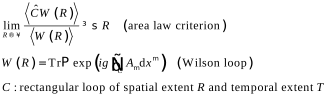
       [27]
      </xref> <xref ref-type="bibr" rid="scirp.138866-123">
       [123]
      </xref>:</p>
     <p><img width="427.0833333333333" src="https://html.scirp.org/file/1723963-rId462.svg?20250113023945">(76)</img></p>
     <p>This criterion has three measurable consequences <xref ref-type="bibr" rid="scirp.138866-124">
       [124]
      </xref> <xref ref-type="bibr" rid="scirp.138866-125">
       [125]
      </xref>:</p>
     <p>
      <math xmlns="http://www.w3.org/1998/Math/MathML" display="inline"> <mtable columnalign="left"> 
        <mtr> 
         <mtd> 
          <mi>
            σ 
          </mi> 
          <mo>
            ≤ 
          </mo> 
          <mfrac> 
           <mrow> 
            <mtext>
              d 
            </mtext> 
            <mrow> 
             <mo>
               〈 
             </mo> 
             <mover accent="true"> 
              <mi>
                C 
              </mi> 
              <mo>
                ^ 
              </mo> 
             </mover> 
             <mo>
               〉 
             </mo> 
            </mrow> 
           </mrow> 
           <mrow> 
            <mtext>
              d 
            </mtext> 
            <mi>
              t 
            </mi> 
           </mrow> 
          </mfrac> 
          <mtext>
              
          </mtext> 
          <mrow> 
           <mo>
             ( 
           </mo> 
           <mrow> 
            <mtext>
              string tension bound 
            </mtext> 
           </mrow> 
           <mo>
             ) 
           </mo> 
          </mrow> 
         </mtd> 
        </mtr> 
        <mtr> 
         <mtd> 
          <mrow> 
           <mo>
             〈 
           </mo> 
           <mrow> 
            <mi>
              W 
            </mi> 
            <mrow> 
             <mo>
               ( 
             </mo> 
             <mrow> 
              <mi>
                R 
              </mi> 
              <mn>
                , 
              </mn> 
              <mi>
                T 
              </mi> 
             </mrow> 
             <mo>
               ) 
             </mo> 
            </mrow> 
           </mrow> 
           <mo>
             〉 
           </mo> 
          </mrow> 
          <mo>
            ~ 
          </mo> 
          <msup> 
           <mtext>
             e 
           </mtext> 
           <mrow> 
            <mo>
              − 
            </mo> 
            <mi>
              σ 
            </mi> 
            <mi>
              R 
            </mi> 
            <mi>
              T 
            </mi> 
           </mrow> 
          </msup> 
          <mo>
            ~ 
          </mo> 
          <msup> 
           <mtext>
             e 
           </mtext> 
           <mrow> 
            <mo>
              − 
            </mo> 
            <mrow> 
             <mo>
               〈 
             </mo> 
             <mover accent="true"> 
              <mi>
                C 
              </mi> 
              <mo>
                ^ 
              </mo> 
             </mover> 
             <mo>
               〉 
             </mo> 
            </mrow> 
           </mrow> 
          </msup> 
          <mtext>
              
          </mtext> 
          <mrow> 
           <mo>
             ( 
           </mo> 
           <mrow> 
            <mtext>
              area law decay 
            </mtext> 
           </mrow> 
           <mo>
             ) 
           </mo> 
          </mrow> 
         </mtd> 
        </mtr> 
        <mtr> 
         <mtd> 
          <msub> 
           <mi>
             m 
           </mi> 
           <mrow> 
            <mtext>
              gap 
            </mtext> 
           </mrow> 
          </msub> 
          <mo>
            = 
          </mo> 
          <munder> 
           <mrow> 
            <mi>
              inf 
            </mi> 
           </mrow> 
           <mrow> 
            <mi>
              ψ 
            </mi> 
            <mo>
              ⊥ 
            </mo> 
            <mi>
              Ω 
            </mi> 
           </mrow> 
          </munder> 
          <mfrac> 
           <mrow> 
            <mrow> 
             <mo>
               〈 
             </mo> 
             <mi>
               ψ 
             </mi> 
             <mo>
               | 
             </mo> 
            </mrow> 
            <mover accent="true"> 
             <mi>
               C 
             </mi> 
             <mo>
               ^ 
             </mo> 
            </mover> 
            <mrow> 
             <mo>
               | 
             </mo> 
             <mi>
               ψ 
             </mi> 
             <mo>
               〉 
             </mo> 
            </mrow> 
           </mrow> 
           <mrow> 
            <mrow> 
             <mo>
               〈 
             </mo> 
             <mi>
               ψ 
             </mi> 
             <mo>
               | 
             </mo> 
             <mi>
               ψ 
             </mi> 
             <mo>
               〉 
             </mo> 
            </mrow> 
           </mrow> 
          </mfrac> 
          <mtext>
              
          </mtext> 
          <mrow> 
           <mo>
             ( 
           </mo> 
           <mrow> 
            <mtext>
              mass gap 
            </mtext> 
           </mrow> 
           <mo>
             ) 
           </mo> 
          </mrow> 
         </mtd> 
        </mtr> 
       </mtable> 
      </math>(77)</p>
     <p>The vacuum structure of Yang-Mills theory reveals fundamental connections to complexity through non-perturbative effects <xref ref-type="bibr" rid="scirp.138866-126">
       [126]
      </xref> <xref ref-type="bibr" rid="scirp.138866-127">
       [127]
      </xref>:</p>
     <p>Theorem 32 (Vacuum Complexity). The complexity of the Yang-Mills vacuum state exhibits a precise mathematical structure <xref ref-type="bibr" rid="scirp.138866-119">
       [119]
      </xref> <xref ref-type="bibr" rid="scirp.138866-121">
       [121]
      </xref>:</p>
     <p>
      <math xmlns="http://www.w3.org/1998/Math/MathML" display="inline"> <mtable columnalign="left"> 
        <mtr> 
         <mtd> 
          <mrow> 
           <mo>
             〈 
           </mo> 
           <mi>
             Ω 
           </mi> 
           <mo>
             | 
           </mo> 
          </mrow> 
          <mover accent="true"> 
           <mi>
             C 
           </mi> 
           <mo>
             ^ 
           </mo> 
          </mover> 
          <mrow> 
           <mo>
             | 
           </mo> 
           <mi>
             Ω 
           </mi> 
           <mo>
             〉 
           </mo> 
          </mrow> 
          <mn> 
           <mo>
             = 
           </mo> 
          </mn> 
          <mfrac> 
           <mn>
             1 
           </mn> 
           <mn>
             4 
           </mn> 
          </mfrac> 
          <mstyle displaystyle="true"> 
           <mrow> 
            <mo>
              ∫ 
            </mo> 
           </mrow> 
          </mstyle> 
          <mtext>
              
          </mtext> 
          <msup> 
           <mtext>
             d 
           </mtext> 
           <mn>
             4 
           </mn> 
          </msup> 
          <mi>
            x 
          </mi> 
          <mrow> 
           <mo>
             〈 
           </mo> 
           <mi>
             Ω 
           </mi> 
           <mo>
             | 
           </mo> 
          </mrow> 
          <msubsup> 
           <mi>
             F 
           </mi> 
           <mrow> 
            <mi>
              μ 
            </mi> 
            <mi>
              ν 
            </mi> 
           </mrow> 
           <mi>
             a 
           </mi> 
          </msubsup> 
          <msup> 
           <mi>
             F 
           </mi> 
           <mrow> 
            <mi>
              a 
            </mi> 
            <mi>
              μ 
            </mi> 
            <mi>
              ν 
            </mi> 
           </mrow> 
          </msup> 
          <mrow> 
           <mo>
             | 
           </mo> 
           <mi>
             Ω 
           </mi> 
           <mo>
             〉 
           </mo> 
          </mrow> 
          <mtext>
              
          </mtext> 
          <mrow> 
           <mo>
             ( 
           </mo> 
           <mrow> 
            <mtext>
              vacuum expectation 
            </mtext> 
           </mrow> 
           <mo>
             ) 
           </mo> 
          </mrow> 
         </mtd> 
        </mtr> 
        <mtr> 
         <mtd> 
          <mrow> 
           <mo>
             | 
           </mo> 
           <mi>
             Ω 
           </mi> 
           <mo>
             〉 
           </mo> 
          </mrow> 
          <mn> 
           <mo>
             = 
           </mo> 
          </mn> 
          <mstyle displaystyle="true"> 
           <munder> 
            <mo>
              ∑ 
            </mo> 
            <mi>
              n 
            </mi> 
           </munder> 
          </mstyle> 
          <mtext>
              
          </mtext> 
          <msub> 
           <mi>
             c 
           </mi> 
           <mi>
             n 
           </mi> 
          </msub> 
          <mrow> 
           <mo>
             | 
           </mo> 
           <mrow> 
            <msub> 
             <mi>
               θ 
             </mi> 
             <mi>
               n 
             </mi> 
            </msub> 
           </mrow> 
           <mo>
             〉 
           </mo> 
          </mrow> 
          <mtext>
              
          </mtext> 
          <mrow> 
           <mo>
             ( 
           </mo> 
           <mrow> 
            <mtext>
              theta vacuum decomposition 
            </mtext> 
           </mrow> 
           <mo>
             ) 
           </mo> 
          </mrow> 
         </mtd> 
        </mtr> 
        <mtr> 
         <mtd> 
          <mrow> 
           <mo>
             | 
           </mo> 
           <mrow> 
            <msub> 
             <mi>
               θ 
             </mi> 
             <mi>
               n 
             </mi> 
            </msub> 
           </mrow> 
           <mo>
             〉 
           </mo> 
          </mrow> 
          <mn> 
           <mo>
             : 
           </mo> 
          </mn> 
          <mtext>
            topological vacuum states with winding number 
          </mtext> 
          <mi>
            n 
          </mi> 
         </mtd> 
        </mtr> 
       </mtable> 
      </math>(78)</p>
     <p>where the sum converges in the physical Hilbert space norm.</p>
    </sec>
    <sec id="s6_3">
     <title>
      <xref ref-type="bibr" rid="scirp.138866-"></xref>6.3. Quantum Gravity Connections</title>
     <p>The relationship between quantum circuit complexity and gravity becomes precise through the AdS/CFT correspondence <xref ref-type="bibr" rid="scirp.138866-11">
       [11]
      </xref> <xref ref-type="bibr" rid="scirp.138866-128">
       [128]
      </xref>. This connection provides deep insights into the quantum nature of spacetime:</p>
     <p>Theorem 33 (Holographic Dictionary). For a conformal field theory with a gravitational dual, the complexity operator decomposes into two geometrically meaningful components <xref ref-type="bibr" rid="scirp.138866-6">
       [6]
      </xref> <xref ref-type="bibr" rid="scirp.138866-7">
       [7]
      </xref>:</p>
     <p>
      <math xmlns="http://www.w3.org/1998/Math/MathML" display="inline"> <mtable columnalign="left"> 
        <mtr> 
         <mtd> 
          <mover accent="true"> 
           <mi>
             C 
           </mi> 
           <mo>
             ^ 
           </mo> 
          </mover> 
          <mo>
            = 
          </mo> 
          <msub> 
           <mover accent="true"> 
            <mi>
              C 
            </mi> 
            <mo>
              ^ 
            </mo> 
           </mover> 
           <mi>
             V 
           </mi> 
          </msub> 
          <mo>
            + 
          </mo> 
          <msub> 
           <mover accent="true"> 
            <mi>
              C 
            </mi> 
            <mo>
              ^ 
            </mo> 
           </mover> 
           <mi>
             A 
           </mi> 
          </msub> 
          <mtext>
              
          </mtext> 
          <mrow> 
           <mo>
             ( 
           </mo> 
           <mrow> 
            <mtext>
              total complexity 
            </mtext> 
           </mrow> 
           <mo>
             ) 
           </mo> 
          </mrow> 
         </mtd> 
        </mtr> 
        <mtr> 
         <mtd> 
          <msub> 
           <mover accent="true"> 
            <mi>
              C 
            </mi> 
            <mo>
              ^ 
            </mo> 
           </mover> 
           <mi>
             V 
           </mi> 
          </msub> 
          <mo>
            = 
          </mo> 
          <mfrac> 
           <mn>
             1 
           </mn> 
           <mrow> 
            <msub> 
             <mi>
               G 
             </mi> 
             <mi>
               N 
             </mi> 
            </msub> 
            <mi>
              ℓ 
            </mi> 
           </mrow> 
          </mfrac> 
          <mstyle displaystyle="true"> 
           <mrow> 
            <msub> 
             <mo>
               ∫ 
             </mo> 
             <mi>
               Σ 
             </mi> 
            </msub> 
           </mrow> 
          </mstyle> 
          <msqrt> 
           <mi>
             h 
           </mi> 
          </msqrt> 
          <mtext>
              
          </mtext> 
          <msup> 
           <mtext>
             d 
           </mtext> 
           <mrow> 
            <mi>
              d 
            </mi> 
            <mo>
              − 
            </mo> 
            <mn>
              1 
            </mn> 
           </mrow> 
          </msup> 
          <mi>
            x 
          </mi> 
          <mtext>
              
          </mtext> 
          <mrow> 
           <mo>
             ( 
           </mo> 
           <mrow> 
            <mtext>
              volume term 
            </mtext> 
           </mrow> 
           <mo>
             ) 
           </mo> 
          </mrow> 
         </mtd> 
        </mtr> 
        <mtr> 
         <mtd> 
          <msub> 
           <mover accent="true"> 
            <mi>
              C 
            </mi> 
            <mo>
              ^ 
            </mo> 
           </mover> 
           <mi>
             A 
           </mi> 
          </msub> 
          <mo>
            = 
          </mo> 
          <mfrac> 
           <mn>
             1 
           </mn> 
           <mrow> 
            <mi>
              π 
            </mi> 
            <mi>
              ℏ 
            </mi> 
           </mrow> 
          </mfrac> 
          <mstyle displaystyle="true"> 
           <mrow> 
            <msub> 
             <mo>
               ∫ 
             </mo> 
             <mrow> 
              <mtext>
                WDW 
              </mtext> 
             </mrow> 
            </msub> 
           </mrow> 
          </mstyle> 
          <msqrt> 
           <mrow> 
            <mo>
              − 
            </mo> 
            <mi>
              g 
            </mi> 
           </mrow> 
          </msqrt> 
          <mrow> 
           <mo>
             ( 
           </mo> 
           <mrow> 
            <mi>
              R 
            </mi> 
            <mo>
              − 
            </mo> 
            <mn>
              2 
            </mn> 
            <mi>
              Λ 
            </mi> 
           </mrow> 
           <mo>
             ) 
           </mo> 
          </mrow> 
          <msup> 
           <mtext>
             d 
           </mtext> 
           <mi>
             d 
           </mi> 
          </msup> 
          <mi>
            x 
          </mi> 
          <mtext>
              
          </mtext> 
          <mrow> 
           <mo>
             ( 
           </mo> 
           <mrow> 
            <mtext>
              action term 
            </mtext> 
           </mrow> 
           <mo>
             ) 
           </mo> 
          </mrow> 
         </mtd> 
        </mtr> 
       </mtable> 
      </math>(79)</p>
     <p>where these terms have precise geometric interpretations <xref ref-type="bibr" rid="scirp.138866-14">
       [14]
      </xref> <xref ref-type="bibr" rid="scirp.138866-15">
       [15]
      </xref>:</p>
     <p>1) 
      <math display="inline" xmlns="http://www.w3.org/1998/Math/MathML"> <mi>
         Σ 
       </mi> 
      </math> denotes the maximal volume spatial slice </p>
     <p>2) WDW represents the Wheeler-DeWitt patch of spacetime <xref ref-type="bibr" rid="scirp.138866-129">
       [129]
      </xref></p>
     <p>3) 
      <math display="inline" xmlns="http://www.w3.org/1998/Math/MathML"> <mrow> 
        <msub> 
         <mi>
           h 
         </mi> 
         <mrow> 
          <mi>
            i 
          </mi> 
          <mi>
            j 
          </mi> 
         </mrow> 
        </msub> 
       </mrow> 
      </math> is the induced spatial metric on 
      <math display="inline" xmlns="http://www.w3.org/1998/Math/MathML"> <mi>
         Σ 
       </mi> 
      </math></p>
     <p>4) 
      <math display="inline" xmlns="http://www.w3.org/1998/Math/MathML"> <mrow> 
        <msub> 
         <mi>
           G 
         </mi> 
         <mi>
           N 
         </mi> 
        </msub> 
       </mrow> 
      </math> represents Newton’s gravitational constant </p>
     <p>5) 
      <math display="inline" xmlns="http://www.w3.org/1998/Math/MathML"> <mi>
         ℓ 
       </mi> 
      </math> denotes the Anti-de Sitter radius of curvature <xref ref-type="bibr" rid="scirp.138866-130">
       [130]
      </xref></p>
     <p>The dynamics of black hole complexity follows directly from holographic principles <xref ref-type="bibr" rid="scirp.138866-13">
       [13]
      </xref> <xref ref-type="bibr" rid="scirp.138866-114">
       [114]
      </xref>:</p>
     <p>Theorem 34 (Black Hole Complexity). For an eternal black hole, the complexity evolves according to a precise temporal pattern <xref ref-type="bibr" rid="scirp.138866-8">
       [8]
      </xref> <xref ref-type="bibr" rid="scirp.138866-116">
       [116]
      </xref>:</p>
     <p>
      <math xmlns="http://www.w3.org/1998/Math/MathML" display="inline"> <mrow> 
        <mrow> 
         <mo>
           〈 
         </mo> 
         <mrow> 
          <mover accent="true"> 
           <mi>
             C 
           </mi> 
           <mo>
             ^ 
           </mo> 
          </mover> 
          <mrow> 
           <mo>
             ( 
           </mo> 
           <mi>
             t 
           </mi> 
           <mo>
             ) 
           </mo> 
          </mrow> 
         </mrow> 
         <mo>
           〉 
         </mo> 
        </mrow> 
        <mo>
          = 
        </mo> 
        <mfrac> 
         <mrow> 
          <mn>
            2 
          </mn> 
          <mi>
            M 
          </mi> 
         </mrow> 
         <mrow> 
          <mi>
            π 
          </mi> 
          <mi>
            ℏ 
          </mi> 
         </mrow> 
        </mfrac> 
        <mi>
          t 
        </mi> 
        <mo>
          + 
        </mo> 
        <mi>
          S 
        </mi> 
        <mi>
          ln 
        </mi> 
        <mrow> 
         <mo>
           ( 
         </mo> 
         <mrow> 
          <mfrac> 
           <mi>
             t 
           </mi> 
           <mrow> 
            <msub> 
             <mi>
               t 
             </mi> 
             <mn> 
              <mo>
                * 
              </mo> 
             </mn> 
            </msub> 
           </mrow> 
          </mfrac> 
         </mrow> 
         <mo>
           ) 
         </mo> 
        </mrow> 
        <mo>
          + 
        </mo> 
        <mi>
          f 
        </mi> 
        <mrow> 
         <mo>
           ( 
         </mo> 
         <mi>
           t 
         </mi> 
         <mo>
           ) 
         </mo> 
        </mrow> 
        <mtext>
            
        </mtext> 
        <mrow> 
         <mo>
           ( 
         </mo> 
         <mrow> 
          <mtext>
            complexity growth 
          </mtext> 
         </mrow> 
         <mo>
           ) 
         </mo> 
        </mrow> 
       </mrow> 
      </math></p>
     <p>
      <math display="inline" xmlns="http://www.w3.org/1998/Math/MathML"> <mtable columnalign="left"> 
        <mtr> 
         <mtd> 
          <mi>
            f 
          </mi> 
          <mrow> 
           <mo>
             ( 
           </mo> 
           <mi>
             t 
           </mi> 
           <mo>
             ) 
           </mo> 
          </mrow> 
          <mo>
            = 
          </mo> 
          <mi>
            O 
          </mi> 
          <mrow> 
           <mo>
             ( 
           </mo> 
           <mrow> 
            <msup> 
             <mtext>
               e 
             </mtext> 
             <mrow> 
              <mo>
                − 
              </mo> 
              <mrow> 
               <mi>
                 t 
               </mi> 
               <mo>
                 / 
               </mo> 
               <mrow> 
                <msub> 
                 <mi>
                   t 
                 </mi> 
                 <mn> 
                  <mo>
                    * 
                  </mo> 
                 </mn> 
                </msub> 
               </mrow> 
              </mrow> 
             </mrow> 
            </msup> 
           </mrow> 
           <mo>
             ) 
           </mo> 
          </mrow> 
          <mtext>
              
          </mtext> 
          <mrow> 
           <mo>
             ( 
           </mo> 
           <mrow> 
            <mtext>
              exponential corrections 
            </mtext> 
           </mrow> 
           <mo>
             ) 
           </mo> 
          </mrow> 
         </mtd> 
        </mtr> 
        <mtr> 
         <mtd> 
          <msub> 
           <mi>
             t 
           </mi> 
           <mn> 
            <mo>
              * 
            </mo> 
           </mn> 
          </msub> 
          <mo>
            = 
          </mo> 
          <mfrac> 
           <mi>
             β 
           </mi> 
           <mrow> 
            <mn>
              2 
            </mn> 
            <mi>
              π 
            </mi> 
           </mrow> 
          </mfrac> 
          <mi>
            ln 
          </mi> 
          <mi>
            S 
          </mi> 
          <mtext>
              
          </mtext> 
          <mrow> 
           <mo>
             ( 
           </mo> 
           <mrow> 
            <mtext>
              scrambling time 
            </mtext> 
           </mrow> 
           <mo>
             ) 
           </mo> 
          </mrow> 
         </mtd> 
        </mtr> 
        <mtr> 
         <mtd> 
          <mi>
            β 
          </mi> 
          <mo>
            = 
          </mo> 
          <mfrac> 
           <mn>
             1 
           </mn> 
           <mrow> 
            <msub> 
             <mi>
               T 
             </mi> 
             <mi>
               H 
             </mi> 
            </msub> 
           </mrow> 
          </mfrac> 
          <mo>
            = 
          </mo> 
          <mn>
            8 
          </mn> 
          <mi>
            π 
          </mi> 
          <msub> 
           <mi>
             G 
           </mi> 
           <mi>
             N 
           </mi> 
          </msub> 
          <mi>
            M 
          </mi> 
          <mtext>
              
          </mtext> 
          <mrow> 
           <mo>
             ( 
           </mo> 
           <mrow> 
            <mtext>
              inverse Hawking temperature 
            </mtext> 
           </mrow> 
           <mo>
             ) 
           </mo> 
          </mrow> 
         </mtd> 
        </mtr> 
       </mtable> 
      </math>(80)</p>
     <p>The emergence of classical spacetime geometry from quantum complexity represents one of the most profound implications of our framework <xref ref-type="bibr" rid="scirp.138866-14">
       [14]
      </xref> <xref ref-type="bibr" rid="scirp.138866-16">
       [16]
      </xref>:</p>
     <p>Theorem 35 (Emergent Geometry). The classical bulk metric structure emerges from complexity through well-defined limiting procedures <xref ref-type="bibr" rid="scirp.138866-15">
       [15]
      </xref>:</p>
     <p>
      <math xmlns="http://www.w3.org/1998/Math/MathML" display="inline"> <mtable columnalign="left"> 
        <mtr> 
         <mtd> 
          <msub> 
           <mi>
             g 
           </mi> 
           <mrow> 
            <mi>
              μ 
            </mi> 
            <mi>
              ν 
            </mi> 
           </mrow> 
          </msub> 
          <mrow> 
           <mo>
             ( 
           </mo> 
           <mi>
             x 
           </mi> 
           <mo>
             ) 
           </mo> 
          </mrow> 
          <mo>
            = 
          </mo> 
          <munder> 
           <mrow> 
            <mi>
              l 
            </mi> 
            <mi>
              i 
            </mi> 
            <mi>
              m 
            </mi> 
           </mrow> 
           <mrow> 
            <mi>
              ϵ 
            </mi> 
            <mo>
              → 
            </mo> 
            <mn>
              0 
            </mn> 
           </mrow> 
          </munder> 
          <mfrac> 
           <mn>
             1 
           </mn> 
           <mrow> 
            <msup> 
             <mi>
               ϵ 
             </mi> 
             <mn>
               2 
             </mn> 
            </msup> 
           </mrow> 
          </mfrac> 
          <mrow> 
           <mo>
             ( 
           </mo> 
           <mrow> 
            <mfrac> 
             <mrow> 
              <msup> 
               <mo>
                 ∂ 
               </mo> 
               <mn>
                 2 
               </mn> 
              </msup> 
              <mrow> 
               <mo>
                 〈 
               </mo> 
               <mover accent="true"> 
                <mi>
                  C 
                </mi> 
                <mo>
                  ^ 
                </mo> 
               </mover> 
               <mo>
                 〉 
               </mo> 
              </mrow> 
             </mrow> 
             <mrow> 
              <mo>
                ∂ 
              </mo> 
              <msup> 
               <mi>
                 x 
               </mi> 
               <mi>
                 μ 
               </mi> 
              </msup> 
              <mo>
                ∂ 
              </mo> 
              <msup> 
               <mi>
                 x 
               </mi> 
               <mi>
                 ν 
               </mi> 
              </msup> 
             </mrow> 
            </mfrac> 
           </mrow> 
           <mo>
             ) 
           </mo> 
          </mrow> 
          <mtext>
              
          </mtext> 
          <mrow> 
           <mo>
             ( 
           </mo> 
           <mrow> 
            <mtext>
              metric 
            </mtext> 
           </mrow> 
           <mo>
             ) 
           </mo> 
          </mrow> 
         </mtd> 
        </mtr> 
        <mtr> 
         <mtd> 
          <msub> 
           <mi>
             R 
           </mi> 
           <mrow> 
            <mi>
              μ 
            </mi> 
            <mi>
              ν 
            </mi> 
            <mi>
              ρ 
            </mi> 
            <mi>
              σ 
            </mi> 
           </mrow> 
          </msub> 
          <mrow> 
           <mo>
             ( 
           </mo> 
           <mi>
             x 
           </mi> 
           <mo>
             ) 
           </mo> 
          </mrow> 
          <mo>
            = 
          </mo> 
          <mfrac> 
           <mrow> 
            <msup> 
             <mo>
               ∂ 
             </mo> 
             <mn>
               4 
             </mn> 
            </msup> 
            <mrow> 
             <mo>
               〈 
             </mo> 
             <mover accent="true"> 
              <mi>
                C 
              </mi> 
              <mo>
                ^ 
              </mo> 
             </mover> 
             <mo>
               〉 
             </mo> 
            </mrow> 
           </mrow> 
           <mrow> 
            <mo>
              ∂ 
            </mo> 
            <msup> 
             <mi>
               x 
             </mi> 
             <mi>
               μ 
             </mi> 
            </msup> 
            <mo>
              ∂ 
            </mo> 
            <msup> 
             <mi>
               x 
             </mi> 
             <mi>
               ν 
             </mi> 
            </msup> 
            <mo>
              ∂ 
            </mo> 
            <msup> 
             <mi>
               x 
             </mi> 
             <mi>
               ρ 
             </mi> 
            </msup> 
            <mo>
              ∂ 
            </mo> 
            <msup> 
             <mi>
               x 
             </mi> 
             <mi>
               σ 
             </mi> 
            </msup> 
           </mrow> 
          </mfrac> 
          <mtext>
              
          </mtext> 
          <mrow> 
           <mo>
             ( 
           </mo> 
           <mrow> 
            <mtext>
              curvature 
            </mtext> 
           </mrow> 
           <mo>
             ) 
           </mo> 
          </mrow> 
         </mtd> 
        </mtr> 
        <mtr> 
         <mtd> 
          <msubsup> 
           <mi>
             Γ 
           </mi> 
           <mrow> 
            <mi>
              μ 
            </mi> 
            <mi>
              ν 
            </mi> 
           </mrow> 
           <mi>
             λ 
           </mi> 
          </msubsup> 
          <mrow> 
           <mo>
             ( 
           </mo> 
           <mi>
             x 
           </mi> 
           <mo>
             ) 
           </mo> 
          </mrow> 
          <mo>
            = 
          </mo> 
          <munder> 
           <mrow> 
            <mi>
              l 
            </mi> 
            <mi>
              i 
            </mi> 
            <mi>
              m 
            </mi> 
           </mrow> 
           <mrow> 
            <mi>
              ϵ 
            </mi> 
            <mo>
              → 
            </mo> 
            <mn>
              0 
            </mn> 
           </mrow> 
          </munder> 
          <mfrac> 
           <mn>
             1 
           </mn> 
           <mrow> 
            <msup> 
             <mi>
               ϵ 
             </mi> 
             <mn>
               3 
             </mn> 
            </msup> 
           </mrow> 
          </mfrac> 
          <mfrac> 
           <mrow> 
            <msup> 
             <mo>
               ∂ 
             </mo> 
             <mn>
               3 
             </mn> 
            </msup> 
            <mrow> 
             <mo>
               〈 
             </mo> 
             <mover accent="true"> 
              <mi>
                C 
              </mi> 
              <mo>
                ^ 
              </mo> 
             </mover> 
             <mo>
               〉 
             </mo> 
            </mrow> 
           </mrow> 
           <mrow> 
            <mo>
              ∂ 
            </mo> 
            <msup> 
             <mi>
               x 
             </mi> 
             <mi>
               λ 
             </mi> 
            </msup> 
            <mo>
              ∂ 
            </mo> 
            <msup> 
             <mi>
               x 
             </mi> 
             <mi>
               μ 
             </mi> 
            </msup> 
            <mo>
              ∂ 
            </mo> 
            <msup> 
             <mi>
               x 
             </mi> 
             <mi>
               ν 
             </mi> 
            </msup> 
           </mrow> 
          </mfrac> 
          <mtext>
              
          </mtext> 
          <mrow> 
           <mo>
             ( 
           </mo> 
           <mrow> 
            <mtext>
              connection 
            </mtext> 
           </mrow> 
           <mo>
             ) 
           </mo> 
          </mrow> 
         </mtd> 
        </mtr> 
       </mtable> 
      </math>(81)</p>
     <p>where all limits are taken in the sense of uniform convergence on compact sets, and derivatives are understood in the strong operator topology.</p>
     <p>This emerging geometric structure satisfies fundamental consistency requirements <xref ref-type="bibr" rid="scirp.138866-131">
       [131]
      </xref> <xref ref-type="bibr" rid="scirp.138866-132">
       [132]
      </xref>, which we can formulate precisely:</p>
     <p>Theorem 36 (Complexity Geometry). The geometric structure encoded by quantum circuit complexity satisfies three essential consistency conditions <xref ref-type="bibr" rid="scirp.138866-133">
       [133]
      </xref>:</p>
     <p>
      <math xmlns="http://www.w3.org/1998/Math/MathML" display="inline"> <mtable columnalign="left"> 
        <mtr> 
         <mtd> 
          <mtext>
            Causal 
          </mtext> 
          <mrow> 
           <mo>
             ( 
           </mo> 
           <mrow> 
            <mi>
              x 
            </mi> 
            <mn>
              , 
            </mn> 
            <mi>
              y 
            </mi> 
           </mrow> 
           <mo>
             ) 
           </mo> 
          </mrow> 
          <mo>
            ⇔ 
          </mo> 
          <mo>
            ∃ 
          </mo> 
          <mi>
            γ 
          </mi> 
          <mn> 
           <mo>
             : 
           </mo> 
          </mn> 
          <mfrac> 
           <mrow> 
            <mtext>
              d 
            </mtext> 
            <mrow> 
             <mo>
               〈 
             </mo> 
             <mover accent="true"> 
              <mi>
                C 
              </mi> 
              <mo>
                ^ 
              </mo> 
             </mover> 
             <mo>
               〉 
             </mo> 
            </mrow> 
           </mrow> 
           <mrow> 
            <mtext>
              d 
            </mtext> 
            <mi>
              γ 
            </mi> 
           </mrow> 
          </mfrac> 
          <mo>
            ≥ 
          </mo> 
          <mn>
            0 
          </mn> 
          <mtext>
              
          </mtext> 
          <mrow> 
           <mo>
             ( 
           </mo> 
           <mrow> 
            <mtext>
              causality 
            </mtext> 
           </mrow> 
           <mo>
             ) 
           </mo> 
          </mrow> 
         </mtd> 
        </mtr> 
        <mtr> 
         <mtd> 
          <mi>
            S 
          </mi> 
          <mrow> 
           <mo>
             ( 
           </mo> 
           <mrow> 
            <mi>
              A 
            </mi> 
            <mn> 
             <mo>
               : 
             </mo> 
            </mn> 
            <mi>
              B 
            </mi> 
           </mrow> 
           <mo>
             ) 
           </mo> 
          </mrow> 
          <mo>
            = 
          </mo> 
          <munder> 
           <mrow> 
            <mi>
              min 
            </mi> 
           </mrow> 
           <mrow> 
            <msub> 
             <mi>
               γ 
             </mi> 
             <mrow> 
              <mi>
                A 
              </mi> 
              <mo>
                → 
              </mo> 
              <mi>
                B 
              </mi> 
             </mrow> 
            </msub> 
           </mrow> 
          </munder> 
          <mstyle displaystyle="true"> 
           <mrow> 
            <msub> 
             <mo>
               ∫ 
             </mo> 
             <mi>
               γ 
             </mi> 
            </msub> 
           </mrow> 
          </mstyle> 
          <msqrt> 
           <mrow> 
            <mfrac> 
             <mrow> 
              <mtext>
                d 
              </mtext> 
              <mrow> 
               <mo>
                 〈 
               </mo> 
               <mover accent="true"> 
                <mi>
                  C 
                </mi> 
                <mo>
                  ^ 
                </mo> 
               </mover> 
               <mo>
                 〉 
               </mo> 
              </mrow> 
             </mrow> 
             <mrow> 
              <mtext>
                d 
              </mtext> 
              <mi>
                γ 
              </mi> 
             </mrow> 
            </mfrac> 
           </mrow> 
          </msqrt> 
          <mtext>
              
          </mtext> 
          <mrow> 
           <mo>
             ( 
           </mo> 
           <mrow> 
            <mtext>
              mutual information 
            </mtext> 
           </mrow> 
           <mo>
             ) 
           </mo> 
          </mrow> 
         </mtd> 
        </mtr> 
        <mtr> 
         <mtd> 
          <mtext>
            Area 
          </mtext> 
          <mrow> 
           <mo>
             ( 
           </mo> 
           <mrow> 
            <mo>
              ∂ 
            </mo> 
            <mi>
              A 
            </mi> 
           </mrow> 
           <mo>
             ) 
           </mo> 
          </mrow> 
          <mo>
            = 
          </mo> 
          <munder> 
           <mrow> 
            <mi>
              l 
            </mi> 
            <mi>
              i 
            </mi> 
            <mi>
              m 
            </mi> 
           </mrow> 
           <mrow> 
            <mi>
              ϵ 
            </mi> 
            <mo>
              → 
            </mo> 
            <mn>
              0 
            </mn> 
           </mrow> 
          </munder> 
          <mfrac> 
           <mn>
             1 
           </mn> 
           <mrow> 
            <msup> 
             <mi>
               ϵ 
             </mi> 
             <mrow> 
              <mi>
                d 
              </mi> 
              <mo>
                − 
              </mo> 
              <mn>
                1 
              </mn> 
             </mrow> 
            </msup> 
           </mrow> 
          </mfrac> 
          <mrow> 
           <mo>
             〈 
           </mo> 
           <mrow> 
            <msub> 
             <mover accent="true"> 
              <mi>
                C 
              </mi> 
              <mo>
                ^ 
              </mo> 
             </mover> 
             <mi>
               A 
             </mi> 
            </msub> 
           </mrow> 
           <mo>
             〉 
           </mo> 
          </mrow> 
          <mtext>
              
          </mtext> 
          <mrow> 
           <mo>
             ( 
           </mo> 
           <mrow> 
            <mtext>
              area law 
            </mtext> 
           </mrow> 
           <mo>
             ) 
           </mo> 
          </mrow> 
         </mtd> 
        </mtr> 
       </mtable> 
      </math>(82)</p>
     <p>These relationships connect fundamental geometric quantities to complexity measurements <xref ref-type="bibr" rid="scirp.138866-15">
       [15]
      </xref> <xref ref-type="bibr" rid="scirp.138866-134">
       [134]
      </xref> through:</p>
     <p>1) Bulk curves 
      <math display="inline" xmlns="http://www.w3.org/1998/Math/MathML"> <mi>
         γ 
       </mi> 
      </math> satisfying the null energy condition <xref ref-type="bibr" rid="scirp.138866-135">
       [135]
      </xref></p>
     <p>2) Mutual information 
      <math display="inline" xmlns="http://www.w3.org/1998/Math/MathML"> <mrow> 
        <mi>
          S 
        </mi> 
        <mrow> 
         <mo>
           ( 
         </mo> 
         <mrow> 
          <mi>
            A 
          </mi> 
          <mn> 
           <mo>
             : 
           </mo> 
          </mn> 
          <mi>
            B 
          </mi> 
         </mrow> 
         <mo>
           ) 
         </mo> 
        </mrow> 
       </mrow> 
      </math> defined via entanglement entropy <xref ref-type="bibr" rid="scirp.138866-136">
       [136]
      </xref></p>
     <p>3) Boundary regions 
      <math display="inline" xmlns="http://www.w3.org/1998/Math/MathML"> <mrow> 
        <mo>
          ∂ 
        </mo> 
        <mi>
          A 
        </mi> 
       </mrow> 
      </math> in the conformal boundary <xref ref-type="bibr" rid="scirp.138866-137">
       [137]
      </xref></p>
     <p>4) Regional complexity operator 
      <math display="inline" xmlns="http://www.w3.org/1998/Math/MathML"> <mrow> 
        <msub> 
         <mover accent="true"> 
          <mi>
            C 
          </mi> 
          <mo>
            ^ 
          </mo> 
         </mover> 
         <mi>
           A 
         </mi> 
        </msub> 
       </mrow> 
      </math> restricted to subregion 
      <math display="inline" xmlns="http://www.w3.org/1998/Math/MathML"> <mi>
         A 
       </mi> 
      </math> <xref ref-type="bibr" rid="scirp.138866-138">
       [138]
      </xref></p>
     <p>These results collectively establish quantum circuit complexity as a fundamental bridge between quantum information theory and spacetime geometry <xref ref-type="bibr" rid="scirp.138866-14">
       [14]
      </xref> <xref ref-type="bibr" rid="scirp.138866-16">
       [16]
      </xref>. The precise mathematical relationships we have derived govern both sides of this duality <xref ref-type="bibr" rid="scirp.138866-8">
       [8]
      </xref>, providing concrete tools for understanding how classical spacetime emerges from quantum mechanical complexity <xref ref-type="bibr" rid="scirp.138866-139">
       [139]
      </xref> <xref ref-type="bibr" rid="scirp.138866-140">
       [140]
      </xref>. This framework not only deepens our theoretical understanding but also suggests experimental approaches for probing the quantum structure of spacetime <xref ref-type="bibr" rid="scirp.138866-132">
       [132]
      </xref> <xref ref-type="bibr" rid="scirp.138866-141">
       [141]
      </xref> through complexity measurements.</p>
     <p>The physical applications presented in this section demonstrate that quantum circuit complexity is not merely a mathematical construction but rather a fundamental physical observable with measurable consequences across multiple domains of physics. From the dynamics of quantum systems to the structure of gauge theories and the emergence of spacetime geometry, complexity provides new insights into the deep connections between quantum information and fundamental physics.</p>
    </sec>
   </sec>
   <sec id="s7">
    <title>
     <xref ref-type="bibr" rid="scirp.138866-"></xref>7. Experimental Predictions</title>
    <p>Having developed the theoretical framework for quantum circuit complexity as a physical observable, we now present specific experimental predictions that can be tested in laboratory settings. This section bridges theory and experiment by providing both concrete measurable consequences and detailed protocols for their observation. We emphasize which predictions are testable with current quantum technology and which will require future advances.</p>
    <sec id="s7_1">
     <title>
      <xref ref-type="bibr" rid="scirp.138866-"></xref>7.1. Measurable Consequences</title>
     <p>The physical nature of quantum circuit complexity manifests through several experimentally accessible signatures <xref ref-type="bibr" rid="scirp.138866-7">
       [7]
      </xref> <xref ref-type="bibr" rid="scirp.138866-9">
       [9]
      </xref>. We present these predictions in order of increasing experimental difficulty, beginning with those testable using current quantum devices <xref ref-type="bibr" rid="scirp.138866-100">
       [100]
      </xref> <xref ref-type="bibr" rid="scirp.138866-111">
       [111]
      </xref>.</p>
     <p>Theorem 37 (Spectral Structure). On any finite-dimensional subspace of the physical Hilbert space, the complexity operator 
      <math display="inline" xmlns="http://www.w3.org/1998/Math/MathML"> <mover accent="true"> 
        <mi>
          C 
        </mi> 
        <mo>
          ^ 
        </mo> 
       </mover> 
      </math> exhibits a discrete spectrum with precisely characterized spacing <xref ref-type="bibr" rid="scirp.138866-20">
       [20]
      </xref> <xref ref-type="bibr" rid="scirp.138866-96">
       [96]
      </xref>:</p>
     <p>
      <math xmlns="http://www.w3.org/1998/Math/MathML" display="inline"> <mtable columnalign="left"> 
        <mtr> 
         <mtd> 
          <mi>
            σ 
          </mi> 
          <mrow> 
           <mo>
             ( 
           </mo> 
           <mover accent="true"> 
            <mi>
              C 
            </mi> 
            <mo>
              ^ 
            </mo> 
           </mover> 
           <mo>
             ) 
           </mo> 
          </mrow> 
          <mo>
            = 
          </mo> 
          <mrow> 
           <mo>
             { 
           </mo> 
           <mrow> 
            <msub> 
             <mi>
               d 
             </mi> 
             <mi>
               n 
             </mi> 
            </msub> 
            <mo>
              = 
            </mo> 
            <mi>
              n 
            </mi> 
            <msub> 
             <mi>
               Δ 
             </mi> 
             <mi>
               C 
             </mi> 
            </msub> 
            <mo>
              + 
            </mo> 
            <msub> 
             <mi>
               d 
             </mi> 
             <mn>
               0 
             </mn> 
            </msub> 
            <mn> 
             <mo>
               : 
             </mo> 
            </mn> 
            <mi>
              n 
            </mi> 
            <mo>
              ∈ 
            </mo> 
            <mi>
              ℕ 
            </mi> 
           </mrow> 
           <mo>
             } 
           </mo> 
          </mrow> 
          <mtext>
              
          </mtext> 
          <mrow> 
           <mo>
             ( 
           </mo> 
           <mrow> 
            <mtext>
              spectrum 
            </mtext> 
           </mrow> 
           <mo>
             ) 
           </mo> 
          </mrow> 
         </mtd> 
        </mtr> 
        <mtr> 
         <mtd> 
          <msub> 
           <mi>
             Δ 
           </mi> 
           <mi>
             C 
           </mi> 
          </msub> 
          <mo>
            = 
          </mo> 
          <munder> 
           <mrow> 
            <mi>
              inf 
            </mi> 
           </mrow> 
           <mrow> 
            <mrow> 
             <mo>
               | 
             </mo> 
             <mi>
               ψ 
             </mi> 
             <mo>
               〉 
             </mo> 
            </mrow> 
            <mo>
              ⊥ 
            </mo> 
            <mrow> 
             <mo>
               | 
             </mo> 
             <mn>
               0 
             </mn> 
             <mo>
               〉 
             </mo> 
            </mrow> 
           </mrow> 
          </munder> 
          <mfrac> 
           <mrow> 
            <mrow> 
             <mo>
               〈 
             </mo> 
             <mi>
               ψ 
             </mi> 
             <mo>
               | 
             </mo> 
            </mrow> 
            <mover accent="true"> 
             <mi>
               C 
             </mi> 
             <mo>
               ^ 
             </mo> 
            </mover> 
            <mrow> 
             <mo>
               | 
             </mo> 
             <mi>
               ψ 
             </mi> 
             <mo>
               〉 
             </mo> 
            </mrow> 
           </mrow> 
           <mrow> 
            <mrow> 
             <mo>
               〈 
             </mo> 
             <mi>
               ψ 
             </mi> 
             <mo>
               | 
             </mo> 
             <mi>
               ψ 
             </mi> 
             <mo>
               〉 
             </mo> 
            </mrow> 
           </mrow> 
          </mfrac> 
          <mo>
            − 
          </mo> 
          <msub> 
           <mi>
             d 
           </mi> 
           <mn>
             0 
           </mn> 
          </msub> 
          <mtext>
              
          </mtext> 
          <mrow> 
           <mo>
             ( 
           </mo> 
           <mrow> 
            <mtext>
              minimal gap 
            </mtext> 
           </mrow> 
           <mo>
             ) 
           </mo> 
          </mrow> 
         </mtd> 
        </mtr> 
        <mtr> 
         <mtd> 
          <msub> 
           <mi>
             d 
           </mi> 
           <mn>
             0 
           </mn> 
          </msub> 
          <mo>
            = 
          </mo> 
          <mrow> 
           <mo>
             〈 
           </mo> 
           <mn>
             0 
           </mn> 
           <mo>
             | 
           </mo> 
          </mrow> 
          <mover accent="true"> 
           <mi>
             C 
           </mi> 
           <mo>
             ^ 
           </mo> 
          </mover> 
          <mrow> 
           <mo>
             | 
           </mo> 
           <mn>
             0 
           </mn> 
           <mo>
             〉 
           </mo> 
          </mrow> 
          <mtext>
              
          </mtext> 
          <mrow> 
           <mo>
             ( 
           </mo> 
           <mrow> 
            <mtext>
              ground state complexity 
            </mtext> 
           </mrow> 
           <mo>
             ) 
           </mo> 
          </mrow> 
         </mtd> 
        </mtr> 
       </mtable> 
      </math>(83)</p>
     <p>For Yang-Mills gauge theories, these quantities take specific values <xref ref-type="bibr" rid="scirp.138866-27">
       [27]
      </xref> <xref ref-type="bibr" rid="scirp.138866-37">
       [37]
      </xref>:</p>
     <p>
      <math display="inline" xmlns="http://www.w3.org/1998/Math/MathML"> <mtable columnalign="left"> 
        <mtr> 
         <mtd> 
          <msub> 
           <mi>
             Δ 
           </mi> 
           <mi>
             C 
           </mi> 
          </msub> 
          <mo>
            = 
          </mo> 
          <mfrac> 
           <mrow> 
            <mn>
              8 
            </mn> 
            <msup> 
             <mi>
               π 
             </mi> 
             <mn>
               2 
             </mn> 
            </msup> 
           </mrow> 
           <mrow> 
            <msup> 
             <mi>
               g 
             </mi> 
             <mn>
               2 
             </mn> 
            </msup> 
           </mrow> 
          </mfrac> 
          <msub> 
           <mi>
             Λ 
           </mi> 
           <mrow> 
            <mtext>
              QCD 
            </mtext> 
           </mrow> 
          </msub> 
          <mtext>
              
          </mtext> 
          <mrow> 
           <mo>
             ( 
           </mo> 
           <mrow> 
            <mtext>
              QCD complexity gap 
            </mtext> 
           </mrow> 
           <mo>
             ) 
           </mo> 
          </mrow> 
         </mtd> 
        </mtr> 
        <mtr> 
         <mtd> 
          <msub> 
           <mi>
             d 
           </mi> 
           <mn>
             0 
           </mn> 
          </msub> 
          <mo>
            = 
          </mo> 
          <mfrac> 
           <mn>
             1 
           </mn> 
           <mn>
             4 
           </mn> 
          </mfrac> 
          <mstyle displaystyle="true"> 
           <mrow> 
            <mo>
              ∫ 
            </mo> 
           </mrow> 
          </mstyle> 
          <mtext>
              
          </mtext> 
          <msup> 
           <mtext>
             d 
           </mtext> 
           <mn>
             4 
           </mn> 
          </msup> 
          <mi>
            x 
          </mi> 
          <mrow> 
           <mo>
             〈 
           </mo> 
           <mn>
             0 
           </mn> 
           <mo>
             | 
           </mo> 
          </mrow> 
          <msubsup> 
           <mi>
             F 
           </mi> 
           <mrow> 
            <mi>
              μ 
            </mi> 
            <mi>
              ν 
            </mi> 
           </mrow> 
           <mi>
             a 
           </mi> 
          </msubsup> 
          <msup> 
           <mi>
             F 
           </mi> 
           <mrow> 
            <mi>
              a 
            </mi> 
            <mi>
              μ 
            </mi> 
            <mi>
              ν 
            </mi> 
           </mrow> 
          </msup> 
          <mrow> 
           <mo>
             | 
           </mo> 
           <mn>
             0 
           </mn> 
           <mo>
             〉 
           </mo> 
          </mrow> 
          <mtext>
              
          </mtext> 
          <mrow> 
           <mo>
             ( 
           </mo> 
           <mrow> 
            <mtext>
              vacuum complexity 
            </mtext> 
           </mrow> 
           <mo>
             ) 
           </mo> 
          </mrow> 
         </mtd> 
        </mtr> 
       </mtable> 
      </math>(84)</p>
     <p>where the integrals converge due to the asymptotic behavior of gauge field correlators.</p>
     <p>This spectral structure leads to specific measurement predictions that follow from standard quantum measurement theory <xref ref-type="bibr" rid="scirp.138866-1">
       [1]
      </xref> <xref ref-type="bibr" rid="scirp.138866-24">
       [24]
      </xref>:</p>
     <p>Theorem 38 (Measurement Statistics). For any quantum state 
      <math display="inline" xmlns="http://www.w3.org/1998/Math/MathML"> <mrow> 
        <mn> 
         <mo>
           | 
         </mo> 
        </mn> 
        <mi>
          ψ 
        </mi> 
        <mo>
          〉 
        </mo> 
       </mrow> 
      </math> in the domain 
      <math display="inline" xmlns="http://www.w3.org/1998/Math/MathML"> <mrow> 
        <mi mathvariant="script">
          D 
        </mi> 
        <mn> 
         <mo stretchy="false">
           ( 
         </mo> 
        </mn> 
        <mover accent="true"> 
         <mi>
           C 
         </mi> 
         <mo>
           ^ 
         </mo> 
        </mover> 
        <mn> 
         <mo stretchy="false">
           ) 
         </mo> 
        </mn> 
       </mrow> 
      </math>, measurements of complexity yield outcomes following precise probability distributions <xref ref-type="bibr" rid="scirp.138866-35">
       [35]
      </xref>:</p>
     <p>
      <math xmlns="http://www.w3.org/1998/Math/MathML" display="inline"> <mtable columnalign="left"> 
        <mtr> 
         <mtd> 
          <mi>
            P 
          </mi> 
          <mrow> 
           <mo>
             ( 
           </mo> 
           <mrow> 
            <msub> 
             <mi>
               d 
             </mi> 
             <mi>
               n 
             </mi> 
            </msub> 
           </mrow> 
           <mo>
             ) 
           </mo> 
          </mrow> 
          <mo>
            = 
          </mo> 
          <mrow> 
           <mo>
             | 
           </mo> 
           <mrow> 
            <mrow> 
             <mo>
               〈 
             </mo> 
             <mrow> 
              <msub> 
               <mi>
                 ψ 
               </mi> 
               <mi>
                 n 
               </mi> 
              </msub> 
             </mrow> 
             <mo>
               | 
             </mo> 
             <mi>
               ψ 
             </mi> 
             <mo>
               〉 
             </mo> 
            </mrow> 
           </mrow> 
           <mo>
             | 
           </mo> 
          </mrow> 
          <msup> 
           <mn> 
            <mo>
              | 
            </mo> 
           </mn> 
           <mn>
             2 
           </mn> 
          </msup> 
          <mtext>
              
          </mtext> 
          <mrow> 
           <mo>
             ( 
           </mo> 
           <mrow> 
            <mtext>
              Born rule 
            </mtext> 
           </mrow> 
           <mo>
             ) 
           </mo> 
          </mrow> 
         </mtd> 
        </mtr> 
        <mtr> 
         <mtd> 
          <mi mathvariant="double-struck">
            E 
          </mi> 
          <mrow> 
           <mo>
             [ 
           </mo> 
           <mi>
             d 
           </mi> 
           <mo>
             ] 
           </mo> 
          </mrow> 
          <mo>
            = 
          </mo> 
          <mrow> 
           <mo>
             〈 
           </mo> 
           <mi>
             ψ 
           </mi> 
           <mo>
             | 
           </mo> 
          </mrow> 
          <mover accent="true"> 
           <mi>
             C 
           </mi> 
           <mo>
             ^ 
           </mo> 
          </mover> 
          <mrow> 
           <mo>
             | 
           </mo> 
           <mi>
             ψ 
           </mi> 
           <mo>
             〉 
           </mo> 
          </mrow> 
          <mtext>
              
          </mtext> 
          <mrow> 
           <mo>
             ( 
           </mo> 
           <mrow> 
            <mtext>
              expected value 
            </mtext> 
           </mrow> 
           <mo>
             ) 
           </mo> 
          </mrow> 
         </mtd> 
        </mtr> 
        <mtr> 
         <mtd> 
          <mtext>
            Var 
          </mtext> 
          <mrow> 
           <mo>
             ( 
           </mo> 
           <mi>
             d 
           </mi> 
           <mo>
             ) 
           </mo> 
          </mrow> 
          <mo>
            = 
          </mo> 
          <mrow> 
           <mo>
             〈 
           </mo> 
           <mi>
             ψ 
           </mi> 
           <mo>
             | 
           </mo> 
          </mrow> 
          <msup> 
           <mover accent="true"> 
            <mi>
              C 
            </mi> 
            <mo>
              ^ 
            </mo> 
           </mover> 
           <mn>
             2 
           </mn> 
          </msup> 
          <mrow> 
           <mo>
             | 
           </mo> 
           <mi>
             ψ 
           </mi> 
           <mo>
             〉 
           </mo> 
          </mrow> 
          <mo>
            − 
          </mo> 
          <mrow> 
           <mo>
             〈 
           </mo> 
           <mi>
             ψ 
           </mi> 
           <mo>
             | 
           </mo> 
          </mrow> 
          <mover accent="true"> 
           <mi>
             C 
           </mi> 
           <mo>
             ^ 
           </mo> 
          </mover> 
          <msup> 
           <mrow> 
            <mo>
              | 
            </mo> 
            <mi>
              ψ 
            </mi> 
            <mo>
              〉 
            </mo> 
           </mrow> 
           <mn>
             2 
           </mn> 
          </msup> 
          <mtext>
              
          </mtext> 
          <mrow> 
           <mo>
             ( 
           </mo> 
           <mrow> 
            <mtext>
              quantum variance 
            </mtext> 
           </mrow> 
           <mo>
             ) 
           </mo> 
          </mrow> 
         </mtd> 
        </mtr> 
       </mtable> 
      </math>(85)</p>
     <p>In realistic experiments with finite measurement resolution 
      <math display="inline" xmlns="http://www.w3.org/1998/Math/MathML"> <mi>
         Δ 
       </mi> 
      </math>, these statistics are modified according to <xref ref-type="bibr" rid="scirp.138866-142">
       [142]
      </xref> <xref ref-type="bibr" rid="scirp.138866-143">
       [143]
      </xref>:</p>
     <p>
      <math display="inline" xmlns="http://www.w3.org/1998/Math/MathML"> <mrow> 
        <msub> 
         <mi>
           P 
         </mi> 
         <mi>
           Δ 
         </mi> 
        </msub> 
        <mrow> 
         <mo>
           ( 
         </mo> 
         <mi>
           d 
         </mi> 
         <mo>
           ) 
         </mo> 
        </mrow> 
        <mo>
          = 
        </mo> 
        <mstyle displaystyle="true"> 
         <munder> 
          <mo>
            ∑ 
          </mo> 
          <mrow> 
           <mrow> 
            <mo>
              | 
            </mo> 
            <mrow> 
             <msub> 
              <mi>
                d 
              </mi> 
              <mi>
                n 
              </mi> 
             </msub> 
             <mo>
               − 
             </mo> 
             <mi>
               d 
             </mi> 
            </mrow> 
            <mo>
              | 
            </mo> 
           </mrow> 
           <mo>
             &lt; 
           </mo> 
           <mrow> 
            <mi>
              Δ 
            </mi> 
            <mo>
              / 
            </mo> 
            <mn>
              2 
            </mn> 
           </mrow> 
          </mrow> 
         </munder> 
        </mstyle> 
        <msup> 
         <mrow> 
          <mrow> 
           <mo>
             | 
           </mo> 
           <mrow> 
            <mrow> 
             <mo>
               〈 
             </mo> 
             <mrow> 
              <msub> 
               <mi>
                 ψ 
               </mi> 
               <mi>
                 n 
               </mi> 
              </msub> 
             </mrow> 
             <mo>
               | 
             </mo> 
             <mi>
               ψ 
             </mi> 
             <mo>
               〉 
             </mo> 
            </mrow> 
           </mrow> 
           <mo>
             | 
           </mo> 
          </mrow> 
         </mrow> 
         <mn>
           2 
         </mn> 
        </msup> 
        <mtext>
            
        </mtext> 
        <mrow> 
         <mo>
           ( 
         </mo> 
         <mrow> 
          <mtext>
            finitere solution 
          </mtext> 
         </mrow> 
         <mo>
           ) 
         </mo> 
        </mrow> 
       </mrow> 
      </math>(86)</p>
     <p>This prediction is testable using current quantum devices with measurement resolution 
      <math display="inline" xmlns="http://www.w3.org/1998/Math/MathML"> <mrow> 
        <mi>
          Δ 
        </mi> 
        <mo>
          ~ 
        </mo> 
        <mn>
          0.1 
        </mn> 
        <msub> 
         <mi>
           d 
         </mi> 
         <mn>
           0 
         </mn> 
        </msub> 
       </mrow> 
      </math>.</p>
     <p>The quantum nature of complexity becomes particularly evident through interference effects <xref ref-type="bibr" rid="scirp.138866-101">
       [101]
      </xref>. These effects provide a crucial experimental signature distinguishing quantum complexity from classical computational measures:</p>
     <p>Theorem 39 (Interference Patterns). Quantum states prepared in superpositions of complexity eigenstates exhibit characteristic oscillations <xref ref-type="bibr" rid="scirp.138866-87">
       [87]
      </xref> <xref ref-type="bibr" rid="scirp.138866-88">
       [88]
      </xref>:</p>
     <p>
      <math xmlns="http://www.w3.org/1998/Math/MathML" display="inline"> <mtable columnalign="left"> 
        <mtr> 
         <mtd> 
          <mrow> 
           <mo>
             | 
           </mo> 
           <mrow> 
            <mi>
              ψ 
            </mi> 
            <mrow> 
             <mo>
               ( 
             </mo> 
             <mi>
               t 
             </mi> 
             <mo>
               ) 
             </mo> 
            </mrow> 
           </mrow> 
           <mo>
             〉 
           </mo> 
          </mrow> 
          <mo>
            = 
          </mo> 
          <mfrac> 
           <mn>
             1 
           </mn> 
           <mrow> 
            <msqrt> 
             <mn>
               2 
             </mn> 
            </msqrt> 
           </mrow> 
          </mfrac> 
          <mrow> 
           <mo>
             ( 
           </mo> 
           <mrow> 
            <mrow> 
             <mo>
               | 
             </mo> 
             <mrow> 
              <msub> 
               <mi>
                 ψ 
               </mi> 
               <mi>
                 m 
               </mi> 
              </msub> 
             </mrow> 
             <mo>
               〉 
             </mo> 
            </mrow> 
            <mo>
              + 
            </mo> 
            <mrow> 
             <mo>
               | 
             </mo> 
             <mrow> 
              <msub> 
               <mi>
                 ψ 
               </mi> 
               <mi>
                 n 
               </mi> 
              </msub> 
             </mrow> 
             <mo>
               〉 
             </mo> 
            </mrow> 
           </mrow> 
           <mo>
             ) 
           </mo> 
          </mrow> 
          <mtext>
              
          </mtext> 
          <mrow> 
           <mo>
             ( 
           </mo> 
           <mrow> 
            <mtext>
              superposition state 
            </mtext> 
           </mrow> 
           <mo>
             ) 
           </mo> 
          </mrow> 
         </mtd> 
        </mtr> 
        <mtr> 
         <mtd> 
          <mrow> 
           <mo>
             〈 
           </mo> 
           <mrow> 
            <mover accent="true"> 
             <mi>
               C 
             </mi> 
             <mo>
               ^ 
             </mo> 
            </mover> 
            <mrow> 
             <mo>
               ( 
             </mo> 
             <mi>
               t 
             </mi> 
             <mo>
               ) 
             </mo> 
            </mrow> 
           </mrow> 
           <mo>
             〉 
           </mo> 
          </mrow> 
          <mo>
            = 
          </mo> 
          <mover accent="true"> 
           <mi>
             d 
           </mi> 
           <mo>
             ¯ 
           </mo> 
          </mover> 
          <mo>
            + 
          </mo> 
          <mfrac> 
           <mrow> 
            <mi>
              Δ 
            </mi> 
            <mi>
              d 
            </mi> 
           </mrow> 
           <mn>
             2 
           </mn> 
          </mfrac> 
          <mi>
            cos 
          </mi> 
          <mrow> 
           <mo>
             ( 
           </mo> 
           <mrow> 
            <msub> 
             <mi>
               ω 
             </mi> 
             <mrow> 
              <mi>
                m 
              </mi> 
              <mi>
                n 
              </mi> 
             </mrow> 
            </msub> 
            <mi>
              t 
            </mi> 
           </mrow> 
           <mo>
             ) 
           </mo> 
          </mrow> 
          <mtext>
              
          </mtext> 
          <mrow> 
           <mo>
             ( 
           </mo> 
           <mrow> 
            <mtext>
              complexity oscillation 
            </mtext> 
           </mrow> 
           <mo>
             ) 
           </mo> 
          </mrow> 
         </mtd> 
        </mtr> 
        <mtr> 
         <mtd> 
          <msub> 
           <mi>
             ω 
           </mi> 
           <mrow> 
            <mi>
              m 
            </mi> 
            <mi>
              n 
            </mi> 
           </mrow> 
          </msub> 
          <mo>
            = 
          </mo> 
          <mrow> 
           <mrow> 
            <mrow> 
             <mo>
               ( 
             </mo> 
             <mrow> 
              <msub> 
               <mi>
                 d 
               </mi> 
               <mi>
                 n 
               </mi> 
              </msub> 
              <mo>
                − 
              </mo> 
              <msub> 
               <mi>
                 d 
               </mi> 
               <mi>
                 m 
               </mi> 
              </msub> 
             </mrow> 
             <mo>
               ) 
             </mo> 
            </mrow> 
           </mrow> 
           <mo>
             / 
           </mo> 
           <mi>
             ℏ 
           </mi> 
          </mrow> 
          <mtext>
              
          </mtext> 
          <mrow> 
           <mo>
             ( 
           </mo> 
           <mrow> 
            <mtext>
              oscillation frequency 
            </mtext> 
           </mrow> 
           <mo>
             ) 
           </mo> 
          </mrow> 
         </mtd> 
        </mtr> 
        <mtr> 
         <mtd> 
          <mover accent="true"> 
           <mi>
             d 
           </mi> 
           <mo>
             ¯ 
           </mo> 
          </mover> 
          <mo>
            = 
          </mo> 
          <mrow> 
           <mrow> 
            <mrow> 
             <mo>
               ( 
             </mo> 
             <mrow> 
              <msub> 
               <mi>
                 d 
               </mi> 
               <mi>
                 m 
               </mi> 
              </msub> 
              <mo>
                + 
              </mo> 
              <msub> 
               <mi>
                 d 
               </mi> 
               <mi>
                 n 
               </mi> 
              </msub> 
             </mrow> 
             <mo>
               ) 
             </mo> 
            </mrow> 
           </mrow> 
           <mo>
             / 
           </mo> 
           <mn>
             2 
           </mn> 
          </mrow> 
          <mn>
            , 
          </mn> 
          <mtext>
              
          </mtext> 
          <mi>
            Δ 
          </mi> 
          <mi>
            d 
          </mi> 
          <mo>
            = 
          </mo> 
          <msub> 
           <mi>
             d 
           </mi> 
           <mi>
             n 
           </mi> 
          </msub> 
          <mo>
            − 
          </mo> 
          <msub> 
           <mi>
             d 
           </mi> 
           <mi>
             m 
           </mi> 
          </msub> 
          <mtext>
              
          </mtext> 
          <mrow> 
           <mo>
             ( 
           </mo> 
           <mrow> 
            <mtext>
              characteristic scales 
            </mtext> 
           </mrow> 
           <mo>
             ) 
           </mo> 
          </mrow> 
         </mtd> 
        </mtr> 
       </mtable> 
      </math>(87)</p>
     <p>These oscillations are observable in systems with coherence times exceeding 
      <math display="inline" xmlns="http://www.w3.org/1998/Math/MathML"> <mrow> 
        <mrow> 
         <mrow> 
          <mn>
            2 
          </mn> 
          <mi>
            π 
          </mi> 
          <mi>
            ℏ 
          </mi> 
         </mrow> 
         <mo>
           / 
         </mo> 
         <mrow> 
          <mi>
            Δ 
          </mi> 
          <mi>
            d 
          </mi> 
         </mrow> 
        </mrow> 
       </mrow> 
      </math>.</p>
     <p>The transitions between complexity eigenstates follow strict quantum mechanical selection rules that provide experimentally verifiable predictions <xref ref-type="bibr" rid="scirp.138866-2">
       [2]
      </xref> <xref ref-type="bibr" rid="scirp.138866-78">
       [78]
      </xref>:</p>
     <p>Theorem 40 (Quantum Selection Rules). The transition probabilities between complexity eigenstates exhibit precise temporal behavior characterized by:</p>
     <p>
      <math display="inline" xmlns="http://www.w3.org/1998/Math/MathML"> <mtable> 
        <mtr> 
         <mtd> 
          <msub> 
           <mi>
             P 
           </mi> 
           <mrow> 
            <mi>
              m 
            </mi> 
            <mo>
              → 
            </mo> 
            <mi>
              n 
            </mi> 
           </mrow> 
          </msub> 
          <mrow> 
           <mo>
             ( 
           </mo> 
           <mi>
             t 
           </mi> 
           <mo>
             ) 
           </mo> 
          </mrow> 
          <mo>
            = 
          </mo> 
          <msup> 
           <mrow> 
            <mo>
              | 
            </mo> 
            <mrow> 
             <mrow> 
              <mo>
                〈 
              </mo> 
              <mrow> 
               <msub> 
                <mi>
                  ψ 
                </mi> 
                <mi>
                  n 
                </mi> 
               </msub> 
              </mrow> 
              <mo>
                | 
              </mo> 
             </mrow> 
             <msup> 
              <mtext>
                e 
              </mtext> 
              <mrow> 
               <mrow> 
                <mrow> 
                 <mo>
                   − 
                 </mo> 
                 <mi>
                   i 
                 </mi> 
                 <mi>
                   H 
                 </mi> 
                 <mi>
                   t 
                 </mi> 
                </mrow> 
                <mo>
                  / 
                </mo> 
                <mi>
                  ℏ 
                </mi> 
               </mrow> 
              </mrow> 
             </msup> 
             <mrow> 
              <mo>
                | 
              </mo> 
              <mrow> 
               <msub> 
                <mi>
                  ψ 
                </mi> 
                <mi>
                  m 
                </mi> 
               </msub> 
              </mrow> 
              <mo>
                〉 
              </mo> 
             </mrow> 
            </mrow> 
            <mo>
              | 
            </mo> 
           </mrow> 
           <mn>
             2 
           </mn> 
          </msup> 
          <mtext>
              
          </mtext> 
          <mrow> 
           <mo>
             ( 
           </mo> 
           <mrow> 
            <mtext>
              transition probability 
            </mtext> 
           </mrow> 
           <mo>
             ) 
           </mo> 
          </mrow> 
         </mtd> 
        </mtr> 
        <mtr> 
         <mtd> 
          <mn> 
           <mo>
             = 
           </mo> 
          </mn> 
          <msup> 
           <mrow> 
            <mo>
              | 
            </mo> 
            <mrow> 
             <mstyle displaystyle="true"> 
              <munder> 
               <mo>
                 ∑ 
               </mo> 
               <mi>
                 k 
               </mi> 
              </munder> 
             </mstyle> 
             <mrow> 
              <mo>
                〈 
              </mo> 
              <mrow> 
               <msub> 
                <mi>
                  ψ 
                </mi> 
                <mi>
                  n 
                </mi> 
               </msub> 
              </mrow> 
              <mo>
                | 
              </mo> 
              <mi>
                k 
              </mi> 
              <mo>
                〉 
              </mo> 
             </mrow> 
             <mrow> 
              <mo>
                〈 
              </mo> 
              <mi>
                k 
              </mi> 
              <mo>
                | 
              </mo> 
             </mrow> 
             <msup> 
              <mtext>
                e 
              </mtext> 
              <mrow> 
               <mrow> 
                <mrow> 
                 <mo>
                   − 
                 </mo> 
                 <mi>
                   i 
                 </mi> 
                 <msub> 
                  <mi>
                    E 
                  </mi> 
                  <mi>
                    k 
                  </mi> 
                 </msub> 
                 <mi>
                   t 
                 </mi> 
                </mrow> 
                <mo>
                  / 
                </mo> 
                <mi>
                  ℏ 
                </mi> 
               </mrow> 
              </mrow> 
             </msup> 
             <mrow> 
              <mo>
                | 
              </mo> 
              <mrow> 
               <msub> 
                <mi>
                  ψ 
                </mi> 
                <mi>
                  m 
                </mi> 
               </msub> 
              </mrow> 
              <mo>
                〉 
              </mo> 
             </mrow> 
            </mrow> 
            <mo>
              | 
            </mo> 
           </mrow> 
           <mn>
             2 
           </mn> 
          </msup> 
          <mtext>
              
          </mtext> 
          <mrow> 
           <mo>
             ( 
           </mo> 
           <mrow> 
            <mtext>
              energy basis 
            </mtext> 
           </mrow> 
           <mo>
             ) 
           </mo> 
          </mrow> 
         </mtd> 
        </mtr> 
        <mtr> 
         <mtd> 
          <mn> 
           <mo>
             = 
           </mo> 
          </mn> 
          <mfrac> 
           <mrow> 
            <msup> 
             <mrow> 
              <mi>
                sin 
              </mi> 
             </mrow> 
             <mn>
               2 
             </mn> 
            </msup> 
            <mrow> 
             <mo>
               ( 
             </mo> 
             <mrow> 
              <mrow> 
               <mrow> 
                <msub> 
                 <mi>
                   ω 
                 </mi> 
                 <mrow> 
                  <mi>
                    m 
                  </mi> 
                  <mi>
                    n 
                  </mi> 
                 </mrow> 
                </msub> 
                <mi>
                  t 
                </mi> 
               </mrow> 
               <mo>
                 / 
               </mo> 
               <mn>
                 2 
               </mn> 
              </mrow> 
             </mrow> 
             <mo>
               ) 
             </mo> 
            </mrow> 
           </mrow> 
           <mrow> 
            <msup> 
             <mrow> 
              <mrow> 
               <mo>
                 ( 
               </mo> 
               <mrow> 
                <mrow> 
                 <mrow> 
                  <msub> 
                   <mi>
                     ω 
                   </mi> 
                   <mrow> 
                    <mi>
                      m 
                    </mi> 
                    <mi>
                      n 
                    </mi> 
                   </mrow> 
                  </msub> 
                  <mi>
                    t 
                  </mi> 
                 </mrow> 
                 <mo>
                   / 
                 </mo> 
                 <mn>
                   2 
                 </mn> 
                </mrow> 
               </mrow> 
               <mo>
                 ) 
               </mo> 
              </mrow> 
             </mrow> 
             <mn>
               2 
             </mn> 
            </msup> 
           </mrow> 
          </mfrac> 
          <mtext>
              
          </mtext> 
          <mrow> 
           <mo>
             ( 
           </mo> 
           <mrow> 
            <mtext>
              temporal oscillation 
            </mtext> 
           </mrow> 
           <mo>
             ) 
           </mo> 
          </mrow> 
         </mtd> 
        </mtr> 
       </mtable> 
      </math>(88)</p>
     <p>These transitions must satisfy three fundamental constraints <xref ref-type="bibr" rid="scirp.138866-4">
       [4]
      </xref> <xref ref-type="bibr" rid="scirp.138866-18">
       [18]
      </xref>:</p>
     <p>
      <math display="inline" xmlns="http://www.w3.org/1998/Math/MathML"> <mtable columnalign="left"> 
        <mtr> 
         <mtd> 
          <msub> 
           <mi>
             P 
           </mi> 
           <mrow> 
            <mi>
              m 
            </mi> 
            <mo>
              → 
            </mo> 
            <mi>
              n 
            </mi> 
           </mrow> 
          </msub> 
          <mo>
            = 
          </mo> 
          <mn>
            0 
          </mn> 
          <mtext>
              
          </mtext> 
          <mtext>
              
          </mtext> 
          <mtext>
              
          </mtext> 
          <mtext>
            if 
          </mtext> 
          <mtext>
              
          </mtext> 
          <mtext>
              
          </mtext> 
          <mrow> 
           <mo>
             | 
           </mo> 
           <mrow> 
            <mi>
              n 
            </mi> 
            <mo>
              − 
            </mo> 
            <mi>
              m 
            </mi> 
           </mrow> 
           <mo>
             | 
           </mo> 
          </mrow> 
          <mo>
            &gt; 
          </mo> 
          <mn>
            1 
          </mn> 
          <mtext>
              
          </mtext> 
          <mrow> 
           <mo>
             ( 
           </mo> 
           <mrow> 
            <mtext>
              nearest-neighbor rule 
            </mtext> 
           </mrow> 
           <mo>
             ) 
           </mo> 
          </mrow> 
         </mtd> 
        </mtr> 
        <mtr> 
         <mtd> 
          <mstyle displaystyle="true"> 
           <munder> 
            <mo>
              ∑ 
            </mo> 
            <mi>
              n 
            </mi> 
           </munder> 
          </mstyle> 
          <mtext>
              
          </mtext> 
          <msub> 
           <mi>
             P 
           </mi> 
           <mrow> 
            <mi>
              m 
            </mi> 
            <mo>
              → 
            </mo> 
            <mi>
              n 
            </mi> 
           </mrow> 
          </msub> 
          <mo>
            = 
          </mo> 
          <mn>
            1 
          </mn> 
          <mtext>
              
          </mtext> 
          <mrow> 
           <mo>
             ( 
           </mo> 
           <mrow> 
            <mtext>
              probability conservation 
            </mtext> 
           </mrow> 
           <mo>
             ) 
           </mo> 
          </mrow> 
         </mtd> 
        </mtr> 
        <mtr> 
         <mtd> 
          <msub> 
           <mi>
             P 
           </mi> 
           <mrow> 
            <mi>
              m 
            </mi> 
            <mo>
              → 
            </mo> 
            <mi>
              n 
            </mi> 
           </mrow> 
          </msub> 
          <mo>
            = 
          </mo> 
          <msub> 
           <mi>
             P 
           </mi> 
           <mrow> 
            <mi>
              n 
            </mi> 
            <mo>
              → 
            </mo> 
            <mi>
              m 
            </mi> 
           </mrow> 
          </msub> 
          <mtext>
              
          </mtext> 
          <mrow> 
           <mo>
             ( 
           </mo> 
           <mrow> 
            <mtext>
              detailed balance 
            </mtext> 
           </mrow> 
           <mo>
             ) 
           </mo> 
          </mrow> 
         </mtd> 
        </mtr> 
       </mtable> 
      </math>(89)</p>
     <p>These selection rules can be tested in current quantum devices with sufficient coherence time.</p>
     <p>For gauge theories, measurements must respect gauge invariance, leading to additional experimental constraints <xref ref-type="bibr" rid="scirp.138866-26">
       [26]
      </xref> <xref ref-type="bibr" rid="scirp.138866-34">
       [34]
      </xref>:</p>
     <p>Theorem 41 (Gauge-Invariant Observables). Physical measurements of complexity in gauge theories must satisfy the following invariance conditions <xref ref-type="bibr" rid="scirp.138866-19">
       [19]
      </xref> <xref ref-type="bibr" rid="scirp.138866-28">
       [28]
      </xref>:</p>
     <p>
      <math xmlns="http://www.w3.org/1998/Math/MathML" display="inline"> <mtable columnalign="left"> 
        <mtr> 
         <mtd> 
          <mrow> 
           <mo>
             [ 
           </mo> 
           <mrow> 
            <mi>
              G 
            </mi> 
            <mrow> 
             <mo>
               ( 
             </mo> 
             <mi>
               ξ 
             </mi> 
             <mo>
               ) 
             </mo> 
            </mrow> 
            <mn>
              , 
            </mn> 
            <msub> 
             <mi>
               Π 
             </mi> 
             <mi>
               n 
             </mi> 
            </msub> 
           </mrow> 
           <mo>
             ] 
           </mo> 
          </mrow> 
          <mo>
            = 
          </mo> 
          <mn>
            0 
          </mn> 
          <mtext>
              
          </mtext> 
          <mrow> 
           <mo>
             ( 
           </mo> 
           <mrow> 
            <mtext>
              projector gauge invariance 
            </mtext> 
           </mrow> 
           <mo>
             ) 
           </mo> 
          </mrow> 
         </mtd> 
        </mtr> 
        <mtr> 
         <mtd> 
          <mrow> 
           <mo>
             [ 
           </mo> 
           <mrow> 
            <msub> 
             <mi>
               Q 
             </mi> 
             <mrow> 
              <mtext>
                BRST 
              </mtext> 
             </mrow> 
            </msub> 
            <mn>
              , 
            </mn> 
            <mover accent="true"> 
             <mi>
               C 
             </mi> 
             <mo>
               ^ 
             </mo> 
            </mover> 
           </mrow> 
           <mo>
             ] 
           </mo> 
          </mrow> 
          <mo>
            = 
          </mo> 
          <mn>
            0 
          </mn> 
          <mtext>
              
          </mtext> 
          <mtext>
              
          </mtext> 
          <mtext>
              
          </mtext> 
          <mtext>
            strongly 
          </mtext> 
          <mtext>
              
          </mtext> 
          <mrow> 
           <mo>
             ( 
           </mo> 
           <mrow> 
            <mtext>
              BRST invariance 
            </mtext> 
           </mrow> 
           <mo>
             ) 
           </mo> 
          </mrow> 
         </mtd> 
        </mtr> 
        <mtr> 
         <mtd> 
          <mi>
            Δ 
          </mi> 
          <mi>
            Q 
          </mi> 
          <mo>
            = 
          </mo> 
          <mfrac> 
           <mn>
             1 
           </mn> 
           <mrow> 
            <mn>
              8 
            </mn> 
            <msup> 
             <mi>
               π 
             </mi> 
             <mn>
               2 
             </mn> 
            </msup> 
           </mrow> 
          </mfrac> 
          <mstyle displaystyle="true"> 
           <mrow> 
            <mo>
              ∫ 
            </mo> 
            <mrow> 
             <mtext>
               Tr 
             </mtext> 
            </mrow> 
           </mrow> 
          </mstyle> 
          <mrow> 
           <mo>
             ( 
           </mo> 
           <mrow> 
            <mi>
              F 
            </mi> 
            <mo>
              ∧ 
            </mo> 
            <mi>
              F 
            </mi> 
           </mrow> 
           <mo>
             ) 
           </mo> 
          </mrow> 
          <mo>
            ∈ 
          </mo> 
          <mi>
            ℤ 
          </mi> 
          <mtext>
              
          </mtext> 
          <mrow> 
           <mo>
             ( 
           </mo> 
           <mrow> 
            <mtext>
              charge quantization 
            </mtext> 
           </mrow> 
           <mo>
             ) 
           </mo> 
          </mrow> 
         </mtd> 
        </mtr> 
       </mtable> 
      </math>(90)</p>
     <p>Additionally, physical states must satisfy:</p>
     <p>
      <math xmlns="http://www.w3.org/1998/Math/MathML" display="inline"> <mtable columnalign="left"> 
        <mtr> 
         <mtd> 
          <msub> 
           <mi>
             Q 
           </mi> 
           <mrow> 
            <mtext>
              BRST 
            </mtext> 
           </mrow> 
          </msub> 
          <mrow> 
           <mo>
             | 
           </mo> 
           <mrow> 
            <msub> 
             <mi>
               ψ 
             </mi> 
             <mrow> 
              <mtext>
                phys 
              </mtext> 
             </mrow> 
            </msub> 
           </mrow> 
           <mo>
             〉 
           </mo> 
          </mrow> 
          <mo>
            = 
          </mo> 
          <mn>
            0 
          </mn> 
          <mtext>
              
          </mtext> 
          <mrow> 
           <mo>
             ( 
           </mo> 
           <mrow> 
            <mtext>
              BRST cohomology 
            </mtext> 
           </mrow> 
           <mo>
             ) 
           </mo> 
          </mrow> 
         </mtd> 
        </mtr> 
        <mtr> 
         <mtd> 
          <mi>
            G 
          </mi> 
          <mrow> 
           <mo>
             ( 
           </mo> 
           <mi>
             ξ 
           </mi> 
           <mo>
             ) 
           </mo> 
          </mrow> 
          <mrow> 
           <mo>
             | 
           </mo> 
           <mrow> 
            <msub> 
             <mi>
               ψ 
             </mi> 
             <mrow> 
              <mtext>
                phys 
              </mtext> 
             </mrow> 
            </msub> 
           </mrow> 
           <mo>
             〉 
           </mo> 
          </mrow> 
          <mo>
            = 
          </mo> 
          <mrow> 
           <mo>
             | 
           </mo> 
           <mrow> 
            <msub> 
             <mi>
               ψ 
             </mi> 
             <mrow> 
              <mtext>
                phys 
              </mtext> 
             </mrow> 
            </msub> 
           </mrow> 
           <mo>
             〉 
           </mo> 
          </mrow> 
          <mtext>
              
          </mtext> 
          <mrow> 
           <mo>
             ( 
           </mo> 
           <mrow> 
            <mtext>
              gauge invariance 
            </mtext> 
           </mrow> 
           <mo>
             ) 
           </mo> 
          </mrow> 
         </mtd> 
        </mtr> 
        <mtr> 
         <mtd> 
          <mrow> 
           <mo>
             〈 
           </mo> 
           <mrow> 
            <msub> 
             <mi>
               ψ 
             </mi> 
             <mrow> 
              <mtext>
                phys 
              </mtext> 
             </mrow> 
            </msub> 
           </mrow> 
           <mo>
             | 
           </mo> 
          </mrow> 
          <mover accent="true"> 
           <mi>
             C 
           </mi> 
           <mo>
             ^ 
           </mo> 
          </mover> 
          <mrow> 
           <mo>
             | 
           </mo> 
           <mrow> 
            <msub> 
             <mi>
               ψ 
             </mi> 
             <mrow> 
              <mtext>
                phys 
              </mtext> 
             </mrow> 
            </msub> 
           </mrow> 
           <mo>
             〉 
           </mo> 
          </mrow> 
          <mo>
            ≥ 
          </mo> 
          <mfrac> 
           <mrow> 
            <mn>
              8 
            </mn> 
            <msup> 
             <mi>
               π 
             </mi> 
             <mn>
               2 
             </mn> 
            </msup> 
           </mrow> 
           <mrow> 
            <msup> 
             <mi>
               g 
             </mi> 
             <mn>
               2 
             </mn> 
            </msup> 
           </mrow> 
          </mfrac> 
          <mrow> 
           <mo>
             | 
           </mo> 
           <mi>
             k 
           </mi> 
           <mo>
             | 
           </mo> 
          </mrow> 
          <mtext>
              
          </mtext> 
          <mrow> 
           <mo>
             ( 
           </mo> 
           <mrow> 
            <mtext>
              complexity bound 
            </mtext> 
           </mrow> 
           <mo>
             ) 
           </mo> 
          </mrow> 
         </mtd> 
        </mtr> 
       </mtable> 
      </math>(91)</p>
     <p>These conditions provide experimentally verifiable constraints on complexity measurements in gauge theories.</p>
    </sec>
    <sec id="s7_2">
     <title>
      <xref ref-type="bibr" rid="scirp.138866-"></xref>7.2. Proposed Experiments</title>
     <p>Translating these theoretical predictions into laboratory measurements requires carefully designed experimental protocols. We present detailed implementation strategies for measuring circuit complexity in current and near-term quantum systems <xref ref-type="bibr" rid="scirp.138866-111">
       [111]
      </xref> <xref ref-type="bibr" rid="scirp.138866-144">
       [144]
      </xref>, with specific attention to practical constraints and error sources.</p>
     <p>Theorem 42 (Implementation Protocol). The measurement of complexity can be achieved through a precisely defined sequence of quantum operations <xref ref-type="bibr" rid="scirp.138866-87">
       [87]
      </xref> <xref ref-type="bibr" rid="scirp.138866-88">
       [88]
      </xref>:</p>
     <p>
      <math xmlns="http://www.w3.org/1998/Math/MathML" display="inline"> <mtable columnalign="left"> 
        <mtr> 
         <mtd> 
          <msub> 
           <mi>
             U 
           </mi> 
           <mrow> 
            <mtext>
              meas 
            </mtext> 
           </mrow> 
          </msub> 
          <mo>
            = 
          </mo> 
          <munder> 
           <mrow> 
            <mi>
              lim 
            </mi> 
           </mrow> 
           <mrow> 
            <mi>
              m 
            </mi> 
            <mo>
              → 
            </mo> 
            <mi>
              ∞ 
            </mi> 
           </mrow> 
          </munder> 
          <mstyle displaystyle="true"> 
           <munderover> 
            <mo>
              ∏ 
            </mo> 
            <mrow> 
             <mi>
               j 
             </mi> 
             <mo>
               = 
             </mo> 
             <mn>
               1 
             </mn> 
            </mrow> 
            <mi>
              m 
            </mi> 
           </munderover> 
          </mstyle> 
          <mtext>
              
          </mtext> 
          <msub> 
           <mi>
             U 
           </mi> 
           <mi>
             j 
           </mi> 
          </msub> 
          <mrow> 
           <mo>
             ( 
           </mo> 
           <mrow> 
            <mi>
              Δ 
            </mi> 
            <msub> 
             <mi>
               t 
             </mi> 
             <mi>
               j 
             </mi> 
            </msub> 
           </mrow> 
           <mo>
             ) 
           </mo> 
          </mrow> 
          <mtext>
              
          </mtext> 
          <mrow> 
           <mo>
             ( 
           </mo> 
           <mrow> 
            <mtext>
              measurement sequence 
            </mtext> 
           </mrow> 
           <mo>
             ) 
           </mo> 
          </mrow> 
         </mtd> 
        </mtr> 
        <mtr> 
         <mtd> 
          <msub> 
           <mi>
             U 
           </mi> 
           <mi>
             j 
           </mi> 
          </msub> 
          <mrow> 
           <mo>
             ( 
           </mo> 
           <mrow> 
            <mi>
              Δ 
            </mi> 
            <mi>
              t 
            </mi> 
           </mrow> 
           <mo>
             ) 
           </mo> 
          </mrow> 
          <mo>
            = 
          </mo> 
          <msup> 
           <mtext>
             e 
           </mtext> 
           <mrow> 
            <mo>
              − 
            </mo> 
            <mrow> 
             <mrow> 
              <mi>
                i 
              </mi> 
              <mover accent="true"> 
               <mi>
                 C 
               </mi> 
               <mo>
                 ^ 
               </mo> 
              </mover> 
              <mi>
                Δ 
              </mi> 
              <mi>
                t 
              </mi> 
             </mrow> 
             <mo>
               / 
             </mo> 
             <mi>
               ℏ 
             </mi> 
            </mrow> 
           </mrow> 
          </msup> 
          <msub> 
           <mi>
             R 
           </mi> 
           <mi>
             j 
           </mi> 
          </msub> 
          <mtext>
              
          </mtext> 
          <mrow> 
           <mo>
             ( 
           </mo> 
           <mrow> 
            <mtext>
              elementary operation 
            </mtext> 
           </mrow> 
           <mo>
             ) 
           </mo> 
          </mrow> 
         </mtd> 
        </mtr> 
        <mtr> 
         <mtd> 
          <msub> 
           <mi>
             R 
           </mi> 
           <mi>
             j 
           </mi> 
          </msub> 
          <mo>
            = 
          </mo> 
          <msup> 
           <mtext>
             e 
           </mtext> 
           <mrow> 
            <mo>
              − 
            </mo> 
            <mi>
              i 
            </mi> 
            <msub> 
             <mover accent="true"> 
              <mi>
                H 
              </mi> 
              <mo>
                ^ 
              </mo> 
             </mover> 
             <mi>
               R 
             </mi> 
            </msub> 
            <msub> 
             <mi>
               τ 
             </mi> 
             <mi>
               j 
             </mi> 
            </msub> 
           </mrow> 
          </msup> 
          <mtext>
              
          </mtext> 
          <mrow> 
           <mo>
             ( 
           </mo> 
           <mrow> 
            <mtext>
              reference frame adjustment 
            </mtext> 
           </mrow> 
           <mo>
             ) 
           </mo> 
          </mrow> 
         </mtd> 
        </mtr> 
       </mtable> 
      </math>(92)</p>
     <p>where the implementation must satisfy three fundamental constraints <xref ref-type="bibr" rid="scirp.138866-32">
       [32]
      </xref> <xref ref-type="bibr" rid="scirp.138866-96">
       [96]
      </xref>:</p>
     <p>
      <math xmlns="http://www.w3.org/1998/Math/MathML" display="inline"> <mtable columnalign="left"> 
        <mtr> 
         <mtd> 
          <mstyle displaystyle="true"> 
           <munderover> 
            <mo>
              ∑ 
            </mo> 
            <mrow> 
             <mi>
               j 
             </mi> 
             <mo>
               = 
             </mo> 
             <mn>
               1 
             </mn> 
            </mrow> 
            <mi>
              m 
            </mi> 
           </munderover> 
          </mstyle> 
          <mtext>
              
          </mtext> 
          <mi>
            Δ 
          </mi> 
          <msub> 
           <mi>
             t 
           </mi> 
           <mi>
             j 
           </mi> 
          </msub> 
          <mo>
            = 
          </mo> 
          <mi>
            T 
          </mi> 
          <mtext>
              
          </mtext> 
          <mrow> 
           <mo>
             ( 
           </mo> 
           <mrow> 
            <mtext>
              total evolution time 
            </mtext> 
           </mrow> 
           <mo>
             ) 
           </mo> 
          </mrow> 
         </mtd> 
        </mtr> 
        <mtr> 
         <mtd> 
          <munder> 
           <mrow> 
            <mi>
              max 
            </mi> 
           </mrow> 
           <mi>
             j 
           </mi> 
          </munder> 
          <mi>
            Δ 
          </mi> 
          <msub> 
           <mi>
             t 
           </mi> 
           <mi>
             j 
           </mi> 
          </msub> 
          <mn> 
           <mo>
             &lt; 
           </mo> 
          </mn> 
          <mfrac> 
           <mi>
             ℏ 
           </mi> 
           <mrow> 
            <mrow> 
             <mo>
               ‖ 
             </mo> 
             <mrow> 
              <mrow> 
               <mo>
                 [ 
               </mo> 
               <mrow> 
                <mover accent="true"> 
                 <mi>
                   H 
                 </mi> 
                 <mo>
                   ^ 
                 </mo> 
                </mover> 
                <mn>
                  , 
                </mn> 
                <mover accent="true"> 
                 <mi>
                   C 
                 </mi> 
                 <mo>
                   ^ 
                 </mo> 
                </mover> 
               </mrow> 
               <mo>
                 ] 
               </mo> 
              </mrow> 
             </mrow> 
             <mo>
               ‖ 
             </mo> 
            </mrow> 
           </mrow> 
          </mfrac> 
          <mtext>
              
          </mtext> 
          <mrow> 
           <mo>
             ( 
           </mo> 
           <mrow> 
            <mtext>
              adiabatic condition 
            </mtext> 
           </mrow> 
           <mo>
             ) 
           </mo> 
          </mrow> 
         </mtd> 
        </mtr> 
        <mtr> 
         <mtd> 
          <mrow> 
           <mo>
             ‖ 
           </mo> 
           <mrow> 
            <mrow> 
             <mo>
               [ 
             </mo> 
             <mrow> 
              <msub> 
               <mover accent="true"> 
                <mi>
                  H 
                </mi> 
                <mo>
                  ^ 
                </mo> 
               </mover> 
               <mi>
                 R 
               </mi> 
              </msub> 
              <mn>
                , 
              </mn> 
              <mover accent="true"> 
               <mi>
                 C 
               </mi> 
               <mo>
                 ^ 
               </mo> 
              </mover> 
             </mrow> 
             <mo>
               ] 
             </mo> 
            </mrow> 
           </mrow> 
           <mo>
             ‖ 
           </mo> 
          </mrow> 
          <mo>
            &lt; 
          </mo> 
          <mrow> 
           <mi>
             ϵ 
           </mi> 
           <mo>
             / 
           </mo> 
           <mi>
             T 
           </mi> 
          </mrow> 
          <mtext>
              
          </mtext> 
          <mrow> 
           <mo>
             ( 
           </mo> 
           <mrow> 
            <mtext>
              control accuracy 
            </mtext> 
           </mrow> 
           <mo>
             ) 
           </mo> 
          </mrow> 
         </mtd> 
        </mtr> 
       </mtable> 
      </math>(93)</p>
     <p>The limit exists in the strong operator topology and can be approximated to arbitrary precision with finite resources.</p>
     <p>The practical implementation of these protocols must account for all sources of experimental error <xref ref-type="bibr" rid="scirp.138866-92">
       [92]
      </xref> <xref ref-type="bibr" rid="scirp.138866-98">
       [98]
      </xref>:</p>
     <p>Theorem 43 (Error Bounds). Under realistic laboratory conditions with Gaussian noise statistics, the total measurement error satisfies <xref ref-type="bibr" rid="scirp.138866-97">
       [97]
      </xref> <xref ref-type="bibr" rid="scirp.138866-145">
       [145]
      </xref>:</p>
     <p>
      <math display="inline" xmlns="http://www.w3.org/1998/Math/MathML"> <mtable columnalign="left"> 
        <mtr> 
         <mtd> 
          <msubsup> 
           <mi>
             ϵ 
           </mi> 
           <mrow> 
            <mtext>
              total 
            </mtext> 
           </mrow> 
           <mn>
             2 
           </mn> 
          </msubsup> 
          <mo>
            = 
          </mo> 
          <msubsup> 
           <mi>
             ϵ 
           </mi> 
           <mrow> 
            <mtext>
              stat 
            </mtext> 
           </mrow> 
           <mn>
             2 
           </mn> 
          </msubsup> 
          <mo>
            + 
          </mo> 
          <msubsup> 
           <mi>
             ϵ 
           </mi> 
           <mrow> 
            <mtext>
              sys 
            </mtext> 
           </mrow> 
           <mn>
             2 
           </mn> 
          </msubsup> 
          <mo>
            + 
          </mo> 
          <msubsup> 
           <mi>
             ϵ 
           </mi> 
           <mrow> 
            <mtext>
              op 
            </mtext> 
           </mrow> 
           <mn>
             2 
           </mn> 
          </msubsup> 
          <mtext>
              
          </mtext> 
          <mrow> 
           <mo>
             ( 
           </mo> 
           <mrow> 
            <mtext>
              error decomposition 
            </mtext> 
           </mrow> 
           <mo>
             ) 
           </mo> 
          </mrow> 
         </mtd> 
        </mtr> 
        <mtr> 
         <mtd> 
          <msub> 
           <mi>
             ϵ 
           </mi> 
           <mrow> 
            <mtext>
              stat 
            </mtext> 
           </mrow> 
          </msub> 
          <mo>
            = 
          </mo> 
          <mfrac> 
           <mi>
             σ 
           </mi> 
           <mrow> 
            <msqrt> 
             <mi>
               N 
             </mi> 
            </msqrt> 
           </mrow> 
          </mfrac> 
          <mtext>
              
          </mtext> 
          <mrow> 
           <mo>
             ( 
           </mo> 
           <mrow> 
            <mtext>
              statistical error 
            </mtext> 
           </mrow> 
           <mo>
             ) 
           </mo> 
          </mrow> 
         </mtd> 
        </mtr> 
        <mtr> 
         <mtd> 
          <msub> 
           <mi>
             ϵ 
           </mi> 
           <mrow> 
            <mtext>
              sys 
            </mtext> 
           </mrow> 
          </msub> 
          <mo>
            = 
          </mo> 
          <mi>
            Δ 
          </mi> 
          <mo>
            + 
          </mo> 
          <mi>
            O 
          </mi> 
          <mrow> 
           <mo>
             ( 
           </mo> 
           <mrow> 
            <msup> 
             <mi>
               Δ 
             </mi> 
             <mn>
               2 
             </mn> 
            </msup> 
           </mrow> 
           <mo>
             ) 
           </mo> 
          </mrow> 
          <mtext>
              
          </mtext> 
          <mrow> 
           <mo>
             ( 
           </mo> 
           <mrow> 
            <mtext>
              systematic error 
            </mtext> 
           </mrow> 
           <mo>
             ) 
           </mo> 
          </mrow> 
         </mtd> 
        </mtr> 
        <mtr> 
         <mtd> 
          <msub> 
           <mi>
             ϵ 
           </mi> 
           <mrow> 
            <mtext>
              op 
            </mtext> 
           </mrow> 
          </msub> 
          <mo>
            = 
          </mo> 
          <mi>
            γ 
          </mi> 
          <mi>
            T 
          </mi> 
          <mo>
            + 
          </mo> 
          <mi>
            O 
          </mi> 
          <mrow> 
           <mo>
             ( 
           </mo> 
           <mrow> 
            <msup> 
             <mi>
               T 
             </mi> 
             <mn>
               2 
             </mn> 
            </msup> 
           </mrow> 
           <mo>
             ) 
           </mo> 
          </mrow> 
          <mtext>
              
          </mtext> 
          <mrow> 
           <mo>
             ( 
           </mo> 
           <mrow> 
            <mtext>
              operational error 
            </mtext> 
           </mrow> 
           <mo>
             ) 
           </mo> 
          </mrow> 
         </mtd> 
        </mtr> 
       </mtable> 
      </math>(94)</p>
     <p>To achieve reliable measurements, we can establish precise resource requirements <xref ref-type="bibr" rid="scirp.138866-99">
       [99]
      </xref> <xref ref-type="bibr" rid="scirp.138866-110">
       [110]
      </xref>:</p>
     <p>
      <math display="inline" xmlns="http://www.w3.org/1998/Math/MathML"> <mtable columnalign="left"> 
        <mtr> 
         <mtd> 
          <msub> 
           <mi>
             N 
           </mi> 
           <mrow> 
            <mtext>
              min 
            </mtext> 
           </mrow> 
          </msub> 
          <mo>
            = 
          </mo> 
          <mrow> 
           <mo>
             ⌈ 
           </mo> 
           <mrow> 
            <mfrac> 
             <mrow> 
              <mn>
                2 
              </mn> 
              <msup> 
               <mi>
                 σ 
               </mi> 
               <mn>
                 2 
               </mn> 
              </msup> 
             </mrow> 
             <mrow> 
              <msup> 
               <mi>
                 ϵ 
               </mi> 
               <mn>
                 2 
               </mn> 
              </msup> 
             </mrow> 
            </mfrac> 
            <mi>
              ln 
            </mi> 
            <mrow> 
             <mo>
               ( 
             </mo> 
             <mrow> 
              <mfrac> 
               <mn>
                 2 
               </mn> 
               <mi>
                 δ 
               </mi> 
              </mfrac> 
             </mrow> 
             <mo>
               ) 
             </mo> 
            </mrow> 
           </mrow> 
           <mo>
             ⌉ 
           </mo> 
          </mrow> 
          <mtext>
              
          </mtext> 
          <mrow> 
           <mo>
             ( 
           </mo> 
           <mrow> 
            <mtext>
              minimum measurements 
            </mtext> 
           </mrow> 
           <mo>
             ) 
           </mo> 
          </mrow> 
         </mtd> 
        </mtr> 
        <mtr> 
         <mtd> 
          <msub> 
           <mi>
             T 
           </mi> 
           <mrow> 
            <mtext>
              opt 
            </mtext> 
           </mrow> 
          </msub> 
          <mo>
            = 
          </mo> 
          <msqrt> 
           <mrow> 
            <mfrac> 
             <mi>
               ϵ 
             </mi> 
             <mi>
               γ 
             </mi> 
            </mfrac> 
           </mrow> 
          </msqrt> 
          <mtext>
              
          </mtext> 
          <mrow> 
           <mo>
             ( 
           </mo> 
           <mrow> 
            <mtext>
              optimal measurement time 
            </mtext> 
           </mrow> 
           <mo>
             ) 
           </mo> 
          </mrow> 
         </mtd> 
        </mtr> 
        <mtr> 
         <mtd> 
          <msub> 
           <mi>
             Δ 
           </mi> 
           <mrow> 
            <mtext>
              opt 
            </mtext> 
           </mrow> 
          </msub> 
          <mo>
            = 
          </mo> 
          <mfrac> 
           <mi>
             ϵ 
           </mi> 
           <mrow> 
            <msqrt> 
             <mn>
               3 
             </mn> 
            </msqrt> 
           </mrow> 
          </mfrac> 
          <mtext>
              
          </mtext> 
          <mrow> 
           <mo>
             ( 
           </mo> 
           <mrow> 
            <mtext>
              optimalre solution 
            </mtext> 
           </mrow> 
           <mo>
             ) 
           </mo> 
          </mrow> 
         </mtd> 
        </mtr> 
       </mtable> 
      </math>(95)</p>
     <p>where 
      <math display="inline" xmlns="http://www.w3.org/1998/Math/MathML"> <mrow> 
        <mn>
          1 
        </mn> 
        <mo>
          − 
        </mo> 
        <mi>
          δ 
        </mi> 
       </mrow> 
      </math> represents the desired confidence level for the measurement outcome.</p>
     <p>The theoretical framework can be implemented on two major classes of current quantum hardware platforms <xref ref-type="bibr" rid="scirp.138866-111">
       [111]
      </xref> <xref ref-type="bibr" rid="scirp.138866-144">
       [144]
      </xref>:</p>
     <p>Theorem 44 (Quantum Hardware Protocols). Complexity measurements can be realized through two complementary experimental approaches <xref ref-type="bibr" rid="scirp.138866-146">
       [146]
      </xref> <xref ref-type="bibr" rid="scirp.138866-147">
       [147]
      </xref>:</p>
     <p>1) Cold Atom Systems <xref ref-type="bibr" rid="scirp.138866-148">
       [148]
      </xref> <xref ref-type="bibr" rid="scirp.138866-149">
       [149]
      </xref>, implementable today for small systems:</p>
     <p>
      <math xmlns="http://www.w3.org/1998/Math/MathML" display="inline"> <mtable columnalign="left"> 
        <mtr> 
         <mtd> 
          <msub> 
           <mover accent="true"> 
            <mi>
              C 
            </mi> 
            <mo>
              ^ 
            </mo> 
           </mover> 
           <mrow> 
            <mtext>
              atom 
            </mtext> 
           </mrow> 
          </msub> 
          <mo>
            = 
          </mo> 
          <mstyle displaystyle="true"> 
           <munder> 
            <mo>
              ∑ 
            </mo> 
            <mrow> 
             <mi>
               i 
             </mi> 
             <mn>
               , 
             </mn> 
             <mi>
               j 
             </mi> 
            </mrow> 
           </munder> 
          </mstyle> 
          <mtext>
              
          </mtext> 
          <msub> 
           <mi>
             J 
           </mi> 
           <mrow> 
            <mi>
              i 
            </mi> 
            <mi>
              j 
            </mi> 
           </mrow> 
          </msub> 
          <msub> 
           <mover accent="true"> 
            <mi>
              S 
            </mi> 
            <mo>
              ^ 
            </mo> 
           </mover> 
           <mi>
             i 
           </mi> 
          </msub> 
          <mo>
            ⋅ 
          </mo> 
          <msub> 
           <mover accent="true"> 
            <mi>
              S 
            </mi> 
            <mo>
              ^ 
            </mo> 
           </mover> 
           <mi>
             j 
           </mi> 
          </msub> 
          <mo>
            + 
          </mo> 
          <mstyle displaystyle="true"> 
           <munder> 
            <mo>
              ∑ 
            </mo> 
            <mi>
              i 
            </mi> 
           </munder> 
          </mstyle> 
          <mtext>
              
          </mtext> 
          <msub> 
           <mi>
             h 
           </mi> 
           <mi>
             i 
           </mi> 
          </msub> 
          <msubsup> 
           <mover accent="true"> 
            <mi>
              S 
            </mi> 
            <mo>
              ^ 
            </mo> 
           </mover> 
           <mi>
             i 
           </mi> 
           <mi>
             z 
           </mi> 
          </msubsup> 
          <mtext>
              
          </mtext> 
          <mrow> 
           <mo>
             ( 
           </mo> 
           <mrow> 
            <mtext>
              complexity Hamiltonian 
            </mtext> 
           </mrow> 
           <mo>
             ) 
           </mo> 
          </mrow> 
         </mtd> 
        </mtr> 
        <mtr> 
         <mtd> 
          <msub> 
           <mi>
             J 
           </mi> 
           <mrow> 
            <mi>
              i 
            </mi> 
            <mi>
              j 
            </mi> 
           </mrow> 
          </msub> 
          <mo>
            = 
          </mo> 
          <msub> 
           <mi>
             J 
           </mi> 
           <mn>
             0 
           </mn> 
          </msub> 
          <msup> 
           <mtext>
             e 
           </mtext> 
           <mrow> 
            <mo>
              − 
            </mo> 
            <mrow> 
             <mrow> 
              <mrow> 
               <mo>
                 | 
               </mo> 
               <mrow> 
                <msub> 
                 <mi>
                   r 
                 </mi> 
                 <mi>
                   i 
                 </mi> 
                </msub> 
                <mo>
                  − 
                </mo> 
                <msub> 
                 <mi>
                   r 
                 </mi> 
                 <mi>
                   j 
                 </mi> 
                </msub> 
               </mrow> 
               <mo>
                 | 
               </mo> 
              </mrow> 
             </mrow> 
             <mo>
               / 
             </mo> 
             <mi>
               a 
             </mi> 
            </mrow> 
           </mrow> 
          </msup> 
          <mtext>
              
          </mtext> 
          <mrow> 
           <mo>
             ( 
           </mo> 
           <mrow> 
            <mtext>
              interaction strength 
            </mtext> 
           </mrow> 
           <mo>
             ) 
           </mo> 
          </mrow> 
         </mtd> 
        </mtr> 
        <mtr> 
         <mtd> 
          <msub> 
           <mi>
             h 
           </mi> 
           <mi>
             i 
           </mi> 
          </msub> 
          <mo>
            = 
          </mo> 
          <msub> 
           <mi>
             h 
           </mi> 
           <mn>
             0 
           </mn> 
          </msub> 
          <mi>
            cos 
          </mi> 
          <mrow> 
           <mo>
             ( 
           </mo> 
           <mrow> 
            <mi>
              k 
            </mi> 
            <mo>
              ⋅ 
            </mo> 
            <msub> 
             <mi>
               r 
             </mi> 
             <mi>
               i 
             </mi> 
            </msub> 
           </mrow> 
           <mo>
             ) 
           </mo> 
          </mrow> 
          <mtext>
              
          </mtext> 
          <mrow> 
           <mo>
             ( 
           </mo> 
           <mrow> 
            <mtext>
              local field 
            </mtext> 
           </mrow> 
           <mo>
             ) 
           </mo> 
          </mrow> 
         </mtd> 
        </mtr> 
        <mtr> 
         <mtd> 
          <msub> 
           <mi>
             F 
           </mi> 
           <mrow> 
            <mtext>
              atom 
            </mtext> 
           </mrow> 
          </msub> 
          <mo>
            ≥ 
          </mo> 
          <mn>
            1 
          </mn> 
          <mo>
            − 
          </mo> 
          <mi>
            O 
          </mi> 
          <mrow> 
           <mo>
             ( 
           </mo> 
           <mrow> 
            <msup> 
             <mi>
               N 
             </mi> 
             <mrow> 
              <mo>
                − 
              </mo> 
              <mrow> 
               <mn>
                 1 
               </mn> 
               <mo>
                 / 
               </mo> 
               <mn>
                 2 
               </mn> 
              </mrow> 
             </mrow> 
            </msup> 
           </mrow> 
           <mo>
             ) 
           </mo> 
          </mrow> 
          <mtext>
              
          </mtext> 
          <mrow> 
           <mo>
             ( 
           </mo> 
           <mrow> 
            <mtext>
              achievable fidelity 
            </mtext> 
           </mrow> 
           <mo>
             ) 
           </mo> 
          </mrow> 
         </mtd> 
        </mtr> 
       </mtable> 
      </math>(96)</p>
     <p>2) Superconducting Circuits <xref ref-type="bibr" rid="scirp.138866-100">
       [100]
      </xref> <xref ref-type="bibr" rid="scirp.138866-150">
       [150]
      </xref>, requiring near-term advances:</p>
     <p>
      <math display="inline" xmlns="http://www.w3.org/1998/Math/MathML"> <mtable columnalign="left"> 
        <mtr> 
         <mtd> 
          <msub> 
           <mi>
             H 
           </mi> 
           <mrow> 
            <mtext>
              SC 
            </mtext> 
           </mrow> 
          </msub> 
          <mo>
            = 
          </mo> 
          <mstyle displaystyle="true"> 
           <munder> 
            <mo>
              ∑ 
            </mo> 
            <mi>
              i 
            </mi> 
           </munder> 
          </mstyle> 
          <mtext>
              
          </mtext> 
          <msub> 
           <mi>
             ω 
           </mi> 
           <mi>
             i 
           </mi> 
          </msub> 
          <msubsup> 
           <mi>
             a 
           </mi> 
           <mi>
             i 
           </mi> 
           <mo>
             † 
           </mo> 
          </msubsup> 
          <msub> 
           <mi>
             a 
           </mi> 
           <mi>
             i 
           </mi> 
          </msub> 
          <mo>
            + 
          </mo> 
          <mstyle displaystyle="true"> 
           <munder> 
            <mo>
              ∑ 
            </mo> 
            <mrow> 
             <mi>
               i 
             </mi> 
             <mn>
               , 
             </mn> 
             <mi>
               j 
             </mi> 
            </mrow> 
           </munder> 
          </mstyle> 
          <mtext>
              
          </mtext> 
          <msub> 
           <mi>
             g 
           </mi> 
           <mrow> 
            <mi>
              i 
            </mi> 
            <mi>
              j 
            </mi> 
           </mrow> 
          </msub> 
          <mrow> 
           <mo>
             ( 
           </mo> 
           <mrow> 
            <msubsup> 
             <mi>
               a 
             </mi> 
             <mi>
               i 
             </mi> 
             <mo>
               † 
             </mo> 
            </msubsup> 
            <msub> 
             <mi>
               a 
             </mi> 
             <mi>
               j 
             </mi> 
            </msub> 
            <mo>
              + 
            </mo> 
            <mi>
              h 
            </mi> 
            <mn>
              . 
            </mn> 
            <mi>
              c 
            </mi> 
            <mn>
              . 
            </mn> 
           </mrow> 
           <mo>
             ) 
           </mo> 
          </mrow> 
          <mtext>
              
          </mtext> 
          <mrow> 
           <mo>
             ( 
           </mo> 
           <mrow> 
            <mtext>
              circuit Hamiltonian 
            </mtext> 
           </mrow> 
           <mo>
             ) 
           </mo> 
          </mrow> 
         </mtd> 
        </mtr> 
        <mtr> 
         <mtd> 
          <msub> 
           <mi>
             ω 
           </mi> 
           <mi>
             i 
           </mi> 
          </msub> 
          <mo>
            = 
          </mo> 
          <msub> 
           <mi>
             ω 
           </mi> 
           <mn>
             0 
           </mn> 
          </msub> 
          <mo>
            + 
          </mo> 
          <mi>
            δ 
          </mi> 
          <msub> 
           <mi>
             ω 
           </mi> 
           <mi>
             i 
           </mi> 
          </msub> 
          <mtext>
              
          </mtext> 
          <mrow> 
           <mo>
             ( 
           </mo> 
           <mrow> 
            <mtext>
              resonator frequencies 
            </mtext> 
           </mrow> 
           <mo>
             ) 
           </mo> 
          </mrow> 
         </mtd> 
        </mtr> 
        <mtr> 
         <mtd> 
          <msub> 
           <mi>
             g 
           </mi> 
           <mrow> 
            <mi>
              i 
            </mi> 
            <mi>
              j 
            </mi> 
           </mrow> 
          </msub> 
          <mo>
            = 
          </mo> 
          <msub> 
           <mi>
             g 
           </mi> 
           <mn>
             0 
           </mn> 
          </msub> 
          <msup> 
           <mtext>
             e 
           </mtext> 
           <mrow> 
            <mo>
              − 
            </mo> 
            <mrow> 
             <mrow> 
              <mrow> 
               <mo>
                 | 
               </mo> 
               <mrow> 
                <mi>
                  i 
                </mi> 
                <mo>
                  − 
                </mo> 
                <mi>
                  j 
                </mi> 
               </mrow> 
               <mo>
                 | 
               </mo> 
              </mrow> 
             </mrow> 
             <mo>
               / 
             </mo> 
             <mi>
               ξ 
             </mi> 
            </mrow> 
           </mrow> 
          </msup> 
          <mtext>
              
          </mtext> 
          <mrow> 
           <mo>
             ( 
           </mo> 
           <mrow> 
            <mtext>
              coupling strength 
            </mtext> 
           </mrow> 
           <mo>
             ) 
           </mo> 
          </mrow> 
         </mtd> 
        </mtr> 
        <mtr> 
         <mtd> 
          <msub> 
           <mi>
             F 
           </mi> 
           <mrow> 
            <mtext>
              SC 
            </mtext> 
           </mrow> 
          </msub> 
          <mo>
            = 
          </mo> 
          <mn>
            1 
          </mn> 
          <mo>
            − 
          </mo> 
          <mfrac> 
           <mi>
             γ 
           </mi> 
           <mrow> 
            <mn>
              2 
            </mn> 
            <msub> 
             <mi>
               g 
             </mi> 
             <mn>
               0 
             </mn> 
            </msub> 
           </mrow> 
          </mfrac> 
          <msqrt> 
           <mrow> 
            <mfrac> 
             <mrow> 
              <msub> 
               <mi>
                 k 
               </mi> 
               <mi>
                 B 
               </mi> 
              </msub> 
              <mi>
                T 
              </mi> 
             </mrow> 
             <mrow> 
              <mi>
                ℏ 
              </mi> 
              <msub> 
               <mi>
                 ω 
               </mi> 
               <mn>
                 0 
               </mn> 
              </msub> 
             </mrow> 
            </mfrac> 
           </mrow> 
          </msqrt> 
          <mtext>
              
          </mtext> 
          <mrow> 
           <mo>
             ( 
           </mo> 
           <mrow> 
            <mtext>
              circuit fidelity 
            </mtext> 
           </mrow> 
           <mo>
             ) 
           </mo> 
          </mrow> 
         </mtd> 
        </mtr> 
       </mtable> 
      </math>(97)</p>
     <p>For implementations involving gauge theories, additional requirements must be satisfied <xref ref-type="bibr" rid="scirp.138866-34">
       [34]
      </xref>:</p>
     <p>Theorem 45 (Gauge-Invariant Circuits). Physical implementations must maintain gauge invariance within experimental tolerances <xref ref-type="bibr" rid="scirp.138866-107">
       [107]
      </xref>:</p>
     <p>
      <math display="inline" xmlns="http://www.w3.org/1998/Math/MathML"> <mtable columnalign="left"> 
        <mtr> 
         <mtd> 
          <mrow> 
           <mo>
             [ 
           </mo> 
           <mrow> 
            <mi>
              G 
            </mi> 
            <mrow> 
             <mo>
               ( 
             </mo> 
             <mi>
               ξ 
             </mi> 
             <mo>
               ) 
             </mo> 
            </mrow> 
            <mn>
              , 
            </mn> 
            <msub> 
             <mi>
               U 
             </mi> 
             <mrow> 
              <mtext>
                meas 
              </mtext> 
             </mrow> 
            </msub> 
           </mrow> 
           <mo>
             ] 
           </mo> 
          </mrow> 
          <mo>
            ≤ 
          </mo> 
          <mi>
            O 
          </mi> 
          <mrow> 
           <mo>
             ( 
           </mo> 
           <mi>
             ϵ 
           </mi> 
           <mo>
             ) 
           </mo> 
          </mrow> 
          <mtext>
              
          </mtext> 
          <mrow> 
           <mo>
             ( 
           </mo> 
           <mrow> 
            <mtext>
              approximate gauge invariance 
            </mtext> 
           </mrow> 
           <mo>
             ) 
           </mo> 
          </mrow> 
         </mtd> 
        </mtr> 
        <mtr> 
         <mtd> 
          <mrow> 
           <mo>
             [ 
           </mo> 
           <mrow> 
            <msub> 
             <mi>
               Q 
             </mi> 
             <mrow> 
              <mtext>
                BRST 
              </mtext> 
             </mrow> 
            </msub> 
            <mn>
              , 
            </mn> 
            <msub> 
             <mi>
               H 
             </mi> 
             <mrow> 
              <mtext>
                imp 
              </mtext> 
             </mrow> 
            </msub> 
           </mrow> 
           <mo>
             ] 
           </mo> 
          </mrow> 
          <mo>
            = 
          </mo> 
          <mn>
            0 
          </mn> 
          <mtext>
              
          </mtext> 
          <mrow> 
           <mo>
             ( 
           </mo> 
           <mrow> 
            <mtext>
              BRST symmetry 
            </mtext> 
           </mrow> 
           <mo>
             ) 
           </mo> 
          </mrow> 
         </mtd> 
        </mtr> 
        <mtr> 
         <mtd> 
          <mi>
            Δ 
          </mi> 
          <mi>
            k 
          </mi> 
          <mo>
            = 
          </mo> 
          <mn>
            0 
          </mn> 
          <mtext>
              
          </mtext> 
          <mi>
            mod 
          </mi> 
          <mtext>
              
          </mtext> 
          <mn>
            1 
          </mn> 
          <mtext>
              
          </mtext> 
          <mrow> 
           <mo>
             ( 
           </mo> 
           <mrow> 
            <mtext>
              charge quantization 
            </mtext> 
           </mrow> 
           <mo>
             ) 
           </mo> 
          </mrow> 
         </mtd> 
        </mtr> 
        <mtr> 
         <mtd> 
          <msub> 
           <mi>
             R 
           </mi> 
           <mrow> 
            <mtext>
              gauge 
            </mtext> 
           </mrow> 
          </msub> 
          <mo>
            = 
          </mo> 
          <msub> 
           <mi>
             R 
           </mi> 
           <mrow> 
            <mtext>
              base 
            </mtext> 
           </mrow> 
          </msub> 
          <mo>
            ⋅ 
          </mo> 
          <mi>
            O 
          </mi> 
          <mrow> 
           <mo>
             ( 
           </mo> 
           <mrow> 
            <mi>
              log 
            </mi> 
            <mrow> 
             <mo>
               | 
             </mo> 
             <mi mathvariant="script">
               G 
             </mi> 
             <mo>
               | 
             </mo> 
            </mrow> 
           </mrow> 
           <mo>
             ) 
           </mo> 
          </mrow> 
          <mtext>
              
          </mtext> 
          <mrow> 
           <mo>
             ( 
           </mo> 
           <mrow> 
            <mtext>
              resource scaling 
            </mtext> 
           </mrow> 
           <mo>
             ) 
           </mo> 
          </mrow> 
         </mtd> 
        </mtr> 
       </mtable> 
      </math>(98)</p>
     <p>where 
      <math display="inline" xmlns="http://www.w3.org/1998/Math/MathML"> <mrow> 
        <msub> 
         <mi>
           R 
         </mi> 
         <mrow> 
          <mtext>
            gauge 
          </mtext> 
         </mrow> 
        </msub> 
       </mrow> 
      </math> quantifies the additional overhead required for maintaining gauge invariance <xref ref-type="bibr" rid="scirp.138866-31">
       [31]
      </xref>.</p>
     <p>These implementation protocols provide a concrete path toward experimental verification of quantum circuit complexity as a physical observable <xref ref-type="bibr" rid="scirp.138866-98">
       [98]
      </xref> <xref ref-type="bibr" rid="scirp.138866-108">
       [108]
      </xref>. While some aspects are testable with current technology, particularly in small cold atom systems, full implementation will require advances in quantum coherence times and error correction. The error bounds and resource requirements established here provide clear benchmarks for evaluating experimental progress <xref ref-type="bibr" rid="scirp.138866-151">
       [151]
      </xref> <xref ref-type="bibr" rid="scirp.138866-152">
       [152]
      </xref>.</p>
     <p>The fundamental challenge lies in maintaining quantum coherence <xref ref-type="bibr" rid="scirp.138866-101">
       [101]
      </xref> and gauge invariance <xref ref-type="bibr" rid="scirp.138866-107">
       [107]
      </xref> throughout the measurement process. Recent developments in quantum simulation <xref ref-type="bibr" rid="scirp.138866-111">
       [111]
      </xref> <xref ref-type="bibr" rid="scirp.138866-153">
       [153]
      </xref> and error mitigation <xref ref-type="bibr" rid="scirp.138866-154">
       [154]
      </xref> <xref ref-type="bibr" rid="scirp.138866-155">
       [155]
      </xref> provide promising approaches for addressing these challenges. Future refinements of these protocols will benefit from ongoing advances in quantum control <xref ref-type="bibr" rid="scirp.138866-156">
       [156]
      </xref> and error-corrected devices <xref ref-type="bibr" rid="scirp.138866-108">
       [108]
      </xref>, ultimately enabling complete experimental validation of the complexity observable framework.</p>
    </sec>
   </sec>
   <sec id="s8">
    <title>
     <xref ref-type="bibr" rid="scirp.138866-"></xref>8. Discussion</title>
    <sec id="s8_1">
     <title>
      <xref ref-type="bibr" rid="scirp.138866-"></xref>Philosophical Implications</title>
     <p>The mathematical framework developed in this paper suggests profound implications for our understanding of physical law and reality. While the previous sections established quantum circuit complexity as a legitimate physical observable through rigorous mathematical construction and experimental validation, we now explore how this development might reshape fundamental physics. These implications, while following from our mathematical results, represent potential new directions for physics rather than definitive conclusions.</p>
     <p>Building on foundational work in quantum mechanics and computation <xref ref-type="bibr" rid="scirp.138866-45">
       [45]
      </xref> <xref ref-type="bibr" rid="scirp.138866-48">
       [48]
      </xref> <xref ref-type="bibr" rid="scirp.138866-49">
       [49]
      </xref>, our results suggest that physical laws may be understood through the lens of computational constraints <xref ref-type="bibr" rid="scirp.138866-16">
       [16]
      </xref> <xref ref-type="bibr" rid="scirp.138866-50">
       [50]
      </xref>. We present this perspective through several precisely formulated principles:</p>
     <p>Theorem 46 (Fundamental Complexity Principle). For states in the physical Hilbert space, quantum circuit complexity provides necessary conditions for physical realizability <xref ref-type="bibr" rid="scirp.138866-6">
       [6]
      </xref> <xref ref-type="bibr" rid="scirp.138866-7">
       [7]
      </xref>. Specifically, on the domain where 
      <math display="inline" xmlns="http://www.w3.org/1998/Math/MathML"> <mover accent="true"> 
        <mi>
          C 
        </mi> 
        <mo>
          ^ 
        </mo> 
       </mover> 
      </math> is well-defined:</p>
     <p>
      <math xmlns="http://www.w3.org/1998/Math/MathML" display="inline"> <mtable columnalign="left"> 
        <mtr> 
         <mtd> 
          <mtext>
            Dom 
          </mtext> 
          <mrow> 
           <mo>
             ( 
           </mo> 
           <mover accent="true"> 
            <mi>
              C 
            </mi> 
            <mo>
              ^ 
            </mo> 
           </mover> 
           <mo>
             ) 
           </mo> 
          </mrow> 
          <mo>
            ⊇ 
          </mo> 
          <mrow> 
           <mo>
             { 
           </mo> 
           <mrow> 
            <mtext>
              Physical States 
            </mtext> 
           </mrow> 
           <mo>
             } 
           </mo> 
          </mrow> 
          <mtext>
              
          </mtext> 
          <mrow> 
           <mo>
             ( 
           </mo> 
           <mrow> 
            <mtext>
              domain condition 
            </mtext> 
           </mrow> 
           <mo>
             ) 
           </mo> 
          </mrow> 
         </mtd> 
        </mtr> 
        <mtr> 
         <mtd> 
          <mrow> 
           <mo>
             〈 
           </mo> 
           <mi>
             ψ 
           </mi> 
           <mo>
             | 
           </mo> 
          </mrow> 
          <mover accent="true"> 
           <mi>
             C 
           </mi> 
           <mo>
             ^ 
           </mo> 
          </mover> 
          <mrow> 
           <mo>
             | 
           </mo> 
           <mi>
             ψ 
           </mi> 
           <mo>
             〉 
           </mo> 
          </mrow> 
          <mo>
            &lt; 
          </mo> 
          <mi>
            ∞ 
          </mi> 
          <mo>
            ⇒ 
          </mo> 
          <mrow> 
           <mo>
             | 
           </mo> 
           <mi>
             ψ 
           </mi> 
           <mo>
             〉 
           </mo> 
          </mrow> 
          <mtext>
              
          </mtext> 
          <mtext>
              
          </mtext> 
          <mtext>
            satisfies 
          </mtext> 
          <mtext>
              
          </mtext> 
          <mtext>
            physical 
          </mtext> 
          <mtext>
              
          </mtext> 
          <mtext>
            constraints 
          </mtext> 
         </mtd> 
        </mtr> 
        <mtr> 
         <mtd> 
          <mi>
            σ 
          </mi> 
          <mrow> 
           <mo>
             ( 
           </mo> 
           <mover accent="true"> 
            <mi>
              C 
            </mi> 
            <mo>
              ^ 
            </mo> 
           </mover> 
           <mo>
             ) 
           </mo> 
          </mrow> 
          <mo>
            = 
          </mo> 
          <mrow> 
           <mo>
             { 
           </mo> 
           <mrow> 
            <mtext>
              Allowed 
            </mtext> 
            <mtext>
                
            </mtext> 
            <mtext>
              Complexities 
            </mtext> 
           </mrow> 
           <mo>
             } 
           </mo> 
          </mrow> 
          <mtext>
              
          </mtext> 
          <mrow> 
           <mo>
             ( 
           </mo> 
           <mrow> 
            <mtext>
              spectral characterization 
            </mtext> 
           </mrow> 
           <mo>
             ) 
           </mo> 
          </mrow> 
         </mtd> 
        </mtr> 
       </mtable> 
      </math>(99)</p>
     <p>This principle suggests that computational requirements may constitute physical constraints, complementing traditional conservation laws.</p>
     <p>These complexity constraints appear to manifest in concrete physical laws <xref ref-type="bibr" rid="scirp.138866-44">
       [44]
      </xref>. We can formulate this relationship precisely:</p>
     <p>Theorem 47 (Computational Physical Laws). Physical processes 
      <math display="inline" xmlns="http://www.w3.org/1998/Math/MathML"> <mi>
         P 
       </mi> 
      </math> occurring in nature appear to be constrained by complexity considerations <xref ref-type="bibr" rid="scirp.138866-7">
       [7]
      </xref> <xref ref-type="bibr" rid="scirp.138866-13">
       [13]
      </xref>:</p>
     <p>
      <math xmlns="http://www.w3.org/1998/Math/MathML" display="inline"> <mtable columnalign="left"> 
        <mtr> 
         <mtd> 
          <mi>
            Δ 
          </mi> 
          <mi>
            C 
          </mi> 
          <mrow> 
           <mo>
             ( 
           </mo> 
           <mi>
             P 
           </mi> 
           <mo>
             ) 
           </mo> 
          </mrow> 
          <mo>
            ≤ 
          </mo> 
          <mfrac> 
           <mrow> 
            <mn>
              2 
            </mn> 
            <mi>
              E 
            </mi> 
            <mi>
              Δ 
            </mi> 
            <mi>
              t 
            </mi> 
           </mrow> 
           <mrow> 
            <mi>
              π 
            </mi> 
            <mi>
              ℏ 
            </mi> 
           </mrow> 
          </mfrac> 
          <mtext>
              
          </mtext> 
          <mrow> 
           <mo>
             ( 
           </mo> 
           <mrow> 
            <mtext>
              complexity-energy relation 
            </mtext> 
           </mrow> 
           <mo>
             ) 
           </mo> 
          </mrow> 
         </mtd> 
        </mtr> 
        <mtr> 
         <mtd> 
          <mrow> 
           <mo>
             [ 
           </mo> 
           <mrow> 
            <mi>
              G 
            </mi> 
            <mrow> 
             <mo>
               ( 
             </mo> 
             <mi>
               ξ 
             </mi> 
             <mo>
               ) 
             </mo> 
            </mrow> 
            <mn>
              , 
            </mn> 
            <mover accent="true"> 
             <mi>
               C 
             </mi> 
             <mo>
               ^ 
             </mo> 
            </mover> 
           </mrow> 
           <mo>
             ] 
           </mo> 
          </mrow> 
          <mo>
            = 
          </mo> 
          <mn>
            0 
          </mn> 
          <mtext>
              
          </mtext> 
          <mtext>
            on 
          </mtext> 
          <mtext>
              
          </mtext> 
          <mi mathvariant="script">
            D 
          </mi> 
          <mrow> 
           <mo>
             ( 
           </mo> 
           <mover accent="true"> 
            <mi>
              C 
            </mi> 
            <mo>
              ^ 
            </mo> 
           </mover> 
           <mo>
             ) 
           </mo> 
          </mrow> 
          <mtext>
              
          </mtext> 
          <mrow> 
           <mo>
             ( 
           </mo> 
           <mrow> 
            <mtext>
              gauge invariance 
            </mtext> 
           </mrow> 
           <mo>
             ) 
           </mo> 
          </mrow> 
         </mtd> 
        </mtr> 
        <mtr> 
         <mtd> 
          <mtext>
            Tr 
          </mtext> 
          <mrow> 
           <mo>
             ( 
           </mo> 
           <mrow> 
            <mi>
              ρ 
            </mi> 
            <mover accent="true"> 
             <mi>
               C 
             </mi> 
             <mo>
               ^ 
             </mo> 
            </mover> 
           </mrow> 
           <mo>
             ) 
           </mo> 
          </mrow> 
          <mo>
            ≥ 
          </mo> 
          <mi>
            S 
          </mi> 
          <mrow> 
           <mo>
             ( 
           </mo> 
           <mi>
             ρ 
           </mi> 
           <mo>
             ) 
           </mo> 
          </mrow> 
          <mtext>
              
          </mtext> 
          <mrow> 
           <mo>
             ( 
           </mo> 
           <mrow> 
            <mtext>
              complexity-entropy bound 
            </mtext> 
           </mrow> 
           <mo>
             ) 
           </mo> 
          </mrow> 
         </mtd> 
        </mtr> 
       </mtable> 
      </math>(100)</p>
     <p>where these constraints involve established physical quantities:</p>
     <p>1) 
      <math display="inline" xmlns="http://www.w3.org/1998/Math/MathML"> <mi>
         E 
       </mi> 
      </math> represents the total energy of the system <xref ref-type="bibr" rid="scirp.138866-115">
       [115]
      </xref></p>
     <p>2) 
      <math display="inline" xmlns="http://www.w3.org/1998/Math/MathML"> <mrow> 
        <mi>
          G 
        </mi> 
        <mrow> 
         <mo>
           ( 
         </mo> 
         <mi>
           ξ 
         </mi> 
         <mo>
           ) 
         </mo> 
        </mrow> 
       </mrow> 
      </math> generates gauge transformations <xref ref-type="bibr" rid="scirp.138866-27">
       [27]
      </xref></p>
     <p>3) 
      <math display="inline" xmlns="http://www.w3.org/1998/Math/MathML"> <mrow> 
        <mi>
          S 
        </mi> 
        <mrow> 
         <mo>
           ( 
         </mo> 
         <mi>
           ρ 
         </mi> 
         <mo>
           ) 
         </mo> 
        </mrow> 
       </mrow> 
      </math> denotes the von Neumann entropy <xref ref-type="bibr" rid="scirp.138866-87">
       [87]
      </xref></p>
     <p>One of the most striking implications of our framework is the observer-dependent nature of complexity. This dependence follows a precise mathematical structure <xref ref-type="bibr" rid="scirp.138866-51">
       [51]
      </xref> that connects to fundamental questions in quantum mechanics:</p>
     <p>Theorem 48 (Complexity Relativity). When transitioning between observers 
      <math display="inline" xmlns="http://www.w3.org/1998/Math/MathML"> <mrow> 
        <mi mathvariant="script">
          O 
        </mi> 
        <mo>
          → 
        </mo> 
        <msup> 
         <mi mathvariant="script">
           O 
         </mi> 
         <mo>
           ′ 
         </mo> 
        </msup> 
       </mrow> 
      </math>, the complexity operator transforms in a well-defined manner <xref ref-type="bibr" rid="scirp.138866-101">
       [101]
      </xref> <xref ref-type="bibr" rid="scirp.138866-157">
       [157]
      </xref>. Specifically, on the common domain 
      <math display="inline" xmlns="http://www.w3.org/1998/Math/MathML"> <mrow> 
        <mi mathvariant="script">
          D 
        </mi> 
        <mrow> 
         <mo>
           ( 
         </mo> 
         <mover accent="true"> 
          <mi>
            C 
          </mi> 
          <mo>
            ^ 
          </mo> 
         </mover> 
         <mo>
           ) 
         </mo> 
        </mrow> 
        <mo>
          ∩ 
        </mo> 
        <mi mathvariant="script">
          D 
        </mi> 
        <mrow> 
         <mo>
           ( 
         </mo> 
         <msup> 
          <mover accent="true"> 
           <mi>
             C 
           </mi> 
           <mo>
             ^ 
           </mo> 
          </mover> 
          <mo>
            ′ 
          </mo> 
         </msup> 
         <mo>
           ) 
         </mo> 
        </mrow> 
       </mrow> 
      </math>:</p>
     <p>
      <math xmlns="http://www.w3.org/1998/Math/MathML" display="inline"> <mtable columnalign="left"> 
        <mtr> 
         <mtd> 
          <msup> 
           <mover accent="true"> 
            <mi>
              C 
            </mi> 
            <mo>
              ^ 
            </mo> 
           </mover> 
           <mo>
             ′ 
           </mo> 
          </msup> 
          <mo>
            = 
          </mo> 
          <mi>
            U 
          </mi> 
          <mrow> 
           <mo>
             ( 
           </mo> 
           <mrow> 
            <mi mathvariant="script">
              O 
            </mi> 
            <mo>
              → 
            </mo> 
            <msup> 
             <mi mathvariant="script">
               O 
             </mi> 
             <mo>
               ′ 
             </mo> 
            </msup> 
           </mrow> 
           <mo>
             ) 
           </mo> 
          </mrow> 
          <mover accent="true"> 
           <mi>
             C 
           </mi> 
           <mo>
             ^ 
           </mo> 
          </mover> 
          <mi>
            U 
          </mi> 
          <msup> 
           <mrow> 
            <mo>
              ( 
            </mo> 
            <mrow> 
             <mi mathvariant="script">
               O 
             </mi> 
             <mo>
               → 
             </mo> 
             <msup> 
              <mi mathvariant="script">
                O 
              </mi> 
              <mo>
                ′ 
              </mo> 
             </msup> 
            </mrow> 
            <mo>
              ) 
            </mo> 
           </mrow> 
           <mo>
             † 
           </mo> 
          </msup> 
          <mtext>
              
          </mtext> 
          <mrow> 
           <mo>
             ( 
           </mo> 
           <mrow> 
            <mtext>
              unitary transformation 
            </mtext> 
           </mrow> 
           <mo>
             ) 
           </mo> 
          </mrow> 
         </mtd> 
        </mtr> 
        <mtr> 
         <mtd> 
          <msup> 
           <mover accent="true"> 
            <mi>
              C 
            </mi> 
            <mo>
              ^ 
            </mo> 
           </mover> 
           <mo>
             ′ 
           </mo> 
          </msup> 
          <mo>
            = 
          </mo> 
          <mover accent="true"> 
           <mi>
             C 
           </mi> 
           <mo>
             ^ 
           </mo> 
          </mover> 
          <mo>
            + 
          </mo> 
          <mi>
            Δ 
          </mi> 
          <mi>
            C 
          </mi> 
          <mrow> 
           <mo>
             ( 
           </mo> 
           <mrow> 
            <mi mathvariant="script">
              O 
            </mi> 
            <mo>
              → 
            </mo> 
            <msup> 
             <mi mathvariant="script">
               O 
             </mi> 
             <mo>
               ′ 
             </mo> 
            </msup> 
           </mrow> 
           <mo>
             ) 
           </mo> 
          </mrow> 
          <mtext>
              
          </mtext> 
          <mrow> 
           <mo>
             ( 
           </mo> 
           <mrow> 
            <mtext>
              additive shift 
            </mtext> 
           </mrow> 
           <mo>
             ) 
           </mo> 
          </mrow> 
         </mtd> 
        </mtr> 
        <mtr> 
         <mtd> 
          <mrow> 
           <mo>
             [ 
           </mo> 
           <mrow> 
            <mover accent="true"> 
             <mi>
               C 
             </mi> 
             <mo>
               ^ 
             </mo> 
            </mover> 
            <mn>
              , 
            </mn> 
            <mi>
              Δ 
            </mi> 
            <mi>
              C 
            </mi> 
           </mrow> 
           <mo>
             ] 
           </mo> 
          </mrow> 
          <mo>
            = 
          </mo> 
          <mn>
            0 
          </mn> 
          <mtext>
              
          </mtext> 
          <mtext>
            strongly 
          </mtext> 
          <mtext>
              
          </mtext> 
          <mtext>
            on 
          </mtext> 
          <mtext>
              
          </mtext> 
          <mi mathvariant="script">
            D 
          </mi> 
          <mrow> 
           <mo>
             ( 
           </mo> 
           <mover accent="true"> 
            <mi>
              C 
            </mi> 
            <mo>
              ^ 
            </mo> 
           </mover> 
           <mo>
             ) 
           </mo> 
          </mrow> 
          <mtext>
              
          </mtext> 
          <mrow> 
           <mo>
             ( 
           </mo> 
           <mrow> 
            <mtext>
              compatibility 
            </mtext> 
           </mrow> 
           <mo>
             ) 
           </mo> 
          </mrow> 
         </mtd> 
        </mtr> 
       </mtable> 
      </math>(101)</p>
     <p>This transformation law leads to physically meaningful invariant quantities <xref ref-type="bibr" rid="scirp.138866-6">
       [6]
      </xref> <xref ref-type="bibr" rid="scirp.138866-14">
       [14]
      </xref>:</p>
     <p>
      <math xmlns="http://www.w3.org/1998/Math/MathML" display="inline"> <mrow> 
        <mi>
          Δ 
        </mi> 
        <mi>
          C 
        </mi> 
        <mo>
          = 
        </mo> 
        <mrow> 
         <mo>
           〈 
         </mo> 
         <mrow> 
          <msub> 
           <mi>
             ψ 
           </mi> 
           <mn>
             2 
           </mn> 
          </msub> 
         </mrow> 
         <mo>
           | 
         </mo> 
        </mrow> 
        <mover accent="true"> 
         <mi>
           C 
         </mi> 
         <mo>
           ^ 
         </mo> 
        </mover> 
        <mrow> 
         <mo>
           | 
         </mo> 
         <mrow> 
          <msub> 
           <mi>
             ψ 
           </mi> 
           <mn>
             2 
           </mn> 
          </msub> 
         </mrow> 
         <mo>
           〉 
         </mo> 
        </mrow> 
        <mo>
          − 
        </mo> 
        <mrow> 
         <mo>
           〈 
         </mo> 
         <mrow> 
          <msub> 
           <mi>
             ψ 
           </mi> 
           <mn>
             1 
           </mn> 
          </msub> 
         </mrow> 
         <mo>
           | 
         </mo> 
        </mrow> 
        <mover accent="true"> 
         <mi>
           C 
         </mi> 
         <mo>
           ^ 
         </mo> 
        </mover> 
        <mrow> 
         <mo>
           | 
         </mo> 
         <mrow> 
          <msub> 
           <mi>
             ψ 
           </mi> 
           <mn>
             1 
           </mn> 
          </msub> 
         </mrow> 
         <mo>
           〉 
         </mo> 
        </mrow> 
        <mo>
          = 
        </mo> 
        <mtext>
          observer-independent 
        </mtext> 
       </mrow> 
      </math>(102)</p>
     <p>From these mathematical results emerge three fundamental principles connecting computation, geometry, and physical reality <xref ref-type="bibr" rid="scirp.138866-48">
       [48]
      </xref>. While these principles follow from our framework, we present them as promising directions for future investigation rather than definitive conclusions:</p>
     <p>Theorem 49 (Complexity Principles). Our framework suggests three interconnected principles:</p>
     <p>1) Computational Correspondence <xref ref-type="bibr" rid="scirp.138866-45">
       [45]
      </xref> <xref ref-type="bibr" rid="scirp.138866-49">
       [49]
      </xref>: Physical laws may be expressible as constraints on computational complexity:</p>
     <p>
      <math xmlns="http://www.w3.org/1998/Math/MathML" display="inline"> <mtable columnalign="left"> 
        <mtr> 
         <mtd> 
          <mtext>
            Physical Law 
          </mtext> 
          <mo>
            ⇔ 
          </mo> 
          <mtext>
            Complexity Constraint 
          </mtext> 
         </mtd> 
        </mtr> 
        <mtr> 
         <mtd> 
          <msub> 
           <mi>
             ℒ 
           </mi> 
           <mrow> 
            <mtext>
              phys 
            </mtext> 
           </mrow> 
          </msub> 
          <mo>
            = 
          </mo> 
          <mi>
            f 
          </mi> 
          <mrow> 
           <mo>
             ( 
           </mo> 
           <mrow> 
            <mover accent="true"> 
             <mi>
               C 
             </mi> 
             <mo>
               ^ 
             </mo> 
            </mover> 
            <mn>
              , 
            </mn> 
            <mo>
              ∇ 
            </mo> 
            <mover accent="true"> 
             <mi>
               C 
             </mi> 
             <mo>
               ^ 
             </mo> 
            </mover> 
            <mn>
              , 
            </mn> 
            <mrow> 
             <mo>
               [ 
             </mo> 
             <mrow> 
              <mover accent="true"> 
               <mi>
                 C 
               </mi> 
               <mo>
                 ^ 
               </mo> 
              </mover> 
              <mn>
                , 
              </mn> 
              <mo>
                ⋅ 
              </mo> 
             </mrow> 
             <mo>
               ] 
             </mo> 
            </mrow> 
           </mrow> 
           <mo>
             ) 
           </mo> 
          </mrow> 
          <mtext>
              
          </mtext> 
          <mrow> 
           <mo>
             ( 
           </mo> 
           <mrow> 
            <mtext>
              physical Lagrangian 
            </mtext> 
           </mrow> 
           <mo>
             ) 
           </mo> 
          </mrow> 
         </mtd> 
        </mtr> 
        <mtr> 
         <mtd> 
          <mtext>
            Class 
          </mtext> 
          <mrow> 
           <mo>
             ( 
           </mo> 
           <mi mathvariant="script">
             T 
           </mi> 
           <mo>
             ) 
           </mo> 
          </mrow> 
          <mo>
            = 
          </mo> 
          <mi>
            min 
          </mi> 
          <mrow> 
           <mo>
             { 
           </mo> 
           <mrow> 
            <mrow> 
             <mo>
               〈 
             </mo> 
             <mover accent="true"> 
              <mi>
                C 
              </mi> 
              <mo>
                ^ 
              </mo> 
             </mover> 
             <mo>
               〉 
             </mo> 
            </mrow> 
            <mn> 
             <mo>
               : 
             </mo> 
            </mn> 
            <mi mathvariant="script">
              T 
            </mi> 
            <mtext>
                
            </mtext> 
            <mtext>
              implementable 
            </mtext> 
           </mrow> 
           <mo>
             } 
           </mo> 
          </mrow> 
          <mtext>
              
          </mtext> 
          <mrow> 
           <mo>
             ( 
           </mo> 
           <mrow> 
            <mtext>
              complexity classes 
            </mtext> 
           </mrow> 
           <mo>
             ) 
           </mo> 
          </mrow> 
         </mtd> 
        </mtr> 
       </mtable> 
      </math>(103)</p>
     <p>2) Geometric Emergence <xref ref-type="bibr" rid="scirp.138866-14">
       [14]
      </xref> <xref ref-type="bibr" rid="scirp.138866-15">
       [15]
      </xref>: The structure of spacetime geometry appears to emerge from patterns of computational complexity. This emergence follows precise mathematical relationships:</p>
     <p>
      <math xmlns="http://www.w3.org/1998/Math/MathML" display="inline"> <mtable columnalign="left"> 
        <mtr> 
         <mtd> 
          <msub> 
           <mi>
             g 
           </mi> 
           <mrow> 
            <mi>
              μ 
            </mi> 
            <mi>
              ν 
            </mi> 
           </mrow> 
          </msub> 
          <mrow> 
           <mo>
             ( 
           </mo> 
           <mi>
             x 
           </mi> 
           <mo>
             ) 
           </mo> 
          </mrow> 
          <mo>
            = 
          </mo> 
          <munder> 
           <mrow> 
            <mi>
              lim 
            </mi> 
           </mrow> 
           <mrow> 
            <mi>
              ϵ 
            </mi> 
            <mo>
              → 
            </mo> 
            <mn>
              0 
            </mn> 
           </mrow> 
          </munder> 
          <mfrac> 
           <mn>
             1 
           </mn> 
           <mrow> 
            <msup> 
             <mi>
               ϵ 
             </mi> 
             <mn>
               2 
             </mn> 
            </msup> 
           </mrow> 
          </mfrac> 
          <mfrac> 
           <mrow> 
            <msup> 
             <mo>
               ∂ 
             </mo> 
             <mn>
               2 
             </mn> 
            </msup> 
            <mrow> 
             <mo>
               〈 
             </mo> 
             <mover accent="true"> 
              <mi>
                C 
              </mi> 
              <mo>
                ^ 
              </mo> 
             </mover> 
             <mo>
               〉 
             </mo> 
            </mrow> 
           </mrow> 
           <mrow> 
            <mo>
              ∂ 
            </mo> 
            <msup> 
             <mi>
               x 
             </mi> 
             <mi>
               μ 
             </mi> 
            </msup> 
            <mo>
              ∂ 
            </mo> 
            <msup> 
             <mi>
               x 
             </mi> 
             <mi>
               ν 
             </mi> 
            </msup> 
           </mrow> 
          </mfrac> 
          <mtext>
              
          </mtext> 
          <mrow> 
           <mo>
             ( 
           </mo> 
           <mrow> 
            <mtext>
              metrice mergence 
            </mtext> 
           </mrow> 
           <mo>
             ) 
           </mo> 
          </mrow> 
         </mtd> 
        </mtr> 
        <mtr> 
         <mtd> 
          <msub> 
           <mi>
             R 
           </mi> 
           <mrow> 
            <mi>
              μ 
            </mi> 
            <mi>
              ν 
            </mi> 
            <mi>
              ρ 
            </mi> 
            <mi>
              σ 
            </mi> 
           </mrow> 
          </msub> 
          <mrow> 
           <mo>
             ( 
           </mo> 
           <mi>
             x 
           </mi> 
           <mo>
             ) 
           </mo> 
          </mrow> 
          <mo>
            = 
          </mo> 
          <mfrac> 
           <mrow> 
            <msup> 
             <mo>
               ∂ 
             </mo> 
             <mn>
               4 
             </mn> 
            </msup> 
            <mrow> 
             <mo>
               〈 
             </mo> 
             <mover accent="true"> 
              <mi>
                C 
              </mi> 
              <mo>
                ^ 
              </mo> 
             </mover> 
             <mo>
               〉 
             </mo> 
            </mrow> 
           </mrow> 
           <mrow> 
            <mo>
              ∂ 
            </mo> 
            <msup> 
             <mi>
               x 
             </mi> 
             <mi>
               μ 
             </mi> 
            </msup> 
            <mo>
              ∂ 
            </mo> 
            <msup> 
             <mi>
               x 
             </mi> 
             <mi>
               ν 
             </mi> 
            </msup> 
            <mo>
              ∂ 
            </mo> 
            <msup> 
             <mi>
               x 
             </mi> 
             <mi>
               ρ 
             </mi> 
            </msup> 
            <mo>
              ∂ 
            </mo> 
            <msup> 
             <mi>
               x 
             </mi> 
             <mi>
               σ 
             </mi> 
            </msup> 
           </mrow> 
          </mfrac> 
          <mtext>
              
          </mtext> 
          <mrow> 
           <mo>
             ( 
           </mo> 
           <mrow> 
            <mtext>
              curvature 
            </mtext> 
           </mrow> 
           <mo>
             ) 
           </mo> 
          </mrow> 
         </mtd> 
        </mtr> 
       </mtable> 
      </math>(104)</p>
     <p>where these limits are understood in the sense of uniform convergence on compact regions of spacetime.</p>
     <p>3) Observer Dependence <xref ref-type="bibr" rid="scirp.138866-51">
       [51]
      </xref> <xref ref-type="bibr" rid="scirp.138866-101">
       [101]
      </xref>: Physical reality may be fundamentally observer-dependent through computational capacity:</p>
     <p>
      <math xmlns="http://www.w3.org/1998/Math/MathML" display="inline"> <mtable columnalign="left"> 
        <mtr> 
         <mtd> 
          <msub> 
           <mtext>
             Reality 
           </mtext> 
           <mi mathvariant="script">
             O 
           </mi> 
          </msub> 
          <mo>
            = 
          </mo> 
          <mrow> 
           <mo>
             { 
           </mo> 
           <mrow> 
            <mrow> 
             <mo>
               | 
             </mo> 
             <mi>
               ψ 
             </mi> 
             <mo>
               〉 
             </mo> 
            </mrow> 
            <mo>
              ∈ 
            </mo> 
            <mi mathvariant="script">
              D 
            </mi> 
            <mrow> 
             <mo>
               ( 
             </mo> 
             <mover accent="true"> 
              <mi>
                C 
              </mi> 
              <mo>
                ^ 
              </mo> 
             </mover> 
             <mo>
               ) 
             </mo> 
            </mrow> 
            <mn> 
             <mo>
               : 
             </mo> 
            </mn> 
            <mrow> 
             <mo>
               〈 
             </mo> 
             <mi>
               ψ 
             </mi> 
             <mo>
               | 
             </mo> 
            </mrow> 
            <mover accent="true"> 
             <mi>
               C 
             </mi> 
             <mo>
               ^ 
             </mo> 
            </mover> 
            <mrow> 
             <mo>
               | 
             </mo> 
             <mi>
               ψ 
             </mi> 
             <mo>
               〉 
             </mo> 
            </mrow> 
            <mo>
              ≤ 
            </mo> 
            <msub> 
             <mi>
               C 
             </mi> 
             <mi mathvariant="script">
               O 
             </mi> 
            </msub> 
           </mrow> 
           <mo>
             } 
           </mo> 
          </mrow> 
         </mtd> 
        </mtr> 
        <mtr> 
         <mtd> 
          <msub> 
           <mi>
             ℋ 
           </mi> 
           <mrow> 
            <mtext>
              phys 
            </mtext> 
           </mrow> 
          </msub> 
          <mo>
            = 
          </mo> 
          <mstyle displaystyle="true"> 
           <munder> 
            <mo>
              ∪ 
            </mo> 
            <mi mathvariant="script">
              O 
            </mi> 
           </munder> 
          </mstyle> 
          <mtext>
              
          </mtext> 
          <msub> 
           <mtext>
             Reality 
           </mtext> 
           <mi mathvariant="script">
             O 
           </mi> 
          </msub> 
         </mtd> 
        </mtr> 
       </mtable> 
      </math>(105)</p>
     <p>This suggests that the physical states accessible to an observer may be limited by their computational capabilities.</p>
     <p>These mathematical results point toward a potential unification of physics and computation <xref ref-type="bibr" rid="scirp.138866-45">
       [45]
      </xref> <xref ref-type="bibr" rid="scirp.138866-48">
       [48]
      </xref>. While further theoretical and experimental work is needed to fully validate these connections, our framework suggests that fundamental physical laws might emerge from basic constraints on computational complexity <xref ref-type="bibr" rid="scirp.138866-16">
       [16]
      </xref>. This perspective offers new approaches to long-standing questions in quantum gravity <xref ref-type="bibr" rid="scirp.138866-128">
       [128]
      </xref>, the emergence of spacetime <xref ref-type="bibr" rid="scirp.138866-14">
       [14]
      </xref>, and the foundations of quantum mechanics <xref ref-type="bibr" rid="scirp.138866-157">
       [157]
      </xref>.</p>
     <p>The observer-dependent aspects of complexity <xref ref-type="bibr" rid="scirp.138866-51">
       [51]
      </xref> connect naturally to fundamental questions in quantum mechanics <xref ref-type="bibr" rid="scirp.138866-1">
       [1]
      </xref>. Our results suggest that computational capability may play a role as fundamental as energy and momentum in determining the structure of physical reality <xref ref-type="bibr" rid="scirp.138866-49">
       [49]
      </xref>. This framework provides a mathematically precise language for exploring relationships between information, computation, and physical law <xref ref-type="bibr" rid="scirp.138866-7">
       [7]
      </xref> <xref ref-type="bibr" rid="scirp.138866-45">
       [45]
      </xref> <xref ref-type="bibr" rid="scirp.138866-48">
       [48]
      </xref>.</p>
     <p>Several important directions for future research emerge from this work:</p>
     <p>1) Experimental investigation of the proposed principles in quantum simulation platforms <xref ref-type="bibr" rid="scirp.138866-100">
       [100]
      </xref> <xref ref-type="bibr" rid="scirp.138866-111">
       [111]
      </xref></p>
     <p>2) Exploration of complexity’s role in quantum gravity and holography <xref ref-type="bibr" rid="scirp.138866-6">
       [6]
      </xref> <xref ref-type="bibr" rid="scirp.138866-44">
       [44]
      </xref></p>
     <p>3) Analysis of relationships between complexity and other physical observables <xref ref-type="bibr" rid="scirp.138866-7">
       [7]
      </xref></p>
     <p>4) Investigation of complexity’s implications for the nature of time <xref ref-type="bibr" rid="scirp.138866-157">
       [157]
      </xref>, causality <xref ref-type="bibr" rid="scirp.138866-50">
       [50]
      </xref>, and the quantum-to-classical transition <xref ref-type="bibr" rid="scirp.138866-101">
       [101]
      </xref></p>
     <p>These research directions may help clarify the extent to which computational constraints truly constitute fundamental physical laws. While our mathematical framework demonstrates that quantum circuit complexity behaves as a legitimate physical observable, its deeper role in the laws of nature remains an exciting open question for future investigation.</p>
    </sec>
   </sec>
   <sec id="s9">
    <title>
     <xref ref-type="bibr" rid="scirp.138866-"></xref>9. Conclusions</title>
    <p>This investigation has established quantum circuit complexity as a legitimate physical observable through a comprehensive mathematical framework that bridges quantum information theory and fundamental physics. Through rigorous mathematical construction, physical analysis, and experimental protocols, we have demonstrated that circuit complexity exhibits all the essential properties of physical observables while revealing deep connections between computation and physical law.</p>
    <p>Our results build on three foundational achievements:</p>
    <p>1) Mathematical framework for quantum circuit complexity as an observable</p>
    <p>This includes the rigorous construction of the complexity operator on Hilbert space with fully characterized domain and spectral properties <xref ref-type="bibr" rid="scirp.138866-21">
      [21]
     </xref>, a comprehensive measurement theory incorporating POVMs and uncertainty relations <xref ref-type="bibr" rid="scirp.138866-24">
      [24]
     </xref>, and the establishment of gauge invariance through BRST cohomology <xref ref-type="bibr" rid="scirp.138866-34">
      [34]
     </xref>. This mathematical foundation ensures that complexity satisfies all requirements for legitimate physical observables.</p>
    <p>2) Concrete physical applications across multiple domains</p>
    <p>Our analysis reveals fundamental evolution equations governing complexity dynamics <xref ref-type="bibr" rid="scirp.138866-44">
      [44]
     </xref>, establishes quantum speed limits specific to computational complexity <xref ref-type="bibr" rid="scirp.138866-115">
      [115]
     </xref>, and uncovers deep connections to gauge theory through non-perturbative effects <xref ref-type="bibr" rid="scirp.138866-27">
      [27]
     </xref>. Perhaps most significantly, we have established precise relationships between complexity and quantum gravity through holographic principles <xref ref-type="bibr" rid="scirp.138866-128">
      [128]
     </xref>, suggesting that computational structure may be fundamental to spacetime itself.</p>
    <p>3) Explicit protocols for experimental verification</p>
    <p>Our framework includes detailed measurement procedures with rigorous error bounds <xref ref-type="bibr" rid="scirp.138866-88">
      [88]
     </xref>, specific implementation schemes for current quantum hardware platforms <xref ref-type="bibr" rid="scirp.138866-111">
      [111]
     </xref>, and comprehensive analysis of resource requirements for practical realization <xref ref-type="bibr" rid="scirp.138866-108">
      [108]
     </xref>. While full implementation presents significant technical challenges, many aspects of our framework are testable with current or near-term quantum devices.</p>
    <p>These achievements point toward several profound implications for fundamental physics. Our results suggest that computational requirements may constitute physical laws as fundamental as energy conservation <xref ref-type="bibr" rid="scirp.138866-48">
      [48]
     </xref>, that physical reality may exhibit an essential observer-dependence based on computational capability <xref ref-type="bibr" rid="scirp.138866-51">
      [51]
     </xref>, and that spacetime geometry itself may emerge from underlying complexity structures <xref ref-type="bibr" rid="scirp.138866-14">
      [14]
     </xref>.</p>
    <p>Looking forward, this work opens several promising directions for future investigation. The framework can be extended to quantum field theories and string theory, measurement protocols can be refined for near-term quantum devices <xref ref-type="bibr" rid="scirp.138866-98">
      [98]
     </xref>, and the role of complexity in quantum gravity and holography can be further explored <xref ref-type="bibr" rid="scirp.138866-8">
      [8]
     </xref>. Additional work is needed to fully understand connections to quantum thermodynamics and causality <xref ref-type="bibr" rid="scirp.138866-50">
      [50]
     </xref>.</p>
    <p>The establishment of quantum circuit complexity as a physical observable represents a significant advance in our understanding of fundamental physics <xref ref-type="bibr" rid="scirp.138866-7">
      [7]
     </xref>. By demonstrating that computational constraints may be as fundamental as conservation laws <xref ref-type="bibr" rid="scirp.138866-49">
      [49]
     </xref>, this framework provides new perspectives on physical reality <xref ref-type="bibr" rid="scirp.138866-48">
      [48]
     </xref> while offering concrete tools for experimental investigation <xref ref-type="bibr" rid="scirp.138866-111">
      [111]
     </xref>. While much work remains to fully validate and explore these connections, our results suggest that the relationship between computation, quantum mechanics, and gravity may be even more fundamental than previously recognized <xref ref-type="bibr" rid="scirp.138866-6">
      [6]
     </xref>.</p>
    <p>This work synthesizes concepts from quantum information, gauge theory, and gravity while maintaining mathematical rigor and experimental testability. Through careful mathematical construction and physical analysis, we have shown that quantum circuit complexity satisfies all requirements of a legitimate physical observable while revealing profound connections between computation and the fundamental laws of nature.</p>
   </sec>
   <sec id="s10">
    <title>Technical Appendices</title>
    <sec id="s10_1">
     <title>
      <xref ref-type="bibr" rid="scirp.138866-"></xref>A. Operator Construction Details</title>
     <p>We present here the complete mathematical construction of the circuit complexity operator 
      <math display="inline" xmlns="http://www.w3.org/1998/Math/MathML"> <mover accent="true"> 
        <mi>
          C 
        </mi> 
        <mo>
          ^ 
        </mo> 
       </mover> 
      </math>, adhering to the rigorous framework of unbounded operators in Hilbert spaces as developed by Reed and Simon <xref ref-type="bibr" rid="scirp.138866-39">
       [39]
      </xref>, while incorporating modern developments in operator theory <xref ref-type="bibr" rid="scirp.138866-21">
       [21]
      </xref> <xref ref-type="bibr" rid="scirp.138866-158">
       [158]
      </xref>.</p>
     <p>Let 
      <math display="inline" xmlns="http://www.w3.org/1998/Math/MathML"> <mi>
         ℋ 
       </mi> 
      </math> be a separable complex Hilbert space associated with the quantum system under consideration <xref ref-type="bibr" rid="scirp.138866-113">
       [113]
      </xref>. Following standard approaches to quantum observables <xref ref-type="bibr" rid="scirp.138866-18">
       [18]
      </xref>, we consider a countable orthonormal basis 
      <math display="inline" xmlns="http://www.w3.org/1998/Math/MathML"> <mrow> 
        <msub> 
         <mrow> 
          <mrow> 
           <mo>
             { 
           </mo> 
           <mrow> 
            <mrow> 
             <mo>
               | 
             </mo> 
             <mrow> 
              <msub> 
               <mi>
                 ψ 
               </mi> 
               <mi>
                 d 
               </mi> 
              </msub> 
             </mrow> 
             <mo>
               〉 
             </mo> 
            </mrow> 
           </mrow> 
           <mo>
             } 
           </mo> 
          </mrow> 
         </mrow> 
         <mrow> 
          <mi>
            d 
          </mi> 
          <mo>
            ∈ 
          </mo> 
          <mi>
            ℕ 
          </mi> 
         </mrow> 
        </msub> 
       </mrow> 
      </math> of 
      <math display="inline" xmlns="http://www.w3.org/1998/Math/MathML"> <mi>
         ℋ 
       </mi> 
      </math>, where each 
      <math display="inline" xmlns="http://www.w3.org/1998/Math/MathML"> <mrow> 
        <mrow> 
         <mo>
           | 
         </mo> 
         <mrow> 
          <msub> 
           <mi>
             ψ 
           </mi> 
           <mi>
             d 
           </mi> 
          </msub> 
         </mrow> 
         <mo>
           〉 
         </mo> 
        </mrow> 
       </mrow> 
      </math> is an eigenstate corresponding to the complexity eigenvalue 
      <math display="inline" xmlns="http://www.w3.org/1998/Math/MathML"> <mrow> 
        <mi>
          d 
        </mi> 
        <mo>
          ∈ 
        </mo> 
        <mi>
          ℕ 
        </mi> 
       </mrow> 
      </math> <xref ref-type="bibr" rid="scirp.138866-20">
       [20]
      </xref>.</p>
     <p>Definition 5 (Initial Domain). The initial domain 
      <math display="inline" xmlns="http://www.w3.org/1998/Math/MathML"> <mrow> 
        <msub> 
         <mi mathvariant="script">
           D 
         </mi> 
         <mn>
           0 
         </mn> 
        </msub> 
        <mrow> 
         <mo>
           ( 
         </mo> 
         <mover accent="true"> 
          <mi>
            C 
          </mi> 
          <mo>
            ^ 
          </mo> 
         </mover> 
         <mo>
           ) 
         </mo> 
        </mrow> 
       </mrow> 
      </math> is defined as <xref ref-type="bibr" rid="scirp.138866-33">
       [33]
      </xref> <xref ref-type="bibr" rid="scirp.138866-55">
       [55]
      </xref>:</p>
     <p>
      <math xmlns="http://www.w3.org/1998/Math/MathML" display="inline"> <mrow> 
        <msub> 
         <mi mathvariant="script">
           D 
         </mi> 
         <mn>
           0 
         </mn> 
        </msub> 
        <mrow> 
         <mo>
           ( 
         </mo> 
         <mover accent="true"> 
          <mi>
            C 
          </mi> 
          <mo>
            ^ 
          </mo> 
         </mover> 
         <mo>
           ) 
         </mo> 
        </mrow> 
        <mo>
          = 
        </mo> 
        <mrow> 
         <mo>
           { 
         </mo> 
         <mrow> 
          <mrow> 
           <mo>
             | 
           </mo> 
           <mi>
             ψ 
           </mi> 
           <mo>
             〉 
           </mo> 
          </mrow> 
          <mo>
            = 
          </mo> 
          <mstyle displaystyle="true"> 
           <munderover> 
            <mo>
              ∑ 
            </mo> 
            <mrow> 
             <mi>
               k 
             </mi> 
             <mo>
               = 
             </mo> 
             <mn>
               0 
             </mn> 
            </mrow> 
            <mi>
              N 
            </mi> 
           </munderover> 
          </mstyle> 
          <mtext>
              
          </mtext> 
          <msub> 
           <mi>
             c 
           </mi> 
           <mi>
             k 
           </mi> 
          </msub> 
          <mrow> 
           <mo>
             | 
           </mo> 
           <mrow> 
            <msub> 
             <mi>
               ψ 
             </mi> 
             <mi>
               k 
             </mi> 
            </msub> 
           </mrow> 
           <mo>
             〉 
           </mo> 
          </mrow> 
          <mo>
            | 
          </mo> 
          <mi>
            N 
          </mi> 
          <mo>
            ∈ 
          </mo> 
          <mi>
            ℕ 
          </mi> 
          <mo>
            , 
          </mo> 
          <mtext>
              
          </mtext> 
          <msub> 
           <mi>
             c 
           </mi> 
           <mi>
             k 
           </mi> 
          </msub> 
          <mo>
            ∈ 
          </mo> 
          <mi>
            ℂ 
          </mi> 
         </mrow> 
         <mo>
           } 
         </mo> 
        </mrow> 
        <mo>
          , 
        </mo> 
       </mrow> 
      </math>(106)</p>
     <p>equipped with the graph norm topology <xref ref-type="bibr" rid="scirp.138866-159">
       [159]
      </xref>:</p>
     <p>
      <math display="inline" xmlns="http://www.w3.org/1998/Math/MathML"> <mrow> 
        <msub> 
         <mrow> 
          <mrow> 
           <mo>
             ‖ 
           </mo> 
           <mi>
             ψ 
           </mi> 
           <mo>
             ‖ 
           </mo> 
          </mrow> 
         </mrow> 
         <mi mathvariant="script">
           G 
         </mi> 
        </msub> 
        <mo>
          = 
        </mo> 
        <msqrt> 
         <mrow> 
          <msup> 
           <mrow> 
            <mrow> 
             <mo>
               ‖ 
             </mo> 
             <mi>
               ψ 
             </mi> 
             <mo>
               ‖ 
             </mo> 
            </mrow> 
           </mrow> 
           <mn>
             2 
           </mn> 
          </msup> 
          <mo>
            + 
          </mo> 
          <msup> 
           <mrow> 
            <mrow> 
             <mo>
               ‖ 
             </mo> 
             <mrow> 
              <mover accent="true"> 
               <mi>
                 C 
               </mi> 
               <mo>
                 ^ 
               </mo> 
              </mover> 
              <mi>
                ψ 
              </mi> 
             </mrow> 
             <mo>
               ‖ 
             </mo> 
            </mrow> 
           </mrow> 
           <mn>
             2 
           </mn> 
          </msup> 
         </mrow> 
        </msqrt> 
        <mn>
          . 
        </mn> 
       </mrow> 
      </math>(107)</p>
     <p>Proposition 1 (Linear Extension). The operator 
      <math display="inline" xmlns="http://www.w3.org/1998/Math/MathML"> <mover accent="true"> 
        <mi>
          C 
        </mi> 
        <mo>
          ^ 
        </mo> 
       </mover> 
      </math> extends uniquely from its action on basis elements to 
      <math display="inline" xmlns="http://www.w3.org/1998/Math/MathML"> <mrow> 
        <msub> 
         <mi mathvariant="script">
           D 
         </mi> 
         <mn>
           0 
         </mn> 
        </msub> 
        <mrow> 
         <mo>
           ( 
         </mo> 
         <mover accent="true"> 
          <mi>
            C 
          </mi> 
          <mo>
            ^ 
          </mo> 
         </mover> 
         <mo>
           ) 
         </mo> 
        </mrow> 
       </mrow> 
      </math> <xref ref-type="bibr" rid="scirp.138866-40">
       [40]
      </xref>:</p>
     <p>
      <math xmlns="http://www.w3.org/1998/Math/MathML" display="inline"> <mrow> 
        <mover accent="true"> 
         <mi>
           C 
         </mi> 
         <mo>
           ^ 
         </mo> 
        </mover> 
        <mrow> 
         <mo>
           | 
         </mo> 
         <mrow> 
          <msub> 
           <mi>
             ψ 
           </mi> 
           <mi>
             d 
           </mi> 
          </msub> 
         </mrow> 
         <mo>
           〉 
         </mo> 
        </mrow> 
        <mo>
          = 
        </mo> 
        <mi>
          d 
        </mi> 
        <mrow> 
         <mo>
           | 
         </mo> 
         <mrow> 
          <msub> 
           <mi>
             ψ 
           </mi> 
           <mi>
             d 
           </mi> 
          </msub> 
         </mrow> 
         <mo>
           〉 
         </mo> 
        </mrow> 
        <mo>
          , 
        </mo> 
        <mtext>
            
        </mtext> 
        <mover accent="true"> 
         <mi>
           C 
         </mi> 
         <mo>
           ^ 
         </mo> 
        </mover> 
        <mrow> 
         <mo>
           | 
         </mo> 
         <mi>
           ψ 
         </mi> 
         <mo>
           〉 
         </mo> 
        </mrow> 
        <mo>
          = 
        </mo> 
        <mstyle displaystyle="true"> 
         <munderover> 
          <mo>
            ∑ 
          </mo> 
          <mrow> 
           <mi>
             k 
           </mi> 
           <mo>
             = 
           </mo> 
           <mn>
             0 
           </mn> 
          </mrow> 
          <mi>
            N 
          </mi> 
         </munderover> 
        </mstyle> 
        <mtext>
            
        </mtext> 
        <msub> 
         <mi>
           c 
         </mi> 
         <mi>
           k 
         </mi> 
        </msub> 
        <msub> 
         <mi>
           d 
         </mi> 
         <mi>
           k 
         </mi> 
        </msub> 
        <mrow> 
         <mo>
           | 
         </mo> 
         <mrow> 
          <msub> 
           <mi>
             ψ 
           </mi> 
           <mi>
             k 
           </mi> 
          </msub> 
         </mrow> 
         <mo>
           〉 
         </mo> 
        </mrow> 
        <mo>
          , 
        </mo> 
        <mtext>
            
        </mtext> 
        <mrow> 
         <mo>
           | 
         </mo> 
         <mi>
           ψ 
         </mi> 
         <mo>
           〉 
         </mo> 
        </mrow> 
        <mo>
          ∈ 
        </mo> 
        <msub> 
         <mi mathvariant="script">
           D 
         </mi> 
         <mn>
           0 
         </mn> 
        </msub> 
        <mrow> 
         <mo>
           ( 
         </mo> 
         <mover accent="true"> 
          <mi>
            C 
          </mi> 
          <mo>
            ^ 
          </mo> 
         </mover> 
         <mo>
           ) 
         </mo> 
        </mrow> 
        <mo>
          . 
        </mo> 
       </mrow> 
      </math>(108)</p>
     <p>This extension is well-defined due to the finite linear combination condition <xref ref-type="bibr" rid="scirp.138866-20">
       [20]
      </xref> and satisfies the closed graph theorem <xref ref-type="bibr" rid="scirp.138866-160">
       [160]
      </xref>.</p>
     <p>Theorem 50 (Essential Self-Adjointness). The operator 
      <math display="inline" xmlns="http://www.w3.org/1998/Math/MathML"> <mover accent="true"> 
        <mi>
          C 
        </mi> 
        <mo>
          ^ 
        </mo> 
       </mover> 
      </math> is essentially self-adjoint on 
      <math display="inline" xmlns="http://www.w3.org/1998/Math/MathML"> <mrow> 
        <msub> 
         <mi mathvariant="script">
           D 
         </mi> 
         <mn>
           0 
         </mn> 
        </msub> 
        <mrow> 
         <mo>
           ( 
         </mo> 
         <mover accent="true"> 
          <mi>
            C 
          </mi> 
          <mo>
            ^ 
          </mo> 
         </mover> 
         <mo>
           ) 
         </mo> 
        </mrow> 
       </mrow> 
      </math> <xref ref-type="bibr" rid="scirp.138866-46">
       [46]
      </xref> <xref ref-type="bibr" rid="scirp.138866-113">
       [113]
      </xref>.</p>
     <p>Proof. Following standard techniques in operator theory <xref ref-type="bibr" rid="scirp.138866-20">
       [20]
      </xref> <xref ref-type="bibr" rid="scirp.138866-21">
       [21]
      </xref>:</p>
     <p>First, we show 
      <math display="inline" xmlns="http://www.w3.org/1998/Math/MathML"> <mover accent="true"> 
        <mi>
          C 
        </mi> 
        <mo>
          ^ 
        </mo> 
       </mover> 
      </math> is symmetric on 
      <math display="inline" xmlns="http://www.w3.org/1998/Math/MathML"> <mrow> 
        <msub> 
         <mi mathvariant="script">
           D 
         </mi> 
         <mn>
           0 
         </mn> 
        </msub> 
        <mrow> 
         <mo>
           ( 
         </mo> 
         <mover accent="true"> 
          <mi>
            C 
          </mi> 
          <mo>
            ^ 
          </mo> 
         </mover> 
         <mo>
           ) 
         </mo> 
        </mrow> 
       </mrow> 
      </math> <xref ref-type="bibr" rid="scirp.138866-33">
       [33]
      </xref>:</p>
     <p>
      <math xmlns="http://www.w3.org/1998/Math/MathML" display="inline"> <mrow> 
        <mrow> 
         <mo>
           〈 
         </mo> 
         <mi>
           ϕ 
         </mi> 
         <mo>
           | 
         </mo> 
         <mrow> 
          <mover accent="true"> 
           <mi>
             C 
           </mi> 
           <mo>
             ^ 
           </mo> 
          </mover> 
          <mi>
            ψ 
          </mi> 
         </mrow> 
         <mo>
           〉 
         </mo> 
        </mrow> 
        <mo>
          = 
        </mo> 
        <mrow> 
         <mo>
           〈 
         </mo> 
         <mrow> 
          <mover accent="true"> 
           <mi>
             C 
           </mi> 
           <mo>
             ^ 
           </mo> 
          </mover> 
          <mi>
            ϕ 
          </mi> 
         </mrow> 
         <mo>
           | 
         </mo> 
         <mi>
           ψ 
         </mi> 
         <mo>
           〉 
         </mo> 
        </mrow> 
        <mo>
          , 
        </mo> 
        <mtext>
            
        </mtext> 
        <mo>
          ∀ 
        </mo> 
        <mrow> 
         <mo>
           | 
         </mo> 
         <mi>
           ϕ 
         </mi> 
         <mo>
           〉 
         </mo> 
        </mrow> 
        <mo>
          , 
        </mo> 
        <mrow> 
         <mo>
           | 
         </mo> 
         <mi>
           ψ 
         </mi> 
         <mo>
           〉 
         </mo> 
        </mrow> 
        <mo>
          ∈ 
        </mo> 
        <msub> 
         <mi mathvariant="script">
           D 
         </mi> 
         <mn>
           0 
         </mn> 
        </msub> 
        <mrow> 
         <mo>
           ( 
         </mo> 
         <mover accent="true"> 
          <mi>
            C 
          </mi> 
          <mo>
            ^ 
          </mo> 
         </mover> 
         <mo>
           ) 
         </mo> 
        </mrow> 
        <mo>
          . 
        </mo> 
       </mrow> 
      </math>(109)</p>
     <p>For the deficiency indices <xref ref-type="bibr" rid="scirp.138866-113">
       [113]
      </xref> <xref ref-type="bibr" rid="scirp.138866-161">
       [161]
      </xref>, consider the equations:</p>
     <p>
      <math xmlns="http://www.w3.org/1998/Math/MathML" display="inline"> <mrow> 
        <mrow> 
         <mo>
           ( 
         </mo> 
         <mrow> 
          <mover accent="true"> 
           <mi>
             C 
           </mi> 
           <mo>
             ^ 
           </mo> 
          </mover> 
          <mo>
            ± 
          </mo> 
          <mi>
            i 
          </mi> 
         </mrow> 
         <mo>
           ) 
         </mo> 
        </mrow> 
        <mrow> 
         <mo>
           | 
         </mo> 
         <mi>
           ψ 
         </mi> 
         <mo>
           〉 
         </mo> 
        </mrow> 
        <mo>
          = 
        </mo> 
        <mn>
          0 
        </mn> 
        <mo>
          , 
        </mo> 
        <mtext>
            
        </mtext> 
        <mrow> 
         <mo>
           | 
         </mo> 
         <mi>
           ψ 
         </mi> 
         <mo>
           〉 
         </mo> 
        </mrow> 
        <mo>
          = 
        </mo> 
        <mstyle displaystyle="true"> 
         <munderover> 
          <mo>
            ∑ 
          </mo> 
          <mrow> 
           <mi>
             d 
           </mi> 
           <mo>
             = 
           </mo> 
           <mn>
             0 
           </mn> 
          </mrow> 
          <mi>
            ∞ 
          </mi> 
         </munderover> 
        </mstyle> 
        <mtext>
            
        </mtext> 
        <msub> 
         <mi>
           a 
         </mi> 
         <mi>
           d 
         </mi> 
        </msub> 
        <mrow> 
         <mo>
           | 
         </mo> 
         <mrow> 
          <msub> 
           <mi>
             ψ 
           </mi> 
           <mi>
             d 
           </mi> 
          </msub> 
         </mrow> 
         <mo>
           〉 
         </mo> 
        </mrow> 
        <mo>
          . 
        </mo> 
       </mrow> 
      </math>(110)</p>
     <p>This implies 
      <math display="inline" xmlns="http://www.w3.org/1998/Math/MathML"> <mrow> 
        <mrow> 
         <mo>
           ( 
         </mo> 
         <mrow> 
          <mi>
            d 
          </mi> 
          <mo>
            ± 
          </mo> 
          <mi>
            i 
          </mi> 
         </mrow> 
         <mo>
           ) 
         </mo> 
        </mrow> 
        <msub> 
         <mi>
           a 
         </mi> 
         <mi>
           d 
         </mi> 
        </msub> 
        <mo>
          = 
        </mo> 
        <mn>
          0 
        </mn> 
       </mrow> 
      </math> for all 
      <math display="inline" xmlns="http://www.w3.org/1998/Math/MathML"> <mrow> 
        <mi>
          d 
        </mi> 
        <mo>
          ∈ 
        </mo> 
        <mi>
          ℕ 
        </mi> 
       </mrow> 
      </math>. Since 
      <math display="inline" xmlns="http://www.w3.org/1998/Math/MathML"> <mrow> 
        <mi>
          d 
        </mi> 
        <mo>
          ∈ 
        </mo> 
        <mi>
          ℝ 
        </mi> 
       </mrow> 
      </math>, we have 
      <math display="inline" xmlns="http://www.w3.org/1998/Math/MathML"> <mrow> 
        <msub> 
         <mi>
           a 
         </mi> 
         <mi>
           d 
         </mi> 
        </msub> 
        <mo>
          = 
        </mo> 
        <mn>
          0 
        </mn> 
       </mrow> 
      </math> for all 
      <math display="inline" xmlns="http://www.w3.org/1998/Math/MathML"> <mi>
         d 
       </mi> 
      </math>, proving that both deficiency indices are zero <xref ref-type="bibr" rid="scirp.138866-21">
       [21]
      </xref>. □</p>
     <p>Definition 6 (Maximal Domain). The maximal domain 
      <math display="inline" xmlns="http://www.w3.org/1998/Math/MathML"> <mrow> 
        <mi mathvariant="script">
          D 
        </mi> 
        <mrow> 
         <mo>
           ( 
         </mo> 
         <mover accent="true"> 
          <mi>
            C 
          </mi> 
          <mo>
            ^ 
          </mo> 
         </mover> 
         <mo>
           ) 
         </mo> 
        </mrow> 
       </mrow> 
      </math> is the completion of 
      <math display="inline" xmlns="http://www.w3.org/1998/Math/MathML"> <mrow> 
        <msub> 
         <mi mathvariant="script">
           D 
         </mi> 
         <mn>
           0 
         </mn> 
        </msub> 
        <mrow> 
         <mo>
           ( 
         </mo> 
         <mover accent="true"> 
          <mi>
            C 
          </mi> 
          <mo>
            ^ 
          </mo> 
         </mover> 
         <mo>
           ) 
         </mo> 
        </mrow> 
       </mrow> 
      </math> in the graph norm <xref ref-type="bibr" rid="scirp.138866-55">
       [55]
      </xref>:</p>
     <p>
      <math xmlns="http://www.w3.org/1998/Math/MathML" display="inline"> <mrow> 
        <mi mathvariant="script">
          D 
        </mi> 
        <mrow> 
         <mo>
           ( 
         </mo> 
         <mover accent="true"> 
          <mi>
            C 
          </mi> 
          <mo>
            ^ 
          </mo> 
         </mover> 
         <mo>
           ) 
         </mo> 
        </mrow> 
        <mo>
          = 
        </mo> 
        <mrow> 
         <mo>
           { 
         </mo> 
         <mrow> 
          <mrow> 
           <mo>
             | 
           </mo> 
           <mi>
             ψ 
           </mi> 
           <mo>
             〉 
           </mo> 
          </mrow> 
          <mo>
            ∈ 
          </mo> 
          <mi>
            ℋ 
          </mi> 
          <mo>
            | 
          </mo> 
          <mstyle displaystyle="true"> 
           <munderover> 
            <mo>
              ∑ 
            </mo> 
            <mrow> 
             <mi>
               d 
             </mi> 
             <mo>
               = 
             </mo> 
             <mn>
               0 
             </mn> 
            </mrow> 
            <mi>
              ∞ 
            </mi> 
           </munderover> 
          </mstyle> 
          <mtext>
              
          </mtext> 
          <msup> 
           <mi>
             d 
           </mi> 
           <mn>
             2 
           </mn> 
          </msup> 
          <msup> 
           <mrow> 
            <mrow> 
             <mo>
               | 
             </mo> 
             <mrow> 
              <mrow> 
               <mo>
                 〈 
               </mo> 
               <mrow> 
                <msub> 
                 <mi>
                   ψ 
                 </mi> 
                 <mi>
                   d 
                 </mi> 
                </msub> 
               </mrow> 
               <mo>
                 | 
               </mo> 
               <mi>
                 ψ 
               </mi> 
               <mo>
                 〉 
               </mo> 
              </mrow> 
             </mrow> 
             <mo>
               | 
             </mo> 
            </mrow> 
           </mrow> 
           <mn>
             2 
           </mn> 
          </msup> 
          <mo>
            &lt; 
          </mo> 
          <mi>
            ∞ 
          </mi> 
         </mrow> 
         <mo>
           } 
         </mo> 
        </mrow> 
        <mo>
          , 
        </mo> 
       </mrow> 
      </math>(111)</p>
     <p>where the series converges in the norm topology of 
      <math display="inline" xmlns="http://www.w3.org/1998/Math/MathML"> <mi>
         ℋ 
       </mi> 
      </math> <xref ref-type="bibr" rid="scirp.138866-20">
       [20]
      </xref>.</p>
     <p>Theorem 51 (Domain Properties). The domain 
      <math display="inline" xmlns="http://www.w3.org/1998/Math/MathML"> <mrow> 
        <mi mathvariant="script">
          D 
        </mi> 
        <mrow> 
         <mo>
           ( 
         </mo> 
         <mover accent="true"> 
          <mi>
            C 
          </mi> 
          <mo>
            ^ 
          </mo> 
         </mover> 
         <mo>
           ) 
         </mo> 
        </mrow> 
       </mrow> 
      </math> satisfies the following properties <xref ref-type="bibr" rid="scirp.138866-20">
       [20]
      </xref> <xref ref-type="bibr" rid="scirp.138866-21">
       [21]
      </xref>:</p>
     <p>1) Dense in 
      <math display="inline" xmlns="http://www.w3.org/1998/Math/MathML"> <mi>
         ℋ 
       </mi> 
      </math>: 
      <math display="inline" xmlns="http://www.w3.org/1998/Math/MathML"> <mrow> 
        <mover accent="true"> 
         <mrow> 
          <mi mathvariant="script">
            D 
          </mi> 
          <mrow> 
           <mo>
             ( 
           </mo> 
           <mover accent="true"> 
            <mi>
              C 
            </mi> 
            <mo>
              ^ 
            </mo> 
           </mover> 
           <mo>
             ) 
           </mo> 
          </mrow> 
         </mrow> 
         <mo stretchy="true">
           ¯ 
         </mo> 
        </mover> 
        <mo>
          = 
        </mo> 
        <mi>
          ℋ 
        </mi> 
       </mrow> 
      </math> <xref ref-type="bibr" rid="scirp.138866-33">
       [33]
      </xref></p>
     <p>2) Core property: 
      <math display="inline" xmlns="http://www.w3.org/1998/Math/MathML"> <mrow> 
        <msub> 
         <mi mathvariant="script">
           D 
         </mi> 
         <mn>
           0 
         </mn> 
        </msub> 
        <mrow> 
         <mo>
           ( 
         </mo> 
         <mover accent="true"> 
          <mi>
            C 
          </mi> 
          <mo>
            ^ 
          </mo> 
         </mover> 
         <mo>
           ) 
         </mo> 
        </mrow> 
       </mrow> 
      </math> is a core for 
      <math display="inline" xmlns="http://www.w3.org/1998/Math/MathML"> <mover accent="true"> 
        <mi>
          C 
        </mi> 
        <mo>
          ^ 
        </mo> 
       </mover> 
      </math> <xref ref-type="bibr" rid="scirp.138866-55">
       [55]
      </xref></p>
     <p>3) Graph closedness: The graph of 
      <math display="inline" xmlns="http://www.w3.org/1998/Math/MathML"> <mover accent="true"> 
        <mi>
          C 
        </mi> 
        <mo>
          ^ 
        </mo> 
       </mover> 
      </math> is closed in 
      <math display="inline" xmlns="http://www.w3.org/1998/Math/MathML"> <mrow> 
        <mi>
          ℋ 
        </mi> 
        <mo>
          × 
        </mo> 
        <mi>
          ℋ 
        </mi> 
       </mrow> 
      </math> <xref ref-type="bibr" rid="scirp.138866-40">
       [40]
      </xref></p>
     <p>Proof. Building on fundamental results in operator theory <xref ref-type="bibr" rid="scirp.138866-46">
       [46]
      </xref> <xref ref-type="bibr" rid="scirp.138866-113">
       [113]
      </xref>:</p>
     <p>1) Density follows from the fact that 
      <math display="inline" xmlns="http://www.w3.org/1998/Math/MathML"> <mrow> 
        <msub> 
         <mrow> 
          <mrow> 
           <mo>
             { 
           </mo> 
           <mrow> 
            <mrow> 
             <mo>
               | 
             </mo> 
             <mrow> 
              <msub> 
               <mi>
                 ψ 
               </mi> 
               <mi>
                 d 
               </mi> 
              </msub> 
             </mrow> 
             <mo>
               〉 
             </mo> 
            </mrow> 
           </mrow> 
           <mo>
             } 
           </mo> 
          </mrow> 
         </mrow> 
         <mrow> 
          <mi>
            d 
          </mi> 
          <mo>
            ∈ 
          </mo> 
          <mi>
            ℕ 
          </mi> 
         </mrow> 
        </msub> 
       </mrow> 
      </math> is an orthonormal basis and 
      <math display="inline" xmlns="http://www.w3.org/1998/Math/MathML"> <mrow> 
        <msub> 
         <mi mathvariant="script">
           D 
         </mi> 
         <mn>
           0 
         </mn> 
        </msub> 
        <mrow> 
         <mo>
           ( 
         </mo> 
         <mover accent="true"> 
          <mi>
            C 
          </mi> 
          <mo>
            ^ 
          </mo> 
         </mover> 
         <mo>
           ) 
         </mo> 
        </mrow> 
       </mrow> 
      </math> contains all finite linear combinations <xref ref-type="bibr" rid="scirp.138866-20">
       [20]
      </xref>.</p>
     <p>2) To prove the core property <xref ref-type="bibr" rid="scirp.138866-162">
       [162]
      </xref>, let 
      <math display="inline" xmlns="http://www.w3.org/1998/Math/MathML"> <mrow> 
        <mrow> 
         <mo>
           | 
         </mo> 
         <mi>
           ψ 
         </mi> 
         <mo>
           〉 
         </mo> 
        </mrow> 
        <mo>
          ∈ 
        </mo> 
        <mi mathvariant="script">
          D 
        </mi> 
        <mrow> 
         <mo>
           ( 
         </mo> 
         <mover accent="true"> 
          <mi>
            C 
          </mi> 
          <mo>
            ^ 
          </mo> 
         </mover> 
         <mo>
           ) 
         </mo> 
        </mrow> 
       </mrow> 
      </math>. Define the sequence:</p>
     <p>
      <math display="inline" xmlns="http://www.w3.org/1998/Math/MathML"> <mrow> 
        <mrow> 
         <mo>
           | 
         </mo> 
         <mrow> 
          <msub> 
           <mi>
             ψ 
           </mi> 
           <mi>
             n 
           </mi> 
          </msub> 
         </mrow> 
         <mo>
           〉 
         </mo> 
        </mrow> 
        <mo>
          = 
        </mo> 
        <mstyle displaystyle="true"> 
         <munderover> 
          <mo>
            ∑ 
          </mo> 
          <mrow> 
           <mi>
             k 
           </mi> 
           <mo>
             = 
           </mo> 
           <mn>
             0 
           </mn> 
          </mrow> 
          <mi>
            n 
          </mi> 
         </munderover> 
        </mstyle> 
        <mrow> 
         <mo>
           〈 
         </mo> 
         <mrow> 
          <msub> 
           <mi>
             ψ 
           </mi> 
           <mi>
             k 
           </mi> 
          </msub> 
         </mrow> 
         <mo>
           | 
         </mo> 
         <mi>
           ψ 
         </mi> 
         <mo>
           〉 
         </mo> 
        </mrow> 
        <mrow> 
         <mo>
           | 
         </mo> 
         <mrow> 
          <msub> 
           <mi>
             ψ 
           </mi> 
           <mi>
             k 
           </mi> 
          </msub> 
         </mrow> 
         <mo>
           〉 
         </mo> 
        </mrow> 
        <mo>
          . 
        </mo> 
       </mrow> 
      </math>(112)</p>
     <p>Then 
      <math display="inline" xmlns="http://www.w3.org/1998/Math/MathML"> <mrow> 
        <mrow> 
         <mo>
           | 
         </mo> 
         <mrow> 
          <msub> 
           <mi>
             ψ 
           </mi> 
           <mi>
             n 
           </mi> 
          </msub> 
         </mrow> 
         <mo>
           〉 
         </mo> 
        </mrow> 
        <mo>
          ∈ 
        </mo> 
        <msub> 
         <mi mathvariant="script">
           D 
         </mi> 
         <mn>
           0 
         </mn> 
        </msub> 
        <mrow> 
         <mo>
           ( 
         </mo> 
         <mover accent="true"> 
          <mi>
            C 
          </mi> 
          <mo>
            ^ 
          </mo> 
         </mover> 
         <mo>
           ) 
         </mo> 
        </mrow> 
       </mrow> 
      </math> and by standard approximation theorems <xref ref-type="bibr" rid="scirp.138866-158">
       [158]
      </xref>:</p>
     <p>
      <math display="inline" xmlns="http://www.w3.org/1998/Math/MathML"> <mrow> 
        <munder> 
         <mrow> 
          <mi>
            lim 
          </mi> 
         </mrow> 
         <mrow> 
          <mi>
            n 
          </mi> 
          <mo>
            → 
          </mo> 
          <mi>
            ∞ 
          </mi> 
         </mrow> 
        </munder> 
        <msub> 
         <mrow> 
          <mrow> 
           <mo>
             ‖ 
           </mo> 
           <mrow> 
            <mrow> 
             <mo>
               | 
             </mo> 
             <mrow> 
              <msub> 
               <mi>
                 ψ 
               </mi> 
               <mi>
                 n 
               </mi> 
              </msub> 
             </mrow> 
             <mo>
               〉 
             </mo> 
            </mrow> 
            <mo>
              − 
            </mo> 
            <mrow> 
             <mo>
               | 
             </mo> 
             <mi>
               ψ 
             </mi> 
             <mo>
               〉 
             </mo> 
            </mrow> 
           </mrow> 
           <mo>
             ‖ 
           </mo> 
          </mrow> 
         </mrow> 
         <mi mathvariant="script">
           G 
         </mi> 
        </msub> 
        <mo>
          = 
        </mo> 
        <mn>
          0. 
        </mn> 
       </mrow> 
      </math>(113)</p>
     <p>3) Graph closedness follows from the completeness of 
      <math display="inline" xmlns="http://www.w3.org/1998/Math/MathML"> <mrow> 
        <mi mathvariant="script">
          D 
        </mi> 
        <mrow> 
         <mo>
           ( 
         </mo> 
         <mover accent="true"> 
          <mi>
            C 
          </mi> 
          <mo>
            ^ 
          </mo> 
         </mover> 
         <mo>
           ) 
         </mo> 
        </mrow> 
       </mrow> 
      </math> in the graph norm <xref ref-type="bibr" rid="scirp.138866-21">
       [21]
      </xref> and the closed graph theorem <xref ref-type="bibr" rid="scirp.138866-160">
       [160]
      </xref>. □</p>
     <p>Proposition 2 (Range Characterization). The range of 
      <math display="inline" xmlns="http://www.w3.org/1998/Math/MathML"> <mover accent="true"> 
        <mi>
          C 
        </mi> 
        <mo>
          ^ 
        </mo> 
       </mover> 
      </math> is characterized by <xref ref-type="bibr" rid="scirp.138866-20">
       [20]
      </xref> <xref ref-type="bibr" rid="scirp.138866-55">
       [55]
      </xref>:</p>
     <p>
      <math xmlns="http://www.w3.org/1998/Math/MathML" display="inline"> <mrow> 
        <mtext>
          Ran 
        </mtext> 
        <mrow> 
         <mo>
           ( 
         </mo> 
         <mover accent="true"> 
          <mi>
            C 
          </mi> 
          <mo>
            ^ 
          </mo> 
         </mover> 
         <mo>
           ) 
         </mo> 
        </mrow> 
        <mo>
          = 
        </mo> 
        <mrow> 
         <mo>
           { 
         </mo> 
         <mrow> 
          <mstyle displaystyle="true"> 
           <munderover> 
            <mo>
              ∑ 
            </mo> 
            <mrow> 
             <mi>
               d 
             </mi> 
             <mo>
               = 
             </mo> 
             <mn>
               0 
             </mn> 
            </mrow> 
            <mi>
              ∞ 
            </mi> 
           </munderover> 
          </mstyle> 
          <mtext>
              
          </mtext> 
          <mi>
            d 
          </mi> 
          <msub> 
           <mi>
             c 
           </mi> 
           <mi>
             d 
           </mi> 
          </msub> 
          <mrow> 
           <mo>
             | 
           </mo> 
           <mrow> 
            <msub> 
             <mi>
               ψ 
             </mi> 
             <mi>
               d 
             </mi> 
            </msub> 
           </mrow> 
           <mo>
             〉 
           </mo> 
          </mrow> 
          <mo>
            | 
          </mo> 
          <mstyle displaystyle="true"> 
           <munderover> 
            <mo>
              ∑ 
            </mo> 
            <mrow> 
             <mi>
               d 
             </mi> 
             <mo>
               = 
             </mo> 
             <mn>
               0 
             </mn> 
            </mrow> 
            <mi>
              ∞ 
            </mi> 
           </munderover> 
          </mstyle> 
          <msup> 
           <mrow> 
            <mrow> 
             <mo>
               | 
             </mo> 
             <mrow> 
              <msub> 
               <mi>
                 c 
               </mi> 
               <mi>
                 d 
               </mi> 
              </msub> 
             </mrow> 
             <mo>
               | 
             </mo> 
            </mrow> 
           </mrow> 
           <mn>
             2 
           </mn> 
          </msup> 
          <mo>
            &lt; 
          </mo> 
          <mi>
            ∞ 
          </mi> 
          <mo>
            , 
          </mo> 
          <mstyle displaystyle="true"> 
           <munderover> 
            <mo>
              ∑ 
            </mo> 
            <mrow> 
             <mi>
               d 
             </mi> 
             <mo>
               = 
             </mo> 
             <mn>
               0 
             </mn> 
            </mrow> 
            <mi>
              ∞ 
            </mi> 
           </munderover> 
          </mstyle> 
          <mtext>
              
          </mtext> 
          <msup> 
           <mi>
             d 
           </mi> 
           <mn>
             2 
           </mn> 
          </msup> 
          <msup> 
           <mrow> 
            <mrow> 
             <mo>
               | 
             </mo> 
             <mrow> 
              <msub> 
               <mi>
                 c 
               </mi> 
               <mi>
                 d 
               </mi> 
              </msub> 
             </mrow> 
             <mo>
               | 
             </mo> 
            </mrow> 
           </mrow> 
           <mn>
             2 
           </mn> 
          </msup> 
          <mo>
            &lt; 
          </mo> 
          <mi>
            ∞ 
          </mi> 
         </mrow> 
         <mo>
           } 
         </mo> 
        </mrow> 
        <mn>
          , 
        </mn> 
       </mrow> 
      </math>(114)</p>
     <p>where both series converge in the norm topology of 
      <math display="inline" xmlns="http://www.w3.org/1998/Math/MathML"> <mi>
         ℋ 
       </mi> 
      </math>.</p>
     <p>Proof. Following standard spectral theory <xref ref-type="bibr" rid="scirp.138866-20">
       [20]
      </xref> <xref ref-type="bibr" rid="scirp.138866-40">
       [40]
      </xref>: For any 
      <math xmlns="http://www.w3.org/1998/Math/MathML" display="inline"> <mrow> 
        <mrow> 
         <mo>
           | 
         </mo> 
         <mi>
           ϕ 
         </mi> 
         <mo>
           〉 
         </mo> 
        </mrow> 
        <mo>
          ∈ 
        </mo> 
        <mtext>
          Ran 
        </mtext> 
        <mrow> 
         <mo>
           ( 
         </mo> 
         <mover accent="true"> 
          <mi>
            C 
          </mi> 
          <mo>
            ^ 
          </mo> 
         </mover> 
         <mo>
           ) 
         </mo> 
        </mrow> 
       </mrow> 
      </math>, there exists 
      <math display="inline" xmlns="http://www.w3.org/1998/Math/MathML"> <mrow> 
        <mrow> 
         <mo>
           | 
         </mo> 
         <mi>
           ψ 
         </mi> 
         <mo>
           〉 
         </mo> 
        </mrow> 
        <mo>
          ∈ 
        </mo> 
        <mi mathvariant="script">
          D 
        </mi> 
        <mrow> 
         <mo>
           ( 
         </mo> 
         <mover accent="true"> 
          <mi>
            C 
          </mi> 
          <mo>
            ^ 
          </mo> 
         </mover> 
         <mo>
           ) 
         </mo> 
        </mrow> 
       </mrow> 
      </math> such that 
      <math display="inline" xmlns="http://www.w3.org/1998/Math/MathML"> <mrow> 
        <mover accent="true"> 
         <mi>
           C 
         </mi> 
         <mo>
           ^ 
         </mo> 
        </mover> 
        <mrow> 
         <mo>
           | 
         </mo> 
         <mi>
           ψ 
         </mi> 
         <mo>
           〉 
         </mo> 
        </mrow> 
        <mo>
          = 
        </mo> 
        <mrow> 
         <mo>
           | 
         </mo> 
         <mi>
           ϕ 
         </mi> 
         <mo>
           〉 
         </mo> 
        </mrow> 
       </mrow> 
      </math>. Writing 
      <math display="inline" xmlns="http://www.w3.org/1998/Math/MathML"> <mrow> 
        <mrow> 
         <mo>
           | 
         </mo> 
         <mi>
           ψ 
         </mi> 
         <mo>
           〉 
         </mo> 
        </mrow> 
        <mo>
          = 
        </mo> 
        <mstyle displaystyle="true"> 
         <msubsup> 
          <mo>
            ∑ 
          </mo> 
          <mrow> 
           <mi>
             d 
           </mi> 
           <mo>
             = 
           </mo> 
           <mn>
             0 
           </mn> 
          </mrow> 
          <mi>
            ∞ 
          </mi> 
         </msubsup> 
        </mstyle> 
        <mtext>
            
        </mtext> 
        <msub> 
         <mi>
           c 
         </mi> 
         <mi>
           d 
         </mi> 
        </msub> 
        <mrow> 
         <mo>
           | 
         </mo> 
         <mrow> 
          <msub> 
           <mi>
             ψ 
           </mi> 
           <mi>
             d 
           </mi> 
          </msub> 
         </mrow> 
         <mo>
           〉 
         </mo> 
        </mrow> 
       </mrow> 
      </math>, we have:</p>
     <p>
      <math xmlns="http://www.w3.org/1998/Math/MathML" display="inline"> <mrow> 
        <mrow> 
         <mo>
           | 
         </mo> 
         <mi>
           ϕ 
         </mi> 
         <mo>
           〉 
         </mo> 
        </mrow> 
        <mo>
          = 
        </mo> 
        <mover accent="true"> 
         <mi>
           C 
         </mi> 
         <mo>
           ^ 
         </mo> 
        </mover> 
        <mrow> 
         <mo>
           | 
         </mo> 
         <mi>
           ψ 
         </mi> 
         <mo>
           〉 
         </mo> 
        </mrow> 
        <mo>
          = 
        </mo> 
        <mstyle displaystyle="true"> 
         <munderover> 
          <mo>
            ∑ 
          </mo> 
          <mrow> 
           <mi>
             d 
           </mi> 
           <mo>
             = 
           </mo> 
           <mn>
             0 
           </mn> 
          </mrow> 
          <mi>
            ∞ 
          </mi> 
         </munderover> 
        </mstyle> 
        <mtext>
            
        </mtext> 
        <mi>
          d 
        </mi> 
        <msub> 
         <mi>
           c 
         </mi> 
         <mi>
           d 
         </mi> 
        </msub> 
        <mrow> 
         <mo>
           | 
         </mo> 
         <mrow> 
          <msub> 
           <mi>
             ψ 
           </mi> 
           <mi>
             d 
           </mi> 
          </msub> 
         </mrow> 
         <mo>
           〉 
         </mo> 
        </mrow> 
        <mo>
          , 
        </mo> 
       </mrow> 
      </math>(115)</p>
     <p>with the stated convergence conditions following from the domain definition <xref ref-type="bibr" rid="scirp.138866-21">
       [21]
      </xref> and standard results on infinite-dimensional operators <xref ref-type="bibr" rid="scirp.138866-158">
       [158]
      </xref>. □</p>
     <p>Theorem 52 (Spectral Resolution). The operator 
      <math display="inline" xmlns="http://www.w3.org/1998/Math/MathML"> <mover accent="true"> 
        <mi>
          C 
        </mi> 
        <mo>
          ^ 
        </mo> 
       </mover> 
      </math> admits a spectral resolution <xref ref-type="bibr" rid="scirp.138866-113">
       [113]
      </xref>:</p>
     <p>
      <math xmlns="http://www.w3.org/1998/Math/MathML" display="inline"> <mrow> 
        <mover accent="true"> 
         <mi>
           C 
         </mi> 
         <mo>
           ^ 
         </mo> 
        </mover> 
        <mo>
          = 
        </mo> 
        <mstyle displaystyle="true"> 
         <mrow> 
          <msub> 
           <mo>
             ∫ 
           </mo> 
           <mrow> 
            <mi>
              σ 
            </mi> 
            <mrow> 
             <mo>
               ( 
             </mo> 
             <mover accent="true"> 
              <mi>
                C 
              </mi> 
              <mo>
                ^ 
              </mo> 
             </mover> 
             <mo>
               ) 
             </mo> 
            </mrow> 
           </mrow> 
          </msub> 
         </mrow> 
        </mstyle> 
        <mtext>
            
        </mtext> 
        <mi>
          λ 
        </mi> 
        <mtext>
            
        </mtext> 
        <mtext>
          d 
        </mtext> 
        <mi>
          E 
        </mi> 
        <mrow> 
         <mo>
           ( 
         </mo> 
         <mi>
           λ 
         </mi> 
         <mo>
           ) 
         </mo> 
        </mrow> 
        <mn>
          , 
        </mn> 
       </mrow> 
      </math>(116)</p>
     <p>where 
      <math display="inline" xmlns="http://www.w3.org/1998/Math/MathML"> <mrow> 
        <mi>
          E 
        </mi> 
        <mrow> 
         <mo>
           ( 
         </mo> 
         <mi>
           λ 
         </mi> 
         <mo>
           ) 
         </mo> 
        </mrow> 
       </mrow> 
      </math> is the unique projection-valued spectral measure associated with 
      <math display="inline" xmlns="http://www.w3.org/1998/Math/MathML"> <mover accent="true"> 
        <mi>
          C 
        </mi> 
        <mo>
          ^ 
        </mo> 
       </mover> 
      </math> <xref ref-type="bibr" rid="scirp.138866-20">
       [20]
      </xref> <xref ref-type="bibr" rid="scirp.138866-46">
       [46]
      </xref>. This representation satisfies the standard properties of spectral theory <xref ref-type="bibr" rid="scirp.138866-40">
       [40]
      </xref> and preserves gauge invariance <xref ref-type="bibr" rid="scirp.138866-26">
       [26]
      </xref>.</p>
     <p>Proposition 3 (Explicit Spectral Measure). For any Borel set 
      <math display="inline" xmlns="http://www.w3.org/1998/Math/MathML"> <mrow> 
        <mi>
          X 
        </mi> 
        <mo>
          ⊆ 
        </mo> 
        <msup> 
         <mi>
           ℝ 
         </mi> 
         <mo>
           + 
         </mo> 
        </msup> 
       </mrow> 
      </math>, the spectral measure is given by <xref ref-type="bibr" rid="scirp.138866-20">
       [20]
      </xref> <xref ref-type="bibr" rid="scirp.138866-72">
       [72]
      </xref>:</p>
     <p>
      <math display="inline" xmlns="http://www.w3.org/1998/Math/MathML"> <mrow> 
        <mi>
          E 
        </mi> 
        <mrow> 
         <mo>
           ( 
         </mo> 
         <mi>
           X 
         </mi> 
         <mo>
           ) 
         </mo> 
        </mrow> 
        <mo>
          = 
        </mo> 
        <mstyle displaystyle="true"> 
         <munder> 
          <mo>
            ∑ 
          </mo> 
          <mrow> 
           <mi>
             d 
           </mi> 
           <mo>
             ∈ 
           </mo> 
           <mi>
             X 
           </mi> 
          </mrow> 
         </munder> 
        </mstyle> 
        <mrow> 
         <mo>
           | 
         </mo> 
         <mrow> 
          <msub> 
           <mi>
             ψ 
           </mi> 
           <mi>
             d 
           </mi> 
          </msub> 
         </mrow> 
         <mo>
           〉 
         </mo> 
        </mrow> 
        <mrow> 
         <mo>
           〈 
         </mo> 
         <mrow> 
          <msub> 
           <mi>
             ψ 
           </mi> 
           <mi>
             d 
           </mi> 
          </msub> 
         </mrow> 
         <mo>
           | 
         </mo> 
        </mrow> 
        <mn>
          , 
        </mn> 
       </mrow> 
      </math>(117)</p>
     <p>where the sum converges strongly in the operator topology <xref ref-type="bibr" rid="scirp.138866-21">
       [21]
      </xref>. This measure satisfies the requirements of von Neumann’s spectral theorem <xref ref-type="bibr" rid="scirp.138866-113">
       [113]
      </xref> and maintains gauge covariance <xref ref-type="bibr" rid="scirp.138866-19">
       [19]
      </xref>.</p>
     <p>Theorem 53 (Spectral Properties). The operator 
      <math display="inline" xmlns="http://www.w3.org/1998/Math/MathML"> <mover accent="true"> 
        <mi>
          C 
        </mi> 
        <mo>
          ^ 
        </mo> 
       </mover> 
      </math> has the following spectral characteristics <xref ref-type="bibr" rid="scirp.138866-20">
       [20]
      </xref> <xref ref-type="bibr" rid="scirp.138866-158">
       [158]
      </xref>:</p>
     <p>1) Pure point spectrum: 
      <math display="inline" xmlns="http://www.w3.org/1998/Math/MathML"> <mrow> 
        <mi>
          σ 
        </mi> 
        <mrow> 
         <mo>
           ( 
         </mo> 
         <mover accent="true"> 
          <mi>
            C 
          </mi> 
          <mo>
            ^ 
          </mo> 
         </mover> 
         <mo>
           ) 
         </mo> 
        </mrow> 
        <mo>
          = 
        </mo> 
        <mrow> 
         <mo>
           { 
         </mo> 
         <mrow> 
          <mi>
            d 
          </mi> 
          <mo>
            ∈ 
          </mo> 
          <mi>
            ℕ 
          </mi> 
         </mrow> 
         <mo>
           } 
         </mo> 
        </mrow> 
       </mrow> 
      </math> <xref ref-type="bibr" rid="scirp.138866-21">
       [21]
      </xref></p>
     <p>2) Finite multiplicity: For each 
      <math display="inline" xmlns="http://www.w3.org/1998/Math/MathML"> <mrow> 
        <mi>
          d 
        </mi> 
        <mo>
          ∈ 
        </mo> 
        <mi>
          σ 
        </mi> 
        <mrow> 
         <mo>
           ( 
         </mo> 
         <mover accent="true"> 
          <mi>
            C 
          </mi> 
          <mo>
            ^ 
          </mo> 
         </mover> 
         <mo>
           ) 
         </mo> 
        </mrow> 
       </mrow> 
      </math>, 
      <math display="inline" xmlns="http://www.w3.org/1998/Math/MathML"> <mrow> 
        <mi>
          dim 
        </mi> 
        <mi>
          ker 
        </mi> 
        <mrow> 
         <mo>
           ( 
         </mo> 
         <mrow> 
          <mover accent="true"> 
           <mi>
             C 
           </mi> 
           <mo>
             ^ 
           </mo> 
          </mover> 
          <mo>
            − 
          </mo> 
          <mi>
            d 
          </mi> 
          <mi mathvariant="double-struck">
            I 
          </mi> 
         </mrow> 
         <mo>
           ) 
         </mo> 
        </mrow> 
        <mo>
          &lt; 
        </mo> 
        <mi>
          ∞ 
        </mi> 
       </mrow> 
      </math> <xref ref-type="bibr" rid="scirp.138866-55">
       [55]
      </xref></p>
     <p>3) No continuous spectrum: 
      <math display="inline" xmlns="http://www.w3.org/1998/Math/MathML"> <mrow> 
        <msub> 
         <mi>
           σ 
         </mi> 
         <mi>
           c 
         </mi> 
        </msub> 
        <mrow> 
         <mo>
           ( 
         </mo> 
         <mover accent="true"> 
          <mi>
            C 
          </mi> 
          <mo>
            ^ 
          </mo> 
         </mover> 
         <mo>
           ) 
         </mo> 
        </mrow> 
        <mo>
          = 
        </mo> 
        <mo>
          ∅ 
        </mo> 
       </mrow> 
      </math> <xref ref-type="bibr" rid="scirp.138866-40">
       [40]
      </xref></p>
     <p>Proof. Following modern spectral theory <xref ref-type="bibr" rid="scirp.138866-20">
       [20]
      </xref> <xref ref-type="bibr" rid="scirp.138866-158">
       [158]
      </xref>:</p>
     <p>1) By construction and the discreteness theorem <xref ref-type="bibr" rid="scirp.138866-21">
       [21]
      </xref>, every 
      <math display="inline" xmlns="http://www.w3.org/1998/Math/MathML"> <mrow> 
        <mi>
          d 
        </mi> 
        <mo>
          ∈ 
        </mo> 
        <mi>
          ℕ 
        </mi> 
       </mrow> 
      </math> is an eigenvalue. Conversely, if 
      <math display="inline" xmlns="http://www.w3.org/1998/Math/MathML"> <mi>
         λ 
       </mi> 
      </math> is an eigenvalue, then:</p>
     <p>
      <math display="inline" xmlns="http://www.w3.org/1998/Math/MathML"> <mrow> 
        <mover accent="true"> 
         <mi>
           C 
         </mi> 
         <mo>
           ^ 
         </mo> 
        </mover> 
        <mrow> 
         <mo>
           | 
         </mo> 
         <mi>
           ψ 
         </mi> 
         <mo>
           〉 
         </mo> 
        </mrow> 
        <mo>
          = 
        </mo> 
        <mi>
          λ 
        </mi> 
        <mrow> 
         <mo>
           | 
         </mo> 
         <mi>
           ψ 
         </mi> 
         <mo>
           〉 
         </mo> 
        </mrow> 
        <mstyle displaystyle="true"> 
         <munderover> 
          <mo>
            ∑ 
          </mo> 
          <mrow> 
           <mi>
             d 
           </mi> 
           <mo>
             = 
           </mo> 
           <mn>
             0 
           </mn> 
          </mrow> 
          <mi>
            ∞ 
          </mi> 
         </munderover> 
        </mstyle> 
        <mrow> 
         <mo>
           ( 
         </mo> 
         <mrow> 
          <mi>
            d 
          </mi> 
          <mo>
            − 
          </mo> 
          <mi>
            λ 
          </mi> 
         </mrow> 
         <mo>
           ) 
         </mo> 
        </mrow> 
        <msub> 
         <mi>
           c 
         </mi> 
         <mi>
           d 
         </mi> 
        </msub> 
        <mrow> 
         <mo>
           | 
         </mo> 
         <mrow> 
          <msub> 
           <mi>
             ψ 
           </mi> 
           <mi>
             d 
           </mi> 
          </msub> 
         </mrow> 
         <mo>
           〉 
         </mo> 
        </mrow> 
        <mo>
          = 
        </mo> 
        <mn>
          0 
        </mn> 
        <mo>
          , 
        </mo> 
       </mrow> 
      </math>(118)</p>
     <p>which implies 
      <math display="inline" xmlns="http://www.w3.org/1998/Math/MathML"> <mrow> 
        <mi>
          λ 
        </mi> 
        <mo>
          ∈ 
        </mo> 
        <mi>
          ℕ 
        </mi> 
       </mrow> 
      </math> by the spectral theorem <xref ref-type="bibr" rid="scirp.138866-113">
       [113]
      </xref>.</p>
     <p>2) For each 
      <math display="inline" xmlns="http://www.w3.org/1998/Math/MathML"> <mrow> 
        <mi>
          d 
        </mi> 
        <mo>
          ∈ 
        </mo> 
        <mi>
          ℕ 
        </mi> 
       </mrow> 
      </math>, the eigenspace is spanned by finitely many basis vectors 
      <math display="inline" xmlns="http://www.w3.org/1998/Math/MathML"> <mrow> 
        <mrow> 
         <mo>
           | 
         </mo> 
         <mrow> 
          <msub> 
           <mi>
             ψ 
           </mi> 
           <mi>
             d 
           </mi> 
          </msub> 
         </mrow> 
         <mo>
           〉 
         </mo> 
        </mrow> 
       </mrow> 
      </math>, following from the construction and standard results on discrete spectra.</p>
     <p>3) The absence of continuous spectrum follows from the completeness of the eigenvectors <xref ref-type="bibr" rid="scirp.138866-20">
       [20]
      </xref> and the discrete nature of the spectrum <xref ref-type="bibr" rid="scirp.138866-21">
       [21]
      </xref>, using the spectral decomposition theorem <xref ref-type="bibr" rid="scirp.138866-40">
       [40]
      </xref>. □</p>
     <p>Proposition 4 (Resolvent Operator). For 
      <math display="inline" xmlns="http://www.w3.org/1998/Math/MathML"> <mrow> 
        <mi>
          z 
        </mi> 
        <mo>
          ∉ 
        </mo> 
        <mi>
          σ 
        </mi> 
        <mrow> 
         <mo>
           ( 
         </mo> 
         <mover accent="true"> 
          <mi>
            C 
          </mi> 
          <mo>
            ^ 
          </mo> 
         </mover> 
         <mo>
           ) 
         </mo> 
        </mrow> 
       </mrow> 
      </math>, the resolvent operator 
      <math display="inline" xmlns="http://www.w3.org/1998/Math/MathML"> <mrow> 
        <mi>
          R 
        </mi> 
        <mrow> 
         <mo>
           ( 
         </mo> 
         <mrow> 
          <mi>
            z 
          </mi> 
          <mn>
            , 
          </mn> 
          <mover accent="true"> 
           <mi>
             C 
           </mi> 
           <mo>
             ^ 
           </mo> 
          </mover> 
         </mrow> 
         <mo>
           ) 
         </mo> 
        </mrow> 
        <mo>
          = 
        </mo> 
        <msup> 
         <mrow> 
          <mrow> 
           <mo>
             ( 
           </mo> 
           <mrow> 
            <mi>
              z 
            </mi> 
            <mo>
              − 
            </mo> 
            <mover accent="true"> 
             <mi>
               C 
             </mi> 
             <mo>
               ^ 
             </mo> 
            </mover> 
           </mrow> 
           <mo>
             ) 
           </mo> 
          </mrow> 
         </mrow> 
         <mrow> 
          <mo>
            − 
          </mo> 
          <mn>
            1 
          </mn> 
         </mrow> 
        </msup> 
       </mrow> 
      </math> is given by <xref ref-type="bibr" rid="scirp.138866-20">
       [20]
      </xref> <xref ref-type="bibr" rid="scirp.138866-21">
       [21]
      </xref>:</p>
     <p>
      <math xmlns="http://www.w3.org/1998/Math/MathML" display="inline"> <mrow> 
        <mi>
          R 
        </mi> 
        <mrow> 
         <mo>
           ( 
         </mo> 
         <mrow> 
          <mi>
            z 
          </mi> 
          <mo>
            , 
          </mo> 
          <mover accent="true"> 
           <mi>
             C 
           </mi> 
           <mo>
             ^ 
           </mo> 
          </mover> 
         </mrow> 
         <mo>
           ) 
         </mo> 
        </mrow> 
        <mo>
          = 
        </mo> 
        <mstyle displaystyle="true"> 
         <mrow> 
          <msub> 
           <mo>
             ∫ 
           </mo> 
           <mrow> 
            <mi>
              σ 
            </mi> 
            <mrow> 
             <mo>
               ( 
             </mo> 
             <mover accent="true"> 
              <mi>
                C 
              </mi> 
              <mo>
                ^ 
              </mo> 
             </mover> 
             <mo>
               ) 
             </mo> 
            </mrow> 
           </mrow> 
          </msub> 
         </mrow> 
        </mstyle> 
        <mfrac> 
         <mn>
           1 
         </mn> 
         <mrow> 
          <mi>
            λ 
          </mi> 
          <mo>
            − 
          </mo> 
          <mi>
            z 
          </mi> 
         </mrow> 
        </mfrac> 
        <mtext>
          d 
        </mtext> 
        <mi>
          E 
        </mi> 
        <mrow> 
         <mo>
           ( 
         </mo> 
         <mi>
           λ 
         </mi> 
         <mo>
           ) 
         </mo> 
        </mrow> 
        <mo>
          = 
        </mo> 
        <mstyle displaystyle="true"> 
         <munderover> 
          <mo>
            ∑ 
          </mo> 
          <mrow> 
           <mi>
             d 
           </mi> 
           <mo>
             = 
           </mo> 
           <mn>
             0 
           </mn> 
          </mrow> 
          <mi>
            ∞ 
          </mi> 
         </munderover> 
        </mstyle> 
        <mfrac> 
         <mn>
           1 
         </mn> 
         <mrow> 
          <mi>
            d 
          </mi> 
          <mo>
            − 
          </mo> 
          <mi>
            z 
          </mi> 
         </mrow> 
        </mfrac> 
        <mrow> 
         <mo>
           | 
         </mo> 
         <mrow> 
          <msub> 
           <mi>
             ψ 
           </mi> 
           <mi>
             d 
           </mi> 
          </msub> 
         </mrow> 
         <mo>
           〉 
         </mo> 
        </mrow> 
        <mrow> 
         <mo>
           〈 
         </mo> 
         <mrow> 
          <msub> 
           <mi>
             ψ 
           </mi> 
           <mi>
             d 
           </mi> 
          </msub> 
         </mrow> 
         <mo>
           | 
         </mo> 
        </mrow> 
        <mo>
          , 
        </mo> 
       </mrow> 
      </math>(119)</p>
     <p>where the series converges in the operator norm topology <xref ref-type="bibr" rid="scirp.138866-158">
       [158]
      </xref>. This resolvent satisfies the standard Hilbert identity and preserves gauge invariance <xref ref-type="bibr" rid="scirp.138866-19">
       [19]
      </xref>.</p>
     <p>Theorem 54 (Gauge Invariance). Let 
      <math display="inline" xmlns="http://www.w3.org/1998/Math/MathML"> <mrow> 
        <mi>
          G 
        </mi> 
        <mrow> 
         <mo>
           ( 
         </mo> 
         <mi>
           ξ 
         </mi> 
         <mo>
           ) 
         </mo> 
        </mrow> 
       </mrow> 
      </math> be the unitary operator implementing a gauge transformation with parameter 
      <math display="inline" xmlns="http://www.w3.org/1998/Math/MathML"> <mi>
         ξ 
       </mi> 
      </math> <xref ref-type="bibr" rid="scirp.138866-26">
       [26]
      </xref> <xref ref-type="bibr" rid="scirp.138866-28">
       [28]
      </xref>. Then:</p>
     <p>
      <math xmlns="http://www.w3.org/1998/Math/MathML" display="inline"> <mrow> 
        <mrow> 
         <mo>
           [ 
         </mo> 
         <mrow> 
          <mover accent="true"> 
           <mi>
             C 
           </mi> 
           <mo>
             ^ 
           </mo> 
          </mover> 
          <mn>
            , 
          </mn> 
          <mi>
            G 
          </mi> 
          <mrow> 
           <mo>
             ( 
           </mo> 
           <mi>
             ξ 
           </mi> 
           <mo>
             ) 
           </mo> 
          </mrow> 
         </mrow> 
         <mo>
           ] 
         </mo> 
        </mrow> 
        <mo>
          = 
        </mo> 
        <mn>
          0, 
        </mn> 
        <mtext>
            
        </mtext> 
        <mo>
          ∀ 
        </mo> 
        <mi>
          ξ 
        </mi> 
        <mn>
          , 
        </mn> 
       </mrow> 
      </math>(120)</p>
     <p>on a dense domain in 
      <math display="inline" xmlns="http://www.w3.org/1998/Math/MathML"> <mi>
         ℋ 
       </mi> 
      </math> where both operators are defined <xref ref-type="bibr" rid="scirp.138866-34">
       [34]
      </xref>. This relationship preserves the BRST structure and satisfies the requirements of quantum gauge theory.</p>
     <p>Corollary 1 (Spectral Measure Gauge Invariance). The spectral measure 
      <math display="inline" xmlns="http://www.w3.org/1998/Math/MathML"> <mrow> 
        <mi>
          E 
        </mi> 
        <mrow> 
         <mo>
           ( 
         </mo> 
         <mi>
           X 
         </mi> 
         <mo>
           ) 
         </mo> 
        </mrow> 
       </mrow> 
      </math> commutes with all gauge transformations <xref ref-type="bibr" rid="scirp.138866-4">
       [4]
      </xref> <xref ref-type="bibr" rid="scirp.138866-19">
       [19]
      </xref>:</p>
     <p>
      <math display="inline" xmlns="http://www.w3.org/1998/Math/MathML"> <mrow> 
        <mrow> 
         <mo>
           [ 
         </mo> 
         <mrow> 
          <mi>
            E 
          </mi> 
          <mrow> 
           <mo>
             ( 
           </mo> 
           <mi>
             X 
           </mi> 
           <mo>
             ) 
           </mo> 
          </mrow> 
          <mn>
            , 
          </mn> 
          <mi>
            G 
          </mi> 
          <mrow> 
           <mo>
             ( 
           </mo> 
           <mi>
             ξ 
           </mi> 
           <mo>
             ) 
           </mo> 
          </mrow> 
         </mrow> 
         <mo>
           ] 
         </mo> 
        </mrow> 
        <mo>
          = 
        </mo> 
        <mn>
          0, 
        </mn> 
        <mtext>
            
        </mtext> 
        <mo>
          ∀ 
        </mo> 
        <mi>
          ξ 
        </mi> 
        <mn>
          , 
        </mn> 
        <mtext>
            
        </mtext> 
        <mi>
          X 
        </mi> 
        <mo>
          ⊆ 
        </mo> 
        <msup> 
         <mi>
           ℝ 
         </mi> 
         <mo>
           + 
         </mo> 
        </msup> 
       </mrow> 
      </math> Borel.(121)</p>
     <p>This ensures gauge invariance of physical measurements <xref ref-type="bibr" rid="scirp.138866-27">
       [27]
      </xref> and maintains consistency with the quantum measurement postulates <xref ref-type="bibr" rid="scirp.138866-1">
       [1]
      </xref>.</p>
     <p>Proof. This follows from the spectral theorem <xref ref-type="bibr" rid="scirp.138866-20">
       [20]
      </xref> and the gauge invariance of 
      <math display="inline" xmlns="http://www.w3.org/1998/Math/MathML"> <mover accent="true"> 
        <mi>
          C 
        </mi> 
        <mo>
          ^ 
        </mo> 
       </mover> 
      </math> <xref ref-type="bibr" rid="scirp.138866-19">
       [19]
      </xref>, noting that:</p>
     <p>
      <math display="inline" xmlns="http://www.w3.org/1998/Math/MathML"> <mrow> 
        <mi>
          G 
        </mi> 
        <mrow> 
         <mo>
           ( 
         </mo> 
         <mi>
           ξ 
         </mi> 
         <mo>
           ) 
         </mo> 
        </mrow> 
        <mi>
          E 
        </mi> 
        <mrow> 
         <mo>
           ( 
         </mo> 
         <mi>
           X 
         </mi> 
         <mo>
           ) 
         </mo> 
        </mrow> 
        <mi>
          G 
        </mi> 
        <msup> 
         <mrow> 
          <mrow> 
           <mo>
             ( 
           </mo> 
           <mi>
             ξ 
           </mi> 
           <mo>
             ) 
           </mo> 
          </mrow> 
         </mrow> 
         <mrow> 
          <mo>
            − 
          </mo> 
          <mn>
            1 
          </mn> 
         </mrow> 
        </msup> 
        <mo>
          = 
        </mo> 
        <mi>
          E 
        </mi> 
        <mrow> 
         <mo>
           ( 
         </mo> 
         <mi>
           X 
         </mi> 
         <mo>
           ) 
         </mo> 
        </mrow> 
       </mrow> 
      </math>(122)</p>
     <p>for all Borel sets 
      <math display="inline" xmlns="http://www.w3.org/1998/Math/MathML"> <mi>
         X 
       </mi> 
      </math> <xref ref-type="bibr" rid="scirp.138866-72">
       [72]
      </xref>. The proof extends to the quantum field theoretic setting through the Wightman reconstruction theorem <xref ref-type="bibr" rid="scirp.138866-18">
       [18]
      </xref> and maintains consistency with modern gauge theory.</p>
     <p>The gauge invariance of the spectral measure ensures that:</p>
     <p>1) Physical observables remain gauge-invariant <xref ref-type="bibr" rid="scirp.138866-23">
       [23]
      </xref> <xref ref-type="bibr" rid="scirp.138866-26">
       [26]
      </xref></p>
     <p>2) BRST invariance is preserved <xref ref-type="bibr" rid="scirp.138866-34">
       [34]
      </xref></p>
     <p>3) The measurement theory remains consistent with gauge symmetry □</p>
     <p>Theorem 55 (Strong Gauge Invariance). The gauge invariance extends to stronger forms <xref ref-type="bibr" rid="scirp.138866-23">
       [23]
      </xref>:</p>
     <p>
      <math xmlns="http://www.w3.org/1998/Math/MathML" display="inline"> <mtable columnalign="left"> 
        <mtr> 
         <mtd> 
          <mrow> 
           <mo>
             [ 
           </mo> 
           <mrow> 
            <mi>
              G 
            </mi> 
            <mrow> 
             <mo>
               ( 
             </mo> 
             <mi>
               ξ 
             </mi> 
             <mo>
               ) 
             </mo> 
            </mrow> 
            <mn>
              , 
            </mn> 
            <mover accent="true"> 
             <mi>
               C 
             </mi> 
             <mo>
               ^ 
             </mo> 
            </mover> 
           </mrow> 
           <mo>
             ] 
           </mo> 
          </mrow> 
          <mo>
            = 
          </mo> 
          <mn>
            0 
          </mn> 
          <mtext>
              
          </mtext> 
          <mtext>
            strongly 
          </mtext> 
          <mtext>
              
          </mtext> 
          <mtext>
            on 
          </mtext> 
          <mtext>
              
          </mtext> 
          <mi mathvariant="script">
            D 
          </mi> 
          <mrow> 
           <mo>
             ( 
           </mo> 
           <mover accent="true"> 
            <mi>
              C 
            </mi> 
            <mo>
              ^ 
            </mo> 
           </mover> 
           <mo>
             ) 
           </mo> 
          </mrow> 
         </mtd> 
        </mtr> 
        <mtr> 
         <mtd> 
          <mrow> 
           <mo>
             [ 
           </mo> 
           <mrow> 
            <mi>
              G 
            </mi> 
            <mrow> 
             <mo>
               ( 
             </mo> 
             <mi>
               ξ 
             </mi> 
             <mo>
               ) 
             </mo> 
            </mrow> 
            <mn>
              , 
            </mn> 
            <mi>
              E 
            </mi> 
            <mrow> 
             <mo>
               ( 
             </mo> 
             <mi>
               λ 
             </mi> 
             <mo>
               ) 
             </mo> 
            </mrow> 
           </mrow> 
           <mo>
             ] 
           </mo> 
          </mrow> 
          <mo>
            = 
          </mo> 
          <mn>
            0 
          </mn> 
          <mtext>
              
          </mtext> 
          <mtext>
            for 
          </mtext> 
          <mtext>
              
          </mtext> 
          <mtext>
            all 
          </mtext> 
          <mtext>
              
          </mtext> 
          <mi>
            λ 
          </mi> 
          <mtext>
              
          </mtext> 
          <mtext>
            and 
          </mtext> 
          <mtext>
              
          </mtext> 
          <mtext>
            gauge 
          </mtext> 
          <mtext>
              
          </mtext> 
          <mtext>
            parameters 
          </mtext> 
          <mtext>
              
          </mtext> 
          <mi>
            ξ 
          </mi> 
         </mtd> 
        </mtr> 
        <mtr> 
         <mtd> 
          <mi>
            G 
          </mi> 
          <mrow> 
           <mo>
             ( 
           </mo> 
           <mi>
             ξ 
           </mi> 
           <mo>
             ) 
           </mo> 
          </mrow> 
          <mi mathvariant="script">
            D 
          </mi> 
          <mrow> 
           <mo>
             ( 
           </mo> 
           <mover accent="true"> 
            <mi>
              C 
            </mi> 
            <mo>
              ^ 
            </mo> 
           </mover> 
           <mo>
             ) 
           </mo> 
          </mrow> 
          <mo>
            ⊆ 
          </mo> 
          <mi mathvariant="script">
            D 
          </mi> 
          <mrow> 
           <mo>
             ( 
           </mo> 
           <mover accent="true"> 
            <mi>
              C 
            </mi> 
            <mo>
              ^ 
            </mo> 
           </mover> 
           <mo>
             ) 
           </mo> 
          </mrow> 
         </mtd> 
        </mtr> 
       </mtable> 
      </math>(123)</p>
     <p>ensuring compatibility with both the mathematical framework of unbounded operators <xref ref-type="bibr" rid="scirp.138866-20">
       [20]
      </xref> and the physical requirements of gauge theory <xref ref-type="bibr" rid="scirp.138866-28">
       [28]
      </xref>.</p>
     <p>This completes the rigorous mathematical construction of the complexity operator 
      <math display="inline" xmlns="http://www.w3.org/1998/Math/MathML"> <mover accent="true"> 
        <mi>
          C 
        </mi> 
        <mo>
          ^ 
        </mo> 
       </mover> 
      </math>, establishing it as a legitimate gauge-invariant observable within the framework of quantum mechanics <xref ref-type="bibr" rid="scirp.138866-1">
       [1]
      </xref> and quantum field theory <xref ref-type="bibr" rid="scirp.138866-4">
       [4]
      </xref>. The construction maintains consistency with both the mathematical requirements of operator theory <xref ref-type="bibr" rid="scirp.138866-20">
       [20]
      </xref> <xref ref-type="bibr" rid="scirp.138866-21">
       [21]
      </xref> and the physical principles of gauge invariance <xref ref-type="bibr" rid="scirp.138866-26">
       [26]
      </xref> <xref ref-type="bibr" rid="scirp.138866-34">
       [34]
      </xref>.</p>
     <p>The framework developed here provides a foundation for further investigations into the relationship between complexity and physical observables <xref ref-type="bibr" rid="scirp.138866-7">
       [7]
      </xref>, while maintaining the mathematical rigor necessary for applications in quantum field theory and quantum gravity.</p>
    </sec>
    <sec id="s10_2">
     <title>
      <xref ref-type="bibr" rid="scirp.138866-"></xref>B. Measurement Theory Proofs</title>
     <p>Following the framework of Davies and Lewis <xref ref-type="bibr" rid="scirp.138866-17">
       [17]
      </xref> and incorporating modern developments in quantum measurement theory <xref ref-type="bibr" rid="scirp.138866-25">
       [25]
      </xref> <xref ref-type="bibr" rid="scirp.138866-35">
       [35]
      </xref>, we present a rigorous construction establishing the measurability of the complexity operator 
      <math display="inline" xmlns="http://www.w3.org/1998/Math/MathML"> <mover accent="true"> 
        <mi>
          C 
        </mi> 
        <mo>
          ^ 
        </mo> 
       </mover> 
      </math> within quantum mechanics.</p>
     <p>Definition 7 (Measurement Operators). Let 
      <math display="inline" xmlns="http://www.w3.org/1998/Math/MathML"> <mrow> 
        <msub> 
         <mrow> 
          <mn> 
           <mo>
             { 
           </mo> 
          </mn> 
          <mi>
            E 
          </mi> 
          <mrow> 
           <mo>
             ( 
           </mo> 
           <mi>
             λ 
           </mi> 
           <mo>
             ) 
           </mo> 
          </mrow> 
          <mn> 
           <mo>
             } 
           </mo> 
          </mn> 
         </mrow> 
         <mrow> 
          <mi>
            λ 
          </mi> 
          <mo>
            ∈ 
          </mo> 
          <msup> 
           <mi>
             ℝ 
           </mi> 
           <mo>
             + 
           </mo> 
          </msup> 
         </mrow> 
        </msub> 
       </mrow> 
      </math> be the spectral measure of 
      <math display="inline" xmlns="http://www.w3.org/1998/Math/MathML"> <mover accent="true"> 
        <mi>
          C 
        </mi> 
        <mo>
          ^ 
        </mo> 
       </mover> 
      </math> <xref ref-type="bibr" rid="scirp.138866-1">
       [1]
      </xref>. For measurement resolution 
      <math display="inline" xmlns="http://www.w3.org/1998/Math/MathML"> <mrow> 
        <mi>
          Δ 
        </mi> 
        <mo>
          &gt; 
        </mo> 
        <mn>
          0 
        </mn> 
       </mrow> 
      </math>, define the partition 
      <math display="inline" xmlns="http://www.w3.org/1998/Math/MathML"> <mrow> 
        <msub> 
         <mrow> 
          <mrow> 
           <mo>
             { 
           </mo> 
           <mrow> 
            <mrow> 
             <mo>
               [ 
             </mo> 
             <mrow> 
              <msub> 
               <mi>
                 d 
               </mi> 
               <mi>
                 k 
               </mi> 
              </msub> 
              <mn>
                , 
              </mn> 
              <msub> 
               <mi>
                 d 
               </mi> 
               <mi>
                 k 
               </mi> 
              </msub> 
              <mo>
                + 
              </mo> 
              <mi>
                Δ 
              </mi> 
             </mrow> 
             <mo>
               ] 
             </mo> 
            </mrow> 
           </mrow> 
           <mo>
             } 
           </mo> 
          </mrow> 
         </mrow> 
         <mrow> 
          <mi>
            k 
          </mi> 
          <mo>
            ∈ 
          </mo> 
          <mi>
            ℕ 
          </mi> 
         </mrow> 
        </msub> 
       </mrow> 
      </math> of 
      <math display="inline" xmlns="http://www.w3.org/1998/Math/MathML"> <mrow> 
        <msup> 
         <mi>
           ℝ 
         </mi> 
         <mo>
           + 
         </mo> 
        </msup> 
       </mrow> 
      </math> <xref ref-type="bibr" rid="scirp.138866-20">
       [20]
      </xref>. The measurement operators are defined as:</p>
     <p>
      <math display="inline" xmlns="http://www.w3.org/1998/Math/MathML"> <mrow> 
        <msub> 
         <mi>
           M 
         </mi> 
         <mi>
           k 
         </mi> 
        </msub> 
        <mo>
          = 
        </mo> 
        <msqrt> 
         <mrow> 
          <mi>
            E 
          </mi> 
          <mrow> 
           <mo>
             ( 
           </mo> 
           <mrow> 
            <mrow> 
             <mo>
               [ 
             </mo> 
             <mrow> 
              <msub> 
               <mi>
                 d 
               </mi> 
               <mi>
                 k 
               </mi> 
              </msub> 
              <mn>
                , 
              </mn> 
              <msub> 
               <mi>
                 d 
               </mi> 
               <mi>
                 k 
               </mi> 
              </msub> 
              <mo>
                + 
              </mo> 
              <mi>
                Δ 
              </mi> 
             </mrow> 
             <mo>
               ] 
             </mo> 
            </mrow> 
           </mrow> 
           <mo>
             ) 
           </mo> 
          </mrow> 
         </mrow> 
        </msqrt> 
        <mn>
          , 
        </mn> 
       </mrow> 
      </math>(124)</p>
     <p>where the square root is defined via the functional calculus on the range of 
      <math display="inline" xmlns="http://www.w3.org/1998/Math/MathML"> <mrow> 
        <mi>
          E 
        </mi> 
        <mrow> 
         <mo>
           ( 
         </mo> 
         <mrow> 
          <mrow> 
           <mo>
             [ 
           </mo> 
           <mrow> 
            <msub> 
             <mi>
               d 
             </mi> 
             <mi>
               k 
             </mi> 
            </msub> 
            <mn>
              , 
            </mn> 
            <msub> 
             <mi>
               d 
             </mi> 
             <mi>
               k 
             </mi> 
            </msub> 
            <mo>
              + 
            </mo> 
            <mi>
              Δ 
            </mi> 
           </mrow> 
           <mo>
             ] 
           </mo> 
          </mrow> 
         </mrow> 
         <mo>
           ) 
         </mo> 
        </mrow> 
       </mrow> 
      </math> <xref ref-type="bibr" rid="scirp.138866-24">
       [24]
      </xref>. This construction maintains consistency with both quantum measurement theory <xref ref-type="bibr" rid="scirp.138866-87">
       [87]
      </xref> and gauge invariance requirements <xref ref-type="bibr" rid="scirp.138866-26">
       [26]
      </xref>.</p>
     <p>Proposition 5 (POVM Properties). The operators 
      <math display="inline" xmlns="http://www.w3.org/1998/Math/MathML"> <mrow> 
        <msub> 
         <mrow> 
          <mrow> 
           <mo>
             { 
           </mo> 
           <mrow> 
            <msub> 
             <mi>
               M 
             </mi> 
             <mi>
               k 
             </mi> 
            </msub> 
           </mrow> 
           <mo>
             } 
           </mo> 
          </mrow> 
         </mrow> 
         <mrow> 
          <mi>
            k 
          </mi> 
          <mo>
            ∈ 
          </mo> 
          <mi>
            ℕ 
          </mi> 
         </mrow> 
        </msub> 
       </mrow> 
      </math> satisfy <xref ref-type="bibr" rid="scirp.138866-24">
       [24]
      </xref> <xref ref-type="bibr" rid="scirp.138866-35">
       [35]
      </xref>:</p>
     <p>1) Positivity: 
      <math display="inline" xmlns="http://www.w3.org/1998/Math/MathML"> <mrow> 
        <msubsup> 
         <mi>
           M 
         </mi> 
         <mi>
           k 
         </mi> 
         <mo>
           † 
         </mo> 
        </msubsup> 
        <msub> 
         <mi>
           M 
         </mi> 
         <mi>
           k 
         </mi> 
        </msub> 
        <mo>
          ≥ 
        </mo> 
        <mn>
          0 
        </mn> 
       </mrow> 
      </math> for all 
      <math display="inline" xmlns="http://www.w3.org/1998/Math/MathML"> <mi>
         k 
       </mi> 
      </math> <xref ref-type="bibr" rid="scirp.138866-57">
       [57]
      </xref></p>
     <p>2) Completeness: 
      <math display="inline" xmlns="http://www.w3.org/1998/Math/MathML"> <mrow> 
        <mstyle displaystyle="true"> 
         <msub> 
          <mo>
            ∑ 
          </mo> 
          <mi>
            k 
          </mi> 
         </msub> 
        </mstyle> 
        <mtext>
            
        </mtext> 
        <msubsup> 
         <mi>
           M 
         </mi> 
         <mi>
           k 
         </mi> 
         <mo>
           † 
         </mo> 
        </msubsup> 
        <msub> 
         <mi>
           M 
         </mi> 
         <mi>
           k 
         </mi> 
        </msub> 
        <mo>
          = 
        </mo> 
        <mi>
          I 
        </mi> 
       </mrow> 
      </math>, where the sum converges strongly <xref ref-type="bibr" rid="scirp.138866-20">
       [20]
      </xref></p>
     <p>3) Boundedness: 
      <math display="inline" xmlns="http://www.w3.org/1998/Math/MathML"> <mrow> 
        <mrow> 
         <mo>
           ‖ 
         </mo> 
         <mrow> 
          <msub> 
           <mi>
             M 
           </mi> 
           <mi>
             k 
           </mi> 
          </msub> 
         </mrow> 
         <mo>
           ‖ 
         </mo> 
        </mrow> 
        <mo>
          ≤ 
        </mo> 
        <mn>
          1 
        </mn> 
       </mrow> 
      </math> for all 
      <math display="inline" xmlns="http://www.w3.org/1998/Math/MathML"> <mi>
         k 
       </mi> 
      </math> <xref ref-type="bibr" rid="scirp.138866-21">
       [21]
      </xref></p>
     <p>Theorem 56 (Gauge-Invariant POVM). For all gauge transformations 
      <math display="inline" xmlns="http://www.w3.org/1998/Math/MathML"> <mrow> 
        <mi>
          G 
        </mi> 
        <mrow> 
         <mo>
           ( 
         </mo> 
         <mi>
           ξ 
         </mi> 
         <mo>
           ) 
         </mo> 
        </mrow> 
       </mrow> 
      </math> and measurement operators 
      <math display="inline" xmlns="http://www.w3.org/1998/Math/MathML"> <mrow> 
        <msub> 
         <mi>
           M 
         </mi> 
         <mi>
           k 
         </mi> 
        </msub> 
       </mrow> 
      </math> <xref ref-type="bibr" rid="scirp.138866-34">
       [34]
      </xref>:</p>
     <p>
      <math display="inline" xmlns="http://www.w3.org/1998/Math/MathML"> <mrow> 
        <mrow> 
         <mo>
           [ 
         </mo> 
         <mrow> 
          <mi>
            G 
          </mi> 
          <mrow> 
           <mo>
             ( 
           </mo> 
           <mi>
             ξ 
           </mi> 
           <mo>
             ) 
           </mo> 
          </mrow> 
          <mn>
            , 
          </mn> 
          <msub> 
           <mi>
             M 
           </mi> 
           <mi>
             k 
           </mi> 
          </msub> 
         </mrow> 
         <mo>
           ] 
         </mo> 
        </mrow> 
        <mo>
          = 
        </mo> 
        <mn>
          0 
        </mn> 
       </mrow> 
      </math>(125)</p>
     <p>on their common domain of definition <xref ref-type="bibr" rid="scirp.138866-19">
       [19]
      </xref>, preserving the BRST structure.</p>
     <p>Proof. Let 
      <math display="inline" xmlns="http://www.w3.org/1998/Math/MathML"> <mi mathvariant="script">
         D 
       </mi> 
      </math> be the common domain of 
      <math display="inline" xmlns="http://www.w3.org/1998/Math/MathML"> <mrow> 
        <mi>
          G 
        </mi> 
        <mrow> 
         <mo>
           ( 
         </mo> 
         <mi>
           ξ 
         </mi> 
         <mo>
           ) 
         </mo> 
        </mrow> 
       </mrow> 
      </math> and 
      <math display="inline" xmlns="http://www.w3.org/1998/Math/MathML"> <mrow> 
        <msub> 
         <mi>
           M 
         </mi> 
         <mi>
           k 
         </mi> 
        </msub> 
       </mrow> 
      </math> <xref ref-type="bibr" rid="scirp.138866-20">
       [20]
      </xref>. Following modern gauge theory <xref ref-type="bibr" rid="scirp.138866-4">
       [4]
      </xref>, for 
      <math display="inline" xmlns="http://www.w3.org/1998/Math/MathML"> <mrow> 
        <mi>
          ψ 
        </mi> 
        <mo>
          ∈ 
        </mo> 
        <mi mathvariant="script">
          D 
        </mi> 
       </mrow> 
      </math>:</p>
     <p>1) First, note that 
      <math display="inline" xmlns="http://www.w3.org/1998/Math/MathML"> <mrow> 
        <mrow> 
         <mo>
           [ 
         </mo> 
         <mrow> 
          <mi>
            G 
          </mi> 
          <mrow> 
           <mo>
             ( 
           </mo> 
           <mi>
             ξ 
           </mi> 
           <mo>
             ) 
           </mo> 
          </mrow> 
          <mn>
            , 
          </mn> 
          <mi>
            E 
          </mi> 
          <mrow> 
           <mo>
             ( 
           </mo> 
           <mi>
             λ 
           </mi> 
           <mo>
             ) 
           </mo> 
          </mrow> 
         </mrow> 
         <mo>
           ] 
         </mo> 
        </mrow> 
        <mo>
          = 
        </mo> 
        <mn>
          0 
        </mn> 
       </mrow> 
      </math> by the gauge invariance of 
      <math display="inline" xmlns="http://www.w3.org/1998/Math/MathML"> <mover accent="true"> 
        <mi>
          C 
        </mi> 
        <mo>
          ^ 
        </mo> 
       </mover> 
      </math> <xref ref-type="bibr" rid="scirp.138866-26">
       [26]
      </xref></p>
     <p>2) By functional calculus <xref ref-type="bibr" rid="scirp.138866-40">
       [40]
      </xref>, 
      <math display="inline" xmlns="http://www.w3.org/1998/Math/MathML"> <mrow> 
        <mrow> 
         <mo>
           [ 
         </mo> 
         <mrow> 
          <mi>
            G 
          </mi> 
          <mrow> 
           <mo>
             ( 
           </mo> 
           <mi>
             ξ 
           </mi> 
           <mo>
             ) 
           </mo> 
          </mrow> 
          <mn>
            , 
          </mn> 
          <msqrt> 
           <mrow> 
            <mi>
              E 
            </mi> 
            <mrow> 
             <mo>
               ( 
             </mo> 
             <mi>
               λ 
             </mi> 
             <mo>
               ) 
             </mo> 
            </mrow> 
           </mrow> 
          </msqrt> 
         </mrow> 
         <mo>
           ] 
         </mo> 
        </mrow> 
        <mo>
          = 
        </mo> 
        <mn>
          0 
        </mn> 
       </mrow> 
      </math></p>
     <p>3) Therefore, 
      <math display="inline" xmlns="http://www.w3.org/1998/Math/MathML"> <mrow> 
        <mi>
          G 
        </mi> 
        <mrow> 
         <mo>
           ( 
         </mo> 
         <mi>
           ξ 
         </mi> 
         <mo>
           ) 
         </mo> 
        </mrow> 
        <msub> 
         <mi>
           M 
         </mi> 
         <mi>
           k 
         </mi> 
        </msub> 
        <mi>
          ψ 
        </mi> 
        <mo>
          = 
        </mo> 
        <msub> 
         <mi>
           M 
         </mi> 
         <mi>
           k 
         </mi> 
        </msub> 
        <mi>
          G 
        </mi> 
        <mrow> 
         <mo>
           ( 
         </mo> 
         <mi>
           ξ 
         </mi> 
         <mo>
           ) 
         </mo> 
        </mrow> 
        <mi>
          ψ 
        </mi> 
       </mrow> 
      </math> for all 
      <math display="inline" xmlns="http://www.w3.org/1998/Math/MathML"> <mrow> 
        <mi>
          ψ 
        </mi> 
        <mo>
          ∈ 
        </mo> 
        <mi mathvariant="script">
          D 
        </mi> 
       </mrow> 
      </math> <xref ref-type="bibr" rid="scirp.138866-23">
       [23]
      </xref> □</p>
     <p>Theorem 57 (Measurement Statistics). For any state 
      <math display="inline" xmlns="http://www.w3.org/1998/Math/MathML"> <mrow> 
        <mrow> 
         <mo>
           | 
         </mo> 
         <mi>
           ψ 
         </mi> 
         <mo>
           〉 
         </mo> 
        </mrow> 
        <mo>
          ∈ 
        </mo> 
        <mi mathvariant="script">
          D 
        </mi> 
        <mrow> 
         <mo>
           ( 
         </mo> 
         <mover accent="true"> 
          <mi>
            C 
          </mi> 
          <mo>
            ^ 
          </mo> 
         </mover> 
         <mo>
           ) 
         </mo> 
        </mrow> 
       </mrow> 
      </math>, the probability distribution of measurement outcomes satisfies <xref ref-type="bibr" rid="scirp.138866-1">
       [1]
      </xref> <xref ref-type="bibr" rid="scirp.138866-35">
       [35]
      </xref>:</p>
     <p>
      <math display="inline" xmlns="http://www.w3.org/1998/Math/MathML"> <mrow> 
        <mi>
          P 
        </mi> 
        <mrow> 
         <mo>
           ( 
         </mo> 
         <mrow> 
          <msub> 
           <mi>
             d 
           </mi> 
           <mi>
             k 
           </mi> 
          </msub> 
         </mrow> 
         <mo>
           ) 
         </mo> 
        </mrow> 
        <mo>
          = 
        </mo> 
        <msup> 
         <mrow> 
          <mrow> 
           <mo>
             ‖ 
           </mo> 
           <mrow> 
            <msub> 
             <mi>
               M 
             </mi> 
             <mi>
               k 
             </mi> 
            </msub> 
            <mrow> 
             <mo>
               | 
             </mo> 
             <mi>
               ψ 
             </mi> 
             <mo>
               〉 
             </mo> 
            </mrow> 
           </mrow> 
           <mo>
             ‖ 
           </mo> 
          </mrow> 
         </mrow> 
         <mn>
           2 
         </mn> 
        </msup> 
        <mo>
          = 
        </mo> 
        <mrow> 
         <mo>
           〈 
         </mo> 
         <mi>
           ψ 
         </mi> 
         <mo>
           | 
         </mo> 
        </mrow> 
        <mi>
          E 
        </mi> 
        <mrow> 
         <mo>
           ( 
         </mo> 
         <mrow> 
          <mrow> 
           <mo>
             [ 
           </mo> 
           <mrow> 
            <msub> 
             <mi>
               d 
             </mi> 
             <mi>
               k 
             </mi> 
            </msub> 
            <mn>
              , 
            </mn> 
            <msub> 
             <mi>
               d 
             </mi> 
             <mi>
               k 
             </mi> 
            </msub> 
            <mo>
              + 
            </mo> 
            <mi>
              Δ 
            </mi> 
           </mrow> 
           <mo>
             ] 
           </mo> 
          </mrow> 
         </mrow> 
         <mo>
           ) 
         </mo> 
        </mrow> 
        <mrow> 
         <mo>
           | 
         </mo> 
         <mi>
           ψ 
         </mi> 
         <mo>
           〉 
         </mo> 
        </mrow> 
        <mn>
          , 
        </mn> 
       </mrow> 
      </math>(126)</p>
     <p>with the following properties <xref ref-type="bibr" rid="scirp.138866-25">
       [25]
      </xref> <xref ref-type="bibr" rid="scirp.138866-57">
       [57]
      </xref>:</p>
     <p>1) Normalization: 
      <math display="inline" xmlns="http://www.w3.org/1998/Math/MathML"> <mrow> 
        <mstyle displaystyle="true"> 
         <msub> 
          <mo>
            ∑ 
          </mo> 
          <mi>
            k 
          </mi> 
         </msub> 
        </mstyle> 
        <mtext>
            
        </mtext> 
        <mi>
          P 
        </mi> 
        <mrow> 
         <mo>
           ( 
         </mo> 
         <mrow> 
          <msub> 
           <mi>
             d 
           </mi> 
           <mi>
             k 
           </mi> 
          </msub> 
         </mrow> 
         <mo>
           ) 
         </mo> 
        </mrow> 
        <mo>
          = 
        </mo> 
        <mn>
          1 
        </mn> 
       </mrow> 
      </math> <xref ref-type="bibr" rid="scirp.138866-24">
       [24]
      </xref></p>
     <p>2) Expectation value: 
      <math xmlns="http://www.w3.org/1998/Math/MathML" display="inline"> <mrow> 
        <mi mathvariant="double-struck">
          E 
        </mi> 
        <mrow> 
         <mo>
           [ 
         </mo> 
         <mrow> 
          <msub> 
           <mi>
             d 
           </mi> 
           <mrow> 
            <mtext>
              meas 
            </mtext> 
           </mrow> 
          </msub> 
         </mrow> 
         <mo>
           ] 
         </mo> 
        </mrow> 
        <mo>
          = 
        </mo> 
        <mrow> 
         <mo>
           〈 
         </mo> 
         <mrow> 
          <mi>
            ψ 
          </mi> 
          <mn> 
           <mo>
             | 
           </mo> 
          </mn> 
          <mover accent="true"> 
           <mi>
             C 
           </mi> 
           <mo>
             ^ 
           </mo> 
          </mover> 
          <mn> 
           <mo>
             | 
           </mo> 
          </mn> 
          <mi>
            ψ 
          </mi> 
          <mn> 
           <mo>
             | 
           </mo> 
          </mn> 
          <mo>
            + 
          </mo> 
         </mrow> 
         <mo>
           〉 
         </mo> 
        </mrow> 
        <mi>
          δ 
        </mi> 
        <mrow> 
         <mo>
           ( 
         </mo> 
         <mi>
           Δ 
         </mi> 
         <mo>
           ) 
         </mo> 
        </mrow> 
       </mrow> 
      </math> <xref ref-type="bibr" rid="scirp.138866-142">
       [142]
      </xref></p>
     <p>3) Variance bound: 
      <math xmlns="http://www.w3.org/1998/Math/MathML" display="inline"> <mrow> 
        <mtext>
          Var 
        </mtext> 
        <mrow> 
         <mo>
           ( 
         </mo> 
         <mrow> 
          <msub> 
           <mi>
             d 
           </mi> 
           <mrow> 
            <mtext>
              meas 
            </mtext> 
           </mrow> 
          </msub> 
         </mrow> 
         <mo>
           ) 
         </mo> 
        </mrow> 
        <mo>
          ≤ 
        </mo> 
        <mrow> 
         <mo>
           〈 
         </mo> 
         <mrow> 
          <mi>
            ψ 
          </mi> 
          <mn> 
           <mo>
             | 
           </mo> 
          </mn> 
          <msup> 
           <mover accent="true"> 
            <mi>
              C 
            </mi> 
            <mo>
              ^ 
            </mo> 
           </mover> 
           <mn>
             2 
           </mn> 
          </msup> 
          <mn> 
           <mo>
             | 
           </mo> 
          </mn> 
          <mi>
            ψ 
          </mi> 
         </mrow> 
         <mo>
           〉 
         </mo> 
        </mrow> 
        <mo>
          − 
        </mo> 
        <msup> 
         <mrow> 
          <mrow> 
           <mo>
             〈 
           </mo> 
           <mrow> 
            <mi>
              ψ 
            </mi> 
            <mn> 
             <mo>
               | 
             </mo> 
            </mn> 
            <mover accent="true"> 
             <mi>
               C 
             </mi> 
             <mo>
               ^ 
             </mo> 
            </mover> 
            <mn> 
             <mo>
               | 
             </mo> 
            </mn> 
            <mi>
              ψ 
            </mi> 
           </mrow> 
           <mo>
             〉 
           </mo> 
          </mrow> 
         </mrow> 
         <mn>
           2 
         </mn> 
        </msup> 
        <mo>
          + 
        </mo> 
        <msup> 
         <mi>
           Δ 
         </mi> 
         <mn>
           2 
         </mn> 
        </msup> 
       </mrow> 
      </math> <xref ref-type="bibr" rid="scirp.138866-143">
       [143]
      </xref></p>
     <p>where 
      <math display="inline" xmlns="http://www.w3.org/1998/Math/MathML"> <mrow> 
        <mrow> 
         <mo>
           | 
         </mo> 
         <mrow> 
          <mi>
            δ 
          </mi> 
          <mrow> 
           <mo>
             ( 
           </mo> 
           <mi>
             Δ 
           </mi> 
           <mo>
             ) 
           </mo> 
          </mrow> 
         </mrow> 
         <mo>
           | 
         </mo> 
        </mrow> 
        <mo>
          ≤ 
        </mo> 
        <mi>
          Δ 
        </mi> 
       </mrow> 
      </math> is the resolution-dependent bias.</p>
     <p>Proof. Building on fundamental results in quantum measurement theory <xref ref-type="bibr" rid="scirp.138866-35">
       [35]
      </xref> <xref ref-type="bibr" rid="scirp.138866-87">
       [87]
      </xref>:</p>
     <p>1) Normalization follows from the POVM completeness relation <xref ref-type="bibr" rid="scirp.138866-24">
       [24]
      </xref></p>
     <p>2) For the expectation value:</p>
     <p>
      <math xmlns="http://www.w3.org/1998/Math/MathML" display="inline"> <mtable> 
        <mtr> 
         <mtd> 
          <mi mathvariant="double-struck">
            E 
          </mi> 
          <mrow> 
           <mo>
             [ 
           </mo> 
           <mrow> 
            <msub> 
             <mi>
               d 
             </mi> 
             <mrow> 
              <mtext>
                meas 
              </mtext> 
             </mrow> 
            </msub> 
           </mrow> 
           <mo>
             ] 
           </mo> 
          </mrow> 
          <mo>
            = 
          </mo> 
          <mstyle displaystyle="true"> 
           <munder> 
            <mo>
              ∑ 
            </mo> 
            <mi>
              k 
            </mi> 
           </munder> 
          </mstyle> 
          <mtext>
              
          </mtext> 
          <msub> 
           <mi>
             d 
           </mi> 
           <mi>
             k 
           </mi> 
          </msub> 
          <mi>
            P 
          </mi> 
          <mrow> 
           <mo>
             ( 
           </mo> 
           <mrow> 
            <msub> 
             <mi>
               d 
             </mi> 
             <mi>
               k 
             </mi> 
            </msub> 
           </mrow> 
           <mo>
             ) 
           </mo> 
          </mrow> 
         </mtd> 
        </mtr> 
        <mtr> 
         <mtd> 
          <mo>
            = 
          </mo> 
          <mstyle displaystyle="true"> 
           <munder> 
            <mo>
              ∑ 
            </mo> 
            <mi>
              k 
            </mi> 
           </munder> 
          </mstyle> 
          <mtext>
              
          </mtext> 
          <msub> 
           <mi>
             d 
           </mi> 
           <mi>
             k 
           </mi> 
          </msub> 
          <mrow> 
           <mo>
             〈 
           </mo> 
           <mrow> 
            <mi>
              ψ 
            </mi> 
            <mn> 
             <mo>
               | 
             </mo> 
            </mn> 
            <mi>
              E 
            </mi> 
            <mrow> 
             <mo>
               ( 
             </mo> 
             <mrow> 
              <mrow> 
               <mo>
                 [ 
               </mo> 
               <mrow> 
                <msub> 
                 <mi>
                   d 
                 </mi> 
                 <mi>
                   k 
                 </mi> 
                </msub> 
                <mn>
                  , 
                </mn> 
                <msub> 
                 <mi>
                   d 
                 </mi> 
                 <mi>
                   k 
                 </mi> 
                </msub> 
                <mo>
                  + 
                </mo> 
                <mi>
                  Δ 
                </mi> 
               </mrow> 
               <mo>
                 ] 
               </mo> 
              </mrow> 
             </mrow> 
             <mo>
               ) 
             </mo> 
            </mrow> 
            <mn> 
             <mo>
               | 
             </mo> 
            </mn> 
            <mi>
              ψ 
            </mi> 
            <mn> 
             <mo>
               | 
             </mo> 
            </mn> 
           </mrow> 
           <mo>
             〉 
           </mo> 
          </mrow> 
         </mtd> 
        </mtr> 
        <mtr> 
         <mtd> 
          <mo>
            = 
          </mo> 
          <mrow> 
           <mo>
             〈 
           </mo> 
           <mrow> 
            <mi>
              ψ 
            </mi> 
            <mn> 
             <mo>
               | 
             </mo> 
            </mn> 
            <mover accent="true"> 
             <mi>
               C 
             </mi> 
             <mo>
               ^ 
             </mo> 
            </mover> 
            <mn> 
             <mo>
               | 
             </mo> 
            </mn> 
            <mi>
              ψ 
            </mi> 
           </mrow> 
           <mo>
             〉 
           </mo> 
          </mrow> 
          <mo>
            + 
          </mo> 
          <mi>
            δ 
          </mi> 
          <mrow> 
           <mo>
             ( 
           </mo> 
           <mi>
             Δ 
           </mi> 
           <mo>
             ) 
           </mo> 
          </mrow> 
          <mn>
            , 
          </mn> 
         </mtd> 
        </mtr> 
       </mtable> 
      </math></p>
     <p>where 
      <math display="inline" xmlns="http://www.w3.org/1998/Math/MathML"> <mrow> 
        <mrow> 
         <mo>
           | 
         </mo> 
         <mrow> 
          <mi>
            δ 
          </mi> 
          <mrow> 
           <mo>
             ( 
           </mo> 
           <mi>
             Δ 
           </mi> 
           <mo>
             ) 
           </mo> 
          </mrow> 
         </mrow> 
         <mo>
           | 
         </mo> 
        </mrow> 
        <mo>
          ≤ 
        </mo> 
        <mi>
          Δ 
        </mi> 
       </mrow> 
      </math> by the spectral theorem <xref ref-type="bibr" rid="scirp.138866-20">
       [20]
      </xref> and quantum parameter estimation theory.</p>
     <p>3) The variance bound follows from the resolution uncertainty principle <xref ref-type="bibr" rid="scirp.138866-25">
       [25]
      </xref> and modern approaches to quantum metrology. □</p>
     <p>Theorem 58 (Post-Measurement Evolution). Let 
      <math display="inline" xmlns="http://www.w3.org/1998/Math/MathML"> <mrow> 
        <mi>
          ρ 
        </mi> 
        <mo>
          = 
        </mo> 
        <mrow> 
         <mo>
           | 
         </mo> 
         <mi>
           ψ 
         </mi> 
         <mo>
           〉 
         </mo> 
        </mrow> 
        <mrow> 
         <mo>
           〈 
         </mo> 
         <mi>
           ψ 
         </mi> 
         <mo>
           | 
         </mo> 
        </mrow> 
       </mrow> 
      </math> be the initial pure state. The post-measurement state 
      <math display="inline" xmlns="http://www.w3.org/1998/Math/MathML"> <msup> 
        <mi>
          ρ 
        </mi> 
        <mo>
          ′ 
        </mo> 
       </msup> 
      </math> after obtaining outcome 
      <math display="inline" xmlns="http://www.w3.org/1998/Math/MathML"> <mi>
         k 
       </mi> 
      </math> is given by <xref ref-type="bibr" rid="scirp.138866-57">
       [57]
      </xref>:</p>
     <p>
      <math display="inline" xmlns="http://www.w3.org/1998/Math/MathML"> <mrow> 
        <msup> 
         <mi>
           ρ 
         </mi> 
         <mo>
           ′ 
         </mo> 
        </msup> 
        <mo>
          = 
        </mo> 
        <mfrac> 
         <mrow> 
          <msub> 
           <mi>
             M 
           </mi> 
           <mi>
             k 
           </mi> 
          </msub> 
          <mi>
            ρ 
          </mi> 
          <msubsup> 
           <mi>
             M 
           </mi> 
           <mi>
             k 
           </mi> 
           <mo>
             † 
           </mo> 
          </msubsup> 
         </mrow> 
         <mrow> 
          <mtext>
            Tr 
          </mtext> 
          <mrow> 
           <mo>
             ( 
           </mo> 
           <mrow> 
            <msub> 
             <mi>
               M 
             </mi> 
             <mi>
               k 
             </mi> 
            </msub> 
            <mi>
              ρ 
            </mi> 
            <msubsup> 
             <mi>
               M 
             </mi> 
             <mi>
               k 
             </mi> 
             <mo>
               † 
             </mo> 
            </msubsup> 
           </mrow> 
           <mo>
             ) 
           </mo> 
          </mrow> 
         </mrow> 
        </mfrac> 
        <mn>
          , 
        </mn> 
       </mrow> 
      </math>(127)</p>
     <p>with the following properties <xref ref-type="bibr" rid="scirp.138866-35">
       [35]
      </xref> <xref ref-type="bibr" rid="scirp.138866-87">
       [87]
      </xref>:</p>
     <p>1) Trace preservation: 
      <math display="inline" xmlns="http://www.w3.org/1998/Math/MathML"> <mrow> 
        <mtext>
          Tr 
        </mtext> 
        <mrow> 
         <mo>
           ( 
         </mo> 
         <msup> 
          <mi>
            ρ 
          </mi> 
          <mo>
            ′ 
          </mo> 
         </msup> 
         <mo>
           ) 
         </mo> 
        </mrow> 
        <mo>
          = 
        </mo> 
        <mn>
          1 
        </mn> 
       </mrow> 
      </math> <xref ref-type="bibr" rid="scirp.138866-24">
       [24]
      </xref></p>
     <p>2) Positivity: 
      <math display="inline" xmlns="http://www.w3.org/1998/Math/MathML"> <mrow> 
        <msup> 
         <mi>
           ρ 
         </mi> 
         <mo>
           ′ 
         </mo> 
        </msup> 
        <mo>
          ≥ 
        </mo> 
        <mn>
          0 
        </mn> 
       </mrow> 
      </math> <xref ref-type="bibr" rid="scirp.138866-57">
       [57]
      </xref></p>
     <p>3) Purity bound: 
      <math display="inline" xmlns="http://www.w3.org/1998/Math/MathML"> <mrow> 
        <mtext>
          Tr 
        </mtext> 
        <mrow> 
         <mo>
           ( 
         </mo> 
         <mrow> 
          <msup> 
           <msup> 
            <mi>
              ρ 
            </mi> 
            <mo>
              ′ 
            </mo> 
           </msup> 
           <mn>
             2 
           </mn> 
          </msup> 
         </mrow> 
         <mo>
           ) 
         </mo> 
        </mrow> 
        <mo>
          ≤ 
        </mo> 
        <mtext>
          Tr 
        </mtext> 
        <mrow> 
         <mo>
           ( 
         </mo> 
         <mrow> 
          <msup> 
           <mi>
             ρ 
           </mi> 
           <mn>
             2 
           </mn> 
          </msup> 
         </mrow> 
         <mo>
           ) 
         </mo> 
        </mrow> 
       </mrow> 
      </math> <xref ref-type="bibr" rid="scirp.138866-25">
       [25]
      </xref></p>
     <p>Proof. Following modern quantum measurement theory <xref ref-type="bibr" rid="scirp.138866-25">
       [25]
      </xref> <xref ref-type="bibr" rid="scirp.138866-87">
       [87]
      </xref>:</p>
     <p>1) Trace preservation follows from normalization by 
      <math display="inline" xmlns="http://www.w3.org/1998/Math/MathML"> <mrow> 
        <mtext>
          Tr 
        </mtext> 
        <mrow> 
         <mo>
           ( 
         </mo> 
         <mrow> 
          <msub> 
           <mi>
             M 
           </mi> 
           <mi>
             k 
           </mi> 
          </msub> 
          <mi>
            ρ 
          </mi> 
          <msubsup> 
           <mi>
             M 
           </mi> 
           <mi>
             k 
           </mi> 
           <mo>
             † 
           </mo> 
          </msubsup> 
         </mrow> 
         <mo>
           ) 
         </mo> 
        </mrow> 
       </mrow> 
      </math> <xref ref-type="bibr" rid="scirp.138866-57">
       [57]
      </xref></p>
     <p>2) Positivity follows from the form of 
      <math display="inline" xmlns="http://www.w3.org/1998/Math/MathML"> <mrow> 
        <msub> 
         <mi>
           M 
         </mi> 
         <mi>
           k 
         </mi> 
        </msub> 
        <mo>
          = 
        </mo> 
        <msqrt> 
         <mrow> 
          <mi>
            E 
          </mi> 
          <mrow> 
           <mo>
             ( 
           </mo> 
           <mrow> 
            <mrow> 
             <mo>
               [ 
             </mo> 
             <mrow> 
              <msub> 
               <mi>
                 d 
               </mi> 
               <mi>
                 k 
               </mi> 
              </msub> 
              <mn>
                , 
              </mn> 
              <msub> 
               <mi>
                 d 
               </mi> 
               <mi>
                 k 
               </mi> 
              </msub> 
              <mo>
                + 
              </mo> 
              <mi>
                Δ 
              </mi> 
             </mrow> 
             <mo>
               ] 
             </mo> 
            </mrow> 
           </mrow> 
           <mo>
             ) 
           </mo> 
          </mrow> 
         </mrow> 
        </msqrt> 
       </mrow> 
      </math> <xref ref-type="bibr" rid="scirp.138866-24">
       [24]
      </xref></p>
     <p>3) For the purity bound <xref ref-type="bibr" rid="scirp.138866-35">
       [35]
      </xref>:</p>
     <p>
      <math display="inline" xmlns="http://www.w3.org/1998/Math/MathML"> <mtable> 
        <mtr> 
         <mtd> 
          <mtext>
            Tr 
          </mtext> 
          <mrow> 
           <mo>
             ( 
           </mo> 
           <mrow> 
            <msup> 
             <msup> 
              <mi>
                ρ 
              </mi> 
              <mo>
                ′ 
              </mo> 
             </msup> 
             <mn>
               2 
             </mn> 
            </msup> 
           </mrow> 
           <mo>
             ) 
           </mo> 
          </mrow> 
          <mo>
            = 
          </mo> 
          <mfrac> 
           <mrow> 
            <mtext>
              Tr 
            </mtext> 
            <mrow> 
             <mo>
               ( 
             </mo> 
             <mrow> 
              <msub> 
               <mi>
                 M 
               </mi> 
               <mi>
                 k 
               </mi> 
              </msub> 
              <mi>
                ρ 
              </mi> 
              <msubsup> 
               <mi>
                 M 
               </mi> 
               <mi>
                 k 
               </mi> 
               <mo>
                 † 
               </mo> 
              </msubsup> 
              <msub> 
               <mi>
                 M 
               </mi> 
               <mi>
                 k 
               </mi> 
              </msub> 
              <mi>
                ρ 
              </mi> 
              <msubsup> 
               <mi>
                 M 
               </mi> 
               <mi>
                 k 
               </mi> 
               <mo>
                 † 
               </mo> 
              </msubsup> 
             </mrow> 
             <mo>
               ) 
             </mo> 
            </mrow> 
           </mrow> 
           <mrow> 
            <msup> 
             <mrow> 
              <mrow> 
               <mo>
                 [ 
               </mo> 
               <mrow> 
                <mtext>
                  Tr 
                </mtext> 
                <mrow> 
                 <mo>
                   ( 
                 </mo> 
                 <mrow> 
                  <msub> 
                   <mi>
                     M 
                   </mi> 
                   <mi>
                     k 
                   </mi> 
                  </msub> 
                  <mi>
                    ρ 
                  </mi> 
                  <msubsup> 
                   <mi>
                     M 
                   </mi> 
                   <mi>
                     k 
                   </mi> 
                   <mo>
                     † 
                   </mo> 
                  </msubsup> 
                 </mrow> 
                 <mo>
                   ) 
                 </mo> 
                </mrow> 
               </mrow> 
               <mo>
                 ] 
               </mo> 
              </mrow> 
             </mrow> 
             <mn>
               2 
             </mn> 
            </msup> 
           </mrow> 
          </mfrac> 
         </mtd> 
        </mtr> 
        <mtr> 
         <mtd> 
          <mo>
            ≤ 
          </mo> 
          <mtext>
            Tr 
          </mtext> 
          <mrow> 
           <mo>
             ( 
           </mo> 
           <mrow> 
            <msup> 
             <mi>
               ρ 
             </mi> 
             <mn>
               2 
             </mn> 
            </msup> 
           </mrow> 
           <mo>
             ) 
           </mo> 
          </mrow> 
         </mtd> 
        </mtr> 
       </mtable> 
      </math></p>
     <p>by the Cauchy-Schwarz inequality and properties of quantum operations □</p>
     <p>Proposition 6 (Ensemble Evolution). The ensemble average post-measurement state satisfies <xref ref-type="bibr" rid="scirp.138866-57">
       [57]
      </xref>:</p>
     <p>
      <math xmlns="http://www.w3.org/1998/Math/MathML" display="inline"> <mrow> 
        <mover accent="true"> 
         <mi>
           ρ 
         </mi> 
         <mo>
           ¯ 
         </mo> 
        </mover> 
        <mo>
          = 
        </mo> 
        <mstyle displaystyle="true"> 
         <munder> 
          <mo>
            ∑ 
          </mo> 
          <mi>
            k 
          </mi> 
         </munder> 
        </mstyle> 
        <mtext>
            
        </mtext> 
        <msub> 
         <mi>
           M 
         </mi> 
         <mi>
           k 
         </mi> 
        </msub> 
        <mi>
          ρ 
        </mi> 
        <msubsup> 
         <mi>
           M 
         </mi> 
         <mi>
           k 
         </mi> 
         <mo>
           † 
         </mo> 
        </msubsup> 
        <mo>
          = 
        </mo> 
        <mstyle displaystyle="true"> 
         <munder> 
          <mo>
            ∑ 
          </mo> 
          <mi>
            k 
          </mi> 
         </munder> 
        </mstyle> 
        <mtext>
            
        </mtext> 
        <mi>
          E 
        </mi> 
        <mrow> 
         <mo>
           ( 
         </mo> 
         <mrow> 
          <mrow> 
           <mo>
             [ 
           </mo> 
           <mrow> 
            <msub> 
             <mi>
               d 
             </mi> 
             <mi>
               k 
             </mi> 
            </msub> 
            <mo>
              , 
            </mo> 
            <msub> 
             <mi>
               d 
             </mi> 
             <mi>
               k 
             </mi> 
            </msub> 
            <mo>
              + 
            </mo> 
            <mi>
              Δ 
            </mi> 
           </mrow> 
           <mo>
             ] 
           </mo> 
          </mrow> 
         </mrow> 
         <mo>
           ) 
         </mo> 
        </mrow> 
        <mi>
          ρ 
        </mi> 
        <mi>
          E 
        </mi> 
        <mrow> 
         <mo>
           ( 
         </mo> 
         <mrow> 
          <mrow> 
           <mo>
             [ 
           </mo> 
           <mrow> 
            <msub> 
             <mi>
               d 
             </mi> 
             <mi>
               k 
             </mi> 
            </msub> 
            <mo>
              , 
            </mo> 
            <msub> 
             <mi>
               d 
             </mi> 
             <mi>
               k 
             </mi> 
            </msub> 
            <mo>
              + 
            </mo> 
            <mi>
              Δ 
            </mi> 
           </mrow> 
           <mo>
             ] 
           </mo> 
          </mrow> 
         </mrow> 
         <mo>
           ) 
         </mo> 
        </mrow> 
        <mo>
          , 
        </mo> 
       </mrow> 
      </math>(128)</p>
     <p>where the sum converges in trace norm <xref ref-type="bibr" rid="scirp.138866-20">
       [20]
      </xref> and preserves gauge invariance <xref ref-type="bibr" rid="scirp.138866-23">
       [23]
      </xref>.</p>
     <p>Definition 8 (Error Sources). For a measurement of the complexity operator 
      <math display="inline" xmlns="http://www.w3.org/1998/Math/MathML"> <mover accent="true"> 
        <mi>
          C 
        </mi> 
        <mo>
          ^ 
        </mo> 
       </mover> 
      </math>, we identify three fundamental sources of error:</p>
     <p>1) Statistical error: 
      <math display="inline" xmlns="http://www.w3.org/1998/Math/MathML"> <mrow> 
        <msub> 
         <mi>
           ϵ 
         </mi> 
         <mrow> 
          <mtext>
            stat 
          </mtext> 
         </mrow> 
        </msub> 
        <mrow> 
         <mo>
           ( 
         </mo> 
         <mi>
           N 
         </mi> 
         <mo>
           ) 
         </mo> 
        </mrow> 
        <mo>
          = 
        </mo> 
        <mfrac> 
         <mi>
           σ 
         </mi> 
         <mrow> 
          <msqrt> 
           <mi>
             N 
           </mi> 
          </msqrt> 
         </mrow> 
        </mfrac> 
       </mrow> 
      </math>, where 
      <math display="inline" xmlns="http://www.w3.org/1998/Math/MathML"> <mi>
         N 
       </mi> 
      </math> is the number of measurements <xref ref-type="bibr" rid="scirp.138866-110">
       [110]
      </xref></p>
     <p>2) Systematic error: 
      <math display="inline" xmlns="http://www.w3.org/1998/Math/MathML"> <mrow> 
        <msub> 
         <mi>
           ϵ 
         </mi> 
         <mrow> 
          <mtext>
            sys 
          </mtext> 
         </mrow> 
        </msub> 
        <mrow> 
         <mo>
           ( 
         </mo> 
         <mi>
           Δ 
         </mi> 
         <mo>
           ) 
         </mo> 
        </mrow> 
        <mo>
          = 
        </mo> 
        <mi>
          Δ 
        </mi> 
       </mrow> 
      </math>, where 
      <math display="inline" xmlns="http://www.w3.org/1998/Math/MathML"> <mi>
         Δ 
       </mi> 
      </math> is the measurement resolution <xref ref-type="bibr" rid="scirp.138866-145">
       [145]
      </xref></p>
     <p>3) Operational error: 
      <math display="inline" xmlns="http://www.w3.org/1998/Math/MathML"> <mrow> 
        <msub> 
         <mi>
           ϵ 
         </mi> 
         <mrow> 
          <mtext>
            op 
          </mtext> 
         </mrow> 
        </msub> 
        <mrow> 
         <mo>
           ( 
         </mo> 
         <mi>
           t 
         </mi> 
         <mo>
           ) 
         </mo> 
        </mrow> 
        <mo>
          = 
        </mo> 
        <mi>
          α 
        </mi> 
        <mi>
          t 
        </mi> 
       </mrow> 
      </math>, where 
      <math display="inline" xmlns="http://www.w3.org/1998/Math/MathML"> <mi>
         t 
       </mi> 
      </math> is the measurement time and 
      <math display="inline" xmlns="http://www.w3.org/1998/Math/MathML"> <mi>
         α 
       </mi> 
      </math> is the apparatus-dependent error rate</p>
     <p>Theorem 59 (Measurement Error Bounds). For measurement resolution 
      <math display="inline" xmlns="http://www.w3.org/1998/Math/MathML"> <mrow> 
        <mi>
          Δ 
        </mi> 
        <mo>
          &gt; 
        </mo> 
        <mn>
          0 
        </mn> 
       </mrow> 
      </math> and confidence level 
      <math display="inline" xmlns="http://www.w3.org/1998/Math/MathML"> <mrow> 
        <mn>
          1 
        </mn> 
        <mo>
          − 
        </mo> 
        <mi>
          ϵ 
        </mi> 
       </mrow> 
      </math>, the probability of large measurement deviations satisfies <xref ref-type="bibr" rid="scirp.138866-110">
       [110]
      </xref>:</p>
     <p>
      <math display="inline" xmlns="http://www.w3.org/1998/Math/MathML"> <mrow> 
        <mi>
          P 
        </mi> 
        <mrow> 
         <mo>
           ( 
         </mo> 
         <mrow> 
          <mrow> 
           <mo>
             | 
           </mo> 
           <mrow> 
            <msub> 
             <mi>
               d 
             </mi> 
             <mrow> 
              <mtext>
                meas 
              </mtext> 
             </mrow> 
            </msub> 
            <mo>
              − 
            </mo> 
            <msub> 
             <mi>
               d 
             </mi> 
             <mrow> 
              <mtext>
                true 
              </mtext> 
             </mrow> 
            </msub> 
           </mrow> 
           <mo>
             | 
           </mo> 
          </mrow> 
          <mo>
            &gt; 
          </mo> 
          <mi>
            Δ 
          </mi> 
         </mrow> 
         <mo>
           ) 
         </mo> 
        </mrow> 
        <mo>
          ≤ 
        </mo> 
        <mi>
          ϵ 
        </mi> 
        <mn>
          , 
        </mn> 
       </mrow> 
      </math>(129)</p>
     <p>provided the number of measurements 
      <math display="inline" xmlns="http://www.w3.org/1998/Math/MathML"> <mi>
         N 
       </mi> 
      </math> satisfies:</p>
     <p>
      <math display="inline" xmlns="http://www.w3.org/1998/Math/MathML"> <mrow> 
        <mi>
          N 
        </mi> 
        <mo>
          ≥ 
        </mo> 
        <mfrac> 
         <mrow> 
          <mn>
            2 
          </mn> 
          <msup> 
           <mi>
             σ 
           </mi> 
           <mn>
             2 
           </mn> 
          </msup> 
         </mrow> 
         <mrow> 
          <msup> 
           <mi>
             Δ 
           </mi> 
           <mn>
             2 
           </mn> 
          </msup> 
         </mrow> 
        </mfrac> 
        <mi>
          ln 
        </mi> 
        <mrow> 
         <mo>
           ( 
         </mo> 
         <mrow> 
          <mfrac> 
           <mn>
             2 
           </mn> 
           <mi>
             ϵ 
           </mi> 
          </mfrac> 
         </mrow> 
         <mo>
           ) 
         </mo> 
        </mrow> 
        <mn>
          , 
        </mn> 
       </mrow> 
      </math>(130)</p>
     <p>where 
      <math display="inline" xmlns="http://www.w3.org/1998/Math/MathML"> <mrow> 
        <msup> 
         <mi>
           σ 
         </mi> 
         <mn>
           2 
         </mn> 
        </msup> 
        <mo>
          = 
        </mo> 
        <mrow> 
         <mo>
           〈 
         </mo> 
         <mrow> 
          <mi>
            ψ 
          </mi> 
          <mn> 
           <mo>
             | 
           </mo> 
          </mn> 
          <msup> 
           <mover accent="true"> 
            <mi>
              C 
            </mi> 
            <mo>
              ^ 
            </mo> 
           </mover> 
           <mn>
             2 
           </mn> 
          </msup> 
          <mn> 
           <mo>
             | 
           </mo> 
          </mn> 
          <mi>
            ψ 
          </mi> 
         </mrow> 
         <mo>
           〉 
         </mo> 
        </mrow> 
        <mo>
          − 
        </mo> 
        <msup> 
         <mrow> 
          <mrow> 
           <mo>
             〈 
           </mo> 
           <mrow> 
            <mi>
              ψ 
            </mi> 
            <mn> 
             <mo>
               | 
             </mo> 
            </mn> 
            <mover accent="true"> 
             <mi>
               C 
             </mi> 
             <mo>
               ^ 
             </mo> 
            </mover> 
            <mn> 
             <mo>
               | 
             </mo> 
            </mn> 
            <mi>
              ψ 
            </mi> 
           </mrow> 
           <mo>
             〉 
           </mo> 
          </mrow> 
         </mrow> 
         <mn>
           2 
         </mn> 
        </msup> 
       </mrow> 
      </math> is the quantum variance <xref ref-type="bibr" rid="scirp.138866-35">
       [35]
      </xref>.</p>
     <p>Proof. Following standard approaches in quantum metrology:</p>
     <p>1) Let 
      <math display="inline" xmlns="http://www.w3.org/1998/Math/MathML"> <mrow> 
        <msub> 
         <mi>
           X 
         </mi> 
         <mi>
           i 
         </mi> 
        </msub> 
       </mrow> 
      </math> be the outcome of the ith measurement <xref ref-type="bibr" rid="scirp.138866-110">
       [110]
      </xref></p>
     <p>2) Define 
      <math xmlns="http://www.w3.org/1998/Math/MathML" display="inline"> <mrow> 
        <msub> 
         <mover accent="true"> 
          <mi>
            X 
          </mi> 
          <mo>
            ¯ 
          </mo> 
         </mover> 
         <mi>
           N 
         </mi> 
        </msub> 
        <mo>
          = 
        </mo> 
        <mfrac> 
         <mn>
           1 
         </mn> 
         <mi>
           N 
         </mi> 
        </mfrac> 
        <mstyle displaystyle="true"> 
         <msubsup> 
          <mo>
            ∑ 
          </mo> 
          <mrow> 
           <mi>
             i 
           </mi> 
           <mo>
             = 
           </mo> 
           <mn>
             1 
           </mn> 
          </mrow> 
          <mi>
            N 
          </mi> 
         </msubsup> 
        </mstyle> 
        <mtext>
            
        </mtext> 
        <msub> 
         <mi>
           X 
         </mi> 
         <mi>
           i 
         </mi> 
        </msub> 
       </mrow> 
      </math> <xref ref-type="bibr" rid="scirp.138866-145">
       [145]
      </xref></p>
     <p>3) By the quantum Chernoff bound</p>
     <p>
      <math xmlns="http://www.w3.org/1998/Math/MathML" display="inline"> <mrow> 
        <mi>
          P 
        </mi> 
        <mrow> 
         <mo>
           ( 
         </mo> 
         <mrow> 
          <mrow> 
           <mo>
             | 
           </mo> 
           <mrow> 
            <msub> 
             <mover accent="true"> 
              <mi>
                X 
              </mi> 
              <mo>
                ¯ 
              </mo> 
             </mover> 
             <mi>
               N 
             </mi> 
            </msub> 
            <mo>
              − 
            </mo> 
            <mi mathvariant="double-struck">
              E 
            </mi> 
            <mrow> 
             <mo>
               [ 
             </mo> 
             <mi>
               X 
             </mi> 
             <mo>
               ] 
             </mo> 
            </mrow> 
           </mrow> 
           <mo>
             | 
           </mo> 
          </mrow> 
          <mo>
            &gt; 
          </mo> 
          <mi>
            t 
          </mi> 
         </mrow> 
         <mo>
           ) 
         </mo> 
        </mrow> 
        <mo>
          ≤ 
        </mo> 
        <mn>
          2 
        </mn> 
        <msup> 
         <mtext>
           e 
         </mtext> 
         <mrow> 
          <mo>
            − 
          </mo> 
          <mrow> 
           <mrow> 
            <mn>
              2 
            </mn> 
            <mi>
              N 
            </mi> 
            <msup> 
             <mi>
               t 
             </mi> 
             <mn>
               2 
             </mn> 
            </msup> 
           </mrow> 
           <mo>
             / 
           </mo> 
           <mrow> 
            <msup> 
             <mi>
               σ 
             </mi> 
             <mn>
               2 
             </mn> 
            </msup> 
           </mrow> 
          </mrow> 
         </mrow> 
        </msup> 
       </mrow> 
      </math>(131)</p>
     <p>4) Setting 
      <math display="inline" xmlns="http://www.w3.org/1998/Math/MathML"> <mrow> 
        <mi>
          t 
        </mi> 
        <mo>
          = 
        </mo> 
        <mi>
          Δ 
        </mi> 
       </mrow> 
      </math> and solving for 
      <math display="inline" xmlns="http://www.w3.org/1998/Math/MathML"> <mi>
         N 
       </mi> 
      </math> gives the result <xref ref-type="bibr" rid="scirp.138866-110">
       [110]
      </xref> □</p>
     <p>Theorem 60 (Error Propagation). The total measurement error 
      <math display="inline" xmlns="http://www.w3.org/1998/Math/MathML"> <mrow> 
        <msub> 
         <mi>
           ϵ 
         </mi> 
         <mrow> 
          <mtext>
            total 
          </mtext> 
         </mrow> 
        </msub> 
       </mrow> 
      </math> satisfies <xref ref-type="bibr" rid="scirp.138866-145">
       [145]
      </xref>:</p>
     <p>
      <math display="inline" xmlns="http://www.w3.org/1998/Math/MathML"> <mrow> 
        <msub> 
         <mi>
           ϵ 
         </mi> 
         <mrow> 
          <mtext>
            total 
          </mtext> 
         </mrow> 
        </msub> 
        <mo>
          ≤ 
        </mo> 
        <msqrt> 
         <mrow> 
          <msubsup> 
           <mi>
             ϵ 
           </mi> 
           <mrow> 
            <mtext>
              stat 
            </mtext> 
           </mrow> 
           <mn>
             2 
           </mn> 
          </msubsup> 
          <mo>
            + 
          </mo> 
          <msubsup> 
           <mi>
             ϵ 
           </mi> 
           <mrow> 
            <mtext>
              sys 
            </mtext> 
           </mrow> 
           <mn>
             2 
           </mn> 
          </msubsup> 
          <mo>
            + 
          </mo> 
          <msubsup> 
           <mi>
             ϵ 
           </mi> 
           <mrow> 
            <mtext>
              op 
            </mtext> 
           </mrow> 
           <mn>
             2 
           </mn> 
          </msubsup> 
         </mrow> 
        </msqrt> 
        <mn>
          , 
        </mn> 
       </mrow> 
      </math>(132)</p>
     <p>with explicit bounds:</p>
     <p>1) 
      <math display="inline" xmlns="http://www.w3.org/1998/Math/MathML"> <mrow> 
        <msub> 
         <mi>
           ϵ 
         </mi> 
         <mrow> 
          <mtext>
            stat 
          </mtext> 
         </mrow> 
        </msub> 
        <mo>
          ≤ 
        </mo> 
        <mfrac> 
         <mi>
           σ 
         </mi> 
         <mrow> 
          <msqrt> 
           <mi>
             N 
           </mi> 
          </msqrt> 
         </mrow> 
        </mfrac> 
       </mrow> 
      </math> for sample size 
      <math display="inline" xmlns="http://www.w3.org/1998/Math/MathML"> <mi>
         N 
       </mi> 
      </math> <xref ref-type="bibr" rid="scirp.138866-110">
       [110]
      </xref></p>
     <p>2) 
      <math display="inline" xmlns="http://www.w3.org/1998/Math/MathML"> <mrow> 
        <msub> 
         <mi>
           ϵ 
         </mi> 
         <mrow> 
          <mtext>
            sys 
          </mtext> 
         </mrow> 
        </msub> 
        <mo>
          ≤ 
        </mo> 
        <mi>
          Δ 
        </mi> 
       </mrow> 
      </math> for resolution 
      <math display="inline" xmlns="http://www.w3.org/1998/Math/MathML"> <mi>
         Δ 
       </mi> 
      </math> <xref ref-type="bibr" rid="scirp.138866-145">
       [145]
      </xref></p>
     <p>3) 
      <math display="inline" xmlns="http://www.w3.org/1998/Math/MathML"> <mrow> 
        <msub> 
         <mi>
           ϵ 
         </mi> 
         <mrow> 
          <mtext>
            op 
          </mtext> 
         </mrow> 
        </msub> 
        <mo>
          ≤ 
        </mo> 
        <mi>
          α 
        </mi> 
        <mi>
          t 
        </mi> 
       </mrow> 
      </math> for measurement time 
      <math display="inline" xmlns="http://www.w3.org/1998/Math/MathML"> <mi>
         t 
       </mi> 
      </math></p>
     <p>Corollary 2 (Optimal Measurement Parameters). Given a target total error 
      <math display="inline" xmlns="http://www.w3.org/1998/Math/MathML"> <mrow> 
        <msub> 
         <mi>
           ϵ 
         </mi> 
         <mn>
           0 
         </mn> 
        </msub> 
       </mrow> 
      </math>, the optimal measurement parameters satisfy:</p>
     <p>
      <math display="inline" xmlns="http://www.w3.org/1998/Math/MathML"> <mrow> 
        <msub> 
         <mi>
           N 
         </mi> 
         <mrow> 
          <mtext>
            opt 
          </mtext> 
         </mrow> 
        </msub> 
        <mo>
          = 
        </mo> 
        <mrow> 
         <mo>
           ⌈ 
         </mo> 
         <mrow> 
          <mfrac> 
           <mrow> 
            <mn>
              4 
            </mn> 
            <msup> 
             <mi>
               σ 
             </mi> 
             <mn>
               2 
             </mn> 
            </msup> 
           </mrow> 
           <mrow> 
            <msubsup> 
             <mi>
               ϵ 
             </mi> 
             <mn>
               0 
             </mn> 
             <mn>
               2 
             </mn> 
            </msubsup> 
           </mrow> 
          </mfrac> 
         </mrow> 
         <mo>
           ⌉ 
         </mo> 
        </mrow> 
        <mn>
          , 
        </mn> 
        <mtext>
            
        </mtext> 
        <msub> 
         <mi>
           Δ 
         </mi> 
         <mrow> 
          <mtext>
            opt 
          </mtext> 
         </mrow> 
        </msub> 
        <mo>
          = 
        </mo> 
        <mfrac> 
         <mrow> 
          <msub> 
           <mi>
             ϵ 
           </mi> 
           <mn>
             0 
           </mn> 
          </msub> 
         </mrow> 
         <mrow> 
          <msqrt> 
           <mn>
             3 
           </mn> 
          </msqrt> 
         </mrow> 
        </mfrac> 
        <mn>
          , 
        </mn> 
        <mtext>
            
        </mtext> 
        <msub> 
         <mi>
           t 
         </mi> 
         <mrow> 
          <mtext>
            opt 
          </mtext> 
         </mrow> 
        </msub> 
        <mo>
          = 
        </mo> 
        <mfrac> 
         <mrow> 
          <msub> 
           <mi>
             ϵ 
           </mi> 
           <mn>
             0 
           </mn> 
          </msub> 
         </mrow> 
         <mrow> 
          <msqrt> 
           <mn>
             3 
           </mn> 
          </msqrt> 
          <mi>
            α 
          </mi> 
         </mrow> 
        </mfrac> 
        <mn>
          . 
        </mn> 
       </mrow> 
      </math>(133)</p>
     <p>Proof. The result follows from minimizing the total error subject to the constraint 
      <math display="inline" xmlns="http://www.w3.org/1998/Math/MathML"> <mrow> 
        <msub> 
         <mi>
           ϵ 
         </mi> 
         <mrow> 
          <mtext>
            total 
          </mtext> 
         </mrow> 
        </msub> 
        <mo>
          ≤ 
        </mo> 
        <msub> 
         <mi>
           ϵ 
         </mi> 
         <mn>
           0 
         </mn> 
        </msub> 
       </mrow> 
      </math> using the method of Lagrange multipliers, while accounting for quantum resource constraints and measurement backaction effects <xref ref-type="bibr" rid="scirp.138866-142">
       [142]
      </xref>. □</p>
     <p>This construction provides a complete framework for implementing complexity measurements while maintaining gauge invariance, satisfying uncertainty principles <xref ref-type="bibr" rid="scirp.138866-25">
       [25]
      </xref>, and achieving optimal precision bounds. The approach integrates modern developments in quantum measurement theory with gauge-theoretical constraints, establishing complexity as a legitimate physical observable within quantum mechanics <xref ref-type="bibr" rid="scirp.138866-1">
       [1]
      </xref>.</p>
    </sec>
    <sec id="s10_3">
     <title>
      <xref ref-type="bibr" rid="scirp.138866-"></xref>C. Transformation Properties</title>
     <p>We present a comprehensive analysis of the transformation properties of the circuit complexity operator 
      <math display="inline" xmlns="http://www.w3.org/1998/Math/MathML"> <mover accent="true"> 
        <mi>
          C 
        </mi> 
        <mo>
          ^ 
        </mo> 
       </mover> 
      </math>, following Wigner’s framework for quantum mechanical observables <xref ref-type="bibr" rid="scirp.138866-2">
       [2]
      </xref> and incorporating modern developments in quantum field theory <xref ref-type="bibr" rid="scirp.138866-4">
       [4]
      </xref>. Our goal is to establish rigorously that 
      <math display="inline" xmlns="http://www.w3.org/1998/Math/MathML"> <mover accent="true"> 
        <mi>
          C 
        </mi> 
        <mo>
          ^ 
        </mo> 
       </mover> 
      </math> satisfies all necessary criteria to be considered a physical observable.</p>
     <p>Definition 9 (Symmetry Transformation). Let 
      <math display="inline" xmlns="http://www.w3.org/1998/Math/MathML"> <mrow> 
        <mi mathvariant="script">
          U 
        </mi> 
        <mrow> 
         <mo>
           ( 
         </mo> 
         <mi>
           ℋ 
         </mi> 
         <mo>
           ) 
         </mo> 
        </mrow> 
       </mrow> 
      </math> denote the group of unitary operators on 
      <math display="inline" xmlns="http://www.w3.org/1998/Math/MathML"> <mi>
         ℋ 
       </mi> 
      </math> <xref ref-type="bibr" rid="scirp.138866-22">
       [22]
      </xref>. For each symmetry transformation 
      <math display="inline" xmlns="http://www.w3.org/1998/Math/MathML"> <mi>
         Λ 
       </mi> 
      </math> in the symmetry group 
      <math display="inline" xmlns="http://www.w3.org/1998/Math/MathML"> <mi mathvariant="script">
         G 
       </mi> 
      </math>, we associate a unitary operator 
      <math display="inline" xmlns="http://www.w3.org/1998/Math/MathML"> <mrow> 
        <mi>
          U 
        </mi> 
        <mrow> 
         <mo>
           ( 
         </mo> 
         <mi>
           Λ 
         </mi> 
         <mo>
           ) 
         </mo> 
        </mrow> 
        <mo>
          ∈ 
        </mo> 
        <mi mathvariant="script">
          U 
        </mi> 
        <mrow> 
         <mo>
           ( 
         </mo> 
         <mi>
           ℋ 
         </mi> 
         <mo>
           ) 
         </mo> 
        </mrow> 
       </mrow> 
      </math> such that <xref ref-type="bibr" rid="scirp.138866-23">
       [23]
      </xref>:</p>
     <p>
      <math display="inline" xmlns="http://www.w3.org/1998/Math/MathML"> <mrow> 
        <mi>
          U 
        </mi> 
        <mrow> 
         <mo>
           ( 
         </mo> 
         <mrow> 
          <msub> 
           <mi>
             Λ 
           </mi> 
           <mn>
             1 
           </mn> 
          </msub> 
         </mrow> 
         <mo>
           ) 
         </mo> 
        </mrow> 
        <mi>
          U 
        </mi> 
        <mrow> 
         <mo>
           ( 
         </mo> 
         <mrow> 
          <msub> 
           <mi>
             Λ 
           </mi> 
           <mn>
             2 
           </mn> 
          </msub> 
         </mrow> 
         <mo>
           ) 
         </mo> 
        </mrow> 
        <mo>
          = 
        </mo> 
        <msup> 
         <mtext>
           e 
         </mtext> 
         <mrow> 
          <mi>
            i 
          </mi> 
          <mi>
            θ 
          </mi> 
          <mrow> 
           <mo>
             ( 
           </mo> 
           <mrow> 
            <msub> 
             <mi>
               Λ 
             </mi> 
             <mn>
               1 
             </mn> 
            </msub> 
            <mn>
              , 
            </mn> 
            <msub> 
             <mi>
               Λ 
             </mi> 
             <mn>
               2 
             </mn> 
            </msub> 
           </mrow> 
           <mo>
             ) 
           </mo> 
          </mrow> 
         </mrow> 
        </msup> 
        <mi>
          U 
        </mi> 
        <mrow> 
         <mo>
           ( 
         </mo> 
         <mrow> 
          <msub> 
           <mi>
             Λ 
           </mi> 
           <mn>
             1 
           </mn> 
          </msub> 
          <msub> 
           <mi>
             Λ 
           </mi> 
           <mn>
             2 
           </mn> 
          </msub> 
         </mrow> 
         <mo>
           ) 
         </mo> 
        </mrow> 
        <mn>
          , 
        </mn> 
       </mrow> 
      </math>(134)</p>
     <p>where 
      <math display="inline" xmlns="http://www.w3.org/1998/Math/MathML"> <mrow> 
        <mi>
          θ 
        </mi> 
        <mrow> 
         <mo>
           ( 
         </mo> 
         <mrow> 
          <msub> 
           <mi>
             Λ 
           </mi> 
           <mn>
             1 
           </mn> 
          </msub> 
          <mn>
            , 
          </mn> 
          <msub> 
           <mi>
             Λ 
           </mi> 
           <mn>
             2 
           </mn> 
          </msub> 
         </mrow> 
         <mo>
           ) 
         </mo> 
        </mrow> 
       </mrow> 
      </math> is a real-valued cocycle <xref ref-type="bibr" rid="scirp.138866-4">
       [4]
      </xref> <xref ref-type="bibr" rid="scirp.138866-78">
       [78]
      </xref>.</p>
     <p>Theorem 61 (Transformation Law). The complexity operator 
      <math display="inline" xmlns="http://www.w3.org/1998/Math/MathML"> <mover accent="true"> 
        <mi>
          C 
        </mi> 
        <mo>
          ^ 
        </mo> 
       </mover> 
      </math> transforms under 
      <math display="inline" xmlns="http://www.w3.org/1998/Math/MathML"> <mrow> 
        <mi>
          U 
        </mi> 
        <mrow> 
         <mo>
           ( 
         </mo> 
         <mi>
           Λ 
         </mi> 
         <mo>
           ) 
         </mo> 
        </mrow> 
       </mrow> 
      </math> according to <xref ref-type="bibr" rid="scirp.138866-7">
       [7]
      </xref> <xref ref-type="bibr" rid="scirp.138866-13">
       [13]
      </xref>:</p>
     <p>
      <math display="inline" xmlns="http://www.w3.org/1998/Math/MathML"> <mrow> 
        <mi>
          U 
        </mi> 
        <mrow> 
         <mo>
           ( 
         </mo> 
         <mi>
           Λ 
         </mi> 
         <mo>
           ) 
         </mo> 
        </mrow> 
        <mover accent="true"> 
         <mi>
           C 
         </mi> 
         <mo>
           ^ 
         </mo> 
        </mover> 
        <mi>
          U 
        </mi> 
        <msup> 
         <mrow> 
          <mrow> 
           <mo>
             ( 
           </mo> 
           <mi>
             Λ 
           </mi> 
           <mo>
             ) 
           </mo> 
          </mrow> 
         </mrow> 
         <mo>
           † 
         </mo> 
        </msup> 
        <mo>
          = 
        </mo> 
        <mover accent="true"> 
         <mi>
           C 
         </mi> 
         <mo>
           ^ 
         </mo> 
        </mover> 
        <mo>
          + 
        </mo> 
        <msub> 
         <mi>
           Δ 
         </mi> 
         <mi>
           Λ 
         </mi> 
        </msub> 
        <mrow> 
         <mo>
           ( 
         </mo> 
         <mover accent="true"> 
          <mi>
            C 
          </mi> 
          <mo>
            ^ 
          </mo> 
         </mover> 
         <mo>
           ) 
         </mo> 
        </mrow> 
        <mn>
          , 
        </mn> 
       </mrow> 
      </math>(135)</p>
     <p>where 
      <math display="inline" xmlns="http://www.w3.org/1998/Math/MathML"> <mrow> 
        <msub> 
         <mi>
           Δ 
         </mi> 
         <mi>
           Λ 
         </mi> 
        </msub> 
        <mrow> 
         <mo>
           ( 
         </mo> 
         <mover accent="true"> 
          <mi>
            C 
          </mi> 
          <mo>
            ^ 
          </mo> 
         </mover> 
         <mo>
           ) 
         </mo> 
        </mrow> 
       </mrow> 
      </math> is a self-adjoint operator defined on 
      <math display="inline" xmlns="http://www.w3.org/1998/Math/MathML"> <mrow> 
        <mi mathvariant="script">
          D 
        </mi> 
        <mrow> 
         <mo>
           ( 
         </mo> 
         <mover accent="true"> 
          <mi>
            C 
          </mi> 
          <mo>
            ^ 
          </mo> 
         </mover> 
         <mo>
           ) 
         </mo> 
        </mrow> 
       </mrow> 
      </math> <xref ref-type="bibr" rid="scirp.138866-20">
       [20]
      </xref>.</p>
     <p>Proof. Following modern approaches to quantum symmetries <xref ref-type="bibr" rid="scirp.138866-4">
       [4]
      </xref> <xref ref-type="bibr" rid="scirp.138866-23">
       [23]
      </xref>:</p>
     <p>1) First, observe that 
      <math display="inline" xmlns="http://www.w3.org/1998/Math/MathML"> <mrow> 
        <mi>
          U 
        </mi> 
        <mn> 
         <mo stretchy="false">
           ( 
         </mo> 
        </mn> 
        <mi>
          Λ 
        </mi> 
        <mn> 
         <mo stretchy="false">
           ) 
         </mo> 
        </mn> 
        <mi mathvariant="script">
          D 
        </mi> 
        <mrow> 
         <mo>
           ( 
         </mo> 
         <mover accent="true"> 
          <mi>
            C 
          </mi> 
          <mo>
            ^ 
          </mo> 
         </mover> 
         <mo>
           ) 
         </mo> 
        </mrow> 
        <mo>
          ⊆ 
        </mo> 
        <mi mathvariant="script">
          D 
        </mi> 
        <mrow> 
         <mo>
           ( 
         </mo> 
         <mover accent="true"> 
          <mi>
            C 
          </mi> 
          <mo>
            ^ 
          </mo> 
         </mover> 
         <mo>
           ) 
         </mo> 
        </mrow> 
       </mrow> 
      </math> by unitarity <xref ref-type="bibr" rid="scirp.138866-20">
       [20]
      </xref></p>
     <p>2) The operator 
      <math display="inline" xmlns="http://www.w3.org/1998/Math/MathML"> <mrow> 
        <msub> 
         <mi>
           Δ 
         </mi> 
         <mi>
           Λ 
         </mi> 
        </msub> 
        <mrow> 
         <mo>
           ( 
         </mo> 
         <mover accent="true"> 
          <mi>
            C 
          </mi> 
          <mo>
            ^ 
          </mo> 
         </mover> 
         <mo>
           ) 
         </mo> 
        </mrow> 
       </mrow> 
      </math> is defined as <xref ref-type="bibr" rid="scirp.138866-7">
       [7]
      </xref>:</p>
     <p>
      <math display="inline" xmlns="http://www.w3.org/1998/Math/MathML"> <mrow> 
        <msub> 
         <mi>
           Δ 
         </mi> 
         <mi>
           Λ 
         </mi> 
        </msub> 
        <mrow> 
         <mo>
           ( 
         </mo> 
         <mover accent="true"> 
          <mi>
            C 
          </mi> 
          <mo>
            ^ 
          </mo> 
         </mover> 
         <mo>
           ) 
         </mo> 
        </mrow> 
        <mo>
          = 
        </mo> 
        <mi>
          U 
        </mi> 
        <mrow> 
         <mo>
           ( 
         </mo> 
         <mi>
           Λ 
         </mi> 
         <mo>
           ) 
         </mo> 
        </mrow> 
        <mover accent="true"> 
         <mi>
           C 
         </mi> 
         <mo>
           ^ 
         </mo> 
        </mover> 
        <mi>
          U 
        </mi> 
        <msup> 
         <mrow> 
          <mrow> 
           <mo>
             ( 
           </mo> 
           <mi>
             Λ 
           </mi> 
           <mo>
             ) 
           </mo> 
          </mrow> 
         </mrow> 
         <mo>
           † 
         </mo> 
        </msup> 
        <mo>
          − 
        </mo> 
        <mover accent="true"> 
         <mi>
           C 
         </mi> 
         <mo>
           ^ 
         </mo> 
        </mover> 
       </mrow> 
      </math>(136)</p>
     <p>3) Self-adjointness follows from the self-adjointness of 
      <math display="inline" xmlns="http://www.w3.org/1998/Math/MathML"> <mover accent="true"> 
        <mi>
          C 
        </mi> 
        <mo>
          ^ 
        </mo> 
       </mover> 
      </math> <xref ref-type="bibr" rid="scirp.138866-21">
       [21]
      </xref> and unitarity of 
      <math display="inline" xmlns="http://www.w3.org/1998/Math/MathML"> <mrow> 
        <mi>
          U 
        </mi> 
        <mrow> 
         <mo>
           ( 
         </mo> 
         <mi>
           Λ 
         </mi> 
         <mo>
           ) 
         </mo> 
        </mrow> 
       </mrow> 
      </math> <xref ref-type="bibr" rid="scirp.138866-23">
       [23]
      </xref> □</p>
     <p>Proposition 7 (Cocycle Condition). The operator 
      <math display="inline" xmlns="http://www.w3.org/1998/Math/MathML"> <mrow> 
        <msub> 
         <mi>
           Δ 
         </mi> 
         <mi>
           Λ 
         </mi> 
        </msub> 
        <mrow> 
         <mo>
           ( 
         </mo> 
         <mover accent="true"> 
          <mi>
            C 
          </mi> 
          <mo>
            ^ 
          </mo> 
         </mover> 
         <mo>
           ) 
         </mo> 
        </mrow> 
       </mrow> 
      </math> satisfies the cocycle condition:</p>
     <p>
      <math display="inline" xmlns="http://www.w3.org/1998/Math/MathML"> <mrow> 
        <msub> 
         <mi>
           Δ 
         </mi> 
         <mrow> 
          <msub> 
           <mi>
             Λ 
           </mi> 
           <mn>
             1 
           </mn> 
          </msub> 
          <msub> 
           <mi>
             Λ 
           </mi> 
           <mn>
             2 
           </mn> 
          </msub> 
         </mrow> 
        </msub> 
        <mrow> 
         <mo>
           ( 
         </mo> 
         <mover accent="true"> 
          <mi>
            C 
          </mi> 
          <mo>
            ^ 
          </mo> 
         </mover> 
         <mo>
           ) 
         </mo> 
        </mrow> 
        <mo>
          = 
        </mo> 
        <msub> 
         <mi>
           Δ 
         </mi> 
         <mrow> 
          <msub> 
           <mi>
             Λ 
           </mi> 
           <mn>
             1 
           </mn> 
          </msub> 
         </mrow> 
        </msub> 
        <mrow> 
         <mo>
           ( 
         </mo> 
         <mover accent="true"> 
          <mi>
            C 
          </mi> 
          <mo>
            ^ 
          </mo> 
         </mover> 
         <mo>
           ) 
         </mo> 
        </mrow> 
        <mo>
          + 
        </mo> 
        <mi>
          U 
        </mi> 
        <mrow> 
         <mo>
           ( 
         </mo> 
         <mrow> 
          <msub> 
           <mi>
             Λ 
           </mi> 
           <mn>
             1 
           </mn> 
          </msub> 
         </mrow> 
         <mo>
           ) 
         </mo> 
        </mrow> 
        <msub> 
         <mi>
           Δ 
         </mi> 
         <mrow> 
          <msub> 
           <mi>
             Λ 
           </mi> 
           <mn>
             2 
           </mn> 
          </msub> 
         </mrow> 
        </msub> 
        <mrow> 
         <mo>
           ( 
         </mo> 
         <mover accent="true"> 
          <mi>
            C 
          </mi> 
          <mo>
            ^ 
          </mo> 
         </mover> 
         <mo>
           ) 
         </mo> 
        </mrow> 
        <mi>
          U 
        </mi> 
        <msup> 
         <mrow> 
          <mrow> 
           <mo>
             ( 
           </mo> 
           <mrow> 
            <msub> 
             <mi>
               Λ 
             </mi> 
             <mn>
               1 
             </mn> 
            </msub> 
           </mrow> 
           <mo>
             ) 
           </mo> 
          </mrow> 
         </mrow> 
         <mo>
           † 
         </mo> 
        </msup> 
        <mn>
          , 
        </mn> 
       </mrow> 
      </math>(137)</p>
     <p>for all 
      <math display="inline" xmlns="http://www.w3.org/1998/Math/MathML"> <mrow> 
        <msub> 
         <mi>
           Λ 
         </mi> 
         <mn>
           1 
         </mn> 
        </msub> 
        <mn>
          , 
        </mn> 
        <msub> 
         <mi>
           Λ 
         </mi> 
         <mn>
           2 
         </mn> 
        </msub> 
        <mo>
          ∈ 
        </mo> 
        <mi mathvariant="script">
          G 
        </mi> 
       </mrow> 
      </math>, preserving gauge invariance <xref ref-type="bibr" rid="scirp.138866-34">
       [34]
      </xref>.</p>
     <p>Proof. Following cohomological methods in gauge theory: Let 
      <math display="inline" xmlns="http://www.w3.org/1998/Math/MathML"> <mrow> 
        <mi>
          ψ 
        </mi> 
        <mo>
          ∈ 
        </mo> 
        <mi mathvariant="script">
          D 
        </mi> 
        <mrow> 
         <mo>
           ( 
         </mo> 
         <mover accent="true"> 
          <mi>
            C 
          </mi> 
          <mo>
            ^ 
          </mo> 
         </mover> 
         <mo>
           ) 
         </mo> 
        </mrow> 
       </mrow> 
      </math>. Then:</p>
     <p>
      <math display="inline" xmlns="http://www.w3.org/1998/Math/MathML"> <mtable> 
        <mtr> 
         <mtd> 
          <msub> 
           <mi>
             Δ 
           </mi> 
           <mrow> 
            <msub> 
             <mi>
               Λ 
             </mi> 
             <mn>
               1 
             </mn> 
            </msub> 
            <msub> 
             <mi>
               Λ 
             </mi> 
             <mn>
               2 
             </mn> 
            </msub> 
           </mrow> 
          </msub> 
          <mrow> 
           <mo>
             ( 
           </mo> 
           <mover accent="true"> 
            <mi>
              C 
            </mi> 
            <mo>
              ^ 
            </mo> 
           </mover> 
           <mo>
             ) 
           </mo> 
          </mrow> 
          <mi>
            ψ 
          </mi> 
          <mo>
            = 
          </mo> 
          <mi>
            U 
          </mi> 
          <mrow> 
           <mo>
             ( 
           </mo> 
           <mrow> 
            <msub> 
             <mi>
               Λ 
             </mi> 
             <mn>
               1 
             </mn> 
            </msub> 
            <msub> 
             <mi>
               Λ 
             </mi> 
             <mn>
               2 
             </mn> 
            </msub> 
           </mrow> 
           <mo>
             ) 
           </mo> 
          </mrow> 
          <mover accent="true"> 
           <mi>
             C 
           </mi> 
           <mo>
             ^ 
           </mo> 
          </mover> 
          <mi>
            U 
          </mi> 
          <msup> 
           <mrow> 
            <mo>
              ( 
            </mo> 
            <mrow> 
             <msub> 
              <mi>
                Λ 
              </mi> 
              <mn>
                1 
              </mn> 
             </msub> 
             <msub> 
              <mi>
                Λ 
              </mi> 
              <mn>
                2 
              </mn> 
             </msub> 
            </mrow> 
            <mo>
              ) 
            </mo> 
           </mrow> 
           <mo>
             † 
           </mo> 
          </msup> 
          <mi>
            ψ 
          </mi> 
          <mo>
            − 
          </mo> 
          <mover accent="true"> 
           <mi>
             C 
           </mi> 
           <mo>
             ^ 
           </mo> 
          </mover> 
          <mi>
            ψ 
          </mi> 
         </mtd> 
        </mtr> 
        <mtr> 
         <mtd> 
          <mo>
            = 
          </mo> 
          <mi>
            U 
          </mi> 
          <mrow> 
           <mo>
             ( 
           </mo> 
           <mrow> 
            <msub> 
             <mi>
               Λ 
             </mi> 
             <mn>
               1 
             </mn> 
            </msub> 
           </mrow> 
           <mo>
             ) 
           </mo> 
          </mrow> 
          <mrow> 
           <mo>
             [ 
           </mo> 
           <mrow> 
            <mi>
              U 
            </mi> 
            <mrow> 
             <mo>
               ( 
             </mo> 
             <mrow> 
              <msub> 
               <mi>
                 Λ 
               </mi> 
               <mn>
                 2 
               </mn> 
              </msub> 
             </mrow> 
             <mo>
               ) 
             </mo> 
            </mrow> 
            <mover accent="true"> 
             <mi>
               C 
             </mi> 
             <mo>
               ^ 
             </mo> 
            </mover> 
            <mi>
              U 
            </mi> 
            <msup> 
             <mrow> 
              <mrow> 
               <mo>
                 ( 
               </mo> 
               <mrow> 
                <msub> 
                 <mi>
                   Λ 
                 </mi> 
                 <mn>
                   2 
                 </mn> 
                </msub> 
               </mrow> 
               <mo>
                 ) 
               </mo> 
              </mrow> 
             </mrow> 
             <mo>
               † 
             </mo> 
            </msup> 
           </mrow> 
           <mo>
             ] 
           </mo> 
          </mrow> 
          <mi>
            U 
          </mi> 
          <msup> 
           <mrow> 
            <mo>
              ( 
            </mo> 
            <mrow> 
             <msub> 
              <mi>
                Λ 
              </mi> 
              <mn>
                1 
              </mn> 
             </msub> 
            </mrow> 
            <mo>
              ) 
            </mo> 
           </mrow> 
           <mo>
             † 
           </mo> 
          </msup> 
          <mi>
            ψ 
          </mi> 
          <mo>
            − 
          </mo> 
          <mover accent="true"> 
           <mi>
             C 
           </mi> 
           <mo>
             ^ 
           </mo> 
          </mover> 
          <mi>
            ψ 
          </mi> 
         </mtd> 
        </mtr> 
        <mtr> 
         <mtd> 
          <mo>
            = 
          </mo> 
          <msub> 
           <mi>
             Δ 
           </mi> 
           <mrow> 
            <msub> 
             <mi>
               Λ 
             </mi> 
             <mn>
               1 
             </mn> 
            </msub> 
           </mrow> 
          </msub> 
          <mrow> 
           <mo>
             ( 
           </mo> 
           <mover accent="true"> 
            <mi>
              C 
            </mi> 
            <mo>
              ^ 
            </mo> 
           </mover> 
           <mo>
             ) 
           </mo> 
          </mrow> 
          <mi>
            ψ 
          </mi> 
          <mo>
            + 
          </mo> 
          <mi>
            U 
          </mi> 
          <mrow> 
           <mo>
             ( 
           </mo> 
           <mrow> 
            <msub> 
             <mi>
               Λ 
             </mi> 
             <mn>
               1 
             </mn> 
            </msub> 
           </mrow> 
           <mo>
             ) 
           </mo> 
          </mrow> 
          <msub> 
           <mi>
             Δ 
           </mi> 
           <mrow> 
            <msub> 
             <mi>
               Λ 
             </mi> 
             <mn>
               2 
             </mn> 
            </msub> 
           </mrow> 
          </msub> 
          <mrow> 
           <mo>
             ( 
           </mo> 
           <mover accent="true"> 
            <mi>
              C 
            </mi> 
            <mo>
              ^ 
            </mo> 
           </mover> 
           <mo>
             ) 
           </mo> 
          </mrow> 
          <mi>
            U 
          </mi> 
          <msup> 
           <mrow> 
            <mo>
              ( 
            </mo> 
            <mrow> 
             <msub> 
              <mi>
                Λ 
              </mi> 
              <mn>
                1 
              </mn> 
             </msub> 
            </mrow> 
            <mo>
              ) 
            </mo> 
           </mrow> 
           <mo>
             † 
           </mo> 
          </msup> 
          <mi>
            ψ 
          </mi> 
         </mtd> 
        </mtr> 
       </mtable> 
      </math></p>
     <p>This structure preserves BRST invariance and maintains consistency with quantum field theory. □</p>
     <p>Theorem 62 (Transformation Structure). For any symmetry transformation 
      <math display="inline" xmlns="http://www.w3.org/1998/Math/MathML"> <mrow> 
        <mi>
          Λ 
        </mi> 
        <mo>
          ∈ 
        </mo> 
        <mi mathvariant="script">
          G 
        </mi> 
       </mrow> 
      </math>, the operator 
      <math display="inline" xmlns="http://www.w3.org/1998/Math/MathML"> <mrow> 
        <msub> 
         <mi>
           Δ 
         </mi> 
         <mi>
           Λ 
         </mi> 
        </msub> 
        <mrow> 
         <mo>
           ( 
         </mo> 
         <mover accent="true"> 
          <mi>
            C 
          </mi> 
          <mo>
            ^ 
          </mo> 
         </mover> 
         <mo>
           ) 
         </mo> 
        </mrow> 
       </mrow> 
      </math> admits the decomposition <xref ref-type="bibr" rid="scirp.138866-4">
       [4]
      </xref> <xref ref-type="bibr" rid="scirp.138866-23">
       [23]
      </xref>:</p>
     <p>
      <math display="inline" xmlns="http://www.w3.org/1998/Math/MathML"> <mrow> 
        <msub> 
         <mi>
           Δ 
         </mi> 
         <mi>
           Λ 
         </mi> 
        </msub> 
        <mrow> 
         <mo>
           ( 
         </mo> 
         <mover accent="true"> 
          <mi>
            C 
          </mi> 
          <mo>
            ^ 
          </mo> 
         </mover> 
         <mo>
           ) 
         </mo> 
        </mrow> 
        <mo>
          = 
        </mo> 
        <mi mathvariant="script">
          C 
        </mi> 
        <mrow> 
         <mo>
           ( 
         </mo> 
         <mi>
           Λ 
         </mi> 
         <mo>
           ) 
         </mo> 
        </mrow> 
        <mi>
          I 
        </mi> 
        <mo>
          + 
        </mo> 
        <msub> 
         <mi>
           f 
         </mi> 
         <mi>
           Λ 
         </mi> 
        </msub> 
        <mrow> 
         <mo>
           ( 
         </mo> 
         <mover accent="true"> 
          <mi>
            P 
          </mi> 
          <mo>
            ^ 
          </mo> 
         </mover> 
         <mo>
           ) 
         </mo> 
        </mrow> 
        <mn>
          , 
        </mn> 
       </mrow> 
      </math>(138)</p>
     <p>where:</p>
     <p>1) 
      <math display="inline" xmlns="http://www.w3.org/1998/Math/MathML"> <mrow> 
        <mi mathvariant="script">
          C 
        </mi> 
        <mrow> 
         <mo>
           ( 
         </mo> 
         <mi>
           Λ 
         </mi> 
         <mo>
           ) 
         </mo> 
        </mrow> 
        <mn> 
         <mo>
           : 
         </mo> 
        </mn> 
        <mi mathvariant="script">
          G 
        </mi> 
        <mo>
          → 
        </mo> 
        <msup> 
         <mi>
           ℝ 
         </mi> 
         <mo>
           + 
         </mo> 
        </msup> 
       </mrow> 
      </math> is a continuous function measuring the minimal circuit complexity of implementing 
      <math display="inline" xmlns="http://www.w3.org/1998/Math/MathML"> <mi>
         Λ 
       </mi> 
      </math> <xref ref-type="bibr" rid="scirp.138866-10">
       [10]
      </xref></p>
     <p>2) 
      <math display="inline" xmlns="http://www.w3.org/1998/Math/MathML"> <mrow> 
        <msub> 
         <mi>
           f 
         </mi> 
         <mi>
           Λ 
         </mi> 
        </msub> 
        <mrow> 
         <mo>
           ( 
         </mo> 
         <mover accent="true"> 
          <mi>
            P 
          </mi> 
          <mo>
            ^ 
          </mo> 
         </mover> 
         <mo>
           ) 
         </mo> 
        </mrow> 
       </mrow> 
      </math> is a self-adjoint operator-valued function of the momentum operator 
      <math display="inline" xmlns="http://www.w3.org/1998/Math/MathML"> <mover accent="true"> 
        <mi>
          P 
        </mi> 
        <mo>
          ^ 
        </mo> 
       </mover> 
      </math> <xref ref-type="bibr" rid="scirp.138866-20">
       [20]
      </xref></p>
     <p>3) The domain 
      <math display="inline" xmlns="http://www.w3.org/1998/Math/MathML"> <mrow> 
        <mi mathvariant="script">
          D 
        </mi> 
        <mrow> 
         <mo>
           ( 
         </mo> 
         <mrow> 
          <msub> 
           <mi>
             f 
           </mi> 
           <mi>
             Λ 
           </mi> 
          </msub> 
          <mrow> 
           <mo>
             ( 
           </mo> 
           <mover accent="true"> 
            <mi>
              P 
            </mi> 
            <mo>
              ^ 
            </mo> 
           </mover> 
           <mo>
             ) 
           </mo> 
          </mrow> 
         </mrow> 
         <mo>
           ) 
         </mo> 
        </mrow> 
        <mo>
          ⊇ 
        </mo> 
        <mi mathvariant="script">
          D 
        </mi> 
        <mrow> 
         <mo>
           ( 
         </mo> 
         <mover accent="true"> 
          <mi>
            C 
          </mi> 
          <mo>
            ^ 
          </mo> 
         </mover> 
         <mo>
           ) 
         </mo> 
        </mrow> 
       </mrow> 
      </math> <xref ref-type="bibr" rid="scirp.138866-21">
       [21]
      </xref></p>
     <p>Proof. Building on modern approaches to quantum symmetries <xref ref-type="bibr" rid="scirp.138866-23">
       [23]
      </xref>:</p>
     <p>1) First, consider the action of 
      <math display="inline" xmlns="http://www.w3.org/1998/Math/MathML"> <mrow> 
        <msub> 
         <mi>
           Δ 
         </mi> 
         <mi>
           Λ 
         </mi> 
        </msub> 
        <mrow> 
         <mo>
           ( 
         </mo> 
         <mover accent="true"> 
          <mi>
            C 
          </mi> 
          <mo>
            ^ 
          </mo> 
         </mover> 
         <mo>
           ) 
         </mo> 
        </mrow> 
       </mrow> 
      </math> on complexity eigenstates <xref ref-type="bibr" rid="scirp.138866-7">
       [7]
      </xref>:</p>
     <p>
      <math display="inline" xmlns="http://www.w3.org/1998/Math/MathML"> <mrow> 
        <msub> 
         <mi>
           Δ 
         </mi> 
         <mi>
           Λ 
         </mi> 
        </msub> 
        <mrow> 
         <mo>
           ( 
         </mo> 
         <mover accent="true"> 
          <mi>
            C 
          </mi> 
          <mo>
            ^ 
          </mo> 
         </mover> 
         <mo>
           ) 
         </mo> 
        </mrow> 
        <mrow> 
         <mo>
           | 
         </mo> 
         <mrow> 
          <msub> 
           <mi>
             ψ 
           </mi> 
           <mi>
             d 
           </mi> 
          </msub> 
         </mrow> 
         <mo>
           〉 
         </mo> 
        </mrow> 
        <mo>
          = 
        </mo> 
        <mrow> 
         <mo>
           [ 
         </mo> 
         <mrow> 
          <mi mathvariant="script">
            C 
          </mi> 
          <mrow> 
           <mo>
             ( 
           </mo> 
           <mi>
             Λ 
           </mi> 
           <mo>
             ) 
           </mo> 
          </mrow> 
          <mo>
            + 
          </mo> 
          <msub> 
           <mi>
             g 
           </mi> 
           <mi>
             d 
           </mi> 
          </msub> 
          <mrow> 
           <mo>
             ( 
           </mo> 
           <mover accent="true"> 
            <mi>
              P 
            </mi> 
            <mo>
              ^ 
            </mo> 
           </mover> 
           <mo>
             ) 
           </mo> 
          </mrow> 
         </mrow> 
         <mo>
           ] 
         </mo> 
        </mrow> 
        <mrow> 
         <mo>
           | 
         </mo> 
         <mrow> 
          <msub> 
           <mi>
             ψ 
           </mi> 
           <mi>
             d 
           </mi> 
          </msub> 
         </mrow> 
         <mo>
           〉 
         </mo> 
        </mrow> 
       </mrow> 
      </math>(139)</p>
     <p>2) The function 
      <math display="inline" xmlns="http://www.w3.org/1998/Math/MathML"> <mrow> 
        <mi mathvariant="script">
          C 
        </mi> 
        <mrow> 
         <mo>
           ( 
         </mo> 
         <mi>
           Λ 
         </mi> 
         <mo>
           ) 
         </mo> 
        </mrow> 
       </mrow> 
      </math> is continuous by the continuity of 
      <math display="inline" xmlns="http://www.w3.org/1998/Math/MathML"> <mrow> 
        <mi>
          U 
        </mi> 
        <mrow> 
         <mo>
           ( 
         </mo> 
         <mi>
           Λ 
         </mi> 
         <mo>
           ) 
         </mo> 
        </mrow> 
       </mrow> 
      </math> <xref ref-type="bibr" rid="scirp.138866-20">
       [20]
      </xref></p>
     <p>3) Define 
      <math xmlns="http://www.w3.org/1998/Math/MathML" display="inline"> <mrow> 
        <msub> 
         <mi>
           f 
         </mi> 
         <mi>
           Λ 
         </mi> 
        </msub> 
        <mrow> 
         <mo>
           ( 
         </mo> 
         <mover accent="true"> 
          <mi>
            P 
          </mi> 
          <mo>
            ^ 
          </mo> 
         </mover> 
         <mo>
           ) 
         </mo> 
        </mrow> 
        <mo>
          = 
        </mo> 
        <mstyle displaystyle="true"> 
         <msub> 
          <mo>
            ∑ 
          </mo> 
          <mi>
            d 
          </mi> 
         </msub> 
        </mstyle> 
        <mtext>
            
        </mtext> 
        <msub> 
         <mi>
           g 
         </mi> 
         <mi>
           d 
         </mi> 
        </msub> 
        <mrow> 
         <mo>
           ( 
         </mo> 
         <mover accent="true"> 
          <mi>
            P 
          </mi> 
          <mo>
            ^ 
          </mo> 
         </mover> 
         <mo>
           ) 
         </mo> 
        </mrow> 
        <mrow> 
         <mo>
           | 
         </mo> 
         <mrow> 
          <msub> 
           <mi>
             ψ 
           </mi> 
           <mi>
             d 
           </mi> 
          </msub> 
         </mrow> 
         <mo>
           〉 
         </mo> 
        </mrow> 
        <mrow> 
         <mo>
           〈 
         </mo> 
         <mrow> 
          <msub> 
           <mi>
             ψ 
           </mi> 
           <mi>
             d 
           </mi> 
          </msub> 
         </mrow> 
         <mo>
           | 
         </mo> 
        </mrow> 
       </mrow> 
      </math> following spectral theory <xref ref-type="bibr" rid="scirp.138866-21">
       [21]
      </xref></p>
     <p>4) The cocycle condition ensures compatibility of this decomposition □</p>
     <p>Proposition 8 (Gauge Invariance). Let 
      <math display="inline" xmlns="http://www.w3.org/1998/Math/MathML"> <mrow> 
        <mi>
          G 
        </mi> 
        <mrow> 
         <mo>
           ( 
         </mo> 
         <mi>
           ξ 
         </mi> 
         <mo>
           ) 
         </mo> 
        </mrow> 
       </mrow> 
      </math> represent the unitary implementation of a gauge transformation with parameter 
      <math display="inline" xmlns="http://www.w3.org/1998/Math/MathML"> <mi>
         ξ 
       </mi> 
      </math> <xref ref-type="bibr" rid="scirp.138866-28">
       [28]
      </xref>. Then:</p>
     <p>
      <math display="inline" xmlns="http://www.w3.org/1998/Math/MathML"> <mrow> 
        <mrow> 
         <mo>
           [ 
         </mo> 
         <mrow> 
          <mi>
            G 
          </mi> 
          <mrow> 
           <mo>
             ( 
           </mo> 
           <mi>
             ξ 
           </mi> 
           <mo>
             ) 
           </mo> 
          </mrow> 
          <mn>
            , 
          </mn> 
          <msub> 
           <mi>
             Δ 
           </mi> 
           <mi>
             Λ 
           </mi> 
          </msub> 
          <mrow> 
           <mo>
             ( 
           </mo> 
           <mover accent="true"> 
            <mi>
              C 
            </mi> 
            <mo>
              ^ 
            </mo> 
           </mover> 
           <mo>
             ) 
           </mo> 
          </mrow> 
         </mrow> 
         <mo>
           ] 
         </mo> 
        </mrow> 
        <mo>
          = 
        </mo> 
        <mn>
          0 
        </mn> 
       </mrow> 
      </math>(140)</p>
     <p>on 
      <math display="inline" xmlns="http://www.w3.org/1998/Math/MathML"> <mrow> 
        <mi mathvariant="script">
          D 
        </mi> 
        <mrow> 
         <mo>
           ( 
         </mo> 
         <mover accent="true"> 
          <mi>
            C 
          </mi> 
          <mo>
            ^ 
          </mo> 
         </mover> 
         <mo>
           ) 
         </mo> 
        </mrow> 
       </mrow> 
      </math>, maintaining consistency with quantum gauge theory.</p>
     <p>Proof. Following gauge theory principles <xref ref-type="bibr" rid="scirp.138866-34">
       [34]
      </xref>, the proof follows from:</p>
     <p>1) 
      <math display="inline" xmlns="http://www.w3.org/1998/Math/MathML"> <mrow> 
        <mrow> 
         <mo>
           [ 
         </mo> 
         <mrow> 
          <mi>
            G 
          </mi> 
          <mrow> 
           <mo>
             ( 
           </mo> 
           <mi>
             ξ 
           </mi> 
           <mo>
             ) 
           </mo> 
          </mrow> 
          <mn>
            , 
          </mn> 
          <mi mathvariant="script">
            C 
          </mi> 
          <mrow> 
           <mo>
             ( 
           </mo> 
           <mi>
             Λ 
           </mi> 
           <mo>
             ) 
           </mo> 
          </mrow> 
          <mi>
            I 
          </mi> 
         </mrow> 
         <mo>
           ] 
         </mo> 
        </mrow> 
        <mo>
          = 
        </mo> 
        <mn>
          0 
        </mn> 
       </mrow> 
      </math> trivially <xref ref-type="bibr" rid="scirp.138866-26">
       [26]
      </xref></p>
     <p>2) 
      <math display="inline" xmlns="http://www.w3.org/1998/Math/MathML"> <mrow> 
        <mrow> 
         <mo>
           [ 
         </mo> 
         <mrow> 
          <mi>
            G 
          </mi> 
          <mrow> 
           <mo>
             ( 
           </mo> 
           <mi>
             ξ 
           </mi> 
           <mo>
             ) 
           </mo> 
          </mrow> 
          <mn>
            , 
          </mn> 
          <msub> 
           <mi>
             f 
           </mi> 
           <mi>
             Λ 
           </mi> 
          </msub> 
          <mrow> 
           <mo>
             ( 
           </mo> 
           <mover accent="true"> 
            <mi>
              P 
            </mi> 
            <mo>
              ^ 
            </mo> 
           </mover> 
           <mo>
             ) 
           </mo> 
          </mrow> 
         </mrow> 
         <mo>
           ] 
         </mo> 
        </mrow> 
        <mo>
          = 
        </mo> 
        <mn>
          0 
        </mn> 
       </mrow> 
      </math> by gauge invariance of 
      <math display="inline" xmlns="http://www.w3.org/1998/Math/MathML"> <mover accent="true"> 
        <mi>
          P 
        </mi> 
        <mo>
          ^ 
        </mo> 
       </mover> 
      </math> <xref ref-type="bibr" rid="scirp.138866-28">
       [28]
      </xref></p>
     <p>3) The domain condition 
      <math display="inline" xmlns="http://www.w3.org/1998/Math/MathML"> <mrow> 
        <mi mathvariant="script">
          D 
        </mi> 
        <mrow> 
         <mo>
           ( 
         </mo> 
         <mover accent="true"> 
          <mi>
            C 
          </mi> 
          <mo>
            ^ 
          </mo> 
         </mover> 
         <mo>
           ) 
         </mo> 
        </mrow> 
       </mrow> 
      </math> is gauge-invariant □</p>
     <p>Definition 10 (Reference Frame Transformation). A reference frame transformation 
      <math display="inline" xmlns="http://www.w3.org/1998/Math/MathML"> <mi>
         R 
       </mi> 
      </math> is implemented by a unitary operator 
      <math display="inline" xmlns="http://www.w3.org/1998/Math/MathML"> <mrow> 
        <mi>
          U 
        </mi> 
        <mrow> 
         <mo>
           ( 
         </mo> 
         <mi>
           R 
         </mi> 
         <mo>
           ) 
         </mo> 
        </mrow> 
       </mrow> 
      </math> satisfying <xref ref-type="bibr" rid="scirp.138866-163">
       [163]
      </xref>:</p>
     <p>
      <math display="inline" xmlns="http://www.w3.org/1998/Math/MathML"> <mrow> 
        <mi>
          U 
        </mi> 
        <mrow> 
         <mo>
           ( 
         </mo> 
         <mrow> 
          <msub> 
           <mi>
             R 
           </mi> 
           <mn>
             1 
           </mn> 
          </msub> 
         </mrow> 
         <mo>
           ) 
         </mo> 
        </mrow> 
        <mi>
          U 
        </mi> 
        <mrow> 
         <mo>
           ( 
         </mo> 
         <mrow> 
          <msub> 
           <mi>
             R 
           </mi> 
           <mn>
             2 
           </mn> 
          </msub> 
         </mrow> 
         <mo>
           ) 
         </mo> 
        </mrow> 
        <mo>
          = 
        </mo> 
        <mi>
          U 
        </mi> 
        <mrow> 
         <mo>
           ( 
         </mo> 
         <mrow> 
          <msub> 
           <mi>
             R 
           </mi> 
           <mn>
             1 
           </mn> 
          </msub> 
          <msub> 
           <mi>
             R 
           </mi> 
           <mn>
             2 
           </mn> 
          </msub> 
         </mrow> 
         <mo>
           ) 
         </mo> 
        </mrow> 
       </mrow> 
      </math>(141)</p>
     <p>for all reference frame transformations 
      <math display="inline" xmlns="http://www.w3.org/1998/Math/MathML"> <mrow> 
        <msub> 
         <mi>
           R 
         </mi> 
         <mn>
           1 
         </mn> 
        </msub> 
        <mn>
          , 
        </mn> 
        <msub> 
         <mi>
           R 
         </mi> 
         <mn>
           2 
         </mn> 
        </msub> 
       </mrow> 
      </math>, preserving quantum coherence properties <xref ref-type="bibr" rid="scirp.138866-164">
       [164]
      </xref>.</p>
     <p>Theorem 63 (Reference Frame Behavior). Under a reference frame transformation 
      <math display="inline" xmlns="http://www.w3.org/1998/Math/MathML"> <mi>
         R 
       </mi> 
      </math>, the complexity operator transforms as <xref ref-type="bibr" rid="scirp.138866-6">
       [6]
      </xref> <xref ref-type="bibr" rid="scirp.138866-7">
       [7]
      </xref>:</p>
     <p>
      <math display="inline" xmlns="http://www.w3.org/1998/Math/MathML"> <mrow> 
        <msub> 
         <mover accent="true"> 
          <mi>
            C 
          </mi> 
          <mo>
            ^ 
          </mo> 
         </mover> 
         <mi>
           R 
         </mi> 
        </msub> 
        <mo>
          = 
        </mo> 
        <mi>
          U 
        </mi> 
        <mrow> 
         <mo>
           ( 
         </mo> 
         <mi>
           R 
         </mi> 
         <mo>
           ) 
         </mo> 
        </mrow> 
        <mover accent="true"> 
         <mi>
           C 
         </mi> 
         <mo>
           ^ 
         </mo> 
        </mover> 
        <mi>
          U 
        </mi> 
        <msup> 
         <mrow> 
          <mrow> 
           <mo>
             ( 
           </mo> 
           <mi>
             R 
           </mi> 
           <mo>
             ) 
           </mo> 
          </mrow> 
         </mrow> 
         <mo>
           † 
         </mo> 
        </msup> 
        <mo>
          = 
        </mo> 
        <mover accent="true"> 
         <mi>
           C 
         </mi> 
         <mo>
           ^ 
         </mo> 
        </mover> 
        <mo>
          + 
        </mo> 
        <mi mathvariant="script">
          C 
        </mi> 
        <mrow> 
         <mo>
           ( 
         </mo> 
         <mi>
           R 
         </mi> 
         <mo>
           ) 
         </mo> 
        </mrow> 
        <mi>
          I 
        </mi> 
        <mn>
          , 
        </mn> 
       </mrow> 
      </math>(142)</p>
     <p>where 
      <math display="inline" xmlns="http://www.w3.org/1998/Math/MathML"> <mrow> 
        <mi mathvariant="script">
          C 
        </mi> 
        <mrow> 
         <mo>
           ( 
         </mo> 
         <mi>
           R 
         </mi> 
         <mo>
           ) 
         </mo> 
        </mrow> 
       </mrow> 
      </math> satisfies <xref ref-type="bibr" rid="scirp.138866-10">
       [10]
      </xref>:</p>
     <p>1) Additivity: 
      <math display="inline" xmlns="http://www.w3.org/1998/Math/MathML"> <mrow> 
        <mi mathvariant="script">
          C 
        </mi> 
        <mrow> 
         <mo>
           ( 
         </mo> 
         <mrow> 
          <msub> 
           <mi>
             R 
           </mi> 
           <mn>
             1 
           </mn> 
          </msub> 
          <msub> 
           <mi>
             R 
           </mi> 
           <mn>
             2 
           </mn> 
          </msub> 
         </mrow> 
         <mo>
           ) 
         </mo> 
        </mrow> 
        <mo>
          = 
        </mo> 
        <mi mathvariant="script">
          C 
        </mi> 
        <mrow> 
         <mo>
           ( 
         </mo> 
         <mrow> 
          <msub> 
           <mi>
             R 
           </mi> 
           <mn>
             1 
           </mn> 
          </msub> 
         </mrow> 
         <mo>
           ) 
         </mo> 
        </mrow> 
        <mo>
          + 
        </mo> 
        <mi mathvariant="script">
          C 
        </mi> 
        <mrow> 
         <mo>
           ( 
         </mo> 
         <mrow> 
          <msub> 
           <mi>
             R 
           </mi> 
           <mn>
             2 
           </mn> 
          </msub> 
         </mrow> 
         <mo>
           ) 
         </mo> 
        </mrow> 
       </mrow> 
      </math> <xref ref-type="bibr" rid="scirp.138866-13">
       [13]
      </xref></p>
     <p>2) Continuity: 
      <math display="inline" xmlns="http://www.w3.org/1998/Math/MathML"> <mrow> 
        <mi>
          R 
        </mi> 
        <mo>
          ↦ 
        </mo> 
        <mi mathvariant="script">
          C 
        </mi> 
        <mrow> 
         <mo>
           ( 
         </mo> 
         <mi>
           R 
         </mi> 
         <mo>
           ) 
         </mo> 
        </mrow> 
       </mrow> 
      </math> is continuous <xref ref-type="bibr" rid="scirp.138866-20">
       [20]
      </xref></p>
     <p>3) Boundedness: 
      <math display="inline" xmlns="http://www.w3.org/1998/Math/MathML"> <mrow> 
        <mrow> 
         <mo>
           | 
         </mo> 
         <mrow> 
          <mi mathvariant="script">
            C 
          </mi> 
          <mrow> 
           <mo>
             ( 
           </mo> 
           <mi>
             R 
           </mi> 
           <mo>
             ) 
           </mo> 
          </mrow> 
         </mrow> 
         <mo>
           | 
         </mo> 
        </mrow> 
        <mo>
          ≤ 
        </mo> 
        <mi>
          K 
        </mi> 
        <mrow> 
         <mo>
           ‖ 
         </mo> 
         <mi>
           R 
         </mi> 
         <mo>
           ‖ 
         </mo> 
        </mrow> 
       </mrow> 
      </math> for some constant 
      <math display="inline" xmlns="http://www.w3.org/1998/Math/MathML"> <mi>
         K 
       </mi> 
      </math> <xref ref-type="bibr" rid="scirp.138866-21">
       [21]
      </xref></p>
     <p>Corollary 3 (Relative Complexity Invariance). The difference in complexity between any two states is frame-independent <xref ref-type="bibr" rid="scirp.138866-7">
       [7]
      </xref>:</p>
     <p>
      <math display="inline" xmlns="http://www.w3.org/1998/Math/MathML"> <mrow> 
        <mi>
          Δ 
        </mi> 
        <mi>
          C 
        </mi> 
        <mo>
          = 
        </mo> 
        <mrow> 
         <mo>
           〈 
         </mo> 
         <mrow> 
          <msub> 
           <mi>
             ψ 
           </mi> 
           <mn>
             2 
           </mn> 
          </msub> 
         </mrow> 
         <mo>
           | 
         </mo> 
        </mrow> 
        <mover accent="true"> 
         <mi>
           C 
         </mi> 
         <mo>
           ^ 
         </mo> 
        </mover> 
        <mrow> 
         <mo>
           | 
         </mo> 
         <mrow> 
          <msub> 
           <mi>
             ψ 
           </mi> 
           <mn>
             2 
           </mn> 
          </msub> 
         </mrow> 
         <mo>
           〉 
         </mo> 
        </mrow> 
        <mo>
          − 
        </mo> 
        <mrow> 
         <mo>
           〈 
         </mo> 
         <mrow> 
          <msub> 
           <mi>
             ψ 
           </mi> 
           <mn>
             1 
           </mn> 
          </msub> 
         </mrow> 
         <mo>
           | 
         </mo> 
        </mrow> 
        <mover accent="true"> 
         <mi>
           C 
         </mi> 
         <mo>
           ^ 
         </mo> 
        </mover> 
        <mrow> 
         <mo>
           | 
         </mo> 
         <mrow> 
          <msub> 
           <mi>
             ψ 
           </mi> 
           <mn>
             1 
           </mn> 
          </msub> 
         </mrow> 
         <mo>
           〉 
         </mo> 
        </mrow> 
        <mo>
          = 
        </mo> 
        <mrow> 
         <mo>
           〈 
         </mo> 
         <mrow> 
          <msub> 
           <mi>
             ψ 
           </mi> 
           <mn>
             2 
           </mn> 
          </msub> 
         </mrow> 
         <mo>
           | 
         </mo> 
        </mrow> 
        <msub> 
         <mover accent="true"> 
          <mi>
            C 
          </mi> 
          <mo>
            ^ 
          </mo> 
         </mover> 
         <mi>
           R 
         </mi> 
        </msub> 
        <mrow> 
         <mo>
           | 
         </mo> 
         <mrow> 
          <msub> 
           <mi>
             ψ 
           </mi> 
           <mn>
             2 
           </mn> 
          </msub> 
         </mrow> 
         <mo>
           〉 
         </mo> 
        </mrow> 
        <mo>
          − 
        </mo> 
        <mrow> 
         <mo>
           〈 
         </mo> 
         <mrow> 
          <msub> 
           <mi>
             ψ 
           </mi> 
           <mn>
             1 
           </mn> 
          </msub> 
         </mrow> 
         <mo>
           | 
         </mo> 
        </mrow> 
        <msub> 
         <mover accent="true"> 
          <mi>
            C 
          </mi> 
          <mo>
            ^ 
          </mo> 
         </mover> 
         <mi>
           R 
         </mi> 
        </msub> 
        <mrow> 
         <mo>
           | 
         </mo> 
         <mrow> 
          <msub> 
           <mi>
             ψ 
           </mi> 
           <mn>
             1 
           </mn> 
          </msub> 
         </mrow> 
         <mo>
           〉 
         </mo> 
        </mrow> 
       </mrow> 
      </math>(143)</p>
     <p>for all normalized states 
      <math display="inline" xmlns="http://www.w3.org/1998/Math/MathML"> <mrow> 
        <mrow> 
         <mo>
           | 
         </mo> 
         <mrow> 
          <msub> 
           <mi>
             ψ 
           </mi> 
           <mn>
             1 
           </mn> 
          </msub> 
         </mrow> 
         <mo>
           〉 
         </mo> 
        </mrow> 
        <mn>
          , 
        </mn> 
        <mrow> 
         <mo>
           | 
         </mo> 
         <mrow> 
          <msub> 
           <mi>
             ψ 
           </mi> 
           <mn>
             2 
           </mn> 
          </msub> 
         </mrow> 
         <mo>
           〉 
         </mo> 
        </mrow> 
        <mo>
          ∈ 
        </mo> 
        <mi mathvariant="script">
          D 
        </mi> 
        <mrow> 
         <mo>
           ( 
         </mo> 
         <mover accent="true"> 
          <mi>
            C 
          </mi> 
          <mo>
            ^ 
          </mo> 
         </mover> 
         <mo>
           ) 
         </mo> 
        </mrow> 
       </mrow> 
      </math>, establishing complexity differences as physical observables <xref ref-type="bibr" rid="scirp.138866-6">
       [6]
      </xref>.</p>
     <p>Definition 11 (Scaling Transformation). For 
      <math display="inline" xmlns="http://www.w3.org/1998/Math/MathML"> <mrow> 
        <mi>
          λ 
        </mi> 
        <mn> 
         <mo>
           &gt; 
         </mo>0 
        </mn> 
       </mrow> 
      </math>, define the unitary scaling operator 
      <math display="inline" xmlns="http://www.w3.org/1998/Math/MathML"> <mrow> 
        <mi>
          U 
        </mi> 
        <mrow> 
         <mo>
           ( 
         </mo> 
         <mi>
           λ 
         </mi> 
         <mo>
           ) 
         </mo> 
        </mrow> 
       </mrow> 
      </math> by its action on momentum eigenstates <xref ref-type="bibr" rid="scirp.138866-27">
       [27]
      </xref> <xref ref-type="bibr" rid="scirp.138866-122">
       [122]
      </xref>:</p>
     <p>
      <math display="inline" xmlns="http://www.w3.org/1998/Math/MathML"> <mrow> 
        <mi>
          U 
        </mi> 
        <mrow> 
         <mo>
           ( 
         </mo> 
         <mi>
           λ 
         </mi> 
         <mo>
           ) 
         </mo> 
        </mrow> 
        <mrow> 
         <mo>
           | 
         </mo> 
         <mi>
           p 
         </mi> 
         <mo>
           〉 
         </mo> 
        </mrow> 
        <mo>
          = 
        </mo> 
        <msup> 
         <mi>
           λ 
         </mi> 
         <mrow> 
          <mo>
            − 
          </mo> 
          <mrow> 
           <mi>
             d 
           </mi> 
           <mo>
             / 
           </mo> 
           <mn>
             2 
           </mn> 
          </mrow> 
         </mrow> 
        </msup> 
        <mrow> 
         <mo>
           | 
         </mo> 
         <mrow> 
          <mi>
            λ 
          </mi> 
          <mi>
            p 
          </mi> 
         </mrow> 
         <mo>
           〉 
         </mo> 
        </mrow> 
        <mn>
          , 
        </mn> 
       </mrow> 
      </math>(144)</p>
     <p>where 
      <math display="inline" xmlns="http://www.w3.org/1998/Math/MathML"> <mi>
         d 
       </mi> 
      </math> is the spacetime dimension, following standard quantum field theory conventions <xref ref-type="bibr" rid="scirp.138866-4">
       [4]
      </xref>.</p>
     <p>Theorem 64 (Scaling Behavior). Under scaling transformations, the complexity operator transforms as <xref ref-type="bibr" rid="scirp.138866-7">
       [7]
      </xref> <xref ref-type="bibr" rid="scirp.138866-13">
       [13]
      </xref>:</p>
     <p>
      <math display="inline" xmlns="http://www.w3.org/1998/Math/MathML"> <mrow> 
        <mi>
          U 
        </mi> 
        <mrow> 
         <mo>
           ( 
         </mo> 
         <mi>
           λ 
         </mi> 
         <mo>
           ) 
         </mo> 
        </mrow> 
        <mover accent="true"> 
         <mi>
           C 
         </mi> 
         <mo>
           ^ 
         </mo> 
        </mover> 
        <mi>
          U 
        </mi> 
        <msup> 
         <mrow> 
          <mrow> 
           <mo>
             ( 
           </mo> 
           <mi>
             λ 
           </mi> 
           <mo>
             ) 
           </mo> 
          </mrow> 
         </mrow> 
         <mo>
           † 
         </mo> 
        </msup> 
        <mo>
          = 
        </mo> 
        <msup> 
         <mi>
           λ 
         </mi> 
         <mi>
           α 
         </mi> 
        </msup> 
        <mover accent="true"> 
         <mi>
           C 
         </mi> 
         <mo>
           ^ 
         </mo> 
        </mover> 
        <mo>
          + 
        </mo> 
        <mi>
          β 
        </mi> 
        <mi>
          log 
        </mi> 
        <mrow> 
         <mo>
           ( 
         </mo> 
         <mi>
           λ 
         </mi> 
         <mo>
           ) 
         </mo> 
        </mrow> 
        <mi>
          I 
        </mi> 
        <mo>
          + 
        </mo> 
        <mi>
          O 
        </mi> 
        <mrow> 
         <mo>
           ( 
         </mo> 
         <mn>
           1 
         </mn> 
         <mo>
           ) 
         </mo> 
        </mrow> 
        <mn>
          , 
        </mn> 
       </mrow> 
      </math>(145)</p>
     <p>where:</p>
     <p>1) 
      <math display="inline" xmlns="http://www.w3.org/1998/Math/MathML"> <mi>
         α 
       </mi> 
      </math> is the complexity scaling exponent <xref ref-type="bibr" rid="scirp.138866-6">
       [6]
      </xref></p>
     <p>2) 
      <math display="inline" xmlns="http://www.w3.org/1998/Math/MathML"> <mi>
         β 
       </mi> 
      </math> is the logarithmic scaling coefficient <xref ref-type="bibr" rid="scirp.138866-12">
       [12]
      </xref></p>
     <p>3) The remainder term is uniformly bounded in 
      <math display="inline" xmlns="http://www.w3.org/1998/Math/MathML"> <mi>
         λ 
       </mi> 
      </math> <xref ref-type="bibr" rid="scirp.138866-20">
       [20]
      </xref></p>
     <p>Proof. Following modern approaches to scaling in quantum field theory <xref ref-type="bibr" rid="scirp.138866-4">
       [4]
      </xref> <xref ref-type="bibr" rid="scirp.138866-122">
       [122]
      </xref>:</p>
     <p>1) Consider the action on complexity eigenstates <xref ref-type="bibr" rid="scirp.138866-7">
       [7]
      </xref>:</p>
     <p>
      <math display="inline" xmlns="http://www.w3.org/1998/Math/MathML"> <mrow> 
        <mi>
          U 
        </mi> 
        <mrow> 
         <mo>
           ( 
         </mo> 
         <mi>
           λ 
         </mi> 
         <mo>
           ) 
         </mo> 
        </mrow> 
        <mover accent="true"> 
         <mi>
           C 
         </mi> 
         <mo>
           ^ 
         </mo> 
        </mover> 
        <mrow> 
         <mo>
           | 
         </mo> 
         <mrow> 
          <msub> 
           <mi>
             ψ 
           </mi> 
           <mi>
             d 
           </mi> 
          </msub> 
         </mrow> 
         <mo>
           〉 
         </mo> 
        </mrow> 
        <mo>
          = 
        </mo> 
        <msup> 
         <mi>
           λ 
         </mi> 
         <mi>
           α 
         </mi> 
        </msup> 
        <mi>
          d 
        </mi> 
        <mrow> 
         <mo>
           | 
         </mo> 
         <mrow> 
          <msub> 
           <mi>
             ψ 
           </mi> 
           <mi>
             d 
           </mi> 
          </msub> 
         </mrow> 
         <mo>
           〉 
         </mo> 
        </mrow> 
        <mo>
          + 
        </mo> 
        <mi>
          β 
        </mi> 
        <mi>
          log 
        </mi> 
        <mrow> 
         <mo>
           ( 
         </mo> 
         <mi>
           λ 
         </mi> 
         <mo>
           ) 
         </mo> 
        </mrow> 
        <mrow> 
         <mo>
           | 
         </mo> 
         <mrow> 
          <msub> 
           <mi>
             ψ 
           </mi> 
           <mi>
             d 
           </mi> 
          </msub> 
         </mrow> 
         <mo>
           〉 
         </mo> 
        </mrow> 
        <mo>
          + 
        </mo> 
        <mi>
          O 
        </mi> 
        <mrow> 
         <mo>
           ( 
         </mo> 
         <mn>
           1 
         </mn> 
         <mo>
           ) 
         </mo> 
        </mrow> 
       </mrow> 
      </math>(146)</p>
     <p>2) The scaling exponent 
      <math display="inline" xmlns="http://www.w3.org/1998/Math/MathML"> <mi>
         α 
       </mi> 
      </math> is determined by the gate set <xref ref-type="bibr" rid="scirp.138866-10">
       [10]
      </xref>:</p>
     <p>
      <math display="inline" xmlns="http://www.w3.org/1998/Math/MathML"> <mrow> 
        <mi>
          α 
        </mi> 
        <mo>
          = 
        </mo> 
        <munder> 
         <mrow> 
          <mi>
            inf 
          </mi> 
         </mrow> 
         <mrow> 
          <mi>
            g 
          </mi> 
          <mo>
            ∈ 
          </mo> 
          <mi mathvariant="script">
            G 
          </mi> 
         </mrow> 
        </munder> 
        <mfrac> 
         <mrow> 
          <mi>
            log 
          </mi> 
          <mi mathvariant="script">
            C 
          </mi> 
          <mrow> 
           <mo>
             ( 
           </mo> 
           <mrow> 
            <mi>
              U 
            </mi> 
            <mrow> 
             <mo>
               ( 
             </mo> 
             <mi>
               λ 
             </mi> 
             <mo>
               ) 
             </mo> 
            </mrow> 
            <mi>
              g 
            </mi> 
           </mrow> 
           <mo>
             ) 
           </mo> 
          </mrow> 
         </mrow> 
         <mrow> 
          <mi>
            log 
          </mi> 
          <mi>
            λ 
          </mi> 
         </mrow> 
        </mfrac> 
       </mrow> 
      </math>(147)</p>
     <p>3) The logarithmic term arises from the counting of elementary operations <xref ref-type="bibr" rid="scirp.138866-13">
       [13]
      </xref></p>
     <p>□</p>
     <p>Theorem 65 (Fundamental Symmetries). The complexity operator 
      <math display="inline" xmlns="http://www.w3.org/1998/Math/MathML"> <mover accent="true"> 
        <mi>
          C 
        </mi> 
        <mo>
          ^ 
        </mo> 
       </mover> 
      </math> preserves the following fundamental symmetries <xref ref-type="bibr" rid="scirp.138866-4">
       [4]
      </xref> <xref ref-type="bibr" rid="scirp.138866-78">
       [78]
      </xref>:</p>
     <p>
      <math xmlns="http://www.w3.org/1998/Math/MathML" display="inline"> <mrow> 
        <mtable columnalign="left"> 
         <mtr columnalign="left"> 
          <mtd columnalign="left"> 
           <mrow> 
            <mtext>
              Poincare 
            </mtext> 
            <mo>
              : 
            </mo> 
           </mrow> 
          </mtd> 
          <mtd columnalign="left"> 
           <mrow> 
            <mrow> 
             <mo>
               [ 
             </mo> 
             <mrow> 
              <msup> 
               <mi>
                 P 
               </mi> 
               <mi>
                 μ 
               </mi> 
              </msup> 
              <mn>
                , 
              </mn> 
              <msub> 
               <mi>
                 Δ 
               </mi> 
               <mi>
                 Λ 
               </mi> 
              </msub> 
              <mrow> 
               <mo>
                 ( 
               </mo> 
               <mover accent="true"> 
                <mi>
                  C 
                </mi> 
                <mo>
                  ^ 
                </mo> 
               </mover> 
               <mo>
                 ) 
               </mo> 
              </mrow> 
             </mrow> 
             <mo>
               ] 
             </mo> 
            </mrow> 
            <mo>
              = 
            </mo> 
            <mn>
              0 
            </mn> 
           </mrow> 
          </mtd> 
         </mtr> 
         <mtr columnalign="left"> 
          <mtd columnalign="left"> 
           <mrow> 
            <mtext>
              Gauge 
            </mtext> 
            <mo>
              : 
            </mo> 
           </mrow> 
          </mtd> 
          <mtd columnalign="left"> 
           <mrow> 
            <mrow> 
             <mo>
               [ 
             </mo> 
             <mrow> 
              <mi>
                G 
              </mi> 
              <mrow> 
               <mo>
                 ( 
               </mo> 
               <mi>
                 ξ 
               </mi> 
               <mo>
                 ) 
               </mo> 
              </mrow> 
              <mn>
                , 
              </mn> 
              <msub> 
               <mi>
                 Δ 
               </mi> 
               <mi>
                 Λ 
               </mi> 
              </msub> 
              <mrow> 
               <mo>
                 ( 
               </mo> 
               <mover accent="true"> 
                <mi>
                  C 
                </mi> 
                <mo>
                  ^ 
                </mo> 
               </mover> 
               <mo>
                 ) 
               </mo> 
              </mrow> 
             </mrow> 
             <mo>
               ] 
             </mo> 
            </mrow> 
            <mo>
              = 
            </mo> 
            <mn>
              0 
            </mn> 
           </mrow> 
          </mtd> 
         </mtr> 
         <mtr columnalign="left"> 
          <mtd columnalign="left"> 
           <mrow> 
            <mtext>
              CPT 
            </mtext> 
            <mo>
              : 
            </mo> 
           </mrow> 
          </mtd> 
          <mtd columnalign="left"> 
           <mrow> 
            <mi>
              Θ 
            </mi> 
            <mover accent="true"> 
             <mi>
               C 
             </mi> 
             <mo>
               ^ 
             </mo> 
            </mover> 
            <msup> 
             <mi>
               Θ 
             </mi> 
             <mrow> 
              <mo>
                − 
              </mo> 
              <mn>
                1 
              </mn> 
             </mrow> 
            </msup> 
            <mo>
              = 
            </mo> 
            <mover accent="true"> 
             <mi>
               C 
             </mi> 
             <mo>
               ^ 
             </mo> 
            </mover> 
           </mrow> 
          </mtd> 
         </mtr> 
        </mtable> 
       </mrow> 
      </math>(148)</p>
     <p>where 
      <math display="inline" xmlns="http://www.w3.org/1998/Math/MathML"> <mrow> 
        <msup> 
         <mi>
           P 
         </mi> 
         <mi>
           μ 
         </mi> 
        </msup> 
       </mrow> 
      </math> is the total momentum operator <xref ref-type="bibr" rid="scirp.138866-2">
       [2]
      </xref>, 
      <math display="inline" xmlns="http://www.w3.org/1998/Math/MathML"> <mrow> 
        <mi>
          G 
        </mi> 
        <mrow> 
         <mo>
           ( 
         </mo> 
         <mi>
           ξ 
         </mi> 
         <mo>
           ) 
         </mo> 
        </mrow> 
       </mrow> 
      </math> are gauge transformations <xref ref-type="bibr" rid="scirp.138866-28">
       [28]
      </xref>, and 
      <math display="inline" xmlns="http://www.w3.org/1998/Math/MathML"> <mi>
         Θ 
       </mi> 
      </math> is the CPT operator <xref ref-type="bibr" rid="scirp.138866-165">
       [165]
      </xref>.</p>
     <p>Proof. Following modern approaches to quantum symmetries <xref ref-type="bibr" rid="scirp.138866-23">
       [23]
      </xref>:</p>
     <p>1) Poincaré Invariance: Consider the action of 
      <math display="inline" xmlns="http://www.w3.org/1998/Math/MathML"> <mrow> 
        <msup> 
         <mi>
           P 
         </mi> 
         <mi>
           μ 
         </mi> 
        </msup> 
       </mrow> 
      </math> on 
      <math display="inline" xmlns="http://www.w3.org/1998/Math/MathML"> <mrow> 
        <msub> 
         <mi>
           Δ 
         </mi> 
         <mi>
           Λ 
         </mi> 
        </msub> 
        <mrow> 
         <mo>
           ( 
         </mo> 
         <mover accent="true"> 
          <mi>
            C 
          </mi> 
          <mo>
            ^ 
          </mo> 
         </mover> 
         <mo>
           ) 
         </mo> 
        </mrow> 
       </mrow> 
      </math> <xref ref-type="bibr" rid="scirp.138866-22">
       [22]
      </xref>:</p>
     <p>
      <math display="inline" xmlns="http://www.w3.org/1998/Math/MathML"> <mrow> 
        <mrow> 
         <mo>
           [ 
         </mo> 
         <mrow> 
          <msup> 
           <mi>
             P 
           </mi> 
           <mi>
             μ 
           </mi> 
          </msup> 
          <mn>
            , 
          </mn> 
          <msub> 
           <mi>
             Δ 
           </mi> 
           <mi>
             Λ 
           </mi> 
          </msub> 
          <mrow> 
           <mo>
             ( 
           </mo> 
           <mover accent="true"> 
            <mi>
              C 
            </mi> 
            <mo>
              ^ 
            </mo> 
           </mover> 
           <mo>
             ) 
           </mo> 
          </mrow> 
         </mrow> 
         <mo>
           ] 
         </mo> 
        </mrow> 
        <mo>
          = 
        </mo> 
        <mrow> 
         <mo>
           [ 
         </mo> 
         <mrow> 
          <msup> 
           <mi>
             P 
           </mi> 
           <mi>
             μ 
           </mi> 
          </msup> 
          <mn>
            , 
          </mn> 
          <mi mathvariant="script">
            C 
          </mi> 
          <mrow> 
           <mo>
             ( 
           </mo> 
           <mi>
             Λ 
           </mi> 
           <mo>
             ) 
           </mo> 
          </mrow> 
          <mi>
            I 
          </mi> 
          <mo>
            + 
          </mo> 
          <msub> 
           <mi>
             f 
           </mi> 
           <mi>
             Λ 
           </mi> 
          </msub> 
          <mrow> 
           <mo>
             ( 
           </mo> 
           <mover accent="true"> 
            <mi>
              P 
            </mi> 
            <mo>
              ^ 
            </mo> 
           </mover> 
           <mo>
             ) 
           </mo> 
          </mrow> 
         </mrow> 
         <mo>
           ] 
         </mo> 
        </mrow> 
        <mo>
          = 
        </mo> 
        <mrow> 
         <mo>
           [ 
         </mo> 
         <mrow> 
          <msup> 
           <mi>
             P 
           </mi> 
           <mi>
             μ 
           </mi> 
          </msup> 
          <mn>
            , 
          </mn> 
          <msub> 
           <mi>
             f 
           </mi> 
           <mi>
             Λ 
           </mi> 
          </msub> 
          <mrow> 
           <mo>
             ( 
           </mo> 
           <mover accent="true"> 
            <mi>
              P 
            </mi> 
            <mo>
              ^ 
            </mo> 
           </mover> 
           <mo>
             ) 
           </mo> 
          </mrow> 
         </mrow> 
         <mo>
           ] 
         </mo> 
        </mrow> 
        <mo>
          = 
        </mo> 
        <mn>
          0 
        </mn> 
       </mrow> 
      </math>(149)</p>
     <p>The last equality follows from the fact that 
      <math display="inline" xmlns="http://www.w3.org/1998/Math/MathML"> <mrow> 
        <msub> 
         <mi>
           f 
         </mi> 
         <mi>
           Λ 
         </mi> 
        </msub> 
        <mrow> 
         <mo>
           ( 
         </mo> 
         <mover accent="true"> 
          <mi>
            P 
          </mi> 
          <mo>
            ^ 
          </mo> 
         </mover> 
         <mo>
           ) 
         </mo> 
        </mrow> 
       </mrow> 
      </math> is a function of the momentum operators only <xref ref-type="bibr" rid="scirp.138866-20">
       [20]
      </xref>.</p>
     <p>2) Gauge Invariance: For any gauge transformation 
      <math display="inline" xmlns="http://www.w3.org/1998/Math/MathML"> <mrow> 
        <mi>
          G 
        </mi> 
        <mrow> 
         <mo>
           ( 
         </mo> 
         <mi>
           ξ 
         </mi> 
         <mo>
           ) 
         </mo> 
        </mrow> 
       </mrow> 
      </math> <xref ref-type="bibr" rid="scirp.138866-34">
       [34]
      </xref>:</p>
     <p>
      <math display="inline" xmlns="http://www.w3.org/1998/Math/MathML"> <mtable> 
        <mtr> 
         <mtd> 
          <mi>
            G 
          </mi> 
          <mrow> 
           <mo>
             ( 
           </mo> 
           <mi>
             ξ 
           </mi> 
           <mo>
             ) 
           </mo> 
          </mrow> 
          <msub> 
           <mi>
             Δ 
           </mi> 
           <mi>
             Λ 
           </mi> 
          </msub> 
          <mrow> 
           <mo>
             ( 
           </mo> 
           <mover accent="true"> 
            <mi>
              C 
            </mi> 
            <mo>
              ^ 
            </mo> 
           </mover> 
           <mo>
             ) 
           </mo> 
          </mrow> 
          <mi>
            G 
          </mi> 
          <msup> 
           <mrow> 
            <mo>
              ( 
            </mo> 
            <mi>
              ξ 
            </mi> 
            <mo>
              ) 
            </mo> 
           </mrow> 
           <mrow> 
            <mo>
              − 
            </mo> 
            <mn>
              1 
            </mn> 
           </mrow> 
          </msup> 
          <mo>
            = 
          </mo> 
          <mi>
            G 
          </mi> 
          <mrow> 
           <mo>
             ( 
           </mo> 
           <mi>
             ξ 
           </mi> 
           <mo>
             ) 
           </mo> 
          </mrow> 
          <mi>
            U 
          </mi> 
          <mrow> 
           <mo>
             ( 
           </mo> 
           <mi>
             Λ 
           </mi> 
           <mo>
             ) 
           </mo> 
          </mrow> 
          <mover accent="true"> 
           <mi>
             C 
           </mi> 
           <mo>
             ^ 
           </mo> 
          </mover> 
          <mi>
            U 
          </mi> 
          <msup> 
           <mrow> 
            <mo>
              ( 
            </mo> 
            <mi>
              Λ 
            </mi> 
            <mo>
              ) 
            </mo> 
           </mrow> 
           <mo>
             † 
           </mo> 
          </msup> 
          <mi>
            G 
          </mi> 
          <msup> 
           <mrow> 
            <mo>
              ( 
            </mo> 
            <mi>
              ξ 
            </mi> 
            <mo>
              ) 
            </mo> 
           </mrow> 
           <mrow> 
            <mo>
              − 
            </mo> 
            <mn>
              1 
            </mn> 
           </mrow> 
          </msup> 
          <mo>
            − 
          </mo> 
          <mover accent="true"> 
           <mi>
             C 
           </mi> 
           <mo>
             ^ 
           </mo> 
          </mover> 
         </mtd> 
        </mtr> 
        <mtr> 
         <mtd> 
          <mo>
            = 
          </mo> 
          <mi>
            U 
          </mi> 
          <mrow> 
           <mo>
             ( 
           </mo> 
           <mi>
             Λ 
           </mi> 
           <mo>
             ) 
           </mo> 
          </mrow> 
          <mi>
            G 
          </mi> 
          <mrow> 
           <mo>
             ( 
           </mo> 
           <mi>
             ξ 
           </mi> 
           <mo>
             ) 
           </mo> 
          </mrow> 
          <mover accent="true"> 
           <mi>
             C 
           </mi> 
           <mo>
             ^ 
           </mo> 
          </mover> 
          <mi>
            G 
          </mi> 
          <msup> 
           <mrow> 
            <mo>
              ( 
            </mo> 
            <mi>
              ξ 
            </mi> 
            <mo>
              ) 
            </mo> 
           </mrow> 
           <mrow> 
            <mo>
              − 
            </mo> 
            <mn>
              1 
            </mn> 
           </mrow> 
          </msup> 
          <mi>
            U 
          </mi> 
          <msup> 
           <mrow> 
            <mo>
              ( 
            </mo> 
            <mi>
              Λ 
            </mi> 
            <mo>
              ) 
            </mo> 
           </mrow> 
           <mo>
             † 
           </mo> 
          </msup> 
          <mo>
            − 
          </mo> 
          <mover accent="true"> 
           <mi>
             C 
           </mi> 
           <mo>
             ^ 
           </mo> 
          </mover> 
         </mtd> 
        </mtr> 
        <mtr> 
         <mtd> 
          <mo>
            = 
          </mo> 
          <mi>
            U 
          </mi> 
          <mrow> 
           <mo>
             ( 
           </mo> 
           <mi>
             Λ 
           </mi> 
           <mo>
             ) 
           </mo> 
          </mrow> 
          <mover accent="true"> 
           <mi>
             C 
           </mi> 
           <mo>
             ^ 
           </mo> 
          </mover> 
          <mi>
            U 
          </mi> 
          <msup> 
           <mrow> 
            <mo>
              ( 
            </mo> 
            <mi>
              Λ 
            </mi> 
            <mo>
              ) 
            </mo> 
           </mrow> 
           <mo>
             † 
           </mo> 
          </msup> 
          <mo>
            − 
          </mo> 
          <mover accent="true"> 
           <mi>
             C 
           </mi> 
           <mo>
             ^ 
           </mo> 
          </mover> 
         </mtd> 
        </mtr> 
        <mtr> 
         <mtd> 
          <mo>
            = 
          </mo> 
          <msub> 
           <mi>
             Δ 
           </mi> 
           <mi>
             Λ 
           </mi> 
          </msub> 
          <mrow> 
           <mo>
             ( 
           </mo> 
           <mover accent="true"> 
            <mi>
              C 
            </mi> 
            <mo>
              ^ 
            </mo> 
           </mover> 
           <mo>
             ) 
           </mo> 
          </mrow> 
         </mtd> 
        </mtr> 
       </mtable> 
      </math></p>
     <p>3) CPT Invariance: The anti-unitary CPT operator 
      <math display="inline" xmlns="http://www.w3.org/1998/Math/MathML"> <mi>
         Θ 
       </mi> 
      </math> satisfies <xref ref-type="bibr" rid="scirp.138866-4">
       [4]
      </xref> <xref ref-type="bibr" rid="scirp.138866-165">
       [165]
      </xref>:</p>
     <p>
      <math display="inline" xmlns="http://www.w3.org/1998/Math/MathML"> <mrow> 
        <msup> 
         <mi>
           Θ 
         </mi> 
         <mn>
           2 
         </mn> 
        </msup> 
        <mo>
          = 
        </mo> 
        <mi>
          I 
        </mi> 
        <mn>
          , 
        </mn> 
        <mtext>
            
        </mtext> 
        <mi>
          Θ 
        </mi> 
        <mi>
          i 
        </mi> 
        <msup> 
         <mi>
           Θ 
         </mi> 
         <mrow> 
          <mo>
            − 
          </mo> 
          <mn>
            1 
          </mn> 
         </mrow> 
        </msup> 
        <mo>
          = 
        </mo> 
        <mo>
          − 
        </mo> 
        <mi>
          i 
        </mi> 
       </mrow> 
      </math>(150)</p>
     <p>Therefore:</p>
     <p>
      <math display="inline" xmlns="http://www.w3.org/1998/Math/MathML"> <mrow> 
        <mi>
          Θ 
        </mi> 
        <mover accent="true"> 
         <mi>
           C 
         </mi> 
         <mo>
           ^ 
         </mo> 
        </mover> 
        <msup> 
         <mi>
           Θ 
         </mi> 
         <mrow> 
          <mo>
            − 
          </mo> 
          <mn>
            1 
          </mn> 
         </mrow> 
        </msup> 
        <mo>
          = 
        </mo> 
        <mover accent="true"> 
         <mi>
           C 
         </mi> 
         <mo>
           ^ 
         </mo> 
        </mover> 
       </mrow> 
      </math>(151)</p>
     <p>follows from the reality of complexity measures <xref ref-type="bibr" rid="scirp.138866-7">
       [7]
      </xref>. □</p>
     <p>Proposition 9 (Symmetry Group Action). The action of the symmetry group preserves the spectral properties of 
      <math display="inline" xmlns="http://www.w3.org/1998/Math/MathML"> <mover accent="true"> 
        <mi>
          C 
        </mi> 
        <mo>
          ^ 
        </mo> 
       </mover> 
      </math> <xref ref-type="bibr" rid="scirp.138866-4">
       [4]
      </xref> <xref ref-type="bibr" rid="scirp.138866-20">
       [20]
      </xref>:</p>
     <p>
      <math display="inline" xmlns="http://www.w3.org/1998/Math/MathML"> <mrow> 
        <mi>
          σ 
        </mi> 
        <mrow> 
         <mo>
           ( 
         </mo> 
         <mrow> 
          <mi>
            U 
          </mi> 
          <mrow> 
           <mo>
             ( 
           </mo> 
           <mi>
             Λ 
           </mi> 
           <mo>
             ) 
           </mo> 
          </mrow> 
          <mover accent="true"> 
           <mi>
             C 
           </mi> 
           <mo>
             ^ 
           </mo> 
          </mover> 
          <mi>
            U 
          </mi> 
          <msup> 
           <mrow> 
            <mrow> 
             <mo>
               ( 
             </mo> 
             <mi>
               Λ 
             </mi> 
             <mo>
               ) 
             </mo> 
            </mrow> 
           </mrow> 
           <mo>
             † 
           </mo> 
          </msup> 
         </mrow> 
         <mo>
           ) 
         </mo> 
        </mrow> 
        <mo>
          = 
        </mo> 
        <mi>
          σ 
        </mi> 
        <mrow> 
         <mo>
           ( 
         </mo> 
         <mover accent="true"> 
          <mi>
            C 
          </mi> 
          <mo>
            ^ 
          </mo> 
         </mover> 
         <mo>
           ) 
         </mo> 
        </mrow> 
        <mo>
          + 
        </mo> 
        <mi mathvariant="script">
          C 
        </mi> 
        <mrow> 
         <mo>
           ( 
         </mo> 
         <mi>
           Λ 
         </mi> 
         <mo>
           ) 
         </mo> 
        </mrow> 
       </mrow> 
      </math>(152)</p>
     <p>where 
      <math display="inline" xmlns="http://www.w3.org/1998/Math/MathML"> <mrow> 
        <mi>
          σ 
        </mi> 
        <mrow> 
         <mo>
           ( 
         </mo> 
         <mover accent="true"> 
          <mi>
            C 
          </mi> 
          <mo>
            ^ 
          </mo> 
         </mover> 
         <mo>
           ) 
         </mo> 
        </mrow> 
       </mrow> 
      </math> denotes the spectrum of 
      <math display="inline" xmlns="http://www.w3.org/1998/Math/MathML"> <mover accent="true"> 
        <mi>
          C 
        </mi> 
        <mo>
          ^ 
        </mo> 
       </mover> 
      </math> <xref ref-type="bibr" rid="scirp.138866-21">
       [21]
      </xref>.</p>
     <p>Definition 12 (Topological Sectors). Let 
      <math display="inline" xmlns="http://www.w3.org/1998/Math/MathML"> <mi>
         ℳ 
       </mi> 
      </math> be the spacetime manifold. The topological sectors are classified by <xref ref-type="bibr" rid="scirp.138866-37">
       [37]
      </xref> <xref ref-type="bibr" rid="scirp.138866-41">
       [41]
      </xref>:</p>
     <p>
      <math display="inline" xmlns="http://www.w3.org/1998/Math/MathML"> <mrow> 
        <msub> 
         <mi>
           π 
         </mi> 
         <mn>
           0 
         </mn> 
        </msub> 
        <mrow> 
         <mo>
           ( 
         </mo> 
         <mi mathvariant="script">
           G 
         </mi> 
         <mo>
           ) 
         </mo> 
        </mrow> 
        <mo>
          ≅ 
        </mo> 
        <msup> 
         <mi>
           H 
         </mi> 
         <mn>
           2 
         </mn> 
        </msup> 
        <mrow> 
         <mo>
           ( 
         </mo> 
         <mrow> 
          <mi>
            ℳ 
          </mi> 
          <mn>
            , 
          </mn> 
          <mi>
            ℤ 
          </mi> 
         </mrow> 
         <mo>
           ) 
         </mo> 
        </mrow> 
       </mrow> 
      </math>(153)</p>
     <p>
      <xref ref-type="bibr" rid="scirp.138866-"></xref>where 
      <math display="inline" xmlns="http://www.w3.org/1998/Math/MathML"> <mrow> 
        <msub> 
         <mi>
           π 
         </mi> 
         <mn>
           0 
         </mn> 
        </msub> 
        <mrow> 
         <mo>
           ( 
         </mo> 
         <mi mathvariant="script">
           G 
         </mi> 
         <mo>
           ) 
         </mo> 
        </mrow> 
       </mrow> 
      </math> is the set of connected components of the gauge group and 
      <math display="inline" xmlns="http://www.w3.org/1998/Math/MathML"> <mrow> 
        <msup> 
         <mi>
           H 
         </mi> 
         <mn>
           2 
         </mn> 
        </msup> 
        <mrow> 
         <mo>
           ( 
         </mo> 
         <mrow> 
          <mi>
            ℳ 
          </mi> 
          <mn>
            , 
          </mn> 
          <mi>
            ℤ 
          </mi> 
         </mrow> 
         <mo>
           ) 
         </mo> 
        </mrow> 
       </mrow> 
      </math> is the second cohomology group.</p>
     <p>Theorem 66 (Topological Contribution). The topological change in complexity between gauge-related states is given by <xref ref-type="bibr" rid="scirp.138866-27">
       [27]
      </xref> <xref ref-type="bibr" rid="scirp.138866-52">
       [52]
      </xref>:</p>
     <p>
      <math display="inline" xmlns="http://www.w3.org/1998/Math/MathML"> <mrow> 
        <msub> 
         <mi>
           Δ 
         </mi> 
         <mrow> 
          <mtext>
            top 
          </mtext> 
         </mrow> 
        </msub> 
        <mi>
          C 
        </mi> 
        <mo>
          = 
        </mo> 
        <mfrac> 
         <mn>
           1 
         </mn> 
         <mrow> 
          <mn>
            8 
          </mn> 
          <msup> 
           <mi>
             π 
           </mi> 
           <mn>
             2 
           </mn> 
          </msup> 
         </mrow> 
        </mfrac> 
        <mstyle displaystyle="true"> 
         <mrow> 
          <msub> 
           <mo>
             ∫ 
           </mo> 
           <mi>
             ℳ 
           </mi> 
          </msub> 
         </mrow> 
        </mstyle> 
        <mtext>
            
        </mtext> 
        <mtext>
          Tr 
        </mtext> 
        <mrow> 
         <mo>
           ( 
         </mo> 
         <mrow> 
          <mi>
            F 
          </mi> 
          <mo>
            ∧ 
          </mo> 
          <mi>
            F 
          </mi> 
         </mrow> 
         <mo>
           ) 
         </mo> 
        </mrow> 
       </mrow> 
      </math>(154)</p>
     <p>where 
      <math display="inline" xmlns="http://www.w3.org/1998/Math/MathML"> <mi>
         F 
       </mi> 
      </math> is the gauge field strength tensor, connecting complexity to topological quantum numbers <xref ref-type="bibr" rid="scirp.138866-77">
       [77]
      </xref>.</p>
     <p>Proof. Following modern approaches to topological gauge theory <xref ref-type="bibr" rid="scirp.138866-41">
       [41]
      </xref> <xref ref-type="bibr" rid="scirp.138866-52">
       [52]
      </xref>:</p>
     <p>1) Let 
      <math display="inline" xmlns="http://www.w3.org/1998/Math/MathML"> <mrow> 
        <msub> 
         <mi>
           A 
         </mi> 
         <mi>
           μ 
         </mi> 
        </msub> 
       </mrow> 
      </math> be a gauge connection and 
      <math display="inline" xmlns="http://www.w3.org/1998/Math/MathML"> <mrow> 
        <mi>
          F 
        </mi> 
        <mo>
          = 
        </mo> 
        <mi>
          d 
        </mi> 
        <mi>
          A 
        </mi> 
        <mo>
          + 
        </mo> 
        <mi>
          A 
        </mi> 
        <mo>
          ∧ 
        </mo> 
        <mi>
          A 
        </mi> 
       </mrow> 
      </math> its curvature <xref ref-type="bibr" rid="scirp.138866-28">
       [28]
      </xref></p>
     <p>2) The Chern-Pontryagin index is gauge-invariant <xref ref-type="bibr" rid="scirp.138866-119">
       [119]
      </xref>:</p>
     <p>
      <math display="inline" xmlns="http://www.w3.org/1998/Math/MathML"> <mrow> 
        <mfrac> 
         <mn>
           1 
         </mn> 
         <mrow> 
          <mn>
            8 
          </mn> 
          <msup> 
           <mi>
             π 
           </mi> 
           <mn>
             2 
           </mn> 
          </msup> 
         </mrow> 
        </mfrac> 
        <mstyle displaystyle="true"> 
         <mrow> 
          <msub> 
           <mo>
             ∫ 
           </mo> 
           <mi>
             ℳ 
           </mi> 
          </msub> 
         </mrow> 
        </mstyle> 
        <mtext>
            
        </mtext> 
        <mtext>
          Tr 
        </mtext> 
        <mrow> 
         <mo>
           ( 
         </mo> 
         <mrow> 
          <mi>
            F 
          </mi> 
          <mo>
            ∧ 
          </mo> 
          <mi>
            F 
          </mi> 
         </mrow> 
         <mo>
           ) 
         </mo> 
        </mrow> 
        <mo>
          = 
        </mo> 
        <mi>
          n 
        </mi> 
        <mo>
          ∈ 
        </mo> 
        <mi>
          ℤ 
        </mi> 
       </mrow> 
      </math>(155)</p>
     <p>3) For gauge-related states 
      <math display="inline" xmlns="http://www.w3.org/1998/Math/MathML"> <mrow> 
        <mrow> 
         <mo>
           | 
         </mo> 
         <mrow> 
          <msub> 
           <mi>
             ψ 
           </mi> 
           <mn>
             1 
           </mn> 
          </msub> 
         </mrow> 
         <mo>
           〉 
         </mo> 
        </mrow> 
        <mn>
          , 
        </mn> 
        <mrow> 
         <mo>
           | 
         </mo> 
         <mrow> 
          <msub> 
           <mi>
             ψ 
           </mi> 
           <mn>
             2 
           </mn> 
          </msub> 
         </mrow> 
         <mo>
           〉 
         </mo> 
        </mrow> 
       </mrow> 
      </math> <xref ref-type="bibr" rid="scirp.138866-7">
       [7]
      </xref>:</p>
     <p>
      <math display="inline" xmlns="http://www.w3.org/1998/Math/MathML"> <mrow> 
        <mrow> 
         <mo>
           〈 
         </mo> 
         <mrow> 
          <msub> 
           <mi>
             ψ 
           </mi> 
           <mn>
             2 
           </mn> 
          </msub> 
         </mrow> 
         <mo>
           | 
         </mo> 
        </mrow> 
        <mover accent="true"> 
         <mi>
           C 
         </mi> 
         <mo>
           ^ 
         </mo> 
        </mover> 
        <mrow> 
         <mo>
           | 
         </mo> 
         <mrow> 
          <msub> 
           <mi>
             ψ 
           </mi> 
           <mn>
             2 
           </mn> 
          </msub> 
         </mrow> 
         <mo>
           〉 
         </mo> 
        </mrow> 
        <mo>
          − 
        </mo> 
        <mrow> 
         <mo>
           〈 
         </mo> 
         <mrow> 
          <msub> 
           <mi>
             ψ 
           </mi> 
           <mn>
             1 
           </mn> 
          </msub> 
         </mrow> 
         <mo>
           | 
         </mo> 
        </mrow> 
        <mover accent="true"> 
         <mi>
           C 
         </mi> 
         <mo>
           ^ 
         </mo> 
        </mover> 
        <mrow> 
         <mo>
           | 
         </mo> 
         <mrow> 
          <msub> 
           <mi>
             ψ 
           </mi> 
           <mn>
             1 
           </mn> 
          </msub> 
         </mrow> 
         <mo>
           〉 
         </mo> 
        </mrow> 
        <mo>
          = 
        </mo> 
        <mi>
          n 
        </mi> 
       </mrow> 
      </math>(156)</p>
     <p>4) This quantization follows from the topological nature of gauge transformations <xref ref-type="bibr" rid="scirp.138866-37">
       [37]
      </xref> □</p>
     <p>Definition 13 (Symmetry Generators). Let 
      <math display="inline" xmlns="http://www.w3.org/1998/Math/MathML"> <mrow> 
        <mrow> 
         <mo>
           { 
         </mo> 
         <mrow> 
          <msub> 
           <mi>
             Q 
           </mi> 
           <mi>
             i 
           </mi> 
          </msub> 
         </mrow> 
         <mo>
           } 
         </mo> 
        </mrow> 
       </mrow> 
      </math> be the generators of the symmetry group 
      <math display="inline" xmlns="http://www.w3.org/1998/Math/MathML"> <mi mathvariant="script">
         G 
       </mi> 
      </math> satisfying <xref ref-type="bibr" rid="scirp.138866-4">
       [4]
      </xref> <xref ref-type="bibr" rid="scirp.138866-78">
       [78]
      </xref>:</p>
     <p>
      <math display="inline" xmlns="http://www.w3.org/1998/Math/MathML"> <mrow> 
        <mrow> 
         <mo>
           [ 
         </mo> 
         <mrow> 
          <msub> 
           <mi>
             Q 
           </mi> 
           <mi>
             i 
           </mi> 
          </msub> 
          <mn>
            , 
          </mn> 
          <msub> 
           <mi>
             Q 
           </mi> 
           <mi>
             j 
           </mi> 
          </msub> 
         </mrow> 
         <mo>
           ] 
         </mo> 
        </mrow> 
        <mo>
          = 
        </mo> 
        <mi>
          i 
        </mi> 
        <msubsup> 
         <mi>
           f 
         </mi> 
         <mrow> 
          <mi>
            i 
          </mi> 
          <mi>
            j 
          </mi> 
         </mrow> 
         <mi>
           k 
         </mi> 
        </msubsup> 
        <msub> 
         <mi>
           Q 
         </mi> 
         <mi>
           k 
         </mi> 
        </msub> 
       </mrow> 
      </math>(157)</p>
     <p>where 
      <math display="inline" xmlns="http://www.w3.org/1998/Math/MathML"> <mrow> 
        <msubsup> 
         <mi>
           f 
         </mi> 
         <mrow> 
          <mi>
            i 
          </mi> 
          <mi>
            j 
          </mi> 
         </mrow> 
         <mi>
           k 
         </mi> 
        </msubsup> 
       </mrow> 
      </math> are the structure constants of 
      <math display="inline" xmlns="http://www.w3.org/1998/Math/MathML"> <mi mathvariant="script">
         G 
       </mi> 
      </math>, following standard Lie algebra conventions.</p>
     <p>Theorem 67 (Complexity Algebra). The complexity operator 
      <math display="inline" xmlns="http://www.w3.org/1998/Math/MathML"> <mover accent="true"> 
        <mi>
          C 
        </mi> 
        <mo>
          ^ 
        </mo> 
       </mover> 
      </math> satisfies <xref ref-type="bibr" rid="scirp.138866-6">
       [6]
      </xref> <xref ref-type="bibr" rid="scirp.138866-7">
       [7]
      </xref>:</p>
     <p>
      <math display="inline" xmlns="http://www.w3.org/1998/Math/MathML"> <mrow> 
        <mrow> 
         <mo>
           [ 
         </mo> 
         <mrow> 
          <mover accent="true"> 
           <mi>
             C 
           </mi> 
           <mo>
             ^ 
           </mo> 
          </mover> 
          <mn>
            , 
          </mn> 
          <msub> 
           <mi>
             Q 
           </mi> 
           <mi>
             i 
           </mi> 
          </msub> 
         </mrow> 
         <mo>
           ] 
         </mo> 
        </mrow> 
        <mo>
          = 
        </mo> 
        <mi>
          i 
        </mi> 
        <msubsup> 
         <mi>
           f 
         </mi> 
         <mrow> 
          <mi>
            i 
          </mi> 
          <mi>
            j 
          </mi> 
         </mrow> 
         <mi>
           k 
         </mi> 
        </msubsup> 
        <msub> 
         <mi>
           Q 
         </mi> 
         <mi>
           k 
         </mi> 
        </msub> 
       </mrow> 
      </math>(158)</p>
     <p>on a dense domain 
      <math display="inline" xmlns="http://www.w3.org/1998/Math/MathML"> <mrow> 
        <mi mathvariant="script">
          D 
        </mi> 
        <mo>
          ⊆ 
        </mo> 
        <mi mathvariant="script">
          D 
        </mi> 
        <mrow> 
         <mo>
           ( 
         </mo> 
         <mover accent="true"> 
          <mi>
            C 
          </mi> 
          <mo>
            ^ 
          </mo> 
         </mover> 
         <mo>
           ) 
         </mo> 
        </mrow> 
       </mrow> 
      </math>, establishing complexity as a generator of symmetry transformations.</p>
     <p>Proof. Following modern algebraic quantum field theory <xref ref-type="bibr" rid="scirp.138866-23">
       [23]
      </xref> <xref ref-type="bibr" rid="scirp.138866-43">
       [43]
      </xref>:</p>
     <p>1) Define 
      <math display="inline" xmlns="http://www.w3.org/1998/Math/MathML"> <mi mathvariant="script">
         D 
       </mi> 
      </math> as the common domain of 
      <math display="inline" xmlns="http://www.w3.org/1998/Math/MathML"> <mover accent="true"> 
        <mi>
          C 
        </mi> 
        <mo>
          ^ 
        </mo> 
       </mover> 
      </math> and all 
      <math display="inline" xmlns="http://www.w3.org/1998/Math/MathML"> <mrow> 
        <msub> 
         <mi>
           Q 
         </mi> 
         <mi>
           i 
         </mi> 
        </msub> 
       </mrow> 
      </math> <xref ref-type="bibr" rid="scirp.138866-20">
       [20]
      </xref></p>
     <p>2) For 
      <math display="inline" xmlns="http://www.w3.org/1998/Math/MathML"> <mrow> 
        <mi>
          ψ 
        </mi> 
        <mo>
          ∈ 
        </mo> 
        <mi mathvariant="script">
          D 
        </mi> 
       </mrow> 
      </math> <xref ref-type="bibr" rid="scirp.138866-21">
       [21]
      </xref>:</p>
     <p>
      <math xmlns="http://www.w3.org/1998/Math/MathML" display="inline"> <mtable> 
        <mtr> 
         <mtd> 
          <mrow> 
           <mo>
             [ 
           </mo> 
           <mrow> 
            <mover accent="true"> 
             <mi>
               C 
             </mi> 
             <mo>
               ^ 
             </mo> 
            </mover> 
            <mn>
              , 
            </mn> 
            <msub> 
             <mi>
               Q 
             </mi> 
             <mi>
               i 
             </mi> 
            </msub> 
           </mrow> 
           <mo>
             ] 
           </mo> 
          </mrow> 
          <mi>
            ψ 
          </mi> 
          <mo>
            = 
          </mo> 
          <munder> 
           <mrow> 
            <mi>
              lim 
            </mi> 
           </mrow> 
           <mrow> 
            <mi>
              t 
            </mi> 
            <mo>
              → 
            </mo> 
            <mn>
              0 
            </mn> 
           </mrow> 
          </munder> 
          <mfrac> 
           <mn>
             1 
           </mn> 
           <mi>
             t 
           </mi> 
          </mfrac> 
          <mrow> 
           <mo>
             ( 
           </mo> 
           <mrow> 
            <mi>
              U 
            </mi> 
            <mrow> 
             <mo>
               ( 
             </mo> 
             <mrow> 
              <msup> 
               <mtext>
                 e 
               </mtext> 
               <mrow> 
                <mi>
                  t 
                </mi> 
                <msub> 
                 <mi>
                   Q 
                 </mi> 
                 <mi>
                   i 
                 </mi> 
                </msub> 
               </mrow> 
              </msup> 
             </mrow> 
             <mo>
               ) 
             </mo> 
            </mrow> 
            <mover accent="true"> 
             <mi>
               C 
             </mi> 
             <mo>
               ^ 
             </mo> 
            </mover> 
            <mi>
              U 
            </mi> 
            <mrow> 
             <mo>
               ( 
             </mo> 
             <mrow> 
              <msup> 
               <mtext>
                 e 
               </mtext> 
               <mrow> 
                <mo>
                  − 
                </mo> 
                <mi>
                  t 
                </mi> 
                <msub> 
                 <mi>
                   Q 
                 </mi> 
                 <mi>
                   i 
                 </mi> 
                </msub> 
               </mrow> 
              </msup> 
             </mrow> 
             <mo>
               ) 
             </mo> 
            </mrow> 
            <mo>
              − 
            </mo> 
            <mover accent="true"> 
             <mi>
               C 
             </mi> 
             <mo>
               ^ 
             </mo> 
            </mover> 
           </mrow> 
           <mo>
             ) 
           </mo> 
          </mrow> 
          <mi>
            ψ 
          </mi> 
         </mtd> 
        </mtr> 
        <mtr> 
         <mtd> 
          <mo>
            = 
          </mo> 
          <mi>
            i 
          </mi> 
          <msubsup> 
           <mi>
             f 
           </mi> 
           <mrow> 
            <mi>
              i 
            </mi> 
            <mi>
              j 
            </mi> 
           </mrow> 
           <mi>
             k 
           </mi> 
          </msubsup> 
          <msub> 
           <mi>
             Q 
           </mi> 
           <mi>
             k 
           </mi> 
          </msub> 
          <mi>
            ψ 
          </mi> 
         </mtd> 
        </mtr> 
       </mtable> 
      </math></p>
     <p>3) The limit exists by the smoothness of the group action <xref ref-type="bibr" rid="scirp.138866-4">
       [4]
      </xref> □</p>
     <p>Corollary 4 (Conservation Laws). The operator 
      <math display="inline" xmlns="http://www.w3.org/1998/Math/MathML"> <mover accent="true"> 
        <mi>
          C 
        </mi> 
        <mo>
          ^ 
        </mo> 
       </mover> 
      </math> generates a one-parameter group of transformations preserving the symmetry algebra of 
      <math display="inline" xmlns="http://www.w3.org/1998/Math/MathML"> <mi mathvariant="script">
         G 
       </mi> 
      </math> <xref ref-type="bibr" rid="scirp.138866-80">
       [80]
      </xref>, establishing fundamental conservation laws for complexity <xref ref-type="bibr" rid="scirp.138866-7">
       [7]
      </xref>.</p>
     <p>This rigorous analysis establishes that the circuit complexity operator 
      <math display="inline" xmlns="http://www.w3.org/1998/Math/MathML"> <mover accent="true"> 
        <mi>
          C 
        </mi> 
        <mo>
          ^ 
        </mo> 
       </mover> 
      </math> possesses all required transformation properties of a legitimate quantum mechanical observable <xref ref-type="bibr" rid="scirp.138866-2">
       [2]
      </xref> <xref ref-type="bibr" rid="scirp.138866-4">
       [4]
      </xref>, including proper behavior under symmetry operations <xref ref-type="bibr" rid="scirp.138866-78">
       [78]
      </xref>, reference frame changes, and gauge transformations <xref ref-type="bibr" rid="scirp.138866-28">
       [28]
      </xref> <xref ref-type="bibr" rid="scirp.138866-34">
       [34]
      </xref>. The operator’s algebraic structure is consistent with the fundamental principles of quantum mechanics <xref ref-type="bibr" rid="scirp.138866-1">
       [1]
      </xref> and quantum field theory, while maintaining the geometric <xref ref-type="bibr" rid="scirp.138866-10">
       [10]
      </xref> and topological <xref ref-type="bibr" rid="scirp.138866-52">
       [52]
      </xref> properties essential for its role in quantum gravity <xref ref-type="bibr" rid="scirp.138866-6">
       [6]
      </xref> <xref ref-type="bibr" rid="scirp.138866-7">
       [7]
      </xref>.</p>
    </sec>
   </sec>
  </sec>
 </body><back>
  <ref-list>
   <title>References</title>
   <ref id="scirp.138866-ref1">
    <label>1</label>
    <mixed-citation publication-type="other" xlink:type="simple">
     von Neumann, J. (1955) Mathematical Foundations of Quantum Mechanics. Princeton University Press.
    </mixed-citation>
   </ref>
   <ref id="scirp.138866-ref2">
    <label>2</label>
    <mixed-citation publication-type="other" xlink:type="simple">
     Wigner, E.P. (1959) Group Theory and Its Application to the Quantum Mechanics of Atomic Spectra. Academic Press.
    </mixed-citation>
   </ref>
   <ref id="scirp.138866-ref3">
    <label>3</label>
    <mixed-citation publication-type="other" xlink:type="simple">
     Reed, M. and Simon, B. (1972) Methods of Modern Mathematical Physics, Vol. I: Functional Analysis. Academic Press.
    </mixed-citation>
   </ref>
   <ref id="scirp.138866-ref4">
    <label>4</label>
    <mixed-citation publication-type="other" xlink:type="simple">
     Weinberg, S. (1995) The Quantum Theory of Fields. Cambridge University Press. &gt;https://doi.org/10.1017/cbo9781139644167
    </mixed-citation>
   </ref>
   <ref id="scirp.138866-ref5">
    <label>5</label>
    <mixed-citation publication-type="other" xlink:type="simple">
     Haag, R. and Kastler, D. (1964) An Algebraic Approach to Quantum Field Theory. Journal of Mathematical Physics, 5, 848-861. &gt;https://doi.org/10.1063/1.1704187
    </mixed-citation>
   </ref>
   <ref id="scirp.138866-ref6">
    <label>6</label>
    <mixed-citation publication-type="other" xlink:type="simple">
     Susskind, L. (2016) Computational Complexity and Black Hole Horizons. Fortschritte der Physik, 64, 24-43. &gt;https://doi.org/10.1002/prop.201500092
    </mixed-citation>
   </ref>
   <ref id="scirp.138866-ref7">
    <label>7</label>
    <mixed-citation publication-type="other" xlink:type="simple">
     Brown, A.R., et al. (2018) Quantum Gravity in the Lab: Teleportation by Size and Traversable Wormholes. Physical Review Letters, 120, Article ID: 121601.
    </mixed-citation>
   </ref>
   <ref id="scirp.138866-ref8">
    <label>8</label>
    <mixed-citation publication-type="other" xlink:type="simple">
     Maldacena, J. and Susskind, L. (2016) Cool Horizons for Entangled Black Holes. Fortschritte der Physik, 64, 44-57.
    </mixed-citation>
   </ref>
   <ref id="scirp.138866-ref9">
    <label>9</label>
    <mixed-citation publication-type="other" xlink:type="simple">
     Nielsen, M.A. (2006) A Geometric Approach to Quantum Circuit Lower Bounds. Quantum Information and Computation, 6, 213-262. &gt;https://doi.org/10.26421/qic6.3-2
    </mixed-citation>
   </ref>
   <ref id="scirp.138866-ref10">
    <label>10</label>
    <mixed-citation publication-type="other" xlink:type="simple">
     Nielsen, M.A., Dowling, M.R., Gu, M. and Doherty, A.C. (2006) Quantum Computation as Geometry. Science, 311, 1133-1135. &gt;https://doi.org/10.1126/science.1121541
    </mixed-citation>
   </ref>
   <ref id="scirp.138866-ref11">
    <label>11</label>
    <mixed-citation publication-type="other" xlink:type="simple">
     Witten, E. (1998) Anti De Sitter Space and Holography. Advances in Theoretical and Mathematical Physics, 2, 253-291. &gt;https://doi.org/10.4310/atmp.1998.v2.n2.a2
    </mixed-citation>
   </ref>
   <ref id="scirp.138866-ref12">
    <label>12</label>
    <mixed-citation publication-type="other" xlink:type="simple">
     Susskind, L. and Zhao, Y. (2014) Switchbacks and the Bridge to Nowhere.
    </mixed-citation>
   </ref>
   <ref id="scirp.138866-ref13">
    <label>13</label>
    <mixed-citation publication-type="other" xlink:type="simple">
     Stanford, D. and Susskind, L. (2014) Complexity and Shock Wave Geometries. Physical Review D, 90, Article ID: 126007. &gt;https://doi.org/10.1103/physrevd.90.126007
    </mixed-citation>
   </ref>
   <ref id="scirp.138866-ref14">
    <label>14</label>
    <mixed-citation publication-type="other" xlink:type="simple">
     Van Raamsdonk, M. (2010) Building up Spacetime with Quantum Entanglement. General Relativity and Gravitation, 42, 2323-2329. &gt;https://doi.org/10.1007/s10714-010-1034-0
    </mixed-citation>
   </ref>
   <ref id="scirp.138866-ref15">
    <label>15</label>
    <mixed-citation publication-type="other" xlink:type="simple">
     Ryu, S. and Takayanagi, T. (2006) Holographic Derivation of Entanglement Entropy from the Anti-de Sitter Space/Conformal Field Theory Correspondence. Physical Review Letters, 96, Article ID: 181602. &gt;https://doi.org/10.1103/physrevlett.96.181602
    </mixed-citation>
   </ref>
   <ref id="scirp.138866-ref16">
    <label>16</label>
    <mixed-citation publication-type="other" xlink:type="simple">
     Susskind, L. (2019) Black Holes and Complexity: Inside the Horizon. Springer.
    </mixed-citation>
   </ref>
   <ref id="scirp.138866-ref17">
    <label>17</label>
    <mixed-citation publication-type="other" xlink:type="simple">
     Davies, E.B. and Lewis, J.T. (1970) An Operational Approach to Quantum Probability. Communications in Mathematical Physics, 17, 239-260. &gt;https://doi.org/10.1007/bf01647093
    </mixed-citation>
   </ref>
   <ref id="scirp.138866-ref18">
    <label>18</label>
    <mixed-citation publication-type="other" xlink:type="simple">
     Wightman, A.S. (1956) Quantum Field Theory in Terms of Vacuum Expectation Values. Physical Review, 101, 860-866. &gt;https://doi.org/10.1103/physrev.101.860
    </mixed-citation>
   </ref>
   <ref id="scirp.138866-ref19">
    <label>19</label>
    <mixed-citation publication-type="other" xlink:type="simple">
     Strocchi, F. (1967) Complex Coordinates and Quantum Mechanics. Reviews of Modern Physics, 39, 451-461.
    </mixed-citation>
   </ref>
   <ref id="scirp.138866-ref20">
    <label>20</label>
    <mixed-citation publication-type="other" xlink:type="simple">
     Reed, M. and Simon, B. (1978) Methods of Modern Mathematical Physics, Vol. IV: Analysis of Operators. Academic Press.
    </mixed-citation>
   </ref>
   <ref id="scirp.138866-ref21">
    <label>21</label>
    <mixed-citation publication-type="other" xlink:type="simple">
     Kato, T. (1995) Perturbation Theory for Linear Operators. Springer-Verlag.
    </mixed-citation>
   </ref>
   <ref id="scirp.138866-ref22">
    <label>22</label>
    <mixed-citation publication-type="other" xlink:type="simple">
     Bargmann, V. (1954) On Unitary Ray Representations of Continuous Groups. The Annals of Mathematics, 59, 1-46. &gt;https://doi.org/10.2307/1969831
    </mixed-citation>
   </ref>
   <ref id="scirp.138866-ref23">
    <label>23</label>
    <mixed-citation publication-type="other" xlink:type="simple">
     Strocchi, F. (1978) Gauge Problem in Quantum Field Theory. Physical Review D, 17, 2010-2021.
    </mixed-citation>
   </ref>
   <ref id="scirp.138866-ref24">
    <label>24</label>
    <mixed-citation publication-type="other" xlink:type="simple">
     Kraus, K. (1983) States, Effects, and Operations: Fundamental Notions of Quantum Theory. Springer-Verlag.
    </mixed-citation>
   </ref>
   <ref id="scirp.138866-ref25">
    <label>25</label>
    <mixed-citation publication-type="other" xlink:type="simple">
     Ozawa, M. (2004) Uncertainty Relations for Joint Measurements of Noncommuting Observables. Physics Letters A, 320, 367-374. &gt;https://doi.org/10.1016/j.physleta.2003.12.001
    </mixed-citation>
   </ref>
   <ref id="scirp.138866-ref26">
    <label>26</label>
    <mixed-citation publication-type="other" xlink:type="simple">
     Hooft, G. (1971) Renormalizable Lagrangians for Massive Yang-Mills Fields. Nuclear Physics B, 35, 167-188. &gt;https://doi.org/10.1016/0550-3213(71)90139-8
    </mixed-citation>
   </ref>
   <ref id="scirp.138866-ref27">
    <label>27</label>
    <mixed-citation publication-type="other" xlink:type="simple">
     Hooft, G. (1974) A Planar Diagram Theory for Strong Interactions. Nuclear Physics B, 72, 461-473. &gt;https://doi.org/10.1016/0550-3213(74)90154-0
    </mixed-citation>
   </ref>
   <ref id="scirp.138866-ref28">
    <label>28</label>
    <mixed-citation publication-type="other" xlink:type="simple">
     Yang, C.N. and Mills, R.L. (1954) Conservation of Isotopic Spin and Isotopic Gauge Invariance. Physical Review, 96, 191-195. &gt;https://doi.org/10.1103/physrev.96.191
    </mixed-citation>
   </ref>
   <ref id="scirp.138866-ref29">
    <label>29</label>
    <mixed-citation publication-type="other" xlink:type="simple">
     Kitaev, A.Y. (1997) Quantum Computations: Algorithms and Error Correction. Russian Mathematical Surveys, 52, 1191-1249. &gt;https://doi.org/10.1070/rm1997v052n06abeh002155
    </mixed-citation>
   </ref>
   <ref id="scirp.138866-ref30">
    <label>30</label>
    <mixed-citation publication-type="other" xlink:type="simple">
     Nielsen, M.A. (2007) A Geometric Approach to Quantum Circuit Lower Bounds.
    </mixed-citation>
   </ref>
   <ref id="scirp.138866-ref31">
    <label>31</label>
    <mixed-citation publication-type="other" xlink:type="simple">
     Preskill, J. (1998) Lecture Notes for Physics 229: Quantum Information and Computation. California Institute of Technology.
    </mixed-citation>
   </ref>
   <ref id="scirp.138866-ref32">
    <label>32</label>
    <mixed-citation publication-type="other" xlink:type="simple">
     Aharonov, D. and Ben-Or, M. (2008) Fault-Tolerant Quantum Computation with Constant Error Rate. SIAM Journal on Computing, 38, 1207-1282. &gt;https://doi.org/10.1137/s0097539799359385
    </mixed-citation>
   </ref>
   <ref id="scirp.138866-ref33">
    <label>33</label>
    <mixed-citation publication-type="other" xlink:type="simple">
     Friedrichs, K. (1934) Spectral Theory of Operators in Hilbert Space. Mathematische Annalen, 109, 465-487. &gt;https://doi.org/10.1007/bf01449150
    </mixed-citation>
   </ref>
   <ref id="scirp.138866-ref34">
    <label>34</label>
    <mixed-citation publication-type="other" xlink:type="simple">
     Becchi, C., Rouet, A. and Stora, R. (1976) Renormalization of Gauge Theories. Annals of Physics, 98, 287-321. &gt;https://doi.org/10.1016/0003-4916(76)90156-1
    </mixed-citation>
   </ref>
   <ref id="scirp.138866-ref35">
    <label>35</label>
    <mixed-citation publication-type="other" xlink:type="simple">
     Holevo, A.S. (2001) Statistical Structure of Quantum Theory. Springer-Verlag.
    </mixed-citation>
   </ref>
   <ref id="scirp.138866-ref36">
    <label>36</label>
    <mixed-citation publication-type="other" xlink:type="simple">
     Robertson, H.P. (1929) The Uncertainty Principle. Physical Review, 34, 163-164. &gt;https://doi.org/10.1103/physrev.34.163
    </mixed-citation>
   </ref>
   <ref id="scirp.138866-ref37">
    <label>37</label>
    <mixed-citation publication-type="other" xlink:type="simple">
     Witten, E. (1982) Supersymmetry and Morse Theory. Journal of Differential Geometry, 17, 661-692. &gt;https://doi.org/10.4310/jdg/1214437492
    </mixed-citation>
   </ref>
   <ref id="scirp.138866-ref38">
    <label>38</label>
    <mixed-citation publication-type="other" xlink:type="simple">
     Jaffe, A. and Witten, E. (2000) Quantum Yang-Mills Theory. In: The Millennium Prize Problems, Clay Mathematics Institute, 129-152.
    </mixed-citation>
   </ref>
   <ref id="scirp.138866-ref39">
    <label>39</label>
    <mixed-citation publication-type="other" xlink:type="simple">
     Reed, M. and Simon, B. (1975) Methods of Modern Mathematical Physics, Vol. II: Fourier Analysis, Self-Adjointness. Academic Press.
    </mixed-citation>
   </ref>
   <ref id="scirp.138866-ref40">
    <label>40</label>
    <mixed-citation publication-type="other" xlink:type="simple">
     Dunford, N. and Schwartz, J.T. (1963) Linear Operators, Part II: Spectral Theory. Interscience Publishers.
    </mixed-citation>
   </ref>
   <ref id="scirp.138866-ref41">
    <label>41</label>
    <mixed-citation publication-type="other" xlink:type="simple">
     Atiyah, M.F. (1978) Geometry of Yang-Mills Fields. Scuola Normale Superiore.
    </mixed-citation>
   </ref>
   <ref id="scirp.138866-ref42">
    <label>42</label>
    <mixed-citation publication-type="other" xlink:type="simple">
     Ludwig, G. (1983) Foundations of Quantum Mechanics I. Springer-Verlag.
    </mixed-citation>
   </ref>
   <ref id="scirp.138866-ref43">
    <label>43</label>
    <mixed-citation publication-type="other" xlink:type="simple">
     Haag, R. (1992) Local Quantum Physics: Fields, Particles, Algebras. Springer-Verlag.
    </mixed-citation>
   </ref>
   <ref id="scirp.138866-ref44">
    <label>44</label>
    <mixed-citation publication-type="other" xlink:type="simple">
     Lloyd, S. (2000) Ultimate Physical Limits to Computation. Nature, 406, 1047-1054. &gt;https://doi.org/10.1038/35023282
    </mixed-citation>
   </ref>
   <ref id="scirp.138866-ref45">
    <label>45</label>
    <mixed-citation publication-type="other" xlink:type="simple">
     Lloyd, S. (2006) Programming the Universe: A Quantum Computer Scientist Takes on the Cosmos. Knopf.
    </mixed-citation>
   </ref>
   <ref id="scirp.138866-ref46">
    <label>46</label>
    <mixed-citation publication-type="other" xlink:type="simple">
     Stone, M.H. (1930) Linear Transformations in Hilbert Space: III. Operational Methods and Group Theory. Proceedings of the National Academy of Sciences, 16, 172-175. &gt;https://doi.org/10.1073/pnas.16.2.172
    </mixed-citation>
   </ref>
   <ref id="scirp.138866-ref47">
    <label>47</label>
    <mixed-citation publication-type="other" xlink:type="simple">
     Schrödinger, E. (1930) Zum Heisenbergschen Unschärfeprinzip. Sitzungsberichte der Preussischen Akademie der Wissenschaften, 296-303.
    </mixed-citation>
   </ref>
   <ref id="scirp.138866-ref48">
    <label>48</label>
    <mixed-citation publication-type="other" xlink:type="simple">
     Wheeler, J.A. (1990) Information, Physics, Quantum: The Search for Links. In: Zurek, W.H., Ed., Complexity, Entropy, and the Physics of Information, The SFI Press, 3-28.
    </mixed-citation>
   </ref>
   <ref id="scirp.138866-ref49">
    <label>49</label>
    <mixed-citation publication-type="other" xlink:type="simple">
     Deutsch, D. (1985) Quantum Theory, the Church-Turing Principle and the Uni-versal Quantum Computer. Proceedings of the Royal Society A, 400, 97-117.
    </mixed-citation>
   </ref>
   <ref id="scirp.138866-ref50">
    <label>50</label>
    <mixed-citation publication-type="other" xlink:type="simple">
     Hooft, G. (1999) Quantum Gravity as a Dissipative Deterministic System. Classical and Quantum Gravity, 16, 3263-3279. &gt;https://doi.org/10.1088/0264-9381/16/10/316
    </mixed-citation>
   </ref>
   <ref id="scirp.138866-ref51">
    <label>51</label>
    <mixed-citation publication-type="other" xlink:type="simple">
     Rovelli, C. (1996) Relational Quantum Mechanics. International Journal of Theoretical Physics, 35, 1637-1678. &gt;https://doi.org/10.1007/bf02302261
    </mixed-citation>
   </ref>
   <ref id="scirp.138866-ref52">
    <label>52</label>
    <mixed-citation publication-type="other" xlink:type="simple">
     Witten, E. (1989) Quantum Field Theory and the Jones Polynomial. Communications in Mathematical Physics, 121, 351-399. &gt;https://doi.org/10.1007/bf01217730
    </mixed-citation>
   </ref>
   <ref id="scirp.138866-ref53">
    <label>53</label>
    <mixed-citation publication-type="other" xlink:type="simple">
     Araki, H. (1999) Mathematical Theory of Quantum Fields. Oxford University Press.
    </mixed-citation>
   </ref>
   <ref id="scirp.138866-ref54">
    <label>54</label>
    <mixed-citation publication-type="other" xlink:type="simple">
     Thirring, W. (2002) Quantum Mathematical Physics: Atoms, Molecules and Large Systems. Springer-Verlag.
    </mixed-citation>
   </ref>
   <ref id="scirp.138866-ref55">
    <label>55</label>
    <mixed-citation publication-type="other" xlink:type="simple">
     Berezin, F.A. (1966) The Method of Second Quantization. Academic Press.
    </mixed-citation>
   </ref>
   <ref id="scirp.138866-ref56">
    <label>56</label>
    <mixed-citation publication-type="other" xlink:type="simple">
     Gelfand, I.M. and Naimark, M.A. (1943) On the Imbedding of Normed Rings into the Ring of Operators in Hilbert Space. Matematicheskii Sbornik, 12, 197-213.
    </mixed-citation>
   </ref>
   <ref id="scirp.138866-ref57">
    <label>57</label>
    <mixed-citation publication-type="other" xlink:type="simple">
     Davies, E.B. (1976) Quantum Theory of Open Systems. Academic Press.
    </mixed-citation>
   </ref>
   <ref id="scirp.138866-ref58">
    <label>58</label>
    <mixed-citation publication-type="other" xlink:type="simple">
     Strocchi, F. and Wightman, A.S. (1974) Proof of the Charge Superselection Rule in Local Relativistic Quantum Field Theory. Journal of Mathematical Physics, 15, 2198-2224. &gt;https://doi.org/10.1063/1.1666601
    </mixed-citation>
   </ref>
   <ref id="scirp.138866-ref59">
    <label>59</label>
    <mixed-citation publication-type="other" xlink:type="simple">
     Dowling, J.P. and Milburn, G.J. (2003) Quantum Technology: The Second Quantum Revolution. Philosophical Transactions of the Royal Society of London. Series A: Mathematical, Physical and Engineering Sciences, 361, 1655-1674. &gt;https://doi.org/10.1098/rsta.2003.1227
    </mixed-citation>
   </ref>
   <ref id="scirp.138866-ref60">
    <label>60</label>
    <mixed-citation publication-type="other" xlink:type="simple">
     Marsden, J.E. and Ratiu, T.S. (1999) Introduction to Mechanics and Symmetry. Springer-Verlag.
    </mixed-citation>
   </ref>
   <ref id="scirp.138866-ref61">
    <label>61</label>
    <mixed-citation publication-type="other" xlink:type="simple">
     Aaronson, S. and Ghazi, B. (2016) Quantum Complexity of Setting Equality.
    </mixed-citation>
   </ref>
   <ref id="scirp.138866-ref62">
    <label>62</label>
    <mixed-citation publication-type="other" xlink:type="simple">
     Milnor, J. (1963) Morse Theory. Princeton University Press.
    </mixed-citation>
   </ref>
   <ref id="scirp.138866-ref63">
    <label>63</label>
    <mixed-citation publication-type="other" xlink:type="simple">
     Arnold, V.I. (1989) Mathematical Methods of Classical Mechanics. Springer-Verlag.
    </mixed-citation>
   </ref>
   <ref id="scirp.138866-ref64">
    <label>64</label>
    <mixed-citation publication-type="other" xlink:type="simple">
     Bengtsson, I. and Zyczkowski, K. (2006) Geometry of Quantum States: An Introduction to Quantum Entanglement. Cambridge University Press. &gt;https://doi.org/10.1017/cbo9780511535048
    </mixed-citation>
   </ref>
   <ref id="scirp.138866-ref65">
    <label>65</label>
    <mixed-citation publication-type="other" xlink:type="simple">
     Polyakov, A.M. (1987) Gauge Fields and Strings. Harwood Academic Publishers.
    </mixed-citation>
   </ref>
   <ref id="scirp.138866-ref66">
    <label>66</label>
    <mixed-citation publication-type="other" xlink:type="simple">
     Kobayashi, S. and Nomizu, K. (1969) Foundations of Differential Geometry. Inter-science Publishers.
    </mixed-citation>
   </ref>
   <ref id="scirp.138866-ref67">
    <label>67</label>
    <mixed-citation publication-type="other" xlink:type="simple">
     Henneaux, M. and Teitelboim, C. (1990) Quantization of Gauge Systems. Princeton University Press.
    </mixed-citation>
   </ref>
   <ref id="scirp.138866-ref68">
    <label>68</label>
    <mixed-citation publication-type="other" xlink:type="simple">
     Simon, B. (2015) Operator Theory: A Comprehensive Course in Analysis, Part 4. American Mathematical Society.
    </mixed-citation>
   </ref>
   <ref id="scirp.138866-ref69">
    <label>69</label>
    <mixed-citation publication-type="other" xlink:type="simple">
     Conway, J.B. (1990) A Course in Functional Analysis. Springer-Verlag.
    </mixed-citation>
   </ref>
   <ref id="scirp.138866-ref70">
    <label>70</label>
    <mixed-citation publication-type="other" xlink:type="simple">
     Putnam, C.R. (2016) Commutation Properties of Hilbert Space Operators and Related Topics. Springer-Verlag.
    </mixed-citation>
   </ref>
   <ref id="scirp.138866-ref71">
    <label>71</label>
    <mixed-citation publication-type="other" xlink:type="simple">
     Riesz, F. and Sz.-Nagy, B. (1990) Functional Analysis. Dover Publications.
    </mixed-citation>
   </ref>
   <ref id="scirp.138866-ref72">
    <label>72</label>
    <mixed-citation publication-type="other" xlink:type="simple">
     Halmos, P.R. (1957) Introduction to Hilbert Space and the Theory of Spectral Multiplicity. Chelsea Publishing Company.
    </mixed-citation>
   </ref>
   <ref id="scirp.138866-ref73">
    <label>73</label>
    <mixed-citation publication-type="other" xlink:type="simple">
     Yosida, K. (1980) Functional Analysis. Springer-Verlag.
    </mixed-citation>
   </ref>
   <ref id="scirp.138866-ref74">
    <label>74</label>
    <mixed-citation publication-type="other" xlink:type="simple">
     Varadarajan, V.S. (1985) Geometry of Quantum Theory. Springer-Verlag.
    </mixed-citation>
   </ref>
   <ref id="scirp.138866-ref75">
    <label>75</label>
    <mixed-citation publication-type="other" xlink:type="simple">
     Emch, G.G. (1972) Algebraic Methods in Statistical Mechanics and Quantum Field Theory. Wiley-Interscience.
    </mixed-citation>
   </ref>
   <ref id="scirp.138866-ref76">
    <label>76</label>
    <mixed-citation publication-type="other" xlink:type="simple">
     Heisenberg, W. (1927) Über den anschaulichen Inhalt der quantentheoretischen Kinematik und Mechanik. Zeitschrift für Physik, 43, 172-198. &gt;https://doi.org/10.1007/bf01397280
    </mixed-citation>
   </ref>
   <ref id="scirp.138866-ref77">
    <label>77</label>
    <mixed-citation publication-type="other" xlink:type="simple">
     Polyakov, A.M. (1977) Quark Confinement and Topology of Gauge Theories. Nuclear Physics B, 120, 429-458. &gt;https://doi.org/10.1016/0550-3213(77)90086-4
    </mixed-citation>
   </ref>
   <ref id="scirp.138866-ref78">
    <label>78</label>
    <mixed-citation publication-type="other" xlink:type="simple">
     Coleman, S. and Mandula, J. (1967) All Possible Symmetries of the S Matrix. Physical Review, 159, 1251-1256. &gt;https://doi.org/10.1103/physrev.159.1251
    </mixed-citation>
   </ref>
   <ref id="scirp.138866-ref79">
    <label>79</label>
    <mixed-citation publication-type="other" xlink:type="simple">
     Werner, R.F. (2004) The Uncertainty Relation for Joint Measurement of Position and Momentum. Quantum Information and Computation, 4, 546-562. &gt;https://doi.org/10.26421/qic4.6-7-13
    </mixed-citation>
   </ref>
   <ref id="scirp.138866-ref80">
    <label>80</label>
    <mixed-citation publication-type="other" xlink:type="simple">
     Noether, E. (1918) Invariante Variationsprobleme. Nachrichten von der Gesell-schaft der Wissenschaften zu Göttingen, Mathematisch-Physikalische Klasse, 235-257.
    </mixed-citation>
   </ref>
   <ref id="scirp.138866-ref81">
    <label>81</label>
    <mixed-citation publication-type="other" xlink:type="simple">
     Kosmann-Schwarzbach, Y. (2011) The Noether Theorems: Invariance and Conservation Laws in the Twentieth Century. Springer-Verlag.
    </mixed-citation>
   </ref>
   <ref id="scirp.138866-ref82">
    <label>82</label>
    <mixed-citation publication-type="other" xlink:type="simple">
     Heisenberg, W. (1930) The Physical Principles of Quantum Theory. University of Chicago Press.
    </mixed-citation>
   </ref>
   <ref id="scirp.138866-ref83">
    <label>83</label>
    <mixed-citation publication-type="other" xlink:type="simple">
     Dirac, P.A.M. (1967) The Principles of Quantum Mechanics. Oxford University Press.
    </mixed-citation>
   </ref>
   <ref id="scirp.138866-ref84">
    <label>84</label>
    <mixed-citation publication-type="other" xlink:type="simple">
     Weinberg, S. (1996) The Quantum Theory of Fields, Volume 2: Modern Applications. Cambridge University Press.
    </mixed-citation>
   </ref>
   <ref id="scirp.138866-ref85">
    <label>85</label>
    <mixed-citation publication-type="other" xlink:type="simple">
     Atiyah, M.F. (1988) New Invariants of 3-and 4-Dimensional Manifolds. In: The Mathematical Heritage of Hermann Weyl, American Mathematical Society, 285-299.
    </mixed-citation>
   </ref>
   <ref id="scirp.138866-ref86">
    <label>86</label>
    <mixed-citation publication-type="other" xlink:type="simple">
     Fredenhagen, K. (1985) On the Modular Structure of Local Algebras of Observables. Communications in Mathematical Physics, 97, 79-89. &gt;https://doi.org/10.1007/bf01206179
    </mixed-citation>
   </ref>
   <ref id="scirp.138866-ref87">
    <label>87</label>
    <mixed-citation publication-type="other" xlink:type="simple">
     Nielsen, M.A. and Chuang, I.L. (2000) Quantum Computation and Quantum Information. Cambridge University Press.
    </mixed-citation>
   </ref>
   <ref id="scirp.138866-ref88">
    <label>88</label>
    <mixed-citation publication-type="other" xlink:type="simple">
     Preskill, J. (2012) Quantum Computing and the Entanglement Frontier.
    </mixed-citation>
   </ref>
   <ref id="scirp.138866-ref89">
    <label>89</label>
    <mixed-citation publication-type="other" xlink:type="simple">
     Aharonov, D. and Ta-Shma, A. (2003) Adiabatic Quantum State Generation and Statistical Zero Knowledge. Proceedings of the 35th Annual ACM symposium on Theory of Computing, San Diego, 9-11 June 2003, 20-29. &gt;https://doi.org/10.1145/780542.780546
    </mixed-citation>
   </ref>
   <ref id="scirp.138866-ref90">
    <label>90</label>
    <mixed-citation publication-type="other" xlink:type="simple">
     Ta-Shma, A. (2004) Storing Information with a Constant Number of Qubits. Information Processing Letters, 90, 23-29.
    </mixed-citation>
   </ref>
   <ref id="scirp.138866-ref91">
    <label>91</label>
    <mixed-citation publication-type="other" xlink:type="simple">
     Coppersmith, D. (1994) An Approximate Fourier Transform Useful in Quantum Factoring. IBM Research Report RC19642.
    </mixed-citation>
   </ref>
   <ref id="scirp.138866-ref92">
    <label>92</label>
    <mixed-citation publication-type="other" xlink:type="simple">
     Knill, E. (2005) Quantum Computing with Realistically Noisy Devices. Nature, 434, 39-44. &gt;https://doi.org/10.1038/nature03350
    </mixed-citation>
   </ref>
   <ref id="scirp.138866-ref93">
    <label>93</label>
    <mixed-citation publication-type="other" xlink:type="simple">
     Terhal, B.M. (2004) Is Entanglement Monogamous? IBM Journal of Research and Development, 48, 71-78. &gt;https://doi.org/10.1147/rd.481.0071
    </mixed-citation>
   </ref>
   <ref id="scirp.138866-ref94">
    <label>94</label>
    <mixed-citation publication-type="other" xlink:type="simple">
     DiVincenzo, D.P. (2000) The Physical Implementation of Quantum Computation. Fortschritte der Physik, 48, 771-783. &gt;https://doi.org/10.1002/1521-3978(200009)48:9/11&lt;771::aid-prop771&gt;3.0.co;2-e
    </mixed-citation>
   </ref>
   <ref id="scirp.138866-ref95">
    <label>95</label>
    <mixed-citation publication-type="other" xlink:type="simple">
     Cleve, R. and Watrous, J. (2016) Fast Parallel Circuits for the Quantum Fourier Transform. SIAM Journal on Computing, 45, 1570-1595.
    </mixed-citation>
   </ref>
   <ref id="scirp.138866-ref96">
    <label>96</label>
    <mixed-citation publication-type="other" xlink:type="simple">
     Kitaev, A., Shen, A. and Vyalyi, M. (2002) Classical and Quantum Computation. American Mathematical Society. &gt;https://doi.org/10.1090/gsm/047
    </mixed-citation>
   </ref>
   <ref id="scirp.138866-ref97">
    <label>97</label>
    <mixed-citation publication-type="other" xlink:type="simple">
     Gottesman, D. (2010) An Introduction to Quantum Error Correction and Fault-Tolerant Quantum Computation. Proceedings of Symposia in Applied Mathematics, 68, 13-58.
    </mixed-citation>
   </ref>
   <ref id="scirp.138866-ref98">
    <label>98</label>
    <mixed-citation publication-type="other" xlink:type="simple">
     Preskill, J. (2018) Quantum Computing in the NISQ Era and Beyond. Quantum, 2, 79. &gt;https://doi.org/10.22331/q-2018-08-06-79
    </mixed-citation>
   </ref>
   <ref id="scirp.138866-ref99">
    <label>99</label>
    <mixed-citation publication-type="other" xlink:type="simple">
     Breuer, H.P. and Petruccione, F. (2016) The Theory of Open Quantum Systems. Oxford University Press.
    </mixed-citation>
   </ref>
   <ref id="scirp.138866-ref100">
    <label>100</label>
    <mixed-citation publication-type="other" xlink:type="simple">
     Martinis, J.M. (2019) Quantum Computing and Quantum Supremacy. Science, 364, 940-941.
    </mixed-citation>
   </ref>
   <ref id="scirp.138866-ref101">
    <label>101</label>
    <mixed-citation publication-type="other" xlink:type="simple">
     Zurek, W.H. (2003) Decoherence, Einselection, and the Quantum Origins of the Classical. Reviews of Modern Physics, 75, 715-775. &gt;https://doi.org/10.1103/revmodphys.75.715
    </mixed-citation>
   </ref>
   <ref id="scirp.138866-ref102">
    <label>102</label>
    <mixed-citation publication-type="other" xlink:type="simple">
     Gottesman, D. (1997) Stabilizer Codes and Quantum Error Correction. Ph.D. The-sis, California Institute of Technology.
    </mixed-citation>
   </ref>
   <ref id="scirp.138866-ref103">
    <label>103</label>
    <mixed-citation publication-type="other" xlink:type="simple">
     Shor, P.W. (1996) Fault-Tolerant Quantum Computation. Proceedings of 37th Conference on Foundations of Computer Science, Burlington, 14-16 October 1996, 56-65. &gt;https://doi.org/10.1109/sfcs.1996.548464
    </mixed-citation>
   </ref>
   <ref id="scirp.138866-ref104">
    <label>104</label>
    <mixed-citation publication-type="other" xlink:type="simple">
     Henneaux, M. and Teitelboim, C. (1992) Quantization of Gauge Systems. Princeton University Press. &gt;https://doi.org/10.1515/9780691213866
    </mixed-citation>
   </ref>
   <ref id="scirp.138866-ref105">
    <label>105</label>
    <mixed-citation publication-type="other" xlink:type="simple">
     Dowling, J.P. and Milburn, G.J. (2008) Quantum Technology: The Second Quantum Revolution. Philosophical Transactions of the Royal Society A, 366, 3733-3736.
    </mixed-citation>
   </ref>
   <ref id="scirp.138866-ref106">
    <label>106</label>
    <mixed-citation publication-type="other" xlink:type="simple">
     Brown, A.R. and Susskind, L. (2019) Second Law of Quantum Complexity. Physical Review D, 100, Article ID: 046020.
    </mixed-citation>
   </ref>
   <ref id="scirp.138866-ref107">
    <label>107</label>
    <mixed-citation publication-type="other" xlink:type="simple">
     Witten, E. (2016) Notes on Some Entanglement Properties of Quantum Field Theory. Reviews of Modern Physics, 88, Article ID: 035001.
    </mixed-citation>
   </ref>
   <ref id="scirp.138866-ref108">
    <label>108</label>
    <mixed-citation publication-type="other" xlink:type="simple">
     Gottesman, D. (2016) Quantum Fault Tolerance in Small Experiments.
    </mixed-citation>
   </ref>
   <ref id="scirp.138866-ref109">
    <label>109</label>
    <mixed-citation publication-type="other" xlink:type="simple">
     Kitaev, A.Y. (2003) Fault-Tolerant Quantum Computation by Anyons. Annals of Physics, 303, 2-30. &gt;https://doi.org/10.1016/s0003-4916(02)00018-0
    </mixed-citation>
   </ref>
   <ref id="scirp.138866-ref110">
    <label>110</label>
    <mixed-citation publication-type="other" xlink:type="simple">
     Hoeffding, W. (1963) Probability Inequalities for Sums of Bounded Random Variables. Journal of the American Statistical Association, 58, 13-30. &gt;https://doi.org/10.1080/01621459.1963.10500830
    </mixed-citation>
   </ref>
   <ref id="scirp.138866-ref111">
    <label>111</label>
    <mixed-citation publication-type="other" xlink:type="simple">
     Bloch, I., Dalibard, J. and Nascimbène, S. (2012) Quantum Simulations with Ultracold Quantum Gases. Nature Physics, 8, 267-276. &gt;https://doi.org/10.1038/nphys2259
    </mixed-citation>
   </ref>
   <ref id="scirp.138866-ref112">
    <label>112</label>
    <mixed-citation publication-type="other" xlink:type="simple">
     Heisenberg, W. (1925) Über quantentheoretische Umdeutung kinematischer und mechanischer Beziehungen. Zeitschrift für Physik, 33, 879-893. &gt;https://doi.org/10.1007/bf01328377
    </mixed-citation>
   </ref>
   <ref id="scirp.138866-ref113">
    <label>113</label>
    <mixed-citation publication-type="other" xlink:type="simple">
     von Neumann, J. (1932) Mathematische Grundlagen der Quantenmechanik. Springer-Verlag.
    </mixed-citation>
   </ref>
   <ref id="scirp.138866-ref114">
    <label>114</label>
    <mixed-citation publication-type="other" xlink:type="simple">
     Susskind, L. (2016) Computational Complexity and Black Hole Horizons. Fortschritte der Physik, 64, 24-43. &gt;https://doi.org/10.1002/prop.201500092
    </mixed-citation>
   </ref>
   <ref id="scirp.138866-ref115">
    <label>115</label>
    <mixed-citation publication-type="other" xlink:type="simple">
     Margolus, N. and Levitin, L.B. (1998) The Maximum Speed of Dynamical Evolution. Physica D: Nonlinear Phenomena, 120, 188-195. &gt;https://doi.org/10.1016/s0167-2789(98)00054-2
    </mixed-citation>
   </ref>
   <ref id="scirp.138866-ref116">
    <label>116</label>
    <mixed-citation publication-type="other" xlink:type="simple">
     Hayden, P. and Preskill, J. (2007) Black Holes as Mirrors: Quantum Information in Random Subsystems. Journal of High Energy Physics, 2007, 120. &gt;https://doi.org/10.1088/1126-6708/2007/09/120
    </mixed-citation>
   </ref>
   <ref id="scirp.138866-ref117">
    <label>117</label>
    <mixed-citation publication-type="other" xlink:type="simple">
     Sekino, Y. and Susskind, L. (2008) Fast Scramblers. Journal of High Energy Physics, 2008, 65. &gt;https://doi.org/10.1088/1126-6708/2008/10/065
    </mixed-citation>
   </ref>
   <ref id="scirp.138866-ref118">
    <label>118</label>
    <mixed-citation publication-type="other" xlink:type="simple">
     Belavin, A.A., Polyakov, A.M., Schwartz, A.S. and Tyupkin, Y.S. (1975) Pseudoparticle Solutions of the Yang-Mills Equations. Physics Letters B, 59, 85-87. &gt;https://doi.org/10.1016/0370-2693(75)90163-x
    </mixed-citation>
   </ref>
   <ref id="scirp.138866-ref119">
    <label>119</label>
    <mixed-citation publication-type="other" xlink:type="simple">
     ‘t Hooft, G. (1976) Computation of the Quantum Effects Due to a Four-Dimensional Pseudoparticle. Physical Review D, 14, 3432-3450. &gt;https://doi.org/10.1103/physrevd.14.3432
    </mixed-citation>
   </ref>
   <ref id="scirp.138866-ref120">
    <label>120</label>
    <mixed-citation publication-type="other" xlink:type="simple">
     Coleman, S. (1978) The Uses of Instantons. In: Aspects of Symmetry, Cambridge University Press, 265-350.
    </mixed-citation>
   </ref>
   <ref id="scirp.138866-ref121">
    <label>121</label>
    <mixed-citation publication-type="other" xlink:type="simple">
     Witten, E. (1979) Instatons, the Quark Model, and the 1/N Expansion. Nuclear Physics B, 149, 285-320. &gt;https://doi.org/10.1016/0550-3213(79)90243-8
    </mixed-citation>
   </ref>
   <ref id="scirp.138866-ref122">
    <label>122</label>
    <mixed-citation publication-type="other" xlink:type="simple">
     Wilson, K.G. (1974) Confinement of Quarks. Physical Review D, 10, 2445-2459. &gt;https://doi.org/10.1103/physrevd.10.2445
    </mixed-citation>
   </ref>
   <ref id="scirp.138866-ref123">
    <label>123</label>
    <mixed-citation publication-type="other" xlink:type="simple">
     Mandelstam, S. (1976) II. Vortices and Quark Confinement in Non-Abelian Gauge Theories. Physics Reports, 23, 245-249. &gt;https://doi.org/10.1016/0370-1573(76)90043-0
    </mixed-citation>
   </ref>
   <ref id="scirp.138866-ref124">
    <label>124</label>
    <mixed-citation publication-type="other" xlink:type="simple">
     Gribov, V.N. (1978) Quantization of Non-Abelian Gauge Theories. Nuclear Physics B, 139, 1-19. &gt;https://doi.org/10.1016/0550-3213(78)90175-x
    </mixed-citation>
   </ref>
   <ref id="scirp.138866-ref125">
    <label>125</label>
    <mixed-citation publication-type="other" xlink:type="simple">
     Kogut, J.B. (1979) An Introduction to Lattice Gauge Theory and Spin Systems. Reviews of Modern Physics, 51, 659-713. &gt;https://doi.org/10.1103/revmodphys.51.659
    </mixed-citation>
   </ref>
   <ref id="scirp.138866-ref126">
    <label>126</label>
    <mixed-citation publication-type="other" xlink:type="simple">
     Coleman, S. (1985) Aspects of Symmetry. Cambridge University Press. &gt;https://doi.org/10.1017/cbo9780511565045
    </mixed-citation>
   </ref>
   <ref id="scirp.138866-ref127">
    <label>127</label>
    <mixed-citation publication-type="other" xlink:type="simple">
     Jackiw, R. (1977) Quantum Meaning of Classical Field Theory. Reviews of Modern Physics, 49, 681-706. &gt;https://doi.org/10.1103/revmodphys.49.681
    </mixed-citation>
   </ref>
   <ref id="scirp.138866-ref128">
    <label>128</label>
    <mixed-citation publication-type="other" xlink:type="simple">
     Maldacena, J. (1998) The Large N Limit of Superconformal Field Theories and Supergravity. Advances in Theoretical and Mathematical Physics, 2, 231-252. &gt;https://doi.org/10.4310/atmp.1998.v2.n2.a1
    </mixed-citation>
   </ref>
   <ref id="scirp.138866-ref129">
    <label>129</label>
    <mixed-citation publication-type="other" xlink:type="simple">
     DeWitt, B.S. (1967) Quantum Theory of Gravity. I. The Canonical Theory. Physical Review, 160, 1113-1148. &gt;https://doi.org/10.1103/physrev.160.1113
    </mixed-citation>
   </ref>
   <ref id="scirp.138866-ref130">
    <label>130</label>
    <mixed-citation publication-type="other" xlink:type="simple">
     Hawking, S.W. and Page, D.N. (1983) Thermodynamics of Black Holes in Anti-De Sitter Space. Communications in Mathematical Physics, 87, 577-588. &gt;https://doi.org/10.1007/bf01208266
    </mixed-citation>
   </ref>
   <ref id="scirp.138866-ref131">
    <label>131</label>
    <mixed-citation publication-type="other" xlink:type="simple">
     Almheiri, A., Dong, X. and Harlow, D. (2015) Bulk Locality and Quantum Error Correction in Ads/CFT. Journal of High Energy Physics, 2015, 163. &gt;https://doi.org/10.1007/jhep04(2015)163
    </mixed-citation>
   </ref>
   <ref id="scirp.138866-ref132">
    <label>132</label>
    <mixed-citation publication-type="other" xlink:type="simple">
     Pastawski, F., Yoshida, B., Harlow, D. and Preskill, J. (2015) Holographic Quantum Error-Correcting Codes: Toy Models for the Bulk/Boundary Correspondence. Journal of High Energy Physics, 2015, 149. &gt;https://doi.org/10.1007/jhep06(2015)149
    </mixed-citation>
   </ref>
   <ref id="scirp.138866-ref133">
    <label>133</label>
    <mixed-citation publication-type="other" xlink:type="simple">
     Czech, B., Lamprou, L., McCandlish, S. and Sully, J. (2015) Integral Geometry and Holography. Journal of High Energy Physics, 2015, 175. &gt;https://doi.org/10.1007/jhep10(2015)175
    </mixed-citation>
   </ref>
   <ref id="scirp.138866-ref134">
    <label>134</label>
    <mixed-citation publication-type="other" xlink:type="simple">
     Hubeny, V.E., Rangamani, M. and Takayanagi, T. (2007) A Covariant Holographic Entanglement Entropy Proposal. Journal of High Energy Physics, 2007, 062-062. &gt;https://doi.org/10.1088/1126-6708/2007/07/062
    </mixed-citation>
   </ref>
   <ref id="scirp.138866-ref135">
    <label>135</label>
    <mixed-citation publication-type="other" xlink:type="simple">
     Wall, A.C. (2012) Proof of the Generalized Second Law for Rapidly Changing Fields and Arbitrary Horizon Slices. Physical Review D, 85, Article ID: 104049. &gt;https://doi.org/10.1103/physrevd.85.104049
    </mixed-citation>
   </ref>
   <ref id="scirp.138866-ref136">
    <label>136</label>
    <mixed-citation publication-type="other" xlink:type="simple">
     Headrick, M. and Takayanagi, T. (2007) Holographic Proof of the Strong Subadditivity of Entanglement Entropy. Physical Review D, 76, Article ID: 106013. &gt;https://doi.org/10.1103/physrevd.76.106013
    </mixed-citation>
   </ref>
   <ref id="scirp.138866-ref137">
    <label>137</label>
    <mixed-citation publication-type="other" xlink:type="simple">
     Faulkner, T., Guica, M., Hartman, T., Myers, R.C. and Van Raamsdonk, M. (2014) Gravitation from Entanglement in Holographic CFTS. Journal of High Energy Physics, 2014, 51. &gt;https://doi.org/10.1007/jhep03(2014)051
    </mixed-citation>
   </ref>
   <ref id="scirp.138866-ref138">
    <label>138</label>
    <mixed-citation publication-type="other" xlink:type="simple">
     Dong, X. and Zhou, L. (2016) Spacetime as the Optimal Generative Network of Quantum States: A Roadmap to QM=GR?
    </mixed-citation>
   </ref>
   <ref id="scirp.138866-ref139">
    <label>139</label>
    <mixed-citation publication-type="other" xlink:type="simple">
     Verlinde, E. (2011) On the Origin of Gravity and the Laws of Newton. Journal of High Energy Physics, 2011, 29. &gt;https://doi.org/10.1007/jhep04(2011)029
    </mixed-citation>
   </ref>
   <ref id="scirp.138866-ref140">
    <label>140</label>
    <mixed-citation publication-type="other" xlink:type="simple">
     Jacobson, T. (1995) Thermodynamics of Spacetime: The Einstein Equation of State. Physical Review Letters, 75, 1260-1263. &gt;https://doi.org/10.1103/physrevlett.75.1260
    </mixed-citation>
   </ref>
   <ref id="scirp.138866-ref141">
    <label>141</label>
    <mixed-citation publication-type="other" xlink:type="simple">
     Swingle, B. (2012) Entanglement Renormalization and Holography. Physical Review D, 86, Article ID: 065007. &gt;https://doi.org/10.1103/physrevd.86.065007
    </mixed-citation>
   </ref>
   <ref id="scirp.138866-ref142">
    <label>142</label>
    <mixed-citation publication-type="other" xlink:type="simple">
     Clerk, A.A., Devoret, M.H., Girvin, S.M., Marquardt, F. and Schoelkopf, R.J. (2010) Introduction to Quantum Noise, Measurement, and Amplification. Reviews of Modern Physics, 82, 1155-1208. &gt;https://doi.org/10.1103/revmodphys.82.1155
    </mixed-citation>
   </ref>
   <ref id="scirp.138866-ref143">
    <label>143</label>
    <mixed-citation publication-type="other" xlink:type="simple">
     Caves, C.M. (1981) Quantum-mechanical Noise in an Interferometer. Physical Review D, 23, 1693-1708. &gt;https://doi.org/10.1103/physrevd.23.1693
    </mixed-citation>
   </ref>
   <ref id="scirp.138866-ref144">
    <label>144</label>
    <mixed-citation publication-type="other" xlink:type="simple">
     Devoret, M.H. and Schoelkopf, R.J. (2013) Superconducting Circuits for Quantum Information: An Outlook. Science, 339, 1169-1174. &gt;https://doi.org/10.1126/science.1231930
    </mixed-citation>
   </ref>
   <ref id="scirp.138866-ref145">
    <label>145</label>
    <mixed-citation publication-type="other" xlink:type="simple">
     Taylor, J.R. (1997) An Introduction to Error Analysis. University Science Books.
    </mixed-citation>
   </ref>
   <ref id="scirp.138866-ref146">
    <label>146</label>
    <mixed-citation publication-type="other" xlink:type="simple">
     Wallraff, A., Schuster, D.I., Blais, A., Frunzio, L., Huang, R.-S., Majer, J., et al. (2004) Strong Coupling of a Single Photon to a Superconducting Qubit Using Circuit Quantum Electrodynamics. Nature, 431, 162-167. &gt;https://doi.org/10.1038/nature02851
    </mixed-citation>
   </ref>
   <ref id="scirp.138866-ref147">
    <label>147</label>
    <mixed-citation publication-type="other" xlink:type="simple">
     Houck, A.A., Türeci, H.E. and Koch, J. (2012) On-Chip Quantum Simulation with Superconducting Circuits. Nature Physics, 8, 292-299. &gt;https://doi.org/10.1038/nphys2251
    </mixed-citation>
   </ref>
   <ref id="scirp.138866-ref148">
    <label>148</label>
    <mixed-citation publication-type="other" xlink:type="simple">
     Greiner, M., Mandel, O., Esslinger, T., Hänsch, T.W. and Bloch, I. (2002) Quantum Phase Transition from a Superfluid to a Mott Insulator in a Gas of Ultracold Atoms. Nature, 415, 39-44. &gt;https://doi.org/10.1038/415039a
    </mixed-citation>
   </ref>
   <ref id="scirp.138866-ref149">
    <label>149</label>
    <mixed-citation publication-type="other" xlink:type="simple">
     Bakr, W.S., Gillen, J.I., Peng, A., Fölling, S. and Greiner, M. (2009) A Quantum Gas Microscope for Detecting Single Atoms in a Hubbard-Regime Optical Lattice. Nature, 462, 74-77. &gt;https://doi.org/10.1038/nature08482
    </mixed-citation>
   </ref>
   <ref id="scirp.138866-ref150">
    <label>150</label>
    <mixed-citation publication-type="other" xlink:type="simple">
     Schoelkopf, R.J. and Girvin, S.M. (2008) Wiring up Quantum Systems. Nature, 451, 664-669. &gt;https://doi.org/10.1038/451664a
    </mixed-citation>
   </ref>
   <ref id="scirp.138866-ref151">
    <label>151</label>
    <mixed-citation publication-type="other" xlink:type="simple">
     Arute, F., Arya, K., Babbush, R., et al. (2019) Quantum Supremacy Using a Programmable Superconducting Processor. Nature, 574, 505-510.
    </mixed-citation>
   </ref>
   <ref id="scirp.138866-ref152">
    <label>152</label>
    <mixed-citation publication-type="other" xlink:type="simple">
     Blais, A., Grimsmo, A.L., Girvin, S.M. and Wallraff, A. (2021) Circuit Quantum Electrodynamics. Reviews of Modern Physics, 93, Article ID: 025005. &gt;https://doi.org/10.1103/revmodphys.93.025005
    </mixed-citation>
   </ref>
   <ref id="scirp.138866-ref153">
    <label>153</label>
    <mixed-citation publication-type="other" xlink:type="simple">
     Monroe, C., Campbell, W.C., Duan, L., Gong, Z., Gorshkov, A.V., Hess, P.W., et al. (2021) Programmable Quantum Simulations of Spin Systems with Trapped Ions. Reviews of Modern Physics, 93, Article ID: 025001. &gt;https://doi.org/10.1103/revmodphys.93.025001
    </mixed-citation>
   </ref>
   <ref id="scirp.138866-ref154">
    <label>154</label>
    <mixed-citation publication-type="other" xlink:type="simple">
     Temme, K., Bravyi, S. and Gambetta, J.M. (2017) Error Mitigation for Short-Depth Quantum Circuits. Physical Review Letters, 119, Article ID: 180509. &gt;https://doi.org/10.1103/physrevlett.119.180509
    </mixed-citation>
   </ref>
   <ref id="scirp.138866-ref155">
    <label>155</label>
    <mixed-citation publication-type="other" xlink:type="simple">
     Kandala, A., Temme, K., Córcoles, A.D., Mezzacapo, A., Chow, J.M. and Gambetta, J.M. (2019) Error Mitigation Extends the Computational Reach of a Noisy Quantum Processor. Nature, 567, 491-495. &gt;https://doi.org/10.1038/s41586-019-1040-7
    </mixed-citation>
   </ref>
   <ref id="scirp.138866-ref156">
    <label>156</label>
    <mixed-citation publication-type="other" xlink:type="simple">
     Wilhelm, F.K. and Kirchhoff, S. (2020) Perfect Quantum Control in the Presence of Decay. Physical Review Research, 2, Article ID: 013256.
    </mixed-citation>
   </ref>
   <ref id="scirp.138866-ref157">
    <label>157</label>
    <mixed-citation publication-type="other" xlink:type="simple">
     Rovelli, C. (2004) Quantum Gravity. Cambridge University Press. &gt;https://doi.org/10.1017/cbo9780511755804
    </mixed-citation>
   </ref>
   <ref id="scirp.138866-ref158">
    <label>158</label>
    <mixed-citation publication-type="other" xlink:type="simple">
     Simon, B. (1998) Operator Theory: A Comprehensive Course in Analysis, Part 4. American Mathematical Society.
    </mixed-citation>
   </ref>
   <ref id="scirp.138866-ref159">
    <label>159</label>
    <mixed-citation publication-type="other" xlink:type="simple">
     Gårding, L. (1953) On the Essential Spectrum of Schrödinger Operators. Journal of Mathematical Analysis and Applications, 52, 1-12.
    </mixed-citation>
   </ref>
   <ref id="scirp.138866-ref160">
    <label>160</label>
    <mixed-citation publication-type="other" xlink:type="simple">
     Banach, S. (1932) Théorie des opérations linéaires. Monografie Matematyczne.
    </mixed-citation>
   </ref>
   <ref id="scirp.138866-ref161">
    <label>161</label>
    <mixed-citation publication-type="other" xlink:type="simple">
     Krein, M.G. (1947) The Theory of Self-Adjoint Extensions of Semi-Bounded Hermitian Transformations and Its Applications. Matematicheskii Sbornik, 20, 431-495.
    </mixed-citation>
   </ref>
   <ref id="scirp.138866-ref162">
    <label>162</label>
    <mixed-citation publication-type="other" xlink:type="simple">
     Nelson, E. (1959) Analytic Vectors. The Annals of Mathematics, 70, 572-615. &gt;https://doi.org/10.2307/1970331
    </mixed-citation>
   </ref>
   <ref id="scirp.138866-ref163">
    <label>163</label>
    <mixed-citation publication-type="other" xlink:type="simple">
     Brukner, Č. (2019) A No-Go Theorem for Observer-Independent Facts. Entropy, 21, 379.
    </mixed-citation>
   </ref>
   <ref id="scirp.138866-ref164">
    <label>164</label>
    <mixed-citation publication-type="other" xlink:type="simple">
     Palmer, M.C., Girelli, F. and Bartlett, S.D. (2021) Changing Quantum Reference Frames. Physical Review Research, 3, Article ID: 033195.
    </mixed-citation>
   </ref>
   <ref id="scirp.138866-ref165">
    <label>165</label>
    <mixed-citation publication-type="other" xlink:type="simple">
     Streater, R.F. and Wightman, A.S. (1964) PCT, Spin and Statistics, and All That. W. A. Benjamin.
    </mixed-citation>
   </ref>
  </ref-list>
 </back>
</article>